Home Blog Page 1228

Jinggoy pork barrel cases to proceed

PHILSTAR FILE PHOTO

THE PHILIPPINES’ anti-graft court has rejected Senator Jose “Jinggoy” Ejercito Estrada’s motion to dismiss his graft charges in connection with a multibillion-peso pork barrel scam.

“The court is convinced that the plaintiff clearly proved that Estrada’s PDAF (Priority Development Assistance Fund) was systematically pocketed, was divided among the accused, and nothing went to the supposed beneficiaries of the PDAF-funded agricultural and livelihood programs,” the Sandiganbyan said in a 99-page resolution written by Associate Justice Zaldy V. Trespeses.

The Ombudsman filed the lawsuit in 2014, accusing the senator of participating in the PDAF scam, where public funds were funneled to bogus projects from 2004 to 2012.

Mr. Estrada did not immediately reply to a Viber message seeking comment, but said in his dismissal motion that state prosecutors had failed to prove his role in the scam.

“The prosecution failed to prove beyond reasonable doubt that he… committed acts… [that] supposedly caused undue injury to the government and gave unwarranted benefits and advantage to private individuals,” he said in his motion, according to a copy of the Sandiganbayan ruling posted on its website.

Mr. Estrada faces 11 graft charges due to his alleged misappropriation of P183 million of discretionary funds in collusion with businesswoman Janet Lim-Napoles. The Sandiganbayan last year allowed the senator to file the motion to dismiss the cases.

The pork barrel, which allowed lawmakers to fund small-scale projects in their districts that fell outside the national infrastructure program, was voided by the Supreme Court in 2013 for being illegal. — Kenneth Christiane L. Basilio

Marcos orders LGUs to build more daycares

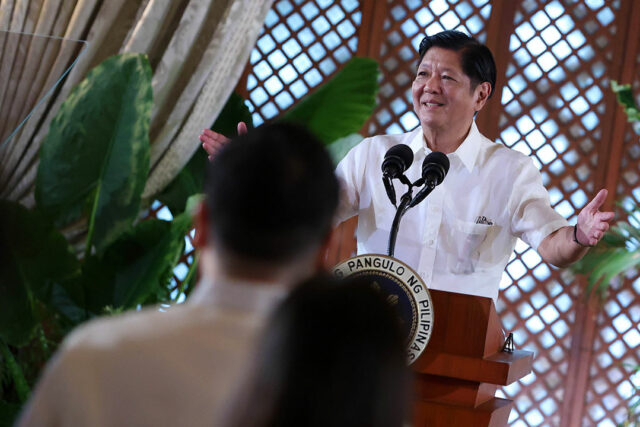
PRESIDENT Ferdinand R. Marcos, Jr. spoke at the ceremonial signing at Malacañan Palace of a joint circular for the establishment of P1 billion worth of child development centers in low-income parts of the country. — PPA POOL/MARIANNE BERMUDEZ

PRESIDENT FERDINAND R. MARCOS, JR. on Thursday ordered local government units (LGUs) to build more early child development centers after the Department of Budget and Management (DBM) and the Department of Education (DepEd) signed a circular to prioritize funding of about P1 billion to build 328 of these centers in low-income localities to boost learning programs for young Filipino children.

“To our local government units, we need your full commitment to ensure the success of the project. You must provide our childhood development teachers and workers with the support and resources that they need while encouraging our community members to take an active role in the child development centers,” he said in his speech at the signing of the joint circular between the Department of Budget and Management at Malacañang.

“Too many children do not have the structure care that they need in their formative years and these challenges have been accumulating for the past 30 years and cannot be solved overnight.” Of the 328 low-income villages, 89 are in Luzon, 106 in Visayas, and 133 in Mindanao including the Bangsamoro Autonomous Region in Muslim Mindanao.

Republic Act No. 6972, enacted in 1990, mandated each village to have at least one of these daycares to prepare children below five years old for formal schooling.

Mr. Marcos said at least 3,800 villages have yet to set up these centers.

“Even though it is not primarily the National Government’s responsibility, a collective effort with local governments is necessary,” Education Secretary Juan Edgardo “Sonny” M. Angara said at a Palace briefing in mixed English and Filipino.

“Otherwise, it will take too long — it’s already been a long time since the law, the Republic Act requiring municipalities to construct daycare centers, was passed.

The Second Congressional Commission on Education (EDCOM 2) said in a statement that access to early childhood care and development is still “inequitable” due to some LGUs lacking the funding needed to carry out these programs and to build daycares. 

Citing the joint circular, EDCOM 2 said LGUs are required to submit funding requests for these programs pending the evaluation and approval of DepEd.

Lower income localities must also provide land of at least 150 square meters for these daycares and to handle their operation. These localities are also tasked to oversee the salaries of child development workers and teachers.

The government only spends about P3,870 per child for health, compared to the $150 (P8,556.15) other lower and middle-income countries spend on children’s health, according to an EDCOM 2 study published in May last year.

“We recognize that education goes beyond what happens just inside the classroom,” the Philippine President said in his speech.

“The government continues to find ways to support our children so they can grow and thrive and reach their full potential.”

STRICTER POLICIES
Meanwhile, a Philippine senator on Thursday urged tech companies operating in the Philippines to strengthen their policies to combat online child sexual exploitation amid its proliferation in social media platforms and messaging applications.

“There is no question that the abuse and exploitation of children has proliferated and been facilitated through advancements in modern technology. With the internet and highly accessible apps, transactions have been made easier,” Senator Ana Theresia N. Hontiveros-Baraquel said in a committee hearing.

The hearing was meant to examine new ways Child Sexual Abuse or Exploitation Materials (CSAEM) are being created, trafficked, and spread online.

Ms. Hontiveros added that her office had received numerous reports of child sexual exploitation content in online platforms and messaging applications.

“We found content being shared on Facebook, Twitter, and even on Telegram, and these aren’t hidden, some are publicly advertised,” she said.

“In a simple Google search, CSAEM also came up. I want to ask our tech giants: why is this happening?” she asked.

About half a million Filipino children were forced to produce child sexual exploitation material for profit, according to a study by the International Justice Mission.

United Nations Children’s Fund said that about 20% of children aged 12-17 were prone to online sexual abuse and exploitation, with 23% of children not telling anyone of the harm they experienced.

Anti-Online Sexual Abuse and Exploitation of Children (OSAEC) and Anti-child sexual abuse and exploitation materials Act of 2022 mandated internet intermediaries, along with service providers, hosting platforms, search engines, payment systems, messaging apps, and social media networks, to prevent and take down CSAEM content.

“Internet intermediaries play a crucial role, under the law, but until now, CSAEM continues to be spread and advertised,” she added in Filipino.

The law also mandates the creation of an online sexual offenders registry for foreigners and Filipinos along with the establishment of the National Coordination Center against Online Sexual Abuse Against Children. — John Victor D. Ordoñez and Adrian H. Halili

High Court justice says P160-B PhilHealth, PDIC fund moves skipped accountability

PHOTO BY MIKE GONZALEZ

THE Senior Associate Justice of the Philippine Supreme Court (SC) said on Thursday that the transfer of funds from two government-owned and -controlled corporations (GOCCs), worth over P160 billion, was a stopgap measure that did not address the systemic problem of corruption.

“When we look at P15.8 billion (government expense) a day, we can take a look at, not only corruption, outright stealing from people, the people’s money, but also inefficiencies,” Senior Associate Justice Marvic M.V.F. Leonen told Finance Secretary Ralph G. Recto, who responded “That is correct.”

The two were speaking at SC’s fifth hearing of lawsuits on the controversial transfer of P89.9-billion PhilHealth funds to national coffers in Baguio City.

“Therefore, the gap that you need to fill in can sometimes be addressed, not only by transferring funds, but also attending to accountability. And accountability includes following the rule of law,” Mr. Leonen further said.

He, however, noted that the transfer of P60 billion from PhilHealth and P104 billion from the Philippine Deposit Insurance Corp. were a stopgap measure that failed to address the systemic problem of corruption. Mr. Recto, in response, asserted that “it does.”

“It does for the moment,” Mr. Leonen said. “It does also for teaching a lesson to these government corporations from your point of view.”

For the Finance chief’s part, he agreed the move taught government corporations a lesson because if the government had not transferred the P60 billion from PhilHealth, it would not have improved their benefit packages.

“If we do not reduce the reserve requirement, then there would be less money for increasing benefit packages to reduce out of pocket expenses,” Mr. Recto countered.

‘PRUDENT AND MORAL’
In the same hearing, the Finance Secretary said the Department of Finance (DoF) exercised prudence when it transferred P89.9 billion out of P138.1 billion of the PhilHealth’s unprogrammed appropriations to the National Treasury.

Mr. Recto said under the unprogrammed appropriations of PhilHealth, it can return P138.1 billion to national coffers, but the department “exercised a prudent and moral decision to limit the return to the excess, idle, and unused government subsidies from 2021 to 2023.”

“We did not want to touch the hard-earned contributions of the PhilHealth members. This is how we ended up determining the P89.9 billion of excess, idle, and unused government subsidies sleeping in PhilHealth’s bank that we, the taxpayers, are paying P5 billion in interest while sleeping,” he told the SC in full court. “And importantly, the move is aligned with the medical principle of do no harm.”

Mr. Recto, a former lawmaker who authored the Universal Health Care Act, also said that utilizing idle funds is a temporary and common-sense approach consistent with the Medium-Term Fiscal Framework, which aimed to reduce the fiscal deficit and national debt while ensuring the efficient allocation of public resources.

“With PhilHealth’s remittance, we raised more funds without increasing taxes or resorting to additional borrowing that future generations would have to shoulder. We protected the people without punishing them,” he stated.

He likened the move to the enactment of Bayanihan 1 and 2, the government’s economic stimulus and recovery measures during the coronavirus pandemic, calling the transfer a form of “Bayanihan 3” that utilizes existing funds rather than new taxes to support economic recovery.

Addressing concerns about PhilHealth members’ contributions, Mr. Recto clarified that the transfer did not affect individual contributions as it involved excess government subsidies that had been left idle.

He added that the transfer prompted PhilHealth to enhance its services and expand benefit packages, further improving healthcare access for Filipinos.

Of the P60 billion remitted from PhilHealth’s P89.9 billion in excess funds, 78% was allocated to critical health initiatives, including P27.45 billion for Health Emergency Allowances of COVID-19 frontliners, P10 billion for medical assistance to indigent patients, P4.1 billion for the procurement of medical equipment for hospitals and primary care facilities, P3.37 billion for three new Department of Health (DoH) health facilities, and P1.69 billion for the Health Facilities Enhancement Program.

An additional P13 billion was allocated to infrastructure and social programs aimed at improving healthcare delivery in remote areas and ensuring food security.

Meanwhile, IBON Foundation Executive Director Jose Enrique A. Africa, speaking as a friend of the court, said the move to transfer funds hurt involuntary members of PhilHealth, which include indigents, senior citizens, persons with disabilities, and other marginalized sectors.

Their contributions are subsidized by the National Government and direct contributing members to ensure access to essential healthcare services.

“We did see a fall in the number of PhilHealth indirect beneficiaries because already of budget cuts, it was I think 642 million in indirect benefits in 2023 down to about 21 million in 2024,” he told Mr. Leonen. “That immediately impacts on, we believe, roughly 60-70% of poor and vulnerable Filipinos, including, according to the central bank, 75% of families who do not have any savings, whether in the bank, home, in their pockets.”

In 2024, the government initiated the transfer of P89.9 billion from PhilHealth to the national Treasury, labeling these as “excess funds.” The money was supposed to fund various projects, including infrastructure and social services.

The High Court on the same day ordered both parties and the friends of the court to submit memoranda in a non-extendible period of 30 days from April 3 as it wrapped up its 5-day hearing on the consolidated lawsuits.

The High Court last November issued a temporary restraining order to stop the last tranche of transfers worth P29.9 billion.

The transfer faced legal challenges, with the plaintiffs arguing that PhilHealth’s funds, taken from member contributions and specific taxes, should be exclusively used for health-related purposes, as mandated by the Universal Health Care Act. — Chloe Mari A. Hufana


Imee’s subpoena request OKd

IMEE R. MARCOS — FACEBOOK.COM/SENATEPH

SENATE PRESIDENT Francis G. Escudero has signed subpoenas to summon officials to the Senate committee hearing on the arrest of former President Rodrigo R. Duterte.

“I had signed subpoenas to summon two officials… we sent them to the Senate legal counsel to study the implication of invoking executive privilege,” Mr. Escudero said during a news briefing on Thursday.

He added that he sought the aid of Senate lawyers on the signed subpoenas to avoid a constitutional crisis.

He identified the officials as Prosecutor General Richard D. Fadullon and Philippine Air Force Lieutenant General Arthur M. Cordura.

Senator Maria Imelda R. Marcos sought to subpoena the officials after Executive Secretary Lucas P. Bersamin on Monday invoked executive privilege to officials and cabinet secretaries invited to the Senate committee hearing on Foreign Relations.

Mr. Bersamin said the agenda has been extensively discussed by the Committee in its March 20 hearing, noting also that Ms. Marcos has already publicly relayed the panel’s “comprehensive” findings.

He also cited a possible violation of the sub judice rule, which could unduly influence the ongoing proceedings in the Supreme Court. 

“There are more questions that need answers, and so many of us citizens have sent documents, information, and evidence that this hearing should be an opportunity for our cabinet members to explain to the people,” Ms. Marcos said during the second committee hearing on Thursday.

According to her preliminary report, Ms. Marcos said the Philippines had no obligation to arrest and surrender Mr. Duterte to the ICC, and the government had not only helped the ICC in the arrest but have planned it before a warrant was issued. — Adrian H. Halili

17 OFWs held in Qatar released

SEVENTEEN overseas Filipino workers (OFWs) arrested in Qatar have been granted provisional release as authorities continue their investigation, the Department of Migrant Workers (DMW) said on Thursday.

Migrant Workers Secretary Hans Leo J. Cacdac, in a statement, said the OFWs detained for allegedly participating in an illegal assembly without a permit have not been formally charged.

Under Qatari law, such offenses can result in six months to three years of imprisonment and fines ranging from 10,000 to 50,000 Qatari riyals (P157,682.02 to P788,410.08).

Mr. Cacdac said the Philippine government will provide legal and welfare assistance to the workers as they navigate the legal process.

He added that the released OFWs are currently in contact with their families and receiving support.

Philippine Ambassador to Qatar Mardomel Celo D. Melicor and Labor Attaché Edward Ferrer are set to meet with them to coordinate their legal defense.

The DMW also reaffirmed its commitment to assisting the affected OFWs in maintaining their employment status.

Mr. Cacdac also urged Filipino workers abroad to comply with the laws and regulations of their host countries.

“This serves as a reminder to all our fellow Filipinos working overseas to respect the laws of their host nations. In Qatar, these individuals faced arrest, but adherence to local laws should not require such consequences,” he said in Filipino.

The Migrant Workers Office (MWO) in Doha, in collaboration with the Philippine Embassy, remains on standby to provide necessary aid to the OFWs. — Chloe Mari A. Hufana

Russian-American vlogger nabbed

PHILSTAR FILE PHOTO

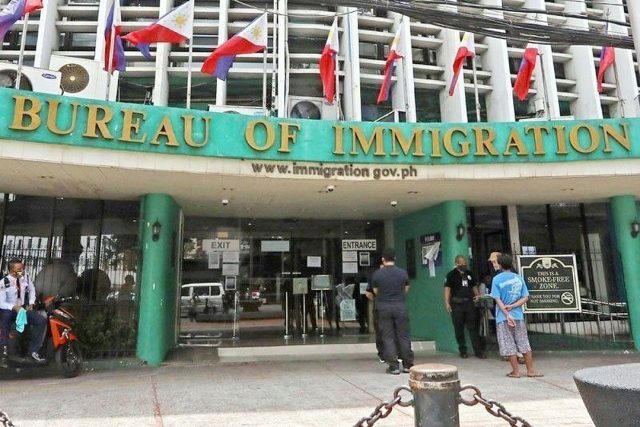
THE Bureau of Immigration (BI) has arrested a Russian American video blogger who gained notoriety on social media for harassing Filipinos in Bonifacio Global City (BGC), it reported on Thursday.

BI Intelligence Division Chief Fortunato S. Manahan, Jr., in a statement, confirmed the arrest of the 33-year-old man after he was deemed an undesirable foreign national due to his controversial online posts.

Immigration Commissioner Joel Anthony M. Viado emphasized that while the Philippines is known for its hospitality, foreign visitors are expected to respect local customs and obey national laws.

“The Philippines welcomes visitors from all over the world, but those who abuse our hospitality and violate our laws will be held accountable,” he said. “Harassment and disruptive behavior have no place in our society, and we will take swift action against offenders.”

The video blogger sparked widespread outrage after posting videos of himself harassing Filipinos in public spaces around BGC.

His arrest was carried out in coordination with the Philippine National Police (PNP) Makati and the Criminal Investigation and Detection Group (CIDG).

A security guard stationed in BGC had filed a police blotter with the PNP Southern Police District, citing harassment.

Following this complaint, the CIDG coordinated with BI intelligence operatives, leading to the foreigner’s arrest under a mission order issued by Mr. Viado.

The man has since been transferred to the BI detention facility in Camp Bagong Diwa, Bicutan, Taguig, where he awaits deportation proceedings.

“Our laws exist to protect the welfare of Filipinos,” Mr. Viado said. “Let this serve as a reminder that while we welcome visitors, those who fail to respect our people and our laws will face the consequences.” — Chloe Mari A. Hufana

57% disapprove political families gunning for multiple Senate seats

PHILIPPINE STAR/ WALTER BOLLOZOS

ALMOST six out of ten Filipino voters believe it is unacceptable for multiple candidates from the same political dynasty to run in the same Senate election, according to a recent WR Numero survey published on Thursday.

The Philippine Public Opinion Monitor, conducted by the non-partisan research firm in February 2025, revealed that 57% of the respondents disapproved of political families fielding multiple Senate candidates in the same race, while only 24% found it acceptable. The remaining 20% were undecided.

A similar sentiment was observed for local races, with 55% opposing the idea of family members simultaneously running for mayor, governor, or district representative. Meanwhile, 28% expressed approval, and 17% were uncertain.

While opposition to simultaneous bids was evident, the survey found that Filipinos were more open to political dynasties when candidates ran in different election cycles.

A majority (51%) found it acceptable for a family member to seek office after another relative’s term ended, compared to 32% who opposed the idea. Only 16% were unsure.

Opinions on the extent of dynastic influence in the Senate were mixed. If 10-20% of Senate seats were held by political families, 41% of Filipinos found this acceptable, while 31% disagreed, and 28% were unsure.

However, if dynastic politicians occupied 80-90% of the Senate, public opinion was more divided — 39% opposed, 35% approved, and 26% remained uncertain.

The survey also noted changing public attitudes toward political dynasties. While 44% of respondents still found dynasties acceptable, the same percentage believed they were more prone to corruption.

This marked a shift from WR Numero’s September 2024 survey, where 56% found political dynasties acceptable and 50% associated them with corruption.

When asked to name a political family that prioritizes personal interests over public welfare, 42% of respondents were unable to specify one.

However, those who identified political families who value personal interests, most mentioned the Marcoses (19%), Dutertes (10%), Villars (3%), Aquinos (2%), and Binays (2%).

The WR Numero survey, conducted from Feb. 10 to 18, included face-to-face interviews with 1,814 Filipinos aged 18 and older. It has a ±2% margin of error at a 95% confidence level.

The upcoming midterm elections on May 12 will determine the composition of the Senate, House of Representatives, and local government positions. — Chloe Mari A. Hufana

P18-M cannabis torched in Benguet

FDG-UNSPLASH

BAGUIO CITY — Philippine Drug Enforcement Agency (PDEA)-Benguet operatives with local policemen torched around 90,000 fully grown marijuana plants discovered in separate lots with a total area of 9,000 square meters on Wednesday in a barangay in Kibungan, Benguet.

PDEA-Cordillera director Derrick Arnold Carreon estimated the marijuana haul to reach P18 million.

Mr. Carreon detailed the operatives discovered 50,000 plants from the first plantation valued at P10 million and around 40,000 plants worth P8 million from the second plantation.

He lamented, however, that operatives were unable to catch any cultivator. — Artemio A. Dumlao

P7.6-M ecstasy tablets seized

BAGUIO CITY — At least 4,491 pieces of party drug tablets “ecstasy” valued at P7.63 million were seized in an “interdiction” operation at Port of Clark Wednesday noon.

According to the Philippine Drug Enforcement Agency (PDEA) Clark Interdiction Unit, the shipment containing the ecstasy tablets came from Belgium and arrived at the Port of Clark on March 29.

PDEA Director-General, former Police Major General and lawyer Isagani R. Nerez quoting the team leader of the unit, said the PDEA International Cooperation and Foreign Affairs Service (ICFAS) received information that a certain parcel from Belgium will arrive at the Port of Clark.

The information was relayed by the PDEA Intelligence Service (PDEA IS) to PDEA Regional Office 3, which led to the successful interdiction operation, Mr. Nerez added.

In the presence of PDEA Clark personnel and other witnesses, the Bureau of Customs (BoC) Port of Clark examined the package containing the ecstasy. Field tests on the seized tablets confirmed them as ecstasy.

The seized drugs were forwarded to the PDEA-Central Luzon laboratory for forensic examination.

The successful operation was joined in by the National Bureau of Investigation-Pampanga District Office agents, Philippine National Police (PNP) Aviation Security Unit 3, PNP Drug Enforcement Group and PDEA Intelligence Service and PDEA SES K-9 Unit operatives. — Artemio A. Dumlao

4 drug sellers to pineapple plantation workers busted

COTABATO CITY — Four drug dealers, long under surveillance for selling their illegal merchandise in villages around vast pineapple plantations in Tupi town in South Cotabato, finally fell in a police entrapment operation on Tuesday.

Major Rovi L. Jardenil, Tupi municipal police chief, and the director of the Police Regional Office-12, Brig. Gen. Arnold P. Ardiente, separately announced on Thursday that all four suspects, one of them a 34-year-old woman, are now detained, charged with violation of the Comprehensive Dangerous Drugs Act of 2002.

Residents of barangays around the vast pineapple plantations in South Cotabato’s adjoining Tupi and Polomolok towns had confirmed to reporters that all four suspects sold crystal meth (shabu) and marijuana to buyers in far-flung areas in both areas.

They had reportedly eluded earlier attempts by local officials and non-uniformed policemen to intercept them while distributing drugs to their contacts, a number of them entrapped one after another in recent months.

Mr. Jardenil, in a report to the South Cotabato Provincial Police Office and to Mr. Ardiente, said the suspects were immediately arrested after selling P81,600 worth of shabu to non-uniformed personnel of the Tupi Municipal Police Station, disguised as ordinary villagers, in a tradeoff on Tuesday night in a secluded area in Barangay Palian. — John Felix M. Unson

Southeast Asia nations, hit particularly hard by US tariffs, prep for talks with Trump

In this photo illustration, the Association of Southeast Asian Nations (ASEAN) emblem is seen on a smartphone screen in front of the ASEAN flag. — PAVLO GONCHAR / SOPA IMAGES/SIPA VIA REUTERS CONNECT

HANOI/BANGKOK (UPDATED) — Southeast Asian nations reeled on Thursday as they were hit with some of President Donald Trump’s heftiest tariffs, which now threaten the economies that have benefited from investment since he imposed levies on China during his first term.

Vietnam, slapped with 46% tariffs, said it would set up a task force and Thailand’s prime minister said she would pursue negotiations to try to reduce the 37% rate her country faces – far greater than the 11% it had expected.

Both countries are heavy exporters to the US, having gained from the so-called China+1 strategy, whereby manufacturers, seeking to escape tariffs on China, shifted some of their Chinese production to nearby countries in the region.

“We have to negotiate and get into details,” Thai Prime Minister Paetongtarn Shinawatra said. “We can’t let it get to where we miss our GDP target.”

Six of the nine Southeast Asian countries listed by Trump were slapped with much bigger-than-expected tariffs of between 32% and 49%. By comparison, the level for the European Union was 20%, Japan’s was 24% and India’s 27%.

So far, none of the Southeast Asian nations have spoken of retaliatory tariffs.

Vietnam, where companies like Apple, Nike and Samsung Electronics have large manufacturing operations, appears particularly exposed. Its exports to the United States were worth $142 billion last year, nearly 30% of its gross domestic product.

Vietnam’s benchmark stock index slid 6.7%, on course for its biggest one-day drop since January 2021 while its currency, the dong, lost 0.7% to hit an all-time low.

Prime Minister Pham Minh Chinh ordered up a task force to address the situation after an urgent cabinet meeting early on Thursday, state media said. He noted the country’s 8% growth target for this year remained unchanged.

“Vietnam’s export-driven growth model has been highly successful, attracting multinational companies … However, a 46% US tariff would directly challenge this model,” said Leif Schneider, head of international law firm Luther in Vietnam.

ING estimates that the tariffs put 5.5% of Vietnam’s gross domestic product at risk.

Vietnam made a number of recent concessions to Washington to avoid tariffs, including cutting duties and a pledge to import more US goods, and is likely to offer more in the coming days.

“I expect negotiations to continue on ways to reduce or mitigate the impact of any new tariffs,” said Adam Sitkoff, executive director of the American Chamber of Commerce in Hanoi.

HOPING FOR TALKS
Thai Commerce MiniUSster Pichai Naripthaphan said his government was prepared for negotiations and had high hopes they would go well, citing Thailand’s good relations with the US.

Thailand is hoping for 3% growth this year. It has lagged regional peers, growing 2.5% last year, held back by soaring household debt.

The country’s stock index, already having taken a battering this year due to its weak economy and last week’s earthquake, slipped 1.1% while the baht fell to a one-month low. ING estimates the tariffs put 3% of the country’s GDP at risk.

Malaysia, which was dealt a rate of 24%, announced it would not seek retaliatory tariffs and it said the trade ministry would be actively engaging with US authorities “to seek solutions that will uphold the spirit of free and fair trade.”

Cambodia is facing tariffs of 49% that will hurt its garment and footwear industries and promise to crush hopes that it could attract investment relocating from other countries in the region.

It is a “very, very serious situation for the economy,” said a Cambodia-based investment consultant who declined to be identified.

There is “nothing that Cambodia can offer as a negotiating tool, and will be at the back of a very long queue,” he added. — Reuters

Meralco braces for hard challenge to defend the Philippine Cup title

MERALCO BOLTS — PBA.PH

Games on Friday
(Ninoy Aquino Stadium)
5 p.m. – Terrafirma vs Phoenix
7:30 p.m. – Meralco vs Converge

FOR the first time in its PBA stint, Meralco heads into a tournament as the reigning champion that 11 others are plotting to take down.

And the Bolts are determined to face the heavy challenge head on and keep the coveted Philippine Cup crown that they seized on the historic night of June 16, 2024 over multi-titled San Miguel Beer, 4-2.

But it’s going to be a tough road back to the throne.

And a grueling kickoff slate that tests Meralco against vastly improved Converge in Friday’s conference opener at the Ninoy Aquino Stadium then Terrafirma (Sunday), SMB (April 9) and Phoenix (April 13) with short turnaround times in between.

“We’re just locked in on this stretch. We were given four games in the next nine days then one game in a month (after this) so balancing what we do leading up to those five games is important,” coach Luigi Trillo told The STAR on Thursday.

Mr. Trillo said in the absence of an import, who normally plays 40 minutes a night, Meralco’s support crew will have to do more to support stalwarts such as Chris Newsome, Cliff Hodge, Chris Banchero, Bong Quinto, Raymond Almazan and Allein Maliksi.

In the last four months since Meralco’s milestone, the rest of the field had beefed up their rosters.

One such team is Converge, Meralco’s opponent at 7:30 p.m. following the curtain raiser between Terrafirma and Phoenix at 5 p.m.

The FiberXers expect to fully unleash Justin Baltazar and Jordan Heading after their mid-conference entry and Commissioner’s Cup quarterfinal run. The squad has also acquired Rey Suerte via trade and Jackson Corpuz from free agency to fortify the cast bannered by Alec Stockton, Justin Arana and Schonny Winston.

Meralco got stuck in the quarterfinals of the last two conferences, losing to Barangay Ginebra via a 0-3 sweep in the Governors’ Cup and 1-2 in the Commissioner’s Cup, so motivation is another weapon it could use in this title defense. — Olmin Leyba