Home Blog Page 1229

Metro Retail direct-to-market tie-up with small farmers set for expansion

METRO RETAIL Stores Group, Inc. said it is seeking to expand its direct-to-market partnership with smallholder farmers beyond a current ongoing program in Cebu province.

The partnership with Gulay Farmers Cooperative is helping supply produce to eight retail stores in Cebu, the company said in an e-mail.

Metro Retail said the arrangement provides a “structured and reliable” supply chain with a direct-to-stores model that cuts out middlemen and gives farmers access to mainstream markets.

The cooperative, meanwhile, assists with regulatory compliance, logistics, and quality control, allowing farmers to focus on increasing productivity and crop quality.

Since its launch in 2020, the program has directly benefited 500 farmers, supplying about 60,000 tons of produce to Metro Retail stores, the company said.

It said smallholder farmers typically struggle with bringing their produce to large retailers due to strict documentation requirements, fluctuating market prices, and logistical constraints.

“Many farmers are unable to secure business permits or tax registrations, limiting their access to formal retail markets,” it said.

“Additionally, the lack of an efficient distribution system means that much of their produce goes to waste before it even reaches consumers,” it added.

Metro Retail said the model allows it to offer fresher, high-quality produce at competitive prices while ensuring fair compensation for growers.

Metro Retail operates 71 locations across Luzon and the Visayas under the brands Metro Supermarket, Metro Department Store, Super Metro Hypermarket, Metro Value Mart, and Metro Home and Lifestyle. — Kyle Aristophere T. Atienza

Treasury bills, bonds may end mixed amid market volatility

BW FILE PHOTO

RATES of the Treasury bills (T-bills) and Treasury bonds (T-bonds) on offer this week could end mixed as market volatility and recession fears due to US trade policy uncertainties continue to affect global yields.

The Bureau of the Treasury (BTr) will auction off P25 billion in T-bills on Monday, or P8 billion each in 91- and 182-day papers and P9 billion in 364-day papers.

On Tuesday, the government will offer P30 billion in reissued 10-year T-bonds with a remaining life of seven years and four months.

T-bill and T-bond rates could mirror the mixed movements seen in secondary market yields as markets recalibrate their expectations amid ongoing uncertainties, analysts said.

The T-bills on offer on Monday may fetch mostly higher yields following the increase in comparable secondary market benchmark rates, Rizal Commercial Banking Corp. Chief Economist Michael L. Ricafort said in a Viber message.

Mr. Ricafort added that yields on the reissued 10-year bonds to be auctioned off on Tuesday may inch down to track secondary market rate movements amid growing expectations of a Federal Reserve rate cut following weak US economic data recently.

The bonds may fetch rates ranging from 6.04% to 6.075% and see decent demand, a trader said in an e-mail.

The trader added that the local bond market mostly consolidated last week amid the release of several key US economic reports.

At the secondary market on Friday, the 91- and 182-day T-bills rose by 5.88 basis points (bps) and 6.24 bps week on week to end at 5.5146% and 5.6713%, respectively, based on PHP Bloomberg Valuation Service Reference Rates data as of April 25 published on the Philippine Dealing System’s website. Meanwhile, the 364-day T-bill’s yield went down by 1.79 bps to 5.7183%.

On the other hand, the 10-year bond decreased by 8.01 bps week on week to yield 6.2603%, while the seven-year debt, the tenor closest to the remaining life of the T-bonds to be offered on Tuesday, went down by 4 bps to 6.0528%.

Federal Reserve policymakers on the alert for possible cracks in the labor market as businesses adjust to President Donald J. Trump’s erratic trade policy got some reassurance on Friday that so far there’s little weakness, and no reason to rush on rate cuts, Reuters reported.

US employers added a more-than-expected 177,000 jobs in April, the Labor department reported, and the unemployment rate was unchanged at 4.2%. Both are signs the labor market remains in balance during a month when Mr. Trump announced the steepest tariffs in a century, sending stocks downward and convulsing the bond market before the administration paused many of those levies until July.

With the job market holding up and inflation still running above their 2% target, Fed policymakers are expected to stick to their plan to leave short-term borrowing costs where they are while they wait to see how the tariffs affect prices and economic growth.

Traders are now betting the Fed will wait until July to start cutting interest rates; earlier they had thought a June move was more likely. And they now see the Fed delivering a total of three quarter-point interest rate cuts by yearend, one fewer than previously.

Shortly after the report, Mr. Trump reiterated his own call for the Fed to lower rates.

Fed policymakers, who say it will be the economy’s needs, not the president’s desires, that will dictate their moves, want to be sure that inflation won’t resurge. They have signaled that to do so they’ll keep the policy rate in the current 4.25%-4.5% range, as long as the job market doesn’t crumble.

Last week, the BTr raised P25 billion as planned from the T-bills it auctioned off as total bids reached P80.265 billion or more than thrice the amount on offer.

Broken down, the Treasury borrowed the programmed P8 billion via the 91-day T-bills as tenders for the tenor reached P22.025 billion. The three-month paper was quoted at an average rate of 5.546%, steady from the previous auction. Tenders accepted by the BTr carried yields of 5.494% to 5.608%.

The government likewise made a full P8-billion award of the 182-day securities as bids for the paper amounted to P29.21 billion. The average rate of the six-month T-bill went up by 2 bps week on week to 5.655%, with accepted rates ranging from 5.6% to 5.684%.

Lastly, the Treasury raised P9 billion as planned via the 364-day debt papers as demand for the tenor totaled P29.03 billion. The average rate of the one-year T-bill inched down by 0.3 bp to 5.688%, with bids accepted having yields of 5.684% to 5.7%.

Meanwhile, the T-bonds to be offered on Tuesday were last auctioned off on March 11, where the government raised P30 billion as planned at an average rate of 6.143%, lower than the 6.75% coupon.

The Treasury plans to raise P260 billion from the domestic market this month, or P100 billion via T-bills and P160 billion through T-bonds.

The government borrows from local and foreign sources to help fund its budget deficit, which is capped at P1.54 trillion or 5.3% of gross domestic product this year. — A.M.C. Sy with Reuters

Auto Shanghai 2025: Jetour-ing beyond roads

Jetour International President Ke Chuandeng with the G700 at Auto Shanghai — PHOTO FROM JETOUR

Chinese brand ventures into ‘luxury hybrid off-road’ segment

AT A JETOUR convention in Fuzhou, China last November, Jetour International President Ke Chuandeng told members of the media (with “Velocity” in attendance) that the brand’s aspiration is to be to China what Land Rover is to the United Kingdom, and what Jeep is to the United States. Of course, the aforementioned brands are off-road specialists which have built a reputation for an ability to go where the pavement ends.

To be sure, the releases rolling out or are set to emerge from the Jetour production lines are certainly looking to give credence to this declaration of intent. Following the T2 and T1 off-roaders (with the latter slated for launch in the Philippines in September, according to Jetour Auto Philippines, Inc. Managing Director Miguelito Jose), Jetour took advantage of the recent Auto Shanghai 2025 state to feature its new, so-called GAIA Intelligent Off-Road Architecture, expressed in two hulking off-roaders in the G700 and G900.

In a release, Jetour said it is among the “fastest-growing automotive startup brands globally,” with sales of over 560,000 units in 2024 — translating to a huge 80.3% jump year-on-year. The brand is now present in 67 countries and regions, boasting a network of “over 2,000” sales and service outlets.

With the reveal of the G700 and G900, Jetour is opening the third “era” of its journey, with the first defined by “family-focused” releases such as the X70, X90, and Dashing; the second was the “off-road” era as evidenced by the T1 and T2.

So, what does the “3.0 era” mean? For Jetour, it means “signaling deeper investment in off-road technology and a clear shift toward hybridization, intelligence, and premium in off-road mobility.”

Through GAIA, Jetour now presents two “advanced power systems.” The iDM-O Super Hybrid System, upon which the G700 is built, is designed for “high-efficiency off-road performance,” said to deliver strong power while being mindful of fuel economy. Meanwhile, the iEM-O Amphibious Range Extender System is claimed to be able to provide “tank-level propulsion with up to 18,000Nm of wheel torque and 2,500Nm of thrust, enabling seamless driving across both land and water.” Yes, you read that right: water. The Jetour G900 is fitted with a vector quad-motor drivetrain and “marine-grade navigation,” to go along with an “intelligent oxygen cabin,” smart cockpit, and “seamless connectivity.”

Back to the Jetour G700, it is positioned as a premium all-terrain SUV and will get a “groundbreaking 2.0TD engine with an industry-leading 45.5% thermal efficiency.” It receives the world’s first dual-speed hybrid DHT system, said the company, and is expected to deliver up to 210kW of power and 6,446Nm of wheel torque.

The GAIA platform promises adjustable suspension travel of up to 150mm and a maximum ground clearance of 350mm. “Capabilities include tank-turning, crab-walk mode, and integrated marine-grade functions for full amphibious performance. Further enhancing the platform are six core innovations: low-orbit satellite communication, onboard oxygen generation, an immersive AI-powered cockpit, advanced terrain navigation and parking assistance, vehicle-cloud integration, and continuous intelligent system upgrades via over-the-air updates,” reported Jetour.

If it all sounds very incredible and fantastic, well, that seems to be the goal for Jetour brass: to impress and get the attention of a market that has never before seen such a glut of brands. “GAIA is more than an architecture — it’s the cornerstone of Jetour’s vision for the future of intelligent off-road mobility,” said Mr. Chuandeng. “With GAIA, Jetour is redefining what off-road vehicles can achieve — delivering not only extreme performance but a smarter, safer, and more sustainable way to explore the world.”

Our dispatch from Shanghai continues next week.

Five things to consider when voting: The health and nutrition edition

The Philippines 2025 midterm elections will be held on May 12. On that day, Filipinos will elect senators, district representatives, party-list representatives, and local government officials. With tens of thousands of candidates vying for 18,320 elective positions to be voted for this year, voters are challenged to choose the right candidates.

The recent survey of the Social Weather Stations shows that a top issue among voters is health. Ninety percent of the voters “will vote for a candidate who will advocate… strengthening the healthcare system.”

The politicians should be aware of this. To garner votes, politicians appeal to the aspirations — or desperation — of Filipinos for freedom from poverty and destitution. This is why politicians make promises on giving prosperity by providing social services and distributing taxpayer-funded ayuda (assistance).

However, band-aid solutions do not eradicate poverty. Poverty must be addressed in all its dimensions, including malnutrition that traps families in poverty. This situation breeds dependence on dole-outs that serve as vehicles for patronage politics.

Here are five things we should consider when choosing who to vote for in the midterm elections this May. Let’s call this the health and nutrition edition of who to vote for.

This is a challenge and a call to Filipinos to examine the candidates’ platforms, and for reelectionists, their track record in terms of lasting impact on the nation’s development.

1. Dapat may alam (someone knowledgeable): recognizing the triple burden of malnutrition.

The Philippines is facing a triple burden of malnutrition. Different forms of malnutrition, such as undernutrition, overnutrition, and micronutrient deficiency, afflict millions of Filipinos. Annually, the country loses a staggering P496 billion to malnutrition — or a daily loss of P1.36 billion.

Undernutrition may be acute (also known as wasting or being thin) or chronic (also known as stunting or being short for age). Wasting, stunting, and micronutrient deficiency may co-exist in a single individual.

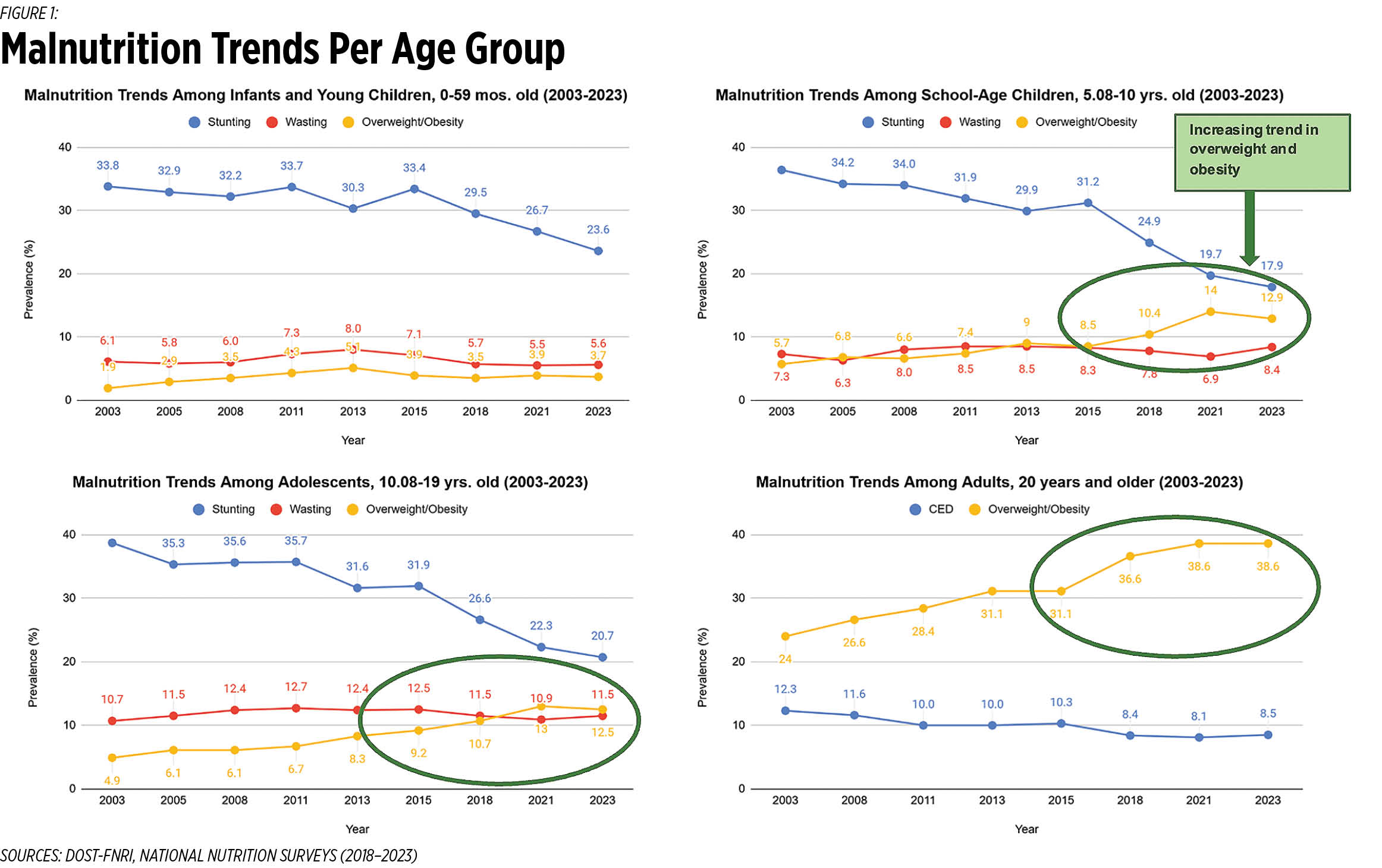
Across age groups, a common paradoxical trend is emerging: the slowly declining prevalence of undernutrition is being met with the rapidly rising incidence/prevalence of overnutrition. While we are gradually addressing stunting, wasting and vitamin- and mineral-deficient diets, we are faced with ballooning cases of an equally concerning form of malnutrition — an epidemic of overweight and obesity.

Amid this triple burden of malnutrition, children under five stand to be the most severely affected. This age group encompasses the first 1,000 days of life, from the point of conception until a child’s second birthday.

The first 1,000 days form a critical period of development, which, if compromised, may lead to irreversible injury and insult. Harsh early environments in the womb may manifest as low birth weight, and via “intrauterine programming,” as serious health problems later in life, e.g., the “metabolic syndrome,” an overlap syndrome of overweight/obesity, diabetes, and cardiovascular disorders.

The impact is not just over the lifetime of one child, but is intergenerational. Picture a pregnant teenager. She needs an adequate diet for her own growth, plus the needs of her developing fetus — and yet, she is likely subsisting on instant noodles, junk food, and soft drinks that are high in salt, trans fat, and sugars. She is probably consuming excess sugars and carbohydrates, but not enough building blocks — protein and healthy fats — for growth and development of her fetus’ organs, including the brain.

To make things worse, she may be consuming alcohol, vaping or smoking. A teenage adolescent is more likely to conceal her pregnancy and not seek prenatal care early. Without guidance and because of her unhealthy diet, she is at a higher risk of developing hypertensive disorders of pregnancy and gestational diabetes, her pelvis may be narrow and thus if her baby is a big baby, she runs a higher risk of having to deliver via cesarean section. Her low birthweight offspring now becomes one of the future generations of nutritionally at-risk children.

We need more champions in government who will raise awareness about the triple burden of malnutrition, with a strong understanding of the importance and urgency of investing in the right nutrition, especially in the first 1,000 days of life.

2. Dapat may pakialam (someone who cares): Championing urgent and sustainable solutions

The country’s malnutrition problem is not a new topic. And yet we have seen minimal progress and are off-track in achieving our nutrition targets, especially in curbing overnutrition among all age groups.

We have been underinvesting in nutrition. Figure 2 illustrates the funds for nutrition-specific programs that make up an insignificant portion of the national budget, hardly even visible in the graph below.

Malnutrition fuels broader health crises — particularly the rise of non-communicable diseases (NCDs). In 2024, Philippines Statistics Authority (PSA) data showed that NCDs remained as the leading causes of death among Filipinos, with ischemic heart disease being the top cause and diabetes ranking fourth. Annually, the country loses P756.5 billion to NCDs, according to the World Health Organization.

Our leaders should be proactive in crafting and implementing sound and sustainable solutions.

3. Hindi nagmumudmod ng ayuda (does not distribute assistance): Rejecting patronage politics that breeds pagmamakaawa (begging) and utang na loob (debt of gratitude), to allow citizens to claim their inalienable right to health.

NCDs are chronic and costly to treat, often leading to medical expenses that can last a lifetime.

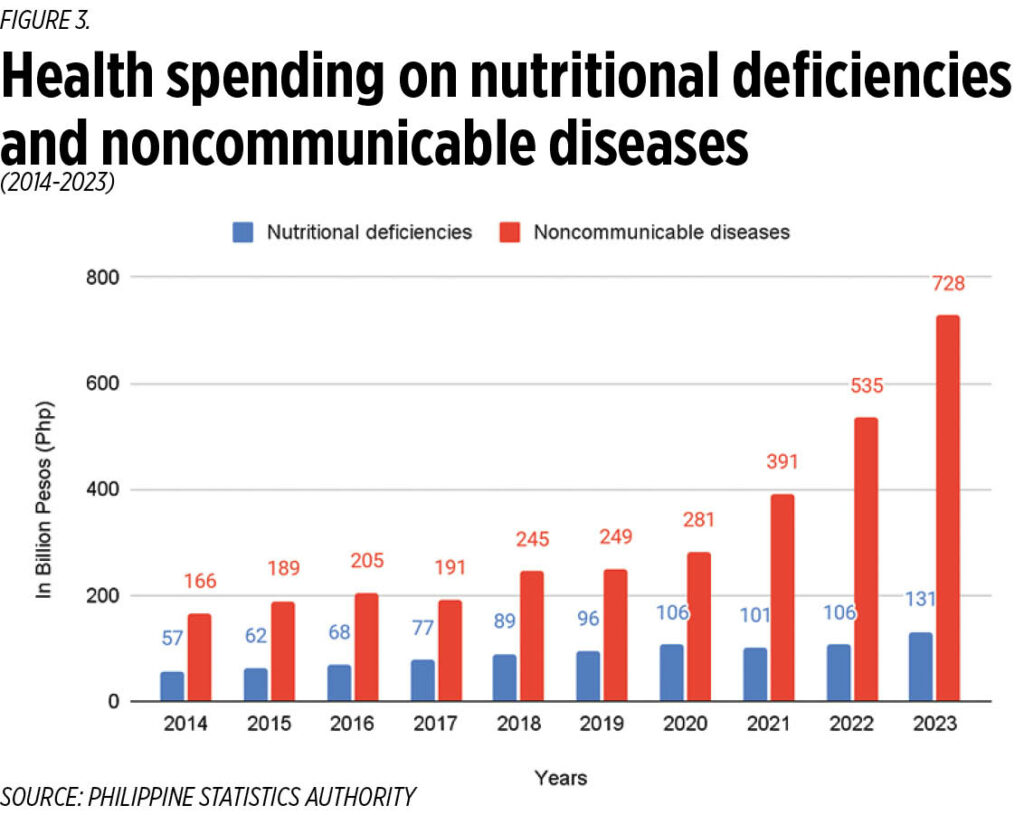
According to PSA data on health spending, the Philippines spent P728 billion on NCDs alone. The largest portion (44.4%) came from the pockets of Filipino people. That is an estimated P323.2 billion worth of health expenditure — a sum equivalent to the entire national health budget for one fiscal year.

Hence, the Universal Health Care (UHC) Act established the role of the Philippine Health Insurance Corp. (PhilHealth) as the key purchaser of health services.

This mandate is funded by premium contributions from PhilHealth members, along with earmarked revenues from sweetened beverage (SB) and tobacco taxation.

Even if out-of-pocket healthcare expenses remain high, the Department of Finance ordered the transfer of P89.9 billion of PhilHealth funds to the National Treasury in 2024. To make matters worse, Congress inflated the budget for the Medical Assistance to Indigents and Financially Incapacitated Patients (MAIFIP) program, a band-aid medical ayuda scheme which forces patients to beg for aid, rather than strengthen an institution that ensures dignified healthcare financing.

Enough with the utang na loob mentality that fuels the ayuda politics of traditional politicians or trapos. The healthcare assistance we receive is not a favor — it is funded by our taxes, paid with our hard-earned money.
4. Walang utang na loob na pagbabayaran (no debts to gratitude to be paid): Scrutinize candidates’ campaign backers and vote for those who cannot be bought.

Good governance rejects the scheme of trapos that breeds utang na loob. This applies not only to patronage-driven politics but also to the influence of campaign funders.

The danger of politicians being backed by industry players is that they will distort policies to favor the industry backers — evident early this year when the House railroaded House Bill 11360, branded by civil society as the “Sin Tax Sabotage Bill.” HB 11360 proposes to reduce excise taxes on tobacco. Its proponents, mainly identified with tobacco interests, make the false claim that lowering taxes will curb smuggling. The true beneficiaries of this bill reducing tobacco taxes, however, are tobacco companies, which stand to profit at the expense of public health.

The Sin Tax Reforms have significantly reduced smoking prevalence — from 28.3% of adults smoking in 2009 to 19.5% in 2021. The proposed “Sin Tax Sabotage Bill” threatens to reverse these gains — if passed, it is projected to result in almost 2 million new smokers by 2030, according to Action for Economic Reforms.

We must reject the pro-tobacco bill. Its passage can likewise lead to undermining sweetened beverage and alcohol taxes, the very taxes that fund UHC.

5. ’Yung may plano (someone with a plan): check for clear and concrete Local Nutrition Action Plans

Concretely, we ask: What are their programs, projects, and activities that serve the Local Nutrition Action Plan (LNAP)? Do they undertake participatory approaches, not merely tokenistic approaches?

On Election Day, consider voting for candidates who will champion health and nutrition. The five things to guide our vote  dapat may alam; dapat may pakialam; hindi nagmumudmod ng ayuda; walang utang na loob na pagbabayaran; ’yung may plano — apply not only to the vote for health and nutrition. They apply to how we must vote in general.


Ma. Dhelyn Dela Cruz and Rosheic Sims are researchers for the fiscal and health policy team of Action for Economic Reforms (AER). Maria Asuncion Silvestre, M.D. is a World Health Assembly Laureate (2023), recipient of the United Arab Emirates Health Foundation Prize, and the founding president of Kalusugan ng Mag-Ina (KMI).


New faces at Bench Design Awards

BENCH FASHION WEEK and its culminating fashion show, the Bench Design Awards, celebrated a lot of new faces during the last weekend of April: refreshing in a city that can be stubborn.

For example, Day 1 saw the rather indie collection of Maligaya Clothing Co., which showed various outfits in crochet lace. Model, now designer Ria Bolivar showed off a similar collection, albeit with more sizzle and sex, through a crochet collection called Reveri.

Even Human, sister branch to Ben Chan’s Suyen Corporation’s Bench, presented a more indie slant: the streetwear brand decorated its offerings with the work of Filipino autism advocate and artist Vico Cham (himself on the autism spectrum). The artwork made the outfits more exciting: while Human presented looks that were more preppy than punk, this preppy had a stint in art school.

Mr. Chan himself judged the Bench Design Awards on April 27. The awards recognize new talent, and three winners will be given trips to Japan — because they will show their collections at Tokyo Fashion Week in the fall.

Mr. Chan, chairing Suyen Corp., judged the collections (12 designers presenting eight pieces each) with Kaoru Imajo, director of the Japan Fashion Week Organization; Mihara Yasuhiro, designer of Maison Miharayasuhiro; fashion stylist Michael Salientes; and renowned designers Dennis Lustico and Joey Samson.

Stephany Verano opened the show with a collection based on the clothes worn by fisherfolk in cold climates: this meant winklepicker boots, waterproof and quilted jumpsuits, and outfits of net with fishing floats and lures. Ms. Verano took home one of the top prizes.

Some of the collections this writer liked were by Andre Plaus, who used a knitting machine found at a surplus store to create very bright neon knit jumpsuits reminiscent of 1980s kiddy show costumes. Marc Carcillar made a collection inspired by his having a twin (the opening outfits were identical playsuits worn by two male models, bonded together by an “umbilical cord” of linen emerging from one sleeve to the other). The rest of the collection seems almost cozy, with just a touch of squalor gained from dyeing the clothes with metal rust. Gil Salazar made a really great effort with recycled plastics and foils; some of the trash paid tribute to their origins (one skirt looked like cigarette filters over a wispy tulle skirt).

Ms. Verano shares her win with Karl Nadales and Peter Gagula (behind the brand Peach Garde; the designer won the top prize for Bench-backed Ternocon earlier this year).

Mr. Nadales showed off unfinished outfits (one such outfit had a frayed semicircular hole). When there are parts that are unfinished, it makes it up with the masterful draping in other parts of the outfit. “I love dissecting garments,” said Mr. Nadales.

Meanwhile, Mr. Gagula showed off his mastery of movement and technique, taking inspiration from jellyfish (according to a video shown before the show). Panels on outfits, in spare blue and white, move slowly, almost like they were mechanically timed, along with the model, recalling a jellyfish floating in water. In an interview with BusinessWorld, the designer, who once had to quit nursing school to work in retail due to financial difficulties, said, “I’m so very grateful.

“I’m not really good with design, honestly — I’m just into quality handcrafting,” he said, humbly. — Joseph L. Garcia

Meralco awaits Senate action on proposed nuclear regulatory body

FREEPIK

MANILA ELECTRIC Co. (Meralco) is hopeful that the bill seeking to establish an independent nuclear energy regulatory body will secure Senate approval when the session resumes in June, according to a top executive.

“Hopefully, the nuclear PhilATOM bill will be passed by the Senate by June, as any delay in the enactment of the bill would definitely cause a major backlog in terms of hitting that target,” Meralco Executive Vice-President and Chief Operating Officer Ronnie L. Aperocho said during a briefing on April 28.

PhilATOM refers to the proposed Philippine Atomic Energy Regulatory Authority, which will have regulatory control over all sources of ionizing radiation, including nuclear and radioactive materials and radiation devices.

Under the Philippine nuclear energy roadmap, the government aims for at least 1,200 megawatts (MW) of nuclear energy capacity by 2032, scaling up to 2,400 MW by 2040 and 4,800 MW by 2050.

By 2025, the necessary laws regarding the nuclear legal and regulatory framework are expected to be in place.

The House of Representatives approved House Bill No. 9293 in November 2023, which seeks to establish the country’s atomic energy regulatory authority and provide a comprehensive legal framework for nuclear safety, security, and safeguards in the peaceful use of nuclear energy.

The Senate began reviewing Senate Bill No. 2498, or the proposed Philippine National Nuclear Energy Safety Act, last year.

Congress is currently on a four-month break for the midterm elections and is scheduled for a two-week session in June.

Mr. Aperocho said the Philippines may be running out of time to integrate 1,200 MW of nuclear energy capacity into the country’s power supply mix by 2032, as it would take years to build a plant.

“Of course, building a power plant in the Philippines, public acceptance will be an issue. And, of course, we need to find a place to build it in a way that manages stakeholders… The government is a big partner, a major stakeholder. That’s where we are,” he said.

“Without the PhilATOM bill, I think all we could do is conduct feasibility studies and train our people,” he added.

Last month, Meralco signed a two-year memorandum of cooperation with state-controlled French multinational electric utility company Electricité de France SA to explore the potential deployment of nuclear energy in the Philippines.

The companies will undertake a feasibility study focused on site activities, power system integration, and the economic viability of nuclear energy in the country’s energy mix.

Meralco has been disclosing plans to explore the deployment of small modular reactors (SMRs) through partnerships with foreign firms. 

“Well, building thousands of megawatts of a conventional power plant is a major challenge, but at Meralco, we are keen on deploying SMRs,” Mr. Aperocho said.

He mentioned that the company is monitoring the ongoing construction of the first-of-a-kind SMR in Romania to follow suit.

“We leave it up to the Department of Energy (DoE) to decide how we can build an SMR. There have been discussions already, but we leave it up to the DoE to take the lead on the first-of-a-kind SMR,” he said.

SMRs are smaller than traditional nuclear power plants, which typically generate up to 450 MW.

Meralco’s controlling stakeholder, Beacon Electric Asset Holdings, Inc., is partly owned by PLDT, Inc.

Hastings Holdings, Inc., a unit of PLDT Beneficial Trust Fund subsidiary MediaQuest Holdings, Inc., has an interest in BusinessWorld through the Philippine Star Group, which it controls. — Sheldeen Joy Talavera

Environmental groups blast US listing approval for JBS

REUTERS

SAO PAULO — The US financial regulator’s approval last month of a proposal by the world’s largest meatpacker JBS to list on the New York Stock Exchange (NYSE) is drawing strong criticism from climate and animal rights groups but praise from Wall Street.

In multiple statements after April 22, when Brazil’s JBS said the US Securities and Exchange Commission (SEC) greenlit its dual-listing plan to broaden its investor pool and raise its valuation closer to peers, environment activists and animal rights lobbies have unleashed a campaign condemning it.

They cited sprawling criminal investigations into JBS or its controllers in Brazil and in the US, as well as concerns over the deforestation of the Amazon and the company’s outsized role as a large global emitter of greenhouse gases in the course of its operations.

“Given the company’s long rap sheet of illegal and corrupt conduct, it’s hard to see how the SEC could have confidence that JBS won’t deceive US investors,” Glenn Hurowitz, CEO of Mighty Earth, a Washington DC-based advocacy group, said in a statement.

JBS was deeply implicated in a bribery scandal in 2017 that shook Brazil’s political and economic landscape. In the US, the company or related parties were fined millions of dollars in 2020 for corruption in Brazil and for bribery related to its 2009 acquisition of Pilgrim’s Pride, another top US meat company.

US lawmakers have also raised concerns over the listing and JBS’s criminal and environmental track record.

The SEC did not respond to several requests for comment.

JBS said it believes its US listing presents a compelling investment option and increased opportunities for farmers and ranchers, employees, consumers and the communities where it operates.

The company, which partly funded its aggressive global expansion by issuing bonds traded internationally, pointed out that it has been subject to the information and reporting requirements of the US Securities Exchange Act of 1934 and other US federal securities laws for years.

Global Witness, a London-based organization which investigates industries’ links to climate change, called the SEC’s approval of the listing “a disaster” for both the planet and its people. Other groups have alleged that JBS purchases cattle grazed on deforested areas of the Amazon.

In a statement to Reuters, JBS rejected that claim, citing a “rigorous, zero-tolerance agricultural commodity sourcing policy with strong anti-deforestation measures.”

But climate activists are unimpressed.

“Allowing it to list on the world’s largest stock exchange — unlocking vast opportunities for expansion and profit — shows the deep failures of the US financial regulatory system,” Global Witness said.

This year, JBS stock rose some 24% on the Sao Paulo Stock Exchange on expectations that the SEC would approve the US listing, something the company has been seeking in various forms since 2009. The company announced the structure of the current listing proposal in July 2023.

For Brazilian investment bank BTG, access to a larger pool of investors after listing in the US would offer JBS “unprecedented firepower to drive growth.”

Citi and other banks have repeatedly said the move will close a valuation gap with rivals, like Tyson Foods.

Under the plan, the meatpacker’s shares will be primarily listed in New York through a Netherlands-based company, but the stock will also continue to trade in Sao Paulo via Brazilian Depositary Receipts, which are certificates representing shares of foreign companies traded in Brazil.

JBS NV, the Dutch company created for the dual listing, will issue Class A and Class B shares. The Class B shares will have 10 times the voting power of Class A shares, and only Class A shares will be publicly traded.

All shareholders will be able to convert Class A into Class B shares through December 2026. That will define JBS’ final free float on the NYSE and voting power distribution.

On May 23, an extraordinary assembly of JBS shareholders will vote on the dual listing plan. JBS’ second largest shareholder, the equity arm of Brazil’s development bank, BNDESPar, said it would abstain from voting.

JBS shares could start trading on the NYSE as soon as June.

After all steps are complete, the controlling shareholders could end up with 85% of voting power in one potential scenario, said Genial Investimentos, a Sao Paulo-based investment firm.

Global Witness said such power concentration would limit opportunities for minority shareholders to steer the company on environmental, social and governance issues. — Reuters

Yields on central bank securities drop further

BW FILE PHOTO

YIELDS on the central bank’s short-term securities ended lower on Friday as both tenors were oversubscribed, even as total demand declined from the previous week.

The Bangko Sentral ng Pilipinas (BSP) bills fetched bids amounting to P119.459 billion on Friday, higher than the P80-billion offer but below the P149.916 billion in tenders for the same volume auctioned off a week prior. Still, the central bank awarded P80 billion in securities as planned.

Broken down, tenders for the 28-day BSP bills reached P48.109 billion, above the P30 billion placed on the auction block but lower than the P69.713 billion in bids for the same volume offered in the previous week. The central bank fully awarded the one-month papers.

Banks asked for rates ranging from 5.64% to 5.7135%, narrower than the 5.625% to 5.738% margin seen a week earlier. This caused the average rate of the one-month securities to decline by 3.23 basis points (bps) to 5.6812% from 5.7135% previously.

Meanwhile, bids for the 56-day bills amounted to P71.35 billion, more than the P50-billion offering but also below the P80.203 billion in tenders for the same volume offered by the central bank a week prior. The BSP made a full P50-billion award of the two-month bills.

Accepted yields were from 5.64% to 5.718%, lower than the 5.649% to 5.74% band seen a week prior. With this, the average rate of the 56-day securities went down by 0.94 bp to 5.7041% from the 5.7135% logged in the previous auction.

The central bank uses the BSP securities and its term deposit facility to mop up excess liquidity in the financial system and to better guide short-term market rates towards its policy rate.

The BSP bills also contribute to improved price discovery for debt instruments while supporting monetary policy transmission, the central bank said.

The central bank securities were calibrated to not overlap with the Treasury bill and term deposit tenors also being offered weekly.

Data from the central bank showed that around 50% of its market operations are done through the short-term BSP bills.

The BSP bills are considered high-quality liquid assets for the computation of banks’ liquidity coverage ratio, net stable funding ratio, and minimum liquidity ratio. They can also be traded on the secondary market. — A.M.C. Sy

Warren Buffett caps a career built on humility

ASA MATHAT/FORTUNE MPW/FLICKR

By Jonathan Levin

WARREN BUFFETT is stepping down as chief executive officer of Berkshire Hathaway, Inc., the company he built alongside his later partner Charlie Munger for the past six decades. It’s a final show of humility by a man many consider the greatest investor of all time.

Operating in an era replete with purported Wall Street soothsayers, the 94-year-old Buffett always rejected the idea that anyone — even him — could predict the future. Nicknamed the Oracle of Omaha (a misnomer perhaps), he credited his success to patience and insisting on only buying the businesses he understood. From the early years of Berkshire, those included a textile business, insurance company GEICO, The Buffalo News, and See’s Candies. After delivering a 20% annual compounded annual gain between 1964 and 2024, about double that of the S&P 500 Index, the business is now a behemoth valued at more than $1.16 trillion, more than 390,000 employees and a cash hoard totaling $347.7 billion.

Buffett gave credit to the people around him, including vice-chairman for non-insurance operations Greg Abel — his chosen successor — and of course Munger, a lawyer by training and poker player. With the influence of Munger, Buffett slowly moved from a philosophy of buying “cigar butt” investments — as he’d learned from his mentor Ben Graham — to a style of investing that might best be characterized today as “quality”: buying great companies at the right price. The key example of that worldview in Berkshire’s portfolio became Apple, Inc. “I am embarrassed to say that Tim Cook made more money for Berkshire than I ever did, so credit should be given to him,” Buffett said on Saturday, with Apple CEO Cook in the audience.

Buffett’s legend grew during the 2008 global financial crisis when he opportunistically scooped up investments in Goldman Sachs Group, Inc., General Electric Co., and Dow Chemical Co. He managed to do so because he had stockpiled cash in the runup to the crisis — much as he’s done in recent years. Yet he always dismissed the notion that he had any great foresight or that anyone in the investing business had such capacity — a theme that he returned to Saturday when asked about the current state of financial markets and the economic risks of the moment. In Buffett’s telling, he always just waited for the right opportunities to present themselves, and passed on anything less.

In a way, humility was Buffett’s brand. Though he worked briefly in New York early in his career, Buffett ultimately returned to build Berkshire in Omaha, Nebraska, where he was born and has lived in the home he bought in 1958 for $31,500. He always insisted on treating Berkshire’s shareholders as co-owners in the company, an ethos that was always on display at his sprawling annual shareholder meeting in Omaha, dubbed the Woodstock of Capitalism, in which Buffett would sit for hours taking questions from the audience.

Despite Berkshire’s incredible run, Buffett’s conservative tendencies may have also contributed to the company’s lagging performance in recent years — an era in which cheap and easy money often pushed valuations to extraordinary levels. Since the financial crisis, Berkshire is only keeping pace with the S&P 500, a benchmark that any investor can mimic through shares of an exchange-traded fund. Some of that may underscore the ways in which the investing industry has changed and become more democratized — but also harder to outperform even for the most gifted investors. Others would say that the equity market values are too high relative to historical levels and are set for a correction, and that cash-rich Berkshire may ultimately come out on top.

As for Buffett’s personal fortune of $168.6 billion, he owes at least some of it to his long career and life and the magic of compound investing, as he’s frequently admitted. Although Buffett’s announcement Saturday was unexpected, Abel, 62, has long been groomed as the Oracle’s successor. Buffett, starting to sound every one of his 94 years, said he would recommend to the board of directors that Abel become the new chief executive.

Earlier in the day, Buffett — with his signature folksy humor — dismissed the idea that Berkshire’s sizeable cash stockpile was somehow a gift to Abel to make him look good. “I wouldn’t do anything nearly so noble as to withhold investing myself just so Greg could look good,” he said. He wasn’t totally joking. As much as Buffett valued relationships, his first allegiance in business was always to Berkshire’s shareholders, something that he demonstrated once again when he laid the groundwork for his succession to begin.

BLOOMBERG OPINION

Bank of Commerce to hold 2025 Annual Meeting of Stockholders via remote communication on May 27

NOTICE OF ANNUAL STOCKHOLDERS’ MEETING
April 30, 2025

The Annual Meeting of the Stockholders of Bank of Commerce (the Bank) will be held on Tuesday, May 27, 2025 at 2:00 P.M. As permitted by its By-laws, the Bank will conduct the annual meeting via remote communication using Pro Version License Zoom Application and livestreaming as authorized by the Board of Directors on March 25, 2025.

The Agenda of the Meeting is as follows:

  1. Call to Order
  2. Certification of Notice and Quorum
  3. Approval of the Minutes of Annual Stockholders’ Meeting held on 30 April 2024
  4. Presentation of the Annual Report
  5. Ratification of Acts and Proceedings of the Board of Directors and Corporate Officers
  6. Confirmation of Bank’s Significant Transactions with its DOSRI and Related Parties
  7. Approval of 2024 Performance Bonus of Directors
  8. Election of the Board of Directors
  9. Appointment of External Auditor
  10. Adjournment

Stockholders who would like to attend the meeting must advise the Bank on or before Wednesday, May 21, 2025, by sending the following information to stockholders@bankcom.com.ph: (1) Name; (2) E- mail address; (3) Contact number; (4) Postal address; and (5) scanned copy of any valid government-issued ID with photo of the stockholder, to obtain the link for the 2025 Annual Stockholders’ Meeting.

Stockholders may visit the Bank’s website at https://www.bankcom.com.ph/disclosure to download copies of (a) the Minutes of the Annual Stockholders’ Meeting held on 30 April 2024 and (b) the proxy form/ballot.

Electronic copies of the Information Statement and Management Report shall be available on the Company’s website and the PSE Edge.

Ballots and proxies may be submitted via email to stockholders@bankcom.com.ph, which submission shall be duly acknowledged and validated by the Bank’s stock transfer agent, SMC Stock Transfer Service Corporation. For an individual, the submission must be accompanied by a copy of a government-issued ID with photo, as proof of identification. For a corporation, the submission must be accompanied by a certification from its Corporate Secretary stating the corporate officer’s authority to represent the corporation in the meeting. In case of an event that restricts the movement of persons and makes submission of the originally signed ballots, proxies, and notarized Secretary’s Certificate difficult, these documents shall be submitted to the SMC Stock Transfer Service Corporation within a reasonable time after the Annual Stockholders’ Meeting.

During the meeting, the Bank shall entertain questions and comments from the stockholders after the presentation of the Annual Report. Questions and comments must be submitted either in advance by email to stockholders@bankcom.com.ph or during the meeting by posting the questions and comments in the feedback box that will be made available. Priority will be given to questions sent in advance. Questions which are not answered during the meeting shall be forwarded to the Office of the Corporate Secretary for the appropriate response.

The deadline for submission of the proxy and ballot is on May 21, 2025. Validation of proxies and ballots will be on May 22, 2025 at 10:00AM at the SMC Stock Transfer Service Corporation Office, 2nd Floor, SMC Head Office Complex, No. 40 San Miguel Ave., Mandaluyong City, Philippines. Only stockholders who have notified the Bank of their intention to participate through remote communication as above described and have been validated by the Office of the Corporate Secretary to be stockholders of record of the Bank as of May 7, 2025 will be considered in computing stockholder attendance at the meeting together with the stockholders attending through proxies.

(Original Signed)
EVITA C. CABALLA
Corporate Secretary


Spotlight is BusinessWorld’s sponsored section that allows advertisers to amplify their brand and connect with BusinessWorld’s audience by publishing their stories on the BusinessWorld Web site. For more information, send an email to online@bworldonline.com.

Join us on Viber at https://bit.ly/3hv6bLA to get more updates and subscribe to BusinessWorld’s titles and get exclusive content through www.bworld-x.com.

Isuzu PHL aims for further growth with added value, services

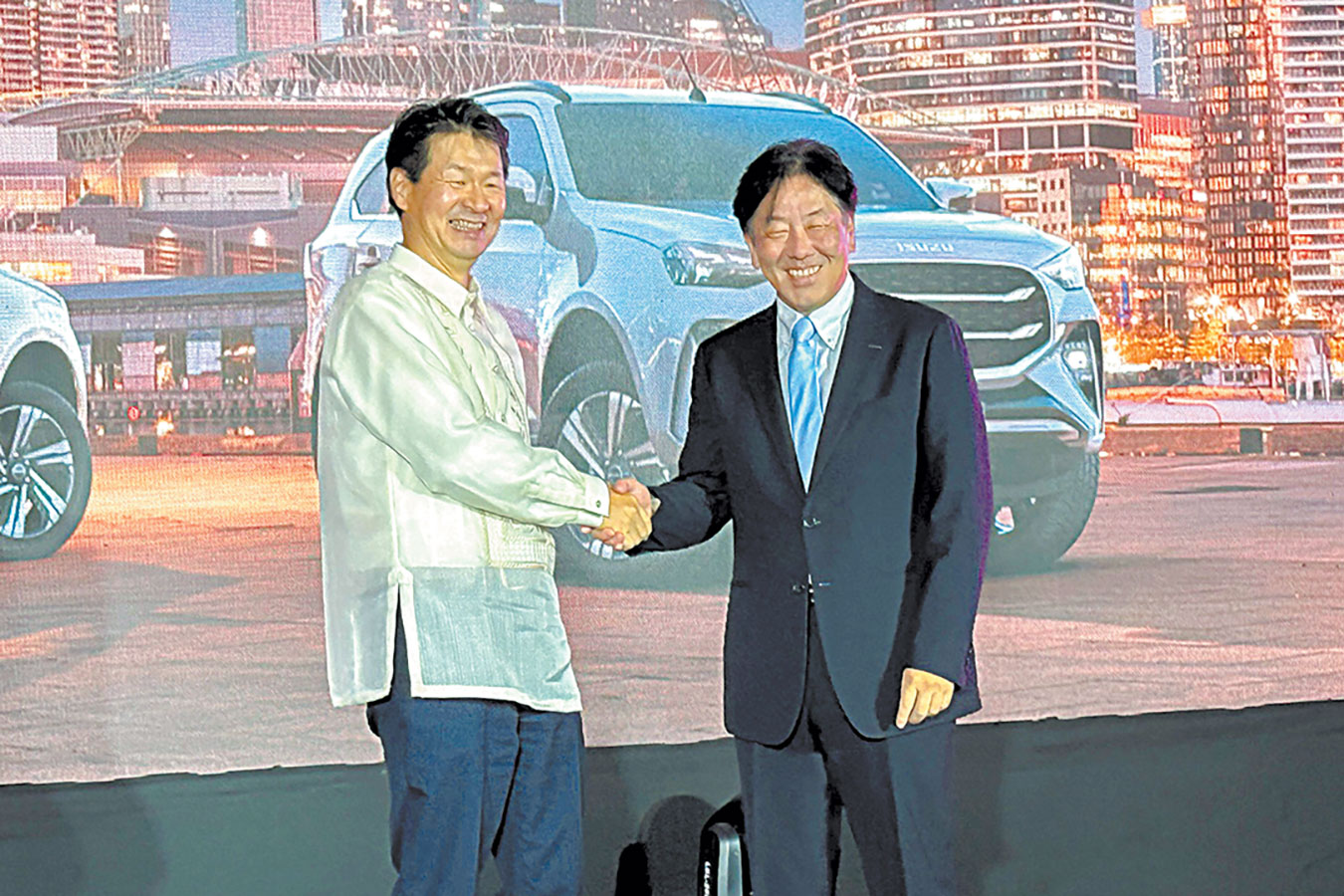
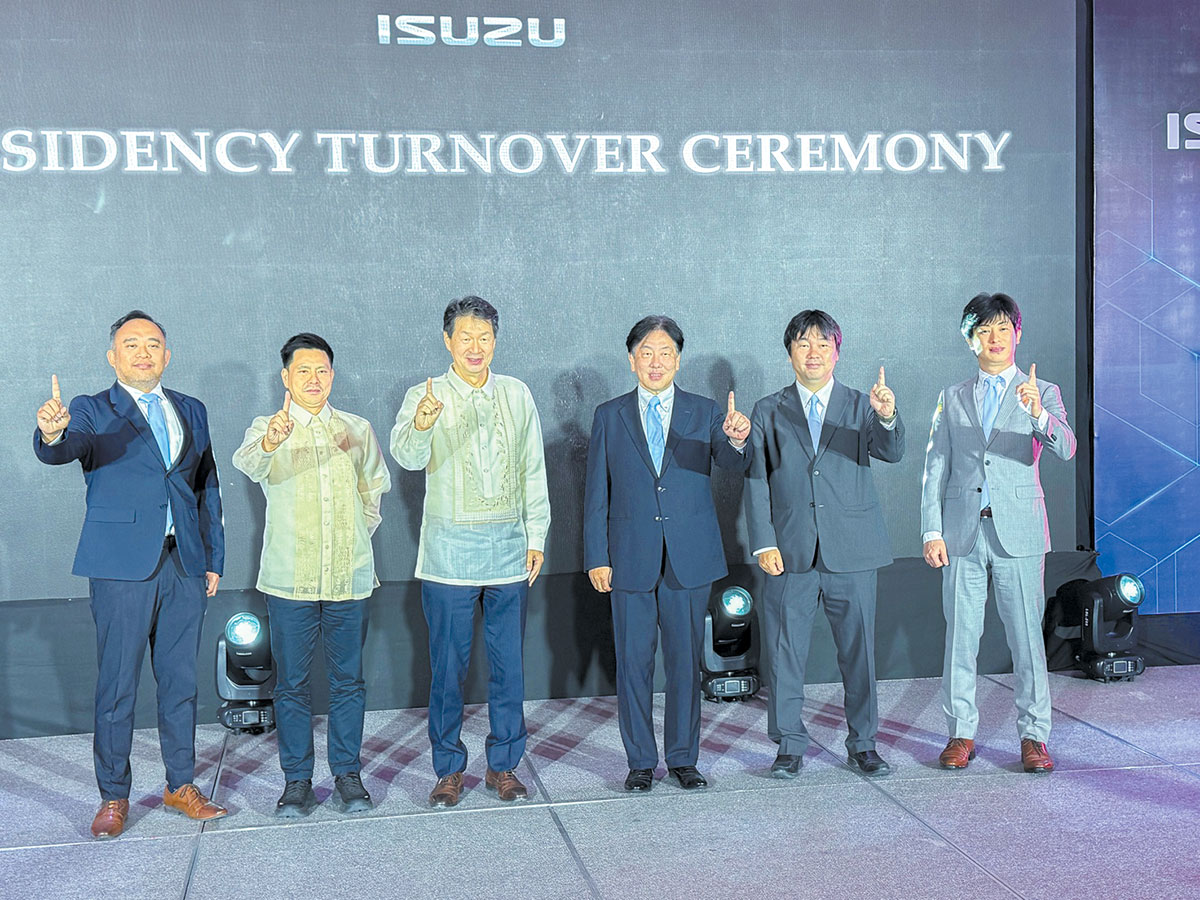
Outgoing Isuzu Philippines President Tetsuya Fujita (left) with new President Mikio Tsukui — PHOTO BY JOYCE REYES-AGUILA

New president takes helm

By Joyce Reyes-Aguila

VETERAN ISUZU GROUP executive Mikio Tsukui recently took over the presidency of Isuzu Philippines Corp. (IPC) from Tetsuya Fujita.

This was formalized in a turnover ceremony in Pasay City, attended by members of the media and content creators. In a release, IPC said that the change is a “significant milestone in the company’s leadership transition.” Mr. Tsukui has led the brand’s offices in Europe and China, and managed operations for Isuzu in various key global markets, such as the ASEAN (Association of Southeast Asian Nations) region.

Aside from upholding the brand’s legacy of “trust, reliability, and performance,” Mr. Tsukui is putting a premium on customer responsiveness and satisfaction. “The most important (imperative) when you sell a product is to always satisfy your customers, take care of customers,” he said. “My job is to have more Isuzu fans in the market and (have) more customers prefer our products. As long as we take action (to achieve these), we will maintain (our number one position) for years to come.”

He added, “We want to make more opportunities for customers to touch and feel the products. This is quite important for us because customers have a lot of choices. There are a lot of car brands; there are a lot of competitors. We aim to offer not just durability but a more refined driving experience that resonates with today’s customers. To achieve this, we plan to continue to expand our network and customer touchpoints, ensuring that the Isuzu brand is more accessible and more responsive, and more connected to their needs.”

Mr. Tsukui underscored the importance of staying competitive, especially amid the continued influx of Chinese automotive brands in the country. “We are not familiar with the (Chinese companies). When you say (the names of brands like) Toyota, Honda, you know about the companies. We are not sure how (Chinese brands) will compete in the market. We are still not sure how they work, what is (their) mindset, what is (their) strategy. So far, we only know that they come with very aggressive pricing and very short delivery time. At this moment that is a threat. But (whether) that business (model is) sustainable or not is another issue. But we are not trying to fight them with pricing. We are trying to fight with added value and service.”

The new IPC president does not expect the tariffs imposed by the United States to impact Isuzu’s operations in the country. “We bring in the parts from Japan, Indonesia and Thailand, and build the trucks here in the Philippines to provide products to the Filipino people. I think (the tariffs) do not have a direct connection (to our business),” he explained.

According to the executive, the Philippines is “one of the very important markets” for Isuzu as it “has a lot of potential to grow.” Mr. Tsukui’s priorities include sustaining the brand’s position as the leading truck brand in the Philippines, introducing more aggressive offerings in the light commercial vehicle (LCV) segment and continuously expanding IPC’s dealership network across the country.

“Beyond maintaining our leadership in commercial vehicles, we are also committed to steering IPC toward a more innovative and progressive future. This includes strengthening our presence in the light commercial segment where we’ll see great potential growth for vehicles like the Isuzu mu-X and D-Max,” he said. The executive maintained that while no electrified vehicles are scheduled to be released in the country this year, IPC is “prepared to take action” if there is market demand.

Outgoing president Mr. Fujita has started a new role in Isuzu Motors Limited in Japan. Under his leadership, IPC promoted sustainable transportation via its “Road to Progress” campaign, accelerated the expansion and modernization of Isuzu dealerships, and introduced lifestyle activities like overlanding trips for off-road and outdoor enthusiasts.

RLC holds new round of job fairs nationwide

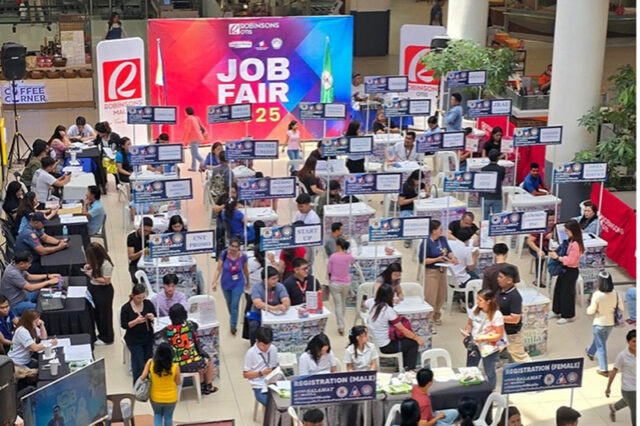
ROBINSONS LAND Corp. (RLC) is conducting another round of job fairs at Robinsons Malls across the country as part of its initiative to support employment generation.

“These job fairs will offer opportunities across a wide range of sectors, including retail, services, agriculture, manufacturing, and public services,” the company said in a statement on Sunday.

On May 1, job fairs were conducted at Robinsons Galleria, Robinsons Metro East, Robinsons Antipolo, Robinsons Iloilo, Robinsons Butuan, Robinsons Iligan, Robinsons Las Piñas, Robinsons Palawan, Robinsons Pangasinan, Robinsons Ilocos, and Robinsons Santiago. Additional events were held on May 2 at Robinsons Imus, Robinsons General Trias, and Robinsons Lipa.

Upcoming job fairs are scheduled at Robinsons Tuguegarao on May 9 and Robinsons Gapan on May 23.

The initiative is part of the company’s Lingkod Pinoy Center program, which aims to provide accessible government services, livelihood assistance, and employment opportunities.

The Philippine Statistics Authority reported that the country’s unemployment rate declined to 3.8% in February from 4.3% in January. — Beatriz Marie D. Cruz