Home Blog Page 1222

RL Commercial REIT eyes to triple portfolio via potential RLC asset infusions

ROBINSONS LAND CORP. (RLC), incorporated in 1980, is the real estate arm of JG Summit. — JGSUMMIT.COM.PH

RL COMMERCIAL REIT, Inc. (RCR) plans to expand its portfolio in the coming years through potential asset infusions from its sponsor Robinsons Land Corp. (RLC), a company official said.

“The current assets that are in RCR right now from the sponsor is just one-third of the sponsors’ assets,” RCR Treasurer and Director Kerwin Max S. Tan said during a media briefing last week.

“Potentially, RCR can grow two-thirds of the assets of the sponsor. So, it’s basically three times more of the current assets,”  he added.

Mr. Tan said growth is expected in the next few years, depending on market conditions and other factors.

As of end-March, RCR’s assets stood at P114.06 billion, while shareholders’ equity totaled P109.48 billion.

RCR has 828,000 square meters (sq.m.) of gross leasable area (GLA), consisting of 539,000 sq.m. of office space and 289,000 sq.m. of mall space. The company holds 17 offices and 12 mall assets across 18 locations nationwide.

The REIT company is positioned for further growth as RLC still has over 1.3 million sq.m. of mall GLA and over 250,000 sq.m. of office GLA that could be infused in the future.

RLC could also infuse about 300,000 sq.m. of logistics GLA and approximately 4,000 hotel room keys into RCR.

In April, RLC raised P6.2 billion from a block sale of 1.04 billion RCR common shares at P5.95 apiece, paving the way for the REIT company’s future portfolio expansion.

The transaction increased RCR’s public float to 42.57% from 35.93%.

Last year, RLC infused 13 properties worth P33.9 billion into RCR. The infused assets include Robinsons Luisita, Robinsons Cabanatuan, Robinsons Novaliches, Robinsons Cainta, Robinsons Imus, Robinsons Sta. Rosa, and Robinsons Los Baños.

RLC also infused Robinsons Lipa, Robinsons Palawan, Robinsons Ormoc, Cybergate Davao, Giga Tower, and Cybergate Delta 2.

For the first quarter, RCR grew its net income by 47% to P1.66 billion, as revenue surged by 58% to P2.25 billion.

RCR shares were last traded on May 9, rising by 1.39% or nine centavos to P6.58 apiece. — Revin Mikhael D. Ochave

Let’s talk tariff

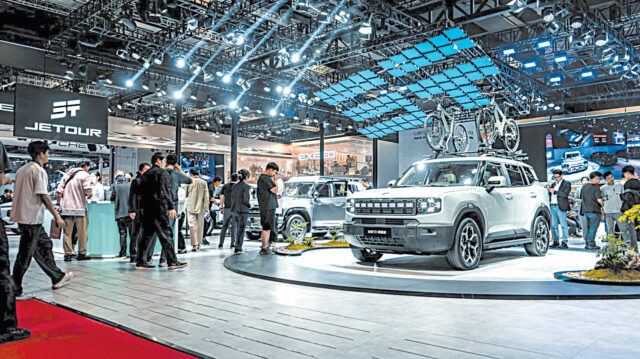
From China to the world: Auto Shanghai 2025 was the most recent mobility flex of the country, featuring a growing number of brands already making their impression on the global market. — PHOTO BY KAP MACEDA AGUILA

Everything you need to know about the ‘reciprocal tariffs’ of the US

THE TARIFF increases that United States President Donald Trump announced are much ado about everything. The hikes in tariffs on imports to the USA are sweeping, broad-based, and seen to affect trade flows globally. I cannot claim to grasp the enormity of the entire matter, but this could possibly redraw the bounds of globalization as we know it.

Frankly, tariffs are a complicated lot because trade is such an intricate and complex transactional web. In fact, a whole organization — the World Trade Organization (WTO) — exists to arbiter this gargantuan ecosystem. An impact analysis will entail a great many number of permutations. The only certainty is that they result to higher prices for consumers or lower margins for the exporters and importers. Often, though, taxes -— and make no mistake, tariffs are taxes — are passed onto the consumer, so it will be inflationary. A quote from President Trump himself succinctly captures this truth: “Well, maybe the children will have two dolls instead of 30 dolls. And maybe the two dolls will cost a couple bucks more than they would normally.”

Tariffs are a fiscal tool that governments use to manage trade balances, protect domestic industries, or raise revenues. And though it is a fiscal tool, the impact of changes in tariffs can indirectly affect monetary policy as well. For example, tariffs can lead to higher prices or a depreciation of the currency because of a drop in trade. Consequently, this can cause monetary authorities to increase interest rates. Another instance is that higher tariffs may result to increased business uncertainty and reduced economic activity. This would lead monetary authorities to cut interest rates to stimulate the economy. The worst case is if the tariff disruptions lead to stagflation — a period of rising prices and stalling economic growth. Then, we could be in real trouble.

When the US government announced its intention to raise tariffs, the proverbial shot across the bow was an added 25% on imported cars aimed at Canada, Mexico, the European Union (EU) and Asia. Industry data shows that the US auto market in 2024 hit 15.9 million units, the highest since 2019. Of this total, nearly half were imported. According to S&P Global Mobility, Mexico exported 2.5 million vehicles to the USA in 2024, followed by South Korea with 1.4 million, Japan with 1.3 million and Canada with 1.1 million. Germany exported 430,000 vehicles and the UK shipped nearly 90,000. Combined, these account for over 80% of all car imports to America.

Ironically, China — which the US government points to as the one to bear the brunt of tariffs — accounted for only around 2% of car imports to the US last year. China became a powerhouse of auto manufacturing only in the last decade or two, leveraging its huge domestic market. As well, it focused on new energy vehicles (NEV), acknowledging that it was already too late to the internal combustion engine (ICE) party. By the time it was firing on all NEV cylinders, though, the demand for fully electrified vehicles in China and the rest of the world plateaued.

The USA and EU became wary of China exporting its excess capacity of EV production on the back of government subsidies. This resulted to the USA imposing a 100% tariff on Chinese-made EVs while the EU imposed tariffs (differing by manufacturer) ranging from 17.4% (BYD) to 20% (Geely) and 38.1% (SAIC). These tariffs likely kept the increase of exports to the USA at bay.

So, what is the likely effect of these tariff increases on the auto industry? Tariffs are like dikes that divert the flow of water; in the case of tariffs, it diverts the flow of trade and consumer choices. In the USA, it is expected that the higher tariffs will result to higher prices for imported automobiles, expectedly lowering demand for them and hopefully spurring import substitution with made-in-USA cars. This increase in locally built car sales will, in turn, create more jobs and a more robust auto sector. The potential reduction in tariff revenues due to decreased imports are, theoretically, compensated for by higher local value added.

Unless, of course, consumers accept the increased prices, and the sustained level of imports leads to a rise in government revenues and a rebalancing of trade with source countries. But, seriously, how likely is it that consumers would readily agree to a price increase in the magnitude of the proposed tariffs?

For example, assuming an imported vehicle from Mexico costs US$20,000, the added 10% baseline tariff — if non-compliant with the United States-Mexico-Canada Agreement (USMCA) — plus the 25% auto-specific tariff leads to a 35% add-on cost on the car of around US$7,000. That is pretty steep. Even assuming that car companies absorb, say, 25% of that added cost, that is still a US$5,250 increase. On the other hand, the application of the 25% tariff on imports of auto parts effective May 3, 2025 will reportedly cause car prices to rise by an average of US$4,000. I think car buyers will surely blink.

The other hope is that those exporters who are affected by the higher tariffs will consider onshoring their production of vehicles in the USA. This will effectively eliminate tariffs on their cars and allow them to sustain their sales volumes. Given the significant rate of increase in tariffs, perhaps, this would be enough to compensate for any cost penalties that production in the USA would entail. Cost penalties are incurred when the production costs in the host country are higher than those in the country of origin — for example labor, logistics, power, and raw material costs. In this case, trade imbalances will narrow and the reduction in tariff revenues will, once again, be compensated by increased local value added.

Building capacity and new auto plants, though, will take time — two to three years, maybe longer. In the meantime, the flow of goods will remain disrupted. As well, the gestation period for investments in new plants can run anywhere from five to 10 years depending on the scale of investment and production volume. This necessitates long-term policy stability. Since the imposition of tariffs is vested with the Executive branch, it is hard to predict whether the tariffs imposed by the current administration will carry forward to the next one or the one after.

One must remember that local production is a complex operation that must consider the intricacy of the global supply chain. Each automobile — the ICE kind — is comprised of around 30,000 components. The “Big 3” American auto makers — GM, Ford and Stellantis (formerly Chrysler) — sourced about 70% of their parts from the USA and Canada in 2007. By 2023, this is reported to have dropped to 40%. Rebuilding a parts-making industry in the USA will take time and will have to achieve competitive production costs versus the likes of China, Korea, Japan, Southeast Asia and even the EU. The span of planned tariffs covers auto parts, too, thus further complicating cost planning and parts sourcing.

(To be continued)

SEC vows continued reforms for FATF compliance

SEC Chairperson Emilio B. Aquino — FACEBOOK.COM/PHILIPPINESEC

THE Securities and Exchange Commission (SEC) is aiming to continue its reforms and initiatives to help keep the country off the Financial Action Task Force’s (FATF) gray list ahead of the scheduled assessment in 2027, its chairman said.

“The next two years will be crucial for the country as we prepare for the next round of mutual evaluation for the assessment of our anti-money laundering and counter-terrorism financing (AML/CFT) framework,” SEC Chairperson Emilio B. Aquino said in an e-mail statement over the weekend.

In February, the Philippines was removed from the FATF’s gray list, which includes jurisdictions under increased monitoring for “dirty money” following a successful on-site visit and completion of the recommended action plan.

The country had been on the FATF’s gray list for more than three years, since June 2021.

“The SEC remains steadfast in its commitment to leverage innovation to enhance transparency in the corporate sector and to strengthen its enforcement and monitoring capabilities to ensure that companies are not misused for illicit activities,” Mr. Aquino said.

The SEC launched its fourth wave of digital initiatives last week, including the Hierarchical and Applicable Relations and Beneficial Ownership Registry (HARBOR) platform, which promotes transparency in beneficial ownership data.

HARBOR provides a platform for the submission and updating of beneficial ownership information, allowing businesses, regulators, and government agencies to access faster and more reliable data.

The SEC previously strengthened beneficial ownership data disclosure among companies through a revised general information sheet in 2019. It also prohibited the issuance and sale of bearer shares and bearer share warrants in 2021 to prevent the use of corporations for illegal activities.

In 2023, the corporate regulator implemented an amnesty program to increase the compliance rate of companies in submitting reportorial requirements. It also advocated for the registration of nearly 8,000 non-profit organizations since 2021 as part of its efforts to expand transparency. — Revin Mikhael D. Ochave

Auto Shanghai 2025: Geely spotlights safety, intelligence, and strategy

The Geely Galaxy Cruiser prototype

CHINESE AUTO giant Geely Auto recently arranged an international media tour predicated on the Auto Shanghai 2025. In a release, the company said that “automotive journalists from the Middle East, Latin America, Eastern Europe, Southeast Asia, and Oceania gathered in China for an immersive experience of the Geely brand.”

While the trip commenced with a trip to the auto show, the delegates also visited the brand’s base in Hangzhou, with the end goal of checking out Geely’s “latest achievements across three core areas: safety innovation, intelligent technology, and global product strategy — comprehensively demonstrating (its) competitive edge and strategic vision in international markets.”

At Auto Shanghai 2025, Geely unveiled the Galaxy Cruiser prototype, said to be the world’s first SUV with the capability of “switching (to any of three) energy modes — pure electric, hybrid, and extended range — while adapting to diverse terrains and driving conditions in real time.” An AI-driven four-wheel-drive system can “effortlessly (transition) from city streets to rugged off-road trails.”

Additionally, the Galaxy Cruiser is highlighted by “groundbreaking safety features: no loss of control, no self-ignition, no loss of connectivity, no collisions, and no sinking. Platformed on an “AI digital chassis,” the vehicle can perform maneuvers such as crab walking, on-the-spot turning, driving with a flat tire, and even autonomous drifting.

Powered by Geely’s Golden Short Blade Battery — fortified with exclusive patented bulletproof materials and coatings to prevent deformation, fire, or explosion — the SUV also will receive advanced satellite connectivity for reliable connection even in remote areas. An industry-first “vehicle-mounted sonar and water radar” enables the Galaxy Cruiser to float in water for up to two hours at a cruising speed exceeding 8.5kph (4.6 knots), with a maximum wading depth of over 800mm. Geely Auto Group CEO Jerry Gan announced Geely’s latest safety technologies and initiatives at the show, and shared Geely’s attitude and philosophy toward automotive safety, with the theme “AI for All, All for Safety.”

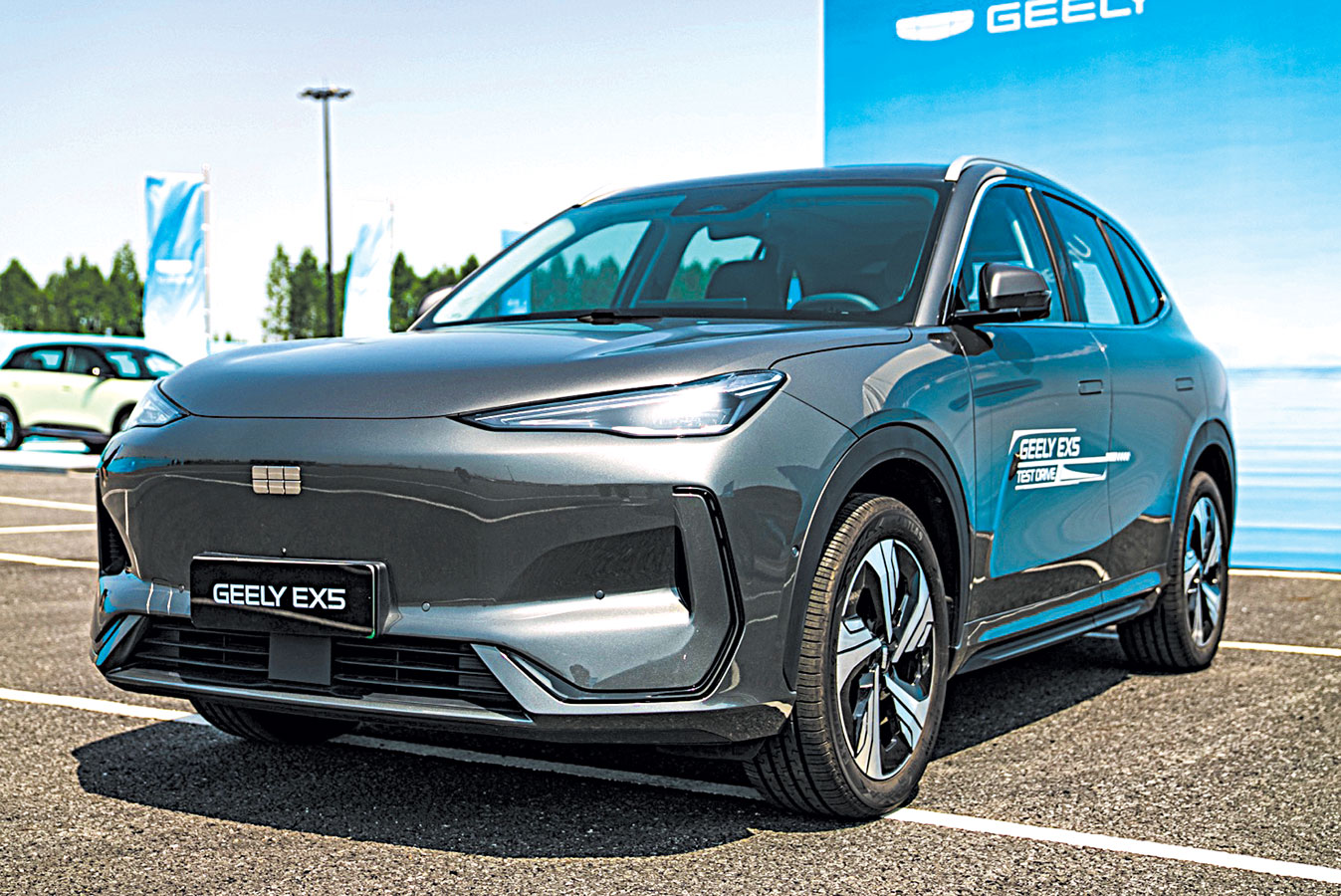
In Hangzhou, Qiantang District, international media members were granted unprecedented access to Geely’s safety technology laboratories focusing independently on body structure, pedestrian protection, air bags, crash test dummies, and sled testing. Among other things, rigorous crash tests are performed for all Geely models, including the Geely EX5 which earned five-star safety ratings from the Europ NCAP and ANCAP.

Geely will invest over CN¥2 billion in a new global safety test center, to open by the end of 2025. “This world-class facility will strengthen Geely’s innovation in automotive safety and provide even more comprehensive protection for users worldwide,” added the company.

At its headquarters, Geely offered a comprehensive view of its mobility ecosystem, which includes integrated space-air-ground technology and vehicle connectivity solutions. Global connectivity will be realized through Geespace satellite technology; Geely also showed Aerofugia’s eVTOL aircraft advancing “three-dimensional travel,” and DreamSmart glasses creating new immersive interactive experiences.

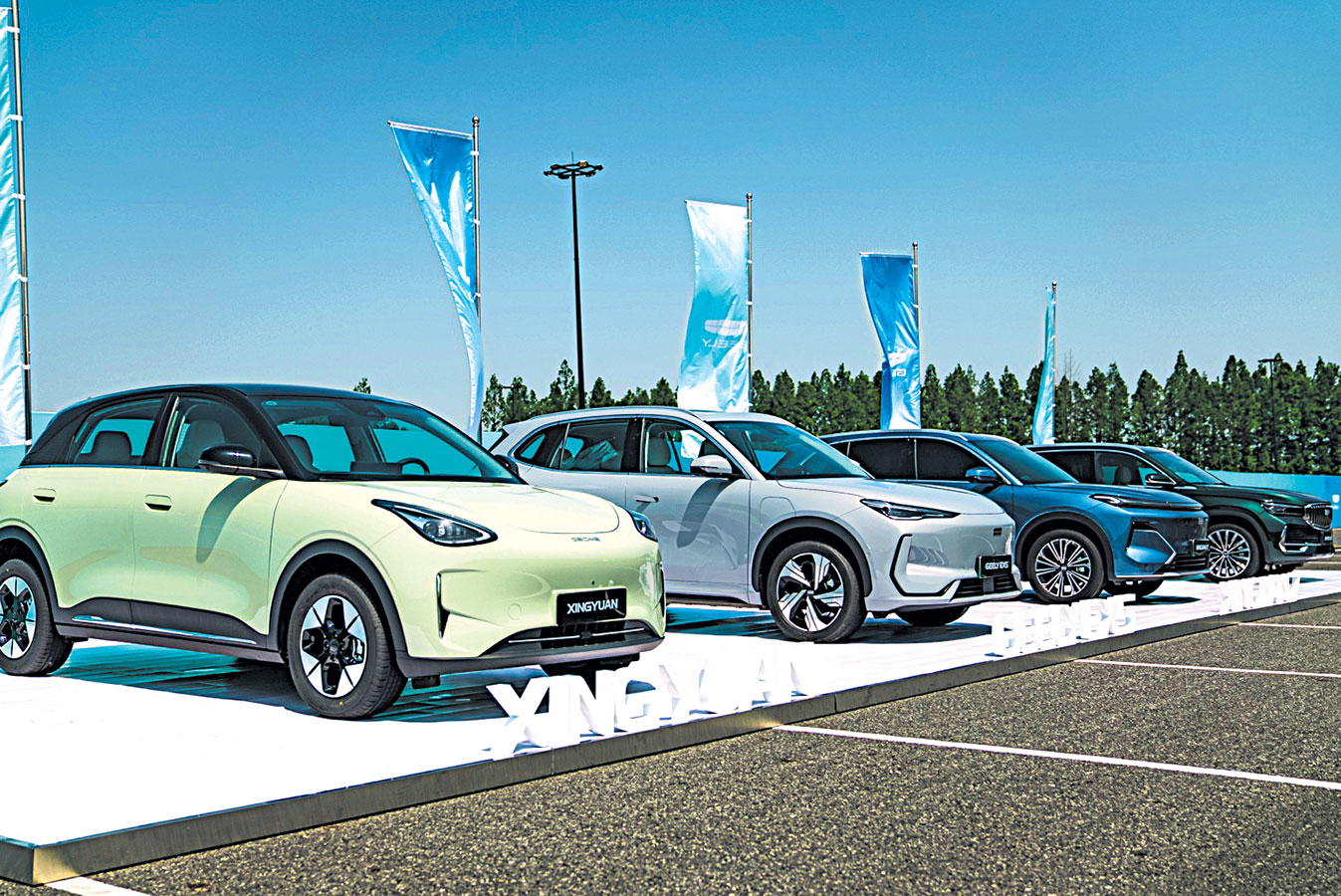
Geely conducted comprehensive test drives in Hangzhou featuring vehicles across three powertrain categories: conventional fuel, hybrid, and pure electric. Premium fuel models include the Geely Monjaro, Geely Starray, Geely Cityray, and the Geely Emgrand. In the EV lineup, EX5 took center stage, while Geely’s new-generation plug-in hybrid SUV Xingjian 7 EM-i and the A0-class pure-electric sedan Xingyuan, also made an appearance. These models comprehensively showcased the brand’s product strength and technological innovation capabilities in the global market.

Meanwhile, the Geely Geome was also previewed. This should be of interest to the Philippine market as it is slated for release “later this year or early 2026.” This compact crossover gets a minimalistic and modern take “with youthful energy.” The profile is smooth and rounded for a more aerodynamic look, while the front fascia is “clean and futuristic,” with slim, sharply styled headlights.

Anko opens second store, launches membership app

THE newly opened Anko branch at Alabang Town Center.

THERE are many affordable everyday essentials, storage solutions, and decorations to be found at Anko, the Australia-based house brand under Kmart Australia Ltd., which specializes in home and lifestyle products.

Last week, Anko opened a second branch in Alabang Town Center (ATC), Muntinlupa, six months after opening its first store at Glorietta 2 in Makati.

The May 8 launch saw guests browse through the store’s expansive kitchen and dinnerware selection, as well as its trendy items such as notebooks, pens, and other arts and crafts items. There were toys for kids and beauty and wellness products for moms — and most of the prices didn’t exceed three digits.

“It’s more laidback here in Alabang, so the products that we carry are more for that kind of market,” Paul Miranda, store manager for Anko in ATC, told BusinessWorld. “Glorietta is a hub for working commuters and Makati residents, so it’s a mixed market. Here, majority are families.”

Compared to the 1,200-square-meter Glorietta store, the ATC branch is smaller at 812 square meters. As for how it measures up to similar homeware competitors, Mr. Miranda pointed out that Anko stores have “more spacious, presentable aisles” and “display items to accommodate the touchy-feely shopping style of Filipino consumers.”

“We have been overwhelmed with the warm welcome and hospitality the Filipino community has shown us. We’ve enjoyed interacting with our customers, meeting them in the store, and learning more and more about this beautiful place we now call home,” said Rachel Turner, Anko Philippines’ country manager, at the second branch’s opening.

“Not only do we bring Anko closer to more families, but the opening of this store will bring in new jobs to the area,” she added.

MORE BRANCHES TO COME
A third branch, opening in July, will be located in TriNoma Mall. “Quezon City, where TriNoma is located, is the highest population city in the Philippines with over 2.9 million people. We are confident that our third store will resonate strongly and extend our reach further,” Ms. Turner said of the location.

She explained that their approach to expanding is “informed by listening closely to their customers.” It is also based on a joint venture with Ayala Corp., helping the brand boost its domestic presence.

Mark Robert Uy, corporate and business development head of Ayala Corp., said at the launch that they are thrilled to be part of the journey of setting up more stores, with two more in the pipeline this year aside from the ATC and TriNoma stores.

“We’re happy to see Anko as more than just another retail store. It’s a shopping experience that focuses on creating the best in-store experience while offering products at affordable everyday prices,” said Mr. Uy.

LOYALTY PROGRAM
Anko also unveiled its first-ever loyalty program called the Anko Club, available through its own mobile app. It gives members access to exclusive events such as VIP experiences, product launches, and online and in-store activations.

Upon registering, users can earn participation rewards. Member information on the app also serves as a digital pass for events.

“For now, there’s no points system. We offer more of exclusive offers. As it is, you can see that our prices are not high so there’s no need for discounts,” said Mr. Miranda on what to expect from Anko Club.

“Plus, we’re cardless, so everything is digital through the mobile app,” he added.

Club members who shop at Anko until June 7 have a chance to win a family hotel experience at Seda Hotel. Every transaction earns members one raffle entry, with no minimum spend.

Ms. Turner explained that the Anko Club app will “help better connect with customers and meet their needs.”

“We’re creating a space — online and in-store — where people can explore, be inspired, and find their perfect match,” she said.

Anko currently has branches on the ground floor of Glorietta 2, Makati City, and the ground floor of Alabang Town Center, Muntinlupa City. Its third location in TriNoma, Quezon City, will open in July. — Brontë H. Lacsamana

Why we vote the way we do — Voting behavior and economic reforms

PHILIPPINE STAR/EDD GUMBAN

By Jam Magdaleno

THIS ARTICLE was written one day before the election and the releasing of the results, but I am near certain that the outcome will be disappointing for “learned” voters. I emphasize the quotation marks because the prevalent discourse on voting in the Philippines is largely framed in two equally flawed ways: moral and educational.

For this article’s purpose, I will focus on the latter.

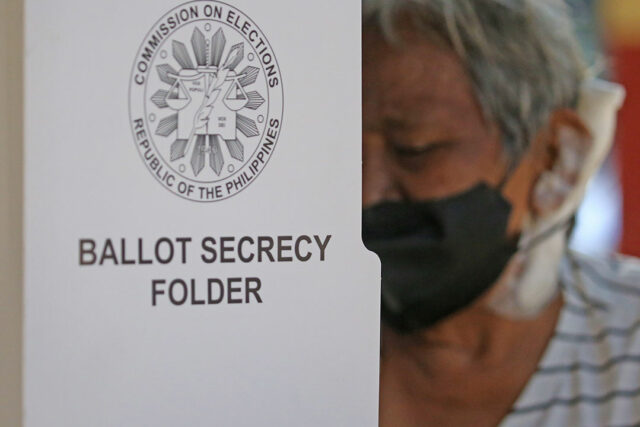
For the longest time, the government and civil society have treated voting as an educational issue. The assumption is simple: to nudge voters to vote for the “right” candidate, they must be “rightly” educated. Consistently, most government interventions focus on this. The Commission on Elections (Comelec) has media partnerships, holds campus forums and digital campaigns (like #MagpaRehistroKa), while NGOs host countless “voter education” seminars in barangays.

At the heart of these campaigns lies what behavioral theorists call the Information Deficit Model (IDM), a term popularized by linguist Robin Lakoff. It frames voters as passive recipients — as if simply supplying the “right” facts can reshape choices. This assumes a blank-slate psychology that flattens the complexity of political behavior, ignoring how class, identity, and material realities shape how voters process information in the first place.

But voting, which inherently presupposes information-seeking, is not a passive political act that happens in a vacuum. Voting behavior is not neutral, not symmetrical, not zero-sum. As Daniel Kahneman and much of cognitive science tell us, humans don’t seek “truth” — we seek relevance, and that relevance is deeply shaped by our material and economic environment.

INFORMATION SEEKING IS CLASS-DRIVEN
Class D or E voters are not irrational for voting the way they do. They are precisely rational, strategic, and making the best decision available within their constraints. For a minimum-wage earner deciding between skipping a meal or accepting a P500 vote-buying offer, that money is not corruption but an immediate policy. In fact, a 2019 Ateneo School of Government empirical study found that 34% of Filipino voters surveyed admitted they would accept money or gifts in exchange for votes, not out of ignorance, but because it “helps with daily expenses.”

In other words, vote buying works, not because voters are simply irrational and uneducated, but because they are economically immobile. Voter education campaigns ignore this. They treat class D and E voters as if they are just temporarily unaware of “better” candidates, when in truth, these voters are responding to their lived realities.

Even beyond vote buying, this shift is consistent with how Filipino voters have moved away from yellow- and left-leaning politics toward the right since the Duterte era, driven by widespread discontent with how previous administrations handled drugs, crime, and the economy. While the disinformation problem is serious, it merely builds upon — and amplifies — the existing zeitgeist of discontent among Filipinos.

WHY VOTER EDUCATION FAILS AND SOMETIMES BACKFIRES
The focus on voter education often patronizes the poor. It assumes that if we just give voters the correct information, they’ll miraculously abandon local patrons or dynasts. But these campaigns are usually designed by middle-class technocrats and strategists anyway, relying on middle-class models of communication: brochures, lectures, webinars, infographics usually in English. Even grassroot-driven campaigns, which ostensibly master the art of looking like a grassroot movement, fail to acknowledge the vast difference between the gut issues of the majority of voters (security, economic relief) and the technocrats’ idea of political progress (good governance and gender equality).

Worse, as I had previously written, this backfires by alienating voters. You cannot tell someone to “vote wisely” if your idea of wisdom ignores their hunger. You cannot ask someone to think long-term if their problem is next week’s rent. Political scientist Frederic Schaffer argues that vote buying in the Global South is often “morally reframed as patronage” — a way to establish trust in systems that otherwise exclude the poor. Studies from the J-PAL Southeast Asia Lab have shown that even well-funded deliberative campaigns had minimal effect on voter choice without corresponding changes in their economic mobility.

VOTING AND ECONOMIC REFORMS
The focus, then, must shift toward meaningful economic reform and the improvement of people’s material conditions.

Across democracies, a well-documented pattern emerges: as economies grow, so does the quality of political participation. Seymour Martin Lipset’s modernization theory long argued that prosperity — through higher incomes, education, and urbanization — lays the groundwork for stable, more accountable democracies. This view is echoed in the empirical work of Boix and Stokes in 2003, who found that as national income rises, clientelism and patronage-based politics tend to fade, giving way to more programmatic, policy-driven choices at the ballot box.

A World Bank study by Keefer and Khemani further argues that when voters are economically insecure, they favor clientelist exchanges, but as material conditions improve, political preferences shift toward long-term, policy-based governance. We’ve seen this trajectory play out in Taiwan and South Korea, where rapid industrialization in the 20th century helped dismantle the grip of patronage politics, paving the way for more robust democratic institutions and policy-centered elections.

In the Philippines, this is a long but necessary battle. Among many other reforms, it begins with addressing the malnutrition crisis, which continues to stunt Filipino children’s physical growth and cognitive development at an alarming rate. It also involves expanding property rights so that Filipinos gain a sense of security and economic agency, factors that translate into more meaningful political participation. Finally, it requires reimagining the country’s economic direction by shifting away from inward-looking, protectionist policies toward a more outward-looking, competitive economy.

Without addressing the structural roots of political behavior, the notion of an “educated” electorate remains a largely elitist aspiration — one that is detached from the daily realities that shape voter decisions. The cycle of discontent and disappointment will only persist.


Jam Magdaleno is a political and economic researcher, writer, and communications strategist. He currently serves as the head of Information and Communications at the Foundation for Economic Freedom, a policy think tank in the Philippines.

Globe Telecom Q1 profit rises 2.65% to P6.98B

BW FILE PHOTO

GLOBE Telecom, Inc. saw its first-quarter (Q1) attributable net income rise by 2.65% to P6.98 billion, driven by contributions from its e-wallet platform GCash, the Ayala-led telecommunications company said.

“Notwithstanding our first-quarter results, we remain steadfast in driving our strategic agenda forward and unlocking greater operational efficiency across the business,” Globe President and Chief Executive Officer Carl Raymond R. Cruz said in a media release on Sunday.

Globe’s first-quarter net income was fueled by equity earnings from affiliates, especially from Globe Fintech Innovations, Inc. (Mynt). Mynt, a unit of Globe, is the holding company of the e-wallet platform GCash.

To recall, Mitsubishi UFJ Financial Group (MUFG) acquired an 8% stake in Mynt, which helped offset the impact of higher depreciation, increased interest expenses, and other non-operating charges, Globe said.

Globe said Mynt expanded its user base and profitability, with Globe’s share in Mynt’s equity earnings surging to P1.8 billion in the first three months of the year, an 86% increase from the P962 million in the same period last year, which also accounts for 22% of Globe’s pre-tax net income.

Excluding one-off items, such as gains from the deemed disposal of Mynt and tower sales, Globe’s core net income would have decreased by 22% to P4.5 billion for the first quarter, compared with P5.8 billion in the same period last year.

For the first quarter, Globe’s combined revenue declined by 3.42% to P43.76 billion from P45.31 billion a year ago.

Broken down, service revenues, which account for the majority of Globe’s total topline, dropped by 3.16% to P39.85 billion from P41.15 billion previously, while non-service revenues fell by 6.25% to P3.9 billion from P4.16 billion.

Costs and expenses also surged for the period to P40.54 billion, marking an increase of 2.1% from P39.72 billion in the first quarter last year.

“While acknowledging the maturity of the telecommunications industry, we are particularly encouraged by the opportunities for growth in other significant verticals, notably the enterprise sector and the strong growth momentum of our GFiber Prepaid, all while maintaining our position as the number one mobile network in the Philippines,” Mr. Cruz said.

Globe’s capital expenditures for the period reached P8.5 billion, 38% lower than P13.7 billion last year, it said, noting that this is part of the company’s continued effort to optimize capital allocation while also maintaining strong network investments.

At present, Globe has officially turned over 6,849 out of the 7,506 towers included in its sale-and-leaseback portfolio, which generated P87.9 billion in proceeds.

Further, Globe continues to focus on the rollout of 5G, with 235 new sites deployed nationwide. To date, the company reaches 98.71% of the National Capital Region and 97% of key cities in the Visayas and Mindanao.

On Friday, shares in Globe fell by P20, or 1%, to close at P1,980 apiece. — Ashley Erika O. Jose

Two elections

PHILIPPINE STAR/EDD GUMBAN

On Easter Monday, April 21, Pope Francis passed away peacefully at 7:35 a.m. in his room at Casa Santa Marta, a Vatican guesthouse where he chose to live instead of the Apostolic Palace since his election as Pope in 2013. He had been sick for three months since February until just before Easter, when he left Rome’s Gemelli Hospital to recuperate at home.

Not only the Catholics, but most of the world was saddened by the passing of Pope Francis, who had assumed the role of unifying servant-leader to all — non-discriminatory of religion, philosophy, race or social and economic status, gender, and identity preferences — in his determination to include all in solutions for peace and harmony among peoples.

Would there be a good replacement for Pope Francis? The world was anxious.

On Wednesday, May 7, the first day of the conclave, 133 cardinals gathered in the Sistine Chapel to cast their vote to choose the 267th Roman Pontiff.

The liturgy and traditions of the Roman Catholic Church provide for the holding of a “Conclave” (cum [with]; clavis [key]), a closed-door, locked-in election of the new Pope by the College of Cardinals, those who are below 80 years old at the time of the Conclave (from the Catholic Encyclopedia, newadvent.org).

Before putting his ballot into the chalice on the altar, the Cardinal-elector swears to the truth and integrity of his vote, saying aloud in Italian: “I call as my witness Christ the Lord, who will be my judge, that my vote is given to the one whom I believe should be elected according to God.”

The votes are counted one-by-one and verified by the three-layered nine-man Committee on Elections (Comelec) appointed from among the Cardinal-electors, and read out aloud before the altar. A candidate must receive at least two-thirds of the vote in order to become the next Pope. There are four available voting sessions (lasting at least two hours each) on a Conclave Day, which may carry on for a maximum of seven days, until the attempt to get the two-thirds majority vote is achieved.

Although the voting in the Conclave is done in tight secrecy, the result after each voting session is immediately conveyed to the waiting crowds gathered at St. Peter’s Square. A failed vote would be signaled by black smoke coming out of the chimney on the roof of the Sistine Chapel. On May 8, after only four voting sessions of the Conclave, white smoke floated out of the chimney.

Habemus Papam!” (We have a Pope!)

More than 100,000 people cheered. Cardinal Dominique Mambertì appeared on the central balcony of St. Peter’s Basilica and announced the new pope’s name in Latin — Robertum Franciscum Prevost (Robert Francis Prevost). Cardinal Prevost had chosen his name to be Pope Leo XIV.

The 69-year-old pontiff presented himself to the public, dressed in the traditional white cassock, red mozetta, and white skullcap, along with the gold cross necklace and Fisherman’s ring placed on his right ring finger. He also wore a burgundy stole with ornate gold embroidery draped over his shoulders — restoring the tradition for a new Pope’s first appearance that Pope Francis dispensed with in 2013 (National Catholic Register, May 9, 2025).

La pace sia con tutti voi.” Peace be with you all.

Pope Leo XIV delivered his first “Urbi et Orbi” (To the city and to the world) address and blessing, recalling his predecessor, the late Pope Francis, who delivered his last “Urbi et Orbi” on that same balcony to bless all on Easter Sunday just hours before his death. “Allow me,” Leo said, “to follow that same blessing.”

The Pope’s election prompted an outpouring of congratulations from world leaders, who expressed eagerness to work with the pontiff on global issues. US President Donald Trump called the historic selection a great honor for the country (cnn.com, May 9). Pope Leo XIV is the first citizen of the USA to be elected Pope.

Cardinal Robert Francis Prevost was a dark horse at the Conclave, and not known by most Catholics. Not even the American clergy thought that he might be Pope — it was just in 2023 that he had been made Cardinal by Pope Francis, for his long missionary work in Peru, and after that, his assignment at the Dicastery for Bishops (the Pope’s advisory group in Rome that recommends the elevation of priests to the bishopric in dioceses).

The Catholic Bishop’s Conference of the Philippines (CBCP) held a presscon on May 9, presenting as resource speakers, the three Filipino Cardinal-electors at the Conclave that elected Pope Leo XIV: Luis Antonio Tagle, Pro-Prefect Emeritus of the Dicastery for Evangelization in Rome; Jose Advincula, current Archbishop of Manila; and Pablo Virgilio “Ambo” David, current Bishop of Kalookan.

Cardinals Advincula, Tagle, and David thanked God for giving us Pope Leo XIV — for truly, he was the choice of the Holy Spirit to guide and guard the faithful in synodality and inclusion of the Least, the Last, and the Lost in the peripheries of society.

Cardinal David set the tone by focusing on “the chimney”— the white smoke from the Conclave that signaled the strictly conscience-based selection of the new Pope by the Cardinal-electors, guided by the Holy Spirit. Yet the all-too similar questions and comments from the VIP mainstream journalists at the presscon seemed to insinuate apprehensions on the election of a “dark horse,” Cardinal Prevost, and anxieties of whether the new Pope Leo XIV can follow-through on the achievements of the late Pope Francis on peace and harmony in the world.

Were there politics in the Conclave? Cardinal David already warned against politicking and horse-betting both within the clergy and the laity (even the world leaders and interested other-faith observers). “Any participating cardinal, including those not considered papabile or front-runners, can emerge as the next pope,” said David. He played down the social media posts that had gone viral since Francis’ death about the list of his possible successors (globalnation.inquirer.net, April 24).

Cardinal Tagle was indeed played up by both mainstream and social media (and individual private speculations) as a strong, if not the strongest possible papabile, almost surely the next Pope. At the presscon, Cardinal Tagle decried the weight brought on by this unwanted over-exposure in media. In all humility, he knew he could not be Pope, for lack of capability and strength of mind and body, he said. It was also very embarrassing. He related that he was also used for AI-created advertising of medicine, food, services, and other things totally unrelated to his persona as a man of God.

There may have been politicking, maybe influencing public opinion, among interested parties to the outcome of the Conclave — some wanted the new pope to be liberal like Pope Francis was, and to continue what he had started; some wanted the new pope to be traditionalist, and temper or reverse the radical changes Pope Francis made in his dealing with issues in society that touched Canon Law and traditions. Cardinal David warned, “Don’t expect a photocopy of Pope Francis. Continuity is needed, but the direction is what is good for the world.”

Cardinal Tagle pointed out the learning points from the Conclave: the internal discipline gained from adherence to the strict rules of secrecy and isolation, and the safeguarding of the integrity of the vote. The identifying and selecting of candidates are a responsibility more than the right of the voter.

Cardinal Advincula admonished candidates (like even the papabile) to be mindful not of the honor, but of the responsibility of the position (of Pope).

“The elections in the Catholic Church are far from the elections we know in the Philippines, where there is noisy fanfare, many candidates going around to campaign, tarpaulins are being posted everywhere, and financial aid being handed out. There’s nothing like that in the papal election,” David said in an interview on GMA’s Unang Balita.

Today, May 12, mid-term elections will be held for a total of 18,320 positions in government (Philstar.com, June 26, 2024). Filipinos will vote for 12 senators who will serve for a term of six years in the 24-member Senate until 2031. All 317 seats in the House of Representatives are open, with representatives elected for a term of three years; these include the 254 seats representing geographic congressional districts and 63 seats to be apportioned among party-lists.

Local elections above the barangay level will also be held, with the following positions being contested, excluding sectoral and ex officio seats: all 82 governors and vice-governors, and 792 out of 1,038 provincial board members; all 149 city mayors and vice-mayors, and 1,690 out of 1,988 city councilors; all 1,493 municipal mayors and vice-mayors, and 11,948 out of 14,934 municipal councilors.

The Philippine National Police has officially recorded 35 election-related incidents since January, with 13 deaths occurring as a result (ABS-CBN, April 29). As of April 28, the Comelec has summoned 213 candidates due to various complaints, mostly regarding vote-buying and abuse of state resources (GMA News, April 29).

May the Holy Spirit guide the Filipino people in voting for honest and capable leaders of the country.


Amelia H. C. Ylagan is a doctor of Business Administration from the University of the Philippines.

ahcylagan@yahoo.com

BMW PHL to hold ‘Festival of Deals’ in BGC

IMAGE FROM BMW PHILIPPINES

SMC ASIA CAR DISTRIBUTORS CORP., official importer and distributor of BMW in the Philippines, will hold the “BMW Festival of Deals” from May 9 to 31 at the Bonifacio Global City (BGC) in Taguig.

Special offers on BMW vehicles will be featured, with a “premier event” within the campaign scheduled from May 16 to 18. “This flagship event promises not only an exceptional display of BMW’s latest innovations but also significant purchasing opportunities,” said SMC Asia Car Distributors Group Corp. in a release. Future BMW owners will be “immersed in the world of BMW, surrounded by the brand’s signature blend of luxury, performance, and cutting-edge technology. The festival offers a unique chance to explore a curated selection of BMW’s most desirable models up close.” Test drives will also be available.

The featured lineup, to be displayed at C1 Park, will include the BMW 318i sports sedan, BMW 520i executive sedan, BMW iX1 fully electric compact SAV, BMW X3 PHEV, and the BMW X5 PHEV. BMW product experts will be present throughout the weekend, ready to provide comprehensive information, answer questions, and assist visitors in “identifying the BMW that perfectly aligns with their lifestyle and aspirations.”

Said SMC Asia Car Distributors Corp. President Spencer Yu, “This festival is designed as an immersive experience for everyone who appreciates fine automobiles. It’s a chance to engage with our latest models, enjoy a test drive, and discover exceptional offers that make joining the BMW family even more appealing.”

The BMW Festival of Deals is open to the public, with offers to be extended at all BMW dealerships across the country: Autoallee BMW, RSA Motors Greenhills and Libis, Pampanga Premier Cars BMW, and Visayas Motor Works in Cebu.

For more information, e-mail information@bmw.com.ph or follow the official social media pages of BMW Philippines on Facebook and Instagram.

When you think of home…

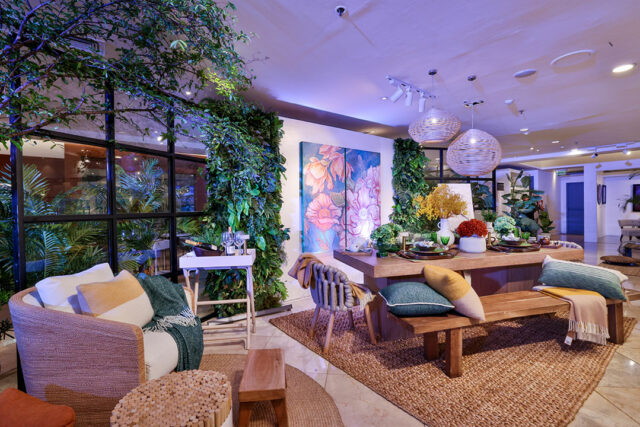
INTERIOR DESIGNER Ann Dee-Santiago’s curated “lounge-dining experience in a lanai” vignette that feels like an effortless extension of the home, is found in Rustan’s Makati.

RUSTAN’S started in the home of founders Bienvenido and Gliceria Tantoco who opened up their living room in Ermita in the 1950s. Now, they’re paying tribute to the home with the Rustan’s Designers’ Circle: a loyalty program for interior designers to be able to tap into their home department exclusives.

Rustan’s has partnered with the Philippine Institute of Interior Designers (PIID), the country’s officially recognized body of licensed interior design practitioners. A part of this partnership is displaying design vignettes of four interior designers, namely Cynthia Almario, Cyndi Fernandez Beltran, Cecil Ravelas, and Ann Dee-Santiago, at the store’s Makati flagship for a month, after launching on May 8.

Ms. Almario made a living room showcase with pieces from Poliform and Flexform, accented with pieces from Jonathan Adler. Ms. Fernandez-Beltran used items from Fornasetti to create a fusion of European and Filipino sensibilities, while Ms. Ravelas made a living and dining room vignette. Finally, Ms. Dee-Santiago made a lanai as “an effortless extension of the home.”

Jackie Avecilla, head of marketing of Rustan Commercial Corp., said about the rewards program in an interview: “They can come, they shop in Rustan’s, and they’re part of this circle where they get rewards, perks, exclusive access, and first dibs.” She added that not only licensed interior designers can take advantage of these perks (which include shopping vouchers after a certain amount is spent), but also hobbyists and decorators — so long as they sign up (for free).

“We cast it as a sort of destination for them to get their stuff,” said Michael Huang, senior vice-president for store development and expansions of Rustan Commercial Corp.

“It’s one of our top performers; it always has been,” he said of the home department. “It’s one of our departments that we’ve held very dear to us from the very beginning, since the time of my grandparents,” he said.

Mr. Huang and Ms. Avecilla highlighted brands that can only be found in Rustan’s. These include Lladró and Lalique sculptures, Christofle flatware, and Bernardaud porcelain; while mentioning that international Filipino-born designer Kenneth Cobonpue also has a space in Rustan’s.

Speaking of redecorating, the Makati flagship’s interiors have seen some sprucing up in the past five years, a project they are continuing. The beauty and the men’s floors have been improved, but the project will extend throughout the rest of the store and through its various branches. “It’s been a while since we’ve tweaked the interiors. We’re in the planning stages,” said Mr. Huang. — Joseph L. Garcia

Coconut demand seen surging from US, EU

PHILSTAR FILE PHOTO

THE PHILIPPINES needs to upgrade coconut production in the face of increased demand from the US and European Union (EU), an industry group said.

“What we are facing right now is actually a good problem; we need more coconuts to export,” United Coconut Association of the Philippines, Inc. Chairman Marco C. Reyes told an online forum organized by the Philippine Manufacturing Team on Friday.

He said that Philippine coconut exports have been growing substantially since 2021.

“From 2023 to 2024 alone, exports jumped 43%. Now it accounts for $700 million of export revenue, and it is still increasing,” he added.

He said that this makes the availability of coconuts a main concern for the industry.

“The reason is we have no competition from the US. They have their own oils — soybean oil, corn oil, and canola oil — but they are not substitutable for our coconut oil,” he added.

He said the Philippines’ long track record as supplier of coconut products to the US mitigates concerns about the 17% tariff assigned to Philippine goods, including coconut oil.

“Our 17% tariff is the lowest among all the other coconut-producing competing countries with tariffs that range from 26% to 42%,” he said.

“The Department of Trade and Industry (DTI) is negotiating with the US to bring the tariff to zero percent, because the other competing countries are also negotiating with the US to bring down their tariffs,” he added.

He said that the US reciprocal tariffs are a “temporary situation” that will not distract the industry from executing its roadmap.

“These are mostly three things: value addition, expansion of the export markets, and more investment,” he added.

In the short term, he said the industry sees a supply constraints.

“Because of El Niño and the coconut trees being really stressed, the harvest has been much lower. Many coconut trees in the Philippines are senile, so the yield now is much lower,” he said.

“The main goal now for the Philippine coconut industry, which the Philippine Coconut Authority is also aware of, is to really plant more coconut trees,” he added.

He said that exporters of coconut are also expecting an increase in orders from the EU next year.

“Most of our exports go to Europe, and by next year they will have the EU Deforestation Regulation, which heavily favors our coconut,” he said.

“We will have a lot of demand coming from the EU and the US, so we need to plant more coconuts because Indonesia, Thailand, and India are planting heavily,” he added. — Justine Irish D. Tabile

MGen unit’s 100-MW facility in Singapore set for Q2 operations

MERALCOPOWERGEN.COM.PH

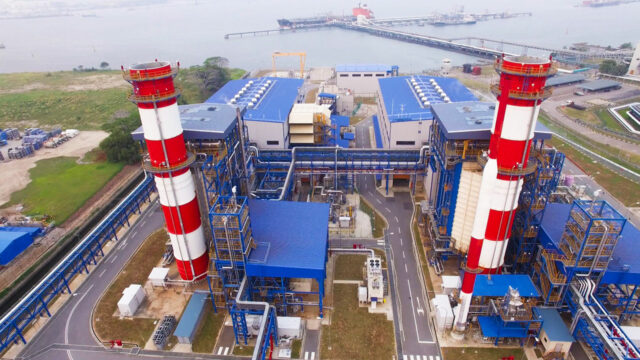
PACIFICLIGHT Power Pte. Ltd. (PLP), a subsidiary of Meralco PowerGen Corp. (MGen), is set to start operations of its 100-megawatt (MW) combined-cycle gas turbine (CCGT) in Singapore in the second quarter (Q2).

The new capacity is an expansion of PLP’s existing 840-MW CCGT facility, according to MGen President and Chief Executive Officer Emmanuel V. Rubio.

Once operational, the facility will provide dispatchable reserves.

Mr. Rubio said that PLP’s new 600-MW CCGT plant on Jurong Island is slated for commercial operations by January 2029.

PLP has engaged Mitsubishi Power as the engineering, procurement, and construction contractor for the CCGT facility.

The new plant will include a large-scale battery energy storage system and is poised to become Singapore’s largest of its kind.

“While we aim to expand the LNG (liquefied natural gas) to power business in the Philippines, we have been steadily growing our LNG capacity outside of the country,” Mr. Rubio said.

PLP, owned by MGen and Hong Kong-based First Pacific Group, is a Singapore-based power generation and electricity retail company that has been operating since 2014, generating close to 10% of the country’s demand.

Meralco’s controlling stakeholder, Beacon Electric Asset Holdings, Inc., is partly owned by PLDT Inc.

Hastings Holdings, Inc., a unit of PLDT Beneficial Trust Fund subsidiary MediaQuest Holdings, Inc., has an interest in BusinessWorld through the Philippine Star Group, which it controls. — Sheldeen Joy Talavera