Home Blog Page 1215

Trump hits Brazil with tariffs, sanctions but key sectors excluded
RAWPIXEL.COM

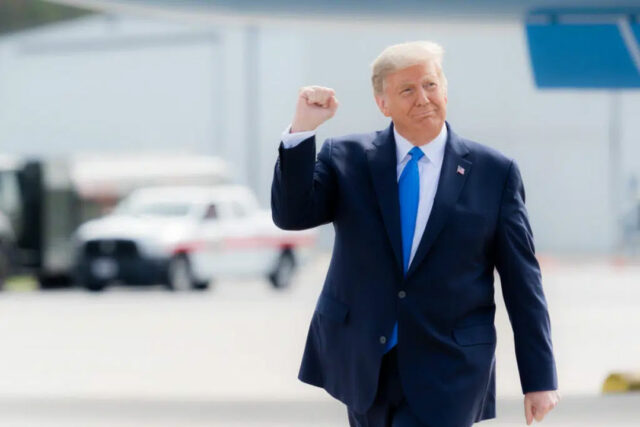
SAO PAULO/BRASILIA – U.S. President Donald Trump on Wednesday slapped a 50% tariff on most Brazilian goods to fight what he has called a “witch hunt” against former President Jair Bolsonaro, but softened the blow by excluding sectors such as aircraft, energy and orange juice from heavier levies.

Mr. Trump announced the tariffs, some of the steepest levied on any economy in the U.S. trade war, as his administration also unveiled sanctions on the Brazilian supreme court justice who has been overseeing Mr. Bolsonaro’s trial on charges of plotting a coup.

“Alexandre de Moraes has taken it upon himself to be judge and jury in an unlawful witch hunt against U.S. and Brazilian citizens and companies,” Treasury Secretary Scott Bessent said in a statement.

Mr. Bessent said Mr. Moraes “is responsible for an oppressive campaign of censorship, arbitrary detentions that violate human rights, and politicized prosecutions — including against former President Jair Bolsonaro.”

Last week, the Brazilian justice levied search warrants and restraining orders against Bolsonaro over allegations he courted Trump’s interference in his criminal case, in which he is accused of plotting to stop President Luiz Inacio Lula da Silva from taking office in 2023.

Mr. Trump’s final tariff order and the sanctions followed weeks of sparring with Lula, who has likened the U.S. president, a close ideological ally of Mr. Bolsonaro’s, to an unwanted “emperor.”

On Wednesday, Mr. Lula and his government closed ranks behind Moraes, calling the U.S. sanctions “unacceptable.”

“The Brazilian government considers the use of political arguments to defend the trade measures announced by the U.S. government against Brazilian exports to be unjustifiable,” it said in a statement.

Mr. Lula added that Brazil was willing to negotiate trade with the U.S., but that it would not give up on the tools it had at hand to defend itself, hinting that retaliation was possible.

Still, Mr. Trump’s tariff order threatened that if Brazil were to retaliate, the U.S. would also up the ante.

DIPLOMACY AT WORK

Despite Mr. Trump’s effort to use the tariffs to alter the trajectory of a pivotal criminal trial, the range of exemptions came as a relief for many in Brasilia, who since Mr. Trump announced the tariff earlier this month had been urging protections for major exporters caught in the crossfire.

“We’re not facing the worst-case scenario,” Brazilian Treasury Secretary Rogerio Ceron told reporters.

The new tariffs will go into effect on August 6, not on Friday as Trump announced originally.

Mr. Trump’s executive order formalizing a 50% tariff excluded dozens of key Brazilian exports to the United States, including civil aircraft, pig iron, precious metals, wood pulp, energy and fertilizers.

Planemaker Embraer, whose chief executive has met with officials in Washington and U.S. clients in recent days to plead its case for relief, said an initial review indicated that a 10% tariff imposed by Mr. Trump in April remains in place, with the exclusion applying to the additional 40%.

The exceptions are likely a response to concerns from U.S. companies, rather than a step back from Trump’s efforts to influence Brazilian politics, said Rafael Favetti, a partner at political consultancy Fatto Inteligencia Politica in Brasilia.

“This also shows that Brazilian diplomacy did its work correctly by working to raise awareness among U.S. companies,” he said.

Brazil’s minister of foreign affairs, Mauro Vieira, said he met with U.S. Secretary of State Marco Rubio on Wednesday to express the nation’s willingness to discuss tariffs after negotiations stalled in June, though he stressed Mr. Bolsonaro’s legal troubles were not up for debate.

It remains unclear what Brazilian authorities “are bringing to the negotiating table to, for instance, open the domestic market,” Goldman Sachs said in a note to clients.

IMPACT SMALLER THAN EXPECTED

The effective tariff rate on Brazilian shipments to the U.S. should be around 30.8%, lower than previously expected due to the exemptions, according to Goldman.

Oil shipments to the U.S., which had been suspended, are set to restart after being spared, lobby group IBP said. Meanwhile, mining lobby Ibram said the exemptions covered 75% of mining exports.

However, it was still too soon to celebrate, said former Brazilian trade secretary Welber Barral, estimating that Brazil exports some 3,000 different products to the United States.

“There will be an impact,” Mr. Barral said.

Trump’s tariff exemptions did not shield two of Brazil’s key exports to the U.S., beef and coffee.

Meatpackers expect to log $1 billion in losses in the second half of the year on the new tariffs, lobby group Abiec, which represents beef producers including JBS and Marfrig said.

Coffee exporters will also continue to push for exemptions, they said in a statement.

The government said it was readying measures to protect Brazil’s businesses and workers.

If Brazil were to retaliate against Mr. Trump’s measures, that “would generate a larger negative impact” on activity and inflation, Goldman said.

“The political inclination may be to retaliate, but exporters and business associations have been urging the Brazilian administration to engage, negotiate and de-escalate.” — Reuters


Lenovo Philippines launches latest Yoga, Legion laptops

LENOVO PHILIPPINES

LENOVO Philippines on Wednesday launched its latest AI (artificial intelligence)-powered Yoga and Legion laptops that seek to boost user productivity and deliver improved gaming and entertainment experiences. 

The laptops are the 10th iteration of the Yoga and Legion devices and are in line with the brand’s goal to constantly evolve amid rapid technological changes, Lenovo Philippines President and General Manager Michael Ngan said during the launch. 

“These 2025 Lenovo Yoga and Legion devices are more than upgrades — they represent the next era of personal computing,” Mr. Ngan said. “We’re giving Filipinos devices that are AI-ready, creatively freeing, and built to match how we work, play, and express ourselves today.”

Lenovo’s newest lineup of Yoga devices include the Yoga Slim Aura 7i Edition 14ILL0, Yoga Slim 7i 2-in-1 14ILL10, Yoga Pro 7i Aura Edition 14IAH10, Yoga Slim 9i 14ILL10, Yoga Book 9i 14IAH10, and the Yoga Pro 9i Aura Edition 16IAH10.

The Yoga Slim Aura 7i Edition 14ILL0, which is priced starting at P76,995, is powered by Intel Core Ultra processors and features a vibrant OLED display.

Meanwhile, the Yoga Slim 7i 2-in-1 14ILL10 has a 360° hinge, touch-enabled display, and longer battery life. It is priced at P81,995.

Designed for creators, the Yoga Pro 7i Aura Edition 14IAH10 features a PureSight Pro display with NVIDIA RTX graphics and military-grade durability. Prices for the device start at P94,995.

The Yoga Slim 9i 14ILL10, which features a 14-inch 4K OLED display, a 98% screen-to-body ratio, and the world’s first camera-under-display, costs P130,995.

The Yoga Book 9i 14IAH10 is a dual-screen, 14-inch OLED laptop that is designed for multitaskers and creatives. It is priced at P145,995.

Lastly, the Yoga Pro 9i Aura Edition 16IAH10, which Lenovo said is the most powerful device in the Yoga lineup, is priced at P152,995. It features a high refresh rate display and NVIDIA GeForce RTX graphics suitable for heavy creative workloads.

Meanwhile, Lenovo’s Legion Gen 10 devices are “uniquely designed to deliver AI-tuned performance, next-generation cooling and stunning visuals through pure-site OLED displays,” said Sheilla Valencia, product manager at Lenovo Consumer Philippines.

Lenovo’s newest Legion devices include the Legion 5i 15IRX10, Legion 7i 16IAX10, Legion Pro 5i 16IAX10H, and the Lenovo Pro 7i 16IAX10H.

The Legion 5i 15IRX10’s prices start at P114,995. Powered by Intel Core i7 processors and the NVIDIA RTX graphics, this device aims to ensure smooth, reliable gameplay.

The Legion 7i 16IAX10, priced at P145,995, is built for gamers and creators in need of speed and visual clarity. Likewise, Legion Pro 5i 16IAX10H, which costs P152,995, features enhanced thermals for an elite gaming experience.

Lastly, the Lenovo Pro 7i 16IAX10H, has a thermal design power of 285 watts, fast refresh rates, and advanced AI engine support. It is priced at P285,995. — Beatriz Marie D. Cruz

Franchise Negosyo Para sa Region VII (Cebu) opens tomorrow

The much-anticipated “Franchise Negosyo Para sa Region VII (Cebu)” is set to open its doors tomorrow, Aug. 1, 2025, at the Mountain Wing Atrium, SM Seaside City Cebu. Organized by the Philippine Franchise Association (PFA), this premier event aims to empower aspiring entrepreneurs and expand franchise opportunities throughout the Visayas region.

Expo visitors will have the chance to explore over 60 successful brands and connect directly with franchisors and service providers. The two-day event, which is free and open to the public, will feature a series of seminars and forums designed to provide valuable insights into the world of franchising.

Highlights of the Event:

  • How to Invest in the Right Franchise: A free seminar offering essential guidance for would-be franchisees on making informed investment decisions. This will be held at the stage area of the event.
  • Franchise Forum: “Expanding Your Business Through Franchising”: A dynamic forum featuring two successful local franchisors who will be sharing their experiences on growing their businesses through franchising. This will also be held at the stage area of the event.
  • How to Franchise Your Business: A paid seminar on August 2, 2025, at the Summit Galleria Hotel, specifically for aspiring franchisors who want to learn how to grow their own business through franchising.

“We are always looking forward to holding our yearly regional event here at the vibrant and dynamic city of Cebu,” said PFA Chairman Chris Lim, CFE.

Skip the lines. Register online for FREE: https://www.pfa.org.ph/event-details/cebu2025

This event is not possible without the help and support of the following partners: Provincial Government of Cebu, City Government of Cebu, DTI Region VII, OWWA Region VII, Cebu City Chamber of Commerce, Mandaue Chamber of Commerce, SM Supermalls, SM Seaside City Cebu, PLDT Enterprise, GCash, Carrier, BPI, Grainsmart Café, UnionBank, Chong’s Chicken Inasal, Jonie’s Sizzlers + Roast, Phoenix LPG, Converge, Villa Tuna,  Mayet Dela Rosa Fine Jewelry, K2 Pharmacy, Francorp, U-Franchise, and Qualiplus.

Media Partners: NET 25 Eagle Broadcasting Corp., BusinessWorld, Business Mirror, Mega Mobile (Inquirer Mobile), Inquirer Group of Companies, Asia Journal / Balikbayan Magazine, Philstar Media Group, Philippine Daily Inquirer, The Freeman, Business News Asia, SMNI, RMA News, Cebu Online News Press Corps, Cebu Lifestyle Channel, and Sugbo Highlights.

Franchise Negosyo Para sa Region VII (Cebu) EXPO DIRECTORY:

https://drive.google.com/drive/folders/10qal08bGSFBzGbHjVlCqyE4aFApfzFgV.


Spotlight is BusinessWorld’s sponsored section that allows advertisers to amplify their brand and connect with BusinessWorld’s audience by publishing their stories on the BusinessWorld Web site. For more information, send an email to online@bworldonline.com.

Join us on Viber at https://bit.ly/3hv6bLA to get more updates and subscribe to BusinessWorld’s titles and get exclusive content through www.bworld-x.com.

Meta shares jump as AI fuels ad sales, outweighing big capital costs

Meta Platforms forecast third-quarter revenue well above analysts’ estimates on Wednesday, as artificial intelligence once more powered its core advertising business, sending its shares soaring 11% in extended trading.

The bumper results could ease investor worries about the social media giant’s frenzied pace of spending, at least for now, as it seeks to change Wall Street’s impression that it lags rivals including Microsoft and Alphabet’s Google in the AI race.

Meta raised the bottom end of its annual capital expenditures forecast by $2 billion, to a range of between $66 billion and $72 billion, as CEO Mark Zuckerberg told analysts on a call that AI was making big leaps possible in its business that makes money by selling ads on Facebook and Instagram.

Rising costs to build out data center infrastructure and employee compensation costs – Meta has been poaching researchers with mega salaries – would push the 2026 expense growth rate above the pace in 2025, Meta said. The company is planning higher capital expenses next year as well.

“I think there are all these questions that people have about what are going to be the timelines to get to really strong AI or superintelligence … we’ve observed the more aggressive assumptions, or the fastest assumptions, have been the ones that have most accurately predicted what would happen. I think that that just continued to happen over the course of this year too,” Mr. Zuckerberg said on a conference call with analysts.

Investors have largely backed Mr. Zuckerberg’s pursuit of superintelligence – a hypothetical concept where AI surpasses human intelligence in every possible way – pushing the company’s stock up nearly a fifth so far this year.

Meta’s post-market stock gains on Wednesday, along with those of Microsoft’s, added a combined half a trillion dollars in stock market value.

Microsoft said on Wednesday it expects capital expenditure to exceed $30 billion in its fiscal first quarter, far above analysts’ estimate of $23.75 billion. At that pace, the company would spend roughly $120 billion on AI this fiscal year.

The update came a week after Google parent Alphabet raised its capital spending plans for the year to about $85 billion and signaled more to come next year to meet surging demand for AI services.

‘PUSH VERY AGGRESSIVELY’
For the third quarter, Meta said it expected total revenue of $47.5 billion to $50.5 billion, compared with analysts’ average estimate of $46.15 billion, according to data compiled by LSEG. Its third-quarter guidance assumed a 1% benefit from a weak dollar. It said year-over-year revenue growth in the fourth quarter would be slower than in the third quarter.

“AI-driven investments into Meta’s advertising business continue to pay off … But Meta’s exorbitant spending on its AI visions will continue to draw questions and scrutiny from investors who are eager to see returns,” Emarketer senior analyst Minda Smiley said.

She noted that the company’s earnings “come against a backdrop of regulatory challenges that Meta faces in the U.S. and abroad, adding more uncertainty to its future.”

U.S. antitrust regulators have sued Meta to force it to restructure or sell Instagram and WhatsApp, claiming the company sought to monopolize the market for social media platforms used to share updates with friends and family. With court papers due in September, the judge overseeing the case is unlikely to rule until later this year at the earliest.

Mr. Zuckerberg testified in April that the company was initially slow to recognize the competitive threat of TikTok, and that Meta has over the years tried to build many apps that never gained traction.

The founder-CEO has pledged to spend hundreds of billions of dollars to build massive AI data centers, having shelled out $14.3 billion for a stake in startup Scale AI and poached its 28-year-old billionaire CEO, Alexandr Wang.

After a lackluster reception for its Llama 4 model that led to staff departures, Meta has tried to revitalize its AI push by sparking a high-stakes talent war in which it has doled out more than $100 million in pay packages to researchers from rival firms.

“We’re just going to push very aggressively on all of that,” Mr. Zuckerberg said on the conference call, referring to Meta’s AI strategy.

In the second quarter, AI-powered ad recommendations drove about 5% more conversions on Instagram and 3% on Facebook, the company said. Ad conversions refer to a user making a purchase or a commitment after clicking or viewing an ad.

The tech giant recently introduced an AI-driven image-to-video ad creation tool under its Advantage+ suite, allowing marketers to generate video ads from static images.

Meta reported revenue of $47.52 billion for the quarter ended June 30, which surpassed analysts’ average estimate of $44.80 billion. Profit per share of $7.14 for the second quarter also exceeded estimates of $5.92.

Instagram, whose Reels product competes with ByteDance’s TikTok and YouTube Shorts for ad dollars in the popular short video format, is set to account for more than half of Meta’s ad revenue in the U.S. this year, according to eMarketer. — Reuters

Australia, UK leaders discuss Gaza crisis amid Palestinian state recognition plans

A view shows houses and buildings destroyed by Israeli strikes in Gaza City, Oct. 10, 2023. — REUTERS

SYDNEY – Australian Prime Minister Anthony Albanese said on Thursday that he had discussed the crisis in Gaza with his UK counterpart, Keir Starmer, and reiterated his government’s strong support for a two-state solution for Israel and the Palestinians.

Mr. Starmer this week said Britain was prepared to recognize a Palestinian state in September at the United Nations General Assembly in response to growing public anger over the images of starving children in Gaza.

Australia has not yet made a formal decision to recognize Palestine though Mr. Albanese supports Israel’s right to exist within secure borders and Palestinians’ right to demand their own state.

In a statement, Mr. Albanese said they agreed on the importance of using international momentum to secure a ceasefire, the release of all Israeli hostages and the acceleration of aid. They also want to ensure militant group Hamas does not play a role in a future Palestinian state.

Some of Israel’s closest allies, including France and Canada, have indicated they would recognize a Palestinian state amid growing international outrage over the dire humanitarian crisis in Gaza. A global hunger monitor has warned that a worst-case scenario of famine is unfolding in the enclave.

Israel has criticized France, Britain and Canada, saying their decision will reward Hamas.

Australian Treasurer Jim Chalmers on Thursday said the treatment of hostages and any involvement of Hamas in a future Palestinian state remained major obstacles for Australia but added the government would push for a two-state solution.

“It’s a matter of when, not if, Australia recognizes a Palestinian state … but I don’t want to put a time frame on it,” Mr. Chalmers told ABC News. — Reuters

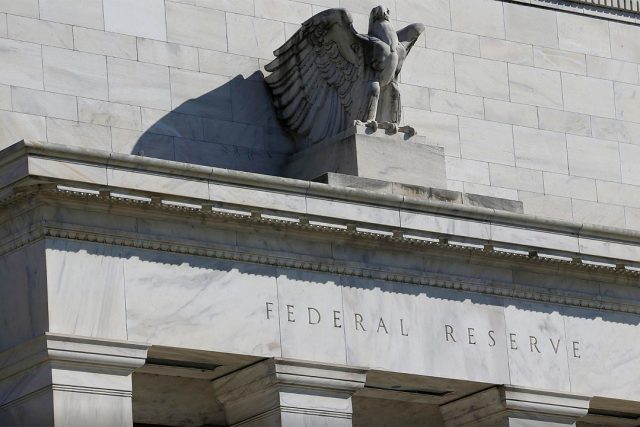
Fed leaves rates steady despite Trump pressure, gives no hint of September cut

REUTERS

WASHINGTON – The US central bank held interest rates steady on Wednesday and Federal Reserve Chair Jerome Powell’s comments after the decision undercut confidence that borrowing costs would begin to fall in September, possibly stoking the ire of President Donald Trump who has demanded immediate and steep rate relief.

Powell said the Fed is focused on controlling inflation – not on government borrowing or home mortgage costs that Trump wants lowered – and added that the risk of rising price pressures from the administration’s trade and other policies remains too high for the central bank to begin loosening its “modestly restrictive” grip on the economy until more information is collected.

While there will be two full months of data before the Fed’s September 16-17 meeting, Powell said the central bank was still in the early stages of understanding how Trump’s rewrite of import taxes and other policy changes will unfold in terms of inflation, jobs and economic growth.

“You have to think of this as still quite early days,” Powell said in a press conference after the release of the Fed’s latest policy statement. “There’s quite a lot of data coming in before the next meeting. Will it be dispositive? … It is really hard to say.”

Those comments, and others that placed the burden on upcoming data to convince policymakers that lower rates were warranted, led investors to reduce the probability of a rate cut in September to less than 50%, after entering this week’s two-day Fed meeting at nearly 70%. Treasury yields rose while the S&P 500 and Dow Jones Industrial Average indexes closed marginally lower.

Powell “made clear that he thinks the Fed has room to hold the fed funds rate steady for a period of time and wait and see how much tariffs affect inflation,” said Bill Adams, chief economist at Comerica Bank, projecting that the central bank won’t cut rates until its last meeting of the year in December.

“If the unemployment rate holds steady and tariffs push up inflation, it will be hard to justify a rate cut in the next few months.”

The latest policy decision was made by a 9-2 vote, what passes for a split outcome at the consensus-driven central bank, with two Fed governors dissenting for the first time in more than 30 years.

Trump has given Powell the pejorative nickname “Too Late” for his refusal to cut rates, but the Fed chief on Wednesday said his hope was to be right on time when the decision is made to lower borrowing costs, neither moving so soon that inflation reemerges, or waiting so long that the job market slides and the unemployment rate rises. Indeed, Powell said the fact that the Fed isn’t discussing rate hikes could be seen as a willingness to overlook some of the expected impact of tariffs.

“If you move too soon, you wind up not getting inflation all the way fixed … That’s inefficient,” Powell told reporters. “If you move too late, you might do unnecessary damage to the labor market … In the end, there should be no doubt that we will do what we need to do to keep inflation controlled. Ideally, we do it efficiently.”

The data since the Fed’s June 17-18 meeting has given policymakers little reason to shift from the “wait-and-see” approach they have taken on interest rates since Trump’s January 20 inauguration raised the possibility that new import tariffs and other policy shifts could put upward pressure on prices.

Inflation is about half a percentage point above the Fed’s 2% target and has shown signs of increasing as prices of some heavily imported goods begin to rise, a process Powell said is expected to continue. As of June, Fed policymakers at the median expected inflation to rise further and end the year at about 3%.

New inflation data for June will be released on Thursday, and a key jobs report for the month of July will follow on Friday, part of the data Powell said policymakers will evaluate as they debate a possible rate cut in September.

Earlier on Wednesday, the US government reported that economic growth rebounded more than expected in the second quarter, but declining imports accounted for the bulk of the improvement and domestic demand rose at its slowest pace in 2-1/2 years.

‘THOUGHTFULLY ARGUED’

Along with Powell’s comments, the Fed’s new policy statement also gave little hint that rates were likely to fall soon, particularly with an unemployment rate that has stabilized around 4% as weaker hiring trends are offset by slowing growth in the labor force due to Trump’s immigration policies.

“The unemployment rate remains low, and labor market conditions remain solid. Inflation remains somewhat elevated,” the central bank said after voting to keep its benchmark overnight interest rate steady in the 4.25%-4.50% range for the fifth consecutive meeting.

The two dissents came from Fed Vice Chair for Supervision Michelle Bowman and Governor Christopher Waller, who has been mentioned as a possible nominee to replace Powell when the Fed chief’s term expires next May. Bowman and Waller, both appointed to the board by Trump, “preferred to lower the target range for the federal funds rate by one quarter of a percentage point at this meeting,” the Fed’s policy statement said.

Powell characterized their opposition to the policy decision as part of a debate that was “argued, very thoughtfully … all around the table,” but with a majority of policymakers still reluctant to cut rates without more inflation data in hand.

A bipartisan figure who was appointed to the Fed’s board by former President Barack Obama and later promoted to the top job by Trump, Powell voted to hold rates steady, as did three other governors and the five Fed regional bank presidents who currently hold a vote on the FOMC. The Fed’s regional bank presidents are hired by local boards of directors who oversee the Fed’s 12 regional institutions.

Governor Adriana Kugler was absent and did not vote.

Dissenting members of the FOMC often release statements explaining their vote on the Friday following Fed meetings. — Reuters

PHL debt hits record-high P17.27T

REUTERS/THOMAS WHITE/ILLUSTRATION

THE NATIONAL GOVERNMENT’S (NG) outstanding debt jumped to a fresh high P17.27 trillion as of end-June, data from the Bureau of the Treasury (BTr) showed.

The latest data from the BTr showed outstanding debt rose by 11.5% from P15.48 trillion in the same month in 2024.

Despite hitting a fresh high, the Treasury said outstanding debt “remains sustainable.”

National Government outstanding debt

Month on month, NG debt inched up by 2.1% from P16.92 trillion in May due to “strong investor demand for government securities,” the BTr said.

NG debt is the total amount owed by the Philippine government to creditors such as international financial institutions, development partner-countries, banks, global bondholders and other investors.

The bulk or 69.2% of the total debt was owed to domestic creditors, while the rest was owed to foreign creditors.

Domestic debt, which is composed of government securities, increased by 13% to P11.95 trillion as of end-June from P10.57 trillion in the same month last year.

Month on month, domestic borrowings rose by 1.4% from P11.78 trillion at end-May.

The BTr said it prioritizes domestic borrowings because it is “consistent with the government’s goal to boost the local capital market while lowering foreign exchange risks and building investor trust in Philippine-issued securities.”

On the other hand, external debt rose by 8.3% to P5.32 trillion as of end-June from P4.91 trillion a year ago. It also went up by 3.5% from P5.14 trillion in the previous month.

Foreign debt was composed mainly of P2.71 trillion in government securities and P2.6 trillion in loans.

External debt securities consisted of P2.29 trillion in US dollar bonds, P252 million in euro bonds, P59.32 billion in Japanese yen bonds, P56.38 billion in Islamic certificates and P54.77 million in peso global bonds.

As of end-June, the NG-guaranteed obligations “remained stable” and inched up by 0.4% to P345.11 billion from P343.65 billion a year ago.

“The year-to-date decline of P4.33 billion since end-2024 highlights continued efforts to manage contingent liabilities while supporting essential sectors,” the BTr said.

Month on month, it also increased by 0.4% from the end-May level of P343.58 billion.

“After the NG released a statement effectively raising the debt ceiling for the country, the new inflow of borrowings seems to be in line with their goal of further increasing their spending to drive growth and development,” Reinielle Matt M. Erece, an economist at Oikonomia Advisory and Research, Inc., said in a Viber message.

Earlier this month, Palace Press Officer Clarissa A. Castro said the Department of Finance  considers 70% of gross domestic product (GDP) to be the international threshold for sustainable borrowing, as opposed to the 60% rule-of-thumb that multilateral banks often hold developing countries to.

NG debt as a share of GDP rose to 62% at the end of the first quarter, the highest in 20 years. This is a significant jump from the 60.7% posted at the end of 2024.

“The National Government’s prudent debt management approach strategy reflects the Marcos, Jr. administration’s commitment to safeguarding fiscal sustainability, supporting inclusive growth, and ensuring that every peso borrowed is used to build a stronger economy for the Filipino people,” the BTr said.

The NG’s outstanding debt is projected to reach P17.35 trillion by end-2025. — A.R.A.Inosante

Trade deficit narrows to $3.95 billion in June

Workers unload sacks of rice from a trailer truck. The Philippines posted a trade deficit of $3.95 billion in June. — PHILIPPINE STAR/MIGUEL DE GUZMAN

THE Philippines’ trade-in-goods deficit narrowed to $3.95 billion in June, as double-digit export growth was driven by frontloading in the run-up to higher US tariffs, the Philippine Statistics Authority (PSA) said on Wednesday.

Preliminary data from the PSA showed the country’s balance of trade in goods — the difference between the values of exports and imports — stood at a $3.95-billion deficit in June, slimmer than the $4.34-billion gap a year earlier. It was the widest trade deficit since the $3.97-billion gap seen in April.

Month on month, the trade gap widened from the revised $3.63-billion deficit in May.

Philippine Merchandise Trade Performance (June 2025)

Outbound shipments of Philippine-made goods jumped by 26.1% year on year to $7.02 billion in June, marking the sixth straight month of annual expansion. This was also the fastest growth in exports since 28.2% in April 2024.

Month on month, exports slid by 4% from $7.31 billion in May. Export receipts for June were also the lowest since $6.78 billion in April.

On the other hand, the value of imports picked up 10.8% year on year to $10.98 billion in June from $9.9 billion in the same month a year ago.

The growth in imports was the fastest since 17.8% logged in March.

Month on month, imports inched up by 0.3% from $10.95 billion in May.

For the first semester, the trade deficit narrowed to $23.97 billion from the $25.06-billion deficit a year ago.

The country’s balance of trade in goods has been in the red for over a decade or since the $64.95-million surplus in May 2015.

In the January-to-June period, exports increased by 13.2% to $41.24 billion, while imports rose by 6% to $65.22 billion.

Pantheon Macroeconomics Chief Emerging Asia Economist Miguel Chanco said in a research note that trade was “flattered hugely by base effects in June,” as exports and imports saw a decline last year.

“The widening of the trade deficit would’ve been more pronounced if not for the still-favorable seasonal effects in play, particularly on the export side,” he said.

FRONTLOADING
In a note, Chinabank Research said exports grew faster in June amid signs of frontloading by US importers due to uncertainty over tariffs.

US President Donald J. Trump in April announced a 17% “reciprocal tariff” on Philippine goods, but implementation was paused until July. Earlier this month, Mr. Trump set a 19% tariff on Philippine goods after a meeting with Philippine President Ferdinand R. Marcos, Jr. It will take effect on Aug. 1.

“Shipments to the US — the Philippines’ top export market — surged (+35.2%), suggesting some frontloading by US importers before higher US tariffs take effect, alongside some base effects (i.e., exports to the US fell 19.8% in June 2024),” Chinabank Research said.

In June, the United States was the top destination for Philippine-made goods at $1.22 billion (17.3% share). It was closely followed by Hong Kong ($1.065 billion or a 15.2% share), Japan ($974.8 million or a 13.9% share), and China ($733.99 million or a 10.5% share).

However, Mr. Chanco pointed out the month-on-month decline in exports in June was caused by the “broad-based pullback in demand from a number of key markets, namely, Japan (-10.1%), Hong Kong (-7.6%), and China (-1.6%).”

By major type of goods, exports of manufactured goods went up by 27.3% year on year to $5.53 billion in June. This made up the bulk of total outbound sales during the month.

Electronic products, which accounted for more than half of exports and 70.3% of manufactured goods, rose by 30% to $3.89 billion.

Semiconductors, which made up a little over 40% of exports and 74% of electronic products, climbed by 24.6% year on year to $2.89 billion.

“Month on month, however, semiconductor exports were flat, underscoring the sector’s fragile recovery. A risk is the potential imposition of US tariffs on currently exempt semiconductors, depending on the result of the US’ national security probe into chip imports,” Chinabank Research said.

SILVER LININGS
Meanwhile, Mr. Chanco said there are a few silver linings in the import data, “which is a far more important health-check for the Philippines’ domestic demand driven economy.”

“Specifically, the recovery in previously subdued capital goods imports is going from strength to strength… with their continued surge in June masking a poor month for consumer goods and purchases of raw materials and intermediate goods,” he said.

PSA data showed imports of capital goods grew by 31.1% to $3.71 billion in June.

Chinabank Research said the surge in capital goods was “driven by a sharp rise in telecommunication equipment and electrical machinery (+30.4%), and transport-related assets such as aircraft, ships and boats (+702.4%).”

“This indicates that domestic service businesses remain optimistic even in the face of uncertainties,” it added.

Imports of raw materials and intermediate goods inched up 2.9% to $3.67 billion in June.

“Demand for consumer goods held firm (+13.1%), with household consumption benefiting from low and stable inflation and robust labor market conditions. The country’s pledge to slash tariffs on automobiles from the US may contribute to the increase in this category moving forward,” Chinabank Research said.

By commodity group, electronic products, which accounted for more than a fifth of total imports, went up by 14.9% to $2.56 billion in June.

Orders of semiconductors, which accounted for 70% of electronic products and 16.3% of total imports, rose 22.8% year on year to $1.79 billion in June

China remained the main source of imported products, which accounted for 28.2% of the total or $3.1 billion. Japan followed with a 7.9% share or $870.15 million and South Korea’s 7.8% share or $853.26 million.

Ateneo de Manila University economics professor Leonardo M. Lanzona said the trade data showed strong growth in exports to other markets which could help offset a potential slowdown in demand from the US.

“The Philippines appears to be maintaining strong growth despite trade headwinds, suggesting domestic demand and other sectors are compensating for trade challenges,” Mr. Lanzona said. “It is recommended then that we strengthen the domestic economy at least for now but make sure that this leads to greater exports later.”

The Development Budget Coordination Committee in June raised the export growth assumption for this year to 5% from 3%. It lowered the import growth assumption to 2% from 4%. — Pierce Oel A. Montalvo

DoF warns of P5-B revenue loss if travel tax is eliminated

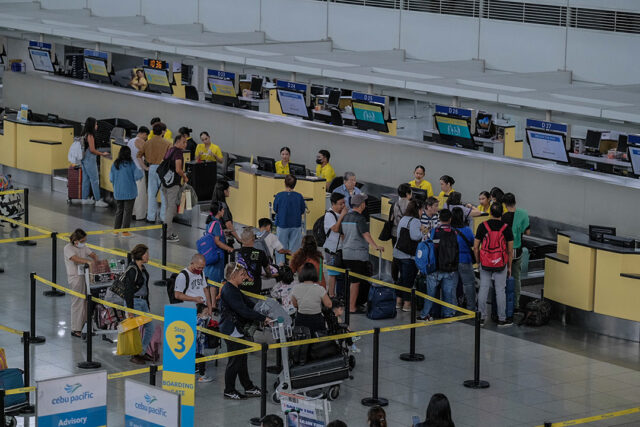
Travelers wait to check in at a counter at the Ninoy Aquino International Airport Terminal 3. — PHILIPPINE STAR/RYAN BALDEMOR

By Aubrey Rose A. Inosante, Reporter

ANALYSTS are urging the Philippine government to abolish the “outdated” travel tax, but the Department of Finance (DoF) has warned this could lead to as much as P5.1 billion in revenue losses.

In a statement sent to BusinessWorld, the DoF said it is reviewing Senate Bill (SB) No. 424, which seeks to remove the travel tax imposed on individuals leaving the Philippines via international flights.

“Highly preliminary (estimates show the) removal of travel tax would have cost the government around P5.1 billion in 2023,” the DoF said via Viber message on Friday.

“We will be projecting 2025 onwards and the distributional impact,” the DoF said.

Senator Alan Peter S. Cayetano, author of SB 424, has estimated P4 billion in foregone revenue from the removal of the travel tax. However, he expects the government to gain around P299 billion through increased tourism and spending.

The travel tax was first imposed under Republic Act No. 1478 in 1956 and later amended through Presidential Decree No. 1183, issued by then-President Ferdinand E. Marcos in 1977.

The government collects a travel tax of P1,620 ($28.35) from economy air passengers and P2,700 ($47.24) from first class air passengers.

Exempted from paying the travel tax are overseas Filipino workers (OFW), Filipino permanent residents abroad who stayed less than a year in the Philippines, and children aged two years and below.

“Abolishing the travel tax is a bold move, people-first move. It empowers more Filipinos to explore, spend, and stimulate the economy. We may lose roughly P4 billion in tax, but we stand to gain close to P300 billion in tourism and local business growth. It’s a smart trade-off,” Reyes Tacandong & Co. Senior Adviser Jonathan L. Ravelas said in a Viber message.

Filomeno S. Sta. Ana III, coordinator of Action for Economic Reforms, said the removal of the travel tax would mean less revenues for the government that is already facing “a worrisome fiscal problem.”

“[Travelers] are willing to pay the tax. The travel tax is not a disincentive for both Filipinos and foreigners to travel to and from the Philippines. And the travel tax is not the real barrier to attracting tourists,” Mr. Sta. Ana said in a Viber message.

Mr. Sta Ana pointed out that the bigger question is how the travel taxes are being used.”

Under the law, 50% of the proceeds from the travel tax collection go to the Tourism Infrastructure and Enterprise Zone Authority (TIEZA), while 40% of the proceeds go to the Commission on Higher Education for tourism-related education programs. The remaining 10% goes to the National Commission for Culture and the Arts.

Nigel Paul C. Villarete, a senior adviser on public-private partnerships at the technical advisory group Libra Konsult, Inc., said most Filipino travelers are not aware of how the travel tax proceeds are used.

“The government must find ways to fund the same. Or we tax the airlines directly since they will still get it from the ticket sales. There are many ways of doing that (instead of collecting it from air travelers),” Mr. Villarete said.

Analysts said the removal of the travel tax would make international flights more affordable for Filipinos and boost tourism activity.

John Paolo R. Rivera, a senior research fellow at the Philippine Institute for Development Studies, said removing the travel tax would lower the cost of international travel for Filipinos.

“The P5.1-billion revenue loss from abolishing the travel tax is relatively small in the broader fiscal picture, but it funds important programs in education, tourism, and culture,” Mr. Rivera via Viber message said.

Raymond “Mon” Abrea, chairman and chief executive officer of the Asian Consulting Group, said the removal of the travel tax is long overdue as it discourages tourism and regional mobility.

“The Philippines remains the only ASEAN (Association of Southeast Asian Nations) country that still imposes this outdated tax on outbound travelers,” Mr. Abrea told BusinessWorld in a Viber message at the weekend.

He noted that while OFWs are exempt, the travel tax disproportionately affects ordinary residents, particularly those flying economy.

“We can’t promote tourism while charging people to leave the country. It’s time to align with our ASEAN neighbors and put the people’s mobility — and the economy — first,” Mr. Abrea said.

He said TIEZA collected P7.8 billion from its share of the travel tax last year, but this can be subsidized by the general fund.

Mr. Rivera said the government should ensure there is a sustainable alternative to funding tourism investments.

“But until then, a full repeal may be premature. A more targeted reform like exempting OFWs, students, or low-income travelers might be a more balanced approach,” he said.

Eleanor L. Roque, tax principal of P&A Grant Thornton, also backed the removal of the travel tax, citing its high cost and inconvenience for passengers.

“The government has been collecting travel tax since 2009 when it was approved but we have not seen any substantial improvement in tourism because of it,” she said in a Viber message.

Air passengers can pay the travel tax at airport payment counters, the TIEZA website and authorized travel agencies. Travelers can also opt to include payment of the travel tax when buying their airline tickets.

“Abolishing the travel tax would encourage more Filipinos to travel abroad and thus benefit that segment of the aviation sector catering to international travel,” Rene S. Santiago, former president of the Transportation Science Society of the Philippines, said in a Viber message to BusinessWorld.

Under Mr. Cayetano’s bill, nationals from ASEAN member states are also exempted from the travel tax.

This would also align the Philippines with its commitments under the ASEAN Tourism Agreement of 2002, which calls for the gradual elimination of travel levies among member countries to promote regional mobility and tourism integration.

Mr. Marcos last year granted travel tax exemptions to all travelers departing from international airports and seaports in Mindanao and Palawan to any destination in the Brunei Darussalam-Indonesia-Malaysia-Philippines-East ASEAN Growth Area. The tax exemption will be in place until June 30, 2028. — with inputs from Ashley Erika O. Jose

PHL employers to cut salary budgets in 2026 — WTW

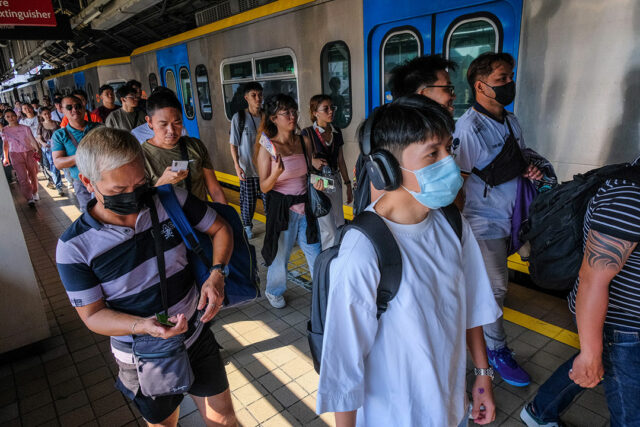
Commuters get off a train at a Light Rail Transit (LRT) Line 1 station. — PHILIPPINE STAR/RYAN BALDEMOR

By Adrian H. Halili, Reporter

PHILIPPINE EMPLOYERS expect to see a decline in their salary budgets in 2026, which could affect potential pay hikes for private sector workers, global advisory firm WTW said.

In its Salary Budget Planning Survey Report, WTW said that private companies are projected to allocate an average median increase of 5.5% for salaries in 2026. This is slightly higher than the 5.3% actual average salary increase this year, and unchanged from 5.5% in 2024.

The Philippines ranked fourth out of 13 countries in the Asia-Pacific region with the highest projected median salary increase for 2026. It was behind India (9%), Vietnam (7%), and Indonesia (6.1%).

WTW Survey: Philippine salary bumps seen at 5.5% in 2026

WTW said that nearly 47.8% of the 344 local employers surveyed had lowered their salary budgets for 2026 due to an anticipated recession or weaker financial results, while 43.5% cited cost management concerns.

“Although overall budgets remain stable, the real transformation is happening behind the scenes. Employers are becoming more strategic in how they distribute compensation, prioritize investments, and define the results they aim to achieve,” WTW Philippines Rewards Data Intelligence Practice Leader Chantal Querubin said in a statement.

“Rather than simply reacting to economic trends, companies are proactively reshaping their approach to better align with broader business objectives, even in uncertain times,” she added.

On the other hand, the WTW report found that only 14.3% of Philippine employers are expecting to increase their salary budget for 2026.

Philippine employers noted that the increase in the budget for compensation would mainly be driven by inflationary pressures (26.1%), tight labor markets (19.6%), and anticipated stronger financial results (19.6%).

The WTW survey also showed that 92.6% of employers have conducted regular salary reviews this year, slightly lower than the 96.1% recorded in 2024. The rest said they either halted their salary review process (3.9%) or postponed wage negotiations (3.5%).

“This reflects a cautious approach by companies amidst current global economic uncertainties,” the advisory firm said.

Maria Ella Calaor-Oplas, an economics professor who specializes in human capital development research at De La Salle University, said that the smaller budget for salary hikes may affect the household finances of private sector workers.

“They will not be able to sustain their lifestyle, especially if the wage increase is smaller than inflation,” Ms. Oplas said in a Facebook Messenger chat. “Meaning that combined income levels of families may have increased, but it is not sufficient given inflation levels.”

The Bangko Sentral ng Pilipinas (BSP) expects inflation to settle at 1.6% this year and 3.4% in 2026.

Benjamin Velasco, an assistant professor at the University of the Philippines Diliman School of Labor and Industrial Relations, said that sluggish pay hikes may encourage more Filipinos to seek work overseas.

“The stagnation of wages will nudge more workers to overseas employment or gig work — both of which present challenges despite the prospects of better pay,” he said in a Messenger chat.

“If decent jobs in the private sector are lacking, one option is for the state to take up the slack through an improved and innovative public employment program, such as climate jobs,” he added.

The Department of Labor and Employment recently launched the National Green Jobs Human Resource Development Plan, with the aim of developing a skilled workforce to support the country’s green transition.

Mr. Velasco said that the labor sector’s call for a legislated wage hike may remain relevant amid the projected stagnation of salary increases for workers in the private sector.

Labor groups are expected to continue to push lawmakers to approve a wage hike bill, after a similar measure failed to hurdle the previous Congress.

“The recent minimum wage hike of P50 in the National Capital Region (NCR) which amounts to a 7.8% increase, is not too far off from the 5.5% finding of the survey,” Mr. Velasco added, noting that expected adjustments in other regions may be lower.

A P50 daily pay increase for minimum wage workers in the NCR took effect on July 18, bringing the daily minimum wage to P695.

HEADCOUNT
Meanwhile, the WTW report showed 76.9% of employers in the Philippines plan to maintain their headcount in the next 12 months.

Only 15.4% of surveyed companies said that they intended to increase the number of employees, while 7.7% are planning to cut their workforce.

“In today’s Philippine labor market, shaped by both local and global pressures, employers are shifting from rapid expansion to maintaining a stable and resilient workforce,” WTW’s Ms. Querubin said.

The WTW survey also showed 57% of employers are experiencing little to no difficulty in attracting and retaining their employees.

WTW said Philippine employers have been adjusting their compensation programs to augment their regular salary reviews “amid rising operating costs and intensifying labor market pressures.”

The report showed that 54% of companies are reviewing the compensation of all employees, while 49% said they are reviewing only salaries of specific employee groups. Organizations are also raising starting salaries (44%), using retention bonuses and spot awards (39%), and adjusting salary ranges more aggressively (38%).

“More organizations have likewise undertaken or are planning complementary actions to address talent needs and support their employees,” WTW said.

About 73% of companies are looking to improve employee experience, while 62% will increase training opportunities and 60% will enhance health and wellness benefits.

“Instead of broad hiring or large budget increases, companies are taking a more measured approach, carefully managing costs while staying focused on long-term talent priorities such as upskilling, succession planning, internal mobility, and employee well-being,” Ms. Querubin said.

She added that these strategies would become essential in sustaining the capability and competitiveness of a company’s workforce.

TDF yields drop as BSP hints at August rate cut

YIELDS on the Bangko Sentral ng Pilipinas’ (BSP) term deposits continued to drop on Wednesday, even as the shorter tenor went undersubscribed, following signals of a potential rate cut next month.

The central bank’s term deposit facility (TDF) fetched bids amounting to just P88.578 billion on Wednesday, below the P100 billion placed on the auction block and the P144.309 billion for the same volume offered a week ago. As a result, the BSP awarded only P81.69 billion in term deposits.

Broken down, tenders for the seven-day papers reached only P31.69 billion, lower than the P50 billion auctioned off by the central bank and the P71.503 billion in bids for the same offer the previous week. The BSP accepted all the submitted tenders for the one-week tenor.

Accepted yields were from 5.23% to 5.265%, slightly narrower than the 5.23% to 5.2675% band seen a week ago. This caused the average rate of the one-week deposits to inch down by 0.47 basis point (bp) to 5.2521% from 5.2568% previously.

Meanwhile, bids for the 14-day term deposits amounted to P56.888 billion, higher than the P50-billion offering and the P72.806 billion in tenders for the same volume auctioned off a week prior. The central bank made a full P50-billion award of the two-week tenor.

Banks asked for yields ranging from 5.25% to 5.33%, also tighter compared with the 5.25% to 5.3595% margin seen a week ago. With this, the weighted average accepted rate for the two-week deposits fell by 2.25 bps to 5.3009% from the 5.3234% quoted in the prior auction.

The BSP has not auctioned off 28-day term deposits for nearly five years to give way to its weekly offerings of securities with the same tenor.

Both the TDF and BSP bills are used by the central bank to mop up excess liquidity in the financial system and to better guide market rates towards the policy rate.

“The BSP TDF average auction yields continued to ease amid expectations of continued benign inflation and more dovish signals from local monetary authorities recently,” Rizal Commercial Banking Corp. Chief Economist Michael L. Ricafort said in a Viber message.

BSP Governor Eli M. Remolona, Jr. told reporters on Tuesday that a rate cut is still “on the table” at the Monetary Board’s next policy review on Aug. 28.

If realized, this would mark the third straight rate cut delivered by the Philippine central bank since April.

The BSP has slashed benchmark borrowing costs by a total of 50 bps this year, with the policy rate now at 5.25%. This brought cumulative reductions since August last year to 125 bps.

Mr. Remolona also said he is keeping his outlook for two more rate cuts this year.

After August, the Monetary Board has two remaining meetings scheduled for October and December.

Further BSP rate cuts would also be supported by potential monetary easing in the United States due to the economic impact of the Trump administration’s tariff policies, Mr. Ricafort said.

Economists expect the US Federal Reserve will keep its benchmark interest rate in the 4.25%-4.5% range after the end of a two-day policy meeting overnight pending more clarity on the impact of tariffs on inflation, resisting pressure from US President Donald J. Trump to lower borrowing costs, Reuters reported.

The Fed cut rates three times in 2024, with the last move coming in December.

There is speculation that Governor Christopher Waller and Vice Chair for Supervision Michelle Bowman could issue dissents if the Fed holds the policy rate steady for the fifth time since December. Both were appointed by Mr. Trump as was Mr. Powell.

Mr. Ricafort added that upcoming maturities of government debt in the next two months worth about P800 billion helped drive TDF yields down as market players are already looking at reinvestment options for their funds, with current rate levels being attractive compared with the low yields quoted for the original issuances years ago. — Luisa Maria Jacinta C. Jocson with Reuters

BSP looking to ease bancassurance rules to boost access to insurance

BANGKO SENTRAL ng Pilipinas Deputy Governor Bernadette Romulo-Puyat — BSP FACEBOOK PAGE

THE BANGKO Sentral ng Pilipinas (BSP) is set to issue new guidelines this year that will allow banks to offer their customers insurance products from multiple providers.

“A draft circular amending the cross-selling guidelines is currently being finalized to consider the inputs we received from various stakeholders. It is targeted for issuance this 2025,” BSP Deputy Governor Bernadette Romulo-Puyat said in a speech at an event on Tuesday.

Under current BSP and Insurance Commission (IC) regulations on bancassurance, or the presentation and sale of insurance products by an insurer to bank clients, the bank and the insurer must also belong to the same financial conglomerate before bancassurance activities may be allowed.

The draft rules released by the central bank in 2024 proposed to expand the scope of an allied undertaking for the purpose of cross-selling, defining this as entities that fall within the bank’s financial conglomerate or entities having a contractual relationship with the bank resulting in joint ownership or shared responsibility for a business undertaking.

These contractual relationships include partnerships, joint ventures, or strategic alliances, the BSP said.

The rules allow cross-selling of financial products like simple insurance and collective investment schemes like variable unit-linked life insurance policies on a stand-alone basis or bundled with products of the bank.

“It opens the field… With this, we want to open up banks to outside of their own conglomerate. So, this opens banks to other players,” Ms. Romulo-Puyat told reporters on the sidelines of the event.

She added that this will allow more insurers to offer their products to bank customers “as long as there’s a contractual relationship with the bank and the insurance company.”

This will help boost financial health among consumers, she said.

“If you open it up to more players, more people can be insured,” Ms. Romulo-Puyat added. “Now, it’s financial health… We want Filipinos not only to have an account, but to have savings, to have insurance.”

Philippine Life Insurance Association, Inc. President Rahul Hora, who is the president and chief executive officer of The Manufacturers Life Insurance Co. (Phils.), Inc. (Manulife Philippines), told reporters at the same event that the new cross-selling guidelines would be beneficial for the industry as insurers would be able to expand their reach.

“That’s what we’ve been requesting because then it allows rural banks to start getting into partnerships, which then allows insurance companies to expand into other areas and geographically spread their business,” Mr. Hora said.

Insurance penetration — or premium volume as a share of gross domestic product, which shows the contribution of the industry to the economy — inched up to 1.89% as of March from 1.78% a year prior, latest IC data showed.

Insurance density — or the amount of premium per capita, which reflects the average spending of each individual on insurance — increased by 13.4% to P1,094.94 from P965.56. — A.M.C. Sy

ADVERTISEMENT
ADVERTISEMENT