Home Blog Page 1169

Gov’t to ask US to exempt PHL chip exports from tariffs

Semiconductor chips are seen on a circuit board of a computer in this illustration picture taken on Feb. 25, 2022. — REUTERS/FLORENCE LO/ILLUSTRATION/FILE PHOTO

THE PHILIPPINE GOVERNMENT is seeking an exemption from US tariffs on select exports, particularly semiconductors, a move aimed at safeguarding one of the country’s most important industries.

“We are working on getting several of our exports exempted,” Special Assistant to the President for Investment and Economic Affairs  Frederick D. Go told reporters on the sidelines of the Economic Journalists Association of the Philippines Economic Forum on Monday.

He said an exemption can be sought for products that an exporting country produces in abundance and cannot be produced in the US.

In particular, he said that the government hopes that the US will exempt Philippine-made semiconductor chips from steep tariffs.

“We are hoping that they view the work we do here in the Philippines, which is ATP (assembly, testing, and packaging), to be part of the process that the US may not really want to do. So, we are hoping… and we have expressed this, that ATP is a process that the semiconductor companies would probably want to outsource,” he said.

The Philippines is a key player in the ATP segment of semiconductor production. Electronics and semiconductors are the country’s single largest export category.

Last week, US President Donald J. Trump announced a 100% tariff on imports of semiconductors in a bid to bring back manufacturing to the country. However, he offered exemptions to companies currently manufacturing in the US and planning to do so.

Mr. Go said Mr. Trump’s proposed tariff on semiconductors remains uncertain, but some countries are already claiming exemptions for their semiconductor exports.

“So, we are still seeking clarification from the US Trade Representative side, and of course we are lobbying that our semiconductor exports likewise be exempted if there is such,” he said.

The US had paused tariffs on imports of semiconductors and semiconductor manufacturing equipment, which have been the subject of a US national security investigation. The results are expected to be out within the month.

Semiconductor and Electronics Industries in the Philippines, Inc. (SEIPI) President Danilo C. Lachica welcomed the government’s move to seek an exemption for Philippine-made chips.

“We appreciate the government’s effort to secure an exemption for our semiconductor exports,” said Mr. Lachica in a Viber message.

Mr. Lachica warned last week of the devastating effect of the proposed 100% tariff on semiconductors entering the US market on Philippine exporters.

In a separate message, Mr. Lachica said the Philippines’ semiconductor and electronics industries should expand to other markets.

“The impact really would be very complex, and it affects the whole supply chain,” he said, noting it can also drive up logistics costs for semiconductor firms.

He also said the industries should work to move up the value chain into research and development and integrated circuit design and other high-value activities.

Associate Professor of the University of Asia and the Pacific George N. Manzano said some US-owned semiconductor firms may move back to the US if Mr. Trump pushes through with his threatened semiconductor tariff.

“The danger to the Philippines is that 100% tariffs on semiconductors by the Trump administration, might motivate some of these US-owned semiconductor companies to move back operations to the US. I hope it does not lead to that,” Mr. Manzano said.

Diwa C. Guinigundo, country analyst at GlobalSource Partners and a former central bank governor, said a 100% US tariff on semiconductors could hurt the Philippine exporters.

“We are now hit by double whammy: higher reciprocal tariff of 19% and then this 100% on specific product as semiconductors and electronics,” Mr. Guinigundo said in a Viber message.

The US began imposing higher tariffs on most of its trading partners starting Aug. 7. A 19% tariff was slapped on goods from the Philippines, Indonesia, Cambodia, Malaysia and Thailand.

“US imports from the Philippines will be more expensive and domestic demand could possibly decline. We don’t exactly have the lowest cost of doing business to make us more competitive than the rest.”

TRANSSHIPMENT
Meanwhile, Mr. Go said that the Philippines’ deal with the US does not include tariffs on transshipment of goods from third countries.

“The transshipment category applies to countries that the US believes engage in transshipments from a third country… We do not have that clause because we do not, and we are not identified as one of those who engage in transshipments,” he added.

The US imposed a 20% tariff on goods from Vietnam, while transshipments from third countries through Vietnam will face a 40% levy. — Justine Irish D. Tabile and Aubrey Rose A. Inosante

FDI jumps 21% in May, down in first 5 months

Euro, Hong Kong dollar, US dollar, Japanese yen, pound and Chinese yuan banknotes are seen in this picture illustration in Beijing, China. — REUTERS

NET INFLOWS of foreign direct investments (FDI) into the Philippines rose by 21.3% year on year in May but declined by 26.9% in the first five months of the year, preliminary data from the central bank showed.

The Bangko Sentral ng Pilipinas (BSP) said the net inflows of FDI jumped by 21.3% to $586 million in May from $483 million in the same month in 2024, with “inflows from the United States and into manufacturing taking the lead.”

Month on month, net inflows of FDIs slipped by 3.9% from $610 million in April.

Net Foreign Direct Investments (May 2025)“The (year-on-year) increase resulted from the significant expansion in nonresidents’ net investments in debt instruments, which rose by 88.3% year-on-year, from $227 million to $427 million,” the BSP said.

Investments in equity and investment fund shares dropped by 38% to $159 million in May from $256 million in the same month in 2024.

This was due to the 61.4% decline in nonresidents’ net investments in equity capital (excluding reinvestment of earnings) to $62 million in May from $161 million a year ago.

Reinvestment of earnings also inched up by 1.4% year on year to $97 million in May.

Nearly half (49%) of gross placements of equity capital went into manufacturing, followed by real estate activities (14%); and electricity, gas, steam and air-conditioning supply (13%).

In May, the bulk of FDI inflows came from the US (36%) and Japan (33%), followed by Singapore (12%) and South Korea (12%).

“The uptick in May’s FDI reflects improved investor sentiment due to the country’s solid macroeconomic fundamentals, relatively stable (decelerating) inflation, and infrastructure momentum,” John Paolo R. Rivera, a senior research fellow at the Philippine Institute for Development Studies, said in a Viber message. “Externally, moderating global interest rates and a recovery in regional trade also helped.”

Rizal Commercial Banking Corp. Chief Economist Michael L. Ricafort said the year-on-year improvement in May FDI inflow can be partly attributed to the release of the rules for the Corporate Recovery and Tax Incentives for Enterprises to Maximize Opportunities for Reinvigorating the Economy (CREATE MORE) Act.

However, this was “counteracted” by the uncertainty over the US tariffs and other protectionist policies, as well as China-Philippines tensions, Mr. Ricafort said.

For the first five months of the year, net inflows of FDI declined by 26.9% to $2.96 billion, from the $4.04 billion recorded in the same period a year ago.

Net investment in debt instruments plunged by 14.1% in the January-May period to $2.149 billion from $2.501 billion in the same period in 2024.

Reinvestment of earnings rose by 6% to $445 million in the January-to-May period, from $420 million a year ago.

Investments in equity capital other than the reinvestment of earnings also went down by 67.6% to $364 million in the five-month period from $1.123 billion a year ago.

Equity placements plunged by 55% year on year to $616 million while withdrawals rose by 1.8% to $253 million.

Equity investments during the period were mainly from Japan (39%), the US (21%), Singapore (14%), and South Korea (8%).

At least 48% of equity placements flowed to manufacturing, while 20% went to real estate activities and 12% to the electricity, gas, steam, and air-conditioning supply industries.

Mr. Ricafort said FDI inflows in recent months may have been affected by proposed legislated wage increases that threaten to increase labor costs in the country.

“Local political noises since the latter part of 2024 (Dutertes vs. the Marcoses) could have also partly weighed on the FDI data in recent months,” he said.

Foreign investors could have also been waiting for further rate cuts by the US and Philippine central banks before making investment decisions, he said.

“For the coming months, the release of the CREATE MORE IRR (implementing rules and regulations) could make some foreign investors/FDIs to become more decisive in locating in the country amid enhanced incentives for foreign investors,” Mr. Ricafort said.

Meanwhile, Mr. Rivera noted that the year-to-date decline shows that FDI inflows are still sensitive to policy clarity, geopolitical risks, and tariff developments.

“If growth holds near the 5.4% average in the first half, we can sustain modest FDI recovery in the latter part of the year. To gain stronger traction, the Philippines needs to accelerate reforms in EODB (ease of doing business), investment facilitation, and trade diversification to counter headwinds from global uncertainty,” Mr. Rivera said.

The BSP expects FDI to end the year at a net inflow of $7.5 billion. — Katherine K.Chan

Recto says extending rice import suspension beyond October unlikely

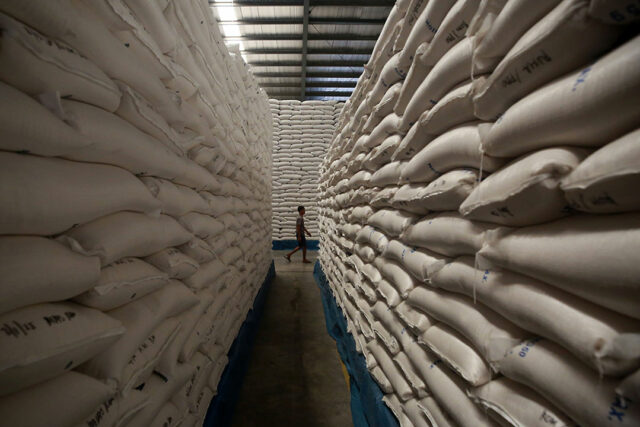
Sacks of rice are seen at the National Food Authority (NFA) warehouse in Valenzuela City, Feb. 5, 2025. — PHILIPPINE STAR/MIGUEL DE GUZMAN

By Aubrey Rose A. Inosante, Reporter

THE PHILIPPINE government is unlikely to extend the 60-day suspension of rice imports after end of October, and has no plans to raise tariffs on rice, Finance Secretary Ralph G. Recto said on Monday.

“The only reason for the suspension essentially is because it’s harvest season,” he said on the sidelines of the Economic Journalists Association of the Philippines Economic Forum on Monday.

Last week, President Ferdinand R. Marcos, Jr. ordered a halt on rice imports for 60 days starting Sept. 1 to provide relief for farmers, upon the recommendation of the Department of Agriculture (DA).

Asked if the government would extend the suspension beyond October, Mr. Recto replied: “unlikely.”

The DA also recommended gradually raising the rice import tariff to its original 35% rate from the current 15%.

Asked if there are plans to hike tariffs, Mr. Recto said: “Wala pa. There are no plans.”

Executive Order (EO) No. 62, which took effect in July 2024, lowered import tariffs on rice to 15% until 2028 to tame inflation. The order is valid until 2028 and is subject to review every four months.

Department of Economy, Planning, and Development Secretary Arsenio M. Balisacan said the government is still studying the impact of a hike in rice tariffs.

“We’ll be meeting our technical group in consultation. We’re preparing the study and then we’ll set an informed basis for the decision or our recommendation,” he told reporters.

Mr. Balisacan said there is a need to balance the interests of farmers, consumers, and the broader economy as it will affect inflation and wages.

“We have to use additional tools to address the concerns of various parties,” he said. “It has to be a win-win for all.”

Mr. Balisacan earlier said there are no inflation risks from the pause on rice imports, citing ample supply.

He cited estimates that supply will remain sufficient even if the government pauses imports for more than 40 days.

“The 60-day rice import pause was a quick fix to protect farmers during harvest — but it’s not a long-term solution. Instead of suspension, we need smart safeguards: fair tariffs, better buffer stocking, and stronger support for local production,” Jonathan L. Ravelas, a senior adviser at Reyes Tacandong & Co., said in a Viber message.

However, farmer groups said the 60-day suspension is not sufficient to allow farmers to recover their losses and are calling for the tariff rate to revert to the original 35%.

“The 60-day suspension of rice importation is not truly sufficient for farmers to recover from years of losses caused by the consistently low farmgate prices of palay — a concrete consequence of the Rice Liberalization Law,” Amihan National Federation of Peasant Women and Bantay Bigas spokesperson Cathy L. Estavillo said via a Viber message.

The Rice Tariffication Law or Republic Act (RA) No. 11203, liberalized rice imports by replacing quota restrictions with tariffs, which the government then used to fund rice industry modernization.

“The suspension of importation is proof that RA 11203, despite amending the Rice Competitiveness Enhancement Fund, remains a hindrance to making rice affordable in markets and achieving rice self-sufficiency in the country,” she said.

Ms. Estavillo urged for the immediate review of the 35% tariff and the repeal of Rice Tariffication Law.

Samahang Industriya ng Agrikultura  spokesman Jay Cainglet said that while they welcome the import ban, their “primary and urgent appeal” is for the reversion of the rice import tariff to 35%.

In particular, they are calling for a 35% tariff rate for imports from the Association of Southeast Asian Nations (ASEAN) and 50% for non-ASEAN imports.

“Despite the temporary halt, palay prices are expected to remain depressed, and farmers will continue to incur losses,” he said.

Mr. Cainglet also claimed that the economic team “continues to feed the President false narratives” about the benefits of EO 62.

“In reality, the measure does little to protect local producers or stabilize the rice market. Importers can simply advance or delay their shipments to work around the suspension, especially since the tariff rate remains at a low 15%,” he said.

FOREGONE REVENUES
Meanwhile, Mr. Recto said the Bureau of Customs (BoC) is expected to see minimal foregone revenues from the two-month halt of rice imports.

“It will slightly drop, but we expect to hit the revenue targets this year,” he said.

In June, Customs collections rose by 6.4% year on year to P85.46 billion, bringing the seven-month total to P544.23 billion.

This year, the BoC is targeting to collect P958.7 billion.

The Philippines is the world’s biggest rice importer, having brought in 2.44 million metric tons at the end of July, according to the Bureau of Plant Industry.

“Maybe at the end of the year after the harvest season, you probably will import the balance,” Mr. Recto said.

JG Summit income surges to P10.7B on core business gains

JG SUMMIT President and Chief Executive Officer Lance Y. Gokongwei — JGSUMMIT.COM.PH

JG SUMMIT Holdings, Inc. posted a 175% jump in second-quarter (Q2) net income to P10.7 billion, driven by strong performances in its airline, real estate, and food and beverage businesses, reduced losses in its petrochemical segment, and gains from compensation related to aircraft engine issues.

Consolidated revenue grew by 5% to P95.9 billion, while core profit surged by 87% to P10.4 billion, driven by the expanding operations of its air transport, property, and food and beverage businesses, as well as a gain recognized from engines provided by Pratt & Whitney as compensation for ongoing aircraft-on-ground issues, the conglomerate said in a regulatory filing on Monday.

“This was supported by robust leisure demand benefiting its airline and property businesses, alongside the sustained domestic consumption seen by its food & beverage arm. These more than made up for the expected decline in petrochemical sales given the plant shutdown which began early this year,” JG Summit said.

“Overall, we are optimistic about the future prospects of the business and will continue to look for opportunities to scale up into adjacencies in airport infrastructure, supply chain/logistics, and digital finance,” JG Summit President and Chief Executive Officer Lance Y. Gokongwei said.

“We continue to see sustained topline performance from our core business units as we benefit from improving consumer sentiment driven by easing inflation. This growth has trickled down to improving core earnings, further helped by the lower losses from the shutdown of our petrochemicals facility. We also expect higher dividends this year coming from our core units and investments,” he added.

FIRST-HALF EARNINGS STEADY
First-half net income was steady at P15 billion, while consolidated revenue increased by 3% to P194 billion.

Core profit dropped by 19% to P14.8 billion amid the absence of the P7.9 billion gain from the merger between the Bank of the Philippine Islands (BPI) and Robinsons Bank Corp. that was booked in the first quarter last year.

The food and beverage business led by Universal Robina Corp. saw a 5% drop in first-half net income to P6.3 billion due to a one-time impairment loss following the cessation of operations of the packaging division.

Revenue rose by 6% to P85.9 billion on higher volume in most of its branded consumer foods Philippines categories, its Malaysia and Indonesia markets, and its sugar division.

The real estate and hotels businesses led by Robinsons Land Corp. saw a 5% increase in first-half net profit to P6.9 billion amid lower interest rates, which outweighed the additional depreciation recorded from newly opened properties.

Revenue went up by 11% to P22.2 billion on higher realized revenues from high-value residential projects and strong ready-for-occupancy unit sales.

The air transportation segment through Cebu Air, Inc. saw a 153% growth in first-half net income to P9 billion, boosted by gains from engines received as compensation from Pratt & Whitney.

Revenue rose by 23% to P63.3 billion on the back of a 21% increase in passenger volumes, higher passenger yields, and 43% more cargo kilograms carried year on year.

The debt of the petrochemical business led by JG Summit Olefins Corp. (JGSOC) has been transferred to JG Summit, and cash burn has also been significantly reduced, while its liquefied petroleum gas trading arm continues to operate.

“From the time the prolonged shutdown of JGSOC’s petrochemical plant was approved by the board in May, the first phase of initiatives focusing on asset preservation, organizational rationalization, and balance sheet management has been completed,” JG Summit said.

“Management has also been actively engaging with various parties as it explores strategic possibilities, further deepens its understanding of market dynamics, and identifies the most viable path that will maximize value for the company,” it added.

JG Summit said its share in the net income of Manila Electric Co. grew by 5% to P6.1 billion in the first half on the back of higher sales volumes in its distribution business and improved contributions from its power generation segment.

Equity income from Singapore Land Group Ltd. grew by 9% to P1.5 billion due to higher contributions from property investments as well as better occupancy and rental rates from commercial properties.

PLDT Inc. paid dividends of P47 per share, translating to a 2% increase in dividend receipts to P1.1 billion for JG Summit. BPI also declared higher dividends, contributing to a 5% increase in income from the conglomerate’s investment.

JG Summit shares rose by 1.96%, or 45 centavos, to P23.45 per share on Monday. — Revin Mikhael D. Ochave

AC Health eyes wider reach with Temasek-backed ABC Impact capital

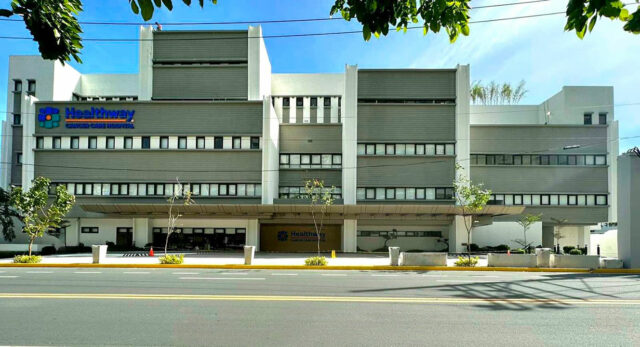
ACHEALTH.COM.PH

INVESTMENT FIRM ABC Impact is acquiring around 16% of the Ayala group’s healthcare arm Ayala Healthcare Holdings, Inc. (AC Health) to support the latter’s expansion.

ABC Impact, backed by Temasek Trust and investment company Temasek, both headquartered in Singapore, will infuse capital in exchange for a minority stake in AC Health, supporting the healthcare company’s goal of having at least 10 hospitals, 300 clinics, and 1,150 pharmacies across its network by 2027.

The investment marks ABC Impact’s first direct entry into the Philippine healthcare sector.

“This partnership marks a significant milestone in AC Health’s journey. ABC Impact’s investment reinforces the strength of our integrated model and our commitment to making healthcare more inclusive,” AC Health President and Chief Executive Officer (CEO) Paolo Maximo F. Borromeo said in a statement on Monday.

“This partnership creates valuable opportunities for knowledge exchange, technology transfer, and the adoption of global best practices, further enabling AC Health to raise the bar in care quality, patient safety, and operational efficiency as it moves toward world-class standards,” he added.

The investment combines AC Health’s integrated delivery network and ABC Impact’s thematic investing experience in inclusive healthcare solutions.

Some of ABC Impact’s regional investments include Vietnam’s largest private dental care network Kim Dental, India-based dialysis provider DCDC Kidney Care, and clinical research organization HiRo.

“We believe AC Health is well positioned to deliver meaningful social outcomes alongside sustainable growth. Through our regional healthcare experience and impact lens, we aim to support AC Health’s efforts to strengthen systems and serve more communities across the Philippines,” ABC Impact CEO David Heng said.

“We are honored to expand our relationship with Temasek and Temasek Trust, and welcome ABC Impact as a partner in our healthcare journey. Together, we look forward to building a more resilient and inclusive health ecosystem for Filipinos,” AC Health Chairman Fernando Zobel de Ayala said.

BofA Securities served as the exclusive financial advisor to AC Health in connection with the transaction. Completion of ABC Impact’s investment is still subject to closing conditions.

AC Health’s portfolio consists of Healthway Medical Network, a network of multi-specialty clinics, ambulatory centers, and full-service hospitals; Generika Drugstore, a generic retail pharmacy chain; IE Medica and MedEthix, a major pharmaceutical importer and distributor; and St. Joseph Drug, a retail pharmacy chain in North and Central Luzon.

ABC Impact has over $900 million in assets under management. Its portfolio spans climate and water solutions, sustainable food and agriculture, healthcare and education, and financial and digital inclusion. — Revin Mikhael D. Ochave

Gov’t fully awards T-bills as rates drop on BSP policy easing hints

BW FILE PHOTO

THE GOVERNMENT made a full award of the Treasury bills (T-bills) it auctioned off on Monday as rates dropped across the board amid dovish signals from the Bangko Sentral ng Pilipinas (BSP) chief.

The Bureau of the Treasury (BTr) raised P25 billion as planned from the T-bills as the offer was almost four times oversubscribed, with total bids reaching P94.926 billion. This was also higher than the P87.28 billion in tenders recorded on Aug. 4.

The Auction Committee fully awarded the T-bills as the average rates fetched for the papers were all lower than those seen at the previous auction and prevailing secondary market yields, the BTr said in a statement.

Broken down, the Treasury borrowed P8 billion as planned via the 91-day T-bills as total tenders for the tenor reached P30.47 billion. The three-month paper was quoted at an average rate of 5.287%, down by 3.1 basis points (bps) from the 5.318% seen in the previous auction. Yields accepted ranged from 5.21% to 5.318%.

The government also raised P8 billion as programmed from the 182-day securities as tenders amounted to P33.45 billion. The average rate of the six-month T-bill was at 5.506%, declining by 2.9 bps from the 5.535% fetched last week, with accepted yields ranging from 5.448% to 5.533%.

Lastly, the Treasury sold the planned P9 billion in 364-day debt as demand for the tenor totaled P31.006 billion. The average rate of the one-year T-bill dropped by 2.5 bps to 5.612% from 5.637% previously. Tenders accepted carried rates ranging from 5.6% to 5.638%.

At the secondary market before Monday’s auction, the 91-, 182-, and 364-day T-bills were quoted at 5.3704%, 5.5575%, and 5.6657%, respectively, based on PHP Bloomberg Valuation Service Reference Rates data provided by the Treasury.

“Treasury bill average auction yields were again mostly slightly lower for the sixth straight week after BSP Governor Eli M. Remolona, Jr. again signaled possible two 25-bp rate cuts or a total of 50 bps for the rest of 2025, and also after the local inflation data eased to the slowest in nearly six years or since October 2019, considered benign and could still support the dovish signals recently by local monetary authorities,… the earliest of which would be a possible 25-bp rate cut as early as the next rate-setting meeting on Aug. 28,” Rizal Commercial Banking Corp. Chief Economist Michael L. Ricafort said in a Viber message.

“BSP Governor Remolona’s comments today regarding more rate cuts this year may have affected the market’s buying sentiment,” a trader likewise said in a text message. “Bids ranged from 3.45 to 4.18 times the offer size with a tighter spread than last week’s bid-to-cover ratios.”

The Philippine central bank signaled on Monday it may deliver the first of two remaining interest rate cuts this year at its Aug. 28 policy meeting as inflation remained subdued, Reuters reported.

Mr. Remolona said it was “quite likely” the bank would lower its key policy rate later this month, reiterating its easing bias to support growth amid global uncertainties and as inflation continues to slow.

“Things look good,” Mr. Remolona told a forum organized by the Economic Journalists Association of the Philippines, adding that inflation could fall to 2% this year, the bottom of the BSP’s target range.

Cooling prices have underpinned domestic demand, with the economy expanding 5.5% in the second quarter, slightly faster than the 5.4% growth in the previous quarter. Annual inflation eased to 0.9% in July, the lowest since October 2019, bringing the year-to-date average to 1.7%.

Mr. Remolona told Reuters on July 28 the BSP was on track to cut rates two more times in 2025. The key rate now stands at 5.25%, a two-and-a-half-year low. After this month’s meeting, the BSP will have two more policy meetings before yearend.

The Monetary Board has lowered benchmark borrowing costs by a total of 50 bps this year via two consecutive 25-bp cuts in April and June, with the policy rate now at 5.25%. This brought cumulative reductions since August 2024 to 125 bps.

Both Mr. Ricafort and the trader said that the government’s ongoing retail Treasury bond (RTB) offer could have affected the demand seen at Monday’s T-bill auction.

The government raised an initial P210 billion from its offer of five-year RTBs at the rate-setting auction held last week, with tenders reaching P354.175 billion.

The notes are priced at 6% per annum, payable quarterly.

The public offer period will run until Friday while settlement is on Aug. 20.

On Aug. 8, the BTr closed the bond exchange component of the RTB offering and limited the sale of the new retail bonds to individual investors.

National Treasurer Sharon P. Almanza earlier said the government is aiming to raise P300 billion in fresh funds from the RTBs, excluding the volume generated through the bond exchange offer program.

The BTr is looking to raise P185 billion from the domestic market this month, or P125 billion through T-bills and P60 billion via Treasury bonds.

The government borrows from local and foreign sources to help fund its budget deficit, which is capped at P1.56 trillion or 5.5% of gross domestic product this year. — A.M.C. Sy with Reuters

Aboitiz, Yuchengco partner to expand TARI Estate in Tarlac

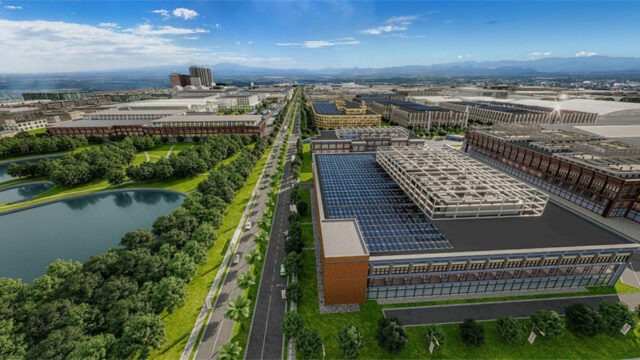
TARI Estate, Tarlac. — ABOITIZ EQUITY VENTURES, INC.

THE ABOITIZ Group’s Lima Land, Inc. is entering into a joint venture (JV) agreement with the Yuchengco group’s listed holding company House of Investments, Inc. (HI) to expand the TARI Estate in Tarlac.

Under the JV, the two groups will develop and manage a 184-hectare mixed-use property owned by HI subsidiary Tarlac Terra Ventures, Inc. that will expand Lima Land’s TARI Estate to 384 hectares, the Aboitiz group’s listed holding company Aboitiz Equity Ventures, Inc. (AEV) said in a statement on Monday.

HI will hold a 51% stake in the expansion project, while LIMA Land will hold 49%. LIMA Land will also serve as the exclusive provider of project management, estate operations, and general support services for the site.

LIMA Land is a subsidiary of the Aboitiz group’s infrastructure arm Aboitiz InfraCapital, Inc. (AIC), while HI is the non-bank holding company of the Yuchengco Group of Companies.

The agreement, approved by the boards of AIC and HI on Aug. 8, is still subject to regulatory approvals, including clearance from the Philippine Competition Commission and the Securities and Exchange Commission.

“This will be our first major venture into Economic Estates. We look forward to the partnership with AIC, one of the leading industrial estate developers in the country,” HI President and Chief Executive Officer (CEO) Lorenzo V. Tan said.

“This joint venture will be an expansion of HI’s business interests in horizontal property development, diversifying our property portfolio. We aim to provide long-term value through flexible, sustainable, and forward-thinking real estate solutions,” he added.

Once fully developed, the expanded TARI Estate is expected to generate more than 60,000 jobs for Northern and Central Luzon.

TARI Estate officially broke ground in May 2024. It recently closed a 16-hectare deal with a new locator, adding to a series of transactions over the past year, including the turnover of a 42-hectare parcel earlier this year. Multiple investors are now actively preparing for construction.

“This partnership allows us to scale that momentum, integrating mixed-use components that will further enhance the estate’s ecosystem. Together, we are creating a dynamic platform for inclusive growth — where industries thrive, investments translate into real progress, and communities benefit from long-term economic opportunity,” LIMA Land President Rafael Fernandez de Mesa said.

“What began as a bold vision is now a tangible reality — we’ve sold over 70% of our Phase 1 inventory, secured major locators, and are nearing full completion of initial development,” he added.

On Monday, AEV shares fell by 3.23% or 95 centavos to P28.50 per share, while HI stocks rose by 2.34% or eight centavos to P3.50 apiece. — Revin Mikhael D. Ochave

Potential entry of Apple Pay, Google Pay to help propel digital payments growth

STOCK PHOTO | Image by Jonas Leupe from Unsplash

THE POTENTIAL ENTRY of Apple Pay and Google Pay into the Philippine market could further drive digital payments in the country, according to industry stakeholders.

“These global platforms complement local innovations and will help drive the Philippines closer to its goal of a cash-lite, inclusive, and future-ready digital economy,” Rizal Commercial Banking Corp. (RCBC) Executive Vice-President and Chief Innovation and Inclusion Officer and FinTech Alliance.PH Chairman Angelito M. Villanueva said.

Ronald B. Gustilo, national campaigner for Digital Pinoys group, said their entry will also “open the door for more secure and convenient payment options for Filipino consumers.”

Bangko Sentral ng Pilipinas (BSP) Deputy Governor Mamerto E. Tangonan earlier said that they have determined that Apple Pay and Google Pay are technology service providers and not operators of payment systems (OPS) and will not need to register with the regulator.

“We deemed them not to be an OPS because their activity is not an OPS activity,” he said.

Apple Pay and Google Pay do not hold funds but instead process payment credentials, Mr. Tangonan said, adding that there is also no contract between them and merchants. “It’s considered an OPS if, in other countries, Apple Pay has an account that holds the funds. But that is not the case for the execution here.”

Since they are not OPS, it will be up to financial institutions to assess them, he said.

“If anything happens, the one accountable to us is the payment service provider (PSP). That’s why they’re being careful, maybe,” he said in mixed English and Filipino. “Because (it’s the PSPs’) responsibility, maybe they are really evaluating them carefully.”

Mr. Villanueva said the entry of Apple Pay and Google Pay would also be timely amid the rollout of cashless fare payments in the Metro Rail Transit Line 3 (MRT-3) and soon at Light Rail Transit lines.

These payment platforms would help “accelerate the adoption of tap-and-go payments in everyday commutes,” he said, and “further scale digital payments and promote consumer trust, security, and convenience.”

Apple Pay and Google Pay use near-field communication (NFC) technology to enable contactless payments. Apple Pay is only compatible with Apple devices while Google Pay is used for Android phones.

“With NFC technology, users can now pay directly using their mobile devices without having to bring out their physical cards — making transactions not only faster but also more secure,” Mr. Villanueva said. “This reduces the risk of card skimming and physical theft, while improving overall user convenience.”

Mr. Gustilo said these services would also serve as an alternative to e-wallets as consumers may use their existing bank accounts or credit cards directly through Apple Pay or Google Pay.

“This empowers consumer choice and pushes the payment ecosystem toward more globally integrated and secure solutions,” he added.

In December, the BSP confirmed that Apple Pay and Google Pay were exploring setting up their operations in the country.

In Southeast Asia, Apple Pay and Google Pay are currently available in Malaysia, Singapore and Vietnam. Google Pay is also present in Cambodia.

“We hope this development encourages further modernization in the Philippine payments landscape, and more importantly, ensures that financial institutions maintain strong oversight of these platforms to protect users,” Mr. Gustilo added.

The share of online payments in monthly retail transactions in the Philippines stood at 57.4% in terms of volume and 59% in value terms in 2024, the latest BSP data showed. These are up from 52.8% and 55.3%, respectively, in 2023.

The BSP is targeting to achieve a 60-70% share of digital payments over total retail payments volume by 2028, in line with the Philippine Development Plan. — Luisa Maria Jacinta C. Jocson

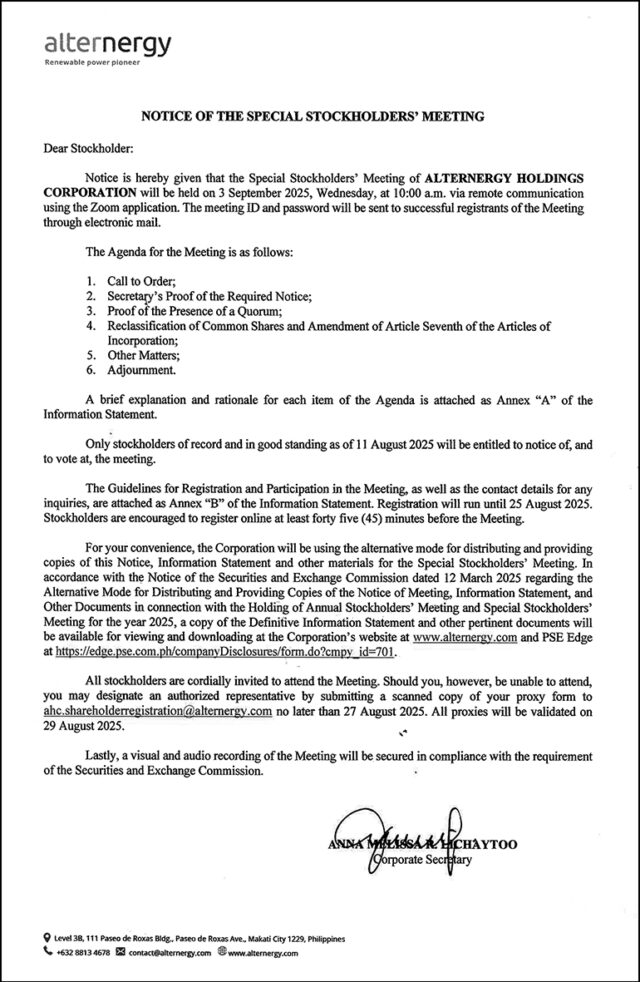
Alternergy Holdings Corp. to hold Special Stockholders’ Meeting on Sept. 3 via Zoom


Spotlight is BusinessWorld’s sponsored section that allows advertisers to amplify their brand and connect with BusinessWorld’s audience by publishing their stories on the BusinessWorld Web site. For more information, send an email to online@bworldonline.com.

Join us on Viber at https://bit.ly/3hv6bLA to get more updates and subscribe to BusinessWorld’s titles and get exclusive content through www.bworld-x.com.

3 films enter 73rd FAMAS awards with 10 noms each

THE Filipino Academy of Movie Arts and Sciences (FAMAS) announced the nominees for the 73rd FAMAS Awards on Aug. 10 through its official Facebook page. Three of the Best Picture-nominated films will enter the awards with 10 nominations each.

The three films are Green Bones by Zig Dulay, Topakk by Richard Somes, and Mamay by Neal Buboy Tan. Their respective directors also have been nominated as Best Director.

Other films in the running for Best Picture are Uninvited (which got eight nominations), And the Breadwinner Is… (also with eight nominations), and When Magic Hurts (seven nominations).

FAMAS is known as the oldest existing award-giving body in the Philippines and one of the oldest in Asia. The organization, which is composed of writers and movie columnists, started in 1953.

This year, the winners of the 13 categories will be declared at the Manila Hotel on Aug. 22. — Brontë H. Lacsamana


Below is the complete list of nominees:

Best Picture: Alipato at Muog, Under a Piaya Moon, Topakk, Green Bones, When Magic Hurts, And the Breadwinner Is…, Balota, Mamay, The Hearing, and Uninvited

Best Director: JL Burgos for Alipato at Muog; Richard Somes for Topakk; Law Fajardo for The Hearing; Gabby Ramos for When Magic Hurts; Chito Roño for Espantaho; Neal Buboy Tan for Mamay; Kurt Soberano for Under a Piaya Moon; Zig Dulay for Green Bones; Jun Lana for And the Breadwinner Is…; and Dan Villegas for Uninvited

Best Actor: Dennis Trillo for Green Bones; Vice Ganda for And the Breadwinner Is…; Arjo Atayde for Topakk; Alden Richards for Hello, Love, Again; Kelvin Miranda for Chances Are, You and I; and Aga Muhlach for Uninvited

Best Actress: Marian Rivera for Balota; Julia Montes for Topakk; Rebecca Chuaunsu for Her Locket; Judy Ann Santos for Espantaho; Kathryn Bernardo for Hello, Love, Again; and Ara Mina for Mamay

Best Supporting Actor: Ruru Madrid for Green Bones; Joel Torre for Under a Piaya Moon; Sid Lucero for Topakk; Jhong Hilario for And the Breadwinner Is…; Jeric Raval for Mamay; and Will Ashley for Balota

Best Supporting Actress: Nadine Lustre for Uninvited; Isabelle Sophie Ng for Her Locket; Eugene Domingo for And the Breadwinner Is…; Alessandra de Rossi for Green Bones; Claudine Barretto for When Magic Hurts; and Mylene Dizon for The Hearing

Best Screenplay: Alipato at Muog, Under a Piaya Moon, Balota, Green Bones, The Hearing, and Mamay

Best Production Design: When Magic Hurts, Topakk, Mamay, Under a Piaya Moon, Espantaho, and Hello, Love, Again

Best Cinematography: When Magic Hurts, Topakk, Uninvited, Kalakal, Mamay, and And the Breadwinner Is…

Best Editing: The Hearing, Topakk, Alipato at Muog, Under a Piaya Moon, Hello, Love, Again, and Green Bones

Best Musical Score: When Magic Hurts, Mamay, Green Bones, Hello, Love, Again, And the Breadwinner Is…, and Uninvited

Best Sound: Topakk, Alipato at Muog, Mamay, And the Breadwinner Is…, Green Bones, and Uninvited

Best Theme Song: “Sa Likod ng Tagumpay” for Idol, “Paruparo” for When Magic Hurts, “Hamon” for Mamay, and “Hahamakin Ang Lahat” for Uninvited

Manila Water expects to complete Wawa project takeover by Sept.

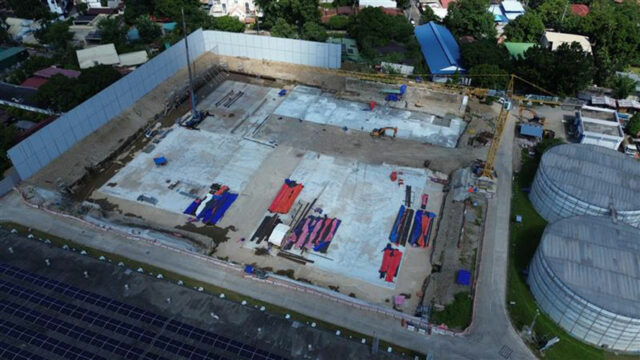
AN AERIAL VIEW of the ongoing demolition of the old San Juan Reservoir and the construction of the new 56-ML earthquake-resilient facility along N. Domingo Street in Quezon City.

EAST ZONE concessionaire Manila Water Co., Inc. expects to complete the takeover of the Wawa Bulk Water Supply from its parent company, Prime Infrastructure Capital, Inc. (Prime Infra), by September.

In a disclosure on Monday, Manila Water said it has signed a share purchase agreement with Prime Infra to buy Prime Infra’s stake in WawaJVCo, Inc.

This agreement follows a previously signed term sheet between the two companies for full ownership of WawaJVCo, involving the acquisition of common and non-voting preferred shares valued at P37.8 billion.

Manila Water said it will make an initial payment of P6.11 billion on Dec. 15.

Trident Water Company Holdings, Inc., a subsidiary of Prime Infra, controls Manila Water.

WawaJVCo, a joint venture between Prime Infra and San Lorenzo Ruiz Builders & Developers Group, was established to develop, operate, and maintain the Wawa Bulk Water Supply Project in Rizal, which is intended to augment Metro Manila’s raw water supply.

The company’s portfolio includes the Tayabasan Weir in Antipolo, which has been operational since October 2022 with a capacity of 80 million liters per day (MLD), and the Upper Wawa Dam in Rodriguez, Rizal, with a capacity of up to 710 MLD.

In 2019, WawaJVCo signed a 30-year bulk water supply agreement with the Metropolitan Waterworks and Sewerage System and Manila Water for the supply of 518 MLD of water until 2050.

WawaJVCo earlier said the Upper Wawa Dam is slated to commence commercial operations in December and is expected to benefit over 700,000 households.

Meanwhile, Manila Water is on track to complete its P932-million San Juan Reservoir project in Quezon City by the third quarter of 2026 to bolster water supply reliability.

As of July, the project has reached 26.9% completion.

Situated along N. Domingo Street in Quezon City, the facility is designed to store up to 56 million liters (ML) of water and withstand earthquakes measuring up to magnitude 7.2.

To stay on schedule, the company is conducting excavation and lean concreting, rebar fabrication for Phase 1 Mat Foundation, and installation of Mat Foundation rebar.

It has also installed acoustic barriers to reduce noise and other construction-related disturbances.

The new facility replaces the original reservoir built in 1968 and incorporates modern engineering standards, including upgraded electrical, instrumentation, mechanical, and site development systems.

“The San Juan Reservoir is more than just a new facility. It’s a forward-looking investment in resilience and reliability. As our cities continue to grow, we must ensure that our infrastructure keeps pace,” said Manila Water Communication Affairs Group Director Jeric T. Sevilla.

“This project reflects Manila Water’s commitment to safeguarding water supply for our communities, even in the face of natural disasters like major earthquakes,” he added.

Manila Water serves the east zone of Metro Manila, covering parts of Marikina, Pasig, Makati, Taguig, Pateros, Mandaluyong, San Juan, portions of Quezon City and Manila, and several towns in Rizal province.

The company recently said it had surpassed 7.8 million customers, driven by expansion projects implemented during the first four months of the year. — Sheldeen Joy Talavera

Hyun Bin on travel and acting

SOUTH KOREAN actor Hyun Bin — FACEBOOK.COM/SOLAIRERESORT

KOREAN actor Hyun Bin (real name: Kim Tae-pyung) made it a point to honor his Filipino fans at a press conference and fan meet in Manila on Aug. 8.

On his first trip to the Philippines, he was in Manila for the meet-and-greet fan event, “Hyun Bin Landing in Solaire,” hosted by Solaire Resort in Entertainment City, Parañaque. The event title was a quip on one of his most popular Korean dramas, Crash Landing on You.

“The unconditional and unchanging love and support there that I’ve seen from the Filipino fans — I’m really grateful and honored to have this kind of support,” Hyun Bin, who was stylishly dressed in an unbuttoned cream-colored suit over a plain white shirt and white sneakers, said in Korean, speaking through an interpreter.

“With that love, I’d like to return it to you Filipino fans with more projects and, of course, [by being] a better actor as well.”

The love and support he mentioned can be seen in the consistent popularity in the Philippines of his shows through the years.

Hyun Bin first rose to fame in 2005 when he starred in the Korean romantic-comedy My Name is Kim Sam-soon, just at the time that the Philippines was starting to notice Korean TV. This was followed in 2010 by romantic-fantasy drama Secret Garden, which garnered him even more fans in the Philippines.

His popularity skyrocketed when he played Captain Ri Jeong Hyeok, a North Korean soldier who falls in love with a South Korean woman in Crash Landing On You. The show was consistently in the Netflix Top 10 list of trending shows in the Philippines the entire time it aired from 2019 to 2020.

ACTING AND TRAVEL
At the press conference prior to the fan meet, the actor talked about his approach to acting and to traveling.

The K-drama star explained that the Philippines has always been on his travel bucket list, though his current visit is limited to Manila, where he has already tried adobo.

“What makes the experience even more special is the warm hospitality, especially from the staff who go above and beyond to make me feel at ease. Their kindness and attentiveness truly make me feel at home here,” he said, of his stay in Solaire Resort.

As for his approach to travel, he said that his three essentials for his Philippines trip are his watch, his sunglasses, and his cap.

He added that health comes first, though. “I always take supplements and vitamins. And if I don’t have a hectic schedule, I always make sure that I perspire, I sweat, I go and work out.”

He took time to think when it came to questions about his acting career.

“Each project teaches me something new about life and emotion. I’m preparing for my next project now. I can’t share much yet, but I’m excited for fans to see a new side of me soon,” he said.

The K-drama project he is likely referring to is Made In Korea, a political period thriller set to premiere on Disney+ later this year. — Brontë H. Lacsamana

ADVERTISEMENT
ADVERTISEMENT