Home Blog Page 1163

DMCI Q2 income drops 27% to P4.02B on weaker core units

The Valeron Tower will soon rise along the C-5 Ortigas Corridor in Metro Manila. — COURTESY OF DMCI HOMES

CONSUNJI-LED conglomerate DMCI Holdings, Inc. saw a 27% drop in its net income for the second quarter (Q2) to P4.02 billion from P5.53 billion a year ago due to lower contributions from its core units.

DMCI attributed the lower second-quarter profit to weaker performances in its coal, real estate, and construction businesses, as well as the ongoing integration of its cement operations, the company said in a regulatory filing on Wednesday.

However, the conglomerate said the decline in income was mitigated by higher earnings from its water distribution, nickel mining, and off-grid power units.

Total revenues for April to June increased by 6% to P29.74 billion from P28.09 billion a year earlier, led by contributions from the cement business, stronger nickel and off-grid power sales, and higher construction accomplishments.

“Business transition and integration take time, but our diverse business mix and engineering ecosystem continue to support the group,” DMCI Chairman and Chief Executive Officer Isidro A. Consunji said.

“We believe that the improvements we are making today will lead to meaningful value for our stakeholders in the long run,” he added.

Coal subsidiary Semirara Mining and Power Corp. accounted for P2.3 billion in earnings, down by 32% from P3.4 billion, due to lower selling prices amid soft energy market conditions.

The real estate business led by DMCI Project Developers, Inc. contributed P678 million in profit, down by 8% from P737 million, due to higher operating and finance costs amid improved revenue recognition from newly qualified accounts.

The earnings contribution from associate Maynilad Water Services, Inc. grew by 33% to P973 million from P732 million, driven by an increased average effective tariff and prudent cost management.

DMCI Power Corp. accounted for P374 million in profit, higher by 5% from P355 million, on the back of higher energy sales and the addition of new bunker-fired and wind power capacities in Palawan and Antique, respectively.

Mining subsidiary DMCI Mining Corp. generated P344 million in net income, a turnaround from a P43-million net loss, driven by better selling prices and improved operational performance with the full activation of Zambales Chromite Mining Co.

The construction business led by D.M. Consunji, Inc. contributed P18 million, down from P250 million, due to higher project costs, delays, and conservative revenue recognition.

Cement subsidiary Concreat Holdings Philippines Inc. posted a P682-million net loss due to higher interest expense and softer revenues. The company’s recovery efforts are ongoing, with improvements aimed at increasing sales and lowering costs.

For the first half, DMCI posted an 18% decline in consolidated net income to P9.1 billion from P11.1 billion a year ago.

Total revenues climbed by 11% to P61.6 billion from P55.52 billion a year earlier on construction accomplishments from new projects, higher real estate accounts qualifying for revenue recognition, improved nickel shipments and prices, and one full quarter of cement revenue contribution.

DMCI shares rose by 0.20%, or two centavos, to P10.22 apiece on Wednesday. — Revin Mikhael D. Ochave


How PSEi member stocks performed — August 6, 2025

Here’s a quick glance at how PSEi stocks fared on Wednesday, August 6, 2025.


DBM to pre-select vetted infra projects for legislators

BW FILE PHOTO

THE Department of Budget and Management (DBM) is working on creating a “menu” of ready-to-implement infrastructure projects for legislators to include in the budget, Secretary Amenah F. Pangandaman said.

“We are going to have a menu for our legislators. If they want to add to the budget or if they see something from our list of projects, for example, flood control, farm-to-market roads, school building programs, they can choose from that menu,” she said on a radio program on Wednesday.

She said the menu system ensures that a project is pre-vetted or validated.

Ms. Pangandaman has indicated a move to a more coordinated, efficient and data-driven approach in selecting priority projects.

The Development Budget Coordination Committee has proposed a P6.793-trillion spending plan for 2026. This is 7.4% higher than this year’s budget and is equivalent to 22% of gross domestic product.

President Ferdinand R. Marcos, Jr. in his State of the Nation Address last month said he would not approve any 2026 national budget that significantly deviates from his government’s national expenditure program.

This could lead to a reenacted budget, under which the government is forced to operate under the preceding year’s budget. The last major reenacted budget crisis was in 2019 under President Rodrigo R. Duterte, during which the new year’s budget was left unsigned for four months.

The House of Representatives is expecting to receive the proposed national budget for 2026 by next week. Budget hearings are set to begin in September. — Luisa Maria Jacinta C. Jocson

Potential Indian investors keen on PHL pharmaceuticals, infrastructure

REUTERS

POTENTIAL Indian investors have indicated their interest in pursuing pharmaceutical and infrastructure ventures in the Philippines, the Palace press office in Manila said.

It added that Indian officials also noted the potential upside in bilateral trade activity, coming from a low base.

Citing the outcome of a business roundtable in Delhi organized during President Ferdinand R. Marcos, Jr.’s state visit to India, it said other areas of interest were digital technology, autos, agri-food processing, clean energy, and innovation-driven enterprises.

Indian investment in the Philippines is valued at about $5 billion in industries like information technology services, pharmaceuticals, healthcare, textiles, and agriculture.

At the roundtable in the Indian capital, Commerce and Industry Minister Piyush Goyal described the current level of bilateral trade as “abysmally low” but saw it as an opportunity for growth.

“This is one partnership where we should only aim for exponential growth,” Mr. Goyal said.

Mr. Marcos’ state visit to India is meant to signal a Philippine pivot to non-traditional trade partners.

The two countries are currently working towards a Preferential Trade Agreement (PTA) and have recently elevated their relationship to a strategic partnership.

Mr. Marcos was quoted by the Palace as saying that the Philippines is continuing to pursue reforms to attract foreign investment, highlighting the CREATE Act; Executive Order No. 18, establishing ‘green lanes’ for expedited processing of strategic investments; the newly passed Public-Private Partnership Code; and liberalization of foreign ownership in renewable energy projects.

“Our investment environment is the most open and liberal that it has ever been,” Mr. Marcos said, citing the Philippines’ 5.7% gross domestic product growth in 2024, healthy banking and financial systems, and strong credit ratings.

Trade Secretary Maria Cristina Aldeguer-Roque called on Indian firms to see the country not just as a market but as a long-term partner in nation-building.

She highlighted industries primed for investment, including infrastructure, clean energy, healthcare, digital services, and electric vehicles.

Federation of Indian Chambers of Commerce and Industry (FICCI) President Harshvardhan Agarwal was quoted as saying that the group is ready to facilitate closer cooperation, and floated the possibility of establishing an FICCI office in the Philippines to support long-term engagement.

Mr. Marcos urged Indian companies to explore joint ventures in high-growth sectors such as ICT, digital technology, semiconductors, infrastructure, healthcare, and pharmaceuticals — areas aligned with Philippine development priorities.

To accelerate progress on trade talks, Mr. Marcos directed the Department of Trade and Industry to work closely with Indian counterparts to convene the Joint Working Group on Trade and Investment.

He also pushed for formal negotiations on the proposed PTA, calling it a “strategic platform” for mutual growth.

He encouraged Indian CEOs to visit the country and “see what a globally competitive Philippines can offer.” — Chloe Mari A. Hufana

Aklan plans terminal to attract more cruise visits to Boracay

PHILIPPINE STAR/ EC TOLEDO IV

BORACAY — Aklan province said it hopes to start construction of a cruise ship terminal this year to address growing demand from cruise lines seeking to stop at Boracay.

“The most important thing for us right now is to provide facilities for cruise ships,” Aklan Governor Jose Enrique M. Miraflores told reporters on the sidelines of the inauguration on Tuesday of the LezzGo Boracay integrated ferry ticketing system for visitors to the resort island.

“Cruise ship tourism is one of the up-and-coming activities here. Last year, we received 19 cruise ships, but our problem here is that there is no port,” he added.

He said some cruise passengers were deterred from visiting Boracay because of the absence of docking facilities. Those who wished to explore the island had to be ferried to shore by tender.

“Many of them are seniors and persons with disabilities. They find it a hassle because they have to be transferred by boat,” he said.

“Our dream is to have a port here where the ships can dock and the tourists can safely go to Boracay,” he added.

He said the province has received P800 million in funding from the Philippine Ports Authority (PPA) this year for the cruise terminal.

“That funding is not enough, so we are also securing more funding that will allow us to complete it,” he said.

“I think more or less we will need P2 billion. We need it to at least have a depth of 12 meters and a 300-meter berth so the cruise ships can,” he added, noting that the province has also sent a letter to the National Government for additional funding.

He said that the project is set to begin construction in the fourth quarter, overseen by the PPA.

“This is supported by the Department of Tourism and other national agencies because they can see the need for a cruise ship facility,” he added.

Once built, he said the port will have the capacity to service two cruise ships at a time.

He said the cruise terminal will allow Boracay to accommodate more port calls by cruise lines.

“I think there were three cruise ships last year that did not go through, so it is such a waste,” he said.

“Next year, we are going to have a lot of cruise ships coming here. There’s going to be a Japanese liner that is going to make a call here,” he added.

Last year, he said the majority of the cruise ships that visited Boracay departed from Hong Kong. — Justine Irish D. Tabile

JICA expediting Pasig-Marikina, Cagayan River flood control plans

PHILIPPINE STAR/MICHAEL VARCAS

THE Department of Public Works and Highways (DPWH) said the Japan International Cooperation Agency (JICA) has been tapped to help expedite the updating of flood control master plans for the Pasig-Marikina and Cagayan River basins.

“Once finalized, the updated master plan reports will be submitted to DEPDev (the Department of Economy, Planning, and Development) for review and approval, with pre-feasibility studies expected to begin in early 2026,” Public Works and Highways Senior Undersecretary Emil K. Sadain said in a statement on Wednesday. 

The DPWH said these plans aim to mitigate the recurring problem of flooding while also enhancing disaster resilience.

These two major waterways are considered crucial in supporting the economic growth and development of Metro Manila and the Cagayan Valley.

“These studies and proposed measures in a holistic approach are anticipated to support integrated water resources management, improve interagency coordination, and enhance the overall risk and reduction efforts in Luzon,” Mr. Sadain said.

Launched in 2024, the Japan-funded technical cooperation program will also assess the necessity of flood control dams as a countermeasure to reduce flooding damage within Metro Manila.

A separate master plan for the San Juan River is also being drafted to address low-river flow capacity, and possible solutions and embankment improvements in Manila, San Juan, and Quezon City. — Ashley Erika O. Jose

July WESM rates rise on thin supply margin

BW FILE PHOTO

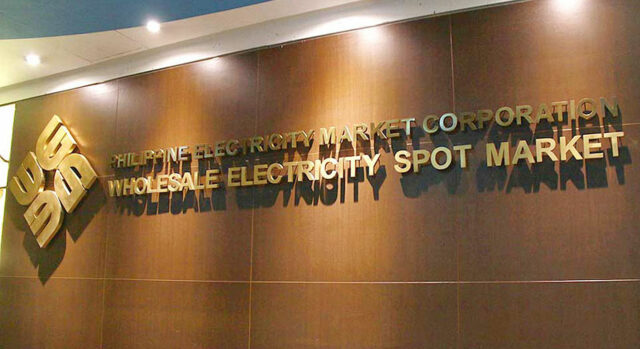
ELECTRICITY PRICES on the Wholesale Electricity Spot Market (WESM) rose 3.1% in July as supply margins thinned, the Independent Electricity Market Operator of the Philippines (IEMOP) said on Wednesday.

IEMOP reported that the WESM system-wide average price of power was P3.99 per kilowatt-hour (kWh) in July, against P3.86 per kWh a month earlier.

Between June 26 and July 25, the available supply decreased 3.2% month on month to 20,754 megawatts (MW). Demand fell 5% to 13,812 MW.

The WESM rate in Luzon increased 0.4% to P3.92 per kWh, with supply declining 3.6% to 14,540 MW and demand falling 6.6% to 9,710 MW.

“Despite higher supply margin there was a slight increase in price due to the limited flow of the HVDC (high voltage direct current) from the Visayas to Luzon,” IEMOP said.

The market operator said the spot price in the Visayas rose 11.7% to P4.39 per kWh in July from P3.93 per kWh in the previous month.

Supply fell 4% to 2,530 MW while demand dropped 1.8% to 1,998 MW.

Power rates in Mindanao increased 7.2% to P3.80 per kWh from P3.54 per kWh a month earlier.

The grid’s available supply decreased 1% to 3,685 MW. Demand grew 0.4% to 2,104 MW.

IEMOP said that the price increase was due to the limited HVDC flows and coal plant outages, leading to high-cost generators clearing the market.

“Having a limited power flow from Mindanao to the Visayas and from the Visayas to Luzon, and with cheaper plants on outage… resulted to higher energy prices across the regions,” IEMOP said.

For the August supply month, the market operator is expecting an increase in the WESM price with several power plants going on forced outage, affecting supply.

“We expect increase in price, but hopefully it won’t be as high as it was last year,” Isidro Cacho, Jr., IEMOP’s head of corporate strategy and communications, said in a virtual briefing.

Since Aug. 4, the Visayas grid has been on yellow alert due to high system demand and with power plants either derated in capacity or going on forced outage.

“So our fearless projection is that (the price) will range between P4.50 and P5 per kWh on average. Earlier, we did some calculations and saw a 40-centavo increase for the Visayas, in particular,” Mr. Cacho said.

Meanwhile, power prices in Luzon will be more or less unchanged, while rates in Mindanao may increase between 27 to 28 centavos.

IEMOP operates the WESM, where energy companies can purchase power when their long-term contracted power supply is insufficient for customer needs. — Sheldeen Joy Talavera

Visayas grid yellow alert continues for third day

NGCP.PH

THE Visayas grid has been placed under yellow alert for a third consecutive day after power plants went on forced outage, limiting the system’s contingency reserves, according to the National Grid Corp. of the Philippines (NGCP).

In an advisory early Wednesday, the NGCP said the yellow alert was raised over the Visayas grid between 3 p.m. and 4 p.m. and between 5 p.m. and 7 p.m.

Peak demand was 2,538 megawatts (MW) while available capacity was 2,369 MW.

The grid operator attributed the declaration of the yellow alert to high system demand and several plants either derated in capacity or going on forced outage, with 725.2 MW lost to the grid.

A yellow alert is issued when the operating margin is insufficient to meet the transmission grid’s contingency requirement. — Sheldeen Joy Talavera

Injection molding firm Paintplas to invest P350M in Batangas facility

ABOITIZEYES.ABOITIZ.COM

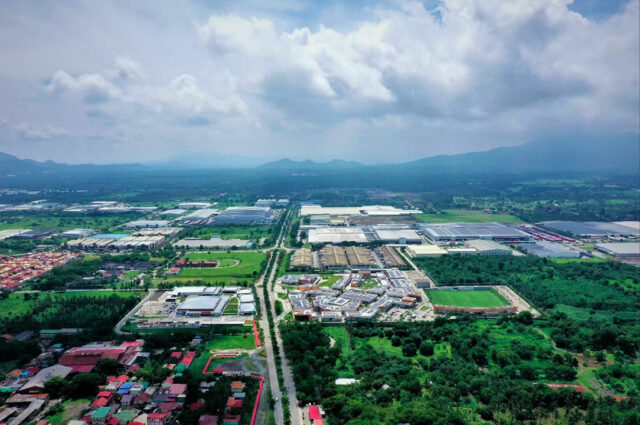
PAINTPLAS Global Corp. is set to invest over P350 million in a manufacturing plant in Batangas, the Philippine Economic Zone Authority (PEZA) said.

In a statement on Wednesday, PEZA said it signed a registration agreement with Paintplas, an injection molding fabricator and plastics manufacturer.

It is set to begin commercial operations in September 2026 at the Lima Technology Center-Special Economic Zone (LTC-SEZ) in Malvar, Batangas.

“We are proud to support Paintplas as they embark on manufacturing and assembly operations at LTC-SEZ,” PEZA Director General Tereso O. Panga said.

He added that the project will help strengthen Batangas as an export hub.

The company’s plastic products are used in toys, vending machines, and motorcycles.

“The company’s main operations are expected to generate around 60 new jobs, contributing to local employment and economic activity in the region,” PEZA said.

The registration agreement was signed on Aug. 1 at the PEZA head office in Pasay City. — Justine Irish D. Tabile

Palay output rises 13.9% in Q2

PHILIPPINE STAR/ KJ ROSALES

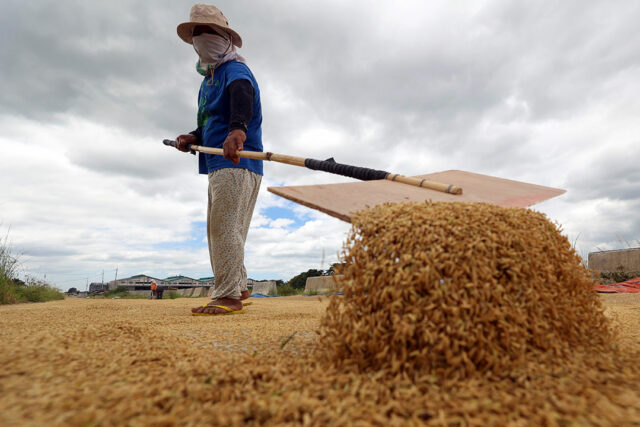
PALAY production in second quarter rose 13.9% year on year, the strongest result for the period in nearly four decades, the Philippine Statistics Authority (PSA) said.

In a report, the PSA said production rose to 4.38 million metric tons (MMT).

“The second quarter of 2025 palay production of 4.38 MMT was the highest production recorded for the same quarter in the series since 1987,” it noted.

Central Luzon was the top producer of palay with 1.098 MMT, accounting for 25.1% of national production.

Cagayan Valley produced 964.37 thousand metric tons (22.0%) and Bicol Region 354.54 thousand metric tons (8.1%).

The three regions accounted for 55.2% of total palay production during the quarter.

Cagayan Valley accounted for 19.3% or 187.36 thousand hectares of the total area of palay harvested.

It was followed by Central Luzon and Bicol Region with 180.83 thousand hectares (18.6%) and 92.16 thousand hectares (9.5%), respectively.

The yield per hectare of palay in the second quarter of 2025 rose 4.2% year on year to 4.50 metric tons (MT), also the highest since 1987, the PSA said.

Central Luzon yields were 6.07 MT per hectare, followed by Cagayan Valley and Ilocos Region with 5.15 MT and 4.81 MT, respectively.

Agriculture department spokesman Arnel V. de Mesa said the Philippines will likely hit its 20.4-MMT target for 2025 in the absence of extreme weather disturbances. — Kyle Aristophere T. Atienza

BCDA obtains P75M to engage consultants for Poro Point upgrade

POROPOINTFREEPORT.GOV.PH

THE Bases Conversion and Development Authority (BCDA) said it obtained P75 million in funding from the Public-Private Partnership (PPP) Center to hire consultants for the modernization of the Poro Point Seaport.

In a statement on Wednesday, BCDA said that the funding for consultants in the modernization of San Fernando International Seaport in Poro Point, La Union was sourced from the Project Development and Monitoring Facility.

Under the technical assistance agreement, the BCDA and the PPP Center “will jointly engage expert consultants to undertake the end-to-end preparation of the project under a PPP arrangement.”

“This advisory package covers feasibility studies, market analysis, legal and financial structuring, PPP transaction support, and other related expenses, with an indicative budget of P74.90 million,” it added.

Targeted to begin construction by the second quarter of 2027, the modernization is expected to be completed by 2029.

“Once operational, the upgraded seaport will support regional industries in Pangasinan, La Union, and the Ilocos provinces as well as enhance Poro Point Freeport Zone’s appeal to logistics investors and export-oriented manufacturers here and abroad,” the BCDA said.

The bulk and break-bulk terminal is being positioned as fully containerized port.

The project covers the installation of quay and yard cranes for faster cargo turnaround, expansion of storage and stacking areas, and the deployment of advanced terminal operating systems.

The modernization also aims to automate gates, digitalize freight management, and improve road and future rail connectivity for seamless cargo movement.

BCDA President and Chief Executive Officer Joshua M. Bingcang said Northern Luzon’s participation in global trade is currently limited by the state of its port infrastructure.

“This project is designed to change that by enabling full containerization, streamlining logistics, and anchoring regional industries to more competitive supply chains,” he said.

“It is a critical step in realizing Poro Point’s vision as a strategic economic gateway for Northern Luzon,” he added. — Justine Irish D. Tabile

PHL targets solar for 100% of gov’t power use 

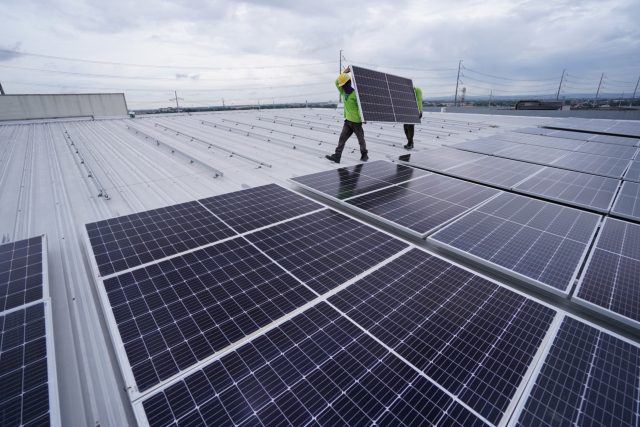
Solar panels are being installed on the roof of a mall. — GREEN HEAT HANDOUT PHOTO

THE PHILIPPINES is hoping to power all government buildings with solar energy eventually, the Department of Energy (DoE) said.

Energy Undersecretary Felix William B. Fuentebella said the private sector will be instrumental in achieving the goal, citing the potential role of registered solar photovoltaic (PV) installers.

“The government is committed to creating an enabling environment for renewable energy, but we need your help to make this real. Let us aim for 100% solar installation in all government buildings,” he said at the recent inaugural general assembly of registered solar PV installers.

The assembly featured discussions on the solar PV registry, policy developments, and compliance mechanisms.

Beyond government facilities, the DoE said that it is working to provide access to electricity to underserved communities via solar home systems.

The National Electrification Administration plans to energize 100,000 households this year, expanding to a total of 154,000 over the next two years.

“This initiative will bring reliable electricity to remote and mountainous areas previously unconnected to the national grid, improving the quality of life and empowering these communities,” the DoE said.

The government is aiming to achieve nationwide electrification by 2028. — Sheldeen Joy Talavera