Home Blog Page 1137

Negative vibes

STOCK PHOTO | Image by Luis_molinero from Freepik

IT’S EASY ENOUGH to turn down the sales brochure being handed out by a promo person to passersby at the mall for yet another property development. Just walk faster, even with a walking stick, and wave a hand — Thanks. There’s no need to even get the brochure.

Rejection, or turning down proposals or requests, is a delicate art in our culture of inclusion and avoidance of conflict. (Of course, boxing challenges for charity offer another form of evasion such as an unscheduled trip abroad.)

What an anthropologist calls “Smooth Interpersonal Relationship” (SIR) is a cherished value for Filipinos. This is part of the kinship system which includes even ritual relationships like fraternities and religious links. The effort to avoid conflict and ensure good relations in social interactions affects how rejections are handled.

The strategies for softening the blow of a negative response may include a request for more information (Can you send me an e-mail on the details?), delaying any definite response (Let me ask my staff to study this.), or simply avoiding the pesky supplicant. In the digital age, there is too the simple expedient of not replying to a text request for a meeting — YNR?

Good news can be more straightforward. Simple declarative sentences are fine — you got the dream job you’ve always wanted. Customer feedback on your performance is off the charts. Former rivals now reporting to you genuflect when you enter the room.

What about breaking bad news?

Applications for employment even from the most laughable leafy lettuces (note alliteration) still require deft handling — You are clearly a person of immense talent, and definitely overqualified to be Vice-President of this conglomerate; You may have been misinformed about the worthiness of our company to employ the skills you can more profitably apply elsewhere.

Still, false flattery may be interpreted literally, prompting the rejected applicant to reply with equal bravado. (Sir, I’m willing to lower my standards for your conglomerate. Does the job come with a car?)

The naysayer still has the option to be more direct and not waste time with niceties and opt to simply be rude. Read my lips — No, N-O, nada, no way… the exit is to your left. Still, such a rude response is seldom resorted to. This aggressive approach is bound to create the negative image of a bully to be avoided, even by friends who don’t need anything.

Artful rejections rule our social dealings, extending even to casually solicited compliments. (How do you like my new tattoo?) Appeals for compliments are like rhetorical questions which only require a grunt or a nod, since there is no real desire to invite an honest comment. (You don’t really want to know what I think.)

Is a casual request for dinner to be taken seriously when given in a big group where most have already gotten a formal invitation? Is saying, “we’ll try to make it” considered a firm pledge to drop in? Did you inadvertently join a group that meets regularly?

How refreshing it is, though somewhat off-putting at first, to get straight answers from western cultures! A request with no likelihood of being granted is simply rejected out of hand — No, that’s not for you. Even firing people requires no song-and-dance of pretend grief. It’s a simple note — can you see me this afternoon? (We’ll compute your separation pay.)

When we say, “maybe, yes,” it is no longer distinguishable from a straightforward no. “Slow walking” is an artful way of dodging an issue. Just drag your feet on a reply, whether it is affirmative or not. The issue will resolve itself somehow — Hey, you already got another job.

Maybe we have traded a straight and quick reply with a slow and ambiguous response. When we are confronted by cultures which are more direct and have no difficulty in communicating rejection, we are likely to be offended by brutal candor.

Is it any wonder that event organizers tear their hair out when requesting for RSVP in the invitation? A straightforward “regret,” given too early, can sound like an affront. Not responding has become the default option. At the event, nobody will be looking for the absentee.


Tony Samson is chairman and CEO of TOUCH xda

ar.samson@yahoo.com

How PSEi member stocks performed — August 13, 2025

Here’s a quick glance at how PSEi stocks fared on Wednesday, August 13, 2025.


Philippines ranks 116th in Climate Vulnerability Index

The Philippines ranked 116th out of 187 countries with a score of 43.4 out of 100 in the latest edition of the Notre Dame Global Adaptation Initiative’s (ND-GAIN) Country Index by the University of Notre Dame. The country is one of the most vulnerable and least ready in the region when it comes to climate-related challenges. The index, which used 2023 data, measures a country’s overall climate adaptation capacity across two dimensions: vulnerability and readiness.

Philippines ranks 116<sup>th</sup> in Climate Vulnerability Index

Consumption ‘not enough’ to push GDP growth past 5-6%, BPI says

A worker is seen inside the new Mega manufacturing plant in Sto. Tomas, Batangas, March 1, 2023. — PHILSTAR/KRIZ JOHN ROSALES

THE ECONOMY requires stronger industry spending if gross domestic product (GDP) is to move beyond its current growth track, the Bank of the Philippine Islands (BPI) said.

“Recent growth in the 5-6% range suggests that consumption alone is no longer enough to drive the economy forward. While domestic demand remains robust, the economy doesn’t produce a significant portion of what it consumes, reflecting its weakness in production. The industry sector must take a bigger role in supporting growth,” BPI Lead Economist Emilio S. Neri, Jr. said in a report.

The economy expanded by an annual 5.5% in the second quarter, hitting the lower end of the government’s 5.5-6.5% target for the year.

For the first half, GDP growth averaged 5.4%, against 6.2% a year earlier.

Household final consumption, which accounts for over 70% of the economy, grew 5.5% in the three months to June, exceeding the 4.8% posted in the second quarter of 2024.

Mr. Neri noted household consumption still has not recovered to pre-pandemic levels.

“It is possible that recent weakness in consumption data partly reflects the challenges in capturing purchases made through e-commerce. The growing access to foreign goods that can be shipped directly to consumers has made tracking certain transactions more difficult, as some low value items may be exempt from monitoring,” he added.

Mr. Neri said GDP growth could remain in the 5-6% range in the coming years if the government is unable to address the structural challenges holding back construction, manufacturing, and investment.

“The economy must shift from being consumption-driven to production-driven, with policies that promote long-term investment and industrial development,” he said.

Construction growth was also weak in the second quarter at 2%, well below the pre-pandemic average of 10.8%, due to the election spending ban. Private-sector construction grew in the double digits but remained below pre-pandemic levels.

He added that real estate developers have taken a cautious approach to new projects due to weak demand in the mid-tier markets.

“Hybrid work arrangements have reduced the appetite for residential units near business districts and have contributed to elevated office vacancy rates,” Mr. Neri said.

While public housing demand remains high, household income needs to catch up with faster-rising property prices for the construction recovery to pick up.

Manufacturing growth likewise remained below pre-pandemic levels at 2.7% from the average of 5.8% before the pandemic as key industries such as food, chemicals, and electronics struggled due to rising input costs and global supply chain disruptions.

Weaker consumption growth has also affected demand for manufactured goods.

“With capital-intensive industries like construction and manufacturing underperforming, investment spending has been sluggish as well. Sustained public-sector spending on infrastructure has not been enough to offset the weakness in private-sector capital expenditures,” Mr. Neri said.

He added that while the economy shifts to more industry spending, inflation must remain low and stable to continue supporting consumption.

The services sector, especially in outsourcing and tourism, also needs to remain competitive during the shift towards more industrial activity.

“The ideal outcome is for the economy to have several drivers of growth, with consumption serving as the foundation rather than an end in itself. Sustaining growth above 6% will be difficult if the industry sector fails to improve and if the services sector loses its competitive edge,” Mr. Neri said. — Aaron Michael C. Sy

Samsung hoping to start work on Laguna expansion by January 2026

SAMSUNGSEM.COM

THE Philippine Economic Zone Authority (PEZA) said Samsung Electronics’ $1-billion expansion project in Laguna is targeted to begin construction by early next year.

“The latest on Samsung is that their fiscal incentives have been approved, and we are now working on the power subsidy,” PEZA Director General Tereso O. Panga said on the sidelines of the PEZA Water Forum 2025.

“We are about to resolve it. There is already a mechanism and formula, which we will endorse to the Fiscal Incentives Review Board (FIRB) for their approval this week,” he added.

Although he did not disclose the exact figures, he said the two sides have agreed on the rates to be charged the project, which operates at the Calamba Premiere International Park in Laguna, where its unit Samsung Electro-Mechanics Corp. is currently based.

“We also talked about this in India (during the President’s state visit) with the Department of Finance. In fact, we were able to rationalize (the subsidy); we lowered the exposure of the government further,” he said.

After approval from the FIRB, the project will be endorsed to the Office of the President.

“Once we get the Office of the President’s approval, it will be endorsed to PEZA for the signing of the registration agreement,” he said.

“I think this can be done in the current quarter. I think what is critical for Samsung is for them to start construction by early January,” he added.

Separately, he said PEZA has not been notified of plans by investors to exit the country as a result of the US reciprocal tariffs, which took effect on Aug. 7.

“For the most part, we are not a big exporter to the US. Although our biggest exports like electronics go to the US, some are really exported to other Association of Southeast Asian Nations countries, Japan, and China,” he said.

He said that the Philippines is the least affected of the ASEAN countries.

Philippine goods entering the US market, as well as goods from Indonesia, Cambodia, Malaysia, and Thailand, were imposed a 19% tariff starting last week.

Despite losing its tariff advantage in the region, he said the Philippines continues to be a competitive destination due to its large domestic market.

“It will be difficult to go up against Vietnam and Thailand in targeting products that are strictly for export,” he said.

“But if we offer the Philippines as a huge domestic market, then that would be a compelling reason for them to locate here… and use us as a hub to export to ASEAN,” he added. — Justine Irish D. Tabile

Prime Infra Laguna pumped storage hydro project on track for completion by 2030

PRIME INFRASTRUCTURE Capital, Inc. said it is on track to finish its 1,400-megawatt (MW) pumped storage hydroelectric power project in Pakil, Laguna within the next five years.

The $5.03-million Pakil Pumped Storage Project developed by group company Ahunan Power, Inc. is expected to provide electricity to approximately 2.3 million households, Prime Infra, controlled by ports and gaming businessman Enrique K. Razon, Jr.  said in a statement on Wednesday.

The project was auctioned during the third round of the green energy auction, which attracted bids for over 6,600 MW of capacity.

Prime Infra recently issued a notice to proceed for the project, allowing it to begin developing access roads to build the upper reservoir, as well as the power waterway, powerhouse, and lower inlet/outlet.

The developer will build connection facilities to the 500-kilovolt grid of the National Grid Corp. of the Philippines.

The project was certified as an energy project of national significance by the Department of Energy and received green lane endorsement from the Board of Investments, qualifying it for expedited permit processing.

To address potential vulnerabilities around the project site, Ahunan Power developed an P80-million integrated management plan for watershed and forest conservation, watershed protection and water management.

The plan was prepared following stakeholder consultations, meetings with the provincial office of the Department of Environment and Natural Resources (DENR) and local government officials, surveys, community mapping, and other supporting activities.

It obtained signoff from the DENR, Laguna Lake Development Authority, and the local governments of Pakil and Paete.

The company said the assessment found that the two subwatersheds are “highly susceptible to rain-induced landslide and soil erosion, while the low-lying areas within the Pakil River Watershed (a portion of Pasig-Marikina-Laguna de Bay River Basin) close to Laguna de Bay are susceptible to flooding.”

To address these vulnerabilities, Ahunan Power said its watershed management plan incorporated a range of strategies “aimed at enhancing ecological resilience and supporting upland and community development.”

These include reforestation, agroforestry development, nursery establishment and operation, establishment of an arboretum, and watershed protection measures, among others.

“Ahunan approaches renewable energy development with a commitment to protect and preserve the vital ecosystems surrounding the Pakil River and Malaking Ilog-Tibag watersheds to ensure a sustainable future for the communities we serve,” the company said. — Sheldeen Joy Talavera

Aug. power bills to reflect higher transmission rates

BW FILE PHOTO

HIGHER TRANSMISSION charges for July will be reflected in power bills for August, after the National Grid Corp. of the Philippines (NGCP) moved to collect its maximum allowable revenue (MAR).

In a briefing on Wednesday, Julius Ryan D. Datingaling, NGCP head of business and regulatory development, said overall transmission rates increased by 9.25% month on month to P1.3233 per kilowatt-hour (kWh).

“The increase of the transmission rates is due to the new revenue of P58 billion and the under-recoveries of P28 billion, plus the decrease in energy consumption,” he said.

Transmission wheeling rates, or what NGCP charges for its primary service of delivering electricity, rose 28.5% to P0.5923 per kWh.

Ancillary service (AS) charges declined 5% to P0.5872 per kWh.

Other charges include the universal charge, Feed-in-Tariff Allowance, and the value-added tax on transmission and AS charges.

The Energy Regulatory Commission (ERC) authorized the NGCP to recover its MAR this year of P58.1 billion, translating to an anticipated increase of P0.0629 per kWh. MAR is the maximum amount the NGCP is allowed to take in annually to recover its operational expenses. 

The decision also allows the NGCP to collect P0.0384 per kWh over 84 months, or until the P28 billion in under-recoveries is fully collected.

The ERC approval forms part of NGCP’s fourth regulatory period reset, spanning the 2016 to 2022 period.

In a 155-page decision, the ERC approved a MAR of P335.79 billion for the NGCP for the period, against the P552.19 billion the company had been seeking.

The rate reset process is usually a forward-looking exercise that requires the regulated entity to submit forecast expenditures and proposed projects over a five-year regulatory period. The ERC assesses the actual performance of the entity and adjusts rates as needed.

“The approved increase will help finance NGCP’s efforts to further strengthen the power grid,” the company said.

NGCP Spokesperson Cynthia P. Alabanza said the company is considering filing an appeal with the ERC, hoping that some other expenses could be considered which it deemed necessary for the proper operation of the transmission system.

“If that’s what we go by, our request of P500 (billion) is reasonable. But again, we will follow the process,” she said.

“The ERC released a decision, and NGCP has the opportunity to explain its request, and will wait for the resolution. We will comply once the decision is final,” she added. — Sheldeen Joy Talavera

NFA starts selling P20 rice to farmers

PHILIPPINE STAR/NOEL B. PABALATE

THE National Food Authority (NFA) has started selling P20-per-kilogram rice to rice farmers and farm workers, according to the Department of Agriculture (DA).

In a statement on Wednesday, the DA said 18 NFA warehouses in Central and Northern Luzon have opened their gates to eligible farmers.

“Based on the Registry System for Basic Sectors in Agriculture (RSBSA) data, around five million rice farmers and workers will qualify once this program is fully rolled out,” Agriculture Secretary Francisco P. Tiu Laurel, Jr. said.

“This is one of the many steps we are taking to ease the burden of those who feed our nation and help secure our food supply,” he added.

According to the DA, eligible farmers till two hectares or less, while the eligible farm workers are those enrolled in the RSBSA.

They can buy up to 10 kilos monthly or a 50-kilo sack to cover their allocation from August to December.

Meanwhile, the subsidized rice program is also expected to be rolled out for 2.8 million RSBSA-registered fisherfolk and in other parts of the country.

Previously the program was limited to senior citizens, solo parents, persons with disabilities, 4Ps (Pantawid Pamilyang Pilipino Program) beneficiaries, and later, minimum wage earners.

The program is expected to be scaled up and reach around 15 million households, or roughly 60 million persons, by 2026.

“The President has approved an P18-billion budget for the 2026 rollout, on top of a proposed P9-billion NFA palay procurement budget for 2025,” the DA said. — Justine Irish D. Tabile

BoC monitoring ports of entry during rice import freeze

PHILSTAR FILE PHOTO

THE Bureau of Customs (BoC) said it will step up its watch for rice imported without authorization during the 60-day import ban.

“The BoC will leave no room for violations and will ensure that this ban is fully enforced,” Customs Commissioner Ariel F. Nepomuceno said in a statement on Wednesday.

Last week, President Ferdinand R. Marcos Jr. ordered a 60-day freeze on rice imports starting Sept. 1 to provide relief for farmers, who are being pressured by traders to accept low prices for their grain.

“As part of our efforts to combat smuggling and illegal trade, the BoC will continue to ramp up its operations to safeguard the agricultural sector,” Mr. Nepomuceno said.

By end of July, the BoC said it confiscated around P354 million worth of smuggled agricultural goods.

The Philippines is the world’s biggest rice importer, having brought in 2.44 million metric tons by the end of July, according to the Bureau of Plant Industry.

“We are committed to upholding the integrity of the rice market, and we will do everything in our power to prevent any illegal imports that undermine the President’s decision,” he said.

Finance Secretary Ralph G. Recto has said the import freeze is expected to result in a slight drop in BoC revenue, but added that he remains confident the BoC will meet its collection target. 

Based on the 2026 Budget of Expenditures and Sources of Financing, the BoC is tasked with collecting P1.01 trillion this year, up 5.75%.

In July, Customs collections rose 6.4% year on year to P85.46 billion, bringing the seven-month total to P544.23 billion. — Aubrey Rose A. Inosante

Air passenger traffic grows 9.25% in 1st half

NINOY AQUINO INTERNATIONAL AIRPORT (NAIA) Terminal 3 — PHILIPPINE STAR/MIGUEL DE GUZMAN

AIR PASSENGER traffic rose 9.25% year on year in the first half, as domestic travel grew 10.21%, according to the Civil Aeronautics Board (CAB).

The CAB reported that overall passenger volume rose to 32.25 million.

Domestic passengers, meanwhile, totaled 17.38 million.

Budget carrier Cebu Pacific accounted for passenger volume of 8.45 million, while its regional unit CebGo carried 1.07 million.

Philippine Airlines and its unit PAL Express logged 700,990 and 4.42 million passengers, respectively in the first half.

Philippines AirAsia, Inc. (AirAsia Philippines) carried a total of 2.38 million for the period.

International passenger traffic grew 8.15% to 14.87 million in the first half.

Foreign carriers accounted for 8.20 million of the international traffic while domestic carriers carried 6.67 million. — Ashley Erika O. Jose

CSC taps Chinese partner to build P1.36-billion facility in Mariveles

CONCRETE STONE Corp. (CSC) said it tied up with a Chinese construction solutions provider to develop a P1.36-billion manufacturing facility in Mariveles, Bataan, which will serve both domestic and regional markets.

“The project is expected to create significant economic impact in Bataan, including the generation of new jobs, the transfer of advanced building technologies, and the strengthening of local supply chains,” the company said in a statement on Wednesday.

CSC’s partnership with Jiangxi GETO New Material Corp. Ltd. will oversee the development of a 40,000-square-meter industrial facility.

“This venture will be implemented through two new corporations: CSC-GETO Realty Corp. (CGRC), which will manage the property, and GETO-CSC Formworks, Inc. (GCFI), which will operate the formworks manufacturing facility,” it added.

The plant is expected to produce advanced formwork systems, which support and shape concrete structures while the concrete is drying.

“Our partnership with CSC will not only introduce our cutting-edge formwork systems but also establish a production hub that can serve the broader ASEAN region,” according to Lian Jie, general manager of GETO International.

“We are setting the stage for a transformative industrial project that will boost local employment and enhance construction efficiency,” Francis Lloyd Chua, chairman of CSC, said, noting that the plant’s output could also help scale up housing projects.

Under the partnership, the Chinese firm will help the plant tap world-class technology. CSC is expected to provide the land and handles operations.

The facility will also benefit from its affiliation with Asiabest Group International, Inc. CSC is set to be an Asiabest subsidiary by the second quarter of next year. — Justine Irish D. Tabile

San Miguel Global Power rejects validity of ERC show-cause order

SMCGLOBALPOWER.COM.PH

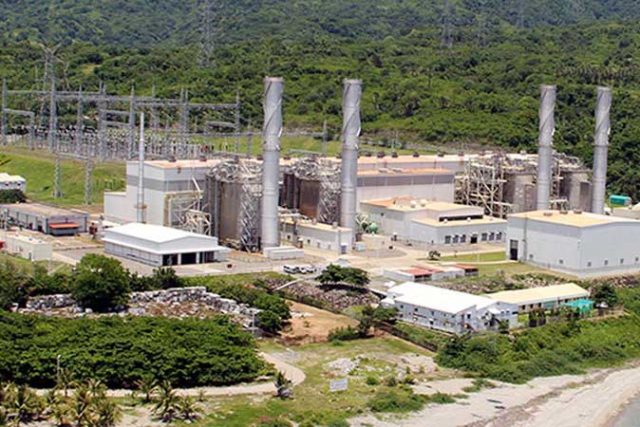
SAN MIGUEL Global Power Holdings Corp. (SMGP) said the show-cause order issued by the Energy Regulatory Commission (ERC) over the Ilijan gas power plant’s alleged anti-competitive practices is “outdated and without basis.”

In a statement on Wednesday, SMGP said that South Premiere Power Corp. (SPPC), the owner and operator of the 1,200-megawatt (MW) Ilijan gas-fired power plant in Batangas, has already been cleared by the Philippine Electricity Market Corp. (PEMC), the governance arm of the spot market, of any violation over the plant’s June 2022 outage.

Citing the PEMC market surveillance committee review in March and another one by its board in May, SMGP said that SPPC did not breach the “must-offer rule” of the Wholesale Electricity Spot Market (WESM).

“Their review found that the plant’s shutdown from June 5 to 25, 2022, was the result of fuel supply constraints that were beyond the company’s control,” SMGP said.

In an order dated July 24, the ERC said it evaluated the assessment report submitted by the PEMC, which found that the Ilijan power plant was placed on “open breaker status” for 21 days in June 2022.

This means the facility was not supplying the WESM, the trading floor for spot electricity contracts.

The ERC directed SPPC to explain why it should not be penalized for engaging in allegedly anti-competitive behavior when the shutdown coincided with high spot market prices and supply alerts.

SMGP said that the outage was due to “sudden and uncontemplated constraints in its supply of natural gas fuel after the cessation of its gas supply delivered via pipeline, which was the plant’s primary fuel for the past two decades.”

The company added that the disruption occurred despite “diligent efforts” exerted by SPPC with the previous operator of the power plant and pertinent agencies to address such constraints.

SMGP said that SPPC has facilitated the construction and commissioned a liquefied natural gas terminal capable of receiving, storing, and processing natural gas capable of producing up to 2,500 MW of baseload power.

SPPC was then wholly owned by SMGP, the power generation arm of conglomerate San Miguel Corp. It has since given up a 67% to units of the Meralco and Aboitiz groups. — Sheldeen Joy Talavera