Home Blog Page 112

PAL confident on fuel; CEB securing supply beyond April

PHILIPPINE STAR/ WALTER BOLLOZOS

PHILIPPINE AIRLINES (PAL) said it has secured sufficient jet fuel supply for scheduled operations in the “foreseeable future,” while Cebu Pacific (CEB) said it has fuel supply through end-April and is arranging supply for May and beyond.

“Philippine Airlines has secured sufficient jet fuel supply to support scheduled operations, including long-haul flights, for the foreseeable future,” the flag carrier said in a statement on Wednesday.

“We have secured our fuel supply up until the end of April, and we are already working on supply for May and beyond,” Cebu Pacific said in a separate statement.

The statements came after President Ferdinand R. Marcos, Jr. said aircraft grounding may be possible as jet fuel supplies remain tight, amid a global fuel crisis linked to the ongoing US-Israel and Iran conflict.

PAL said it continues to monitor global and regional developments that may affect jet fuel prices and supply.

It added that it is working closely with fuel suppliers and government stakeholders to ensure steady and efficient operations.

Cebu Pacific said about 72% of its fleet consists of Airbus NEO aircraft, which are designed for improved fuel efficiency, helping optimize fuel use.

According to the International Air Transport Association, jet fuel prices rose 12.6% week on week to $197 per barrel as of March 20. On a yearly basis, prices increased by 118%, based on data from the airline trade group.

Data from the Department of Energy showed that, as of March 20, the Philippines had enough available jet fuel supply for 38 days.

On Tuesday, Energy Secretary Sharon S. Garin said jet fuel supply remains stable, adding that current challenges are related to pricing and order adjustments due to shifts in supplier countries.

Both PAL and Cebu Pacific have announced temporary suspensions and reductions in flight frequencies on select routes due to the ongoing Middle East conflict, citing its impact on global fuel prices.

BusinessWorld also sought comment from AirAsia Philippines but did not receive a response as of the deadline. — Ashley Erika O. Jose

TDF yield inches down as demand stays strong

BW FILE PHOTO

THE BANGKO SENTRAL ng Pilipinas’ (BSP) one-week term deposits fetched a slightly lower average accepted yield on Wednesday as still-high market liquidity boosted demand for the papers despite the ongoing market volatility.

Bids for the BSP’s seven-day term deposit facility (TDF) amounted to P84.714 billion, exceeding the P70 billion it placed on the auction block. However, this was below the P103.226 billion in tenders seen for a P80-billion offer last week.

This was equivalent to a bid-to-cover ratio of 1.2102 times, lower than the 1.2903 seen a week earlier.

Still, the central bank made a full P70-billion award of its offering.

Accepted rates were from 4% to 4.249%, a tad narrower than the 4% to 4.25% margin in the previous auction. With this, the weighted average accepted yield slipped by 0.23 basis point (bp) week on week to 4.2308% from 4.2331%.

“The still marginally lower seven-day BSP TDF average auction yield still reflects relatively excess peso liquidity in the financial system,” Michael L. Ricafort, chief economist at Rizal Commercial Banking Corp., said in a Viber message.

He noted that the average accepted yield remained below the BSP’s key overnight rate of 4.25%.

This result came amid volatility in global and local financial markets that has caused investors to shift to safer assets, Mr. Ricafort said.

He added that the recent correction in global crude oil prices may have also led to the lower yields.

Based on the latest BSP data, domestic liquidity rose by 8.6% to P19.711 trillion in January, the fastest growth recorded in about five years or since the 9.5% in February 2021.

Meanwhile, the ongoing US-Israel war on Iran continues to jolt markets as trade disruptions triggered major oil shocks globally.

US President Donald J. Trump had threatened to bomb Iran’s power plants if it did not fully reopen the Strait of Hormuz within 48 hours, but later postponed their plan for five days amid an ongoing resolution deal with Iran.

However, Iranian foreign ministry officials denied that such talks took place.

Iran has blocked the Strait of Hormuz, a critical transit point for about a fifth of the world’s oil supply, against the US, Israel and their allies, endangering major net oil importers like the Philippines.

The war’s growing fallout also prompted President Ferdinand R. Marcos, Jr. to declare a state of national energy emergency in the Philippines amid worries over the country’s fuel supply.

The central bank uses the TDF and BSP bills to mop up excess liquidity in the financial system and better guide market rates towards the policy rate.

The BSP last auctioned off both the seven-day and 14-day deposits on Oct. 29. It has not offered 28-day term deposits for over five years to give way to its weekly offerings of securities with the same tenor. — Katherine K. Chan

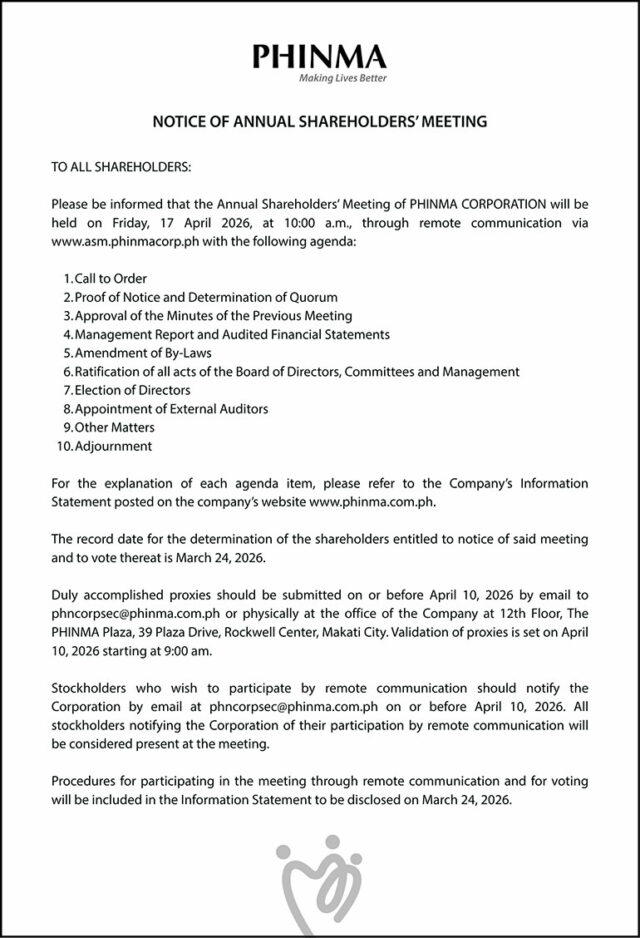
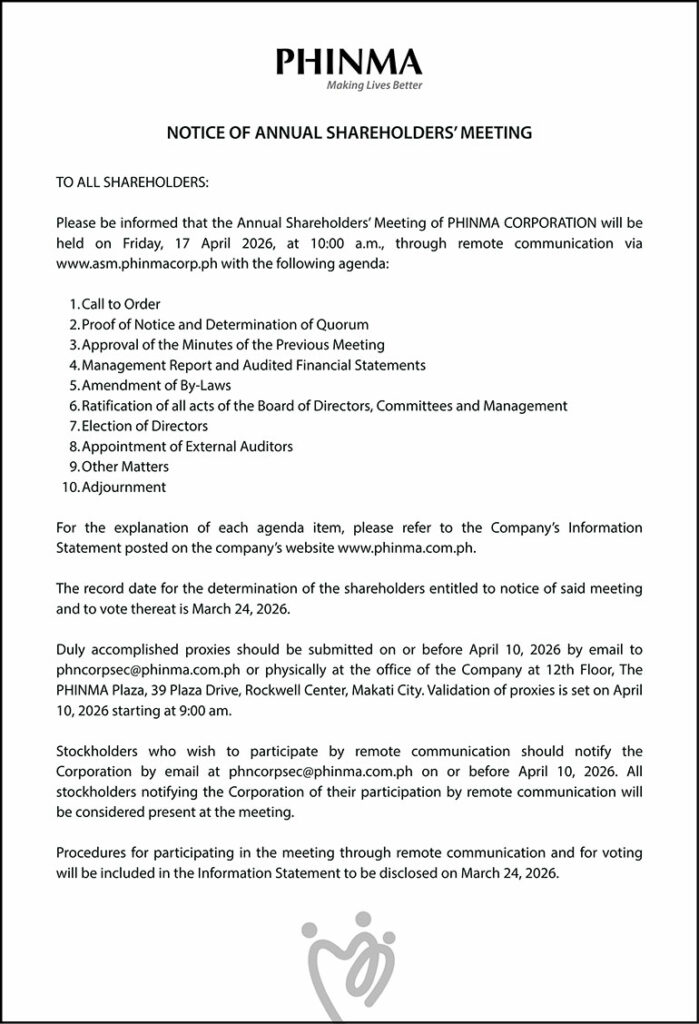
PHINMA Corp. to hold Annual Shareholders’ Meeting on April 17 via remote communication


Spotlight is BusinessWorld’s sponsored section that allows advertisers to amplify their brand and connect with BusinessWorld’s audience by publishing their stories on the BusinessWorld Web site. For more information, send an email to online@bworldonline.com.

Join us on Viber at https://bit.ly/3hv6bLA to get more updates and subscribe to BusinessWorld’s titles and get exclusive content through www.bworld-x.com.

PGPC eyes up to 400-MW geothermal capacity expansion

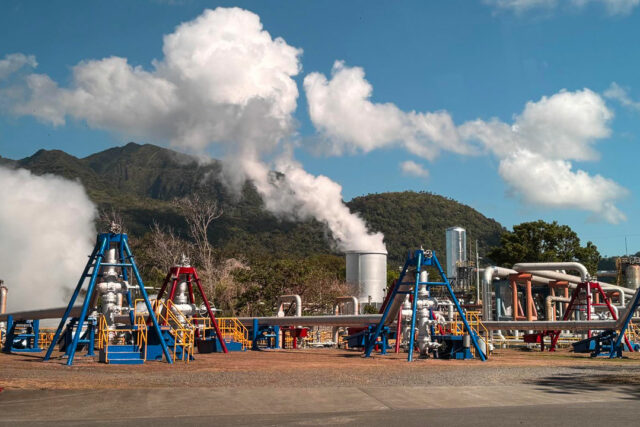
The Makiling-Banahaw (Mak-Ban) geothermal facility — SHELDEEN JOY TALAVERA

BATANGAS — Philippine Geothermal Production Company, Inc. (PGPC), a wholly owned subsidiary of SM Investments Corp., is targeting to add up to 400 megawatts (MW) of capacity over the next five to seven years through six pipeline projects.

“What we have on our radar is around 250 to 400 [MW],” PGPC President Napoleon L. Saporsantos, Jr. told visiting reporters at the Makiling-Banahaw (Mak-Ban) geothermal site on Tuesday.

PGPC currently operates steam fields in Mak-Ban, which straddles Laguna and Batangas, as well as in Tiwi, Albay, with a combined capacity of 682 MW.

The company also holds several geothermal service contracts under exploration. These include Mt. Labo across Camarines Sur, Camarines Norte, and Quezon; Mt. Malinao in Albay; Daklan in Benguet; and Baua-Sikaw in Cagayan.

It also has interests in geothermal prospects in Kalinga and Southwest Kalinga.

For 2026, PGPC has allocated about P3 billion for initial exploration activities.

“What’s really our focus are the Malinao and Labo [sites] because we already have drilling in those two, so that’s sort of our priority in terms of development,” Mr. Saporsantos said.

PGPC developed Southeast Asia’s first commercial geothermal power project in 1971 and has been supplying geothermal steam to power plants since 1979.

Mr. Saporsantos said geothermal energy helps support power supply stability, particularly amid global fuel supply uncertainties linked to the Middle East conflict.

“The important contribution of geothermal in the Middle East crisis is making sure that we’re operating optimally,” he said. — Sheldeen Joy Talavera

Gov’t to borrow up to P784B via local market in Q2

BW FILE PHOTO

By Aaron Michael C. Sy, Reporter

THE GOVERNMENT is looking to borrow up to P784 billion from the domestic debt market in the second quarter, the Bureau of the Treasury said on Wednesday.

According to the borrowing schedule posted on its website, the BTr is looking to raise up to P364 billion via Treasury bills (T-bills) and up to P420 billion through Treasury bonds (T-bonds) in the April-to-June period.

The plan is 4.85% or P40 billion lower than the P824-billion target for the first quarter.

The Treasury exceeded its borrowing goal in the first quarter as it raised P1.02 trillion amid strong demand for government securities early in the year on expectations of continued lower borrowing costs. The period also saw the issuance of new 10-year fixed-rate Treasury notes worth P297.94 billion — made up of P235 billion in new money and P62.94 billion via the switch program — well above the initial P30-billion offer.

For April, the government will auction off securities worth up to P248 billion, or P140 billion in T-bills and P108 billion in T-bonds.

Broken down, the BTr will offer 91-, 182, and 364-day T-bills on April 6, 13, 20, and 27.

For T-bonds, it will also sell three- and eight-year papers in a dual-tenor auction on April 7, five-year bonds on April 14, and seven-year debt on April 21. The BTr will hold another dual auction for four- and 10-year T-bonds on April 28.

In May, the Treasury is targeting to raise up to P268 billion from the local market, or P128 billion in T-bills and P140 billion in T-bonds.

Auctions for T-bills will be held on May 4, 11, 18, and 25.

Meanwhile, the government will offer three- and 20-year notes on May 5, five-year T-bonds on May 12, seven-year securities on May 19, and four- and 10-year bonds on May 26.

For June, it also looks to borrow up to P268 billion, or P128 billion via T-bills and P140 billion through T-bonds.

The BTr will offer T-bills on June 1, 8, 15, and 22.

Meanwhile, it will sell five-year T-bonds on June 2, three- and eight-year papers on June 9, seven-year notes on June 16, and four- and 10-year debt on June 23.

“The lower second-quarter borrowing plan reflects fiscal discipline and healthier cash buffers, so there’s less pressure to borrow at any cost. Demand will likely stay selective, with investors still pushing for higher yields amid global uncertainty, so we may continue to see partial awards,” Reyes Tacandong & Co. Senior Adviser Jonathan L. Ravelas said in a Viber message.

The BTr’s preference for shorter tenors was expected amid weakening appetite for longer-dated debt due to growing inflation worries amid the prolonged Middle East war, which has driven up oil prices, a trader said in a text message.

“There’s really no appetite for longer ones given the inflation picture for the medium term.”

The lower fundraising target for the second quarter could also reflect cautious government spending following the flood control scandal in 2025, Rizal Commercial Banking Corp. Chief Economist Michael L. Ricafort said in a Viber message.

He added that expectations of rising borrowing costs and the peso’s depreciation may also dampen demand for government securities.

Converge tops fixed network rankings in Ookla report

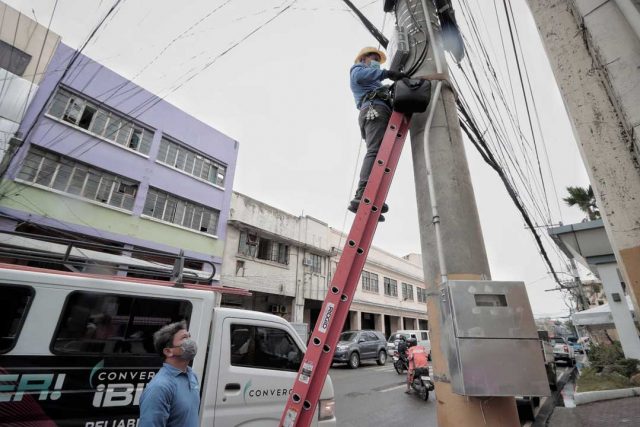
CONVERGE

CONVERGE ICT SOLUTIONS, Inc. ranked as the fastest fixed internet provider in the Philippines based on recent measurements by global network intelligence firm Ookla.

In a media release on Wednesday, the listed fiber broadband provider said it was recognized for having the fastest fixed network, as well as the best fixed network and fixed video experience.

Based on Ookla’s report covering the third and fourth quarters of 2025, Converge posted a Speedtest Connectivity Score of 75.09, followed by Globe Telecom, Inc. at 74.06, PLDT Home Fiber at 73.65, and PLDT Inc. at 71.27.

“From the beginning, Converge committed to building infrastructure that would serve the country for the long term… We invested in nationwide fiber and a robust satellite network. We expanded across regions. We strengthened international connectivity to position the Philippines within the global digital network,” Converge Chief Executive Officer Dennis Anthony H. Uy said.

Converge also led the fastest fixed network category with a score of 61.12, ahead of Globe at 59.88, PLDT Home Fiber at 59.11, and PLDT at 55.89.

In video streaming performance, Converge posted a score of 83.73, which the company said indicates its ability to deliver consistent streaming quality during peak usage periods.

For latency, which measures network responsiveness in real-time applications such as online gaming and cloud services, Converge recorded a score of 13.94.

“As demand for faster and more reliable connectivity continues to grow, Converge remains focused on expanding its fiber footprint and enhancing network capabilities,” the company said.

Shares in Converge rose by 40 centavos, or 3.2%, to close at P12.90 each on Wednesday. — Ashley Erika O. Jose

What’s next for legendary entrepreneur Jose Magsaysay, Jr. of Potato Corner?

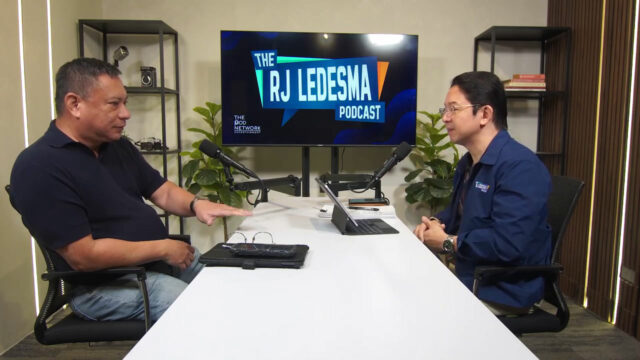
POTATO CORNER co-founder Jose “Jomag” Magsaysay, Jr. during The RJ Ledesma Podcast. — THE RJ LEDESMA PODCAST

Among entrepreneurs, there are few who are as famous, successful, and relevant to Filipinos as Jose “Jomag” Magsaysay, Jr. of Potato Corner. I’ve been lucky to have Jomag as my business partner and mentor in my business, Mercato Centrale, as well as in my podcast. To many Filipinos — myself included — he is a legend.

The story of how he co-founded Potato Corner and grew it into a business that is present in every corner of the Philippines is the gold standard of how to achieve greatness in entrepreneurship through franchising. Potato Corner was founded in 1992 and today has over 1,300 branches around the world. And since its founding, he hasn’t stood still. What is he busy with this year? What is the second act for this iconic Pinoy entrepreneur? And what can other entrepreneurs learn from his mentorship?

Aside from Potato Corner, Mr. Magsaysay is involved in numerous other businesses — as founder, investor, board member, or, at times, as mentor. In fact, in entrepreneurial circles, he has become known as something of a “partner ng bayan” (partner of the community or country) I recently spoke with him on the RJ Ledesma Podcast where he talked about many of the things he is busy with today — what he calls his “Jomag version 2.0” phase. One hour was too short for all the insights he shared. You can watch the interview in full or check out the highlights below.

‘DM ME’
I’ve had so many entrepreneurs approach me and say, “RJ, can you introduce me to Jomag? It’s so inspiring what he’s been writing about entrepreneurship.” Today, he has evolved from a singularly focused founder into a thought leader and enabler of promising young entrepreneurs. He is currently the entrepreneur in residence at the Asian Institute of Management where he works closely with many future business leaders.

So first, let’s get the question on everyone’s mind out of the way: How do you get in touch with Jose Magsaysay, Jr. if you have a winning business idea?

“Message me,” he says. “DM me, and then tell me who you are, what your business is, what challenges you’re going through. And then if your business looks interesting to me, I will reply back, then we’ll talk.”

Yes, entrepreneurs. Jose Magsaysay, Jr. is on Facebook writing about entrepreneurship in a series called “Business As It Really Is.” Getting in touch with him is literally as easy as sending a direct message.

Keep in mind though that he is, in his words, “biased towards food and platform building or ecosystem building.” Good luck on your pitches!

ON MENTORSHIP
In one Facebook post, he talks about the road less traveled. This has been the guiding principle of his entrepreneurial journey — and it continues to guide him as he forges new paths, including his foray into mentorship.

“Sometimes I take the road less traveled,” Mr. Magsaysay, who describes himself as an extreme introvert, says, “And then sometimes I’d rather walk alone because if there’s somewhere that is interesting to go, I go. And if I’m in a pack, I have to follow the pack sometimes. And that makes me uncomfortable.”

He shares that his typical day is now full of mentoring moments. Talking about his mentorship on Facebook, he says, “It continues my road to mentoring and sitting as an independent director for some corporations. I’m enjoying it. And who knows, this might be the new path that I will go to, but I still don’t know.”

For now though, he is enjoying his role as mentor ng bayan. “I think everybody needs a mentor,” he says. “Until now, I still have a mentor. And it really helps. It focuses me.

“From my point of view, I can see problems that others are doing. Sometimes you cannot see your own problem. It takes somebody else to see your problems. That’s what I do now and help founders in.”

BUSINESS AS IT REALLY IS
On his Facebook page, he gives priceless advice to business owners. In very broad strokes, he talks about three things in particular:

• Platform Thinking

• Structural Dominance

• Scar Tissue Leadership

Within each topic is a wealth of learning. For example, for Scar Tissue Leadership, he explains how leaving Potato Corner in the past was a challenging experience but also one that taught him how to start new businesses.

“Every time I left Potato Corner,” he said, “I did something different. One of those times I ended up running Mister Donut, and then one time I was able to put up a new company… ’Yun ang naging runway ko, ’yung mga (those became my runways, the) periods of resignations… That’s when I was able to start some businesses.”

For more on Scar Tissue Leadership, Structural Dominance, and Platform Thinking, head over to his Facebook page where he talks about these topics in detail.

I’d like to end this week’s column with a quote from Jomag that shows how you never know what you’ll learn from this master entrepreneur. This chaotic creator who has been called “the antithesis of order” will be teaching you about building platforms one moment, then dishing life wisdom the next.

“Humility is very important,” he says. “Whenever I enter a room, I never sit in front. But the thing is, they bring me in front and it’s a big difference you know. When I talk I’m usually the last to talk kasi (because) I’m able to think about what to say. Tapos (then) when I broke my neck, had five cranial surgeries, I had a lot of time to think. That alone time is very important for me. When you’re always thinking about who am I, what do I do. That’s helped me.”


RJ Ledesma (www.rjledesma.com) is a Hall of Fame Awardee for Best Male Host at the Aliw Awards, a multi-awarded serial entrepreneur, motivational speaker, and business mentor, podcaster, an Honorary Consul, and editor-in-chief of The Business Manual. Mr. Ledesma can be found on LinkedIn, Facebook and Instagram. The RJ Ledesma Podcast is available on Facebook, Spotify, Google and Apple Podcasts. Are there entrepreneurs you want Mr. Ledesma to interview? Let him know at ledesma.rj@gmail.com.

New ice cream brand pushes Filipino flavors

IT’S NOT LIKE you can eat strawberry, vanilla, and chocolate forever: how about switching to bilo-bilo ice cream?

On March 18, Marcelo’s Microcreamery was formally launched in the country, although they have been found on supermarket shelves since last year. The flavors aren’t quite what you’ll find in any normal store shelf: the brand has the Heritage Line, building on traditional Filipino snacks. These are Inutak, Ube Macapuno Champorado, Latik-Latik, Mangga’t Suman, Bilo-Bilo, and Chocolate Champorado. During a tasting at Romulo Café in Makati, they also unveiled their latest flavor, Pistachio Kunafa Chocolate (as in the Instagram-viral Dubai chocolate, done in collaboration with the chef who made it, Nouel Catis).

Due to an aversion to certain ingredients (my fault, not theirs), we stuck to something familiar: the Chocolate Champorado, made with tablea (cocoa tablets used for hot chocolate) and rice pudding churned into ice cream. This tasted richly dark and indulgent. We also had a bite of the Dubai chocolate one, and it proved very richly creamy, with a slight coolness of flavor (akin to mint) brought by the pistachios.

The flavors we tasted were made with milk, but the Inutak (smoked ube or purple yam pudding), Ube Macapuno Champorado (ube and coconut sport in chocolate rice pudding), Latik-Latik (toasted coconut curds) Mangga’t Suman (mango and rice cake sorbet, and Bilo-Bilo (a treat made of macapuno mochi, sweetened bananas, and jackfruit), all have a non-dairy coconut milk base. “Our drive is really to partner with local coconut farmers, local tablea farmers, to really help,” said Epic Brands Corp. Chief Executive Officer John Marcelo in an interview. They buy the raw materials directly from the farmers, and try to use local as much as possible. “I think it’s about time to get our flavors out there.”

A former racecar driver, Mr. Marcelo and his family always celebrated ice cream. One night, during a grocery run, he saw that all the brands in the supermarket offered the same thing over and over. The family already makes ice cream for other brands, so, “I wanted to create my own brand.”

They weren’t easy to make: he recalls making the rice-based ones, and them coming out rock-hard from the freezer. The same thing happened to the chunks of fruit. That meant researching cooking methods, such as stewing the fruits more slowly, and cooking everything in a slightly different way. They’re called a “microcreamery” by the way, because they only make the ice creams in small batches.

These flavors are tied to his own memories, making each flavor personal. The champorado flavor, for example, is a schoolboy memory, while the mangga’t suman was a memory of a weekend drive.

It’s this same idea of memory that’s driving their push to export, despite being quite new to the game. He told BusinessWorld that they are already in the Middle East (hence the halal seal on the pint), Australia, Canada, and the US. Right now, they are still in talks to bring it to Southeast Asian neighbors Malaysia and Vietnam. The reason for the push to export is the large numbers of Filipino expatriates in those countries: “We thought that the Filipinos overseas, they definitely miss all our kakanins (rice-based desserts).”

“I wanted to tap that market. Most of them, they miss home; they miss their families. So at least (we can) bring them something that can remind them of their childhood and spending time with their families.”

Marcelo’s Microcreamery products are available in the Philippines for around P460 a pint in Landers, Shopwise, Marketplace, and some Robinsons Supermarket branches. — Joseph L. Garcia

BoJ debated need for more rate hikes —Jan. minutes

THE JAPANESE national flag is hoisted atop the headquarters of Bank of Japan in Tokyo, Japan Sept. 20, 2023. — REUTERS

TOKYO — Many Bank of Japan (BoJ) policymakers saw the need to keep raising interest rates, with some calling for timely action on mounting inflationary pressures, minutes of their January meeting showed, highlighting their hawkish bias even before the Iran war boosted oil prices.

They also called for increased vigilance to the weak yen’s impact on inflation, which they saw as becoming bigger than in the past as companies more actively passed on higher ​import and labor costs, the minutes showed on Wednesday.

“Given that addressing rising prices was an urgent priority in Japan, the BoJ should not take too much time examining the impact of past rate hikes, and should proceed with the next rate increase without missing the appropriate timing,” one member was quoted as saying.

Another member said the BoJ should ​raise rates at intervals of a few months, adding that timely rate hikes were the only monetary policy prescription to curb unwelcome yen weakness that pushes up import costs, the minutes showed.

“Many members said a mechanism in which wages and prices rise moderately in tandem was becoming embedded in Japan, with this year’s wage negotiation likely to result in solid pay increases for a wide range of firms,” the minutes showed.

The remarks underscore the BoJ’s resolve to proceed with monetary tightening, with many in the board voicing confidence that higher US tariffs and past rate hikes have yet to become a major drag on the economy.

The Middle East conflict, triggered by US-Israeli attacks against Iran on Feb. 28, has muddled the policy outlook with soaring oil prices adding inflationary pressures while also hampering an economy heavily reliant on fuel imports.

Having just raised rates in December, the BoJ kept its policy rate steady at 0.75% in January but retained its hawkish inflation forecasts.

Many members said underlying inflation, or price moves reflecting domestic demand that the BoJ considers key to its rate-hike timing, was approaching the central bank’s 2% target, the minutes showed.

At a subsequent meeting in March, the BoJ again kept rates unchanged while maintaining its bias for tighter monetary policy as surging oil prices risked exacerbating inflationary pressures.

Core consumer inflation stayed above the BoJ’s 2% target for nearly four years on rising raw material and labor costs ​before slowing to 1.6% in February due largely to generous government fuel subsidies.

With various one-off factors distorting the consumer price index, one member proposed paying more attention to gauges of underlying inflation such as the pace of wage growth and service prices, as well as inflation expectations, the minutes showed.

Several also proposed enhancing communication on how the BoJ perceives underlying inflation and Japan’s neutral rate of interest, the minutes showed.

The proposals likely led to the bank’s decision in March to disclose by summer a new indicator on inflation and an updated staff estimate on the neutral rate.

While the Middle East conflict has heightened uncertainty over the economic outlook, markets still see roughly a 60% chance of a rate hike in April. — Reuters

SM Prime to spend P300M on covered LRT-2 Antipolo link to SM Masinag

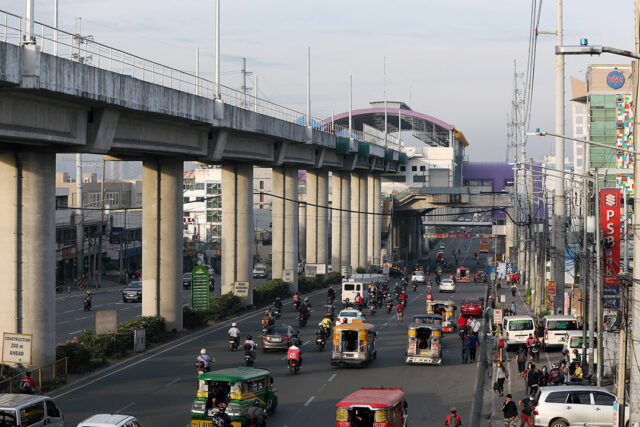
The LRT-2 Masinag Station in Antipolo City, Rizal. — PNA.GOV.PH

SM PRIME HOLDINGS, INC. said it is working with government agencies on transport-related projects in the Greater Manila Area, using its mall locations to improve connectivity with public transit.

In a statement on Wednesday, the company said it is allocating more than P300 million for a direct, covered pedestrian link connecting Light Rail Transit Line 2’s (LRT-2) Antipolo Station to SM City Masinag in Antipolo, Rizal.

The project aims to reduce transfer times and remove the need for street-level crossings, the company said.

“Urban mobility is central to national development. By working with the government, we are able to improve access points that affect commuters every day,” SM Prime President Jeffrey C. Lim said.

“This partnership started during the pandemic, when improving public transport access became a priority. The facilities are now largely in place,” he added.

The project will include ramps, elevators, improved lighting, and closed-circuit television (CCTV) systems to enhance accessibility and security for commuters.

Construction is scheduled to begin in the second quarter of 2026 and is expected to be completed within six months, under a public-private partnership with the Light Rail Transit Authority.

SM Prime said it is also replicating the SM North EDSA Busway Concourse model at SM Megamall. The northbound section is expected to be completed in the first quarter of 2026.

The SM North EDSA Busway Concourse, which opened in March 2025, features covered walkways, elevators, escalators, and direct access to the busway.

Separately, SM Prime said it has partnered with the Metropolitan Manila Development Authority (MMDA) to integrate live traffic feeds from the agency’s AI Traffic Management System into select mall digital directories, allowing commuters to view road conditions in real time.

SM Prime shares rose 3.02% to close at P19.78 each on Wednesday. — Alexandria Grace C. Magno

Stockpiling oil

STOCK PHOTO | Image from Freepik

The case for a national oil buffer is already obvious. We import nearly 90% of our fuel, we have one active domestic refinery, and we have no strategic reserve. That is not an energy policy. That is a gamble. Japan holds around 200 days worth of strategic reserve. South Korea holds 90. The United States holds 90. We have about 30.

Senate President Tito Sotto has filed Senate Bill 1934, proposing the creation of a Philippine Strategic Petroleum Reserve. The bill mandates a reserve equivalent to at least 90 days of the country’s average consumption. Senator Chiz Escudero filed a companion measure proposing a 180-day tank farm.

But a reserve is created not just by law, but by having fuel physically stored somewhere, protected, financed, and ready for use. The harder, more urgent questions are these: where will the fuel come from, where do we put it, who pays for it, and how fast can we get it in place?

A tank farm in Bataan or Subic seems logical. Both have deep-water ports. Both have existing energy infrastructure. But a national stockpile requires the kind of facility that takes years to build, permit, secure, connect, and insure. A four-year answer is not much comfort in a four-week supply shock.

The Strait of Hormuz does not wait for our construction schedule. So, the more useful discussion now is not whether the Philippines should have a strategic reserve. It should. The more useful discussion is how to execute one quickly enough to matter.

We should stop thinking of the reserve as one giant construction project. We need to think in phases. First, lease what can be leased. Second, store what can be stored. Third, diversify where we buy from. Fourth, build the permanent infrastructure after the emergency buffer is already in place.

This is where the most significant recent move in energy security comes in. Enrique Razon, Jr., through Prime Infrastructure Capital, acquired SierraCol Energy, Colombia’s largest independent oil producer. SierraCol produces 77,000 barrels of crude oil per day. That single asset could, in theory, cover roughly one-fifth of our daily fuel needs.

The Razon acquisition does not solve our whole problem, but it creates something valuable: a Filipino-controlled upstream source outside the Middle East, in this case South America. Of course, SierraCol produces crude, not finished fuel.

Thus, Colombian crude will have to pass through refining complexes, possibly in Singapore, where it is processed into finished fuel for a fee before making the final leg to the Philippines. This is a long chain. But it is one in which a Filipino group controls the source, and in energy security that matters.

If the crude is loaded from Colombia’s Caribbean side, which is where most Colombian exports now move, it would likely sail either through the Panama Canal, if vessel size and slot availability allow, or else take the longer route around the Cape of Good Hope or through Suez before reaching Singapore. This can take four to six weeks.

Once in Singapore, the crude itself need not sit long. Refineries run continuously, and tanker port turnaround times are typically measured in days, not weeks, so a practical assumption is that discharge, processing, blending, and reload could take a few days.

From Singapore, the final leg to the Philippines is much shorter. The cargo would pass through the Singapore Strait and then across the South China Sea to Philippine terminals, a run that is roughly another four to six days by tanker under normal conditions.

The logical domestic link in this chain is Bataan. The storage and distribution network there is controlled by Petron, which belongs to Ramon Ang’s San Miguel Corp. Razon controls oil at the source. Ang controls critical infrastructure at the destination. If the country wants a reserve strategy that can be executed faster than government alone can manage, these two men will have to be part of it.

The combination of Razon’s upstream supply and Ang’s downstream infrastructure provides energy security that is privately financed and Filipino-controlled. It also allows for an energy cushion that can be assembled faster than a purely public stockpiling initiative.

In the near term, we still need finished fuel. This means being practical about our suppliers. Despite everything happening in the West Philippine Sea, China remains one of the most practical energy suppliers available to us. It runs the largest refining network in the world. Its ports are near enough that tankers can reach ours in days rather than weeks.

But the political relationship is strained. The government and the private sector can work on this together and treat trade separately from any territorial dispute. Easier said than done, but we have to try. Quid pro quo may be necessary. This is not moral surrender. This is basic statecraft.

Regional diversification is also an option, and Brunei may be the quicker and quieter answer. Brunei already exports high-quality crude and refined petroleum to the Philippines. It is small, stable, close, and energy-rich. Deepening our supply relationship with Brunei gives us a reliable regional counterweight.

Petron can again play a role here. Ramon Ang can seek help from his fellow San Miguel stockholder Iñigo Zobel to raise the matter with Brunei’s Sultan Bolkiah, Zobel’s fellow polo aficionado. Long-standing relationships among Ang, Zobel, and Brunei royalty may sound informal, but informal channels often move faster than formal diplomacy. If the goal is to secure supply quickly, personal ties can become national assets.

The ASEAN Petroleum Security Agreement already exists, and ASEAN ministers this month agreed to hasten work on its updated framework ahead of the May 2026 summit. Under the mechanism, a member state facing a critical shortage may trigger a formal distress process, but only after taking short-term steps of its own to manage demand.

The Philippines, as current ASEAN chair, should push to finalize the updated arrangements at once and be prepared to invoke the mechanism immediately if the legal threshold is met. In an oil shock, a regional backstop that buys even a little time is worth having.

But supply is only half the equation. The other half is storage. And this is where urgency should change the model. The obvious answer is a large land-based reserve in Bataan or Subic. But the obvious answer is not always the quickest one. It will take years to complete a tank farm that can hold a 180-day supply of oil.

Also, one lesson from the present US-Iran conflict is that a single giant tank farm is a fixed and visible target. In a serious conflict, one well-placed strike could hit both the reserve and the downstream supply chain at the same time. That is not a strategic buffer. That is a concentration of risk.

The faster and more flexible option is floating storage. Large vessels called Floating Storage Units, or FSUs, can be leased and deployed in months rather than years. They are expensive, but they are mobile. In an archipelago, mobility is protection.

We can anchor FSUs deep within our internal waters, disperse them across the Visayas, and place some along the eastern seaboard facing the Pacific. Our geography then becomes part of the defense plan. Instead of one visible fuel stockpile, we have multiple movable reserves spread across islands and sea lanes that are harder to neutralize in one blow.

FSUs are not perfect. This is precisely why we need a hybrid system. Privately funded land storage in Bataan or Subic for scale and stability. Then state-leased floating storage in internal waters for speed, flexibility, and dispersal. One backs up the other.

The reserve should be designed with the future in mind. This is not infrastructure meant to serve unchanged for 100 years. The country is slowly moving toward electric vehicles, electrified public transit, and a different transport energy mix.

Over the next two to three decades, daily demand for diesel and gasoline may change materially. This means we should be careful about locking too much capital into oversized permanent tank farms designed around today’s consumption forever. A hybrid system gives us a buffer now without overcommitting us to a fuel future that may not last.

So, while the Senate can quickly pass a law creating a national oil reserve, the real issue is execution. We need a reserve, but how fast can we lease it, fill it, disperse it, and defend it? Because in an energy crisis, the only reserve that really matters is the one already in place.


Marvin Tort is a former managing editor of BusinessWorld, and a former chairman of the Philippine Press Council.

matort@yahoo.com

GCash’s Wais Tindera Caravan empower women entrepreneurs in QC

Women entrepreneurs gathered in Brgy. Commonwealth, Quezon City for the Wais Tindera Caravan, where GCash and Fuse Financing, Inc. brought financial literacy, responsible borrowing lessons, and digital tools closer to grassroots MSMEs this Women’s Month. #MagingWaisTindera #MagingWaisBorrower #GCashFuse


Spotlight is BusinessWorld’s sponsored section that allows advertisers to amplify their brand and connect with BusinessWorld’s audience by publishing their stories on the BusinessWorld Web site. For more information, send an email to online@bworldonline.com.

Join us on Viber at https://bit.ly/3hv6bLA to get more updates and subscribe to BusinessWorld’s titles and get exclusive content through www.bworld-x.com.

ADVERTISEMENT
ADVERTISEMENT