Home Blog Page 1104

ACEN completes offload of remaining diesel power assets

ACENERGY.PH

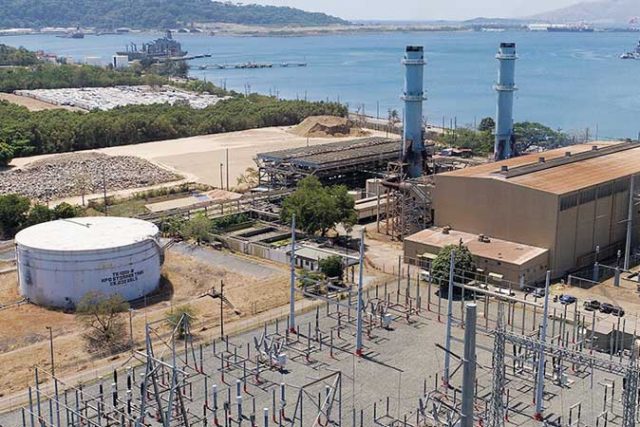
AYALA-LED ACEN CORP. has sold its remaining diesel power plants, moving closer to its goal of 100% renewable energy generation by the end of 2025.

In a stock exchange disclosure on Monday, ACEN said it had signed a deed of absolute sale of shares with AC Energy and Infrastructure Corp. (ACEIC) to dispose of ownership interests in three special purpose vehicles.

The sale involves 33.49 million common shares of One Subic Power Generation Corp., which owns a 116-megawatt (MW) diesel facility in the Subic Freeport; 6.35 million shares of CIP II Power Corp., which owns a 21-MW diesel plant in Bacnotan, La Union; and 6 million shares of Bulacan Power Generation Corp., which owns a 52-MW diesel plant in Norzagaray, Bulacan.

ACEIC, which holds Ayala’s energy and infrastructure assets, is ACEN’s parent company and major shareholder.

“The divestment will help ACEN achieve its goal of 100% renewable energy generation by end-2025,” the company said.

The total consideration for the sale represents less than 10% of ACEN’s total assets as of Dec. 31, 2024.

ACEN, the listed energy platform of the Ayala group, currently boasts 7 gigawatts (GW) of attributable renewable energy capacity across operational, under-construction, and committed projects.

The company has expanded its footprint outside the Philippines to Australia, India, Indonesia, Vietnam, Lao PDR, and the United States.

For the first quarter, ACEN reported an attributable net loss of P1.19 billion, citing a large impairment from its wind farms in Vietnam.

Revenues decreased by 15.8% to P7.95 billion, while costs and expenses dropped 0.3% to P9.95 billion.

ACEN President and Chief Executive Officer Eric T. Francia said macroeconomic and sectoral headwinds persist this year, underscoring the challenges of the energy transition.

“The company’s underlying health and long-term prospects remain robust, and we have been leveraging opportunities to increase contracted capacities and expand investments in energy storage,” Mr. Francia said.

Shares in the company declined 2.25%, or 0.05 points, closing at P2.17 apiece. — Sheldeen Joy Talavera

Venice Film Festival: Del Toro’s Frankenstein shuns horror for humanity

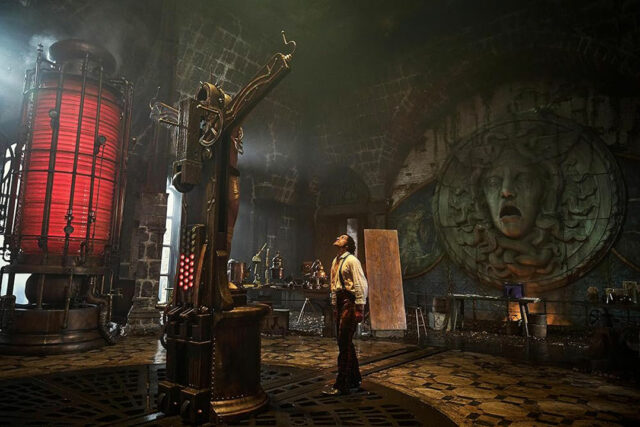
Oscar Isaac and Jacob Elordi in Frankenstein.

VENICE — Forget the classic Frankenstein films, where the monster had a flat head, neck bolts, and heavy boots.

The new adaptation of Mary Shelley’s classic novel Frankenstein, directed by Mexico’s Guillermo del Toro, portrays a sad, sensitive creature craving affection and knowledge, and instead confronted by anger and hatred.

“A lot of the interpretations of the creature visually are almost like accident victims, and I wanted beauty,” Mr. Del Toro told reporters on Saturday ahead of the premiere of his latest film at the Venice Film Festival.

Mr. Del Toro directs from his own screenplay, telling the story of Victor Frankenstein (Oscar Isaac), an arrogant scientist who assembles a creature from body parts and brings to life an indestructible, gentle giant (Jacob Elordi).

The movie shows the danger of misusing modern technologies, but Mr. Del Toro, whose feature The Shape of Water took top honors at Venice in 2017, said he was not thinking about artificial intelligence when he wrote the script.

“Artificial intelligence I’m not afraid of. I’m afraid of natural stupidity, which is much more abundant,” he said. “We live in a time of terror and intimidation, certainly. And the answer, which art is part of, is love.”

Unlike many directors, Mr. Del Toro largely shunned computerized special effects and instead built lavish sets for his team of actors, which also included Christoph Waltz, Mia Goth, and Felix Kammerer.

“If you put them (actors) in a real lab with real windows, with real height, with real giant batteries, they are reacting to another actor,” he said.

“CGI is for losers,” Mr. Waltz added to laughs.

‘BROKEN HEART’
Mr. Del Toro, known for blending fantasy and horror in films such as Pan’s Labyrinth, said he had been obsessed with Mary Shelley’s novel, first published in 1818, since he was a boy and had always wanted to create his own film version.

“What I didn’t want is for you to feel that you were watching a classic interpreted with reverence, but with urgency and something alive now,” he said of the humane retelling of the horror saga, with the scientist emerging as the true monster.

“How do you live with a broken heart, and what do you do with a broken heart? Often cruelty happens out of broken hearts,” Mr. Isaac said of his character.

The picture is one of three films US streamer Netflix is showcasing at Venice. The other two are Kathryn Bigelow’s A House of Dynamite and Noah Baumbach’s Jay Kelly.

It is expected to get a limited release in cinemas in October before going behind the Netflix paywall in November.

Mr. Del Toro said he wanted it to get as wide a cinema release as possible, but was excited by Netflix’s huge potential audience.

“I mean, look at my size. I always want more of everything,” the rotund director joked, before adding: “To me, the battle we are going to fight in telling stories is on two fronts, obviously the size of the screen, but the size of the ideas is very important.”

Frankenstein is one of 21 films competing for the prestigious Golden Lion prize, which will be awarded on Sept. 6. — Reuters

PLDT to activate Google laser sites for fiber-like internet

WIKIMEDIA COMMONS/PATRICKROQUE01

PANGILINAN-LED PLDT INC. is set to activate its three Google Taara laser communication sites, which will bring fiber-like internet connectivity to its customers.

“This is a game-changer for us in connecting remote areas. It makes it easier to provide fiber-like internet to new areas. And we’re excited for the people of Talim Island and Dipaluda to enjoy the benefits of FTTH (fiber-to-the-home) connectivity,” PLDT Chief Operating Officer and Head of Network Menardo G. Jimenez, Jr. said in a media release on Monday.

PLDT’s Google Laser Sites will be installed on Talim Island, Rizal; in Dipaluda, Isabela; and in Bagong Pagasa, Quezon City.

Taara, developed by Google, is one of its technologies that provides high-speed internet to far-flung and underserved areas. The technology utilizes beams of light, or free-space optical lasers, for transmitting data.

It is said to be similar to fiber optics but without physical cables, with each site’s installation capable of delivering up to 20 gigabits per second.

“Deploying Taara avoids the high expense of laying fiber optic cables underwater, while in Dipaluda it bypasses the challenges of installing fiber across rivers and mountains,” PLDT said.

Separately on Monday, PLDT said it had executed a subscription agreement for 594 million additional common shares of Kayana Solutions, Inc.

Kayana Solutions is a data-powered digital experience company that utilizes the data assets of the Pangilinan-led companies.

PLDT holds a 45% stake in Kayana Solutions, while its parent company, Metro Pacific Investments Corp., and affiliate Manila Electric Co. each own 27.5%.

At the local bourse on Monday, shares of PLDT closed P36, or 3.11% lower, at P1,123 apiece.

Hastings Holdings, Inc., a unit of PLDT Beneficial Trust Fund subsidiary MediaQuest Holdings, Inc., has a majority stake in BusinessWorld through the Philippine Star Group, which it controls. — Ashley Erika O. Jose

Venice Film Festival: Jude Law tackles Putin role without fear

PAUL DANO in a scene from The Wizard of the Kremlin.

VENICE — Jude Law said on Sunday he did not fear reprisals for playing Russian President Vladimir Putin in The Wizard of the Kremlin, a new film premiering at the Venice Film Festival that offers a chilling, fictionalized look at Mr. Putin’s rise to power.

The Wizard of the Kremlin, directed by France’s Olivier Assayas and also starring Paul Dano, shows Mr. Putin ruthlessly disposing of people who cross his path.

Asked by reporters if he was worried about possible retaliation for taking on the role, Mr. Law said: “I hope not naively, but… I didn’t fear repercussions.”

The British actor added that the film recounted Mr. Putin’s single-minded ascendancy “with nuance and consideration. We weren’t looking for controversy for controversy’s sake.”

Based on a best-selling novel by Giuliano da Empoli, the movie imagines the life of Vadim Baranov, a shadowy Kremlin insider who rises from artist to television producer before becoming a spin doctor to a young Mr. Putin.

From his office in the Kremlin, he crafts narratives that blur truth and propaganda, faith and manipulation, renouncing his values to serve his master who is determined to restore Russia to greatness after the collapse of the Soviet Union.

‘SCARY AND DANGEROUS SITUATION’
Mr. Law said he shunned a strict impersonation of Mr. Putin, but nonetheless tried to capture the essence of the man. “It’s amazing what a great wig can do,” he joked.

“The tricky side was that the public face (of Putin) that we see gives very little away… I felt that conflict of trying to show very little, but feel an awful lot and portray an awful lot from within,” he said.

Mr. Assayas, best known for films such as Carlos (2010) and Personal Shopper (2016), said his latest movie resonated beyond Russia.

“We made a movie about what politics has become and the very scary and dangerous situation we all feel we are in,” he said.

“We took the case of Vladimir Putin, but it applies to many authoritarian leaders. Politics has changed in a major way during our lifetimes, and what’s going on right now is terrifying,” he added.

American actor Jeffrey Wright, who plays a US writer in the movie, said he hoped it would get widely seen in his home country, which he feared might shed its ideals and aspirations.

“If that is lost as it is now, then we become the thing we see in this film,” he said.

Mr. Dano, who plays the main protagonist Baranov, said the project avoided simple moral labels.

“If you were to just label a character bad, it would be a massive oversimplification,” he said. “Asking why, and looking into the gray, even if it’s scary, is better than letting us go further and further into black and white.”

The Wizard of the Kremlin is one of 21 films competing for the prestigious Golden Lion prize, which will be awarded on Sept. 6. — Reuters

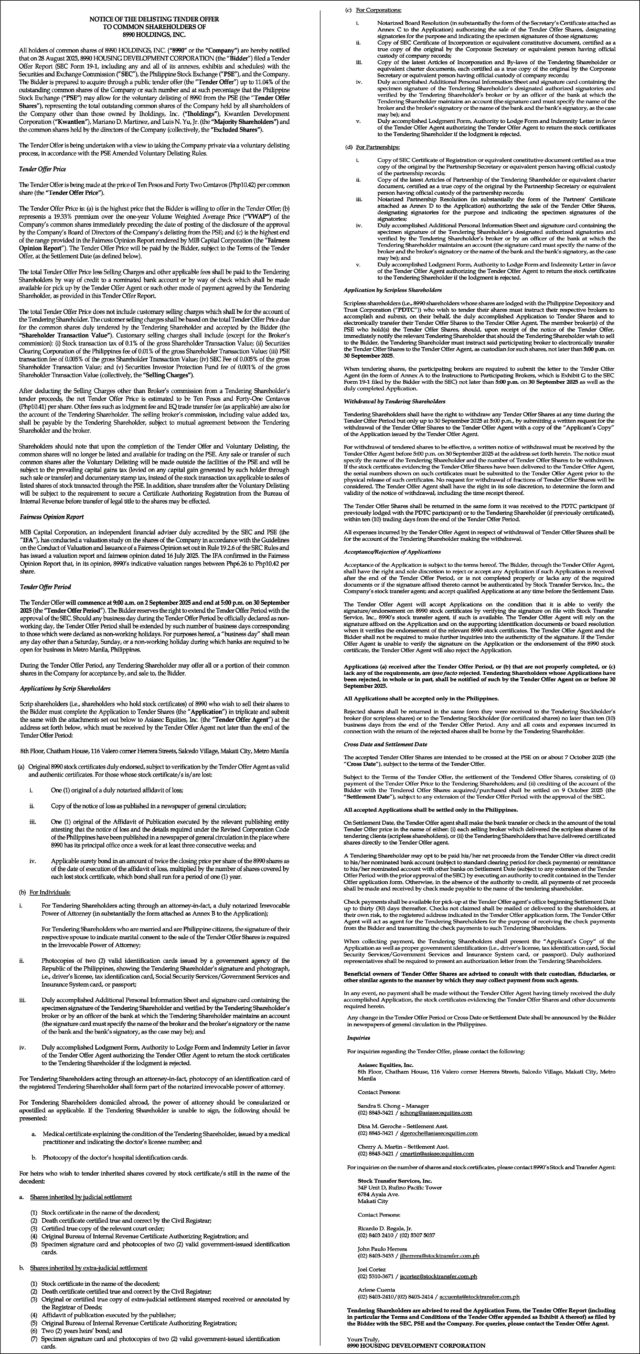
8990 Holdings, Inc. notifies common shareholders of the delisting tender offer

Click to Enlarge


Spotlight is BusinessWorld’s sponsored section that allows advertisers to amplify their brand and connect with BusinessWorld’s audience by publishing their stories on the BusinessWorld Web site. For more information, send an email to online@bworldonline.com.

Join us on Viber at https://bit.ly/3hv6bLA to get more updates and subscribe to BusinessWorld’s titles and get exclusive content through www.bworld-x.com.

Globe says Metro Manila network getting upgrades

PHILSTAR FILE PHOTO

GLOBE TELECOM, INC. said it is boosting its connectivity in Metro Manila with new tower builds and upgrades.

“Metro Manila is always on the move, and connectivity has to keep up. Globe is building new sites and boosting capacity,” Globe Head of Service Planning and Engineering Joel R. Agustin said in a media release on Monday.

Globe is rolling out new cell towers in Metro Manila to improve its capacity and overall internet access, the company said, adding that it recognizes the need for reliable infrastructure as Metro Manila is among the most densely populated cities in the country.

“Every new cell site built and network upgrade reflects Globe’s commitment to deliver the most consistent network in the Philippines, a promise of seamless, reliable connectivity whenever and wherever it’s needed,” Globe said.

The company said its network upgrades cover Metro Manila, particularly the cities of Caloocan, Las Piñas, Marikina, Malabon, Mandaluyong, Manila, Muntinlupa, Navotas, Pasay, Pasig, San Juan, and Valenzuela.

In a separate media release, Globe said it had reached 62.5 million mobile subscribers to date. This represents a 5% year-on-year increase as of end-June, from 59.5 million in the same period last year.

For the second quarter, Globe’s attributable net income fell by 29.46% to P5.46 billion as weaker revenues and higher expenses weighed on earnings.

Its combined revenues for the second quarter declined by 1.92% to P43.47 billion from P44.32 billion in the second quarter of 2024, while gross expenses rose by 0.72% to P39.21 billion from P38.93 billion in the same period last year.

At the local bourse, shares of Globe closed P2, or 0.13% lower, at P1,505 apiece. — Ashley Erika O. Jose

T-bill yields drop across the board after BSP cut

BW FILE PHOTO

THE GOVERNMENT fully awarded the Treasury bills (T-bills) it offered on Monday at lower yields amid robust demand after the Bangko Sentral ng Pilipinas (BSP) cut rates for a third straight meeting and signaled it is near the end of its current easing cycle.

The Bureau of the Treasury (BTr) raised P25 billion as planned from the T-bills it auctioned off as the offer was more than five times oversubscribed, with total bids reaching P125.504 billion. This was also higher than the P113.02 billion in tenders recorded on Aug. 18.

The Auction Committee fully awarded the T-bills as all tenors fetched average rates that were lower than those seen at the previous auction and prevailing secondary market yields, the BTr said in a statement.

Broken down, the Treasury borrowed P8.5 billion as planned via the 91-day T-bills as total tenders for the tenor reached P28.33 billion. The three-month paper was quoted at an average rate of 5.173%, down by 2.2 basis points (bps) from the 5.195% seen in the previous auction. Yields accepted ranged from 5.08% to 5.183%.

The government likewise raised P8.5 billion as programmed from the 182-day securities as tenders amounted to P47.774 billion. The average rate of the six-month T-bill was at 5.323%, falling by 7.5 bps from the 5.398% fetched last week, with accepted yields spanning from 5.288% to 5.35%.

Lastly, the Treasury sold the planned P8 billion in 364-day debt as demand for the tenor totaled P49.39 billion. The average rate of the one-year T-bill dropped by 6.5 bps to 5.457% from 5.522% previously. Tenders accepted carried rates from 5.45% to 5.46%.

At the secondary market before Monday’s auction, the 91-, 182-, and 364-day T-bills were quoted at 5.2321%, 5.3921%, and 5.5357%, respectively, based on PHP Bloomberg Valuation Service Reference Rates data provided by the Treasury.

T-bill rates were lower following the widely expected cut by the BSP last week, Rizal Commercial Banking Corp. Chief Economist Michael L. Ricafort said in a Viber message.

“BSP Governor Remolona gave less dovish signals on a possible one 25-bp BSP rate cut for the rest of 2025 if economic data remained weak, or even no more rate cut for the rest of 2025 if the economic data remained the same,” Mr. Ricafort said.

“The continued decline in yields was due to the BSP’s rate cut decision last week, which signals the end of the current easing cycle,” a trader likewise said in a text message.

On Thursday, the Monetary Board delivered its third consecutive 25-bp reduction this year to bring the target reverse repurchase rate to 5%.

The BSP has now slashed benchmark borrowing costs by a total of 150 bps since the start of its rate-cut cycle in August 2024.

BSP Governor Eli M. Remolona, Jr. said after the meeting that the latest move puts the policy rate at a “sweet spot” in terms of both inflation and output.

Still, Mr. Remolona left the door open to one last reduction within this year to support the economy if needed, which could mark the end of their easing cycle.

The Monetary Board has two remaining meetings this year to be held in October and December.

T-bill rates declined across the board as demand was higher week on week, especially for the longer tenors, the trader added.

On Tuesday, the government will offer P30 billion in reissued 10-year Treasury bonds (T-bonds) with a remaining life of seven years and 13 days.

The BTr is looking to raise P220 billion from the domestic market this month, or P100 billion via T-bills and P120 billion through T-bonds.

The government borrows from local and foreign sources to help fund its budget deficit, which is capped at P1.56 trillion or 5.5% of gross domestic product this year. — AMCS

Venice Film Festival: Broken English reappraises Marianne Faithfull’s legacy

A scene from Broken English.

VENICE — The life and career of British singer-songwriter Marianne Faithfull are reappraised at the Venice Film Festival in Broken English, a movie that mixes documentary and fiction in an effort to redress her often distorted public image.

“Marianne was an artist’s artist… but public perception had been frozen and been stuck. And I think that were it left to AI (artificial intelligence), broken data is just going to stay broken,” said Jane Pollard who co-directed with fellow British filmmaker Iain Forsyth.

Often remembered as simply the former girlfriend of Mick Jagger, despite having released over 30 albums in her own right, Ms. Faithfull is portrayed through a series of interviews conducted in the years leading up to her death at 78 last January.

“When Marianne died so many of the obituaries that ran were headlined ‘Mick Jagger’s ex-girlfriend dies’ … And you kind of think, would you want to be defined for a lifetime by a fairly fleeting relationship that you had in your youth?” Mr. Forsyth told Reuters.

Placed within the setting of the fictional Ministry of Not Forgetting, the film also makes heavy use of archive material, including interviews with journalists who home in on Ms. Faithfull’s rock-and-roll escapades and drug addiction in London’s swinging ’60s rather than her creative work.

“Why have a Ministry of Not Forgetting? Well, because there are many artists whose legacies if left to the algorithms of AI will be misrepresentative of the truth,” said Ms. Pollard ahead of the film’s premiere on Saturday.

“I hope (our film) can begin a conversation and begin a process of reevaluation, both of Marianne as an artist, but also how we consider particularly female artists in the media, which in 50 years has really not changed that much.” Mr. Forsyth added.

Named after Ms. Faithfull’s comeback album released in 1979 after spending two years living on the streets of London, Broken English features actors Tilda Swinton as the ministry overseer and George MacKay in the role of record keeper and interviewer.

Ms. Faithfull, who suffered a severe bout of COVID-19 in her latter years, gives her final musical performance in the film, singing “Misunderstanding” from her 2018 album Negative Capability with backing from Nick Cave and Warren Ellis.

“The physical feat of it with COVID having ravaged her body and not feeling comfortable to talk for long without oxygen, to take it away and to sing was incredibly moving,” Mr. MacKay said.

Ms. Faithfull died during the production but the directors said the finished work reflected 99% of their intended vision.

Broken English is playing out of competition at Venice, meaning it is not in the running for the prestigious Golden Lion award that will be handed out on Sept. 6. — Reuters

The human compass in an AI World: Navigating transitions, preserving traditions

STOCK PHOTO | Image by Vectorpouch from Freepik

As artificial intelligence (AI) continues to expand its reach and importance in our day-to-day living, the conversations around its use almost always carry strong emotional undertones — unease, anxiety, fear, cautious acceptance, sense of wonder, and “no big deal.” In boardrooms, workplaces and classrooms, the same questions echo: Will jobs disappear? Can people adapt fast enough? Will machines take over? It is dividing society between those who master the new tools and those who are left behind.

These are not trivial concerns but valid ones. There is no denying that the profound technological shift is changing the world as we know it. On the other hand, AI is not the first disruptive force humanity has faced. The power loom threatened weavers, calculators unsettled mathematicians, the Industrial Revolution once threatened traditional craftsmen. Each time, the turbulence created by these developments was painful — and yet societies adapted and integrated them into day-to-day living. The difference is not whether humanity will survive this transition, but how we navigate it.

A GENERATIONAL TRANSITION
One key to understanding today’s anxiety is to see it as a generational phenomenon. I belong to a generation that remembers what it was like to use a typewriter and are now working with AI-powered tools. Perhaps that is why I see both the unease and the excitement so clearly. One foot remains in the analog past, and the other is already stepping into the digital future. For the boomers, Gen X and millennials, the acceleration feels disorienting because there is a “before” and an “after” to compare.

This is not the story for the generations after us — Gen Zs, Alphas and those after — who will never know a world without AI. For them, digital life is not an intrusion; it is the water they swim in. What unsettles us today will be their ordinary tomorrow. The anxiety we are experiencing is sharpest now because we are comparing two worlds — the analog we grew up in, and the AI-native one unfolding. This perspective matters because it reminds us that disruption, while real, is transitional. The real challenge, then, is not about whether AI will change us (it already has), but how we bridge this transition responsibly.

BRIDGING THE TRANSITION
Bridging this transition requires intentional choices by businesses, governments, and educational institutions. There are three important pathways where action is both possible and necessary.

Education for Adaptability. We must stop treating education as a front-loaded exercise in job training. Too many curricula still prepare students for specific roles that may not exist a decade from now. Instead, we need to cultivate meta-skills: critical thinking, problem-solving, ethical reasoning, creativity, and adaptability. These are the human strengths that AI cannot replicate — and are the foundation of lifelong learning.

Business with Purpose. Companies must resist the temptation of viewing AI purely as a cost-cutting tool. Yes, efficiency matters, but the deeper opportunity lies in creating new value — new services, new customer experiences, new roles for human workers that are amplified, not replaced, by machines. Businesses that adopt AI with this lens will not only survive disruption; they will lead it responsibly.

Individuals with Courage. On the personal level, the task is both practical and emotional. It requires openness to reskilling, a willingness to explore new paths, and the courage to redefine oneself when old roles fade. But it also requires something gentler: self-compassion. The truth is no one can adapt perfectly at once. The process will be uneven, messy, and sometimes painful. But growth always is.

Much of the present actions center on how we will help today’s generations cross the bridge without losing their livelihood, or their sense of worth.

THE CHALLENGE OF PRESERVATION
In two to three decades, the world will be dominated by people who have only ever known a digital-first world. The challenge of our time goes beyond adaptability — it will be about preservation. When I think about the generations to come, I do not worry about whether they will master the tools — they surely will. As the bridging generation, our responsibility is to hand them not just a digital world, but preserving the memories of the past they will inherit, the heritage and traditions, the history of struggles and victories, the wisdom and empathy, and the enduring values that make progress truly human.

In a present and future that is digital, the enduring lesson we can impart is the understanding that what makes us human is not diminished by technologies and tools but strengthened by how we use them. That AI, like every transformative invention before it, will reflect back to us the kind of world we wish to create. And in that reflection, we are given the chance to reclaim what is most important — connection, purpose, and vision for the future.

Adaptability without integrity can become opportunism. Innovation without empathy can deepen inequality. Progress without responsibility can endanger society itself. If there is one lesson we must carry through this AI transition, it is that technology should serve humanity, not the other way around.

A PERSONAL REFLECTION
Reflecting on these disruptions and in navigating the transitions, I am reminded that technology, no matter how advanced, is never just about the machines. It is about us and how we choose to adapt, what values we uphold, and how we harness tools to become more fully human.

In my own journey, I have come to see AI not merely as a time-saver or a convenience, but as a quiet partner in thought. It is not just about efficiency but also expanding horizons, sparking curiosity, and continuously learning.

The AI revolution is not a storm to be feared, but a passage to be navigated. Certainly, so much will challenge our way ahead, and yes, some will feel disoriented, even displaced. But if we hold steady — if we journey with responsibility, empathy, and a sense of mission — we can arrive on the other side with societies that are more resilient, businesses that are more human-centered, and individuals who carry their worth not in the tasks they perform, but in the values they embody.

In the end, AI will not erase humanity — unless we forget to nurture what makes us human in the first place.

The 23rd International CEO Conference of the Management Association of the Philippines (MAP) will tackle the challenges and opportunities in a multi-generational world with its theme “Leading Amidst Invisible Disruptions: Agility and Resilience in a Multipolar Era” on Sept. 9, Tuesday, from 8 a.m. to 5 p.m. at the Shangri-La The Fort in BGC, Taguig City, Philippines. Interested parties may register now to avail of early bird rates. For particulars, contact the MAP Secretariat via <map@map.org.ph>.


Alma Rita R. Jimenez is chair of the MAP CEO Conference Committee; is the co-chair of the MAP Trade, Investments and Tourism Committee; is president and CEO of Health Solutions Corp.; and former undersecretary of the Department of Tourism.

map@map.org.ph

Jollibee, Canada discuss strengthening supply chain ties

JOLLIBEE GROUP GLOBAL President and Chief Executive Officer Ernesto Tanmantiong (2nd from left) and Global Chief Business Support Officer William Tan Untiong (1st from left) welcomed the Canadian federal delegation led by Minister of Agriculture and Agri-Food Heath MacDonald (3rd from left) together with Ambassador of Canada to the Philippines David Hartman (4th from left) and Parliamentary Secretary to the Leader of the Government in the House of Commons Winnipeg North, Manitoba Kevin Lamoureux (5th from left) at the company’s headquarters in Manila.

JOLLIBEE GROUP, the portfolio of brands under Jollibee Foods Corp. (JFC), said Canada’s Agriculture Minister Heath MacDonald recently met with its executives in Manila to explore potential supply chain partnerships to support the company’s expansion.

During the meeting, the delegation and Jollibee Group executives discussed collaborating on sourcing Canadian agricultural products and improving logistics to support the company’s North American growth, the company said in a press release on Monday.

“Canada remains a valuable and strategic market for the Jollibee Group — not only for expanding our store network, but also as a key partner in strengthening and localizing our supply chain,” Jollibee Group Global President and Chief Executive Officer Ernesto Tanmantiong said.

With the support of Canada’s agriculture and trade sectors, the Jollibee Group aims to unlock new opportunities for collaboration, innovation, and sustainable growth in the food service industry, the company said.

Mr. MacDonald was accompanied by a delegation of senior Canadian government officials, including Ambassador of Canada to the Philippines David Hartman, Executive Director of the Indo-Pacific Agriculture and Agri-Food Office Diedrah Kelly, and Acting Senior Trade Commissioner at the Canadian Embassy Eleonor Rupprecht.

“Jollibee has made its way into the hearts of so many Canadians. We are grateful that you have chosen Canada to be one of your global expansion hubs and for contributing to the vibrant culinary industry in our country,” said Mr. MacDonald.

As of July 2025, the flagship brand Jollibee has grown to 28 stores across five provinces — 12 in Ontario, 8 in Alberta, and several more in Manitoba, Saskatchewan, and British Columbia. Meanwhile, Smashburger, the Jollibee Group’s burger brand, operates six locations in Canada.

In a separate announcement on Monday, JFC said its affiliate Hyper Dynamic acquired additional JFC shares in seven different transactions executed on Aug. 29.

Hyper Dynamic acquired 14,590 shares at P232 each; 410 shares at P232.20 per share; 5,000 shares at P232.80; 5,000 shares at P233.20 each; 5,000 shares at P233.40; 5,000 shares at P233.60 per share; and 5,000 shares at P233.80 each.

With this, Hyper Dynamic now holds a total of 485.09 million shares, or a 43.29% stake in JFC, up from 43.27%.

For the second quarter, JFC reported an attributable net income of P3.21 billion, up 5.6% year on year, driven by higher system-wide sales (SWS).

SWS for the second quarter increased 19.6% to a record-high P114.5 billion from P95.8 billion a year ago. Revenue climbed 15.5% to P77.63 billion, while operating income rose 19.1% to P6.04 billion.

For the first half, JFC saw a 0.7% drop in attributable net income to P5.62 billion from P5.66 billion a year ago. SWS increased 19.2% to P217.74 billion, revenue rose 15% to P147.85 billion, and operating income grew 18.4% to P10.85 billion.

At the local bourse on Monday, JFC shares closed at P235.60, up P3.60 or 1.55%. — Alexandria Grace C. Magno and Ashley Erika O. Jose

Ex-Foodpanda CEO to lead UnionBank’s fintech arm

DANIEL MAROGY — UBX.PH

THE financial technology (fintech) unit of Union Bank of the Philippines, Inc. (UnionBank) has appointed former Foodpanda Philippines Chief Executive Officer (CEO) Daniel Marogy as its new head.

UnionBank said in a disclosure to the stock exchange on Monday that the board of UBx Philippines Corp. has appointed Mr. Marogy as its new CEO effective Sept. 1. He is taking over the post from UBx Chief Commercial Officer Mario Domingo, who served as officer-in-charge after John Januszczak resigned as president and CEO on June 16.

“We are excited to welcome Dan as the new CEO of UBx. His proven leadership and deep expertise in scaling digital platforms will be instrumental in accelerating UBx’s growth and advancing our mission to build the future of financial services through innovations in embedded finance,” UBx Board of Directors Chairman Jose Emmanuel U. Hilado said.

Mr. Marogy has over 16 years of leadership experience across the fields of capital markets, digital ecosystems, fintech, e-commerce, and retail, UnionBank said. “He is known for his strategic vision and operational excellence, having led Foodpanda Philippines and 7- Eleven CLiQQ to significant market growth and innovation.”

“As CEO of Foodpanda Philippines, Marogy positioned the Philippine business as APAC’s (Asia-Pacific) innovation hub and grew the company’s topline significantly by diversifying its offerings into fintech, logistics, grocery retail and quick commerce,” it added.

Mr. Marogy’s most recent post was founder and managing partner of Brookland Advisors. — AMCS

South Luzon retains stature as PHL’s primary industrial hub — Colliers

By Julius Guevara and Joey Roi Bondoc

SOUTHERN LUZON has always been a major growth driver of the Philippine economy. The region is one of the major contributors to the Philippines’ annual economic output, accounting for about 15% of the country’s gross domestic product (GDP).

Aside from industrial and commercial activities, the corridor is also a major recipient of remittances from overseas Filipino workers (OFWs). These continue to keep the region’s economy afloat, fueling the demand for property segments such as retail, office, residential, leisure and industrial.

The access from the capital region to the Cavite-Laguna-Batangas (Calaba) corridor ensures the seamless transport of goods from the region’s industrial parks to Manila Port. This has enabled Cavite-Laguna-Batangas to solidify its stature as the country’s major industrial hub, enticing national property firms to develop industrial parks and the complementing residential projects.

Due to the connectivity, the region saw the influx of large multinational exporters and manufacturers which further propped up Southern Luzon’s viability as a major industrial and manufacturing corridor.

ATTRACTING MULTINATIONAL INDUSTRIAL LOCATORS
But the expansion of manufacturing activities and the number of enterprises in the region require better infrastructure. We are optimistic that the major rail and expressway projects in the pipeline would support Southern Luzon’s expansion.

Major infrastructure projects such as North-South Commuter Railway (NSCR), Cavite-Laguna Expressway (Calax), and LRT-1 Cavite Extension have been compelling developers to aggressively landbank in Southern Luzon as they cash in on the economic corridor’s potential.

Among the manufacturers that announced their expansions in Calaba include VS Industry Philippines in LISP 3, Figaro in Laguna Technopark, and Wenshan Electronics in LISP 2. EMS Group is expanding its semiconductor operations in their hub in Laguna Technopark. The firm also tied up with a European firm for a USD800 million (PHP46.4 billion) plant in Batangas that will manufacture electronic products. Air conditioner manufacturer Kolin has also acquired a 1-hectare lot in First Cavite Industrial Estate for warehousing purposes. Printer manufacturing firm Fujifilm as well as printing and packaging solutions supplier Printwell have recently announced their expansions in Carmelray Industrial Park and LIMA Estate respectively.

Gateway Business Park and NDC Industrial Estate, two newly proclaimed ecozones in Cavite, are expecting four new locators engaged in metalworking, soap and other detergents, renewable energy, and custom electronics. Aboitiz InfraCapital’s LIMA Estate in Batangas also reported that 13 new companies are currently building facilities in its industrial park which can generate up to 7,000 jobs. These manufacturing companies are from the industries of plastic molds, automotive parts, metal products, solar panel components, packaging materials, and dental products. We expect semiconductors, consumer goods, cosmetics, and automotive firms likely driving industrial demand for the remainder of 2025.

MORE MANUFACTURING INVESTMENTS ON THE HORIZON
Industrial vacancy in the Calaba corridor reached 16.9% in end-H1 2025, from 14.3% in 2024. The increase in vacancy was primarily due to new supply. However, we still saw the expansion of several industrial locators during the period. Among the firms that took up industrial space are manufacturers of equipment, electronics, air conditioner, and printing and packing solutions.

A more dynamic manufacturing sector should be beneficial to the Southern Luzon region as it houses expansive industrial parks. The region continues to attract global manufacturing players due to its highly skilled manpower, improving infrastructure, and availability of materplanned communities developed by national property firms.

Overall, Colliers Philippines sees the evolution of Calaba’s industrial sector redefining South Luzon’s property market.


Julius Guevara is senior director and head of capital markets and investment services, and Joey Roi Bondoc is director and head of research at Colliers Philippines.

ADVERTISEMENT
ADVERTISEMENT