Marcos Japan visit seen boosting security ties
By Chloe Mari A. Hufana, Reporter
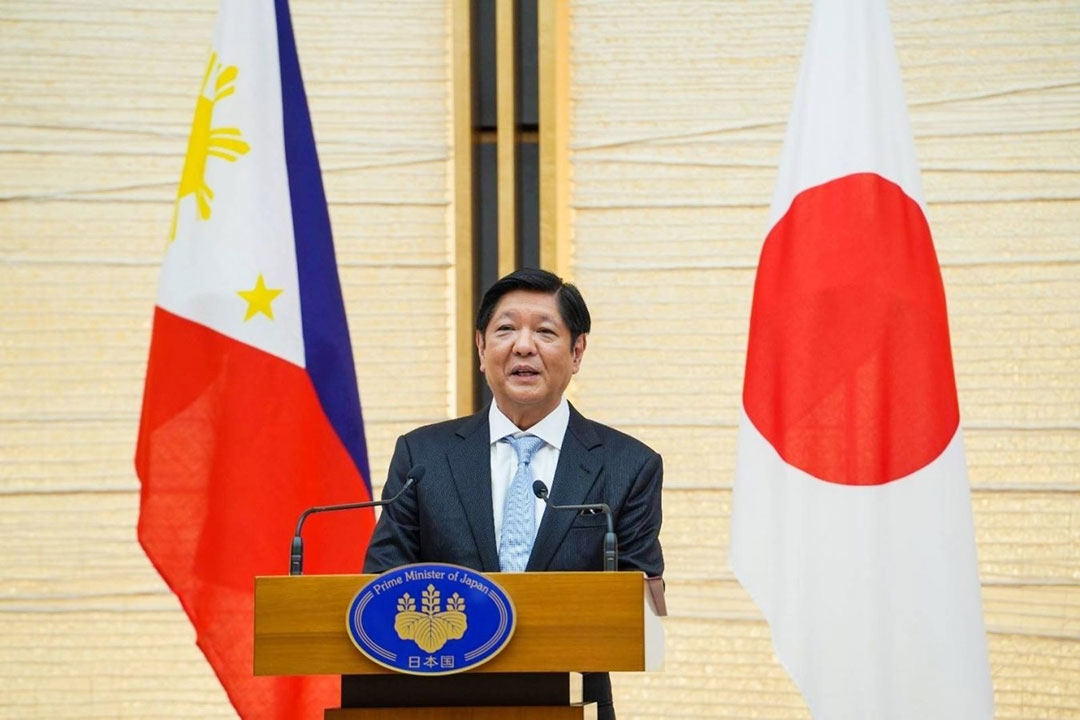
PRESIDENT Ferdinand R. Marcos, Jr.’s upcoming state visit to Japan is expected to strengthen the Philippines’ alignment with regional partners and deepen cooperation on security and economic resilience, analysts said.
The trip signals Manila’s continued effort to expand ties with countries that support a rules-based order and maritime security in the Indo-Pacific region.
“This also sends signals to China that the Philippines is boosting its defense networks further despite the constant pressure from Beijing,” Francis M. Esteban, a faculty member at the Far Eastern University Department of International Studies, said via Facebook Messenger.
Mr. Marcos is scheduled to visit Japan from May 26 to 29, marking the first state visit by a Philippine president in more than a decade. He is expected to meet with Prime Minister Sanae Takaichi, Emperor Naruhito and Empress Masako, Malacañang said.
The visit comes as the Philippines deepens security cooperation with partners such as Japan and the US through joint military activities, including the annual Balikatan exercises alongside Australia, New Zealand, France and Canada.
Tensions between Manila and Beijing continue to shape the regional security environment, with competing claims in the South China Sea leading to repeated maritime incidents and diplomatic protests.
Ederson DT. Tapia, a political science professor at the University of Makati, said the visit’s significance depends on whether it leads to more sustained and structured cooperation.
“What needs to follow is depth,” he said via Facebook Messenger.
“Interoperability, coordinated maritime domain awareness, and a more regularized presence in joint activities will matter more than headline agreements. The question is whether these can be embedded in routines that outlast political cycles,” he added.
Mr. Tapia said while Japan is already a key partner, further progress depends on integrating existing initiatives into a more durable framework focused on capacity-building and institutional strengthening.
“If the visit is to elevate the relationship, it must move beyond sectoral cooperation toward something more deliberate: a partnership anchored in shared capacity-building,” he said.
He added that advancing ties require aligning defense cooperation with economic resilience and infrastructure development within a broader Indo-Pacific strategy.
Energy cooperation is also expected to be part of discussions, particularly as the Philippines seeks to manage supply risks as an import-dependent economy.
“Energy presents a similar opportunity, though the expectations must be tempered,” Mr. Tapia said. “Japan cannot simply substitute for the Philippines’ traditional energy sources, but it can help change the structure of dependence.”
He said Japan’s strengths in technology, financing and system integration could support long-term investments in areas such as liquefied natural gas infrastructure, grid modernization and alternative fuels.
“Energy diplomacy should no longer be understood as sourcing alone,” he said. “Deeper engagement with Japan can help the Philippines move from a reactive posture to a more anticipatory one.”