BoI sees boost to investment in renewables, EV due to Iran crisis
THE Iran crisis is expected to spur investment in renewable energy (RE) and electric vehicle (EV) projects, the Board of Investments (BoI) said.
Speaking to reporters last week, Trade Undersecretary and BoI Managing Head Ceferino S. Rodolfo said investor sentiment is being pushed towards potentially “transformative” technologies.
“The good thing is, for sectors like renewable energy and EVs, those that are transformative and will allow us to, in the future, be more prepared for these types of challenges, those will grow faster,” he said.
The BoI approved P47 billion worth of investment for 35 projects in the first two months. The energy segment, including RE, accounted for 47.7% or P22.4 billion of total approvals during the period.
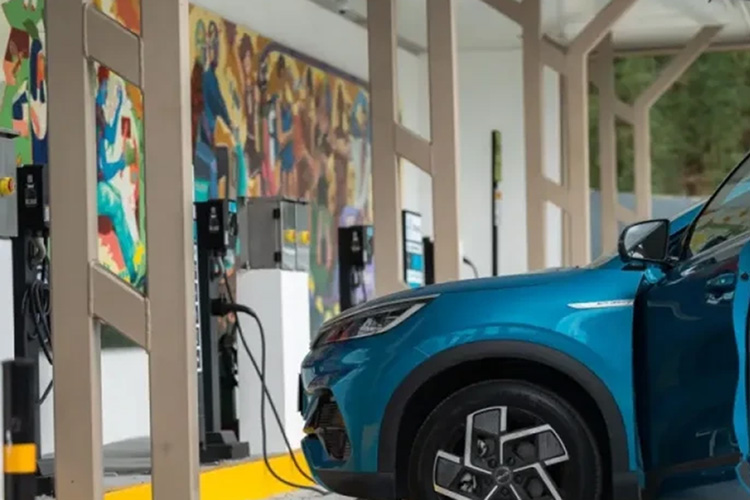
The government is optimistic that demand for EVs will grow due to lower tariff rates for EV and parts imports, as well as incentives for the local manufacture of EVs, Mr. Rodolfo said.
“Number one, we have to build the demand, and we built the demand by removing the MFN (Most Favored Nation) tariff rates,” he noted.
In 2024, President Ferdinand R. Marcos, Jr. approved an executive order (EO) granting a zero most-favored-nation rate on import duties for certain EVs and parts until 2028.
This includes hybrid and plug-in hybrid jeepneys, buses, cars and trucks, e-motorcycles, e-bicycles and nickel metal hydride accumulators.
Mr. Rodolfo added that this also aligns with the Electric Vehicle Incentive Strategy (EVIS), the government’s incentive program designed to attract EV manufacturing.
He has said that the EO for the EVIS will be released before Mr. Marcos delivers the State of the Nation Address in July.
“Second, (we also have to) restore our credibility by making sure that our arrearages for the CARS program are paid,” Mr. Rodolfo said.
The government is expected to pay car manufacturers participating in the Comprehensive Automotive Resurgence Strategy (CARS) program by this year.
“We will be able to pay them this year,” Mr. Rodolfo said, contrary to the DTI’s earlier statement that payments will be completed by 2027.
Mr. Marcos Jr. had vetoed P4.32 billion in unprogrammed appropriations in the 2026 budget meant for the CARS program.
CARS participants awaiting payment are Toyota Motor Philippines Corp., Mitsubishi Motors Philippines Corp., and several auto parts markers.
EVs accounted for some 11% of vehicle sales in the Philippines at the end of March, though sales in the category surged 36.2% during the period to 11,800 units, according to a report by the Chamber of Automotive Manufacturers of the Philippines, Inc. and the Truck Manufacturers Association.
Analysts said the energy crisis will prompt a shift in BoI-approved investment pledges to projects involving RE, trade resiliency, and logistics.
Diana R. Rueda, an economist and professor at the University of Asia and the Pacific, said investment pledges in the coming months will likely focus on boosting trade resiliency.
“Logistics and supply chain projects — specifically the modernization of ports, cold storage, and warehousing — are no longer just about expanding trade capacity,” she said via Viber.
“Instead, they represent a move toward ‘safer trade,’ building the domestic storage necessary to insulate the country from the supply-chain disruptions currently emanating from the Middle East,” Ms. Rueda added.
John Paolo R. Rivera, a senior research fellow at the Philippine Institute for Development Studies, said the Iran war leads to investment opportunities in RE, energy efficiency, and supply-chain resilience.
“In terms of sentiment, we may see a shift toward more selective and risk-sensitive investments,” he said via Viber. — Beatriz Marie D. Cruz