Home Blog Page 1103

Flood control projects set for rebidding — DPWH

PRESIDENTIAL COMMUNICATIONS OFFICE

THE Department of Public Works and Highways (DPWH) said the flood control projects that failed during the heavy July rains or turned out to be non-existent will be subject to new bidding “as soon as possible.”

“We have to fix the projects, we have no choice, the people need flood control. We have to fix it. We have to do it as soon as possible,” Public Works and Highways Secretary Vivencio “Vince” B. Dizon told reporters on the sidelines of a briefing on Tuesday.

Mr. Dizon did not identify how many of the flood control projects will be auctioned again, with the DPWH still in the process of validating whether the contracts were executed properly.

President Ferdinand R. Marcos, Jr. has been inspecting projects related to flood control, including a so-called “ghost” project worth P55 million in Baliwag, Bulacan, which had been accepted as completed, though no visible structures were found.

In his fourth State of the Nation Address on July 28, Mr. Marcos ordered an investigation into flood control projects, ordering the DPWH to submit a full list of projects from the past three years.

Former Secretary Manuel M. Bonoan said the DPWH has submitted a list of more than 9,000 projects completed between July 2022 and May 2025.

He said that of the 9,000 projects 160 have undergone validation, with 15 “missing or unlocated.”

Mr. Dizon has said that contractors involved in ghost or substandard projects will face a lifetime ban and criminal prosecution.

The President is set to issue an executive order establishing an independent body that will investigate and charge officials and private contractors.

Mr. Dizon said he will need between 30 and 60 days to reorganize the DPWH.

He sought courtesy resignations from all DPWH officials on Monday to facilitate an investigation into corruption in big-ticket flood control projects.

“Hopefully, after 30 to 60 days, we will have (a commission) that we feel will be ready to take on these challenges and move forward. It will be a difficult 60 days,” Mr. Dizon said. — Ashley Erika O. Jose

Jeepney, tricycle drivers added to P20 rice program

PHILIPPINE STAR/ MICHAEL VARCAS

THE Department of Agriculture (DA) said it will begin distributing P20-per-kilo rice to jeepney and tricycle drivers next month.

“We will initially roll out the P20 rice program for tricycle and jeepney drivers on Sept. 16 in five pilot areas,” Agriculture Secretary Francisco P. Tiu Laurel, Jr. said on Friday.

“We’re coordinating with Department of Transportation (DoTr ) which holds the TODA (Tricycle Operators and Drivers Association) database.”

One of the first pilot areas is Navotas City, which has 4,000 accredited drivers.

Initially launched for solo parents, senior citizens, 4Ps beneficiaries, and persons with disabilities, the P20 rice program has expanded to cover minimum wage earners, rice farmers, and now fisherfolk.

Next in line are beneficiaries of the Department of Social Welfare and Development’s Walang Gutom program and low-income staff of the Department of Education.

The DA said the phased rollout aims to gather critical data on rice consumption, logistics, and supply requirements.

“This will guide a planned nationwide expansion in 2026, which the President envisions will reach 15 million households,” it said.

The DA also plans to launch the P20 App on Oct. 1. The app is designed to facilitate efficient logistics, ensure transparency, and prevent abuse.

Mr. Laurel said rice stocks are sufficient with the National Food Authority planning to auction 1.2 million bags of rice in October.

The rice will first be offered in September to government relief agencies, and whatever is left will be offered to the private sector. — Kyle Aristophere T. Atienza

Rice importers expected to pass on costs if ordered to maintain reserves

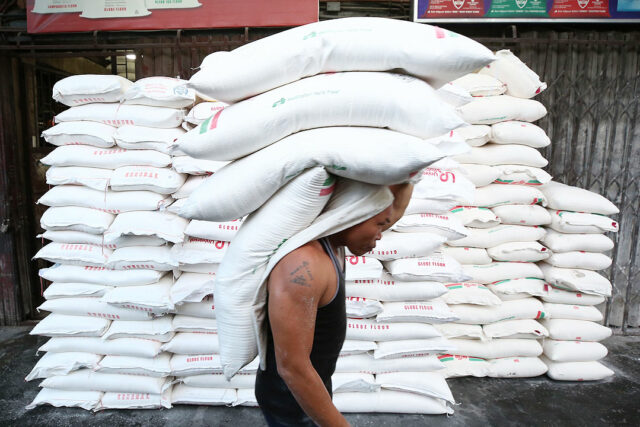
Workers load sacks of flour in a delivery truck in Manila, July 11, 2022. — PHILIPPINE STAR/ MIGUEL DE GUZMAN

THE Department of Agriculture’s (DA) proposal to require private importers to share the responsibility of maintaining the country’s rice reserves could send retail prices higher, a farmers’ group warned.

Federation of Free Farmers National Manager Raul Q. Montemayor said importers will likely charge consumers for the expense of maintaining extra inventory.

“If importers shoulder the cost for importing the government share, they will try to recover that by raising their selling prices which may defeat the purpose of buffer stocks,” he said via Viber.

Agriculture Secretary Francisco P. Tiu Laurel, Jr. floated a plan to Senators that private importers should take some responsibility for maintaining the national rice reserves, which are tapped during emergencies.

“If we aim to have a 20-day rice buffer stock, we’re thinking of a 50-50 split between the National Food Authority (NFA) and the private sector,” he said.

Under the proposed setup, rice imports will follow a controlled model similar to the sugar import program of the Sugar Regulatory Administration, under which only qualified importers are given import allocations. 

Importers, in turn, would be obligated to procure palay (unmilled rice) from farmers at fair prices to build up their reserves.

Mr. Montemayor noted that the local purchase requirement for importers has been questioned in the World Trade Organization as a restrictive policy.

In Singapore, importers are required to reserve 10% of their imports as government reserves, but noted that “50-50 appears too big.”

“Sugar has a different scheme. SRA issues sugar import quotas, arriving shipments are put into reserve and cannot be sold without SRA approval,” he said. “But the government does not acquire any of the imports.”

Marie Annette Galvez-Dacul, executive director of the UA&P Center for Food and Agri Business, said the proposal, among the DA’s suggested amendments to the Rice Tariffication Law, is “a welcome shift from dependence on imports to strengthening supply chains.”

But she said, “execution will be the real test.”

“I agree with this arrangement where private rice importers are given quotas accordingly,” former agriculture secretary William Dar said.

“We should further support the idea that provinces with less rice production to maintain buffer stocks as well,” he added. — Kyle Aristophere T. Atienza

Recto sees foregone revenue due to smuggling at P150B

PHILSTAR FILE PHOTO

THE Bureau of Customs (BoC) is expected to forego P150 billion in revenue due to the smuggling of general merchandise and oil products this year, Finance Secretary Ralph G. Recto said on Tuesday.

“The estimate of the leakage (from Customs revenue) for the year will be roughly be P150 billion,” Mr. Recto said in a Senate Finance Committee budget hearing.

He was responding to a query from Sen. Francis Pancratius N. Pangilinan, who opened an investigation into the smuggling of agricultural goods. 

“The last time we met with the new commissioner of the Bureau of Customs, they presented us with a catch-up plan,” he said, after the BoC missed its collection target last year after tariffs were lowered on key goods like rice.

Mr. Recto also outlined the Department of Finance’s (DoF) own plan to offset the BoC’s revenue foregone to smuggling.

The BoC earlier disposed of five containers of smuggled agricultural products valued at P35 million, which landed at the Port of Subic last month.

In 2024, the BoC seized P85.18 billion worth of smuggled products, including P1.19 billion in agricultural goods.

At the briefing, Mr. Recto said he is open to trimming the list of 130 items currently exempt from value-added tax (VAT) in lieu of imposing new taxes.

Asked by Senator Panfilo M. Lacson if he is open to reducing the VAT-exempt list, Mr. Recto said: “I’m one with you.”

“We will support if you can come up with additional revenue measures by reducing VAT exemptions,” he told reporters separately.

Mr. Recto said the VAT-exempt list currently includes agriculture, exports, small mom-and-pop stores, senior citizens, and persons with disabilities.

The government aims to trim the share of the deficit relative to gross domestic product to 3.1% by 2030.

The DoF remains committed to its no-new-taxes plan with the exception of the proposed Single-Use Plastic Act.

The 2026 Budget of Expenditures and Sources of Financing report indicates that the government aims to collect P4.52 trillion, rising to P4.98 trillion in 2026. — Aubrey Rose A. Inosante

US reciprocal tariff impact seen muted but duties on chips could be damaging

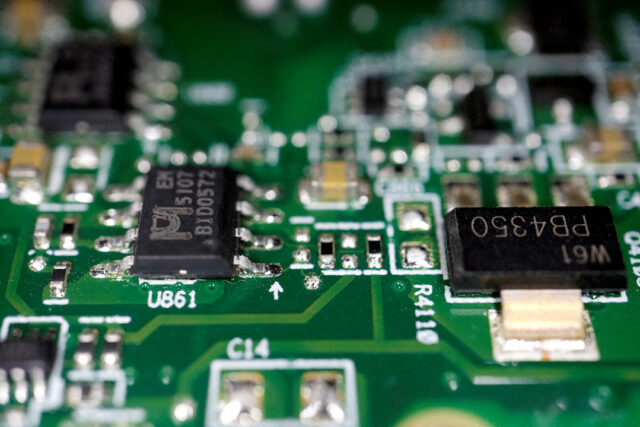
Semiconductor chips are seen on a printed circuit board in this illustration picture taken Feb. 17, 2023. — REUTERS

THE damage done by the US 19% reciprocal tariff on Philippine goods is considered less significant than the potential impact of a special tariff on semiconductors, credit agencies and research houses said.

“Details of upcoming sectoral tariffs on semiconductors will nonetheless be important for Philippine exports given the country’s focus on lower value-added testing and assembly activity,” MUFG Global Markets Research said in a Sept. 1 note.

MUFG said the 19% tariff on Philippine goods is unlikely to have a significant impact on the economy as it shares a similar rate with its Southeast Asian neighbors.

“The US tariffs on the Philippines at 19% were of course not the most ideal, but we have highlighted that the net impact to the Philippine economy is unlikely to be that large given most of the other countries and export competitors are getting relatively similar rates, and also due to the more domestic oriented nature of the Philippine economy,” it said.

Moody’s Ratings said Southeast Asia could nevertheless expect a boost in semiconductor export volumes amid higher demand due to artificial intelligence and high-performance computing and 5G technology.

However, sectoral tariffs could make the region’s exports less attractive to the US, it added.

“Semiconductors now represent a significant engine of export and manufacturing growth within the region, accounting for around 26% of Malaysia’s and 32% of the Philippines’ (Baa2 stable) total goods exports in 2024,” Moody’s said in a separate report.

US President Donald J. Trump has said he plans to impose higher tariffs on semiconductors, except for companies that plan to build manufacturing facilities in the US. However, no rates have been set.

Trade Undersecretary Allan B. Gepty said semiconductors and electronics make up around 53% of Philippine exports to the US. Most of the semiconductors are manufactured by US companies in the Philippines and exported.

The Philippine Statistics Authority reported that exports grew 13.2% in the first half to $41.24 billion. Of the total, the US accounted for 16%, or $6.598 billion.

On the other hand, the manufacturing sector turned in a subdued performance in August, with the Manufacturing Purchasing Managers’ Index receding to 50.8 from 50.9 in July, S&P Global said.

This was marked by a muted rise in output and new orders following the implementation of the US tariffs. — Katherine K. Chan

Agriculture trade deficit widens 4.9% in July to $929.78 million

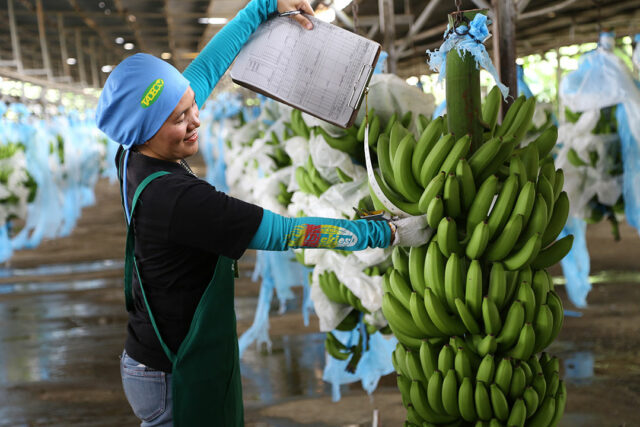
ANFLOCOR.COM/TADECO

THE balance of trade in agricultural goods in July came in at a deficit of $929.78 million, widening by 4.9% year on year, the Philippine Statistics Authority (PSA) reported.

Two-way trade in farm goods in July was $2.49 billion, up 12.4%, consisting of $1.71 billion worth of imports, up 10.3% year on year, and exports of $779.32 million, up 17.5%, the PSA said.

Topping the list of imported agriculture goods were cereals, meat, and animal and vegetable oils, with the latter posting the strongest growth of 124% year on year.

Vietnam and Indonesia were the top suppliers of agricultural imports, accounting for $194.79 million and $195.57 million respectively. Malaysia supplied goods worth $116.98 million.

The European Union was the top supplier of meat, dairy, eggs, natural honey, and animal feed, with Spain remaining the top source with $39.34 million worth of goods during the month.

Topping the exports of farm goods were edible fruit and nuts, and peels of citrus fruit and melons, with shipments valued at $246.19 million.

The previous top exported farm goods were animal, vegetable, or microbial fats and oils and their cleavage products, prepared edible fats, and animal or vegetable waves, which were valued at $245.48 million in July.

Malaysia was the top importer of Philippine goods within ASEAN, accounting for $23.17 million worth of commodities. Thai imports came in at $13.36 million.

The top 3 commodities exported to ASEAN were tobacco and tobacco substitutes, animal & vegetable fats and oils, and fish, crustaceans, and mollusks.

For Europe, the top exported commodities were animal & vegetable fats, prepared fish, crustaceans, and mollusks, and edible fruits & nuts.

The Netherlands was the top buyer of Philippine farm goods, importing $119.89 million in July, followed by Italy with $44.83 million. — Andre Christopher H. Alampay

New Poro Point airport terminal planned with P259-million budget

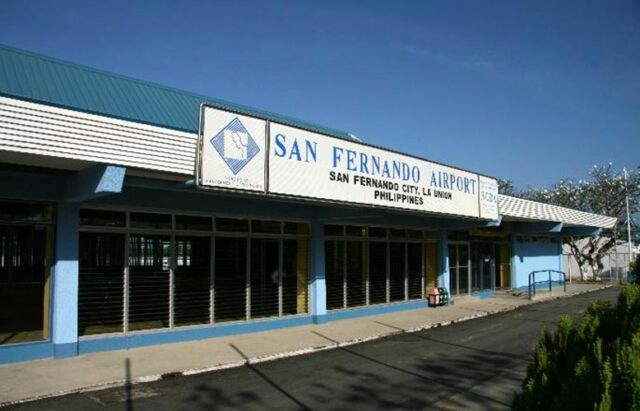
POROPOINTFREEPORT.GOV.PH

THE Bases Conversion and Development Authority (BCDA) said it will invest P250 million to build a new airport terminal at Poro Point, La Union.

“What I want is to have commercial operations in the Poro Point Airport within my term and see the likes of commercial planes bringing in passengers,” BCDA President and Chief Executive Officer Joshua M. Bingcang told reporters.

“The existing Poro Point Airport terminal is old,” he added.

The new terminal will be 10,000 square meters, giving the airport the capacity to accommodate commercial flights.

“We are working on the specifications so we can bid out the design-and-build proposal this year,” he said.

According to Mr. Bingcang, Poro Point has been a steady revenue stream for the BCDA since it took over in October.

Meanwhile, the BCDA is also working with the Public-Private Partnership Center for the feasibility study of the long-term use of San Fernando International Seaport, also in Poro Point.

“It will include an additional 80 hectares and will turn the port into a logistics hub. Our target in two years is to have a feasibility study,” he said.

“That will not prevent us from entertaining unsolicited proposals. That is our plan, to come up with the best land use plan, bid it out, and find a partner for the long-term operation of this port,” he added.

Currently, the port is being operated by the BCDA through subsidiary Poro Point Management Corp. under an interim arrangement.

“What is important is for us to have the concept first,” he said, noting that the feasibility study seeks to explore the property’s best use, whether as an industrial, agro-industrial, or tourism zone.

The BCDA has said that it is hoping to start work on the Poro Point Seaport modernization by the second quarter of 2027 and complete it by 2029. — Justine Irish D. Tabile

Marcos expects Hyundai Subic yard to double PHL shipbuilding capacity

HHCI PHILIPPINES

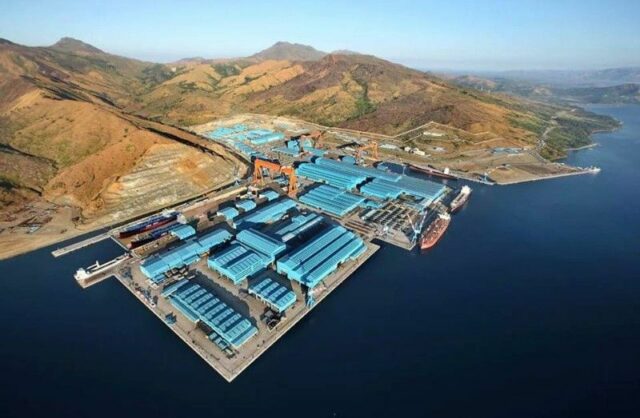
PRESIDENT Ferdinand R. Marcos, Jr. said on Tuesday that South Korea’s HD Hyundai Heavy Industries Philippines, Inc. will nearly double Philippine shipbuilding capacity when it starts operating the yard in Subic.

“With Hyundai Heavy Industries investing in Subic, our shipyard capacity will significantly increase from 1.3 million to 2.5 million deadweight tons, from handling four to five massive oil tankers to about eight of those ships,” Mr. Marcos said at the inauguration ceremony.

The President noted that between 2014 and 2018, Philippine shipyards produced 1.2 to 2 million gross tons of ships annually, before output fell in 2019.

Hyundai Heavy invested $130 million in its Philippine operations and employed 1,200 workers as of July 2025. Investments is projected to hit $180 million by year’s end and $230 million by 2030, creating up to 4,300 jobs.

“That equates to thousands of families with food on the table, thousands of workers with dignity in their craft,” Mr. Marcos said.

To meet demand for labor, the Technical Education and Skills Development Authority partnered with Hyundai in November to set up an off-campus training facility in Subic. Twenty-four trainees have completed welding programs and joined Hyundai’s workforce, with over 100 more in training.

“We now have 16 training programs covering every discipline — from marine electricity to welding — so that the skills forged here meet the standards of any shipyard around the world,” Mr. Marcos said.

Malacañang said the shipyard underscores Hyundai’s “gratitude for the central government’s policy support” and aligns with the administration’s goal to make the Philippines a key player in global shipbuilding.

The President was joined at the inauguration by Public Works and Highways Secretary Vivencio “Vince” B. Dizon and Secretary Frederick D. Go, the special assistant to the President for investment and economic affairs, Korean Ambassador Lee Sang-hwa and US Ambassador MaryKay Carlson. — Erika Mae P. Sinaking

DoT says more investment needed to match ASEAN tourism results

Tourism Secretary Ma. Esperanza Christina G. Frasco — FACEBOOK.COM/DEPARTMENTOFTOURISM

THE Department of Tourism (DoT) said on Tuesday that the Philippines lags its regional rivals in tourism investment, with spending by some ASEAN countries far outstripping Philippine levels.

Tourism Secretary Ma. Esperanza Christina G. Frasco noted at the Senate the “big disparity between the Philippines and our ASEAN neighbors; while we are operating at only over P3 billion, we are competing with countries that have devoted (far more), especially in terms of marketing and promotions.”

She made the remarks to reporters on the sidelines of a budget hearing for her department.

Under the National Expenditure Plan 2026, the department’s branding campaign budget was slashed to P100 million, from P200 million in 2024 and P1.2 billion in 2023.

“Hopefully, we will be able to pick up enough funds so that we can give our country the chance to promote the beauty of the Philippines and to help more Filipinos through tourism,” she added.

For 2026, the DoT is asking for a P500-million budget for its branding campaign.

“Our requests are very much confined by the ceiling provided to us by the Department of Budget and Management (DBM),” she added.

During the hearing, Ms. Frasco said in response to a query about arrival targets that the 7.7 million target last year had assumed the liberalization of visas, specifically for the Chinese market.

“Considering that (most) of our neighbors lifted visa requirements for Chinese nationals, the electronic visa program was launched by the Department of Foreign Affairs,” she said.

“It had projected that they would be able to issue 2 million visas within the span of one year at around 8,000 visas per day. That 2 million number was not reached because the e-visa program was promptly suspended,” she added.

She also added that the Philippines is dependent on air travel for international arrivals, making it harder to compete.

She cited a correlation between tourism investment and results.

“A comparison of the budgets of our counterpart departments of tourism among our direct neighbors would show that the Philippines’ ranking in ASEAN almost equates to our ranking in terms of budgets,” she said.

“The less you invest in tourism, the fewer international arrivals you will have. And finally, we wish to emphasize… that we simply cannot perform as well as we would like if we are given such meager resources,” she added.

In 2024, the DoT received a budget equivalent to $52.1 million, compared to $431.42 million by Singapore, $262.87 million by Malaysia, $234.36 million by Indonesia, $167.9 million by Thailand, and $147.92 million by Vietnam.

She noted the need to emphasize metrics like gross domestic product (GDP) contribution and employment rather than raw arrival numbers.

“Notwithstanding the low international arrivals, our performance as far as GDP contribution with our ASEAN neighbors would show that the GDP contribution of the Philippines in tourism is the highest in Southeast Asia,” she said.

“Tourism spending per capita among our Southeast Asian neighbors places the Philippines first at no less than $2,073, and tourism employment for the country, which is also an important measure of tourism performance, has exceeded pre-pandemic numbers,” she added. — Justine Irish D. Tabile

Davao Gulf closed fishing season ends

SENATE COMMITTEE HEARING SCREEN CAPTURE

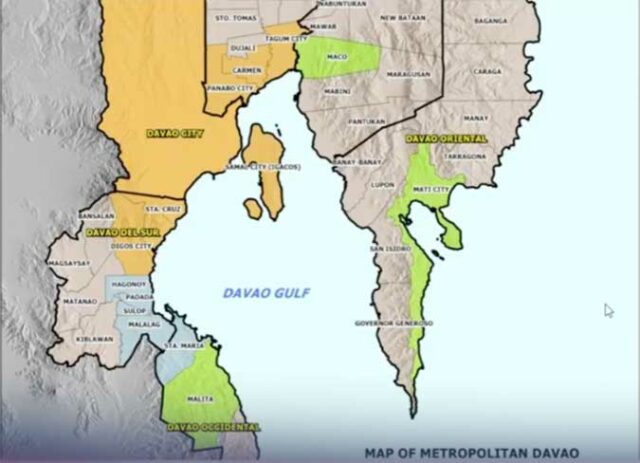
THE Bureau of Fisheries and Aquatic Resources (BFAR) Region XI has declared the end of the closed fishing season in the Davao Gulf.

The three-month ban, enforced between June 1 and Aug. 31, was authorized by Joint Administrative Order No. 02 series of 2014 issued by the departments of Agriculture (DA) and Interior and Local Government.

BFAR XI Regional Director Relly B. Garcia said the seasonal closure is designed to ensure the sustainability of the Davao Gulf’s fisheries and aquatic resources.

“This is a science-based approach to conservation. But  we also recognize the economic impact on our coastal communities, which is why we mobilized a multi-agency support initiative to assist affected fisherfolk,” she said.

The closed season allows small pelagic fish species to regenerate. These include big-eyed scad (matambaka), mackerel (karabalyas), and round scad (galunggong).

During the closed season, the DA provided chickens and goats to fishing communities in Davao del Sur, Davao Occidental, and Davao City, with additional livestock distribution set pending availability.

The Region XI Department of Labor and Employment also allocated 200 slots for short-term employment under its Tulong Panghanapbuhay sa Ating Disadvantaged/Displaced Workers program. — Kyle Aristophere T. Atienza

DoE seeking P3.8-B budget for 2026

PRESIDENT Ferdinand R. Marcos, Jr. and newly appointed Energy Secretary Sharon S. Garin talk following her oath-taking in Malacañan Palace on Monday. — PCO

THE Department of Energy (DoE) is asking for a P3.8-billion budget in 2026, which if granted would be 24.4% higher than this year’s funding, citing the need to support the entry of nuclear power and achieve full electrification.

At a budget hearing on Tuesday, DoE Financial Services Director Agustus Cesar A. Navarro said P2.4 billion or 64% of the proposed budget will go to major programs like the information systemic strategic plan (ISSP) and capital outlays, staffing, and operational requirements of the newly created Nuclear Energy Division.

Around P1.4 billion or 36% will be set aside for the Nuclear Energy Development Program, the promotion of energy efficiency and conservation, alternative fuels for transport and other purposes, and the total electrification project.

Mr. Navarro said the special account of its general fund reflects “the collection of shares from national wealth in the production of petroleum, coal, geothermal, wind, solar, and hydropower energy resources.”

Other sources of revenue are fees and charges collected for permits, certifications, accreditations, processing, fines and penalties, and other services.

“We wanted to show the body that the Energy family actually earns substantial amounts for the National Treasury, and our budget is only P3 billion,” Energy Secretary Sharon S. Garin said.

“We are actually positive. We earn more than we spend as a department,” she said.

Ms. Garin said that the DoE’s legislative priorities include amending the 24-year-old Electric Power Industry Reform Act (EPIRA), particularly giving the Energy Regulatory Commission more authority.

She added that proposed amendments to Republic Act No. 8479, also known as the Downstream Oil Industry Deregulation Act of 1998, will ensure fair trade practices and safeguards.

“One of the most important is to give authority to the President to suspend or reduce excise taxes on fuels in case of emergencies,” she added.

The DoE is also pushing to amend RA No. 9367, or the Biofuels Act of 2006, to allow imported blends if domestic supply is too expensive.

The Philippine Energy Plan 2023-2050 outlines the government’s clean energy transition strategy, she said, citing the need “to be flexible (in the face of) a changing energy landscape and advances in technology.”

The Philippines hopes to increase the share of renewable energy in the power generation mix to 35% by 2030 and 50% by 2040.

Ms. Garin said the DoE is also seeking to develop more indigenous resources like gas or renewables.

“The objective is to have cleaner but more diversified energy,” she said. — Sheldeen Joy Talavera

PSEi dips as inflation worries weigh on sentiment

BW FILE PHOTO

By Alexandria Grace C. Magno

PHILIPPINE SHARES extended their decline on Tuesday, as concerns over stubborn inflation and the timing of monetary easing continued to weigh on investor appetite.

The Philippine Stock Exchange index (PSEi) slipped 0.18% or 11.46 points to close at 6,128.89, while the broader all-share index edged down 0.06% or 2.52 points to 3,681.03.

“Investor confidence appears to be waning as no clear positive catalyst is in sight,” Luis A. Limlingan, head of sales at Regina Capital Development Corp., said in a Viber message. “Sentiment remains uncertain with inflation expectations staying elevated, alongside forecasts that the BSP (Bangko Sentral ng Pilipinas) may delay rate cuts until next year instead of within this year.”

A BusinessWorld poll of 16 analysts yielded a median estimate of 1.3% for August inflation, from 0.9% in July and 3.3% a year earlier. This could mark the sixth straight month inflation remained below the BSP’s 2-4% target. The Philippine Statistics Authority will release the official data on Sept. 5.

Global cues also weighed on local trading. “Wall Street was closed [on Sept. 1] due to Labor Day. Last Friday, major indexes gave back a portion of their recent gains, with the market’s focus now squarely on the anticipated August job report,” Mr. Limlingan said, adding that uncertainty over the US Federal Reserve’s next policy steps is fueling caution.

Alfred Benjamin R. Garcia, research head at AP Securities, Inc., noted that banking stocks bore much of Tuesday’s decline as they extended their downtrend.

Expectations of narrowing margins from recent rate cuts dragged the sector, he said. “Sentiment also remained weak against the backdrop of global economic uncertainty and geopolitical instability in Southeast Asia,” Alfred Benjamin R. Garcia, research head at AP Securities, Inc., said in a Viber message.

Foreign investors turned net sellers, unloading P368.84 million in local shares compared with P148.55 million the previous day.

Sectoral performance was mixed, with three indices rising and three declining. Mining and oil climbed 2.49% or 260.05 points to 10,674.61, property rose 0.26% or 6.52 points to 2,452.26, and industrials added 0.04% or 3.88 points to 9,056.93.

On the other hand, financials dropped 0.78% or 16.39 points to 2,062.93, services slipped 0.16% or 3.66 points to 2,180.83 and holding firms dropped 0.08% or 4.22 points to 5,044.74.

Value turnover increased to P5.58 billion with 1.16 billion shares traded, up from P4.21 billion with 1.15 billion shares on Monday. Losers beat winners, 111 to 84, while 59 stocks were unchanged.

ADVERTISEMENT
ADVERTISEMENT