Home Blog Page 106

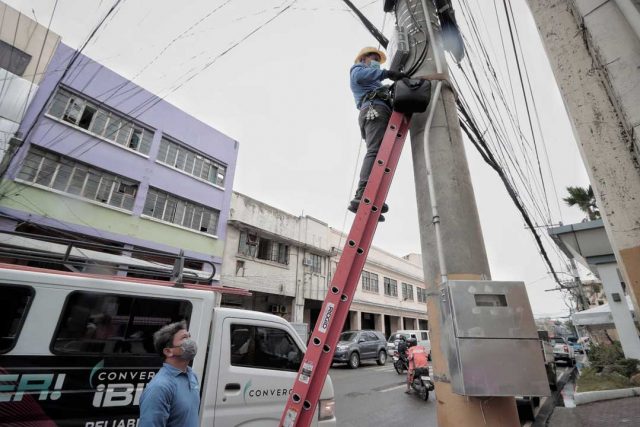
Meralco sees higher generation costs as peso weakens

PHILSTAR FILE PHOTO

POWER DISTRIBUTOR Manila Electric Co. (Meralco) said a weaker peso is putting upward pressure on power generation costs, following the currency’s recent slide to a record low amid geopolitical tensions.

“A depreciation of the peso will put upward pressure on power rates, in particular, the generation charge,” Lawrence S. Fernandez, vice-president and head of utility economics at Meralco, told BusinessWorld.

On March 23, the peso fell to a record low of P60.30 against the US dollar, marking the first time it breached the P60-per-dollar level, according to data from the Bankers Association of the Philippines.

Mr. Fernandez said nearly 60% of Meralco’s cost of purchased power is dollar-denominated, as it largely consists of imported fuels such as coal and gas.

These costs are reflected in the generation charge, which typically accounts for more than half of consumers’ electricity bills.

Earlier this month, Meralco Chairman Manuel V. Pangilinan ordered a review of the company’s power supply mix to manage price volatility linked to movements in the global petroleum market.

“We are optimizing our energy mix and fully leveraging cost-efficient sources, regardless of technology. In addition, we are carefully managing our exposure to the WESM (Wholesale Electricity Spot Market), where price volatility is high,” he said in a social media post.

Gas currently accounts for about 60% of Meralco’s power supply, followed by coal at 20-25% and renewable energy at around 10%. The remainder is sourced from the Wholesale Electricity Spot Market.

Last month, Meralco raised electricity rates by P0.6427 per kilowatt-hour (kWh) to P13.8161 per kWh for March, driven by higher transmission and generation charges.

Meralco is the country’s largest private electric distribution utility, serving more than 8.2 million customers in Metro Manila and nearby provinces, including Bulacan, Cavite, Rizal, and parts of Laguna, Batangas, Pampanga, and Quezon.

Aside from electricity distribution, the company also has power generation interests through its subsidiaries.

Meralco PowerGen Corp. (MGEN), the company’s generation arm, said a weaker peso could affect not only generation costs but also the broader energy value chain.

“The impact of a weaker peso goes well beyond new power investments — it affects the entire energy value chain and is broadly inflationary, making imported goods, including fuel and equipment, more expensive,” MGEN President and Chief Executive Officer Emmanuel V. Rubio told BusinessWorld.

He added that currency weakness may also put upward pressure on interest rates, increasing financing costs for new projects and affecting returns over time.

“At MGEN, we have taken a proactive approach to managing these risks,” Mr. Rubio said.

He said the company has hedged its exposure to currency risks by largely locking in costs for the MTerra Solar project, an integrated solar facility spanning Nueva Ecija and Bulacan.

However, Mr. Rubio said a weaker peso would still feed through to electricity prices, as most of the country’s coal and gas supply is imported and dollar denominated.

“Ultimately, while the direct impact on generators is manageable, the broader concern is affordability — particularly as sustained cost pressures may influence customer demand and the overall energy mix toward more cost-competitive sources,” he said. 

Meralco’s controlling stakeholder, Beacon Electric Asset Holdings, Inc., is partly owned by PLDT Inc. Hastings Holdings, Inc., a unit of PLDT Beneficial Trust Fund subsidiary MediaQuest Holdings, Inc., has an interest in BusinessWorld through the Philippine Star Group, which it controls. — Sheldeen Joy Talavera


ACEN secures P4.78-B loan for India wind project

BW FILE PHOTO

RENEWABLE energy developer ACEN Corp. has secured fresh funding worth 7.517 billion Indian rupees (P4.78 billion) from Japanese banks for its 120-megawatt (MW) wind power project in Karnataka, India.

Diyos Renewables India Project Private Ltd., ACEN’s project developer, obtained a green term loan facility from Mitsubishi UFJ Financial Group and Sumitomo Mitsui Banking Corp., the company said in a statement on Wednesday.

“Securing this project finance facility underscores the strong confidence of global financial institutions in ACEN’s renewable energy platform and our disciplined approach to developing high-quality projects,” ACEN International Chief Executive Officer Patrice Clausse said, adding that the project strengthens the company’s presence in a key renewable energy market.

The funding will support the initial 100-MW phase of the Bijapur Wind project.

The project is scheduled for commissioning in 2027 and is expected to generate about 330 million kilowatt-hours of electricity annually, while avoiding around 300,000 metric tons of carbon dioxide emissions.

ACEN said the project supports India’s target of expanding renewable energy capacity to 500 gigawatts (GW) by 2030.

Once completed, the facility will supply electricity under a power purchase agreement with Indian state-owned firm SJVN Ltd.

“The Bijapur Wind project reflects our focus on delivering scalable, high-quality projects that contribute to India’s clean energy transition while creating sustained value on the ground,” said Alok Nigam, chief executive officer of ACEN’s India platform.

Last month, ACEN said it would take full control of its renewable energy business in India after acquiring the remaining stake held by Singapore-based UPC Renewables in their joint venture.

Following the acquisition, ACEN will own Unlimited Renewables Holdings B.V., which is developing three renewable energy projects in Rajasthan and Karnataka with a combined capacity of 1,059 MW, covering both construction and advanced development stages.

As of March 2026, India accounts for 40% of ACEN’s net attributable capacity across its international portfolio. The company currently operates three solar power projects in the country with a combined capacity of 630 MW.

ACEN, the listed energy platform of the Ayala group, manages an attributable renewable energy portfolio of 7 GW across the Philippines, Australia, Vietnam, India, Indonesia, Laos, and the United States.

Shares in ACEN rose 3.75% on Wednesday to close at P2.77 each. — Sheldeen Joy Talavera

RRHI exits No Brand business as it adapts to consumer trends

NO BRAND PHILIPPINES FACEBOOK PAGE

ROBINSONS Retail Holdings, Inc. (RRHI) said it will close its 11 No Brand standalone stores nationwide by end-June 2026, citing shifting consumer preferences and a move to align its formats with customer demand.

“The decision reflects evolving consumer preferences and how customers are choosing to shop across our retail formats,” RRHI President and Chief Executive Officer Stanley C. Co said in a disclosure on Wednesday.

“Our focus remains on meeting customer needs by providing relevant assortments in the most appropriate formats. We thank Emart for the partnership over the past several years,” he added.

RRHI said the closures are not expected to materially affect its financial performance, as No Brand accounts for about 0.2% of annual net sales and a minimal share of total assets.

“No Brand’s 11 stores are immaterial relative to RRHI’s network of more than 2,700 company-owned stores — including 157 Robinsons Supermarket, 159 Robinsons Easymart, 38 The Marketplace, 16 Shopwise, and 415 Uncle John’s under its food segment — and over 2,100 franchised TGP branches, as of Dec. 31, 2025,” the company said.

No Brand entered the Philippine market in 2019 through a master franchise agreement between RRHI and South Korea’s Emart, allowing the company to operate dedicated stores nationwide.

Analysts said the move reflects a strategic shift toward focusing on more established and profitable formats.

“The No Brand shut down is a move to double down on higher margin formats that should yield RRHI the best returns over time, while also trimming formats that may not be part of their long-term format priorities,” AP Securities, Inc. Equity Research Analyst Shawn Ray R. Atienza said in a Viber message.

In a separate Viber message, F. Yap Securities investment analyst Marky Carunungan said the closure forms part of a broader portfolio rationalization strategy.

“The pivot toward larger, more established formats such as supermarkets is better aligned with local consumption behavior and provides a more resilient earnings base. It also signals a shift toward prioritizing scale, efficiency, and returns over experimentation,” he added.

“The group has been candid about the concept’s limited traction in the Philippine market, and that its performance fell short of expectations. From an impact standpoint, No Brand represents only a small portion of the overall portfolio, and as such, we do not expect this development to materially affect RRHI,” Unicapital Securities Equity Research Analyst Jeri R. Alfonso said in a separate Viber message.

She added that the US-Iran conflict may have also contributed to the decision, as it affects global supply chains and raises logistics and input costs, while contributing to inflation.

“This explains RRHI’s shift toward supermarket formats, which cater to basic needs. While No Brand offers food items, its focus on snacks and confectionery makes it more discretionary, and thus more vulnerable to volume declines as households prioritize meals over indulgences.”

RRHI shares closed unchanged at P39.25 apiece on Wednesday. — Alexandria Grace C. Magno

PAL confident on fuel; CEB securing supply beyond April

PHILIPPINE STAR/ WALTER BOLLOZOS

PHILIPPINE AIRLINES (PAL) said it has secured sufficient jet fuel supply for scheduled operations in the “foreseeable future,” while Cebu Pacific (CEB) said it has fuel supply through end-April and is arranging supply for May and beyond.

“Philippine Airlines has secured sufficient jet fuel supply to support scheduled operations, including long-haul flights, for the foreseeable future,” the flag carrier said in a statement on Wednesday.

“We have secured our fuel supply up until the end of April, and we are already working on supply for May and beyond,” Cebu Pacific said in a separate statement.

The statements came after President Ferdinand R. Marcos, Jr. said aircraft grounding may be possible as jet fuel supplies remain tight, amid a global fuel crisis linked to the ongoing US-Israel and Iran conflict.

PAL said it continues to monitor global and regional developments that may affect jet fuel prices and supply.

It added that it is working closely with fuel suppliers and government stakeholders to ensure steady and efficient operations.

Cebu Pacific said about 72% of its fleet consists of Airbus NEO aircraft, which are designed for improved fuel efficiency, helping optimize fuel use.

According to the International Air Transport Association, jet fuel prices rose 12.6% week on week to $197 per barrel as of March 20. On a yearly basis, prices increased by 118%, based on data from the airline trade group.

Data from the Department of Energy showed that, as of March 20, the Philippines had enough available jet fuel supply for 38 days.

On Tuesday, Energy Secretary Sharon S. Garin said jet fuel supply remains stable, adding that current challenges are related to pricing and order adjustments due to shifts in supplier countries.

Both PAL and Cebu Pacific have announced temporary suspensions and reductions in flight frequencies on select routes due to the ongoing Middle East conflict, citing its impact on global fuel prices.

BusinessWorld also sought comment from AirAsia Philippines but did not receive a response as of the deadline. — Ashley Erika O. Jose

TDF yield inches down as demand stays strong

BW FILE PHOTO

THE BANGKO SENTRAL ng Pilipinas’ (BSP) one-week term deposits fetched a slightly lower average accepted yield on Wednesday as still-high market liquidity boosted demand for the papers despite the ongoing market volatility.

Bids for the BSP’s seven-day term deposit facility (TDF) amounted to P84.714 billion, exceeding the P70 billion it placed on the auction block. However, this was below the P103.226 billion in tenders seen for a P80-billion offer last week.

This was equivalent to a bid-to-cover ratio of 1.2102 times, lower than the 1.2903 seen a week earlier.

Still, the central bank made a full P70-billion award of its offering.

Accepted rates were from 4% to 4.249%, a tad narrower than the 4% to 4.25% margin in the previous auction. With this, the weighted average accepted yield slipped by 0.23 basis point (bp) week on week to 4.2308% from 4.2331%.

“The still marginally lower seven-day BSP TDF average auction yield still reflects relatively excess peso liquidity in the financial system,” Michael L. Ricafort, chief economist at Rizal Commercial Banking Corp., said in a Viber message.

He noted that the average accepted yield remained below the BSP’s key overnight rate of 4.25%.

This result came amid volatility in global and local financial markets that has caused investors to shift to safer assets, Mr. Ricafort said.

He added that the recent correction in global crude oil prices may have also led to the lower yields.

Based on the latest BSP data, domestic liquidity rose by 8.6% to P19.711 trillion in January, the fastest growth recorded in about five years or since the 9.5% in February 2021.

Meanwhile, the ongoing US-Israel war on Iran continues to jolt markets as trade disruptions triggered major oil shocks globally.

US President Donald J. Trump had threatened to bomb Iran’s power plants if it did not fully reopen the Strait of Hormuz within 48 hours, but later postponed their plan for five days amid an ongoing resolution deal with Iran.

However, Iranian foreign ministry officials denied that such talks took place.

Iran has blocked the Strait of Hormuz, a critical transit point for about a fifth of the world’s oil supply, against the US, Israel and their allies, endangering major net oil importers like the Philippines.

The war’s growing fallout also prompted President Ferdinand R. Marcos, Jr. to declare a state of national energy emergency in the Philippines amid worries over the country’s fuel supply.

The central bank uses the TDF and BSP bills to mop up excess liquidity in the financial system and better guide market rates towards the policy rate.

The BSP last auctioned off both the seven-day and 14-day deposits on Oct. 29. It has not offered 28-day term deposits for over five years to give way to its weekly offerings of securities with the same tenor. — Katherine K. Chan

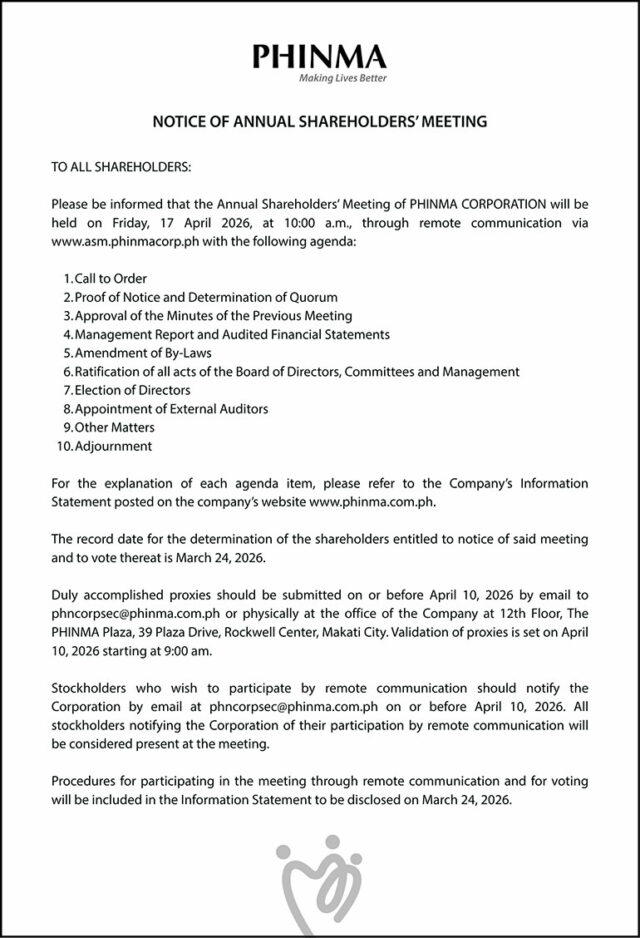
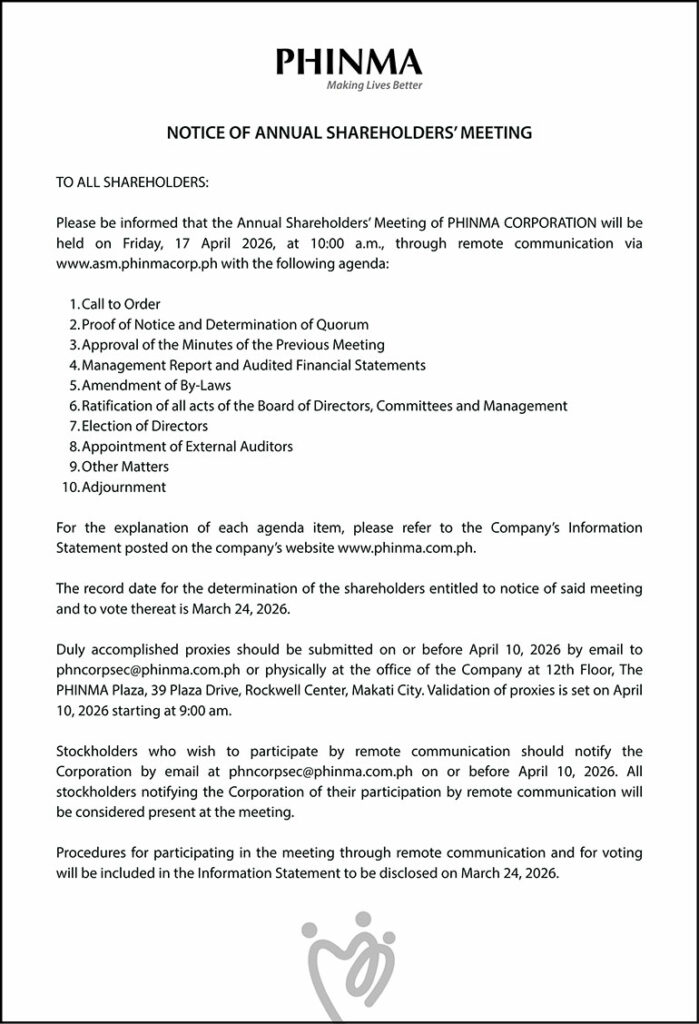
PHINMA Corp. to hold Annual Shareholders’ Meeting on April 17 via remote communication


Spotlight is BusinessWorld’s sponsored section that allows advertisers to amplify their brand and connect with BusinessWorld’s audience by publishing their stories on the BusinessWorld Web site. For more information, send an email to online@bworldonline.com.

Join us on Viber at https://bit.ly/3hv6bLA to get more updates and subscribe to BusinessWorld’s titles and get exclusive content through www.bworld-x.com.

PGPC eyes up to 400-MW geothermal capacity expansion

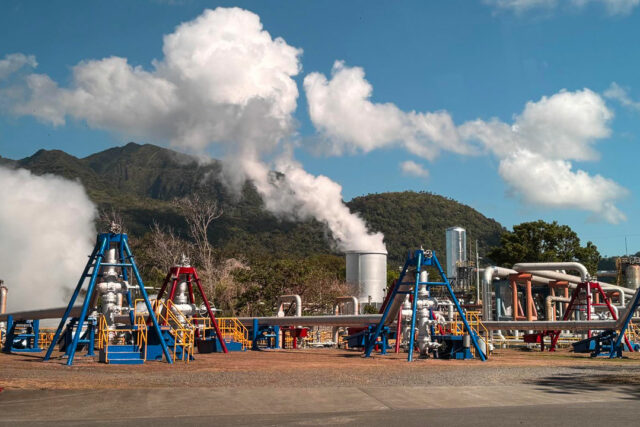
The Makiling-Banahaw (Mak-Ban) geothermal facility — SHELDEEN JOY TALAVERA

BATANGAS — Philippine Geothermal Production Company, Inc. (PGPC), a wholly owned subsidiary of SM Investments Corp., is targeting to add up to 400 megawatts (MW) of capacity over the next five to seven years through six pipeline projects.

“What we have on our radar is around 250 to 400 [MW],” PGPC President Napoleon L. Saporsantos, Jr. told visiting reporters at the Makiling-Banahaw (Mak-Ban) geothermal site on Tuesday.

PGPC currently operates steam fields in Mak-Ban, which straddles Laguna and Batangas, as well as in Tiwi, Albay, with a combined capacity of 682 MW.

The company also holds several geothermal service contracts under exploration. These include Mt. Labo across Camarines Sur, Camarines Norte, and Quezon; Mt. Malinao in Albay; Daklan in Benguet; and Baua-Sikaw in Cagayan.

It also has interests in geothermal prospects in Kalinga and Southwest Kalinga.

For 2026, PGPC has allocated about P3 billion for initial exploration activities.

“What’s really our focus are the Malinao and Labo [sites] because we already have drilling in those two, so that’s sort of our priority in terms of development,” Mr. Saporsantos said.

PGPC developed Southeast Asia’s first commercial geothermal power project in 1971 and has been supplying geothermal steam to power plants since 1979.

Mr. Saporsantos said geothermal energy helps support power supply stability, particularly amid global fuel supply uncertainties linked to the Middle East conflict.

“The important contribution of geothermal in the Middle East crisis is making sure that we’re operating optimally,” he said. — Sheldeen Joy Talavera

Gov’t to borrow up to P784B via local market in Q2

BW FILE PHOTO

By Aaron Michael C. Sy, Reporter

THE GOVERNMENT is looking to borrow up to P784 billion from the domestic debt market in the second quarter, the Bureau of the Treasury said on Wednesday.

According to the borrowing schedule posted on its website, the BTr is looking to raise up to P364 billion via Treasury bills (T-bills) and up to P420 billion through Treasury bonds (T-bonds) in the April-to-June period.

The plan is 4.85% or P40 billion lower than the P824-billion target for the first quarter.

The Treasury exceeded its borrowing goal in the first quarter as it raised P1.02 trillion amid strong demand for government securities early in the year on expectations of continued lower borrowing costs. The period also saw the issuance of new 10-year fixed-rate Treasury notes worth P297.94 billion — made up of P235 billion in new money and P62.94 billion via the switch program — well above the initial P30-billion offer.

For April, the government will auction off securities worth up to P248 billion, or P140 billion in T-bills and P108 billion in T-bonds.

Broken down, the BTr will offer 91-, 182, and 364-day T-bills on April 6, 13, 20, and 27.

For T-bonds, it will also sell three- and eight-year papers in a dual-tenor auction on April 7, five-year bonds on April 14, and seven-year debt on April 21. The BTr will hold another dual auction for four- and 10-year T-bonds on April 28.

In May, the Treasury is targeting to raise up to P268 billion from the local market, or P128 billion in T-bills and P140 billion in T-bonds.

Auctions for T-bills will be held on May 4, 11, 18, and 25.

Meanwhile, the government will offer three- and 20-year notes on May 5, five-year T-bonds on May 12, seven-year securities on May 19, and four- and 10-year bonds on May 26.

For June, it also looks to borrow up to P268 billion, or P128 billion via T-bills and P140 billion through T-bonds.

The BTr will offer T-bills on June 1, 8, 15, and 22.

Meanwhile, it will sell five-year T-bonds on June 2, three- and eight-year papers on June 9, seven-year notes on June 16, and four- and 10-year debt on June 23.

“The lower second-quarter borrowing plan reflects fiscal discipline and healthier cash buffers, so there’s less pressure to borrow at any cost. Demand will likely stay selective, with investors still pushing for higher yields amid global uncertainty, so we may continue to see partial awards,” Reyes Tacandong & Co. Senior Adviser Jonathan L. Ravelas said in a Viber message.

The BTr’s preference for shorter tenors was expected amid weakening appetite for longer-dated debt due to growing inflation worries amid the prolonged Middle East war, which has driven up oil prices, a trader said in a text message.

“There’s really no appetite for longer ones given the inflation picture for the medium term.”

The lower fundraising target for the second quarter could also reflect cautious government spending following the flood control scandal in 2025, Rizal Commercial Banking Corp. Chief Economist Michael L. Ricafort said in a Viber message.

He added that expectations of rising borrowing costs and the peso’s depreciation may also dampen demand for government securities.

Converge tops fixed network rankings in Ookla report

CONVERGE

CONVERGE ICT SOLUTIONS, Inc. ranked as the fastest fixed internet provider in the Philippines based on recent measurements by global network intelligence firm Ookla.

In a media release on Wednesday, the listed fiber broadband provider said it was recognized for having the fastest fixed network, as well as the best fixed network and fixed video experience.

Based on Ookla’s report covering the third and fourth quarters of 2025, Converge posted a Speedtest Connectivity Score of 75.09, followed by Globe Telecom, Inc. at 74.06, PLDT Home Fiber at 73.65, and PLDT Inc. at 71.27.

“From the beginning, Converge committed to building infrastructure that would serve the country for the long term… We invested in nationwide fiber and a robust satellite network. We expanded across regions. We strengthened international connectivity to position the Philippines within the global digital network,” Converge Chief Executive Officer Dennis Anthony H. Uy said.

Converge also led the fastest fixed network category with a score of 61.12, ahead of Globe at 59.88, PLDT Home Fiber at 59.11, and PLDT at 55.89.

In video streaming performance, Converge posted a score of 83.73, which the company said indicates its ability to deliver consistent streaming quality during peak usage periods.

For latency, which measures network responsiveness in real-time applications such as online gaming and cloud services, Converge recorded a score of 13.94.

“As demand for faster and more reliable connectivity continues to grow, Converge remains focused on expanding its fiber footprint and enhancing network capabilities,” the company said.

Shares in Converge rose by 40 centavos, or 3.2%, to close at P12.90 each on Wednesday. — Ashley Erika O. Jose

What’s next for legendary entrepreneur Jose Magsaysay, Jr. of Potato Corner?

POTATO CORNER co-founder Jose “Jomag” Magsaysay, Jr. during The RJ Ledesma Podcast. — THE RJ LEDESMA PODCAST

Among entrepreneurs, there are few who are as famous, successful, and relevant to Filipinos as Jose “Jomag” Magsaysay, Jr. of Potato Corner. I’ve been lucky to have Jomag as my business partner and mentor in my business, Mercato Centrale, as well as in my podcast. To many Filipinos — myself included — he is a legend.

The story of how he co-founded Potato Corner and grew it into a business that is present in every corner of the Philippines is the gold standard of how to achieve greatness in entrepreneurship through franchising. Potato Corner was founded in 1992 and today has over 1,300 branches around the world. And since its founding, he hasn’t stood still. What is he busy with this year? What is the second act for this iconic Pinoy entrepreneur? And what can other entrepreneurs learn from his mentorship?

Aside from Potato Corner, Mr. Magsaysay is involved in numerous other businesses — as founder, investor, board member, or, at times, as mentor. In fact, in entrepreneurial circles, he has become known as something of a “partner ng bayan” (partner of the community or country) I recently spoke with him on the RJ Ledesma Podcast where he talked about many of the things he is busy with today — what he calls his “Jomag version 2.0” phase. One hour was too short for all the insights he shared. You can watch the interview in full or check out the highlights below.

‘DM ME’
I’ve had so many entrepreneurs approach me and say, “RJ, can you introduce me to Jomag? It’s so inspiring what he’s been writing about entrepreneurship.” Today, he has evolved from a singularly focused founder into a thought leader and enabler of promising young entrepreneurs. He is currently the entrepreneur in residence at the Asian Institute of Management where he works closely with many future business leaders.

So first, let’s get the question on everyone’s mind out of the way: How do you get in touch with Jose Magsaysay, Jr. if you have a winning business idea?

“Message me,” he says. “DM me, and then tell me who you are, what your business is, what challenges you’re going through. And then if your business looks interesting to me, I will reply back, then we’ll talk.”

Yes, entrepreneurs. Jose Magsaysay, Jr. is on Facebook writing about entrepreneurship in a series called “Business As It Really Is.” Getting in touch with him is literally as easy as sending a direct message.

Keep in mind though that he is, in his words, “biased towards food and platform building or ecosystem building.” Good luck on your pitches!

ON MENTORSHIP
In one Facebook post, he talks about the road less traveled. This has been the guiding principle of his entrepreneurial journey — and it continues to guide him as he forges new paths, including his foray into mentorship.

“Sometimes I take the road less traveled,” Mr. Magsaysay, who describes himself as an extreme introvert, says, “And then sometimes I’d rather walk alone because if there’s somewhere that is interesting to go, I go. And if I’m in a pack, I have to follow the pack sometimes. And that makes me uncomfortable.”

He shares that his typical day is now full of mentoring moments. Talking about his mentorship on Facebook, he says, “It continues my road to mentoring and sitting as an independent director for some corporations. I’m enjoying it. And who knows, this might be the new path that I will go to, but I still don’t know.”

For now though, he is enjoying his role as mentor ng bayan. “I think everybody needs a mentor,” he says. “Until now, I still have a mentor. And it really helps. It focuses me.

“From my point of view, I can see problems that others are doing. Sometimes you cannot see your own problem. It takes somebody else to see your problems. That’s what I do now and help founders in.”

BUSINESS AS IT REALLY IS
On his Facebook page, he gives priceless advice to business owners. In very broad strokes, he talks about three things in particular:

• Platform Thinking

• Structural Dominance

• Scar Tissue Leadership

Within each topic is a wealth of learning. For example, for Scar Tissue Leadership, he explains how leaving Potato Corner in the past was a challenging experience but also one that taught him how to start new businesses.

“Every time I left Potato Corner,” he said, “I did something different. One of those times I ended up running Mister Donut, and then one time I was able to put up a new company… ’Yun ang naging runway ko, ’yung mga (those became my runways, the) periods of resignations… That’s when I was able to start some businesses.”

For more on Scar Tissue Leadership, Structural Dominance, and Platform Thinking, head over to his Facebook page where he talks about these topics in detail.

I’d like to end this week’s column with a quote from Jomag that shows how you never know what you’ll learn from this master entrepreneur. This chaotic creator who has been called “the antithesis of order” will be teaching you about building platforms one moment, then dishing life wisdom the next.

“Humility is very important,” he says. “Whenever I enter a room, I never sit in front. But the thing is, they bring me in front and it’s a big difference you know. When I talk I’m usually the last to talk kasi (because) I’m able to think about what to say. Tapos (then) when I broke my neck, had five cranial surgeries, I had a lot of time to think. That alone time is very important for me. When you’re always thinking about who am I, what do I do. That’s helped me.”


RJ Ledesma (www.rjledesma.com) is a Hall of Fame Awardee for Best Male Host at the Aliw Awards, a multi-awarded serial entrepreneur, motivational speaker, and business mentor, podcaster, an Honorary Consul, and editor-in-chief of The Business Manual. Mr. Ledesma can be found on LinkedIn, Facebook and Instagram. The RJ Ledesma Podcast is available on Facebook, Spotify, Google and Apple Podcasts. Are there entrepreneurs you want Mr. Ledesma to interview? Let him know at ledesma.rj@gmail.com.

New ice cream brand pushes Filipino flavors

IT’S NOT LIKE you can eat strawberry, vanilla, and chocolate forever: how about switching to bilo-bilo ice cream?

On March 18, Marcelo’s Microcreamery was formally launched in the country, although they have been found on supermarket shelves since last year. The flavors aren’t quite what you’ll find in any normal store shelf: the brand has the Heritage Line, building on traditional Filipino snacks. These are Inutak, Ube Macapuno Champorado, Latik-Latik, Mangga’t Suman, Bilo-Bilo, and Chocolate Champorado. During a tasting at Romulo Café in Makati, they also unveiled their latest flavor, Pistachio Kunafa Chocolate (as in the Instagram-viral Dubai chocolate, done in collaboration with the chef who made it, Nouel Catis).

Due to an aversion to certain ingredients (my fault, not theirs), we stuck to something familiar: the Chocolate Champorado, made with tablea (cocoa tablets used for hot chocolate) and rice pudding churned into ice cream. This tasted richly dark and indulgent. We also had a bite of the Dubai chocolate one, and it proved very richly creamy, with a slight coolness of flavor (akin to mint) brought by the pistachios.

The flavors we tasted were made with milk, but the Inutak (smoked ube or purple yam pudding), Ube Macapuno Champorado (ube and coconut sport in chocolate rice pudding), Latik-Latik (toasted coconut curds) Mangga’t Suman (mango and rice cake sorbet, and Bilo-Bilo (a treat made of macapuno mochi, sweetened bananas, and jackfruit), all have a non-dairy coconut milk base. “Our drive is really to partner with local coconut farmers, local tablea farmers, to really help,” said Epic Brands Corp. Chief Executive Officer John Marcelo in an interview. They buy the raw materials directly from the farmers, and try to use local as much as possible. “I think it’s about time to get our flavors out there.”

A former racecar driver, Mr. Marcelo and his family always celebrated ice cream. One night, during a grocery run, he saw that all the brands in the supermarket offered the same thing over and over. The family already makes ice cream for other brands, so, “I wanted to create my own brand.”

They weren’t easy to make: he recalls making the rice-based ones, and them coming out rock-hard from the freezer. The same thing happened to the chunks of fruit. That meant researching cooking methods, such as stewing the fruits more slowly, and cooking everything in a slightly different way. They’re called a “microcreamery” by the way, because they only make the ice creams in small batches.

These flavors are tied to his own memories, making each flavor personal. The champorado flavor, for example, is a schoolboy memory, while the mangga’t suman was a memory of a weekend drive.

It’s this same idea of memory that’s driving their push to export, despite being quite new to the game. He told BusinessWorld that they are already in the Middle East (hence the halal seal on the pint), Australia, Canada, and the US. Right now, they are still in talks to bring it to Southeast Asian neighbors Malaysia and Vietnam. The reason for the push to export is the large numbers of Filipino expatriates in those countries: “We thought that the Filipinos overseas, they definitely miss all our kakanins (rice-based desserts).”

“I wanted to tap that market. Most of them, they miss home; they miss their families. So at least (we can) bring them something that can remind them of their childhood and spending time with their families.”

Marcelo’s Microcreamery products are available in the Philippines for around P460 a pint in Landers, Shopwise, Marketplace, and some Robinsons Supermarket branches. — Joseph L. Garcia

BoJ debated need for more rate hikes —Jan. minutes

THE JAPANESE national flag is hoisted atop the headquarters of Bank of Japan in Tokyo, Japan Sept. 20, 2023. — REUTERS

TOKYO — Many Bank of Japan (BoJ) policymakers saw the need to keep raising interest rates, with some calling for timely action on mounting inflationary pressures, minutes of their January meeting showed, highlighting their hawkish bias even before the Iran war boosted oil prices.

They also called for increased vigilance to the weak yen’s impact on inflation, which they saw as becoming bigger than in the past as companies more actively passed on higher ​import and labor costs, the minutes showed on Wednesday.

“Given that addressing rising prices was an urgent priority in Japan, the BoJ should not take too much time examining the impact of past rate hikes, and should proceed with the next rate increase without missing the appropriate timing,” one member was quoted as saying.

Another member said the BoJ should ​raise rates at intervals of a few months, adding that timely rate hikes were the only monetary policy prescription to curb unwelcome yen weakness that pushes up import costs, the minutes showed.

“Many members said a mechanism in which wages and prices rise moderately in tandem was becoming embedded in Japan, with this year’s wage negotiation likely to result in solid pay increases for a wide range of firms,” the minutes showed.

The remarks underscore the BoJ’s resolve to proceed with monetary tightening, with many in the board voicing confidence that higher US tariffs and past rate hikes have yet to become a major drag on the economy.

The Middle East conflict, triggered by US-Israeli attacks against Iran on Feb. 28, has muddled the policy outlook with soaring oil prices adding inflationary pressures while also hampering an economy heavily reliant on fuel imports.

Having just raised rates in December, the BoJ kept its policy rate steady at 0.75% in January but retained its hawkish inflation forecasts.

Many members said underlying inflation, or price moves reflecting domestic demand that the BoJ considers key to its rate-hike timing, was approaching the central bank’s 2% target, the minutes showed.

At a subsequent meeting in March, the BoJ again kept rates unchanged while maintaining its bias for tighter monetary policy as surging oil prices risked exacerbating inflationary pressures.

Core consumer inflation stayed above the BoJ’s 2% target for nearly four years on rising raw material and labor costs ​before slowing to 1.6% in February due largely to generous government fuel subsidies.

With various one-off factors distorting the consumer price index, one member proposed paying more attention to gauges of underlying inflation such as the pace of wage growth and service prices, as well as inflation expectations, the minutes showed.

Several also proposed enhancing communication on how the BoJ perceives underlying inflation and Japan’s neutral rate of interest, the minutes showed.

The proposals likely led to the bank’s decision in March to disclose by summer a new indicator on inflation and an updated staff estimate on the neutral rate.

While the Middle East conflict has heightened uncertainty over the economic outlook, markets still see roughly a 60% chance of a rate hike in April. — Reuters

ADVERTISEMENT
ADVERTISEMENT