Home Blog Page 1057

Mind-bending Severance tackles alienation on way to Sunday’s Emmys

Adam Scott in Severance (2022)

SEVERANCE for Apple TV+, he and fellow cast members were unsure how viewers would respond to a streaming series built around brain chips, a room full of goats, and waffle parties.

The psychological thriller, the most-nominated show at Sunday’s Emmy Awards, tells the story of office workers who undergo surgery that makes them forget their home life at work, and vice versa.

“We all felt it was weird, and maybe too weird,” said Adam Scott, the Parks and Recreation actor who plays a history professor turned manager inside the sterile offices of the fictional Lumon Industries.

Voters for the Emmys, the highest honors in television, have embraced the mind-bending tale. Severance racked up 27 Emmy nominations and won six trophies at an Emmys ceremony last week for technical awards.

The sci-fi series is in the running for more Emmys on Sunday including the top prize of best drama. Competitors include Star Wars series Andor, emergency room tale The Pitt, and murder mystery The White Lotus. Winners will be announced at a red-carpet ceremony televised live on CBS.

Mr. Scott was nominated for best drama actor and Severance co-star Britt Lower for best drama actress. Seven other Severance stars received supporting or guest actor nods.

Many of the Severance actors play two characters — an “innie” version who works at Lumon performing tedious tasks and an “outie” variation who lives in the outside world.

Among the show’s unusual touchpoints, the Lumon building includes a room where caretakers raise herds of goats. One employee is rewarded for good work with a waffle party that provides an opportunity for sexual experiences.

What does all of this add up to?

Severance offers a philosophical take on the work-life balance and the power of corporations, while “poking a stick at it with an absurdist light,” said Chris Rice, co-chief executive officer of Fifth Season, the production company behind the show.

Supporting actor nominee John Turturro, who plays loyal Lumon employee Irving, said the show “poses questions without giving all the answers.”

“I think people find that really participatory,” he added.

Plus, “people have to navigate work life and personal life, and that is an eternal conundrum that people go through.”

BIG QUESTIONS
Severance debuted in 2022 to critical acclaim and gained traction with viewers when season two was released in January 2025. The show landed in Nielsen’s top 10 list of the most-streamed shows.

Stars of the series said they thought it was more than job dissatisfaction that drew people to Severance. They cited loneliness in today’s society as people are glued to technology rather than seeking human connection.

“There’s a certain alienation that we’re all feeling from one another these days,” Mr. Scott said.

Zach Cherry, a supporting actor nominee who plays dependable office worker Dylan, said Severance makes people turn inward.

“Beyond the characters connecting to each other,” Mr. Cherry said, “it’s also about the characters learning to connect to all the different parts of themselves, which I think is also something that everyone has to deal with.”

Ms. Lower, who plays the stubborn Helly, said the show has earned fans among high school and college students who have not yet entered the workforce. She believes the series is prompting people to ask deep questions, such as “what makes us human?”

“To me, that is kind of the most exciting part,” Ms. Lower said. “Are the innies human? Are they full humans? And what makes them that?” — Reuters

PDIC partners with World Bank unit to develop risk-based premium assessment system

THE PHILIPPINE Deposit Insurance Corp. (PDIC) has partnered with the World Bank Group’s International Bank for Reconstruction and Development (IBRD) to study and develop a risk-based assessment system for deposit insurance in the country.

The state deposit insurer and the IBRD signed the advisory agreement on June 26, PDIC said in a statement.

“Having a sound risk-based assessment framework is not only essential but critical. This risk-based assessment system will help the PDIC better foresee and address potential problems as new challenges emerge from a more complex banking environment. With the global expertise of World Bank-IBRD and our commitment to see this project through, we are paving the way for an enhanced deposit insurance system in the country,” PDIC President and Chief Executive Officer Roberto B. Tan said.

The risk-based assessment system is a framework that will determine the premiums that banks need to pay for deposit insurance based on their risk profile.

The state deposit insurer earlier said that having a risk-based assessment system will help prevent banks from taking on too much leverage following the increase in the maximum deposit insurance coverage to P1 million per depositor per bank from P500,000.

At present, the PDIC employs a flat rate premium assessment system that applies to all banks, which is one-fifth of 1% of the total deposit liabilities of each institution.

The assessments are collected from member-banks semi-annually and form part of the Deposit Insurance Fund, which stood at P236.95 billion as of end-2024.

“Its goal is to align the cost of insurance with the level of risk each bank poses to the PDIC Deposit Insurance Fund, thereby promoting financial stability, reducing moral hazard, and incentivizing prudent risk management among banks… This approach will improve PDIC’s surveillance of banks through the implementation of an enhanced assessment system that is customized based on a member bank’s individual risk profile,” PDIC said.

Under the partnership, the IBRD will conduct a study on a risk-based premium system that is appropriate for the Philippine context. It will also provide technical assistance as it will come up with the framework, methodology, and implementing guidelines for the system.

“Drawing on international best practices, the initiative is aimed at enhancing the PDIC’s capability to more effectively incorporate institutional risk in its assessment of member banks and ensure a more equitable and sustainable funding mechanism for its Deposit Insurance Fund,” PDIC said. — A.M.C. Sy

It’s business as usual in Asia after ICE raids

LG ENERGY SOLUTION’S IAA Transportation exhibition booth. — LG ENERGY SOLUTION

By Juliana Liu

TO SOOTHE the ruffled feathers of a long-time ally, the Trump administration should waste no time working with Seoul to create a new visa category for skilled workers. That would get the $7.6-billion South Korean-owned manufacturing plant in Georgia that was raided by ICE up and running again, restoring a modicum of trust between the two countries.

Asian companies have committed, at least on paper, to hundreds of billions of dollars in MAGA projects. Despite concerns about a potential backlash, they’ve so far remained calm and focused, no matter what Washington has thrown at them — even humiliating images of their countrymen paraded in chains. From Seoul to Taipei to Tokyo, pragmatism by CEOs and political leaders has been the order of the day. The US remains an irreplaceable market.

For Hyundai Motor Co. and LG Energy Solution Ltd. — 50-50 joint venture partners in the EV battery plant — expanding in the US is a no brainer. In July, Hyundai posted a solid quarter of earnings, buoyed by strong sales of EVs and hybrid cars in North America. Last year, the Korean carmaker and its affiliate Kia were together the fourth-biggest-selling group in the US, with 1.7 million deliveries, according to Motor Intelligence.

In March, Hyundai announced an investment of $21 billion in the US over the next three years to expand production capacity. The factories would help it avoid President Donald Trump’s tariffs on vehicles and steel. Indirectly, they also give Hyundai an edge over rivals like Ford Motor Co. that import some of their cars from Mexico.

For LG Energy, the rationale for staying is no less compelling. The battery maker, which powers EVs and storage systems like Tesla’s Megapacks, is building or running seven plants in the US and one in Canada. Each costs $4 billion to $5 billion. Despite some ups and downs in the clean-power industry, its North America President Bob Lee says he’s still very bullish in the long run.

But it’s clear something has to change. South Korean firms have fessed up to sending skilled workers to the US on improper temporary visas to help build complex manufacturing plants. Now that the workaround is no longer tolerated, a more permanent solution in the form of short-term permits needs to be found, similar to what the US offers citizens of Singapore and Australia.

It’s worth noting that, for both Hyundai and LG Energy, part of the reason for their success in America is the absence of meaningful competition from Chinese rivals. Contemporary Amperex Technology Co., the world’s largest battery maker, dwarfs LG Energy globally, but regulatory hurdles in the US effectively preclude it doing much business there. As for Hyundai, once a contender in the world’s largest auto market, its sales languished in 33rd place last year, a victim of intense competition. Chinese cars, too, face barriers to entry in the US.

China used to be a bread-and-butter market for Seoul’s top companies. But as its own homegrown champions, from batteries to cellphones, have risen, South Korean firms have sought refuge elsewhere. Against this background, it’s no surprise that President Lee Jae Myung’s government has been so measured.

Instead of blasting the US about the ICE raid, which caused a loss of face for the young Seoul administration, the foreign ministry called the situation “regrettable” and requested the quick return of the detainees. Foreign Minister Cho Hyun is expected to meet Secretary of State Marco Rubio on Wednesday in Washington.

It’s not the first time an Asian leader has had to tap dance after a White House surprise.

In March, Taiwanese President Lai Ching-te was also forced to do damage control after an unexpected announcement by the Trump administration that chipmaker Taiwan Semiconductor Manufacturing Co. (TSMC) — the world’s largest — was investing $100 billion in the US. Lai appeared next to the firm’s Chief Executive Officer C.C. Wei in Taipei trying to reassure the public.

Their concern? That TSMC’s outlay would undermine its commitment to Taiwan. Opposition politician and former President Ma Ying-jeou wasted no time calling the landmark venture a “protection fee,” an idea that seemed to be broadly accepted by the public.

However, Lai’s government hasn’t faced any lasting criticism. Compared to South Korea, a larger market with a more sizeable group of corporates, Taiwan confers a great deal of importance on TSMC: Its success is perceived to offer protection from a possible invasion by China.

Like Seoul, there’s a feeling in Taipei and other global capitals that there are good reasons for behaving like it’s business as usual, no matter what the Trump administration does — their version of “Keep Calm and Carry On.”

BLOOMBERG OPINION

Ayala Land says Laurean Residences posts P8 billion in prelaunch sales

Laurean Residences

AYALA LAND PREMIER (ALP), the flagship luxury brand of Ayala Land, Inc. (ALI), said it recorded P8 billion in sales from the Laurean Residences ahead of its August launch, citing strong demand for premium residences in Metro Manila.

“The market response to Laurean Residences has been exceptional, and it validates the strength of Makati as the country’s premier address,” ALP President and Chief Executive Officer Michael Z. Jugo said.

The 65-storey tower, set to be the flagship residential development of Dela Rosa Gardens, is located in the heart of the Makati Central Business District, with completion targeted by 2033.

It is near key commercial hubs such as the Ayala Triangle Gardens, Greenbelt, and One Ayala, and is connected to Makati’s network of elevated walkways and green corridors.

Laurean Residences will have 388 units, ranging from 72-square-meter suites to 402-square-meter four-bedroom homes.

More than half of the property will be dedicated to club-like amenities, including multiple pools, private dining rooms, a wine lounge, wellness and spa facilities, a cinema room, and a sky garden. The development will also offer hotel-grade services from Ayala Land Hospitality.

“More than a collection of homes, it is an urban sanctuary where timeless architecture, purposeful amenities, and meticulous craftsmanship come together to elevate everyday life,” Mr. Jugo said.

The project has received EDGE (Excellence in Design for Greater Efficiencies) certification and will feature facilities for electric vehicles, including charging stations and parking slots.

International design firms HB Design, Joyce Wang Studio, and Landscape Tectonix are collaborating with local designers on the project.

For the first half of 2025, ALI posted an 8% rise in net income to P14.2 billion, with residential revenues reaching P41.3 billion, driven by higher recognized sales from its ALP and Alveo projects.

On Thursday, ALI shares fell 1.34% or 40 centavos to close at P29.50 apiece. — Beatriz Marie D. Cruz

Toronto Film Festival: Film on Oct. 7 rescue in Israel premieres amid protests

EN.WIKIPEDIA.ORG
EN.WIKIPEDIA.ORG

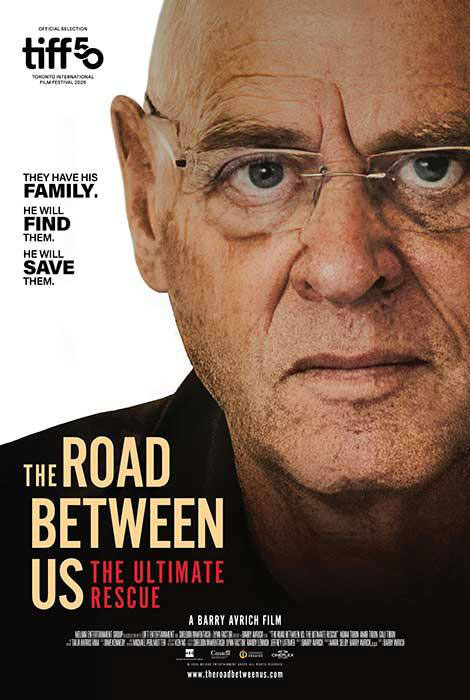
TORONTO — The Road Between Us: The Ultimate Rescue, a documentary about one man’s response to the Oct. 7, 2023, Hamas attack in Israel, faced protests during its Wednesday premiere at the Toronto International Film Festival (TIFF), where it was almost not shown.

Canadian filmmaker Barry Avrich chronicles the story of retired Israeli Defence Forces Major-General Noam Tibon as he races from Tel Aviv to a kibbutz near the Gaza Strip to save his son and his family.

In Toronto, a few dozen protesters carrying Palestinian flags and a handful of people supporting Israel demonstrated outside the screening. One person was arrested, according to Toronto Police.

Mr. Avrich said he did not object to peaceful protests.

“I ultimately wish anybody that’s protesting this film watches it first. Then let’s have a conversation,” he said on the red carpet. “In the world right now we need to hear stories of family and unity and that’s what this movie is about.”

Hamas killed about 1,200 people on Oct. 7 and took about 250 hostage, according to Israeli authorities. The invasion sparked Israel’s bombardment and blockade of Gaza, now almost two years old. More than 64,000 people have been killed, according to local health authorities, and international observers say parts of Gaza are in a state of famine.

Israel’s actions in Gaza have been called a genocide by scholars and rights groups, including some from Israel. Israel has denied accusations of genocide.

The film makes extensive use of violent Hamas bodycam footage from Oct. 7, interspersed with interviews with the Tibon family and other Israeli survivors.

The film is critical of Israeli leadership — “We failed tremendously on that day,” says Mr. Tibon’s wife Gali, who refers to the feeling that “your country abandoned you.” But it is Israelis with guns — security guards, current and former members of the military — who are depicted coming to the rescue.

Mr. Avrich’s film was almost not shown at the festival as TIFF briefly excluded it in mid-August. A joint statement from TIFF Chief Executive Officer Cameron Bailey and Mr. Avrich later said they had worked together to satisfy safety, legal, and programming concerns and would include the film.

“I want to apologize, especially to the Jewish community,” Mr. Bailey said ahead of the screening, to applause. — Reuters

Safety nets touted as infra job-creation engine stalls

PHILIPPINE STAR/KRIZ JOHN ROSALES/PPA POOL

By Chloe Mari A. Hufana, Reporter

THE government should address the negative trend in employment by expanding social safety nets and redeploying workers to “green” jobs, labor advocates said.

They said the job creation being counted on from infrastructure could be stalling with the Department of Public Works and Highways (DPWH) paralyzed by internal investigations and staff upheaval in the wake of the flood-control corruption scandal.

Benjamin B. Velasco, an assistant professor with the University of the Philippines School of Labor and Industrial Relations, said the flood-control investigations will result in job losses for construction workers.

“On the other hand, tolerating massive graft also has negative labor market impacts,” he said via Facebook Messenger.

The Philippine Statistics Authority reported  on Wednesday that the jobless rate hit a three-year high in July at 5.3%, with agriculture jobs taking the biggest hit in the wake of the heavy July rains. Flooded fields led farmers to switch to construction jobs to make ends meet, though that industry could soon be facing its own slowdown due to the corruption probes.

“Ghost projects mean no actual work is done and no jobs are created,” Mr. Velasco added.

President Ferdinand R. Marcos, Jr., during an inspection of flood control projects worth billions of pesos in August, discovered that many of the promised structures were either defective or nonexistent.

Mr. Velasco urged the government to cushion displaced workers through social protection measures, including unemployment insurance via the Social Security System, while accelerating a shift toward sustainable employment.

“(The government should) ensure a just transition and alternative jobs in building public transport facilities and leading the shift to renewable energy through solarization and windmills,” he said.

The 5.3% jobless rate in July was equivalent to 2.59 million jobless workers, up from 2.38 million a year earlier and 1.95 million in June.

The July reading matched the jobless rate from August 2022. In June 2022, unemployment hit 6%.

Skilled agricultural, forestry, and fishery workers declined by 974,000 jobs year on year in July.

The Philippines is hit by about 20 tropical storms each year. Nearly 70% of these weather disturbances occur between July and October, the peak of the typhoon season, according to the government weather service.

In the face of these calamities, the government is losing to corruption billions of pesos allocated for flood mitigation projects.

In response, the government on Thursday issued Executive Order No. 94, creating an independent body to investigate anomalies across all infrastructure projects.

Federation of Free Workers President Jose Sonny G. Matula warned that corruption in flood control and other infrastructure projects has worsened the jobs crisis by diverting public funds away from investment that could have supported rural livelihoods, housing and green industries.

He said the spike in unemployment reflects systemic governance failures. Flood-control projects, in particular, have been turned into conduits for corruption rather than tools to mitigate disasters or create decent work.

Billions of pesos lost to ghost or overpriced projects have robbed farmers, fisherfolk and workers of opportunities for stable employment, he noted.

Even workers within the Department of Public Works and Highways face insecurity, with thousands under contract-of-service or job-order status, he said.

“When funds for flood control are stolen, communities lose jobs and remain vulnerable to flooding. Corruption is the real enemy of workers,” Mr. Matula said via Viber.

He called for greater worker and civil society participation in oversight.

“This kind of corruption is also a major deterrent to investors. who could otherwise bring in capital, build industries, and create thousands of jobs,” he said.

The Philippines has formally adopted International Labour Organization guidelines on the just energy transition, and the Department of Labor and Employment (DoLE) recently unveiled a human resource development plan for green jobs.

The framework, Mr. Velasco said, is already in place.

“The legal and policy framework exists. Political will is all that is needed to create sustainable and green jobs for affected construction workers,” he said.

In a statement on Thursday, Finance Secretary Ralph G. Recto said the government is strengthening rural infrastructure, digital connectivity, and agricultural training.

It also ramped up job facilitation through PhilJobNet, job fairs, and a new data-sharing deal with the central bank. Training programs from the Technical Education and Skills Development Authority (TESDA) and the Department of Social Welfare and Development (DSWD), and a TESDA-TCL refrigeration center are being rolled out.

Meanwhile, the underemployment rate rose to 14.8% in July, up from 12.1% a year earlier and 11.4% in June.

This meant 6.8 million workers were seeking either longer working hours or additional jobs — compared with 5.77 million a year earlier.

Former Agriculture Undersecretary Fermin D. Adriano said weak flood defenses magnified the losses for farmers, who are already dependent on nonagricultural work to survive.

He noted that farmers earn about half their income from nonagriculture-related activities.

“They are mostly working as construction workers during off-peak planting season, as income from farming is not enough to sustain their family,” he said via Viber.

With repeated crop destruction, farmers also have little incentive to invest in improving productivity, leaving agriculture less able to meet growing food demand.

“(The) long-term consequence is lower or stagnant productivity and higher food prices because agriculture cannot efficiently produce [the] food requirements of the population,” Mr. Adriano noted.

“Since they cannot work and lose income due to the destruction of produce by flood, then they will be consigned to poverty.”

Peso depreciates before key US inflation report

BW FILE PHOTO

THE PESO dropped against the dollar on Thursday as the market awaited the release of August US consumer price index (CPI) data overnight that could cement a US Federal Reserve rate cut at its meeting next week.

The local unit closed at P57.191 versus the greenback, weakening by 6.6 centavos from its P57.125 finish on Wednesday, Bankers Association of the Philippines data showed.

The peso opened Thursday’s session stronger at P57.05 versus the dollar. Its intraday high was at P57.04, while its worst showing was at P57.28 against the greenback.

Dollars traded went up to $1.57 billion on Thursday from $1.44 billion on Wednesday.

“The dollar-peso consolidated today as the market awaited US inflation data to be released tonight,” a trader said in a phone interview.

The dollar was mostly stronger on Thursday on safe-haven demand due to renewed geopolitical tensions, Rizal Commercial Banking Corp. Chief Economist Michael L. Ricafort said in a Viber message.

For Friday, the trader expects the peso to move between P57 and P57.40 per dollar, while Mr. Ricafort sees it ranging from P57.05 to P57.30.

The dollar held steady on Thursday as traders await key US consumer price data for a steer on the Federal Reserve’s rate cutting path, while the euro was unchanged ahead of a European Central Bank (ECB) meeting, Reuters reported.

“The main event is the US CPI… The market is looking for reasons to reprice the Fed lower and push the USD down,” said Michalis Rousakis, G10 FX strategist at Bank of America.

“The question is whether the Fed can be re-priced lower, given that a cut or a little more is priced for September, and almost three cuts are priced by yearend,” he said. Bank of America’s house view is for two more Fed rate cuts this year.

The dollar index nudged up 0.1% to 97.91, with the dollar largely steady against major currencies.

Elsewhere, an unexpected drop in US factory-gate prices on Wednesday has bolstered expectations that the Federal Reserve will cut rates next week.

The data followed Tuesday’s revision to US employment growth figures, with the US having created 911,000 fewer jobs in the 12 months through March than previously estimated.

Meanwhile, the ECB is expected to hold rates steady when it meets later in the day.

The euro was unchanged at $1.169225 ahead of the meeting. Analysts said policymakers may strike a more dovish tone to counter a fraught trade and political outlook across the continent.

The common currency is stabilizing after a two-day streak of declines as geopolitical tensions continue on the bloc’s eastern flank. Poland said it shot down suspected Russian drones in its airspace on Wednesday with the backing of aircraft from its NATO allies, the first time a member of the Western military alliance is known to have fired shots during Russia’s war in Ukraine.

Commerzbank analysts said in a note that hopes of the ECB meeting being a catalyst for greater movement in EUR/USD are likely to be disappointed, given no new information is likely to be forthcoming.

“If anything, hopes may lie with ECB President Christine Lagarde. After all, she sounded surprisingly hawkish at the last two press conferences,” they wrote.

Given that a rate cut is not expected until next June, they added, Ms. Lagarde is unlikely to reveal her hand so far in advance.

Attention remains on the Fed’s likely rate cut trajectory.

Markets are trading on expectations that the prospect of the Fed easing is a certainty and the only remaining question is by how much. Traders are pricing in an 8.9% chance of a jumbo 50 basis points (bps) rate cut at the central bank’s Sept. 16-17 meeting, while a cut of at least 25 bps is viewed as a done deal, according to the CME Group’s FedWatch tool.

Appointments to the Fed’s rate-setting panel remained in focus, as President Donald J. Trump’s administration on Wednesday moved to appeal a federal judge’s ruling temporarily blocking Mr. Trump from taking the unprecedented step of firing Federal Reserve Governor Lisa Cook. The White House is seeking to remove her before next week’s Fed meeting.

Stephen Miran also moved closer to becoming a Federal Reserve governor, furthering Mr. Trump’s effort to exert more direct control over interest rate policy. The Senate Banking Committee voted to advance Mr. Miran’s nomination, though lawmakers involved said it is far from certain if the process can be completed in time for him to participate in the coming meeting.

Against the yen, the dollar was trading 0.2% higher at 147.80 yen after data showing Japanese wholesale prices rose 2.7% in the year to August, accelerating from the previous month in a sign of sticky inflationary pressure in the world’s fourth-largest economy.

The Australian dollar slipped 0.1% to $0.66095, retreating after hitting the highest levels since November on Wednesday, as commodities including crude oil and gold gave up recent gains.

The offshore yuan traded at 7.1216 yuan per dollar, strengthening 0.04%. The kiwi slipped 0.2% to $0.59290.

Sterling traded down 0.1% to $1.35195. — A.M.C. Sy with Reuters

Closing the $1.5-trillion gap: How FDI can help achieve the SDGs in Asia and the Pacific

STOCK PHOTO | Image by Studiogstock from Freepik

By Heather Lynne Taylor-Strauss and Eiichiro Takinami

OVER THE PAST two decades, foreign direct investment (FDI) has been the single largest and most stable source of external development capital in Asia and the Pacific (see the figure). In 2022 alone, FDI flows into the region exceeded $300 billion, outpacing official development aid (ODA), remittances and portfolio investment flows. Even in 2023, when global investment slowed under higher interest rates and geopolitical uncertainty, FDI into the region remained close to $290 billion.

For a region facing a $1.5-trillion annual financing gap to achieve the Sustainable Development Goals (SDGs), this is more than a statistic. It is a reminder that the future of development finance and achievement of the 2030 Agenda for Sustainable Development depends on whether countries can effectively attract and channel FDI. From the Addis Ababa Action Agenda (AAAA) in 2015 to the most recent Sevilla Commitment agreed at the International Conference on Financing for Development (FFD4), the global community is aligned to leveraging FDI for sustainable development. In fact, the Sevilla Commitment elevated the role of FDI. While the AAAA positioned FDI as complementary to public finances for sustainable development, the Sevilla Commitment identified FDI as a key source of development capital, devoting an entire subsection to scaling up FDI.

ODA, portfolio investments, and remittances all play important roles. But none match the stability, scale, or transformative power of FDI. While ODA is vital for humanitarian and social priorities, donor budgets are increasingly squeezed by competing demands such as defense spending and climate adaptation. Portfolio investments represent a large volume but are more susceptible to global economic events and often seek short-term returns. Personal remittances are stable and sustain household welfare. However, remittances are primarily consumption-oriented and often are not channeled to building productive capacity. FDI is different. It can build renewable energy plants, expand digital infrastructure, and create jobs. It is not just money flowing in; it is productive capital tied to long-term development.

Nonetheless, not all FDI is equal. Its impact depends on whether investments are effectively channeled towards SDG priorities. To accomplish this, investment promotion agencies (IPAs), with their mandates to promote, attract, and facilitate FDI, play a crucial role. With the right strategies and tools, IPAs can ensure that the FDI contributes to sustainable development needs.

The following three areas are particularly important for action by the IPAs.

1. Aligning and implementing IPA’s investment attraction strategies with SDGs. IPAs need to create medium-term investment promotion and attraction strategies that are aligned with their SDG priorities. This involves IPAs finding their country’s “niche” target sectors to attract investments. Aligning strategies with the SDGs is essential because many corporate investors now value alignment as part of their ESG investment criteria. Over the past several years, ESCAP — the United Nations Economic and Social Commission for Asia and the Pacific — has supported its member States in developing and implementing practical, targeted investment promotion and attraction strategies. These projects have enabled IPAs to narrow their focus, identify niche opportunities, and connect with high-potential investors.

2. Leveraging regional cooperation on investment promotion. While IPAs often compete for investors, regional cooperation can be even more powerful — especially in attracting cross-border investments that require scale. By pooling markets and aligning promotion efforts, countries can present themselves not as fragmented destinations but as part of a larger, integrated investment destination. This approach not only makes the region more attractive to global investors but also enables each country to highlight its comparative strengths within wider value chains.

ESCAP has been at the forefront of advancing such cooperation. In Southeast Asia, the ASEAN Regional Investment Promotion Action Plan (RIPAP) 2025-2030 was endorsed by all ASEAN member States as the first region-wide initiative to jointly promote investment opportunities. In Central Asia, ESCAP and the International Islamic Trade Finance Corporation launched the Boosting Exports through FDI program, which helps countries attract investment that strengthens regional value chains and to become more competitive.

Regional collaboration of this kind demonstrates that cooperation — not just competition — can unlock larger, more sustainable flows of FDI.

3. Developing impact measurement tools. Developing and utilizing impact measurement tools can help IPAs demonstrate how their work is contributing to advancing the SDGs. With database systems and tools, IPAs can track growth in sectors like green industries or progress on digital transformation, making their impact more visible. For example, Investment Fiji has tailored its Customer Relationship Management system to more effectively monitor how the investment they have helped facilitate contributes to the SDGs.

As traditional development aid budgets plateau, FDI remains the most stable and transformative capital for building productive capacity. FDI has already been instrumental in driving SDGs in areas such as transitioning to clean energy, accelerating digital connectivity, and generating decent jobs needed for inclusive growth. But to fully realize this potential, governments and IPAs must be strategic, collaborative and impact-driven.

ESCAP stands ready to support its member States and their IPAs in developing and implementing FDI promotion and attraction strategies aligned with SDGs.


Heather Lynne Taylor-Strauss is the Economic Affairs Officer while Eiichiro Takinami is a Junior Economic Affairs Officer at ESCAP.

Home Credit eyes P100-billion loan receivables this year

HOMECREDIT.PH

HOME CREDIT PHILIPPINES is targeting P100 billion in loan receivables by the end of 2025, supported by a growing customer base, expanding partner stores, and manageable non-performing loans (NPLs).

“As of the end of 2024, our loan receivables were at about P74 billion,” Sheila A. Paul, chief marketing officer at Home Credit Philippines, said on the sidelines of a press event on Thursday. “

As of June 2025, it is P85 billion already. And we’re hoping to hit the magic P100 billion within the year.”

The consumer finance company recorded 12.2 million customers as of July, up from 11 million in October last year. “It is increasing faster than last year … So, it actually signifies we’ve made a lot of progress on making our products more accessible,” Ms. Paul said.

Home Credit also expanded its partner stores to 18,000 from 16,000 last year, alongside a growing sales associate network that now totals 10,000. Its top-selling products remain televisions, air conditioners, and refrigerators, with rising demand for inverter technology helping customers lower electricity costs.

Smartphone financing is expected to reach P20 billion this year, double last year’s P10 billion, with iPhones remaining the top choice among consumers upgrading to premium devices.

The company’s NPL ratio remains below 10%, still higher than traditional banks but considered manageable. “Of course, the lower, the better. But as long as we’re able to manage it within that threshold, I think we are fine,” Ms. Paul said.

She added that the company does not require additional safeguards at present but will review its strategy if market conditions change.

Home Credit is also anticipating strong sales during the Christmas season, its historically busiest period. “So I think it is also going to be the same this year, and so we expect to hit our targets for the year,” Ms. Paul said. — Justine Irish D. Tabile

Toronto Film Festival: Bumble biopic Swiped takes on Silicon Valley ‘boys club’

Lily James in Swiped (2025)

TORONTO — The new biopic Swiped, starring British actor Lily James as dating app Bumble founder Whitney Wolfe Herd, takes the audience back to Silicon Valley in the early 2010s, before swiping left or right had anything to do with match-making.

Directed by Rachel Lee Goldenberg, the film follows Wolfe Herd’s journey through a male-dominated tech industry, leading her to launch Bumble — but not before her contentious departure from rival app Tinder, which she co-founded.

“Seeing Whitney go through an experience where she starts out working within the status quo and playing into the boys club… and then realizing what was wrong with that and being able to turn it all around and create her biggest success… I think that’s a really helpful path for all of us,” Ms. Goldenberg told Reuters before the movie’s world premiere at the Toronto International Film Festival on Tuesday.

Bumble, which launched in 2014, stood out from competitors by requiring women to make the first move by writing to their matches first.

Ms. Wolfe Herd was not involved in the making of the film because of a nondisclosure agreement she signed in her settlement with Tinder.

“The filmmakers and the writers drew everything from the public domain in order to tell this story,” Ms. James told Reuters.

“(They) spent a lot of time developing this story to make it feel as real and deep and true to her story as we possibly could, and I loved doing the research. It was a brilliant part of the process.”

Online dating apps have struggled in recent years to retain audiences, especially Gen Z users. In June, Bumble announced it would lay off nearly a third of its workforce.

Swiped will start streaming globally on Disney+ and Hulu on Sept. 19. — Reuters

Fearless Justice Conchita Carpio-Morales

It was more than a book launch — it was a tribute to courage, industry, and integrity. Held July 16 at the Makati Shangri-La, former Ombudsman and Supreme Court (SC) Justice Conchita Carpio-Morales launched her memoir titled Neither Fear Nor Favor published by Milflores Publishing, Inc. before a full house of legal luminaries (including former Chief Justice Art Panganiban, Justice Antonio Carpio, Former Senator Frank Drilon and Mila), media leaders (Rappler’s Maria Ressa, Vergel Santos and Chit), family, and friends (like former Bangko Sentral ng Pilipinas Governor Say Tetangco and Elma, Lita Salvador, her sister Marylou, Juliet Evangelista), among others.

The event featured a brief talk by author Jose “Butch” Dalisay, followed by a lively and witty Q&A led by Rappler Senior Investigative Reporter Lian Buan. Paterno Esmaquel II, also of Rappler, moderated an open forum where Justice Chit’s classmate, former BIR Commissioner Liwayway Chato, Kababayan Dr. Joven Cuanang of St. Luke’s, and Dr. Antonio Calanoc of Asian Hospital reflected on their personal encounters with her.

Her career spans from the Department of Justice, Court of Appeals, the Supreme Court, and Ombudsman and characterized by her unwavering commitment to justice, transparency, and ethics. She said she enjoyed her years as a trial judge where she personally prepared her own decisions. Her discernment was sharp — she based her decisions on facts and appreciation of witness credibility. She noted that “having a good lawyer really matters.”

Former UP Law Dean Fides “Deng” Cordero Tan said, “Lawyers dream of becoming Supreme Court Justice because the court is a place of honor for lawyers and there is nothing higher.” During the administration of President Gloria Arroyo in 2002, whom she has not met before, she was appointed Associate Justice of the Supreme Court. Since the Court’s founding in 1901 headed by the first Chief Justice Cayetano Arellano until 2023, there have been 195 Justices, and only 18 were women. At the SC, her being a woman was not a factor in her discharge of duties. She said there was no advantage to being a woman, although male colleagues treated her like a “fragile egg.”

William Gladstone said, “Justice delayed is justice denied.” Under the Constitution, you’re supposed to decide a case within two years of submission. Being a hard and conscientious worker, by the time Justice Chit retired in 2011, her docket was spotless, with not a single case left pending. The timely delivery of justice helped build confidence in her swift resolution of grievances.

Justice Chit is a “sis” of my sister Carolina “Kay” Jimenez in the UP Phi Delta Sorority and my “roommate” Ed, a UP Alphan, was her “brod.” In 2019, it was an honor for me to be a judge of The Outstanding Women in the National Service (TOWNS) with Justice Chit, together with PEZA’s Lilia De Lima. Perhaps I was drawn to Justice Chit as her character is like that of my mother, Carolina “Arling” Gozon — courageous, no-nonsense, and speaks her mind. Justice Chit said, “Courage runs in the Carpio women from childhood. We were taught to fend for ourselves.”

Her distinguished career and outstanding accomplishments in the field of law with unquestionable integrity and fearless dispensation of justice earned Justice Chit many awards. This included Asia’s version of the Nobel Prize, the prestigious Ramon Magsaysay Award in 2016. In her acceptance speech, always asked why she continued to serve even after her retirement, she revealed her secret: her inspiration from where she draws her energy are her grandchildren Ennio and Cece “because I want to secure a just and honest society for you and every Filipino child.”

Her greatest legacy may be the generations she inspired. Former SEC Commissioner Ephyro “Eph” Amatong called her “a living embodiment of what a Justice should be. She commands respect — not with force, but with principle. Her staff had to constantly be on their toes and get the job done according to her high standards.  No political agenda — she just does her job well and with integrity. Globally recognized anti-corruption expert Ed Cid Butuyan, echoed that view: “Justice reform is slow and cyclical. It’s easy to give up. But if you have a sense of justice and purpose, you can move mountains — as Justice Chit did.”

Dean Fides noted that “what sets Justice Chit apart isn’t her razor-sharp legal mind — it’s her fearless spirit. She fears only God. Nothing else.” The book Neither Fear Nor Favor is a declaration of how Justice Conchita Carpio-Morales lived and served our country. Thank you, Justice Chit! How I wish there were more of you!

The views expressed herein are the author’s own and do not necessarily reflect the opinion of her office as well as FINEX.


Flor G. Tarriela is a banker and an environmentalist/gardener. She founded Flor’s Garden in Antipolo, an events destination and an accredited ATI National Extension Service Provider

Chip in with Taiwan: A capable friend for the Philippines and a partner in shared prosperity

STOCK PHOTO | Image by Jcomp from Freepik

By Wallace Minn-Gan Chow

AS THE INDO-PACIFIC region faces mounting turbulence, Taiwan and the Philippines should stand shoulder to shoulder, not just as neighbors across a narrow strait, but as brothers connected through shared Austronesian roots, democratic values, and common struggles. Today, the Philippines deserves capable friends who bring solutions, not coercion. Taiwan, with its proven resilience and unmatched innovation, the path for the Philippines forward is clear: it is time to chip in with Taiwan.

CLOSE IN DISTANCE, CLOSE IN BLOOD
Filipinos and Taiwanese share Austronesian roots, proving that our ties are not only geographic but also deeply human. Today, this kinship extends to politics and security: two vibrant democracies facing the same pressures from a big neighbor’s authoritarian playbook.

The people of Batanes in the northern Philippines (Ivatan) and the Lanyu in Taiwan (Tao/Yami) share a remarkable cultural and linguistic connection. Their languages echo one another, sharing about 65% lexical similarity, their traditions of seafaring and stone houses reflect shared ways of life, and their genes still carry traces of an ancient connection. More than neighbors, they are extended family linked by history, culture, and a friendship as enduring as the ocean that unites them.

A NATURAL SEMICONDUCTOR PARTNERSHIP
According to Moody’s ratings, the Philippines is emerging as Southeast Asia’s hub for semiconductor assembly and testing, with the sector already accounting for 32% of exports in 2024. Taiwan, meanwhile, produces over 90% of the world’s most advanced chips and leads in innovation and design.

Together, our strengths are complementary. Taiwan brings cutting-edge R&D and front-end manufacturing, while the Philippines offers downstream capacity and a young, dynamic workforce. By cooperating, Manila and Taipei can build a “non-red supply chain” that resists authoritarian capture and sustains global prosperity.

THE LUZON ECONOMIC CORRIDOR: A DEMOCRATIC LIFELINE
The Philippines, the United States, and Japan have launched the Luzon Economic Corridor to strengthen regional integration. With Taiwan’s participation, this corridor could become a democratic lifeline, linking Filipino labor, Taiwanese innovation, and allied investment into a resilient economic artery.

For the Philippines, this means jobs and inclusive growth. For Taiwan, diversification and security. For the world, a supply chain not held hostage by coercion.

RELIABLE BUT STILL EXCLUDED
Taiwan has consistently proven it is more than capable of contributing to the global commons. From pioneering smart healthcare and clean energy to advancing the UN Sustainable Development Goals, Taiwan’s footprints of friendship is everywhere.

And yet, Taiwan remains blocked from the United Nations system, silenced by Beijing’s distortion of UN General Assembly Resolution 2758. That resolution decided only who would represent China in the UN. It said nothing about Taiwan’s sovereignty, nor did it authorize Beijing to speak for the 23 million Taiwanese people. That misuse must end.

The tide is turning. The United States, Australia, the Netherlands, Belgium, the UK, and the European Parliament have all affirmed that UNGA Resolution 2758 does not determine Taiwan’s status and should not exclude it from international organizations. The US went further, passing the Taiwan International Solidarity Act in 2023 to counter Beijing’s misuse of UNGA Resolution 2758.

Even UN Deputy Secretary-General Amina J. Mohammed admitted that leaving out Taiwan contradicts the UN’s pledge to “leave no one behind.”

Across the world, voices are asking: does clinging to Beijing’s “One China Policy” serve national interests, or does it simply entrench dependence on a power that disrespects rules-based international order? For the Philippines, the answer is clear.

STRONGER TOGETHER
The Philippines and Taiwan are partners by destiny. Close in distance, connected by blood, and united by democracy, we are stronger together.

The United Nations must end Taiwan’s exclusion and honor its promise to “leave no one behind.” For the Philippines, chipping in with Taiwan means standing for peace, democracy, and resilience in the face of coercion.

Taiwan is offering friendship, capability, and commitment. To chip in with Taiwan is to build a future where nations thrive together, not under the shadow of intimidation, but in the light of mutual respect and shared prosperity.


Wallace Minn-Gan Chow is the Representative of the Taipei Economic and Cultural Office in the Philippines.