Home Blog Page 1054

US threatens action against foreigners praising Charlie Kirk killing

CHARLIE KIRK, Turning Point USA founder, puts on a MAGA hat during the AmericaFest 2024 conference in Phoenix, Arizona on Dec. 19, 2024. — REUTERS/CHENEY ORR/FILE PHOTO

WASHINGTON – US Deputy Secretary of State Christopher Landau on Thursday warned that Washington may take action against foreigners “praising, rationalizing, or making light” of the killing of conservative activist Charlie Kirk, adding he had directed consular officials to take appropriate action.

“In light of yesterday’s horrific assassination of a leading political figure, I want to underscore that foreigners who glorify violence and hatred are not welcome visitors to our country,” Landau said in a post on social media platform X.

“I have been disgusted to see some on social media praising, rationalizing, or making light of the event, and have directed our consular officials to undertake appropriate action.”

Landau did not elaborate on what such action would mean.

Some users replied to Landau’s post with screenshots of accounts and posts, though it was unclear if the accounts they flagged were US visa holders.

The State Department’s number two then replied to some of those comments saying he would direct consular officials to monitor the comments on the post, which as of Thursday afternoon had over 2,000 replies.

A State Department spokesperson, asked about Landau’s post, said: “This Administration does not believe that the United States should grant visas to persons whose presence in our country does not align with US national security interests.”

But the spokesperson did not address questions on whether anybody had been identified to have their visa revoked or how consular officials would evaluate those flagged in response to Landau’s post.

Kirk, a 31-year-old author, podcast host and close ally of US President Donald Trump, helped build the Republican Party’s support among younger voters. He was killed on Wednesday by a single gunshot as he gave a talk at a university in Utah in what President Donald Trump called a “heinous assassination.”

The Trump administration has pursued a sweeping crackdown on immigration, including increasing social media vetting and revoking thousands of student visas and aiming to tighten the duration of others. — Reuters

IMF says US economy showing strains; tariffs pose some risks to inflation

PEOPLE pose for photos at the Cloud Gate public sculpture on a sunny day in Millennium Park in Chicago, Illinois, US, March 16, 2017. — REUTERS/CARLO ALLEGRI

WASHINGTON – The US economy is showing some strains after years of resilience, with domestic demand moderating and job growth slowing, the International Monetary Fund said on Thursday.

IMF spokesperson Julie Kozack said inflation was on a path to meet the Federal Reserve’s 2% target, but there were some risks that could push it higher, largely as a result of tariffs imposed on imports by the Trump administration.

“What we’ve seen over the past few years is that the US economy has proven to be quite resilient. We do see now that some strains are beginning to show,” she told a regular briefing. “Domestic demand has been moderating in the US, and job growth is slowing.”

Kozack said the front-loading of imports early in the year in anticipation of tariffs had caused some volatility in economic activity in the first half, and tariffs were now adding to inflation risks.

As a result of the combined factors, she said, the IMF saw scope for the Federal Reserve to lower interest rates, although it should proceed cautiously, with an eye on emerging data.

She told a regular briefing that a downward revision in US employment data announced on Tuesday was a “bit larger” than the historical average.

The US government said 911,000 fewer jobs were likely created in the 12 months through March than previously estimated, suggesting that job growth was stalling before President Donald Trump’s aggressive tariffs on imports.

Such revisions could be driven by a variety of factors, including statistical issues and some related to response and survey errors, she said, adding the issue would be discussed during the scheduled IMF review of the US economy in November.

The Labor Department’s inspector general on Wednesday said it was initiating a review of challenges that the Bureau of Labor Statistics faces in collecting and reporting US economic data after it made large downward revisions to nonfarm payrolls and cut its inflation data collection.

Earlier sharp downgrades to May and June payroll figures angered Trump, prompting him to fire BLS Commissioner Erika McEntarfer and accuse her, without evidence, of faking the data. Trump has nominated E.J. Antoni, chief economist at the conservative Heritage Foundation, to replace her.

Kozack refused to be drawn on the credibility of US data, saying only that the IMF strongly advocated for accurate, timely and reliable data from all its members.

“This kind of data transparency strengthens the credibility of economic management in all countries,” she said. — Reuters US

NCR building materials wholesale price falls in August

Wholesale price of construction materials in Metro Manila declined to a nearly 16-year low in August, due to faster declines and slower increases recorded across most commodity groups, the Philippine Statistics Authority (PSA) said in a report.

Meanwhile, retail price growth rose, driven by the increase in the index of carpentry, the statistics agency said.

Based on preliminary data, the PSA showed that year-on-year growth of the construction materials wholesale price index (CMWPI) in the National capital region (NCR) fell 0.5% in August, steeper than the 0.3% drop in July.

This was a reversal of the 0.5% growth posted a year ago.

The latest reading was the weakest pace in almost 16 years, since the 1.9% drop in October 2009.
Year to date, August CMWPI growth averaged 0.1%, lower than the 0.8% average growth a year earlier.

The PSA attributed the contraction to the prices of electrical works (-0.5% in August from 0.3% in July), while slower increases were observed in G.I. sheet (0.7% from 1.3%), and plumbing fixtures and accessories or waterworks (0.4% from 0.5%).

Additionally, steeper declines were observed in cement (-1.3% from -1.2%), reinforcing steel (-1.3% from -0.7%), and fuels and lubricants (-3.2% from -3%).

On the other hand, price growth of tileworks accelerated to 1.5% from 1.2%, while doors, jambs, and steel casement grew to 0.6% from 0.5%, and PVC pipes accelerated and 0.3% from 0.1%.

Reinielle Matt M. Erece, economist at Oikonomia Advisory & Research, Inc., attributed the decline to sluggish construction activity.

“The slowdown may be caused by typhoons, which halt some activities, and a downturn in investments, as global investor pessimism and local issues weigh on investments,” he said in an email.

In August the Philippines experienced three typhoons, tropical cyclone Gorio (international name: Podul), typhoon Isang (Kajiki), and tropical depression Huaning.

RETAIL PRICE GROWTH PICKS UP
In a separate report by the PSA, the construction materials retail price index (CMRPI) inched up 1.1% in August, from 1% in July. A year earlier, it had the same growth rate.

The August CMRPI outcome was the fastest pace in five months or since the 1.2% in March.

In the eight months to August, CMRPI in NCR averaged 1.1%, similar with its average growth last year.

The CMRPI is based on 2012 constant prices, while the CMWPI is based on 2018 constant prices.

The acceleration in retail building materials price was driven by carpentry materials, whose price growth increased 0.3% in August from flat growth in July.

Stronger growth was also recorded in masonry materials (1.5% in August from 1.3% in July), tinsmithry materials (1.8% from 1.7%), and miscellaneous construction materials (0.4% from 0.2%).

Meanwhile, slower growth was observed in electrical materials (1.9% from 2%), painting materials and related compounds (2.1% from 2.3%), and plumbing materials (0.4% from 0.5%).

Mr. Erece said that demand for construction materials may continue to weaken this year, as major infrastructure projects undergo adjustments aimed at enhancing transparency following recent corruption scandals. — Heather Caitlin P. Mañago

Differentiating through fresh product offerings

The top officials behind the canned sardines brand, Mega Sardines, shared their prime advantage back when they were once a new player trying to enter the market 25 years ago.

“We saw the opportunity that, in the market at that time, there were no quality brand sardines that’s as fresh as Mega Sardines,” Michelle Tiu Lim-Chan, president and chief executive officer of Mega Prime Foods Inc., said.

Interview by Edg Adrian Eva
Video editing by Arjale Queral

#ConsumerGoods
#FoodIndustry
#ProductDifferentiation
#StrategicAdvantage
#BusinessWorldPH

Up to 15 tropical cyclones may enter Philippines in next 6 months – PAGASA

PHILIPPINE STAR/KRIZ JOHN ROSALES/PPA POOL

By Edg Adrian A. Eva, Reporter

Up to 15 tropical cyclones are expected to enter the Philippine Area of Responsibility (PAR) in the next six months, according to the Philippine Atmospheric, Geophysical and Astronomical Services Administration (PAGASA).

“(These tropical cyclones) are expected to enter the Philippine Area of Responsibility within the next six months, from September 2025 to February of the following year,” Kristel Anne Valeri M. Villasica, PAGASA’s weather specialist, said in both English and Tagalog in a climate outlook video on Friday.

Ms. Villasica also said that above-normal rainfall is expected in the northeastern and southwestern parts of Luzon this September, while near-normal conditions are likely in the rest of the country.

From October to December, large portions of the country are expected to experience above-normal rainfall.

For the country’s temperature conditions over the next six months, Ms. Villasica said it is likely to experience average to slightly warmer temperatures.

Cold surges may also occur toward the end of the year and into early 2026, coinciding with the development of the Northeast Monsoon (Amihan).

PAGASA also warns of a possible La Niña development, with the ENSO Alert System currently on La Niña Watch, indicating a 55% chance of occurrence within the next six months.

NEW LPA
PAGASA is currently monitoring a low-pressure area (LPA) that developed within the Philippine Area of Responsibility (PAR), which is expected to bring rain to Visayas and Mindanao.

In its 8:00 a.m. weather bulletin, the LPA was located 405 kilometers east of Surigao City, Surigao del Norte, with a low chance of developing into a tropical depression within the next 24 hours.

PAGASA weather specialist Loriedin Dela Cruz said the LPA may either cross the landmass of Visayas and Mindanao or intensify into a tropical depression before making landfall.

“Either way, we expect it to bring significant rainfall and heavy showers to large parts of Visayas, Mindanao, and some areas of Southern Luzon,” Ms. Dela Cruz said during PAGASA’s 5:00 a.m. media briefing.

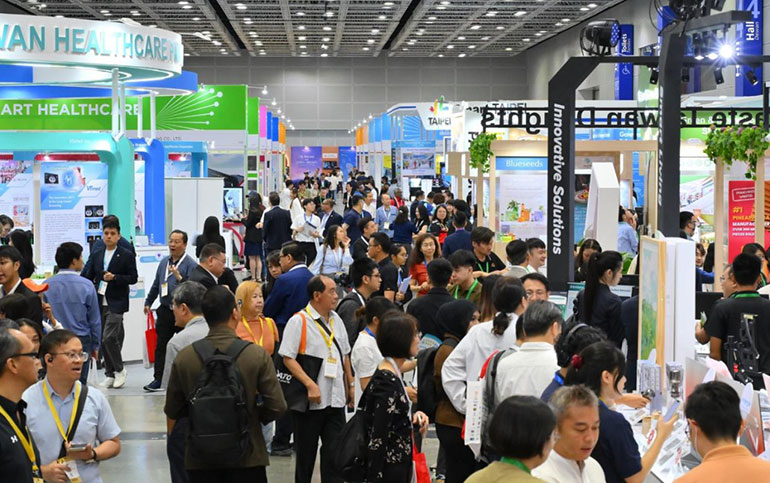
Taiwan Expo unveils on Sept. 17

Showcasing innovation, technology, and sustainability across 140 Taiwanese enterprises

With just one week to go, Taiwan Expo 2025 in the Philippines is set to transform the SMX Convention Center Manila Function Room 1-3 from Sept. 17-19 into a dynamic hub of international trade, innovation, and cross-border collaboration with Taiwan. Organized by the Taiwan International Trade Administration (TITA) and the Taiwan External Trade Development Council (TAITRA), this flagship event highlights Taiwan’s commitment to strengthening commercial partnerships and fostering innovation-driven growth with the Philippines.

Bringing together over 140 leading Taiwanese companies, this year’s Expo will spotlight solutions across industries that align closely with the Philippines’ industrial upgrading and sustainability agenda. More than a trade fair, the three-day showcase has been designed as a strategic B2B platform for industry leaders, SMEs, and entrepreneurs to forge transformative partnerships that could shape the future trajectory of Philippine industries.

Five Specialized Themes

The Expo will feature innovations organized around five major themes:

  • Green & Sustainability — renewable energy solutions, battery innovations, HVAC equipment, fire safety technologies, and water treatment systems supporting the Philippines’ transition toward a low-carbon future.
  • Agritech & Aquatech — smart farming technologies, agri-processing tools, organic food products and cold chain-related solutions that leverage smart technology to improve the productivity and efficiency of agriculture and fisheries.
  • Health & Wellness — cutting-edge medical equipment, diagnostics, skincare and lifestyle essentials meeting the needs of an expanding consumer base.
  • Smart Technology — ICT solutions, automation systems, smart appliances, and advanced network equipment enabling digital transformation and competitiveness.
  • Intelligent Lifestyle — consumer-centric goods including fashion, home security systems, toys, and F&B products tailored to the evolving Filipino household.

These sectors mirror Taiwan’s global strengths while directly addressing the Philippines’ development priorities — making the Expo not just a showcase of products, but a platform for industrial synergy, knowledge exchange and long-term collaboration.

Business Matching Program

A highlight of the Expo is its enhanced business matching program, which has consistently delivered measurable trade outcomes in prior editions. This year, organizers are introducing a more curated system of pre-arranged and onsite 1-on-1 meetings, giving Filipino buyers and distributors streamlined access to Taiwanese enterprises to accelerate deal-making, supply chain collaborations, and cross-border ventures.

Industry-Centric Programs and Networking Sessions

Beyond exhibits, business professionals can look forward to product launch events showcasing pioneering Taiwanese innovations in healthcare, agritech, green technology, smart solutions, and lifestyle sectors. These sessions will emphasize real-world applications relevant to Philippine businesses seeking scalable and sustainable solutions. To enhance engagement, attendees who register, explore booths, join stage events and product launch will have the chance to win rewards through lucky draw promotions — blending business networking with a fun and interactive atmosphere.

Strategic Timing for Deeper Ties

Positioned as both a venue for product discovery and a strategic platform for collaboration, the Expo aims to spark cross-border investments, facilitate knowledge-sharing, and strengthen ASEAN supply chain resilience. Industry leaders, entrepreneurs, and decision-makers are strongly encouraged to participate by registering for Taiwan Expo 2025 Philippines Business Matching and completing visitor pre-registration through Taiwan Expo 2025 platforms.

Taiwan Expo 2025 also presents a unique opportunity to meet distinguished personalities such as MANDARHYME DUO, Julius Cawaling, and Miss Universe 2018 Catriona Gray. Don’t miss the chance to meet with these celebrated guests in person at the Expo!

For updates and announcements, follow Taiwan Expo PH on Facebook at “Taiwan Expo in the Philippines” and on Instagram at “@taiwanexpo.ph.”


Spotlight is BusinessWorld’s sponsored section that allows advertisers to amplify their brand and connect with BusinessWorld’s audience by publishing their stories on the BusinessWorld Web site. For more information, send an email to online@bworldonline.com.

Join us on Viber at https://bit.ly/3hv6bLA to get more updates and subscribe to BusinessWorld’s titles and get exclusive content through www.bworld-x.com.

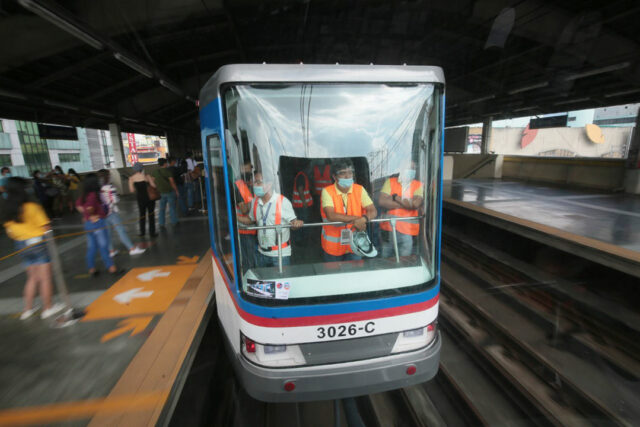
DoTr extends MRT-3 deal with Japan’s Sumitomo

PHILIPPINE STAR/MICHAEL VARCAS

The Department of Transportation (DoTr) on Friday said it will extend its contract with the Japanese firm Sumitomo Corporation for the rehabilitation and maintenance of Metro Rail Transit Line 3 (MRT-3) by another two years.

“We look forward to ensuring that MRT-3 continues to provide safe, reliable, and efficient service to our Filipino commuters and the riding public in general,” Acting Transportation Secretary Giovanni Z. Lopez said in a statement.

The additional two-year rehabilitation and maintenance agreement was signed by Mr. Lopez and Sumitomo Corporate Officer and General Manager Takeshi Noguchi. It covers essential MRT-3 system upgrades and repairs, as well as ongoing operational reliability.

The DoTr said these improvements aim to provide efficient and convenient rail services, reduce glitches and breakdowns, and shorten travel time.

Sumitomo Corp. completed the systems rehabilitation for the MRT-3 in December 2021, with continuing maintenance services until October 2025.

Since the Japanese firm took over the rail line’s rehabilitation and maintenance in 2019, the MRT-3 line was able to increase its operational trains from a low of 7 in 2018 to a high of 22 in 2022. It also enabled the deployment of up to 20 train sets during peak hours. — Almira Louise S. Martinez

MWSS approves Q4 water rate adjustments for Maynilad, Manila Water

PHILIPPINE STAR/EDD GUMBAN

The Metropolitan Waterworks and Sewerage System (MWSS) board of trustees has approved fourth-quarter rate adjustments for Maynilad Water Services, Inc.. and Manila Water Co., Inc. to account for foreign exchange fluctuations.

In a statement on Friday, MWSS approved a hike of P0.14 per cubic meter (cu.m.) for Maynilad and a rebate of P0.15 per cu.m. for Manila Water.

Residential customers served by Maynilad who consume 10 cubic meters or less will pay an additional P0.40 in their monthly bills in the fourth quarter. Those who consume 20 cu.m. and 30 cu.m. will see their bills go up by P1.53 and P3.13, respectively.

Meanwhile, Manila Water customers who use 10 cu.m. or less will see their bills decline by P0.64 during the period. Those who consume an average of 20 cu.m. and 30 cu.m. will see a P1.43 and P2.91 reduction in their bills, respectively.

The FCDA is a tariff mechanism which allows water concessionaires to regain losses or return gains by the movement of peso against other foreign currencies. The water providers pay foreign currency-denominated concession fees to MWSS, as well as loans that are used to finance projects to expand and improve water and sewerage services.

Manila Water serves the east zone network of Metro Manila, covering parts of Marikina, Pasig, Makati, Taguig, Pateros, Mandaluyong, San Juan, portions of Quezon City and Manila, and several towns in Rizal province.

Maynilad serves parts of Manila, Quezon City, and Makati, as well as Caloocan, Pasay, Parañaque, Las Piñas, Muntinlupa, Valenzuela, Navotas, and Malabon. It also supplies water to the cities of Cavite, Bacoor, Imus, and the towns of Kawit, Noveleta, and Rosario in Cavite province.

Metro Pacific Investments Corp., which has a majority stake in Maynilad, is one of three Philippine units of First Pacific Co. Ltd., the others being Philex Mining Corp. and PLDT Inc. Hastings Holdings, Inc., a unit of PLDT Beneficial Trust Fund subsidiary MediaQuest Holdings, Inc., has an interest in BusinessWorld through the Philippine Star Group, which it controls. — Sheldeen Joy Talavera

‘Claims of surrender are false’: Taiwan updates security handbook wary of China threat

CHESS PIECES are seen in front of displayed China and Taiwan’s flags in this illustration taken Jan. 25, 2022. — REUTERS

TAIPEI – Taiwan will issue new security guidelines next week in an updated civil defense handbook that, for the first time, will instruct citizens on what to do if they see enemy soldiers and clarifies that any claims of Taiwan’s surrender should be considered false.

The handbook represents democratic Taiwan’s latest effort to prepare its population for potential emergencies in the face of escalating military pressure from China, which views the island as its own territory.

The bright red-orange handbook, designed for people of all ages, features cartoon characters representing Taiwan’s population on the cover and across its 29 pages, and tells Taiwanese to “protect each other and safeguard our beloved home”. Reuters reviewed a copy before publication.

“Whether it be natural disasters, epidemics, extreme weather, or the threat of Chinese invasion, the challenges we face have never ceased,” the handbook says, offering guidance on how to find bomb shelters via smartphone apps and tips for preparing emergency kits for family members, including pets.

Lin Fei-fan, Deputy Secretary-General of Taiwan’s National Security Council who oversaw the updated handbook, said Taipei has taken inspiration from survival guides planned by fellow democracies including the Czech Republic and France.

“China’s ambitions for authoritarian expansion are being felt by countries around the world,” Lin said, adding Russia’s invasion of Ukraine has also lent new urgency.

“The global situation – whether in Europe or the Indo-Pacific region – is not a distant concern. It is right at our doorstep.”

China’s Taiwan Affairs Office did not respond to a request for comment. China has never renounced the use of force to bring Taiwan under its control and has blamed Taiwan President Lai Ching-te for raising tensions, saying he is a “separatist”.

Lai rejects Beijing’s territorial claims and says only Taiwan’s people can decide their future.

MILITARY SCENARIOS
The handbook, the first edition of which was published in 2022, gives a list of scenarios Taiwan might face, from sabotage of undersea cables and cyber attacks and inspections of Taiwanese vessels by an “enemy nation” as a prelude to conflict, to an all-out invasion.

The handbook highlights the danger of ongoing misinformation campaigns against Taiwan, saying “hostile foreign forces” may exploit misinformation to divide and weaken Taiwan’s resolve with the help of deepfake videos and local collaborators.

“In the event of a military invasion of Taiwan, any claim that the government has surrendered or that the nation has been defeated is false,” it says.

At a time of war when a suspected enemy presence is detected, people are advised to promptly leave the area or take cover in a safe location away from windows, and refrain from taking photos or videos and uploading them, it adds.

“That could compromise military movements, which is detrimental to our defensive operations,” said Shen Wei-chih, director at the Taiwan military’s All-out Defense Mobilization Agency.

The handbook also pointed to potential security risks from China-made tech devices such as cameras and applications, including China’s DeepSeek AI and social media platforms WeChat and TikTok.

“In times of crisis, these devices could be exploited by the enemy,” it added.

None of the Chinese-owned companies responded to requests for comment.

The handbook also offers tips on how to talk to children about an emergency.

“Many parents actually don’t know how to discuss a potential crisis with their children,” said Lin.

“The goal isn’t to make everyone feel afraid. Rather, all the information is intended to help people develop better coping strategies when a real crisis occurs.” — Reuters

UP expresses concern over corruption plaguing flood control projects

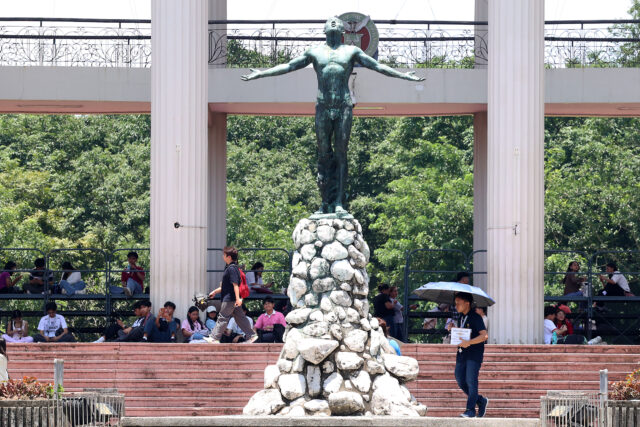
(AUG 2, 2025) A volunteer place a drop box on the foot of the Oblation statues as they encourage examinees to donate the pencils they used during the University of the Philippines College Admission Test (UPCAT) at the UP Diliman campus in Quezon City on Saturday. Rather than breaking the pencil in half and placing it on the foot of the Oblation statue as superstitious belief to pass the UPCAT, various organizations will give the collected pencils to elementary and high school students in need. (PHOTO BY MIGUEL DE GUZMAN)

By Almira Louise S. Martinez, Reporter

The University of the Philippines (UP) expressed the “gravest concern” over allegations of corruption in flood control projects in the country.

This comes as students on Friday staged a university-wide walkout as part of the Black Friday Protest at the UP Diliman campus to protest “rampant corruption” and to demand accountability from the Marcos administration.

“We cannot stay neutral. We support and encourage the expression of general outrage of our citizens in accordance with the constitutionally guaranteed rights to peaceful assembly and freedom of expression,” UP President Angelo A. Jimenez said in a statement.

To address the “real problems” of Filipinos, Mr. Jimenez underscored the need to harness education and training.

“As the University of the People, it is our overarching moral responsibility,” he said.

Mr. Jimenez said UP will continue to safeguard the integrity of its own procurement processes.

“We shall employ all legal means to ensure full accountability, in fulfillment of our continuing duty to serve the Filipino people. Furthermore, we support the advocacy for fiscal governance reforms and greater transparency in the public sector to improve the delivery of services to our people,” he said.

The Black Friday Protest was also supported by UP Diliman Chancellor Edgardo L. Vistan II, according to a Facebook post by the UPD University Student Council (USC).

The USC said the protest aims to demand accountability from the Marcos administration amid the investigation into corruption in flood control projects.

The USC also called for a higher budget for the university, which was only given a P25.82-billion budget under the proposed 2026 National Expenditure Plan. The UP Board of Regents had earlier proposed a P46.85 billion budget.

“These budget gaps between our budget request and the state’s proposal cripple our capacity to provide quality education, research, and public service,” the UPD student council said in a statement.

The student publication Philippine Collegian, in a separate post, noted that deans from colleges of Arts and Letters, Social Work and Community Development, Fine Arts, Science, Asian Institute of Tourism, Media and Communication, and Home Economics have issued similar endorsements for the walkout.

Hyundai battery plant faces at least 2-3 month startup delay following US raid, CEO says

HYUNDAI.PH

DETROIT – A battery plant co-owned by Hyundai Motor 005380.KS is facing a minimum startup delay of two to three months following an immigration raid last week, Hyundai CEO Jose Munoz said on Thursday.

The Georgia plant, which is operated through a joint venture between Hyundai and South Korea’s LG Energy Solution, was at the center of the largest single-site enforcement operation in the US Department of Homeland Security’s history last week.

Munoz, in his first public comments since the raid, said he was surprised when he heard the news and immediately inquired if Hyundai workers were involved. He said the company discovered that the workers at the center of the raid were mainly employed by suppliers of LG.

“For the construction phase of the plants, you need to get specialized people. There are a lot of skills and equipment that you cannot find in the United States,” Munoz said on the sidelines of an automotive conference in Detroit.

The plant, part of a $7.6 billion factory complex to make battery-powered models, was slated to come online later this year.

About 475 workers, including more than 300 South Koreans, were arrested, according to US immigration officials. The raid was conducted over suspicions about the “unlawful” visa and immigration status of workers at the site, US officials have said.

A plane carrying the workers is flying them home from Atlanta, after Seoul and Washington agreed to their release and to discuss setting up a visa program for workers needed at such sites being constructed by South Korean businesses.

Hyundai Motor Group Executive Chair Euisun Chung said on Thursday he was “really worried about that incident” but was relieved the workers were returning home to South Korea.

“Maybe our government and the US government, they are working closely, and the visa regulation is very complicated,” Chung said at the Detroit conference. “And I hope we can make it together a better system.”

It is typical for an automotive battery plant to employ these workers as it is getting off the ground, Munoz said.

Munoz said Hyundai will source batteries from other plants as it waits for the LG plant to start up, including from a Georgia plant co-owned with Korean battery-maker SK On.

Fallout from the raid has cascaded across the country. Reuters first reported that workers at other LG plants, including those co-owned by GM, were asked to return home. — Reuters

US consumer inflation accelerates; weekly jobless claims approach four-year high

A person shops for groceries in New York City, U.S., July 15, 2025. REUTERS/Jeenah Moon

WASHINGTON – US consumer prices increased by the most in seven months in August amid higher costs for housing and food, but a surge in first-time applications for jobless benefits last week kept the Federal Reserve on track to cut interest rates next Wednesday.

The larger-than-expected rise in the Consumer Price Index reported by the Labor Department on Thursday resulted in the biggest year-on-year increase in inflation since January. Higher inflation and softening labor market conditions fanned fears of stagflation, and pose a dilemma for the US central bank, beyond Wednesday’s anticipated rate decision.

The broad increase in inflation partly reflected businesses passing on higher costs from President Donald Trump’s sweeping tariffs to consumers and a rebound in demand for travel. Tourist traffic to the US tanked during the spring and early summer amid boycotts and the White House’s immigration crackdown.

“Even though a September cut is a fait a compli, the future trend looks less certain,” said Sung Won Sohn, a finance and economics professor at Loyola Marymount University.

“The interaction of rising inflation and softening employment creates a difficult policy dilemma for the Fed. Cutting rates too quickly risks embedding tariff-driven inflation, while delaying cuts risks amplifying unemployment.”

The CPI rose 0.4% last month, the biggest gain since January, after increasing 0.2% in July, the Labor Department’s Bureau of Labor Statistics said. The CPI was driven by a 0.4% jump in the cost of shelter. Food prices increased 0.5%, with prices at the supermarket soaring 0.6%.

Fruit and vegetable prices increased 1.6% as tomatoes surged 4.5%, the biggest gain since January 2020. Apples and bananas were also more expensive. Beef prices rose 2.7% and increased 13.9% from a year ago. Coffee prices jumped 3.6% and were up 20.9% from a year ago. Tariffs likely accounted for some of these increases. Past droughts that decimated the national herd were also probably behind the higher beef prices.

Labor shortages at farms as the Trump administration rounds up undocumented migrants for deportation were also adding to higher food prices, economists said. Gasoline prices rose 1.9%.

In the 12 months through August, the CPI advanced 2.9%, the largest increase since January, after climbing 2.7% in July.

Economists polled by Reuters had forecast consumer prices would rise 0.3% in August and increase 2.9% on a year-over-year basis.

Financial markets have fully priced in a quarter-percentage-point reduction in rates next Wednesday, with the Fed expected to deliver two similar-sized additional cuts this year.

The US central bank, which tracks the Personal Consumption Expenditures (PCE) price indexes for its 2% inflation target, paused its easing cycle in January because of uncertainty over the inflationary impact of import duties.

The pass-through from import duties has been gradual, but businesses have now depleted their pre-tariff inventories. Business surveys have for some time been signaling imminent price increases. Economists were divided on whether the pass-through from tariffs would be a one-off event or prolonged.

Stocks on Wall Street rose. The dollar slipped against a basket of currencies. US Treasury yields fell.

THE INCREASE IN INFLATION WAS BROAD
Excluding the volatile food and energy components, the CPI rose 0.3% after a similar gain in July. The rise in the so-called core CPI inflation was broad. Core goods prices increased 0.3%, with tariff-exposed products like new motor vehicles, apparel and household furnishings and operations costing more.

Used cars and trucks prices rose 1.0%. The cost of services increased 0.3% as airline fares soared 5.9%, and hotel and motel room prices surged 2.3%. Owners’ equivalent rent rose 0.4%. In the 12 months through August, the core CPI inflation increased 3.1%, matching July’s rise. Healthcare costs fell as a recent sharp rise in dental services reversed.

“We suspect the broadening cost burden from tariffs will keep the monthly pace of goods inflation elevated through early next year, but the spillover into services inflation should be limited by the weakness in the jobs market, choosier consumers and anchored inflation expectations,” said Sarah House, a senior economist at Wells Fargo.

Economists estimated that core PCE inflation increased 0.2% in August after rising 0.3% for two straight months, which would translate to an annual increase of 3.1%. That would be an acceleration from a 2.9% increase in July.

The labor market’s struggles were underscored by a separate report from the Labor Department showing initial claims for state unemployment benefits jumped 27,000 to a seasonally adjusted 263,000 for the week ended September 6, the highest level since October 2021.

But the data could have been impacted by the Labor Day holiday. There was also an unexplained 15,304 surge in unadjusted applications in Texas. Economists speculated some people could have incorrectly filed regular claims for the state’s Disaster Unemployment Assistance (DUA) following the July floods that was extended to the end of September.

“The magnitude of the Texas spike looks similar to a natural disaster. One possibility is that it is related to the early July flooding in Texas,” said Abiel Reinhart, an economist at J.P. Morgan. “DUA applications are not counted in the regular state jobless claims figures, but what is possible is that many people filed a normal claim by mistake.”

Still, labor market conditions have weakened. The number of people receiving benefits after an initial week of aid was unchanged at 1.939 million during the week ending August 30, the claims report showed.

The government said this week that nonfarm payrolls could have been overstated by 911,000 jobs in the 12 months through March. That followed the release last Friday of the monthly employment report, which showed job growth almost stalled in August and the economy shed jobs in June for the first time in four and a half years amid tariff uncertainty.

“Even if the increase in initial claims overstates any renewed weakness in the labor market, claims have been drifting higher,” said Nancy Vanden Houten, lead US economist at Oxford Economics. — Reuters