Home Blog Page 1038

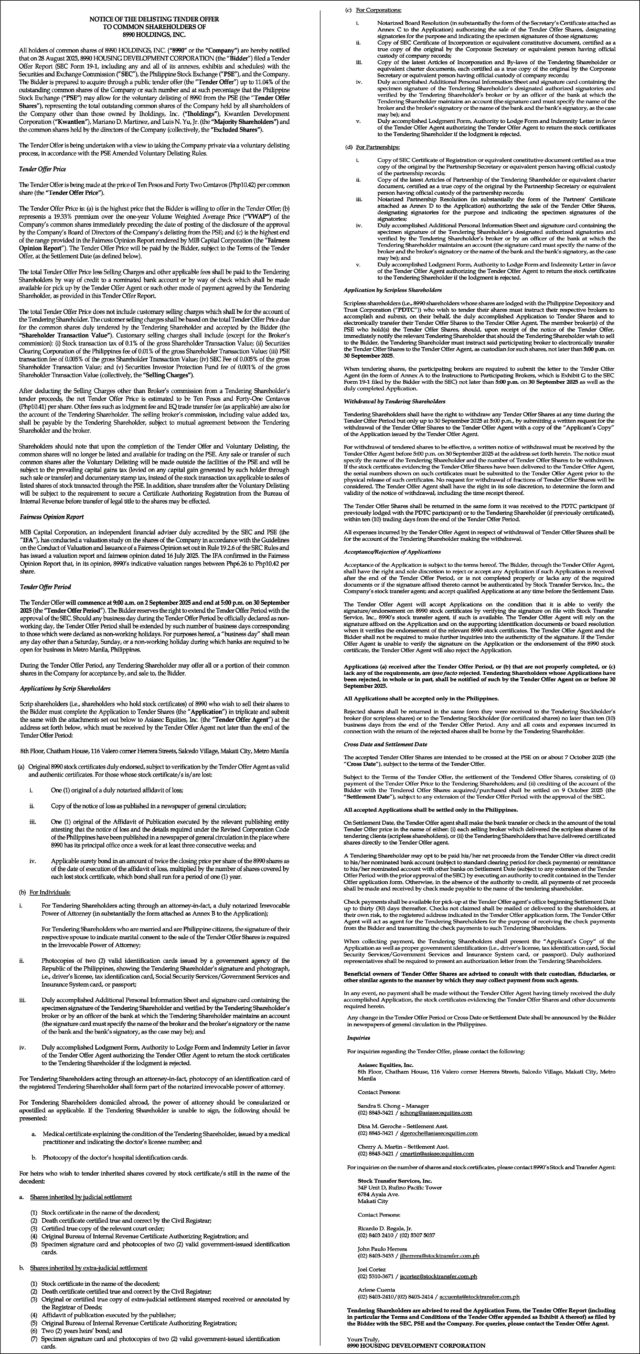
8990 Holdings, Inc. notifies common shareholders of the delisting tender offer

Click to Enlarge


Spotlight is BusinessWorld’s sponsored section that allows advertisers to amplify their brand and connect with BusinessWorld’s audience by publishing their stories on the BusinessWorld Web site. For more information, send an email to online@bworldonline.com.

Join us on Viber at https://bit.ly/3hv6bLA to get more updates and subscribe to BusinessWorld’s titles and get exclusive content through www.bworld-x.com.

Inclusive Archaeology: A new look at Ifugao history

By Jonathan Best

Book Reviews
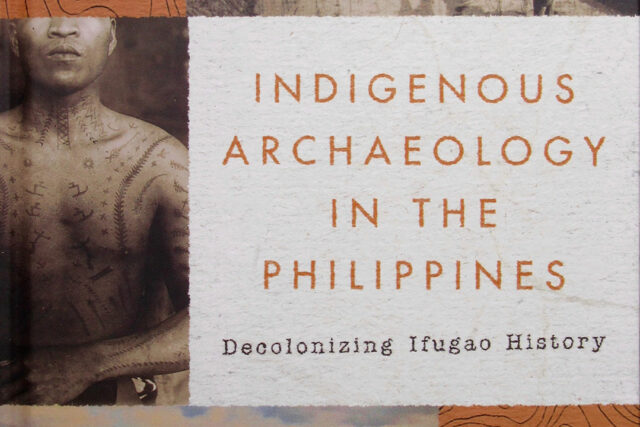
Indigenous Archaeology in the Philippines: Decolonizing Ifugao History
By Stephen B. Acabado and Marlon M. Martin
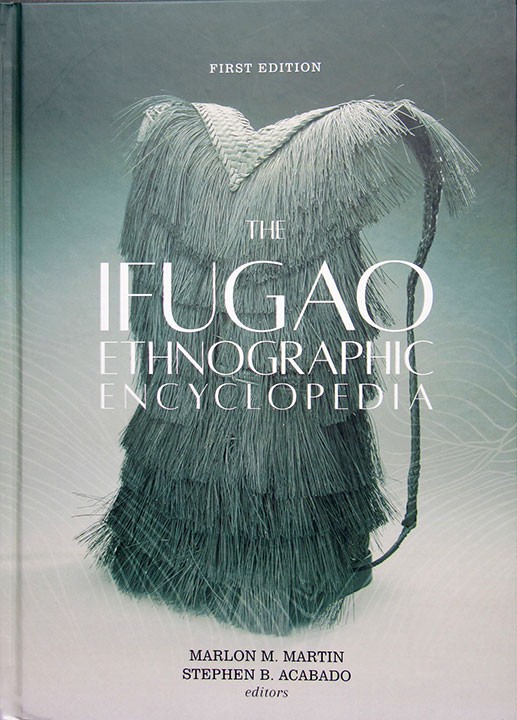
The Ifugao Ethnographic Encyclopedia
Edited by Stephen B. Acabado and Marlon M. Martin

TWO NEW BOOKS by the same two authors have come out recently and are major contributions to the understanding of Ifugao culture on the Grand Cordillera mountains of Northern Luzon and a new approach to historical research and archaeology. Neither book is a conventional historical narrative but they both contain important historical information regarding the extended Ifugao community and a great deal of information and commentary regarding Ifugao the Rice Terraces, Ifugao material culture, folkways, spiritual life, and their relationship to the outside world.

The first book, published by the University of Arizona Press in 2022, titled Indigenous Archaeology in the Philippines: Decolonizing Ifugao History by Stephen B. Acabado and Marlon M. Martin, reports on the archeological findings of the Ifugao Archaeological Project in collaboration with the Save the Ifugao Terraces Movement. The two authors started working together with their respective colleagues over 10 years ago to research Ifugao history from a primary excavation they initiated at the old site of Kiyyangan Village in Ifugao Province. While doing so they tried to develop a more “ethical role” for archaeology, embracing community inclusive research methods with serious attention paid to local folk knowledge and traditions and concern for the education and cultural needs of the current “descendent community.”

The second book, The Ifugao Ethnographic Encyclopedia by the same two articulate authors, this time as editors, came out just this year and is a very useful follow-up to their first book. Whereas the first book tended to focus primarily on early historical anecdotes and new archaeological evidence along with recorded interactions with the present-day community, this second book is a wealth of visual and written information about the material culture and mythology of the present-day Ifugaos living and working in the spectacular landscape of their ancestral rice terraces.

Of the two authors Mr. Martin is a member of the Ifugao community and head of the Save the Ifugao Terraces Movement and an advocate for preserving cultural landscapes using modern scientific research methods in close collaboration with indigenous stakeholders. Mr. Acabado is a professor at the University of California – Los Angeles (UCLA) in the United States, and works on many archaeological projects around the world with an emphasis on interdisciplinary collaboration, indigenous partnerships, and cultural sustainability. The funding for their first book was provided in part by the UCLA, American Indian Studies Center, the Cotsen Institute of Archaeology, and the UCLA Dean of Social Sciences. Their second book’s research and publication was assisted by a grant from the Henry Luce Foundation through the Center for Southeast Asian Studies of the University of California, and was published by the Savage Mind Publishing House in Naga City in the Philippines, an up-and-coming provincial bookshop and gallery.

Their first book reports on their current archaeological research, based on carbon dating of organic material from the stratified layers of their excavations and historical analysis of the pottery shards and beads recovered there. From these findings they estimate that the age of the rice terraces and the introduction of wet rice agriculture to Ifugao Province began approximately in 1650. From this they speculate that the transition from a reliance on tubers, gabi (taro), and camote (sweet potatoes), to wet rice cultivation for community subsistence might have been a direct result of lowland Filipinos fleeing up the Magat River valley to the Cordillera mountains to escape the Spanish colonizers. Their findings also confirm that the mountain inhabitants were not an isolated community and were actively trading with the lowlands for centuries, even acquiring foreign materials such as stoneware and porcelain jars, glass beads, and other manufactured goods.

These archeological findings lead them to discuss at length the negative effects of relying on “assimilationist” and “colonialized histories,” or even Filipino nationalist historians who have tended to gloss over, exoticize, or just ignore the national ethnic minorities’ cultural and spiritual accomplishments. These historians often times repeat urban-based, mestizo and elite Tagalog narratives. Despite the many claims that the Rice Terraces are 2,000 years old, the authors point out that there is very little if any evidence to prove that they are that old, as originally postulated by Western anthropologists such as Otley Beyer. This myth has been repeated over and over again by tour operators and on tourist brochures. Earlier writers had a tendency to either “romanticize” the indigenous minorities as lost tribes, or demonize them as wild, naked headhunters and avoided discussing the more painful political issues of resistance to colonialism and Western imperialism.

Jonathan Best is a senior consultant at the Ortigas Foundation Library.

The author’s second book, The Ifugao Ethnographic Encyclopedia, unlike their first, follows the format of an academic reference book but in a large format with numerous colorful illustrations and a great deal of informative annotations accompanying each entry. Messrs. Martin and Acabado list themselves as editors as this is a community project with much of the material provided by cooperative local informants. The writers continue with their advocacy for direct community participation, and this time present a rich display of Ifugao arts, crafts, and information concerning the accompanying rituals and beliefs which have been for centuries the foundation for the Ifugao’s technological and social accomplishments.

Many of these traditions, including the maintenance of the Rice Terraces, are threatened by the transition to modern social, economic, and technological developments. Much of the Ifugao’s relationship with their departed ancestors, core family genealogies and values, polytheistic beliefs determining seasonal planting and harvesting cycles, land ownership, health and general welfare have been preserved in their sophisticated rituals and chanted oral histories. At times, many of these rituals have been thoughtlessly censored by invasive and inappropriate Christian evangelization which has chastised older spiritual practices, and by well-meaning but naïve outside educators. This has had a “detrimental effect on Ifugao social cohesion” over the years.

Although a very inclusive community, the Ifugaos have had a well-defined class structure with the richest Kadangyan elite on top. Their social status was signified by their ownership of rice paddies, high quality textiles, gold and agate jewelry, antique Chinese jars, and the formidable carved Hagabi benches which took weeks of expensive ritualistic labor and feasting, to produce. Some rituals, like the famous Hudhud chant, recognized by UNESCO for its priceless addition to world oral histories, take days to complete by Mumbaki (ritual specialists) and elderly Ifugao women.

However, Martin and Acabado are eager to point out that despite modern challenges, the various Ifugao communities on the Cordillera are not static, dying historical entities as often characterized by Western “assimilationist historians,” but active and evolving communities which are confronting these evolutionary changes like many other marginalized communities around the world.

The colorful illustrations of Ifugao Gods in traditional attire, painted in a super-hero style by Matt Bulahao and the amusing drawings by Marcial Dulnuan, along with numerous photographic illustrations of artifacts add to the overall attractiveness of the second book. The authors have added some contemporary local photos and many important vintage photos by R. F. Barton, a thoughtful American writer and anthropologist who lived among the Ifugao and Kalinga communities in the first half of the 20th Century and was granted a Guggenheim Fellowship for his research on the Ifugao in the 1930s.

All-in-all, both books give a fairly comprehensive look at Ifugao history and material culture while at the same time making the case for indigenous communities to take control of their own historical narratives with the help of and progressive collaboration with outside experts. The communities themselves, whether Ifugao or others, should be consulted as to how best to pass on cultural and historical information to the next generation. As the authors conclude in their first book, Indigenous Archeology in the Philippines: “For the modern Ifugao who stands on the threshold of cultural loss, community archaeology serves as an aid to self-discovery and revitalized ethnic identity.”

The books can be ordered online from their respective publishers.


Jonathan Best is a senior consultant at the Ortigas Foundation Library.

PLDT says MSCI ESG rating upgraded to ‘BBB’

PLDT and Smart Communications, Inc. Chairman and Chief Executive Officer Manuel V. Pangilinan — PHILSTAR FILE PHOTO

PLDT INC. said its environmental, social, and governance (ESG) rating improved to “BBB” in 2025 from “BB,” based on the latest assessment by MSCI ESG Ratings, a global provider of ESG research and ratings for public and select private companies.

“Our improved MSCI rating is a recognition of our efforts to uphold practices that aim to continuously manage our ESG risks, support the company’s drive towards long-term profitability, and ensure that our business contributes to the wellbeing of our stakeholders and the planet,” PLDT First Vice-President and Chief Sustainability Officer Melissa Vergel de Dios said in a media release on Tuesday.

“We remain focused on the work needed to further enhance our ratings and ESG performance.”

MSCI ESG Research provides ESG ratings on global public and select private companies on a scale from “AAA” (leader) to “CCC” (laggard).

Companies are evaluated based on their industry-specific ESG risks and their ability to manage these risks relative to peers.

The Pangilinan-led telecommunications company said its rating reflects continuing efforts to adopt sustainable practices in its business while improving ESG risk management.

“PLDT continues to integrate sustainability and risk management in its employee performance management and executive compensation metrics, enjoining institutional action and workforce contribution to its ESG goals and focus areas,” the company said.

PLDT said its sustainability efforts include a comprehensive policy for data protection, robust measures to address data breaches, and stringent access controls to safeguard information.

It added that the company continues to identify climate change as one of its top enterprise risks.

Earlier this year, PLDT and its wireless unit, Smart Communications, Inc., established policies to conserve biodiversity and support nature-based solutions as the company expands its network infrastructure.

Last year, PLDT secured a P2-billion social loan to expand its fiber network and a P1-billion green loan for network upgrades and expansion.

At the local bourse, shares in the company gained P16, or 1.42%, to close at P1,139 apiece.

Hastings Holdings, Inc., a unit of PLDT Beneficial Trust Fund subsidiary MediaQuest Holdings, Inc., holds a majority stake in BusinessWorld through the Philippine Star Group, which it controls. — Ashley Erika O. Jose

Peso hits one-month low as dollar rises

BW FILE PHOTO

THE PESO weakened to a more than one-month low against the dollar on Tuesday as the greenback gained strength, supported by a weaker euro and investor anxieties over the UK fiscal position.

It closed at P57.51 a dollar, down 35 centavos from P57.16 on Monday, based on Bankers Association of the Philippines data posted on its website. This was its weakest close since Aug. 1, when it ended at P58.145 a dollar.

The peso opened the session at P57.22. It hit an intraday best of P57.14 and touched a low of P57.54 before settling at its close. Dollar turnover rose to $1.92 billion, sharply higher than $1.06 billion the previous day.

A trader said the peso tracked the dollar’s late-session gains, which came after the euro opened weaker following a spike in the UK’s long-term borrowing costs. Britain’s 30-year government bond yield climbed to its highest level since 1998, fueling worries over its fiscal position.

Sterling and the Japanese yen also slumped on Tuesday amid mounting concern about government finances, allowing the dollar to regain ground after five days of selling, Reuters reported.

Renewed pressure on global bond markets spilled into currencies, with gold prices simultaneously hitting record highs. Sterling fell 1.1% to $1.1396, its weakest level since Aug. 22, while the dollar rose 1% to 148.64 yen. The euro gained against both sterling and the yen, up 0.5% and 0.3%, respectively.

“Capital markets across equities and credit are still optimistic on the US, which suggests that foreign holders of US assets are not in retreat,” analysts from DBS wrote in a client note.

Traders have sold the greenback as US President Donald J. Trump’s attacks on the Federal Reserve, including his decision to remove Governor Lisa Cook, raise fear that the White House is undermining the central bank’s independence at a time when the case to begin cutting interest rates is far from clear.

“The Fed could be ominously poised to start its rate-cutting cycle,” said Chris Weston, head of research at Pepperstone Group in Melbourne. “People see the attraction of being in gold.”

At home, Rizal Commercial Banking Corp. Chief Economist Michael L. Ricafort said the peso’s decline was also partly driven by continued weakness in local equities as net foreign selling persisted.

The Philippine Stock Exchange index (PSEi) slipped 0.18% or 11.46 points to close at 6,128.89, while the broader all-share index shed 0.06% or 2.52 points to 3,681.03.

The trader expects the peso to move within P57.20 to P57.70 against the dollar on Wednesday, while Mr. Ricafort expects a narrower band of P57.40 to P57.65. — Aaron Michael C. Sy

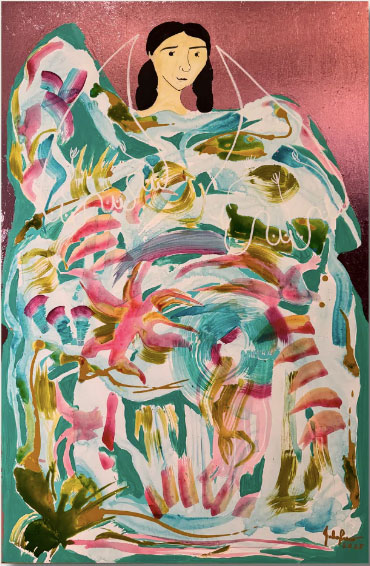
Expressing the deepest of human emotions with whimsy

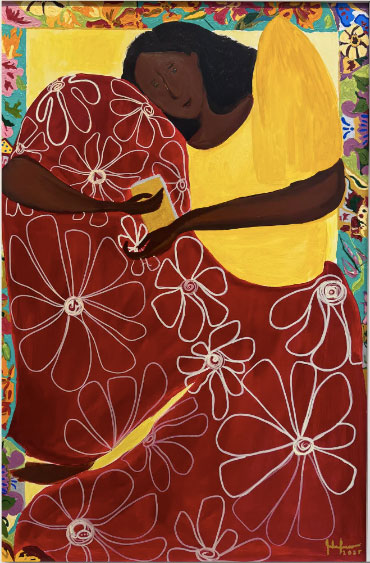
Lady Bottle Series Mini Me, 2025 — OFFICIAL PHOTO FROM THE ARTIST

Contemporary artist Inha Arceo to mount 3rd exhibit

THERE are many mental states and stages in life that people choose to bottle up and keep to themselves.

For artist Gracinha “Inha” Arceo, expressing all of this in bold, vibrant paintings serves not just as a personal outlet, but also an opportunity to connect with others who may be going through the same thing.

Most of all, it has become her full-time job.

“I have a corporate background. Marketing was my passion for about 10 years, but I resigned in the pandemic because I got burnt out,” Ms. Arceo told BusinessWorld in an interview.

She explained that it all started with doing art on the side. “In 2020, I was doing illustrations digitally, primarily highlighting my thoughts. It became an outlet of sorts, painting based on my own emotions and what I see around me, and people online felt a connection.”

It was on Etsy, an online marketplace for creators, where she gained a following selling digital prints and painting commissions. Her clients come from all over the world — mainly the US, Europe, and Australia.

Ms. Arceo’s style, gravitating towards vibrant, dreamlike florals and female figures clad in Filipiniana, allows for a strong overlap between digital prints and acrylic paintings.

“My vision as an artist is to bring more contemporary Filipino art into the global scene,” she said. Online, this has manifested in 65,000 followers on Instagram and more than 15,000 on TikTok.

BOTH GLOBAL AND LOCAL
In 2024, Ms. Arceo finally decided to make art her full-time job. She exhibited in Monaco and Madrid, where she took the opportunity to expose herself to various artists, curators, and styles.

“I love Spanish painters. My inspirations are Pablo Picasso and Joan Miró. I’m also inspired by the works of (Filipino artists) Juan Luna and Fernando Amorsolo,” she said.

To balance her international market, she began joining group shows and mounting solo exhibitions in the Philippines this year. In March, she had her first solo exhibition at RiseSpace Art Gallery in Comuna, Makati.

Her second and ongoing exhibition, Daily Rhythms, can be found at Art Elaan in Festival Mall, Alabang.

“I like appreciating the little mundane things that go on in life. There’s the Lady Bottle collection and the figures I paint that highlight the various emotions and little joys,” Ms. Arceo explained.

Those who see her works will find a mix of abstract floral elements and bold brushstrokes that give shape to the colorful women she paints. Be it the depiction of a girl blooming into maturity or a lady hunched over doomscrolling on her phone, her vibrant, almost whimsical style evoke something personal.

OF RADICAL VISIONS AND FORMS
The fear of breaking into the art scene coming from what started as an online hobby has continued to be part of Ms. Arceo’s journey.

Her third solo exhibition, Of Radical Visions and Forms, is set to open on Sept. 24. She told BusinessWorld that it’s ultimately a show about “vulnerability,” and will showcase more whimsical and abstract works.

“I realized in my journey that there’s always a fear, which is normal. I’m scared about all of this because I know I care. I’m not settling and I’m not complacent. The exhibit is about really challenging myself to expose another side of me, to feel all sorts of emotions,” she said.

Ms. Arceo said that she has been advising younger, newer artists to firstly be authentic in order to “build a brand” — something that came easy to her given her corporate and marketing background.

“From me specifically, you can expect letting loose a bit in terms of brushstrokes. I think it’s healthy to release these emotions,” she said, about the new works that are currently in progress.

“It’s radical because you get to let go of certain things and imagine life the way you want it to.”

Daily Rhythms is ongoing until Sept. 7 at Art Elaan in Festival Mall, Alabang, Muntinlupa City. Of Radical Visions and Forms will run from Sept. 24 to Oct. 8 at RiseSpace Art Gallery, Comuna Building, 238 Pablo Ocampo Sr. Ext., Makati City. — Brontë H. Lacsamana

Pros and cons of minimum wage legislation: How much is enough?

STOCK PHOTO | Image by Jcomp from Freepik

(Part 2)

How do we help employers who want to comply with the ethical standard set by the Social Doctrine of the Church, that a living wage must enable the worker and his family to attain a minimum level of comfort and decency with the wage that he or she is paid.

First, let us calculate what the actual monthly income of a worker who is paid the legal or statutory minimum wage is. We can use the formula: monthly income = daily wage x workdays per month or P645 x 22 standard days = P14,190 per month.

Let us compare this to what a “just” minimum wage should be considering minimum consumption requirements for minimum comfort and human dignity for the worker and his family.

Without using his case as the standard for all workers, just to illustrate, the following were the estimated monthly costs for the various items in the consumer basket reported by an average worker: Food (P5,000); Rent and Utilities (P7,000); Transportation (P1,500); Healthcare (P1,000); Education (P1,000); Clothing/hygiene (P1,000), Emergency savings (P1,000) totaling monthly expenses of P17,500. In this case the legal wage is too low.

It would be useful to cite some studies that have been made in calculating what a family with four members (the present statistical average according to the Philippine Statistics Authority or PSA) would need to live with minimum comfort and human dignity. According to a PSA study (2023), a family of five (the average among the poorest of the poor) would need at least P13,873 per month to be at the poverty threshold (not sufficient for minimum comfort and dignity). About 16% of total households in the Philippines fall below this poverty line. It is clear that this amount does not comply with the doctrine of Rerum Novarum and other papal encyclicals. According to the Social Weather Station (2025), families surveyed say that they need P12,000 per month (for the whole country) while those who reside in Metro Manila estimate it at P20,000, just to feel that they are not poor. These official figures may be useful as possible guides for employers and the Government to consider but they clearly understate what families feel is realistic.

Some publications have attempted to estimate what would be needed by a family of four, which is the national average. According to one study published by Numbeo/Tribune, a family of four in Metro Manila would need P109,770 monthly for a modest lifestyle covering food, utilities, transport, and leisure, excluding rent and education. FilePino (2025) calculated an urban family budget would have monthly costs ranging from P45,000 to as high as P83,000, including food, rent (two bedrooms), utilities, education, healthcare, and personal expenses. A Reddit user shared a breakdown for a family of four in Metro Manila, citing P100,000 as an ideal, broken down into P25,000 for housing; P15,000 to P20,000 for groceries; P4,000 to P8,000 for utilities; and P5,000 for transportation. All totaling P77,000. If extras are added for eating out, savings, or a house helper, the total budget can reach as high as P100,000 monthly.

As summary, the following amounts can be considered as monthly threshold family income depending on how one wants to interpret the phrase “a minimum of comfort and human decency.”

• Bare minimum (PSA threshold): P13,873 monthly for a family of five;

• Self-perceived survival threshold: P12,000 to P20,000 (varying by region);

• Living decently with savings (NEDA): P42,000 to P45,000;

• Modest comfort (basic lifestyle): P45,000 to P83,000;

• More realistic comfort (urban lifestyle): P80,000 to P110,000;

• More affluent lifestyle (savings, leisure, tuition): P150,000 to P250,000.

As can already be realized at this stage of translating doctrine to specific policy recommendations, the issue of minimum wage can be subject to various interpretations depending on family size and costs of living in various geographical settings, whether urban or rural, whether in Metro Manila or other urban centers.

To summarize the various computations above, we can conclude that the barest subsistence level (poverty line) is around P11,000 to P14,000. This does not comply with the criterion of “minimum comfort and human dignity.” A more adequate monthly income for a family of four — ensuring dignity, essentials, and savings — is around P40,000 to P45,000 a month. At the lower level, this would translate to a required daily income of P1,818 (assuming 22 standard working days monthly). This is almost three times the actual minimum wage of P645.

There is, however, a further question about a just family wage. Must it be earned by a single breadwinner, either the husband or wife? Practically every household today in the Philippines has at least two breadwinners, with one of the spouses or a close relative joining one other breadwinner. In a good number of households, there are breadwinners who are overseas workers.

Whatever the actual conditions may be in the average Philippine household, there are those who maintain that one of the spouses, ordinarily the wife, must be given the choice to take on some remunerative work, whether full or part time, or to be a full time wife and mother, doing all the necessary household chores and especially taking care of the children. There are actual methods of imputing financial values to these tasks, thus increasing the real income of the household. In some countries that are suffering severely from extremely low fertility rates, there are serious recommendations that stay-home mothers be actually compensated by the State for addressing a national crisis. In the future the Philippines may have to consider this policy recommendation because our fertility rate has already dropped to 1.9 babies per fertile woman, which is already below replacement. The State may have to compensate stay-home parents if we are to avoid the serious population crisis of rapid ageing that practically all developed countries in the world are experiencing.

It is understandable that President Ferdinand Marcos, Jr. was not ready to take a stand about the debate on the daily P200 wage hike being requested by labor groups. There should be more discussion on the pros and cons of this very complex issue.

The majority of Filipinos who are poor are not wage earners. These are the ones who may be prejudiced by high minimum wages.

To end, let me summarize the pros and cons of setting a high minimum wage. On the pros side, workers can better afford their basic needs and they do not have to rely on government assistance or debt; a high wage helps lift low-income workers above the poverty line and narrows the wage gap between high and low earners. More spending power in workers’ hands can stimulate consumer spending, which is the primary engine of growth of the Philippine economy. Higher wages can improve motivation, loyalty, and work quality and can reduce absenteeism and turnover. Employers may be motivated to invest in advanced technology or streamline processes rather than rely on cheap labor. Greater social stability may be attained through reduced crime, labor unrest, and social tensions.

On the other hand, high wages may lead to job losses or reduced hiring for those who are unemployed or underemployed. Employers may cut staff, reduce hours, or freeze hiring to offset higher labor costs. The MSME sector may be the hardest hit because they are more labor-intensive. Businesses may pass on the higher labor costs on to consumers, thus fueling inflation and reducing the real value of the wage increase. Employers may avoid regulation by hiring informally or underreporting hours, thus increasing job insecurity. There may be greater incentives to automate and outsource as businesses are encouraged to replace workers with machines or shift jobs overseas. The jobs that are most affected are the low-skill ones. There may result wage compression in which wage differentials between entry-level and experienced workers are reduced, causing dissatisfaction.

People in Congress and labor leaders must consider all the stakeholders in the entire economy before suggesting further increases in the minimum wage.

(To be continued.)


Bernardo M. Villegas has a Ph.D. in Economics from Harvard, is professor emeritus at the University of Asia and the Pacific, and a visiting professor at the IESE Business School in Barcelona, Spain. He was a member of the 1986 Constitutional Commission.

bernardo.villegas@uap.asia

Recto: One more BSP rate cut possible this year

THE BANGKO SENTRAL NG PILIPINAS (BSP) may deliver one more rate cut before yearend, depending on economic data, Finance Secretary Ralph G. Recto said on Tuesday.

“So far, I think we can probably ease one more time. Hopefully,” he told reporters at the Senate. “But let’s see what the data show.”

The Monetary Board last week cut the target reverse repurchase rate by 25 basis points (bps) to 5%, the lowest since November 2022.

Since beginning its easing cycle in August 2024, the central bank has trimmed rates by 150 bps, including two 25-bp cuts each in April and June.

BSP Governor Eli M. Remolona, Jr. earlier said there might be room for one more cut this year, though he noted the cycle is nearly over.

The Monetary Board still has two meetings left, in October and December. — Katherine K. Chan

Globe partners with Bolttech to drive flagship smartphone access

BW FILE PHOTO

GLOBE TELECOM, INC. has partnered with global insurance technology (insurtech) company Bolttech to upgrade the telecommunications company’s device upgrade program.

“Our partnership with Bolttech allows us to make premium phones very accessible and reachable, a reflection of our commitment to provide curated experiences and customer-centric solutions that truly meet our customers’ needs,” Globe Head of Platinum Mark Gil Pasaylo said in a media release on Tuesday.

Through this partnership, Globe will launch Flagship Forever, a program designed to give Globe’s customers flexibility and accessibility in owning flagship smartphones, the company said.

Flagship Forever will allow customers to upgrade to the newest models each year without the burden of pre-termination fees for every upgrade, it said, adding that it also enables customers to easily trade their current units without paying pre-termination fees.

“We are thrilled to expand our ongoing collaboration with Globe to bring Flagship Forever to customers in the Philippines. By combining annual upgrades with complete device protection, customers can stay connected through the latest technology while enjoying meaningful savings in this accessible program,” said Bolttech Philippines General Manager Alexander Sarmiento.

The Ayala-led telecommunications company said it is boosting connectivity in Metro Manila with new tower builds and upgrades.

Globe said it had reached 62.5 million mobile subscribers to date, representing a 5% year-on-year increase as of end-June, up from 59.5 million in the same period last year.

For the second quarter, Globe’s attributable net income fell by 29.46% to P5.46 billion as weaker revenues and higher expenses weighed on earnings.

Its combined revenues for the second quarter declined by 1.92% to P43.47 billion from P44.32 billion in the second quarter of 2024, while gross expenses rose by 0.72% to P39.21 billion from P38.93 billion in the same period last year.

At the local bourse on Wednesday, shares in the company closed P15, or 1% higher, at P1,520 apiece. — Ashley Erika O. Jose

Arts & Culture (09/03/25)


Joel Wijangco’s shoe exhibit at Yuchengco Museum

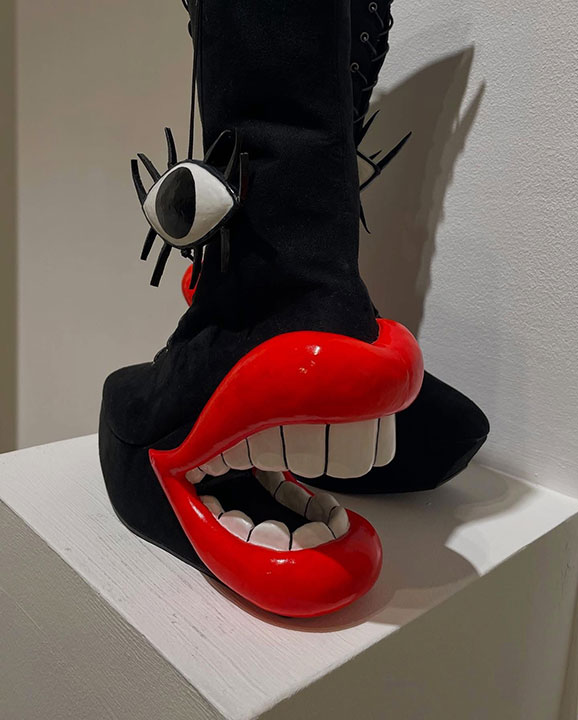
AVANT-GARDE footwear designer and art provocateur Joel Wijangco has unveiled his latest exhibit at the Yuchengco Museum, blurring the line between fashion, sculpture, and social commentary. The exhibit showcases over 25 handcrafted shoes, each one acting as a sculptural narrative, from twisted stilettos exploring body dysmorphia to pieces inspired by the fishwife Amazons of Malabon’s wet markets. It is on view at the Yuchengco Museum, RCBC Plaza, Makati City, until Oct. 15.


Gateway Gallery hosts Pen Medina’s solo exhibit

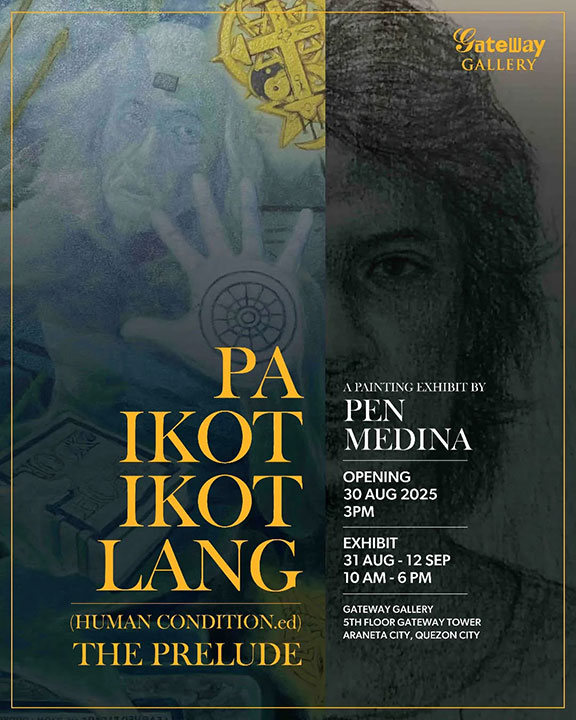
VETERAN actor Pen Medina is holding his first solo painting exhibit at Gateway Gallery. Titled Paikot-ikot Lang: (Human Condition.ed) The Prelude, the exhibit serves as both a personal milestone and a meditation on the cycles of life, art, and the profound question of humanity’s purpose. It runs until Sept. 12 at the Gateway Gallery on the 5th floor of Gateway Tower, Gateway Mall, Cubao, Quezon City.


CCP welcomes deaf and hard-of-hearing apprentices

THE Cultural Center of the Philippines (CCP) has recently conducted its Front-of-House apprenticeship program with participants belonging to the Deaf and Hard-of-Hearing community. It provides opportunities for differently abled youth through training in different aspects of arts management and appreciation, as well as theater operations, especially in the frontline service areas. Ten Deaf and Hard-of-Hearing participants went through the two-week-long series of lectures and workshops.


UNICEF, Ang INK collaborate on gifts for a cause

UNICEF Philippines has launched the Hiraya Collection, a new line of all-occasion cards and merchandise. Created in collaboration with Ang Ilustrador ng Kabataan (Ang INK), the collection is “all about bringing hope to vulnerable children through beautiful, art-filled gifts.” The limited-edition collection features designs that signify hope, inspired by Ang INK artists’ fondest childhood memories. Among the participating artists are Iori Espiritu, a ceramic artist and illustrator, who designed Sama-Sama, Salo-Salo, which shows children gathering ingredients for a meal; designer and illustrator Kat Mel made Sayaw ng Santan; and grade school teacher and illustrator Al Estrella titled his piece on school Pangalawang Tahanan. The Hiraya Collection includes the UNICEF Cards for Every Occasion, featuring 12 unique designs available for P1,000. The collection also consists of the UNICEF Tote Bag, which comes with a keychain and is available in three different designs for P1,500. Every purchase from the Hiraya Collection supports UNICEF’s programs for children in education, health and nutrition, immunization, protection, climate, environment, resilience, and aid in emergencies. The Hiraya Collection and other UNICEF merchandise, such as the UNICEF Mini Backpack Charm (P1,200), UNICEF Notebooks (P500), and UNICEF Gift Bag (P200), are available exclusively on the UNICEF Giving Shop, UNICEF Philippines’ official online store.


Art House exhibit with 0270501, Veronica Ibarreta

THE upcoming exhibit HUGIS: When Memories Take Shape is set to showcase contemporary art by two artists: 0270501 and Veronica Ibarreta. The exhibit, curated by Marika Constantino, showcases the indigenous materials and unconventional processes of each artist. For 0270501, his pieces are artifacts and mementos best described as controlled chaos. Meanwhile, Ibarreta, known for her pointillism technique and floral series, contributes canvases resulting from contemplation and meditation. The dual exhibit will run from Sept. 5 to 21 at the ArtistSpace, Ayala Museum, Makati Ave., Makati City.


Two-day comics workshop at Y Space

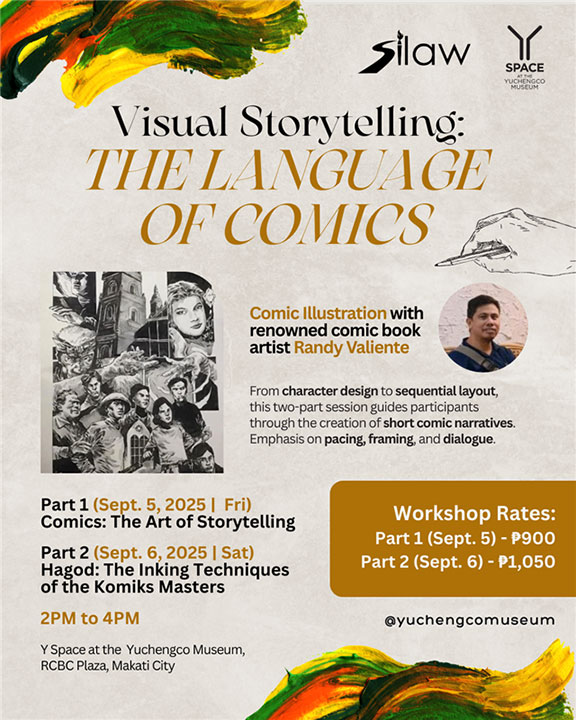
ON Sept. 5 and 6, Y Space will host the workshop “Visual Storytelling: The Language of Comics” which will tackle comic illustration, led by renowned comic book artist Randy Valiente. It will cover character design, sequential layout, and short comic narratives with an emphasis on pacing, framing, and dialogue, all in the span of a two-part session. It takes place on Sept. 5 and 6, 2-4 p.m. The first part costs P900 while the second costs P1,050. Y Space is located at the Yuchengco Museum in RCBC Plaza, Makati City. Register via yuchengcomuseum.org.


Sean Go mounts exhibit on the monumental

FOLLOWING successful exhibitions in Japan, the US, and across Europe, Filipino contemporary artist Sean Go is back in Asia with his solo exhibition Colossus, opening on Sept. 6 at León Gallery International in Makati City. This show presents looks into what it means to be small, overwhelmed, and in awe of things that are bigger. It features towering works reaching up to seven feet in height with widths extending to nine feet, each boasting a mechanical aesthetic. The exhibit will run from Sept. 6 to 16 at León Gallery International in Corinthian Plaza, Paseo de Roxas, Makati City.


PPO set to open 41st concert season

THE 41st music season of the Philippine Philharmonic Orchestra (PPO) will open on Sept. 12 with Concert I: Overture. It will feature acclaimed pianist Andrey Gugnin playing various pieces with the orchestra, including Antonín Dvořák’s Carnival Overture, Op. 92, Sergei Rachmaninov’s Rhapsody on a Theme of Paganini, Op. 43, and Johannes Brahms’ Symphony No. 4, Op. 98, E minor. It will take place at The Metropolitan Theatre in Manila. Tickets are priced from P500 to P3,000.


Shell’s 58th NSAC enters partnerships

SHELL Pilipinas Corp. will continue to champion young Filipino artists through this year’s 58th Shell National Students Art Competition (NSAC), this time with a roster of partners. These are Boysen Philippines, IFEX, and Airspeed, along with various museums and galleries nationwide. This year’s theme has also been revealed: “Alab” (Flame), “which calls on college students to ignite their creative passion and express ideas that resonate with today’s generation.” For updates on the competition, follow Shell Pilipinas Corp.’s official website and social media channels.


Cecile Licad concert at MiraNila in October

MIRANILA Heritage House & Library, in partnership with the Erehwon Center for the Arts and the P. Ilusorio Foundation, will be presenting the piano concert Cecile Licad Up Close next month. Ms. Licad will play in the garden-surrounded setting of the Gallery MiraNila, with a repertoire of Beethoven, Chopin, Joplin, Liszt, and Schumann. The concert is scheduled for Oct. 1 at 6:30 p.m. at the MiraNila Heritage House, 26 Mariposa St., Brgy. Bagong Lipunan ng Crame, Quezon City.

Finding the sweet spot between technology and security

STOCK PHOTO | Image from Freepik

On the one hand, we have to take advantage of advances in technology, aiming not just for digital literacy but sophistication. Developments over the past few years have made many things possible, and many Filipinos have benefitted from the convenience and reach offered by technological progress.

For example, communication between different places in the country and across different countries is now possible at no additional cost. Meetings and even classes can be held virtually, grocery items could be purchased online, and transferring funds or engaging in any financial transaction could be done in a matter of minutes, even seconds.

On the other hand, technology has its drawbacks, security not being the least of all. And because it is ever evolving, it is impossible to completely anticipate and prepare for its pitfalls.

Thus, it is not uncommon to hear about fraud, invasion of privacy, or security breaches.

How, then, do we navigate this fragmented world and complex environment wherein we have to rely on technology as a means to achieve economic goals, be competitive with the rest of the world, and improve the people’s quality of life, while also guarding ourselves against its excesses? More than individuals being at risk, there is a larger danger: as global trade expands, shifting geopolitical realities are reshaping economies and national security.

Specifically, global trade is driven by regional partnerships, strategic alliances, and the rise of a multipolar world. Surviving and thriving in this evolving Indo-Pacific entails adaptation and leadership in innovation, investment, and solutions. The Philippines plays a crucial role here, because it is strategically positioned across sea lanes, trade routes, data connectivity, digital services, and supply chain diversification. This makes the country central to both opportunity and security imperatives.

Trade and investment now sit at the intersection of economic resilience and national security. Emerging technologies must be harnessed with this same goal: enabling progress while protecting sovereignty.

At the opening of the Manila Tech Summit 2025, President Ferdinand Marcos, Jr. said that technology should not only deliver efficiency through faster transactions, broader services, and expanded access. Rather, it must also uplift lives and create opportunities for every Filipino. The digital economy is currently valued at P2.25 trillion, or equivalent to 8.5% of the 2024 gross domestic product, Hence, investments in digital innovation promise far more returns than their costs.

A truly digital Philippines, he said, expands connectivity across the archipelago, strengthens trust and inclusion, and positions the country as both a fintech hub and a leading voice in the global financial system.

According to the President, the Philippines must continue investing in technology, information and communications, and advanced electronics, while deepening partnerships with its most trusted economic allies. A Pulse Asia survey revealed that these trusted economic allies are the United States (66%), Japan (43%), Australia (32%), Canada (31%), and the United Kingdom (16%).

Paul Taylor, Head of the US Commercial Service in the Philippines, highlighted the strong interest of American companies in investing in the country, citing the US government’s recent $15 million commitment to support private-sector development through the Luzon Economic Corridor Initiative.

This initiative translates into projects in ports, rail, power, and digital backbones, which strengthen supply chain resilience and unlock the country’s potential in semiconductors, AI, and cloud centers. These find solid footing on the enduring US-Philippine alliance, anchored in one of the world’s oldest mutual defense treaties.

Meanwhile, Australia’s Trade and Investment Commissioner to Manila, Bernice Vanguardia, highlighted Australia’s sustained investments in the Philippines, recognizing the country as an emerging player in regional value chains under Australia’s Southeast Asia Economic Strategy to 2040. She cited Australia’s investments in the Philippines’ digital infrastructure sector, including an agreement designed to enhance cyber skills development, information sharing, and collaboration on emerging digital threats and frameworks for a trusted digital economy.

Rhiannon Harries, the UK Department of Business Deputy Trade Commissioner for Southeast Asia, highlighted the UK’s 10-Year Modern Industrial Strategy, emphasizing its focus on clean energy, particularly offshore wind, frontier technologies such as AI, and strengthening its role as a globally connected financial center that deepens ties with both advanced and emerging markets. She noted that the UK is expanding its investment in Southeast Asia, including support for renewable energy projects in the Philippines.

Meanwhile, from the private sector, Citibank Philippines Managing Director Paul Favila said that the rapid adoption of e-wallets and online banking demonstrates how technology is driving financial inclusion and enabling broader participation in the economy. As global supply chains diversify, he emphasized that the Philippines has a unique opportunity to position itself as a trusted hub by leveraging its skilled workforce, strong digital adoption, and strategic location.

In a fragmented world, securing the Indo-Pacific region demands a whole-of-society approach that is anchored on strong partnerships, resilient systems, and strategic collaboration amid intensifying geoeconomic competition. This shared recognition was echoed by key partners and stakeholders, who underscored their strong commitment to investing in the Philippines and advancing regional cooperation.

At a time of intensifying geoeconomic tensions, the Philippines stands at the crossroads of opportunity and responsibility. With its strategic location, skilled workforce, and expanding industries, the country is poised to lead in shaping resilient supply chains, advancing digital innovation, and fostering regional security — emerging not just as a participant, but as a driving force in the global economy.


Victor Andres “Dindo” C. Manhit is the president of the Stratbase ADR Institute.

PCCI urges focus on storage, AI in MSME funding

FACEBOOK.COM/DTI.GOLOKAL

By Beatriz Marie D. Cruz, Reporter

STATE FUNDING for micro, small and medium enterprises (MSME) should prioritize storage and artificial intelligence (AI) adoption, according to the Philippine Chamber of Commerce and Industry (PCCI), citing heightened risks from climate change and disruptive tech.

“One of the sectors which has a lot of MSMEs is the agriculture and aquaculture sectors, as they form a whole supply chain,” PCCI Chairman George T. Barcelon told BusinessWorld by telephone. “They are food-related and subject to climate change, so they have a higher risk involved.”

“So, the kind of financing for MSMEs must tailor-fit those prevailing conditions, like post-harvest and storage financing,” he added.

Mr. Barcelon also cited the need to help MSMEs integrate AI and robotics into their operations, noting that many small firms lag in adapting to technological shifts.

“We are now embarking on disruptive technology, such as AI, robotics and the like, but of course, many firms are involved in this since this is just something very recent,” he said.

He added that financing schemes similar to venture capital could also help startups and small entrepreneurial projects that form part of the MSME sector.

The Department of Trade and Industry earlier said it is pushing for bigger MSME financing, in line with President Ferdinand R. Marcos, Jr.’s call during his State of the Nation Address on July 28.

MSMEs, dubbed the backbone of the economy, account for 99% of all registered businesses in the Philippines.

However, a recent study by the Boston Consulting Group (BCG) showed that 50% of surveyed MSMEs cited lack of access to capital as their biggest challenge.

BCG Principal Lance Katigbak said many MSMEs are aware of financing options but hesitate to apply for loans due to fear of debt, lack of collateral and the perceived complexity of applications.

“Government funding should focus on unlocking access, not just increasing availability,” Mr. Katigbak said in a Viber message. “This means developing programs should capture a deep understanding of the specific needs of different MSME segments.”

He added that streamlining and digitizing the loan application process, while expanding eligibility for microenterprises, could ease the burden.

“Many MSMEs — especially sari-sari (mom-and-pop) stores — feel excluded due to lack of collateral, limited credit history or informal operations,” he said.

Mr. Katigbak also suggested short-term working capital for food service MSMEs and retailers, along with broader support measures such as financial literacy programs, mentorship, supply chain linkages, digital adoption incentives, job-matching services and eased labor compliance.

Michael L. Ricafort, chief economist at Rizal Commercial Banking Corp., said creating a centralized credit bureau would boost bank lending to MSMEs by improving borrower information.

“There is great opportunity to further boost MSME lending in the country, partly through loan guarantees for some MSME borrowers that do not have the track record on borrowings as well as on financials,” he said in a Viber message.

Banks have lent only 4.63% of their total loan portfolio to MSMEs as of end-March, far below the 10% quota required by law, according to central bank data.

Pru Life UK unveils 2 insurance plans

PRULIFEUK.COM.PH

PRU LIFE Insurance Corp. of UK Philippines (Pru Life UK) has rolled out two traditional life insurance policies with guaranteed cash payouts and maturity benefits, as part of its strategy to expand the share of traditional products in its portfolio.

At a launch event on Tuesday, Pru Life UK Chief Product Officer Garen U. Dee said the company aims to meet customer needs across different life stages by offering guaranteed returns alongside protection.

“There’s guaranteed payout, guaranteed maturity benefit, and guaranteed protection,” she said. “We have the right solutions depending on the needs of the customer for whatever stage of life they are in.”

The two products — PruSteady Income and PruWealth 10 — target distinct customer segments.

PruSteady Income was designed for freelancers, parents and overseas Filipino workers. It provides a 10% net annual cash payout from the end of year 11 until the policy matures at year 20.

At maturity, policyholders get 100% of the sum insured. The plan also includes access to loanable funds based on the policy’s cash value, while protection worth 200% of the sum insured applies from day one, payable to beneficiaries in case of death.

PruSteady Income requires a minimum investment of P50,000, with payment terms ranging from five to 10 years.

Meanwhile, PruWealth 10 caters to affluent clients seeking wealth diversification. It offers guaranteed 5% net annual cash payouts for 10 years, a full 100% premium return upon maturity, and life coverage equal to 110% of the sum insured. The product, which requires a minimum investment of P500,000, will be offered only while supplies last.

Company officials noted that the guaranteed returns are competitive compared with time deposit (TD) rates, which have fallen amid the Bangko Sentral ng Pilipinas’ easing cycle. “This one guarantees 5% for 10 years, whereas we can see TDs ranging way below that,” she said, adding given the recent rate cut and tax considerations, this stands at a very competitive level.

Pru Life UK said it plans to launch more guaranteed products to balance its portfolio, which is dominated by variable-unit linked (VUL) insurance.

“The difference between VUL and traditional products is really the promise of guarantee,” Ms. Dee said. “There are segments of the market who would want to have that kind of feature.”

She added that the company is not shifting away from VUL policies but rather broadening its offering. “We do not stop carrying VULs because we believe it’s an integral part of the portfolio, but we are also starting to offer guarantees.” — AMCS