Home Blog Page 1023

Identity security: The core of cyber resilience

TRUSTPAIR.COM

By Eric Kong

AS DIGITAL TRANSFORMAtion accelerates across the Asia-Pacific (APAC) region, the cybersecurity landscape evolves at an unprecedented pace. Organizations in APAC and beyond face a complex web of internal and external threats, challenging traditional security models. A recent SailPoint survey of over 100 chief information security officers (CISOs) and vice-presidents of information security reveals a definitive shift in focus: identity security is emerging as the cornerstone of a cybersecurity strategy, particularly in combating the rising tide of sophisticated attacks driven by artificial intelligence (AI).

In Asia-Pacific, where digital ecosystems are rapidly expanding, the hyper-connected nature of today’s business environment demands a fundamental rethinking of security architecture. Some 78% of enterprises rank identity security as extremely or very central to their cybersecurity priorities. This shift reflects a profound understanding that identity — encompassing both human and digital entities — is the new security control plane.

THE IMPORTANCE OF IDENTITY SECURITY
Identity security is critical today due to the growing sophistication and prevalence of identity-based attacks, including credential theft, phishing, and increasingly AI-driven exploits. External threats consistently rank highest on the risk radar of surveyed CISOs, surpassing concerns like insider threats and compliance issues. The rise of AI-powered cyberattacks introduces unprecedented challenges, as attackers leverage AI to craft real-time, targeted phishing campaigns that evade traditional detection methods.

Some 60% of organizations are very concerned about the evolving nature of AI-driven cyberthreats, highlighting the urgency for adaptive defense mechanisms. The stakes are particularly high in the Philippines and the wider Asia-Pacific region, where financial services and technology sectors represent lucrative targets for threat actors.

AI: BOTH A CHALLENGE AND A SOLUTION
As threat actors harness AI to enhance the precision and scale of their attacks, security teams must leverage AI to stay ahead. The survey identifies role mining and anomaly detection powered by AI as game-changing capabilities that enhance identity governance. Role mining, set to be implemented by 62% of organizations surveyed, uses AI to continuously analyze access permissions and optimize role structures, uncovering hidden risks and reducing unnecessary permissions that could be exploited in a breach.

Moreover, AI-driven outlier detection is transforming threat mitigation by surfacing unusual access patterns that would otherwise go unnoticed. Organizations that deploy these advanced AI tools report significantly higher confidence in their ability to contain risks from compromised accounts. By integrating AI into identity security, enterprises move from reactive defense toward a proactive, intelligent posture capable of anticipating and neutralizing threats before they escalate.

OPERATIONALIZING ZERO TRUST THROUGH IDENTITY
The survey highlights that standard identity-centric controls — role-based access control (RBAC), self-service access requests, and automated provisioning — are now ubiquitous, with 90% of respondents reporting active deployment. These foundational controls operationalize zero trust principles by enforcing least privilege access and automating lifecycle management to minimize human error and reduce the attack surface.

Yet, the evolving threat landscape demands continuous refinement. Static access models must give way to dynamic, AI-powered frameworks that align with business realities and adapt in near real-time. This evolution moves identity security from a static gatekeeper to an intelligent, adaptive security layer that continuously verifies and assesses risk.

CHALLENGES AND THE ROAD AHEAD
While significant progress has been made, the path forward is not without challenges. AI-powered attacks are becoming increasingly sophisticated, raising the risk of account takeovers that can bypass traditional defenses. Additionally, managing identities such as employees, third party vendors and machines across hybrid environments and cloud services adds complexity to security operations.

Future investments will have to prioritize AI and machine learning capabilities within identity governance, focusing on risk-based access recommendations, automated policy adjustments, and proactive enforcement mechanisms. Security leaders must recognize these advancements as essential to maintaining resilience in a rapidly evolving threat landscape, and partner closely with IT, risk management, compliance, and business units to cultivate a culture where identity security becomes embedded as a core component of enterprise risk management.

For the Philippines and the broader APAC region, identity security has shifted from a secondary concern to the forefront of cybersecurity defense. As AI-powered threats grow in sophistication within an increasingly borderless digital landscape, AI-driven identity security architectures are essential for resilience. These dynamic solutions are vital for containing breach impacts, protecting critical assets, and confidently navigating the evolving cyber frontier. By adopting adaptive, continuous validation approaches, identity security remains central to safeguarding digital environments against emerging threats.


Eric Kong is the Managing Director for ASEAN, SailPoint
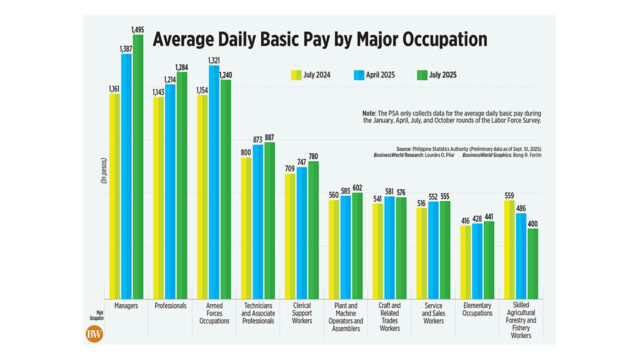
Average Daily Basic Pay by Major Occupation

THE PHILIPPINES’ unemployment rate rose to a three-year high of 5.3% in July as a series of typhoons and monsoon rains dented hiring activity, the statistics agency said on Wednesday. Read the full story.

Average Daily Basic Pay by Major Occupation

BPI, Security Bank join ‘green’ alliance

STOCK PHOTO | Image by ZHANG FENGSHENG from Unsplash

BANK of the Philippine Islands (BPI) and Security Bank Corp. have joined the International Finance Corp.’s (IFC) Alliance for Green Commercial Banks, a network that promotes sustainable finance practices across the Asia-Pacific region.

The two Philippine banks are part of the Alliance’s inaugural cohort, which consists of 20 commercial lenders representing eight markets with a combined asset base of more than $5.6 trillion.

“This inaugural cohort reflects the increasing commitment and leadership of commercial banks in green finance,” Allen Forlemu, IFC regional industry director for the Financial Institutions Group in the Asia-Pacific region, said in a statement.

“The Alliance is more than a network — it is a community of committed institutions working together to transform finance, close the multitrillion-dollar climate finance gap, and position emerging markets at the forefront of sustainable economic growth,” he added

Other members include France’s BNP Paribas; BRED Bank Cambodia; Bank Negara Indonesia; Bank Shinhan Indonesia; Banque Franco-Lao; Banque Pour Le Commerce Exterieur Lao Public; Phongsavanh Bank Limited; Thailand’s Krungsri Bank and TMBThanachart Bank; Vietnam’s HDBank, OCB, Maritime Bank, and VPBank.

The Alliance facilitates peer-to-peer knowledge-sharing, advisory support and community building among members. It aims to accelerate green banking by embedding sustainability into core strategies and supporting financing for the transition to low-carbon, climate-resilient and inclusive economies.

Through the platform, banks gain access to expertise and financing solutions for climate mitigation and adaptation, renewable energy, sustainable transport, agriculture, and urban development. The program also highlights opportunities in energy efficiency, circular economy models, and nature-based solutions.

The Alliance’s first regional chapter was launched in Asia with the Hong Kong Monetary Authority as an anchor institution. Founding cornerstone members include Bank of China (Hong Kong), Citigroup, Inc., Credit Agricole CIB, HSBC and Standard Chartered Plc.

Knowledge partners such as the Carbon Disclosure Project, CFA Institute, Convergence Blended Finance, Climate Capital Asia, Renewables Academy, and the United Nations Environment Program support the initiative by providing market insights and technical expertise. — Aaron Michael C. Sy

The ICE raid on the Georgia Hyundai plant makes no sense

IMMIGRATION authorities arrested 475 people in a raid on a Hyundai manufacturing site in Ellabell, Georgia, federal official said. The majority of the people detained were from South Korea, according to Homeland Security Investigations. — REUTERS/ATF ATLANTA/ZUMA PRESS WIRE

By Mary Ellen Klas

IT DOESN’T make any sense. Last week, the Trump administration executed the largest single-site immigration raid in US history at a Hyundai Motor Co.LG Energy Solution Ltd. battery plant in Ellabell, Georgia.

The surprise raid antagonized South Korea, one of America’s closest allies and a country that had signed a $350-billion trade pact with President Donald Trump just weeks earlier. It contradicted Trump’s stated immigration policy of removing the “worst of the worst” by detaining workers employed to help meet Trump’s goal of expanding manufacturing in the US. And by releasing video footage of South Korean nationals shackled at the wrists and ankles, Immigration and Customs Enforcement managed to humiliate South Korean businesses and investment firms that had recently pledged billions to expand operations in the US.

What’s the upside? It’s hard to see one. Automakers with factories in the US are counting on EV battery deliveries to meet demand. Trump is hoping to stimulate foreign investment in American manufacturing. This raid helps achieve neither.

Trump’s Border Czar Tom Homan told CNN on Sunday that there will be “more worksite enforcements” because “it’s a crime to hire an illegal alien.” Homan is correct, but he is also a master at sidestepping the real problem.

It’s not clear that “illegal alien” is even an accurate term to describe the people seized from the plant. Immigration attorney Charles Kuck, who represents some of the workers, told MSNBC on Monday that many of the employees at the plant had “valid visas” from the US and were installing the equipment needed to make the batteries “so the plant could then employ US workers.” He said ICE was looking for workers from Latin American countries and didn’t expect to apprehend Koreans, so the agents hadn’t even brought a translator.   

It’s starting to look like another bumbling, high-profile error — but it also underscores a major flaw in Trump’s immigration policy. He would like to use his heavy-handed tariff policy to incentivize foreign investment in multibillion-dollar manufacturing plants, but building those facilities requires companies to bring engineers and contractors to the US to help complete the job. The Trump administration has done nothing to make it any easier for the South Korean companies involved with the Hyundai Metaplant America site to secure the work visas needed.

Several officials associated with the project told Bloomberg News that they have struggled to get work visas under the Trump administration, especially for contractors and engineers with expertise in production line design. South Korean lawmaker Oh Gi-hyoung said at a news conference on Sunday that visa delays with the US had complicated legitimate business travel for months, and speculated that many of the workers who were detained appear to have been trapped by visa delays that, in many cases, were caused by the Trump administration’s red tape. If the US expects to attract investment from South Korean companies, he said, it should “match its calls for Korean investment with proper treatment of our citizens.”

Complaints have also surfaced recently from members of local unions. Barry Zeigler, the business manager of UA Local Union 188, which represents plumbers, pipe-fitters, welders, and air-conditioning technicians, told the New York Times that about 65 union members had been initially hired at the plant but were laid off earlier this month. He claimed they were replaced with undocumented workers.

The Trump administration should have sorted out the labor complaints from both sides of the equation here. Homan and ICE should have given the South Korean companies a firm deadline to make sure their employees had valid and up-to-date visas, and then put in place a process to fast-track those visas.

But of course, that kind of response would not have produced the headlines or sensational videos. And it would have required leadership and political finesse — skills that Trump’s Homeland Security team seems not to possess.

The raid also made no sense politically. When Georgia Governor Brian Kemp, a Republican, unveiled the $7.6-billion Hyundai Motor Group deal in 2022 — with nearly $2 billion in taxpayer-funded incentives — he touted it as the largest economic development project in state history and predicted it would help Georgia become the hub of US electric vehicle manufacturing.

Now, the raid has turned one of Kemp’s greatest achievements into a liability. By bringing the plant to a screeching halt, and interrupting the labor pipeline, costs will inevitably rise. What’s more, inflamed tensions between the American and Korean governments also raise questions about Hyundai’s investment in a major auto plant in Montgomery, Alabama and its $5-billion proposal to build a steel plant in Louisiana.

Trump has not had smooth relations with Kemp since the governor refused to go along with his illegal quest to manufacture votes in 2020, but Kemp has otherwise been a reliable foot soldier. Last week, Kemp announced that he would send more than 300 Georgia National Guard troops to Washington, DC, at the president’s request. Kemp has remained silent on the immigration raid except to say that the state Department of Public Safety coordinated with ICE to support the operation and would “always enforce the law, including all state and federal immigration laws.”

Kemp doesn’t have authority over immigration enforcement. Trump does, but his administration’s focus on deportations over governing is no way to revive manufacturing in this country. The US is long overdue for an overhaul of its work visa program, and the Georgia fiasco should be the catalyst.

BLOOMBERG OPINION

David Bowie archive with 90,000 items to open to public in London

PHOTO BY DAVID PARRY, PA MEDIA ASSIGNMENTS

LONDON — From glittery “Ziggy Stardust” costumes and handwritten song lyrics to fan letters and notes on an unfinished musical, a new archive of David Bowie’s life and career is to open its doors to the public in London.

From Saturday, fans and researchers interested in the late British music legend will be able to access some 90,000 items by appointment at the David Bowie Centre at V&A East Storehouse in east London.

Hailed as the “chameleon” of rock music for continually reinventing his artistic persona, Mr. Bowie straddled the worlds of music, fashion, drama and art, leaving behind an extensive collection of items from a five-decade career.

He died of cancer in 2016 aged 69, just two days after the release of his final album, Blackstar.

Curators said the archive includes 70,000 photographs, 400 costumes, 150 musical instruments, and personal notebooks. A separate display of 200 items also explores Mr. Bowie’s creativity.

“We also have displays that chart Bowie’s evolution as a multi-dimensional creative, and speak to his enduring influence on popular culture and how artists like Bowie transform creative practice and have the power to change our worlds,” lead curator Madeleine Haddon told Reuters, describing the artist as a “true polymath.”

The archive also features ideas Mr. Bowie scribbled on to Post-it notes, found in his New York office following his death, for a potential musical set in the 18th century called The Spectator, that he was working on towards the end of his life.

The ideas for the musical are drawn from figures of the era including the painter William Hogarth and the London thief Jack Sheppard.

“We can only speculate as to what final idea he had for that project,” Harriet Reed, curator of contemporary performance at the V&A museum, said.

“It’s a really fascinating look at how Bowie worked as an artist, but (also) as a human being,” Ms. Reed said of the archive. “He can be used as an inspiration to anyone.” — Reuters

FEU income rises 6% to P2.05B on higher enrollment

FAR EASTERN UNIVERSITY FACEBOOK PAGE

LISTED educational institution Far Eastern University, Inc. (FEU) reported a net income of P2.05 billion for its fiscal year ending May 2025, up 5.87% from P1.94 billion a year earlier.

Revenues rose 5.69% to P5.79 billion from P5.53 billion, the company said in a disclosure on Wednesday.

Tuition fees remained the main revenue source, contributing P5.46 billion.

FEU noted tuition revenues have consistently grown over the past three years, driven by higher enrollment and a modest increase in rates for new students.

“Educational revenues steered the result from core operations as it registered an 11% growth mainly on account of a higher number of student population and a modest tuition rate increase for new students,” FEU said.

Rental revenues dropped 20.05% to P21.98 million but remained a small contributor.

Operating expenses rose 7.36% to P3.99 billion, reflecting investments in academic development, data analysis, technology systems, database subscriptions, and building renovations.

The FEU group recorded over 60,000 students across its network, which now offers 117 academic programs.

“Enrollment growth has been supported by a number of strategic initiatives,” the company said, adding that curriculum enhancements aim to address skills gaps in the workforce.

FEU operates its main campus in Manila and has majority stakes in East Asia Computer Center, Inc., FEU Alabang, Inc., Far Eastern College Silang, Inc., FEU High School, Inc., and Roosevelt College, Inc.

FEU shares closed unchanged at P819.50 apiece on Wednesday. — Alexandria Grace C. Magno

Google appoints Prep Palacios as Philippine country manager

Google Philippines Country Manager Prep Palacios

TECH GIANT Google has appointed Prep Palacios as the new country manager for its Philippine office, it said on Tuesday.

Ms. Palacios, who has two decades of leadership experience in the tech landscape, will head Google’s expansion plans in an era of artificial intelligence (AI) and video commerce, the company said in a statement.

She is also expected to focus on empowering organizations to leverage the full potential of Google Search and YouTube in an AI-driven landscape, it added.

“The Philippines is one of Southeast Asia’s (SEA) most dynamic digital economies — young, AI-curious, and video-first. With Prep’s proven leadership and deep commitment to empowering brands and Filipino companies, she is well-positioned to champion Google’s continued growth and impact for the country and the region,” Sapna Chadha, vice-president for Southeast Asia and South Asia Frontier at Google, said in a statement.

Ms. Palacios has worked for Google for eight years, scaling its advertising business and helping customers to grow with digital solutions.

Previously, she spent 12 years at Microsoft where she headed its channels, distribution, and small- and medium-sized business segments. Ms. Palacios also held consulting roles at Oracle, Ernst & Young, and Siemens.

She graduated with a Bachelor of Science in Business Administration (Computer Applications) from De La Salle-College of St. Benilde.

“I’m excited to help brands and communities succeed in the AI era by harnessing the full power of Google’s ecosystem — from Search to YouTube,” she said.

“By combining our strong foundation in Search with the rapid growth of YouTube Shopping, we can enable businesses to scale faster, drive measurable results, and reinforce the Philippines’ position as Southeast Asia’s fastest-growing digital economy,”

Earlier this year, YouTube and electronic commerce platform Shopee launched YouTube Shopping in the Philippines, allowing users to buy goods seen on videos on the platform via Shopee links.

The Philippine digital economy is expected to grow 20% to $31 billion in gross merchandise value, according to the 2024 e-Conomy SEA report by Google, Temasek Holdings and Bain & Co. — Beatriz Marie D. Cruz

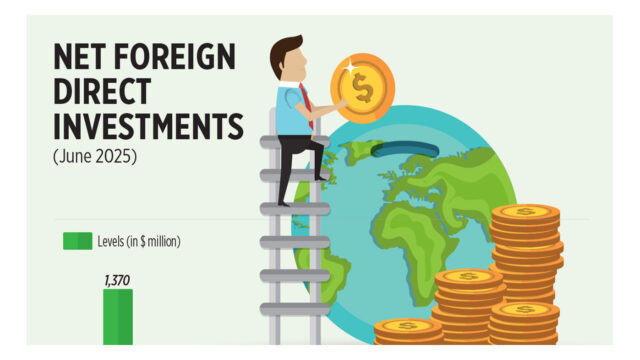
Net Foreign Direct Investment

NET INFLOWS of foreign direct investments (FDI) sank to a six-month low in June, with the first-half tally also posting a double-digit drop, as global trade risks continued to weigh on market sentiment, resulting in a net outflow of equity capital. Read the full story.

Net Foreign Direct Investment

Deadlines

STOCK PHOTO | Image by Upklyak from Freepik

COMPLETING TASKS by a certain time has already become a social obligation. It’s a part of the regime of punctuality in showing up for meetings, remembering anniversaries and birthdays, as well as finishing a job that has been contracted for.

Deadlines and how to cope with them have been instilled in us since youth. These time-bound submissions include homework. So, book reports, term papers, theses, and even “projects” which can range from a family portrait with wedding pictures and baptisms to a school play all rely on coordinating when each one is supposed to hand in his assigned task.

Even as juveniles, deadline dodgers are already adept with excuses — the dog ate my homework. When they grow up as adults, these excuse machines become corporate gamesmen and find ways of coping with deadlines.

The target is just another obstacle to avoid. Here are some methods deadlines are ignored by corporate players.

Move the goal posts. This time-tested technique dispenses with the deadline altogether. It’s not as simple as submitting on time. A week before the expected report, some dire development is reported to the boss. A crisis has just developed which trumps the submission of the silly report and snatches the assignee for more important things like putting out fires, including those started by him. Priorities are rearranged and submission of the “report” must give way to preventing a disaster. (Will they still remember it was due a month ago?)

More information is needed to update the report and make it more current. And it is not certain when the new inputs will become available. It may happen in the assignee’s next incarnation as a lizard.

An incomplete report is submitted with a sequel promised at a distant (and undisclosed) date. The incomplete report is considered sufficient compliance to keep the nagger off the phone and get relief from his persistent e-mail reminders.

Drag some other culprit in. Another department, usually HR, will be pinpointed as responsible for an important requirement — usually the hiring of several warm bodies. How can the deadline be met if the resources needed are not available?

Bring up a series of clarifications for discussion. With the exchange of e-mails and the scheduling of meetings to clarify the “deliverables” being required, the deadline becomes a distant blur. The degree of detail and the timelines needed (do we go back 10 or 12 years?) will make the original deadline seem unreasonable.

Note a change in procedure. The automation study which is never finished (we are now on parallel run) is a good excuse for postponing any deadline. An event which is in continuous and ever-changing mode, like full automation, is a good excuse, even if unconnected to the promised submission.

Corporate executives believe that not meeting deadlines for completion of a task or submission of reports is a sign of inefficiency and a quick way to get on the list of early retirements. The problem disappears when the boss doesn’t give hard deadlines at all. (Can you submit it next week?) Then, for the assignee, it is just a matter of attending meetings and going through the techniques of evasion — we are meeting with the client on his plans next Tuesday.

The deadline dodger though must accept that there are situations that have deadlines that are mercilessly immovable. These include flight schedules, tax reporting, and medical procedures. Delays are punished automatically.

Missed deadlines can come with penalties. This includes non-payment of loans or amortizations on their due dates. There is a bill sent, and no further reminders are made. Skipped payments (I forgot) are penalized and can leave a bad mark on one’s credit rating. Any further letters are from collection agencies or legal firms.

The rude awakening of missed deadlines is quite dramatic when it comes to utilities. The light just goes off — and there is the distant sound of a sigh.


Tony Samson is chairman and CEO of TOUCH xda

ar.samson@yahoo.com

Wise launches business account for Filipino MSMEs

FACEBOOK.COM/DTI.GOLOKAL

GLOBAL cross-border payment platform Wise has introduced a business account in the Philippines to help freelancers, micro, small and medium enterprises (MSME) and entrepreneurs expand internationally through faster and cheaper fund transfers.

“Now, businesses in the Philippines are inherently global,” Wise Product Manager Numair Fazili said at the launch on Wednesday. “You’re receiving money from the US, Europe, you’re spending in Japan, paying suppliers in China. But bank accounts are not.”

“You have problems with hidden fees, lack of transparency and payments just take days or even weeks to process.”

A study by Edgar Dunn & Co. for Wise estimated that Filipino MSMEs lost about P39.5 billion in 2024 due to exchange rate markups.

The Wise Business Account aims to address these costs by providing transparent international transactions. Censuswide, in a survey of 200 middle managers at Philippine firms with fewer than 50 employees conducted from Aug. 4 to 8, found that 66% expect their cross-border transactions to increase in the next six months.

The account is free to open, requires no minimum balance or subscription fees, and can be set up fully online. Filipino businesses can receive payments in 24 currencies and get paid via local bank transfers in 10 major currencies — including the US dollar, euro, British pound and Singapore dollar — for a one-time fee of P1,400. Clients can send funds directly using details such as a US routing number or a European IBAN without additional charges.

Payments in 14 other currencies, including the Japanese yen and Chinese yuan, are supported through the Swift network with upfront disclosure of fees. Outbound payments to overseas suppliers and staff are processed at the mid-market exchange rate without hidden markups.

Wise is also offering a business debit card that enables purchases in more than 150 countries with no foreign transaction fees. Business owners can set spending limits, track expenses in real time and provide cards to employees.

The account integrates with accounting software such as Xero and QuickBooks, allows businesses to issue invoices, and supports bulk payments to as many as 1,000 recipients.

“So whether you’re an up-and-coming freelancer, an entrepreneur or a corporation, you can log in and open a Wise account instantly, from anywhere in the world,” Fazili said. —AMCS

Sweden launches AI music license to protect songwriters

STOCK PHOTO | Image by Pvproductions from Freepik

SWEDEN’S music rights organization has introduced a license that allows artificial intelligence (AI) companies to legally use copyrighted songs for training their models, while ensuring that songwriters and composers are paid.

The move announced by rights group STIM on Tuesday responds to a surge in generative AI usage across creative industries that has prompted lawsuits from artists, authors, and rights holders. The creators allege that AI firms use copyrighted material without consent or compensation to train their models.

The license developed by STIM, which represents more than 100,000 songwriters, composers, and music publishers, allows AI systems to train on copyrighted works while paying royalties to creators.

According to the International Confederation of Societies of Authors and Composers (CISAC), AI could reduce music creators’ income by up to 24% by 2028.

“We show that it is possible to embrace disruption without undermining human creativity. This is not just a commercial initiative but a blueprint for fair compensation and legal certainty for AI firms,” Lina Heyman, STIM’s acting chief executive officer, said in a statement.

By 2028, generative AI outputs in music could approach $17 billion annually, according to CISAC.

Sweden has previously set industry standards for platforms such as Spotify and TikTok, and the new license includes mandatory technology to track AI-generated outputs, ensuring transparency and payments for creators.

Songfox, a Stockholm-based startup, is the first company to operate under the license, allowing users to create legal AI-generated songs and covers. — Reuters

Regulator sets Sept. 30 deadline for SEC RENT securities registration

SEC.GOV.PH

THE Securities and Exchange Commission (SEC) has set a Sept. 30 deadline for real estate developers and companies engaged in rental pool agreements to complete the registration of their securities.

In a notice dated Sept. 8, the corporate regulator reminded firms to comply with the requirements under SEC Memorandum Circular No. 12, Series of 2024, or the Securing and Expanding Capital in Real Estate Non-Traditional Securities (SEC RENT).

The rules, issued in July, aim to streamline capital raising for developers offering investment returns through rental properties.

Rental pool agreements are investment contracts in which a developer sells or offers units in projects such as condominiums, hotels, resorts, or dormitories, with the condition that these units are placed in a rental pool managed by the developer or a third-party operator.

Under SEC RENT, the developer or manager must secure approvals from the SEC’s Company Registration and Monitoring Department, Corporate Governance and Finance Department, Enforcement and Investor Protection Department, Office of the General Counsel, and Office of the General Accountant before filing its registration statement with the Markets and Securities Regulation Department (MSRD).

After pre-filing, the company submits the required documents to the MSRD for pre-processing. Once accepted and fees are paid, a 45-day review begins.

If the commission approves and all requirements are met, the MSRD will issue the registration order and permit to sell securities.

The SEC said the regulation simplifies and expedites the registration and review process, allowing real estate companies — including small developers — better access to capital markets for funding growth through these investment schemes.

“All corporations whose operations or business model fall under the coverage of SEC RENT are hereby advised and reminded that they have less than a month within which to comply with the memorandum circular and have their pertinent securities registered,” the commission said in its notice.

The regulator warned that companies failing to meet the deadline will face penalties and possible enforcement actions. — Alexandria Grace C. Magno

ADVERTISEMENT
ADVERTISEMENT