Flags flutter as soldiers participate in a military parade to mark the 80th anniversary of the end of World War Two, in Beijing, China, Sept. 3, 2025. — REUTERS/MAXIM SHEMETOV TPX IMAGES OF THE DAY
BEIJING — China’s military said on Sunday it had conducted routine patrols in the South China Sea and warned the Philippines against any provocations.
The two countries have been engaged in a long-running maritime standoff in the strategic waterway that has included regular clashes between coast guard ships and massive naval exercises.
A spokesperson for the Chinese military’s Southern Theater Command said the Philippines must immediately stop provoking incidents and escalating tensions in the South China Sea.
“We sternly warn the Philippine side to immediately stop provoking incidents and escalating tensions in the South China Sea, as well as bringing in external forces for backing such efforts that are destined to be futile,” the spokesperson said.
“Any attempt to stir up trouble or disrupt the situation will not succeed.”
The Philippine maritime council and armed forces did not immediately respond to questions outside office hours, while the Philippine embassy in Beijing did not immediately respond to a request for comment.
The US Indo-Pacific Command said in a statement that Japan, the Philippines and the United States conducted joint maritime exercises in the Philippines’ Exclusive Economic Zone from Thursday to Saturday to strengthen regional cooperation and support a free and open Indo-Pacific region.
“The US, along with our allies and partners, upholds the right to freedom of navigation and overflight and other lawful uses of the sea and international airspace, as well as respect to the maritime rights under international law,” it said.
The United States stands with the Philippines, Secretary of State Marco Rubio said on Friday, rejecting what he described as China’s “destabilising plans” for a disputed atoll in the South China Sea.
Calls to Japan’s foreign ministry on Sunday went unanswered outside of business hours, and a person answering a call at the defence ministry said no one could respond to a query on the issue over the weekend.
China claims almost all the South China Sea – a waterway carrying more than $3 trillion of annual commerce – despite overlapping claims by the Philippines, Brunei, Malaysia and Vietnam. — Reuters
The United States stands with the Philippines, Secretary of State Marco Rubio said on Friday, rejecting what he described as China’s “destabilizing plans” for a disputed atoll in the South China Sea.
“Beijing claiming Scarborough Reef as a nature preserve is yet another coercive attempt to advance sweeping territorial and maritime claims in the South China Sea at the expense of its neighbors,” Rubio said in a statement.
Filipino fishermen fear Beijing’s plan to create the nature reserve could make it harder for them to operate in the atoll, which is under the constant watch of Chinese vessels.
Scarborough Shoal lies within the Philippines’ exclusive economic zone but has been under Beijing’s control since 2012. China claims almost all the South China Sea – a waterway carrying more than $3 trillion of annual commerce – despite overlapping claims by the Philippines, Brunei, Malaysia and Vietnam.
Rubio said China’s actions continued to undermine regional stability, calling on Beijing to abide by the Arbitral Tribunal’s unanimous 2016 decision that China had unlawfully prevented Filipino fishermen from engaging in traditional fishing at Scarborough Reef.
The Philippines said on Saturday it had sailed with the U.S. Indo-Pacific Command and Japan’s navy off islands in Zambales province, whose coast is around 120 nautical miles from Scarborough Shoal.
Chinese state media Global Times reported on Friday that Manila had held a “joint patrol” in the South China Sea with unnamed countries outside the region. — Reuters
CURVE’s Cherry Cruz makes highest bid for top Benguet-grown beans
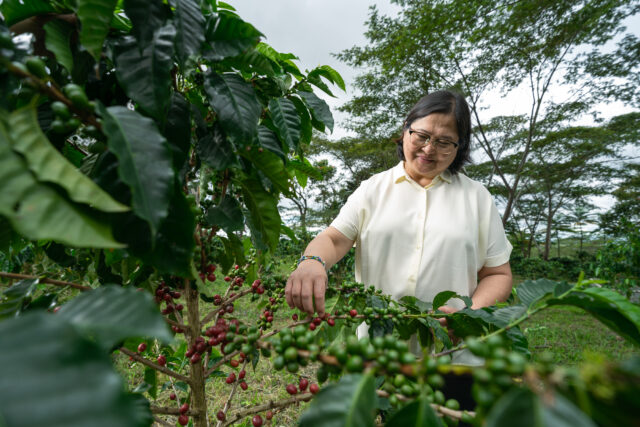
“I am honestly scared, but I am happy,” shares Curve Coffee Collaborators (CURVE) Founder and CEO Cherry Cruz of how she felt when they made the highest bid in PCQC (Philippine Coffee Quality Competition) history and won.
Just the day before, Rodyio Tacdoy’s, a 22-year-old farmer from Benguet, bagged Top 1 in the Arabica category, his beans garnering a cupping score of 84.38.
Unbeknownst to Mr. Tacdoy, his remarkable win had already set things in motion.
“This is the moment we’d been waiting for to have meaningful intervention in the North,” shares Ms. Cruz. The northern region, she adds, is “a region that has been lacking in terms of awards for the longest time” and has “heirloom varieties threatened by extinction.”
“Then here comes a brave yet humble, energetic, and driven young farmer… with years of mentoring from his father, love for the land that they have, the desire to make a difference. We had to support him.”
PCQC 2025 Arabica Top 1 winner Rodyio Tacdoy is joined by CURVE and PCQC officials as he received his award.
As fate would have it, Mr. Tacdoy was seated right behind CURVE’s Qits Nalugon, wondering why the green bean hunter hadn’t been bidding throughout the auction. He was waiting.
“Top 1, last 3 seconds, doon lang ako nagtaas ng paddle. Doon na nag-start yung rally, until umabot na ganoong kalaki ang bid,” narrates Mr. Nalugon.
Heart racing at the skyrocketing bid, he remained sure: “Yun lang talaga yung hinihintay ko. Out of the 12 masasabi mo talagang deserve niyang maging #1.”
At the final auction price of P9,900, Mr. Tacdoy earned over one million pesos for 117kg of his award-winning, record-breaking Benguet Arabica.
This is “a bet for the future of Philippine coffee,” Ms. Cruz describes, one that she is always willing to make.
“I told Rodyio that it’s possible for him to grow from being a producer to a processor of coffees from other farmers to support his community,” Ms. Cruz shared.
Mr. Tacdoy’s mentorship with CURVE is underway, having gone through a post-harvest class in Bukidnon. He learned best farm practices and met with fellow young, progressive farmers like Marvin and Eljean Dagohoy. He was taught quality assessment by Mr. Nalugon and provided agri-related insights by no less than Renjie Lucas, whose deep expertise in coffee farming interventions stems from his work with the USDA-funded ACDI/VOCA-PhilCAFE (Philippine Coffee Advancement and Farm Enterprise) project.
This kind of sustainable, impactful change for the local coffee landscape is the “bet with purpose” Ms. Cruz always goes for. The only other PCQC 2025 coffee they bid for was Samuel Ochea Jr.’s Lanao del Sur Arabica, Top 7.
“Many BARMM Farmers have been left out of many trainings and farm interventions for years. But they have terrific coffees. So why not give them the platform and spotlight they deserve?” she shares on her Facebook post. “I hope this winning moment becomes a lightbulb moment for many.”
Both single origin, proudly Pinoy coffees were offered for tasting at the recently held WOFEX Manila F&B expo.
“It lives up to the reputation. It goes toe-to-toe with what I’ve tasted out there,” shares a coffee enthusiast of Tacdoy’s coffee.
“Kaya niyang makipagsabayan worldwide. Yung price na binayaran mo dito, it’s completely worth it,” says another.
Moreover, Mr. Tacdoy’s coffee is being sold at bid price: P9,900/kg or P495 for 50g, P990 for 100g, and P2,475 for 250g.
All proceeds from Tacdoy’s coffee will go to the young farmer, to be plowed back into his farm, into growing his business.
“Maraming, maraming salamat po sa CURVE. Malaking tulong po sa akin kasi makakapag-elevate po tayo ng facility para makapag-process muli ng ganoong quality ng kape,” he proudly shares.
With Love Your Origin at their core, CURVE—with its own farms, roastery, and cafés— improves the lives of people across the Philippine coffee ecosystem on a regular basis.
CURVE facility and partner farmers in Bukidnon
This has been recognized by the Coffee Quality Institute (CQI), a non-profit based in California. They named Cruz Educator of the Year (2025), making her the first Filipino to receive the prestigious award. They cite her “huge impact” on her community, sector, country, even for the whole “Southeast Asian community in coffee”.
CQI Director for Education Resources, Emma Sage, awards Cherry Cruz Educator of the Year for her immeasurable contributions to coffee communities around the region.
Mr. Tacdoy is now part of that ever-growing circle of Ms. Cruz’s positive influence. And he is ready for his moment on the coffee stage.
Spotlight is BusinessWorld’s sponsored section that allows advertisers to amplify their brand and connect with BusinessWorld’s audience by publishing their stories on the BusinessWorld Web site. For more information, send an email to online@bworldonline.com.
Join us on Viber at https://bit.ly/3hv6bLA to get more updates and subscribe to BusinessWorld’s titles and get exclusive content through www.bworld-x.com.
Spotlight is BusinessWorld’s sponsored section that allows advertisers to amplify their brand and connect with BusinessWorld’s audience by publishing their stories on the BusinessWorld Web site. For more information, send an email to online@bworldonline.com.
Join us on Viber at https://bit.ly/3hv6bLA to get more updates and subscribe to BusinessWorld’s titles and get exclusive content through www.bworld-x.com.
The Philippines stands at a critical economic and climate crossroads, facing an urgent need for sustainable solutions. With national targets committing to reduce greenhouse gas emissions by 75% by 2030, and the Low Carbon Economy Investment Act gaining traction, the opportunity to shape a low-carbon economy is both urgent and within reach. However, despite this momentum, businesses continue to face significant barriers to operationalizing net zero, including a lack of fit-for-purpose tools, scalable technologies, and accessible finance. The challenge is clear: ambition must translate into action.
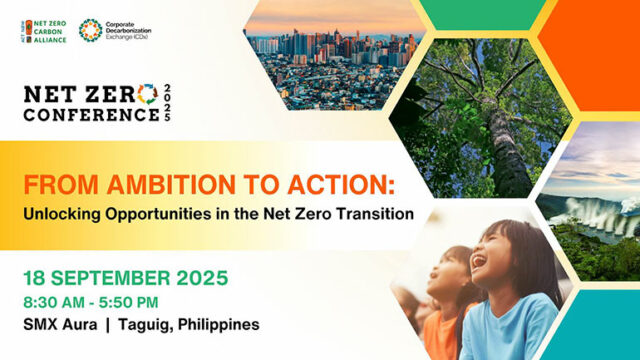
To directly address this gap, the Philippine Net Zero Conference 2025, co-delivered by the Net Zero Carbon Alliance (NZCA) and the Southeast Asia Corporate Decarbonization Exchange (CDx), will bring together the country’s business leaders, policy makers, and sustainability champions on Sept. 18, 2025, at the SMX Convention Center Aura in Taguig City. The conference aims to help Philippine companies move from making climate pledges to implementing real, measurable decarbonization strategies.
Achieving net-zero emissions offers numerous benefits for both the environment and society. It is essential for mitigating the worst impacts of climatic disasters, helping to limit global warming to 1.5°C, reducing extreme weather events, and securing food supplies and biodiversity. Transitioning to net zero also presents significant economic growth and job creation opportunities in emerging industries such as renewable energy, green infrastructure, and nature-based projects. Businesses adopting sustainable practices can also see increased energy security, reduced operational costs, enhanced brand recognition, and attract investment by aligning with Environmental, Social, and Governance (ESG) factors.
The Net Zero Carbon Alliance’s 34 partners that have committed to decarbonizing their respective businesses call on the rest of the Philippine private sector to join them in their move toward a low-carbon economy.
A key driver for this transition is the advancement of the Low Carbon Economy Investment (LCEI) Act. This legislation is crucial for establishing mechanisms that enable the Philippines to leverage economic opportunities during its transition. House Bill 2184, an example of such a legislative effort, proposes an emission cap-and-trade system where the Department of Environment and Natural Resources (DENR) Secretary sets annual emission reduction targets and imposes caps on greenhouse gas emissions for covered sectors. This system issues allowances that can be traded, incentivizing businesses to reduce their emissions. Civil penalties for exceeding allowances would fund a Climate Reinvestment Fund. The conference will feature insights on this, with Congressman Jose Manuel Alba, 1st District Bukidnon Representative and co-author of the LCEI, participating as a panelist and speaker.
The journey to net zero, however, is complex. Challenges include transforming the energy sector, which is responsible for the largest share of global greenhouse gas emissions, creating resilient nature markets, implementing carbon capture technologies, and addressing social and political realities. The Philippines incurs around PHP 200 billion annually in economic losses due to extreme weather events, highlighting the urgent need for investment in climate resilience.
Building on the success of its inaugural 2024 edition, which focused on “Strengthening Resilience: Scaling the Philippine Private Sector’s Net Zero Ambitions” and emphasized regeneration, decarbonization, and collaboration, the 2025 conference expands in focus. The 2024 event brought together corporate leaders, policy makers, and climate advocates to discuss critical issues, highlighting progress made by NZCA partners in reducing Scope 1 and Scope 2 emissions.
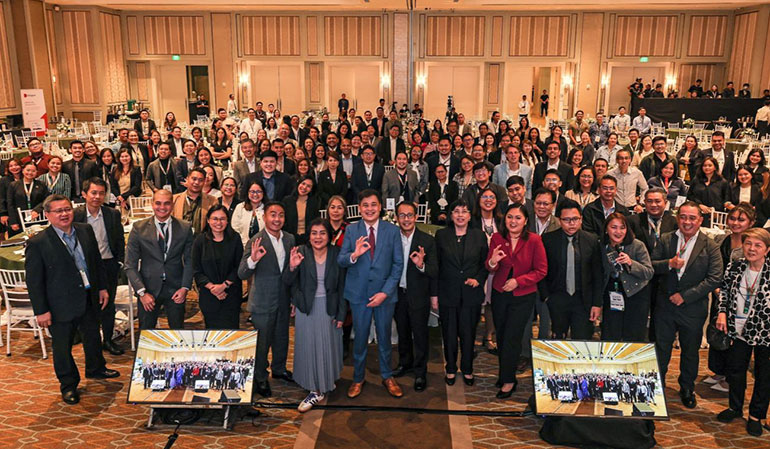
The Net Zero Carbon Alliance and its 34 partner companies are gearing up for their 2nd Philippine Net Zero Conference on Sept. 18 at SMX Aura. The event will bring together local and global experts on decarbonization, climate policies, business matching for net zero, and amplifying the private sector’s climate actions.
The 2025 conference offers deeper sectoral engagement, solution-focused learning, and peer exchange grounded in local realities. New to this year’s event are CDx Fishbowl Sessions, interactive, participant-driven discussions designed to surface real-world strategies, peer learning, and practical enablers. Attendees can expect to gain actionable knowledge across the core pillars of the NZCA Framework, learn from local and regional net-zero implementation case studies, forge partnerships through curated networking spaces, and shape a shared action agenda for 2026 and beyond.
Confirmed speakers include Hon. Secretary Raphael “Popo” Lotilla of the Department of Environment and Natural Resources, delivering the keynote, and Jerome H. Cainglet, President and COO of Energy Development Corp., providing welcome remarks. Other notable speakers and panelists include Rondell Torres (Sustainability Lead for the Philippines and Greater Asia at Unilever), Atty. Allan V. Barcena (NZCA Executive Director), Agnes de Jesus (First Philippine Holdings’ Chief Sustainability Officer), and Mark Lister (CEO, CDx), who will deliver closing remarks.
Register now to secure your slot through https://netzerocarbonalliance.ph/nzcacon2025/ and equip your business with the insights, tools, and partnerships needed to implement effective solutions. By participating, you will not only advance your corporate sustainability agenda but also contribute to the Philippines’ national decarbonization strategy.
Let’s turn ambition into tangible action for a more resilient, sustainable, and low-carbon future for the Philippines.
Spotlight is BusinessWorld’s sponsored section that allows advertisers to amplify their brand and connect with BusinessWorld’s audience by publishing their stories on the BusinessWorld Web site. For more information, send an email to online@bworldonline.com.
Join us on Viber at https://bit.ly/3hv6bLA to get more updates and subscribe to BusinessWorld’s titles and get exclusive content through www.bworld-x.com.
The Philippines needs an Electronic Freedom of Information (EFOI) law to ensure better access to government data, as a study showed that the public’s access to such information on the internet remains a hurdle, according to experts on Friday.
Oliver Xavier A. Reyes, a former judicial staff head of the Supreme Court, said Executive Order No. 2 issued in 2016, which has been operationalizing the current FOI framework, is constrained by various exceptions that limit the public’s access to government records.
“Kung magkaroon ng panibagong EFOI, ang ibang mga exceptions dito ay dapat hindi na current, hindi na applicable sa ngayon, at puwedeng tanggalin na [If a new EFOI is passed, some of the exceptions should no longer be current, no longer applicable today, and may already be removed],” Mr. Reyes said during the press conference on the presentation of the findings of the Data for Development in South and Southeast Asia (D4D) report.
The D4DHub report found that while the Philippine Constitution guarantees the right to information on matters of public concern, actual access to information through the internet remains a hurdle.
The report was based on a review and analysis of laws, policies, and initiatives affecting data governance practices in South and Southeast Asia, including the Philippines.
Mr. Reyes cited the Statement of Assets, Liabilities, and Net Worth (SALN) as an example, noting that requests are still processed manually and have become more stringent due to a memorandum issued by the Ombudsman in 2020.
He added that if the government were more proactive in easing the requirements, SALNs of officials could potentially be made accessible online.
The EFOI would also provide a clearer guideline on what types of information the government may justifiably deny, Mr. Reyes said, citing several cases of unjustified rejections under the current FOI portal.
He also noted that the measure should establish clearer rules on possible violations related to the unjustifiable withholding of information.
“So what happens is that even a judge who is forced to decide on a freedom of information case doesn’t really have comprehensive guidelines,” Mr. Reyes said.
“The absence of an EFOI statute is one of our observations that is diminishing freedom or openness of information.”
Jose Jesus M. Disini Jr., associate professor at the University of the Philippines College of Law, told BusinessWorld that apart from considering the enactment of the EFOI law, the government also has to take into account the cost and sustainability of making information accessible to the public.
“What the government can do, and what it is good at, is making data available through regulation,” Mr. Disini said in an interview at the sidelines of the press conference.
“In other words, the government makes this data available in a particular format — something like open data, such as the Open Data Initiative,” he added.
Mr. Disini added that the government should also tap third parties, such as the private sector, to help maintain the potential portal once the EFOI is in place.
In July, a Philippine lawmaker filed a Freedom of Information (FOI) bill requiring the full disclosure of the SALN of all officials across all branches of government.
The Senate Bill No. 723 also requires agencies to publish annual budgets, itemized collections and disbursements, procurement plans, plantilla positions and vacancies, as well as details on loans, bids, and contracts. It further mandates the timely updating of such records on agency websites.
A Filipino fisherman rows a boat during a trip near the disputed Scarborough Shoal, in Masinloc, Zambales province, Philippines, July 18, 2022. REUTERS/Lisa Marie David/File Photo
SUBIC, Philippines – Philippine fishermen fear that China’s plan to establish a nature reserve in the Scarborough Shoal could expose them to further harassment and make it even harder to operate in the disputed South China Sea atoll, which is already under the constant watch of Chinese vessels.
China has approved the creation of a national nature reserve at the shoal, which lies within the Philippines’ exclusive economic zone but has been under Beijing’s control since 2012.
Filipino boats have reported frequent encounters with Chinese coast guard vessels when venturing near the shoal, prized for its rich fish stocks and a turquoise lagoon that offers refuge for vessels during storms.
“Even now there has been harassment … We will be bullied even more,” said 57-year-old fisherman Mariano Cardenio, who has fished at the shoal for three decades.
China’s State Council said the reserve designation was an “important guarantee” to preserve the atoll’s ecosystem, but Philippine security officials condemned the move, calling it “clear pretext for occupation.”
There was no immediate comment from the Chinese Embassy in Manila about the fishermen’s concerns.
For years, Chinese ships have blockaded the lagoon, forcing Filipino fishermen to travel further for smaller catches, underscoring tensions in the South China Sea where several countries have overlapping claims.
Both China and the Philippines claim the Scarborough Shoal, but sovereignty remains unresolved. China took control in 2012 after a standoff and has since stationed coast guard and fishing vessels there.
A 2016 international ruling invalidated China’s sweeping claims and declared its blockade illegal, affirming the shoal as a traditional fishing ground for countries like the Philippines and Vietnam. China rejected the ruling.
“We fishermen will suffer losses if they push through with building in the shoal,” said 47-year-old fisherman Ruel Villanueva. “We will have a hard time fishing since China is asserting ownership even if it doesn’t belong to China.”
Manila, a US ally, also called on Beijing to withdraw the designation and comply with international law, including the 1982 United Nations Convention on the Law of the Sea.
In November last year, Beijing also defined a baseline of territorial waters around the disputed Shoal. — Reuters
Rizal’s 1st legislative district (LD) emerged as the most populous in the country after logging 1.24 million residents, according to the Philippine Statistics Authority’s 2024 Census of the Population.
Maguindanao del Norte’s Lone LD in the Bangsamoro Autonomous Region in Muslim Mindanao followed with 1.12 million. Caloocan City’s 1st LD trailed with 982,077, Pampanga’s 1st LD (923,929), and the City of Pasig’s Lone LD (853,050).
The Lone LD of Batanes is the least populous with 18,937 residents. This was followed by Makati City’s 2nd LD (40,444), Camiguin’s Lone LD (94,892), Siquijor’s Lone LD (107,642), and Dinagat Island’s Lone LD (120,533).
Among the 33 LDs of the National Capital Region (NCR), Caloocan City’s 1st LD has the highest population at 982,077. Next was the City of Pasig’s Lone LD (853,050), Quezon City’s 2nd LD (752,989), the City of Taguig’s Lone LD (739,502), and the City of Taguig-Pateros’s Lone LD (635,902).
The least populous LD in NCR is Makati City’s 2nd LD with 40,444 residents. Following were San Juan City’s Lone LD (134,312), Marikina City’s 1st LD (177,647), the City of Manila’s 2nd LD (201,515), and the City of Manila’s 3rd LD (237,005).
The NCR has 33 LDs among the region’s 16 highly urbanized cities (HUCs) and one municipality.
Manila and Quezon City both contain six LDs, with Caloocan City divided into three separate LDs. Five cities — Makati, Marikina, Parañaque, Taguig-Pateros, and Valenzuela — are split into two LDs each. Eight other highly urbanized cities have only one LD each.
General Santos City’s Lone LD is the most populous district in an HUC outside NCR, with 722,059 residents. The 1st and 2nd LD of the City of Davao followed with 650,568 persons and 645,734 persons, respectively. Next were the City of Bacolod’s Lone LD (624,787), and the City of Cebu’s 2nd LD (562,643).
The least populous LD in an HUC outside the NCR is the City of Cagayan de Oro’s Lone LD, with 346,633 residents. Next were City of Mandaue’s Lone LD (364,482), the City of Iligan’s Lone LD (368,132), City of Baguio’s Lone LD (368,426), and City of Butuan’s Lone LD (385,530).
Among HUCs outside of the NCR, City of Davao has the biggest number of LDs with three. The cities of Cebu, Zamboanga, and Cagayan de Oro had two LDs each. The remaining HUCs outside NCR had one LD each. — Pierce Oel A. Montalvo
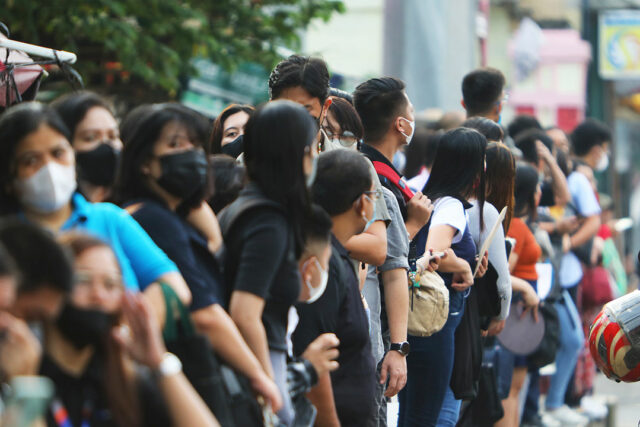
Commuters wait for public transportation along Ortigas Extension in Cainta, Rizal, Sept. 14, 2022. — PHILIPPINE STAR/ WALTER BOLLOZOS
By Justine Irish D. Tabile, Reporter
Technological advancements and the pandemic accelerated the Philippine gig work economy, but it is still being viewed only as an additional revenue stream, according to market research company Ipsos.
Ipsos Strategy3 Principal Christine P. Dugay said that gig work is becoming a new frontier for the Philippine labor market.
More Filipinos are going into gig work not just for additional income but to enjoy flexibility in time and location, she added.
“The gig economy has experienced significant growth in recent years, ushered in primarily by the pandemic, as well as technological advancements that we have seen in recent years,” she said in a press briefing on Friday.
Citing data from the Philippine Statistics Authority, Ms. Dugay said that 9.9 million Filipinos are engaging in gig work as of 2022, representing 22% of the total employee population of 44 million.
“We also see that aside from global players, we also have local players coming into the space,” she added.
The study further revealed that gig workers engage in side hustles only to supplement their main revenue streams.
“Sixty-one percent of gig workers are in it part time. This is because a lot of them actually, or 31%, have full-time employment, and 16% have their own businesses,” she added.
“So, what is unique to the Philippines is that gig work is considered a secondary income,” she added.
Despite this, the report revealed that six out of ten Filipino gig workers see side hustles as a strategic choice and a viable long-term career option.
CHARLIE KIRK, Turning Point USA founder, puts on a MAGA hat during the AmericaFest 2024 conference in Phoenix, Arizona on Dec. 19, 2024. — REUTERS/CHENEY ORR/FILE PHOTO
WASHINGTON – US Deputy Secretary of State Christopher Landau on Thursday warned that Washington may take action against foreigners “praising, rationalizing, or making light” of the killing of conservative activist Charlie Kirk, adding he had directed consular officials to take appropriate action.
“In light of yesterday’s horrific assassination of a leading political figure, I want to underscore that foreigners who glorify violence and hatred are not welcome visitors to our country,” Landau said in a post on social media platform X.
“I have been disgusted to see some on social media praising, rationalizing, or making light of the event, and have directed our consular officials to undertake appropriate action.”
Landau did not elaborate on what such action would mean.
Some users replied to Landau’s post with screenshots of accounts and posts, though it was unclear if the accounts they flagged were US visa holders.
The State Department’s number two then replied to some of those comments saying he would direct consular officials to monitor the comments on the post, which as of Thursday afternoon had over 2,000 replies.
A State Department spokesperson, asked about Landau’s post, said: “This Administration does not believe that the United States should grant visas to persons whose presence in our country does not align with US national security interests.”
But the spokesperson did not address questions on whether anybody had been identified to have their visa revoked or how consular officials would evaluate those flagged in response to Landau’s post.
Kirk, a 31-year-old author, podcast host and close ally of US President Donald Trump, helped build the Republican Party’s support among younger voters. He was killed on Wednesday by a single gunshot as he gave a talk at a university in Utah in what President Donald Trump called a “heinous assassination.”
The Trump administration has pursued a sweeping crackdown on immigration, including increasing social media vetting and revoking thousands of student visas and aiming to tighten the duration of others. — Reuters
PEOPLE pose for photos at the Cloud Gate public sculpture on a sunny day in Millennium Park in Chicago, Illinois, US, March 16, 2017. — REUTERS/CARLO ALLEGRI
WASHINGTON – The US economy is showing some strains after years of resilience, with domestic demand moderating and job growth slowing, the International Monetary Fund said on Thursday.
IMF spokesperson Julie Kozack said inflation was on a path to meet the Federal Reserve’s 2% target, but there were some risks that could push it higher, largely as a result of tariffs imposed on imports by the Trump administration.
“What we’ve seen over the past few years is that the US economy has proven to be quite resilient. We do see now that some strains are beginning to show,” she told a regular briefing. “Domestic demand has been moderating in the US, and job growth is slowing.”
Kozack said the front-loading of imports early in the year in anticipation of tariffs had caused some volatility in economic activity in the first half, and tariffs were now adding to inflation risks.
As a result of the combined factors, she said, the IMF saw scope for the Federal Reserve to lower interest rates, although it should proceed cautiously, with an eye on emerging data.
She told a regular briefing that a downward revision in US employment data announced on Tuesday was a “bit larger” than the historical average.
The US government said 911,000 fewer jobs were likely created in the 12 months through March than previously estimated, suggesting that job growth was stalling before President Donald Trump’s aggressive tariffs on imports.
Such revisions could be driven by a variety of factors, including statistical issues and some related to response and survey errors, she said, adding the issue would be discussed during the scheduled IMF review of the US economy in November.
The Labor Department’s inspector general on Wednesday said it was initiating a review of challenges that the Bureau of Labor Statistics faces in collecting and reporting US economic data after it made large downward revisions to nonfarm payrolls and cut its inflation data collection.
Earlier sharp downgrades to May and June payroll figures angered Trump, prompting him to fire BLS Commissioner Erika McEntarfer and accuse her, without evidence, of faking the data. Trump has nominated E.J. Antoni, chief economist at the conservative Heritage Foundation, to replace her.
Kozack refused to be drawn on the credibility of US data, saying only that the IMF strongly advocated for accurate, timely and reliable data from all its members.
“This kind of data transparency strengthens the credibility of economic management in all countries,” she said. — Reuters US
Wholesale price of construction materials in Metro Manila declined to a nearly 16-year low in August, due to faster declines and slower increases recorded across most commodity groups, the Philippine Statistics Authority (PSA) said in a report.
Meanwhile, retail price growth rose, driven by the increase in the index of carpentry, the statistics agency said.
Based on preliminary data, the PSA showed that year-on-year growth of the construction materials wholesale price index (CMWPI) in the National capital region (NCR) fell 0.5% in August, steeper than the 0.3% drop in July.
This was a reversal of the 0.5% growth posted a year ago.
The latest reading was the weakest pace in almost 16 years, since the 1.9% drop in October 2009.
Year to date, August CMWPI growth averaged 0.1%, lower than the 0.8% average growth a year earlier.
The PSA attributed the contraction to the prices of electrical works (-0.5% in August from 0.3% in July), while slower increases were observed in G.I. sheet (0.7% from 1.3%), and plumbing fixtures and accessories or waterworks (0.4% from 0.5%).
Additionally, steeper declines were observed in cement (-1.3% from -1.2%), reinforcing steel (-1.3% from -0.7%), and fuels and lubricants (-3.2% from -3%).
On the other hand, price growth of tileworks accelerated to 1.5% from 1.2%, while doors, jambs, and steel casement grew to 0.6% from 0.5%, and PVC pipes accelerated and 0.3% from 0.1%.
Reinielle Matt M. Erece, economist at Oikonomia Advisory & Research, Inc., attributed the decline to sluggish construction activity.
“The slowdown may be caused by typhoons, which halt some activities, and a downturn in investments, as global investor pessimism and local issues weigh on investments,” he said in an email.
In August the Philippines experienced three typhoons, tropical cyclone Gorio (international name: Podul), typhoon Isang (Kajiki), and tropical depression Huaning.
RETAIL PRICE GROWTH PICKS UP
In a separate report by the PSA, the construction materials retail price index (CMRPI) inched up 1.1% in August, from 1% in July. A year earlier, it had the same growth rate.
The August CMRPI outcome was the fastest pace in five months or since the 1.2% in March.
In the eight months to August, CMRPI in NCR averaged 1.1%, similar with its average growth last year.
The CMRPI is based on 2012 constant prices, while the CMWPI is based on 2018 constant prices.
The acceleration in retail building materials price was driven by carpentry materials, whose price growth increased 0.3% in August from flat growth in July.
Stronger growth was also recorded in masonry materials (1.5% in August from 1.3% in July), tinsmithry materials (1.8% from 1.7%), and miscellaneous construction materials (0.4% from 0.2%).
Meanwhile, slower growth was observed in electrical materials (1.9% from 2%), painting materials and related compounds (2.1% from 2.3%), and plumbing materials (0.4% from 0.5%).
Mr. Erece said that demand for construction materials may continue to weaken this year, as major infrastructure projects undergo adjustments aimed at enhancing transparency following recent corruption scandals. — Heather Caitlin P. Mañago