T-bill yields surge as war heightens inflation fears
THE GOVERNMENT partially awarded the Treasury bills (T-bills) it offered on Monday as yields surged, with prolonged Middle East conflict continuing to push up inflation risks and raising expectations of further monetary tightening.
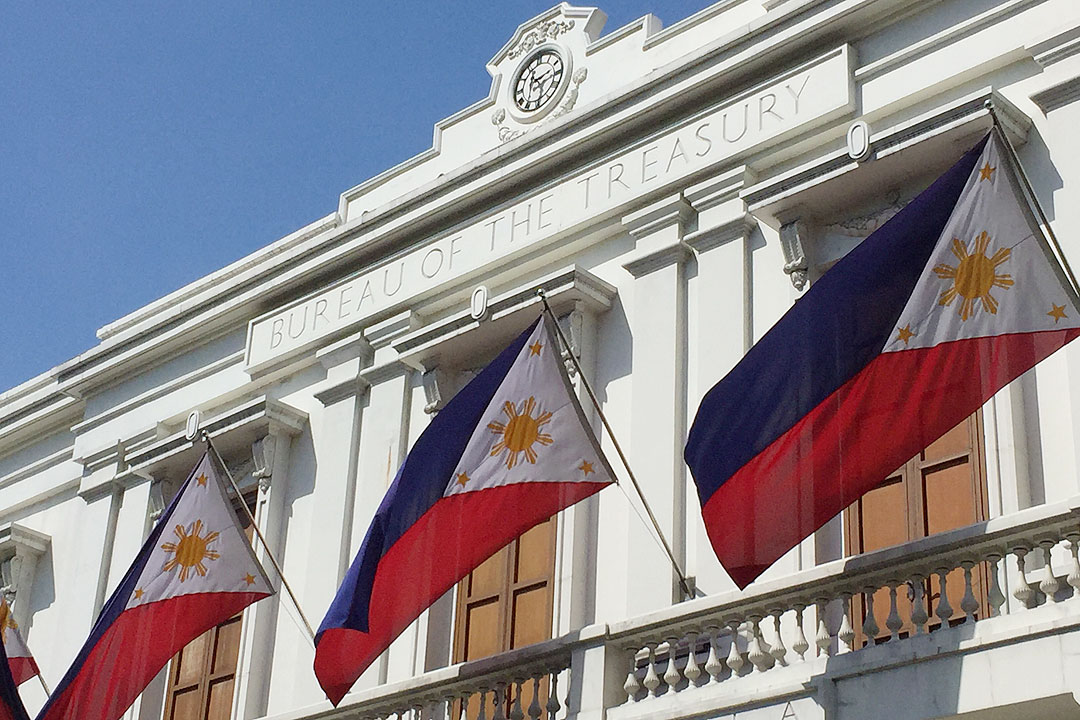
The Bureau of the Treasury (BTr) raised only P25.41 billion via the T-bills it auctioned off, below the P30-billion plan, even as total tenders reached P40.68 billion, lower than the P44.861 billion in demand recorded on May 11.
“Results were mixed in today’s Treasury bills auction, with the Auction Committee upsizing the awarded bids for the 91-day T-bills to P13 billion, while partially awarding the 182-and 364-day securities,” the Treasury said in a statement.
Broken down, the Treasury borrowed P13 billion via the 91-day T-bills, higher than the original P10-billion plan, as demand for the tenor reached P19.87 billion. The three-month paper fetched an average rate of 5.074%, increasing by 22.4 basis points (bps) from 4.85% last week. Bids accepted had yields ranging from 4.915 to 5.173%.
Meanwhile, the government raised just P8.6 billion via 182-day debt, below the P10-billion offering, even as tenders reached P15.15 billion. The average rate of the six-month T-bill was at 5.894%, surging by 62.4 bps from 5.27% previously. Tenders awarded carried rates from 5.59% to 6%.
For the 364-day securities, the BTr awarded just P3.81 billion, lower than the P10 billion on offer, as the tenor drew just P5.66 billion in demand. The one-year paper fetched an average yield of 6.037%, rising by 31.8 bps from 5.719% last week. Accepted bids had rates from 5.925% to 6.1%.
At the secondary market before Monday’s auction, the 91-, 182-, and 364-day T-bills were quoted at 4.9111%, 5.2914%, and 5.914%, respectively, based on PHP Bloomberg Valuation Service Reference Rates data provided by the Treasury.
“Yields continue to rise as demand goes down, aligning with the past few weeks’ movements. The market continues to remain cautious about the lack of progress in the Middle East conflict,” a trader said in a text message.
The government partially awarded its offer as T-bill yields rose for a fourth straight week due to surging inflation, which supports expectations of further tightening by the Bangko Sentral ng Pilipinas (BSP), which the central bank chief has also signaled, Rizal Commercial Banking Corp. Chief Economist Michael L. Ricafort said in a Viber message.
Price risks continue to grow as the Strait of Hormuz remains shut amid the lack of a peace deal between the United States and Iran, he added.
The Philippines imports over 90% of its oil from the Middle East, making it vulnerable to global price shocks.
Headline inflation surged to 7.2% in April, up sharply from the 4.1% in March and 1.4% a year ago, as the crisis pushed up prices of food and utilities. This was the fastest print in over three years or since the 7.6% recorded in March 2023.
April also marked the second straight month that the consumer price index was above the BSP’s 2%-4% tolerance band.
For the first four months, inflation averaged 3.9%.
On April 23, the Monetary Board hiked benchmark interest rates by 25 bps for the first time in over two years, bringing the policy rate to 4.5%, as the Middle East war has caused its inflation outlook to deteriorate further.
BSP Governor Eli M. Remolona, Jr. has signaled further tightening ahead via “a succession of modest rate hikes” to help temper spiraling prices.
On Tuesday, the government plans to raise P30 billion through reissued 10-year Treasury bonds (T-bonds) with a remaining life of seven years and three months.
The BTr wants to raise P268 billion from the domestic market this month, or P128 billion via T-bills and P140 billion through T-bonds.
The government borrows from local and foreign sources to help fund its budget deficit, which is capped at P1.61 trillion or 5.3% of gross domestic product this year. — Aaron Michael C. Sy