Are auto expositions still relevant in the digital era?
THE PHILIPPINE International Motor Show (PIMS) opens on June 4 and will run to June 7 at the World Trade Center Manila. The Chamber of Automotive Manufacturers of the Philippines, Inc. (CAMPI) is organizing this biennial event with 17 of its member companies displaying up to 150 models across their various exhibits.
If you have been or are part of the auto industry, you know that motor shows are a marquee event. According to the publication This Day in Automotive History, the first-ever recorded auto show was the Internationale de Velocipidie et de Locomotion Automobile, when four automakers gathered to display their vehicles in Paris, France 132 years ago in 1894. The participating brands reportedly included the following: De Dion-Bouton, the company founded by the show’s organizer, Count Albert de Dion; Panhard et Levassor, a French manufacturer that often utilized Daimler-licensed engines during this era; Peugeot, another early French pioneer that had recently begun serial production; and Benz & Cie, the German company founded by Karl Benz, which had just introduced earlier that year the Benz Velo, the world’s first large-scale production car.
The industry expanded rapidly following the maiden event; in 1898 the show was renamed the Salon de l’Automobile de Paris, and the number of exhibitors jumped to 77 manufacturers. The event exists today as the Mondial de l’Automobile or the Paris Motor Show.
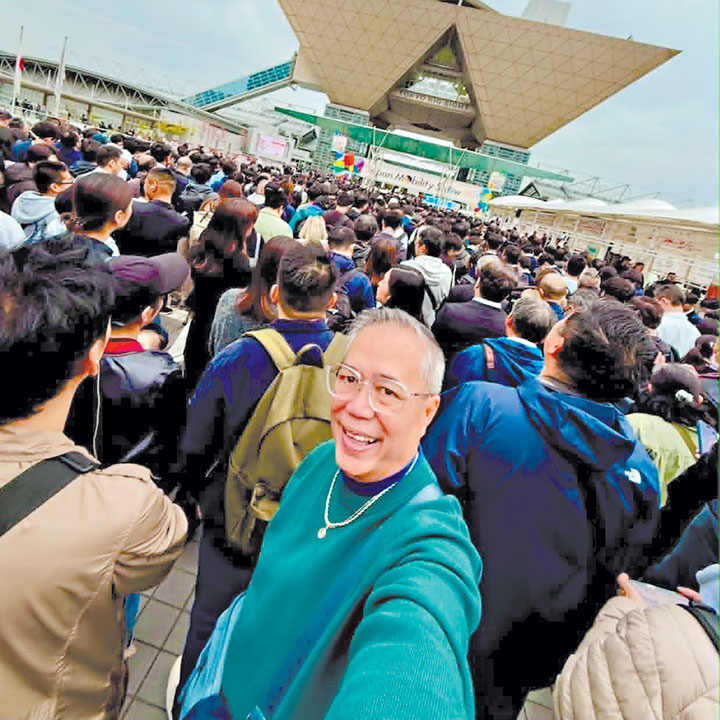
In my over four decades of association with autos, I was fortunate to attend several motor shows. The more prominent global ones I visited were the Paris Motor Show, yes, as well as the Geneva, Frankfurt (now the Munich IAA Mobility show), Tokyo (now the Japan Mobility Show), Detroit, New York, and Los Angeles shows. The Beijing International Automotive Exhibition (or Auto China) has recently joined the ranks of global shows, though I have yet to make it there.
Regionally, the leading event is the Bangkok International Motor Show which has been a regular stop, as Thailand is being heralded as the Detroit of Asia. I have also had the pleasure of visiting a good number of local shows across Asia and the Pacific — in Seoul and Taipei in the northeast; Melbourne down south; New Delhi in South Asia; and Jakarta, Kuala Lumpur, Singapore, and Vietnam in the ASEAN region.
In the Philippines, PIMS is one of two auto shows of prime importance. The Manila International Auto Show (MIAS) preceded PIMS with their inaugural event staged in 2005. Unlike PIMS, though, it is an annual show. In fact, its 21st edition was held just last April focusing on “Powering Mobility” as its theme. The show organizers reported that the MIAS had 250 models on display and that it drew over 180,000 visitors over its four-day run. It also reported a total of around 2,000 sales units booked during the period.
The love affair of Filipinos with automobiles is clear. They troop to auto shows with their “dream catchers” in hand, to find their first “true love” car, discover their fun-to-drive wheels, or take their preferred workhorse vehicle home. Roaming the halls filled with autos of all sorts and brands is like being a kid let loose in a toy store.
PIMS promises to deliver a remarkable experience of its own. This year will be its 10th edition, meaning that it has been running for 20 years now. The first one was staged back in 2007 followed by the second one a year later in 2008. After that, the organizers decided to hold it every other year except for 2020 when the COVID-19 pandemic prevented CAMPI from putting the show together.
The theme of this year’s PIMS is “Forward in Every Drive.” It underscores the aim of CAMPI to foster a vibrant and diverse auto industry that aims to address constantly evolving customer needs while providing a peek into the unfolding future of mobility. Concept vehicles, new model launches, test drives, specialty models, and car parts and accessories will be on display for all to explore.
In response to the current environment of rising fuel prices, participants will also have a full lineup of model offerings ranging from the most fuel-efficient conventional internal combustion engine (ICE) vehicles, the most popular and proven hybrid electric vehicles (HEVs), emerging plug-in hybrid electric vehicles (PHEVs) and battery electric vehicles (BEVs). The show recognizes that there are multiple solutions to prevailing mobility challenges and is, thus, making sure that PIMS will showcase the widest array of automotive technologies and models. The profile of exhibitors reflects the diverse roster of members of CAMPI — Japanese, Chinese, Korean, Vietnamese and American.
I have sometimes been asked if motor shows are still relevant to the times. Auto shows were the marquee platforms for car makers to showcase their latest technologies, launch their newest models, unveil thrilling new concept cars, and to speak about motoring trends and industry issues. Media folks, industry members, policy makers, engineers, and celebrities could be seen wandering the halls filled with shiny and gleaming automobiles. It was a mecca for car enthusiasts and business leaders. Global launches and reveals of the latest technologies were strategically and meticulously planned around the different shows. Booth design was also a serious venture to assure alignment with brand values and corporate identity.
The advent of the digital stage, however, may have diluted some of the very physical and real-world purposes of motor shows. Launches are more cost efficiently produced and managed online — seamlessly spanning world time zones, infinitely broadening reach and creating more impact in the public relations world. Breaking news or announcements from car makers are timelier and more coherent.
While attendance may indicate that the draw of some auto shows may be waning, the number of visitors is still significant. The Detroit show has dropped attendance by around two-thirds from close to 800,000 in 2019 to only 275,000 in 2025. Attendance to the Frankfurt show drew 810,000 visitors in 2017 (with a peak of 1.2 million in 1989) but dropped to only 500,000 in 2025 (in its new format in Munich).
On the other hand, the Beijing Auto Show continues to bring in the visitors, growing from 892,000 in 2024 to a new record high of 1.28 million this 2026. Even the Bangkok show — which is on its 47th edition — is still setting attendance records with almost 1.8 million visitors this year versus 1.6 million in 2025.
There might be a trend. The more mature auto markets are not drawing as much interest in the shows anymore. Perhaps consumer interest is declining as cars are increasingly seen as tech devices rather than engineering marvels to be admired. Meantime, shows in emerging and developing vehicle markets continue to excite as they expand their appeal to increasingly more affluent consumers and car buyers.
The auto shows in the Philippines count among those that draw a growing number of visitors. I think that this will remain the case for many more years as motorization gains traction. In fact, I would argue that the industry needs a much bigger facility to host these events to make sure organizers can adequately — and safely — handle the growing number of visitors and exhibitors.
Especially in these challenging times, motor shows are like a field of dreams and a continuing source of hope for Filipinos. See you at the PIMS.