DBP grants 500 new college scholarships
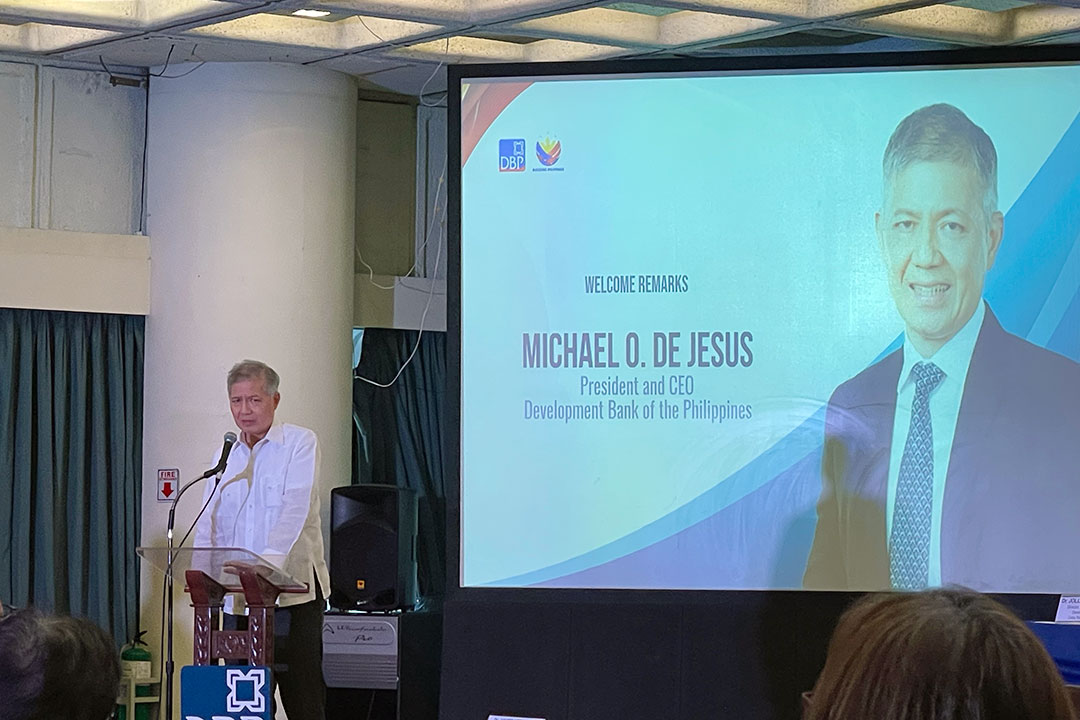
The Development Bank of the Philippines (DBP) on Thursday said that it will add 500 new college students to its scholarship program, as financial concerns widen the nationwide dropout rates.
“We know that our future relies on these young people, so we want to contribute whatever we can,” DBP President and Chief Executive Officer (CEO) Michael O. De Jesus told reporters in an interview.
“Obviously, we have limits, but education is a top priority for us. There’s a lot of fulfillments on our end, and we know it’s important,” he added.
Data from the Second Congressional Commission on Education (EDCOM 2) last year found that subsidies for tertiary education among the poorest declined from 74.24% in 2018 to 30.74% in 2022.
The commission also noted that the national dropout rate for tertiary education stands at 39%, with the need to work (44%), lack of engagement in school (25%), and financial struggles (20%) cited as primary reasons.
Under the DBP Integrated Scholastic Program for Inclusive and Responsive Education (DBP INSPIRE), a P96.75 million funding has been allocated for college scholars. Beneficiaries will receive financing for tuition fees and miscellaneous fees throughout their college education.
The scholarship also covers living allowances for food, lodging, and study materials, such as books and uniforms.
“We pay for the tuition and some out-of-pocket expenses so they can really just concentrate on studying,” Mr. De Jesus said.
DBP INSPIRE is a five-year omnibus assistance program with a total allocation of P437.5 million for the higher education sector.
The program aims to support the Philippine Development Plan for 2023-2028 by financing students from priority courses, including Accountancy, Education, Engineering, Agriculture and Forestry, Sciences, Maritime, Information Technology, and Technical Vocational.
For Academic Year 2026-2027, DBP partnered with 11 educational institutions across the country, up from nine schools a year earlier. Of which, six are state universities and colleges (SUCs), while five are private higher education institutions (HEIs).
“It’s more SUCs than the private institutions, so that more students, especially those who are financially challenged in poverty-stricken areas, are accepted into the program,” DBP Head of Corporate Affairs Department First Vice President Zando Carlos P. Sison told reporters in an interview.
Partner schools will have the opportunity to select the students eligible for the scholarship to create a more “liberal” system.
“It’s part of the agreement; the validation and the vetting are done by the partner schools,” Mr. Sison said. “As long as they pass the subjects, they will be part of the scholarship program until they graduate.”
“They will apply to the schools and the schools will be the ones to pick them. And we spread this out, Luzon, Visayas, Mindanao,” he added.
Pamantasan ng Lungsod ng Maynila, University of Baguio, West Visayas State University, STI Education Services Group, and Cebu Normal University are among the partner schools for the program. — Almira Louise S. Martinez