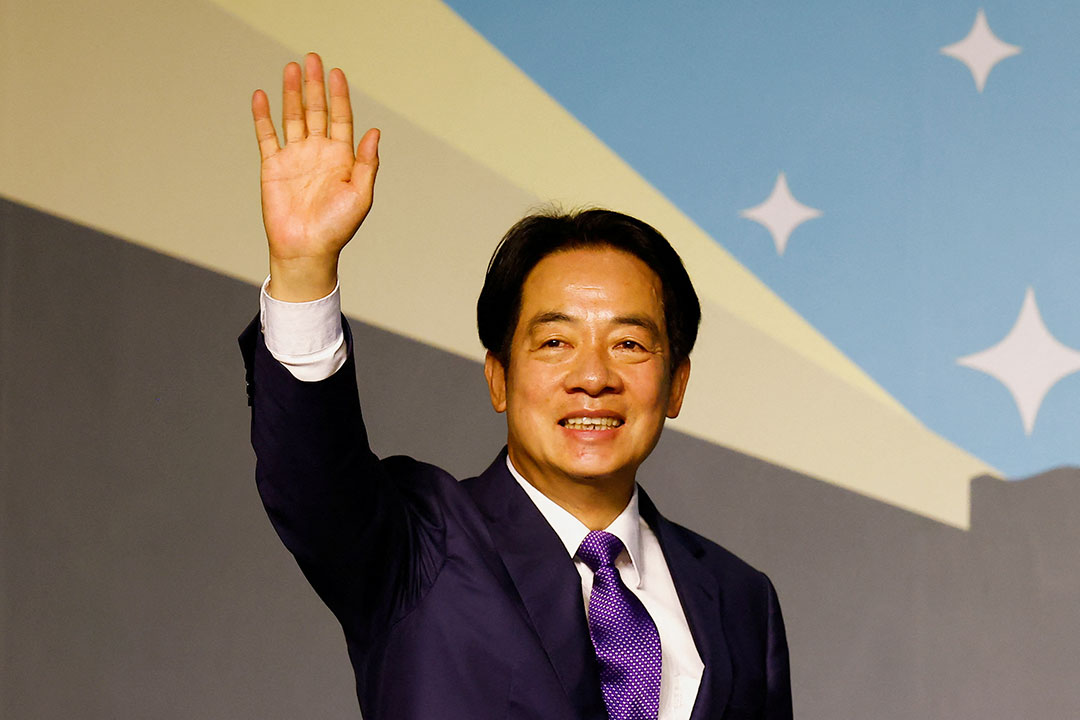
TAIPEI — Taiwan said on Thursday President Lai Ching-te would be happy to speak with US President Donald J. Trump, in what would be an unprecedented conversation between the leader of the world’s biggest economy and the island claimed by China.
It is still unclear when such talks might occur, but the decision could roil Washington’s relations with Beijing and help resolve the fate of a massive arms package the United States is considering for democratically governed Taiwan.
US and Taiwan presidents have not spoken directly since Washington shifted diplomatic recognition to Beijing from Taipei in 1979. China considers Taiwan its own territory and has never renounced the use of force to bring it under Beijing’s control.
On Wednesday, Mr. Trump said he would speak to Mr. Lai, the second time in a week he has done so, dispelling initial speculation that his first mention of it after his Beijing summit with Chinese President Xi Jinping was a verbal slip.
TIMING OF ANY TALKS UNCLEAR
Taiwan’s foreign ministry reiterated comments Mr. Lai made on Wednesday that if he got the opportunity to speak to Mr. Trump, he would say China was undermining peace and his government would keep the status quo across the Taiwan Strait.
“In addition to being committed to maintaining the stable status quo in the Taiwan Strait, President Lai is also happy to discuss these matters with President Trump,” the ministry added, without elaborating.
The secretary-general of the Taiwan National Security Council, Joseph Wu, told lawmakers that the government must “keep a low profile” for now on the topic, and if there is any progress, it will be made public.
“If these communications and dialogues can continue to be elevated to higher levels, and if we can maintain a dialogue that contributes to regional peace and stability, this would be of great significance not only to Taiwan but also to democratic nations and the Indo-Pacific region as a whole,” he said.
Addressing Mr. Trump’s use of the words “Taiwan problem,” which echoes Beijing’s phrasing, Mr. Wu said Taiwan is not the one making problems.
“China is creating all kinds of problems along the first island chain,” he said, referring to an area that stretches from Japan down through Taiwan and into the Philippines.
“China is the problem.”
In late 2016, Mr. Trump, as president-elect, broke decades of US diplomatic precedent by speaking directly, by telephone, with Taiwan’s then-President Tsai Ing-wen.
China has rebuffed multiple offers of talks from Mr. Lai, calling him a “separatist.”
TRUMP-XI SUMMIT
Mr. Trump, who met Mr. Xi in Beijing last week where Taiwan was a major focus of the talks, is weighing whether to approve a new arms sales package for the island, which Reuters has reported could be worth some $14 billion.
The United States is bound by the 1979 Taiwan Relations Act to provide Taiwan with the means to defend itself, despite a lack of formal diplomatic ties.
Speaking to reporters in parliament on Thursday, Taiwan Defense Minister Wellington Koo said the United States has repeatedly reaffirmed that its policy towards Taiwan is unchanged.
In addition to peace and stability in the Strait being a core US interest, providing Taiwan with defensive capabilities through arms sales in accordance with the Taiwan Relations Act is established US policy, he added.
“Given that US policy toward Taiwan remains unchanged, I think we remain cautiously optimistic about arms purchases,” Mr. Koo said.
Beijing has been angered by longstanding US military support for Taiwan to deter Chinese military action, including arms sales.
Taiwan’s government rejects Beijing’s sovereignty claims. — Reuters