

Home Blog Page 9879

An unfair society

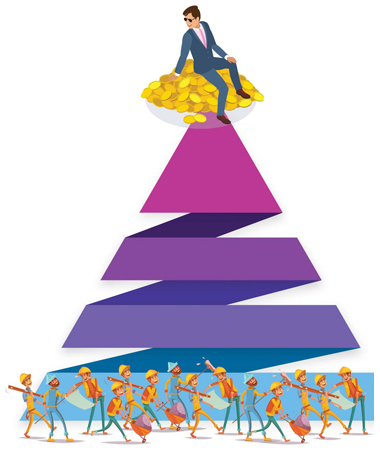
The Research Institute of Credit Suisse paints a grim picture of wealth distribution in the Philippines. According its latest Global Wealth Report, the Philippines is one of the most unfair societies on the planet where one-tenth of one percent of the population control 76% of the country’s wealth.

In terms of incomes, the report showed that a whopping 89% of adults in the Philippines earn under P500,000 per year (or less than P10,000 per month); 10.2% earn between P500,000 and P5 million; .07% earn between P5 million and P50 million; while the .01% elite earn over P50 million per year.

No surprise, 16.1% of all Filipino families live below the poverty line. These families, mostly consisting of five people, collectively earn below P10,481 per month. On the other hand, a mere 105,000 individuals earn between P4 million to P400 million pesos a month.

The Philippines has a GINI coefficient of 82.6. For those unaware, the GINI index is a statistical number that measure a country’s degree of wealth inequality. The higher the value, the more uneven the distribution of wealth.

How did the Philippines become a society so severely imbalanced?

It was designed that way by the narrow elite who write our laws. The law, and the many regulations that govern business, were purposely written to favor big business and eliminate competition.

As a result, most industries in the Philippines operate with just a few players controlling supply, price, distribution and access. In other words, our industries are set up as oligopolies with little or no pressure from competition. This is particularly true in power generation and distribution, telecommunications, infrastructure development, transport services, manufacturing, agriculture, large-scale retail and wholesale industries.

The few players in oligopolies enjoy scandalous profits despite being inefficient and delivering products and services that are oftentimes substandard. Their owners become bigger (and wealthier) without much pressure to improve.

Moreover, having a relatively small number of large-scale employers in an economy gives rise to a situation called “monopsony.” In a monopsony, the few employers that exist can repress wages so as to maximize profits. They keep the workforce living at subsistence levels while they amass wealth. Case in point: Note how cashiers and salespersons in large retail chains live hand to mouth while their owners roll in profits. Monopsonies exacerbates income inequality.

Why do oligopolies thrive in the Philippines? Oligopolies prosper and multiply because our laws favor them. In particular, our laws give undue advantage to big local corporations to the detriment of small- and medium-sized enterprises (SMEs) and foreign firms.

Despite the efforts of governments to develop the SME sector — business conditions in the Philippines remain extremely challenging for them. In obtaining business financing, for instance, banks remain tight-fisted in granting credit to SMEs despite the law mandating them to allocate 10% of their loan portfolio to the entrepreneurial sector. In contrast, clean credit lines are readily granted to large corporations.

In project biddings, government agencies and private firms often require a minimum paid up capital and other constraints that preclude SMEs from participation.

Even the justice system works against SMEs. In enforcing contracts, only big corporations have the resources and wherewithal to navigate their way through the justice system. In trade, nontariff measures (NTMs) or steep technical regulations, act as barriers that prevent SMEs from engaging in imports and exports. In government regulations, the Bureau of Internal Revenue and local governments make it tedious (and expensive) for SMEs to obtain the necessary permits, licenses, and tax clearances to operate.

All these make it nearly impossible for SMEs to mature into strong entities that can compete with oligopolies.

With SMEs unable to break the stronghold of industry giants, one would assume that large foreign firms would fill the gap and provide the needed competition.

Unfortunately, this is not the case. Again, Philippine laws were written in such a way that it discourages foreign firm from competing with local behemoths.

As we all know, the 1987 constitution restricts foreign participation in industries relating to public utilities, mass media, education, and natural resources. In addition, the constitution puts a 40% cap on foreign equity in most sectors.

A study conducted by the Organization for Economic Co-operation and Development (OECD) shows that the Philippines has the most restrictive environment for foreign investors as compared to 62 other emerging economies. While other countries are doing their best to attract foreign direct investments, our constitution discourages them.

The economic laws of the 1987 constitution have worked contrary to the national interest but to the advantage of local conglomerates. It is the reason why electric power supply across the country is perennially in deficit despite being the most expensive in the region. It is why internet speed is among the slowest despite high toll rates. It is why the mining industry remains low yielding and environmentally damaging despite our wealth of natural resources.

The economic laws of the constitution is like a slow-releasing poison that the legislators of the time damned future generations of Filipinos with. We will do well to amend it. The sooner, the better.

In contrast, the sectors that received the highest level of foreign participation by way of equity investments are the most efficient and productive today. They include the hotel and tourism sector, food production, oil and gas.

With SMEs and foreign firms unable to penetrate industries and provide competition, oligopolies are free to manipulate supply and price. They grow not by becoming more efficient but by controlling market conditions.

This is why the elite control the lion’s share of the country’s wealth. What is interesting is that the majority of these families also belong to (or are connected with) political dynasties. The elite write the laws from which they benefit. It is a perverse, self-serving design that we have been forced to live with.

The establishment of the Philippine Competition Commission in 2016 was a step in the right direction but much has yet to be done to eliminate undue advantages enjoyed by the oligopolies.

So what can be done to level the playing field and promote competition? Three reforms need to be put in place: 1. eliminate the barriers that prevent SMEs from flourishing, the most significant of which is access to credit, ease in government regulation, and lowering cost of trade; 2. open Philippine industries to foreign competition by amending the restrictive laws of the constitution; and, 3. pass the Anti-Political Dynasty Law.

The second and third requirements necessitate statesmanship and self sacrifice from our legislators.

But, as expected, certain members of congress have already said they would oppose the proposal to outlaw political dynasties when charter change is deliberated.

It looks like the elite are intent on keeping their perverse, self-serving design in place.


Andrew J. Masigan is an economist.

What explains the increase in self-rated poverty in the last quarter of 2019?

The recent survey on self-rated poverty done by the Social Weather Stations (SWS) piqued my curiosity. The Fourth Quarter of 2019 survey (conducted on Dec. 12-16, 2019) showed self-rated poverty spiking by 12 points compared to the previous quarter. It increased from 42% in September 2019 to 54% in December 2019. In the same vein, self-rated food poverty increased by six points in the same period, from 29% in September 2019 to 35% in December 2019.

To put things in perspective, SWS computed the annual average of self-rated poverty rate in 2019 at 45%, still lower than that of 2018, which was 48%. For self-rated food poverty, the annual average rate for 2019 was 31%, also lower than the self-rated food poverty rate in 2018, which was 33%.

Nevertheless the spike in self-rated poverty in the last quarter of 2019 is surprising, taking into consideration other factors or developments, namely:

1. In the first quarter of 2019, SWS’s survey on self-rated poverty showed a remarkable drop, 12 points below December 2018. This is remarkable given that the reduction in self-rated poverty happened on the heels of the elevated inflation in 2018 brought about by the sharp rise in food prices (mainly, a rice shortage because of a policy that restricted imports) and the increase in petroleum prices, mainly arising from the surge in international crude oil prices. (The culprit is not the tax reform.)

2. According to the SWS, the hunger incidence dropped — from 9.1% of families experiencing involuntary hunger (at least once in the past three months) in September 2019 to 8.8% in December 2019. The annual average hunger rate in 2019 was 9.3%, compared to 10.8% in 2018.

3. The fourth quarter of 2019 SWS survey found an increase in the number of Filipinos who believed their lives improved. The survey result showed that 39% of Filipinos were better off while 21% were worse off, hence a net gain score of +18. This was an increase from the net gain score of +11 in September 2019.

4. Inflation has leveled off at a low rate. In December 2019, inflation stood at 2.5%, compared to 5.1% in the same period in 2018. The annual average inflation rate for 2019 was likewise 2.5%, down from 5.2% in 2018.

5. Philippine unemployment decreased to 4.5% in October 2019, from 5.1% in October 2018. Underemployment likewise declined to 13% in October 2019, from 13.3% in October 2018. One in fact can observe a steady annual decline in unemployment since 2014. Moreover, the unemployment and underemployment rates in October 2019 were the lowest across all quarters since 2005.

How then can we reconcile the increase in self-rated poverty with other indicators (some of which are also drawn from the SWS survey) like the trend of declining poverty (as shown by the SWS’s self-rated poverty and the Philippine Statistics Authority’s official figures on poverty incidence), hunger incidence, low and stable inflation, and decreasing unemployment and underemployment?

SWS founder and former economics professor Mahar Mangahas has pointed out that the most significant determinants of self-rated poverty are inflation, especially food price inflation, and underemployment.

But in the current period, inflation is low, although there was an uptick in the inflation rate between the third and fourth quarters of 2019. The rise in inflation can nevertheless be overcome by a higher increase in income. Underemployment and unemployment have decreased. The increase in employment, particularly in the service and industry sectors, translates into higher incomes. Moreover, the budget for government transfers increased. On top of the conditional cash transfers (CCT), government introduced unconditional cash transfers (UCT) as a compensation for the poor and the near poor in conjunction with the comprehensive tax reform. The UCT was calculated in a way that the amount to be given was greater than the estimated costs that could be attributed to the tax reform.

It is worth mentioning that a 2018 World Bank publication titled Making Growth Work for the Poor: Q Poverty Assessment for the Philippines did state that the leading income sources that contribute to poverty reduction (2006-2015) are non-agriculture wage, government transfers, domestic remittance (note, not foreign remittance), and agriculture wage, in that order. In short, Filipinos escape poverty by having quality employment (wages) and receiving government cash transfers.

So, what can possibly explain the significant increase in the self-rated poverty, in light of the positive indicators on prices and employment?

I posit three possible explanations.

The first plausible explanation is that self-rated poverty is also about relative poverty (hence the respondents would indicate sharply differing income thresholds to be above poverty). As lives of households or families improve, as they receive or earn higher income, their standards and expectations likewise get higher.

Second, still related to relative poverty, is the feeling of inequality, again leading the self-rated poor to aspire for higher living standards. Although what has happened is that the rising tide has lifted all boats, and although the lives of the poor have improved, the fact is that the non-poor — the middle class and the upper class — have gained more from the economic gains. To illustrate, the middle class has benefited tremendously from the income tax reform, through a significant reduction of tax rates. The middle and upper classes, too, are the main beneficiaries of populist measures like free college education. The poor, on the other hand, do not have a direct benefit from the income tax reform (they are exempted from paying income tax, for they do not have sufficient income). Nor can their children avail themselves of free college education, for many of the poor children cannot even finish primary education.

The third explanation is the dismal performance of the Department of Social Welfare and Development (DSWD) and the Land Bank of the Philippines in distributing the cash grants to 10 million poor households and indigent senior citizens. According to the Land Bank, the completion rate of the UCT in 2018 was 81.9%, equivalent to around 8.2 million beneficiaries receiving the UCT amounting to P2,400. But in 2019, wherein the cash subsidy was increased to P3,600, the completion rate was less than half, or 42.85%, equivalent to about 4.3 million beneficiaries. The disbursement rate to Land Bank branches in 2019 was also low, equivalent to 55%, compared to a sterling 97.55% fund disbursement rate in 2018.

For the third reason alone, which is factual, we could have avoided the spike in self-rated poverty.

Self-rated poverty is a politically sensitive indicator. After all, the Filipino people will not vote on the basis of the official poverty data released by the Philippine Statistics Authority. They will vote on the basis of what they feel, what they think. Government agencies and politicians must pay serious attention to it.


Filomeno S. Sta. Ana III coordinates the Action for Economic Reforms.

www.aer.ph

Between love and making a living

The day before Valentine’s Day, red roses were selling briskly at P5,000 per dozen/per bouquet at a small flower stand in a Makati mall. What a waste, the dumpy old widow grumbled to herself — whoever guy is giving that near-wilting bunch of flowers to his lady love would do better to give her the cash.

But that is the ritual, Tita. Have you forgotten when it was your day? Ah, yes! My office was like a funeral wake, with bouquets and bouquets of flowers on Valentine’s Day. No reflection on my attractiveness or desirability as a woman — Valentine’s Day was a safe excuse for business friends and other publics, including co-employees, to give something (flowers) without lasting monetary value to the receiver, and less likely to be perceived as “sip-sip” (a lick-ass) or bribing for favors and advantage. I would have returned them all, but I decided to raffle these off, cost-free, to my male staff, for them to give to their “Valentines.” Flowers on Valentine’s Day have become so obligatory.

“In Japan, it’s women who do the gift giving on Valentine’s Day,” a USA Today article of Feb. 13, 2016 said. Friends, family, and office workers are on the list, and the gift on Feb. 14 is traditionally a box of chocolates. The male recipients are to reciprocate, also with chocolates, on March 14, White Day, if they wanted to. Of course, most, if not all, men who receive chocolates from a woman would, out of courtesy, pay back with chocolates on White Day. The Chocolate and Cocoa Association of Japan estimates that $500 million is spent annually on chocolates for Valentine’s Day, which is less than a third of what Americans spend on candy for Feb. 14. Japanese spend another $500 million on chocolate for White Day, the USA Today write-up said.

The ritual, which is called “giri choco,” started in the 1950s and translates as “obligation chocolates.” Women in the workplace are the most shackled by this tradition, as they are expected to buy chocolates on Feb. 14 for their male co-workers, above them or below them in rank. However, growing numbers of women are snubbing the Valentine’s Day tradition, with a recent survey showing that only 35% of women said they planned to offer chocolate to their male colleagues, the majority instead opting to buy presents for loved ones and friends. “Some firms are now banning the office tradition, which is viewed by many in the country as a form of abuse of power and harassment,” the UK newspaper The Independent wrote last week.

A 2016 editorial of the Japan Times bemoaned that the 1986 equal employment opportunity law — amended in 1999 against discriminatory treatment in the recruitment, hiring, assignment, and promotion of workers for gender-based reasons — has had lackluster compliance even as Prime Minister Shinzo Abe in 2015 required businesses as well as central and local government organizations to compile and publicly disclose plans to increase women in management. Japan’s gender wage gap, at 24.5%, is third-worst among developed countries. But persistent gender attitudes and roles might support the “glass ceiling” which restricts the advancement of women: the male-centric work ethic that requires long working hours and extended male-exclusive bonding after work, vis-à-vis the “tough choice (of women) between their families and their careers,” with married working women having to voluntarily exit the work force to stay home and raise children, or single women opting to stay single to build a career among men. Sodeska! Women hold just 13% percent of managerial positions in Japan, compared with 44% in the United States. According to a recent Reuter’s poll, three-quarters of Japanese companies say they have no female senior executives. “Politics is even more of a male bastion. With women accounting for just 10% of the members in Japan’s lower house, the country ranks 161st out of 193 countries in female political representation, according to the Inter-Parliamentary Union (The New York Times, Oct. 17, 2018). Combined female representation in politics and in business, Japan ranked at the bottom of the G7 countries in 2016.

Compare the status of women workers in Japan, who comprised 43% of the labor force in 2016, with women workers comprising 49.3% of the Filipino work force, also in 2016, both according to respective national statistics. According to the Philippine Commission on Women (PCW), more than 27% of women in the labor force in 2014 held executive and supervisory positions in government and business. By the May 2016 national elections, 78.5% of elective government positions were won by women voted in by a voter turnout of 43.3 million, 80.1% of whom were women.

These numbers seem to show the higher status of women in the workforce and in society in general in the Philippines, compared to other countries. Indeed, the Philippines ranked eighth (0.799) of 149 nations in the 2018 WEF Global Gender Gap Report, higher by two notches from 10th place (0.790) in 2017, on their progress in gender parity through economic participation and opportunity, educational attainment, health and survival, and political empowerment (Sunstar, Dec. 20, 2018). The report also showed that the Philippines is the most gender-equal country in Asia.

One thing disturbs the pride of achievement in gender-equality though: there must be a social cost, particularly to the family unit, for a mother or female head of family to prioritize making a living over the unpaid services of making a home. Then we appreciate and respectfully admire “the cruel choice” between remaining single (to pursue a career among men) or having a family (and giving up a career) that the Japanese working woman is faced with. For the Filipino working woman, she would have to grapple with the same male-centric corporate and business culture of the “old boys club” that will extract from her, more effort and time at the office at the sacrifice of being home with family.

The Philippine Statistics Authority shows that the number of women Overseas Foreign Workers surpased male OFWs since 2014, growing cumulatively from 451,000 in 2000 to 1.25 million of the total 2.447 million OFWs in 2015. One percent of the 100 million Filipinos in 2015 were women aged 25-29 who flew to Hong Kong and the Middle East to take care of foreign children and the elderly. In Japan, where roughly one-fourth of the population is aging (65 years old and over), going abroad as domestic helper is not done and is not compatible with social traditions of filial love and care. Falling birthrates have left Japan with one of the world’s oldest and fastest-shrinking labor forces, and the nation is focused on strengthening the social foundations of family with planned increased births. The “giri choco” tradition on Valentine’s Day might yet help boost the “Womenomics” of Shinzo Abe that urges women to take the initiative in socioeconomic development.

On Valentine’s Day here, the Social Weather Station (SWS) came out with significant insights on love and making a living:

Three out of five, or 60%, of Filipinos said they will choose their career over their love life if they had to. Of this, 77% of men and 83% of women who never married said they would choose career over relationships. Half of married men and those living with partners would also pick their profession over their love life, while 65% percent of women with live-in partners, and 49% of those who are married would choose their career.

“By sex, 68% of men and 63% of women experienced having a successful love life and career at the same time,” SWS said.

Flowers on Valentine’s Day are always welcome.


Amelia H. C. Ylagan is a Doctor of Business Administration from the University of the Philippines.

ahcylagan@yahoo.com

Your attendance is required

By Tony Samson

THE ATTENDANCE CHECK is routine in corporate culture. Scheduled events like the board of directors’ meeting makes presence (if not participation) obligatory. The secretary attests to the required attendance. (Madame Secretary, do we have a quorum?)

Social events oblige the invitee to show up if he confirmed attendance. Monthly coffee reunions regularly hosted by the coffeeshop owner are tracked in a chat group to list down who have confirmed. Woe to the one who said “yes” and then does not show up. A shaming session follows — he said he was coming. He must have slipped into a parallel universe.

To register presence, it is important to seek the host and exchange a few words. After this “hey-I’m-here” moment, you can drift away — let me give you some time to greet your other guests. After a decent interval covering at least three tables but not sitting down in any of them, you head for the washroom and on to the parking lot. Do not use the public intercom to call your driver.

Obligatory attendance is instilled early.

In school, there is the beadle (or his equivalent) that checks attendance, noting tardiness for those who come in after the prayers or the teacher’s erasing of the blackboard to start the new lessons. Maybe, all this is a bit dated as there are now whiteboards and sometimes just screens for Power Point lessons. Also, attendance is probably now just swiped with the student ID. Maybe even physical presence is no longer required as even students can “work from home.” Are there still classrooms?

How long do you stay in an event?

This is a question that crops up. Staying 30 minutes is a good rule. This even allows taking some drinks and a few canapés. Having a plate in one’s hand signals an intention to stick around… near the buffet table. This spot attracts the heaviest traffic and provides the highest visibility where acquaintances can be greeted and be relied on to remember — yes, I think I saw him heaping food on his plate. It’s good to have your picture taken with a group — check if they’re wearing bowties.

The French have introduced most rules governing etiquette. (Even that is a French word). The French’s most significant contribution to social rules after the French kiss — also known in American slang as “tongue hockey” (first used by Tom Wolfe in Bonfire of the Vanities) is the “French leave.” This unannounced, no-fuss departure originated from a military context, sometimes indicating desertion or escape from prison. It has been coopted by social butterflies to indicate a desertion of a different kind.

The justification for exiting without bidding adieu implies thoughtfulness for not bothering the host attending to other guests. A noisy departure can start a deluge to the exit, so hosts, unless they’re tired and want to sleep, prefer quiet and unnoticed exits of some guests — did you leave the gift? Early leavers are already identified by this bad habit. (Is he just going to the loo?)

But why even bother attending a social occasion if the intent is not to stay till the end, or at least after dessert?

Attendance as well as punctuality are social courtesies that a civil society imposes. The frequently absent are considered unreliable and a bit dysfunctional. Presence indicates interest and inclusion.

Event planners have made RSVP management (with frequent messaging) and guest registers (including the assignment of tables) part of their scope of work. The orderly processing of guests and where they are expected to be seated ensures an efficient way of checking attendance. Name plates on designated seats drive home the point. They also identify gate-crashers.

Obligatory attendance is expected for featured speakers in a civic event. Even here, last-minute cancellations at the highest level have become routine. (He is resting and signing papers at home). Sometimes, no excuse is even offered. A substitute is just sent over to read a speech free of unscripted expletives that need to be explained afterwards.

Attendance, even if brief and hasty, requires “being there,” undistracted and mentally present. (Okay, we’re winding up here).

For leaders attending to crisis situations, attendance goes beyond being marked present and photographed handing out loot bags to evacuees. Verbal tirades off-script tend to drive attention in unexpected directions with unforeseen reactions. Can a clarification be far behind, from someone who wasn’t even there?


Tony Samson is Chairman and CEO, TOUCH xda.

ar.samson@yahoo.com

ARTA intervenes, declares Newsnet NTC application approved under EoDB law

THE ANTI-RED TAPE Authority (ARTA) automatically approved News and Entertainment Network Corporation’s (Newsnet) application to deliver interactive pay television and multimedia services.

In a declaration on Feb. 12, ARTA deemed complete the company’s application for a Certificate of Public Convenience to install, operate, and maintain a local multi-point distribution system for the services.

ARTA said Newsnet had submitted all requirements the National Telecommunications Commission (NTC) by Oct. 19 2018. Newsnet had also paid its required fees.

Under RA 11032 or the Ease of Doing Business and Efficient Government Service Delivery Act of 2018, applications that have not been acted on by a government office within the designated processing time are deemed automatically approved.

Automatic approvals are conditional on the submission of all required documents and payment of fees.

ARTA said Newsnet may now deliver its services to South Luzon, North Luzon, Visayas, and Mindanao in the 25.35 GHz-26.35GHz frequency rage, with the authority to charge rates.

ARTA ordered NTC to issue the certificate of public convenience immediately, and to submit a compliance report within three days of receipt of the order.

ARTA also warned NTC that the authority will file an appropriate action if the commission fails to comply with the order.

The Ease of Doing Business (EoDB) law prescribed processing times of three working days for simple transactions, seven working days for complex transactions, and 20 working days for applications involving activities that may pose danger to the public. — Jenina P. Ibañez

BoC, Congress committee at odds over valuation system for imports

A LEGISLATOR said Sunday that Bureau of Customs (BoC) Commissioner Rey Leonardo B. Guerrero can be held liable for graft and corruption, and for violating the Code of Conduct of Government Employees, if he continues to insist on implementing the Bureau’s National Valuation Verification System (NVVS).

“We expect on Monday that the Committee on Ways and Means will again direct the Customs officials to cease and desist the implementation of the illegal NVVS. Any further inaction may force Congress to either hold the Bureau in contempt of Congress and the filing of necessary charges in the Ombudsman for graft and corruption,” PBA Party List Jericho Jonas B. Nograles said in a statement.

The Committee on Ways and Means, citing its oversight powers, has “properly investigated and concluded” that the NVVS is illegal as it is not found in the Customs Modernization and Tariff Act, Mr. Nograles said.

The committee has twice officially advised the commissioner in writing to cease and desist from implementing the NVVS which allowed for the “unequal levying of same goods in multiple instances,” he added.

“The evidence clearly shows that the same commodities charged differently. The inconsistencies only mean that there is corruption in the NVVS system,” the congressman said.

He said that despite the clear declaration of the House Committee on Ways and Means that NVVS has “no lawful basis, and therefore illegal,” the Customs commissioner continues to implement it “on the false pretext that it is only used as reference and not a replacement of the transaction value of imported goods.”

“The memoranda issued to Customs workers are consistent in the strict implementation of the NVVS system. Why is this? Mukhang merong pinapaboran at pinoprotektahan. (It looks like someone is being favored and protected) Pagkatapos ng Green Lanes ng previous Commissioner, ang panibagong diskarte ay ang NVVS (After the previous commissioner’s Green Lanes system, the new ploy is NVVS). This NVVS is a tool for extortion for some corrupt Customs people,” Mr. Nograles said.

He said his office has evidence dealing with the inconsistencies of tariff assessments under the NVVS and he will disclose the same at the upcoming committee meetings.

Vincent Philip C. Maronilla, BoC assistant commissioner heading the Post Clearance Audit Group, said that the Bureau has sent its reply to the committee through its chairman, Albay Rep. Jose Maria Clemente S. Salceda.

“We already wrote our reply to the Committee through Chairman Salceda. But we want to assure the Honorable Committee that we will abide by any guidance or directive they may have after considering our reply,” Mr. Maronilla told Businessworld in a Viber message on Sunday.

According to the BoC website, NVVS is a web-based system which BoC Assessment officers may use to verify whether the value declared by the importer is the “price actually paid or payable for the goods when sold for export to the Philippines.”

It further noted that value verification is based on previous importation “similar and identical goods at the same period of importation, and other methods of valuation available under Republic Act No. 10863, otherwise known as Customs Modernization and Tariff Act.”

NVVS and other computer system projects by the BoC were implemented in June 2019. — Genshen L. Espedido

Davao City looking for more projects under World Bank’s PRDP fund

THE DAVAO City government is planning to propose new ventures for funding under the Philippine Rural Development Project (PRDP) as it recently re-established the special unit tasked to manage the agriculture-focused program at the local level.

An additional $280-million allocation was approved last year for the PRDP, a World Bank-funded program with the Department of Agriculture as lead implementing agency.

Launched in 2014 as a nationwide assistance program following the Mindanao Rural Development Program, PRDP had an initial P27 billion worth of funding with an additional infusion of $450 million approved in 2018.

Davao City Mayor Sara Duterte-Carpio issued an executive order dated Jan. 31 renewing the City Project Management and Implementing Unit (CPMIU) for PRDP, which was first created in 2014.

Led by the City Planning and Development Office (CPDO), the CPMIU is tasked to identify and endorse sub-projects to the PRDP Regional Project Coordination Office as well as supervise the implementation of the approved proposals.

The mayor’s order also specifies that the CPDO will take part in updating the city’s agricultural value chain analysis and the City Commodity Investment Plan, the two major PRDP requirements.

Other key members of the CPMIU are representatives from the City Agriculture’s Office, the City Veterinarian’s Office, and the City Cooperative Development Office.

This cluster is responsible for the Investments for Rural Enterprises, and Agricultural and Fisheries and Productivity (I-REAP) component, which focuses on developing micro, small and medium enterprises.

The City Engineer’s Office, meanwhile, is assigned to supervise the Intensified Building Up of Infrastructure and Logistics for Development (I-BUILD) component.

Of the four PRDP projects previously awarded to Davao City, one has been completed, involving cacao production and dry-fermented beans marketing with a P26-million fund for the 371-member Subasta Integrated Farmers’ Multipurpose Cooperative (SIFMPC).

Two ongoing projects also involve cacao: P7.7 million for the Tawan-Tawan Multi-Purpose Cooperative’s tablea processing and marketing enterprise; and P13.6 million for the Biao Agrarian Reform Beneficiaries Cooperative’s chocolate processing.

The fourth project involves abaca processing and marketing, with P13.5 million worth of funding for the Tapak Farmers Marketing Cooperative.

The CPDO has yet to determine whether the new proposals will involve the same priority commodities.

Davao City Chamber of Commerce and Industry President John Carlo B. Tria said aside from cacao, the city government can also look into boosting other high-value crops.

“For the city, we should continue to develop agricultural products like cacao, coffee and durian,” he said. — Carmelito Q. Francisco

Re-export of South Korean waste shipments completed this month

THE Bureau of Customs (BoC) committed to finish this month shipping out all 201 containers of waste products imported illegally in 2018 to the country of origin, South Korea.

In a statement Sunday, Port of Cagayan de Oro District Collector Jon Simon said the last batches of waste were scheduled for re-export yesterday, Feb. 16 and on Sunday, Feb. 23, to “finally rid the country of the illegally imported waste.”

The first re-export took place on Jan. 13 through the Port of Cagayan, involving 51 containers, followed by another 50 containers shipped back on Jan. 19.

In 2018, a shipment declared as plastic waste was found to contain mixed non-biodegradable waste. A warrant of seizure and detention was issued then and appropriate cases were filed for violation of the Customs Modernization and Tariff Act (CMTA) and R.A. 6969, BoC said.

Last year, the South Korean government committed to help ship back some 5,177 metric tons (MT) of plastic garbage that was exported illegally to the Philippines in 2018. — Beatrice M. Laforga

House panel approves Iloilo ecozone and free port bill

ILOILO CITY — A bill creating the Metro Iloilo Special Economic Zone and Freeport Authority has been approved at committee level in the House of Representatives.

Iloilo City Rep. Julienne L. Baronda said House Bill 5794 or the proposed Act Creating the Metro Iloilo Special Economic Zone (MILOECOZONE) and Freeport Authority, was passed on Feb. 11 by both the House committee on economic affairs and the committee on trade and industry.

“By giving the Ilonggos your respective seals of approval, you are letting us get closer to our dream of bringing the economy of Western Visayas to greater heights that will result in more job opportunities for the people of Iloilo City and the entire Western Visayas,” Ms. Baronda said.

The MILOECOZONE, the first such complex in the Western Visayas Region, is intended to attract more investors to Iloilo and boost international trade.

The proposed 50-hectare zone will be located in La Paz, Iloilo City, where the Iloilo International Port is located.

National Economic and Development Authority (NEDA) Regional Director Ro-ann A. Bacal said the region is ready for such a facility.

“The region is now in the best position to attract investors since the supply of power is now stable, and soon, water will not be a problem with the Jalaur River Multipurpose Project, Phase II,” Ms. Bacal said in a statement.

“An ecozone is very much welcome in Western Visayas. We are hoping that the private sector will come in and invest.” — Emme Rose S. Santiagudo

Philippines urged to view free trade as opportunity to increase FDI

UPCOMING free trade agreements (FTA) are viewed mainly as opportunities to expand foreign direct investment (FDI), economists said.

Ser Percival K. Peña-Reyes, an economist at Ateneo de Manila University, said in an interview that an FTA with South Korea will help strengthen the government’s infrastructure program.

“I think (an FTA) would benefit us in tourism, in investments especially in infrastructure. We’re undergoing “Build, Build, Build” — and who has a lot of resources to spend? (South Korea) has a lot of know-how on infrastructure.”

South Korea last year pledged $355 million to support green infrastructure in Southeast Asia. The country also committed $1 billion in 2018 to help fund Philippine infrastructure projects.

He said South Korea tends to favor investing in Singapore and Malaysia.

“If they really want a new industrial policy, they should invest in all (of Southeast Asia),” he said.

University of Asia and the Pacific economist and former tariff commissioner George N. Manzano said securing export access requires investment.

“The primary motive would be to secure (export) access to markets, particularly large markets,” he said, but added that the agreements increase the comfort level of partner countries and make the Philippines more attractive to FDI.

The Philippines this year is taking on new free trade agreements (FTAs), including the Regional Comprehensive Economic Partnership (RCEP) among Southeast Asian countries and their major trade partners, amid continued negotiations with South Korea. Trade talks with the United States may be delayed following the termination of the Visiting Forces Agreement.

The conclusion of RCEP talks, which was expected at the ASEAN Summit in Bangkok last year, was delayed to 2020 after resistance from India. The Thai government said in November that the signing is expected to take place this month.

The economists said FTAs improve resilience in the face of geopolitical shifts, with Mr. Manzano saying that the agreements increase certainty.

“In light of changes in the world economy, an FTA assures you of continued access to a partner’s economy,” Mr. Manzano said, describing the agreements as insurance policies.

“FTA insulates a partner country in the sense that the tariff concessions negotiated before would have to be respected regardless of economic conditions.”

Mr. Peña-Reyes said global trade tensions and the introduction of artificial intelligence threatens the country’s main revenue sources — remittances and outsourcing.

“We cannot just be relying on these sources for consumption,” he said. “We need to find a way to attract more FDI — the long-term stake used to build capital goods.”

Mr. Manzano said that agreements like the RCEP may have an incremental effect on exports as the country already enjoys market access to many of the countries in the partnership.

Industries also face risks as the Philippines allows more imports.

Mr. Manzano said it is possible some part of the agriculture sector may be subject to more competition from the US, challenging the government to improve competitiveness.

Both economists said that opportunities and risks are in the details — industries will discover how they will fare only after the details of the agreements are released.

But they are concerned about whether the Philippines makes full use of the concessions and opportunities made available in the agreements.

“It’s not automatic that just because you joined it, you’ll benefit,” Mr. Peña-Reyes said. — Jenina P. Ibañez

Mindanao businesses need united position to bring shipping cost down — ECCP

DAVAO CITY — The Mindanao business community needs to take a more united stand in pushing for lower shipping rates and more direct cargo services to boost international trade in the southern islands, an official of the European Chamber of Commerce of the Philippines (ECCP) said.

ECCP-Southern Mindanao Chairperson Antonio S. Peralta said the amendment of the Cabotage Law in 2015, which eased restrictions on the entry of foreign ships to any port in the country, has not translated to lower logistics costs for Mindanao’s producers and traders.

“There has got to be greater consensus of the Mindanao business community to really push for the lowering of shipping costs,” he said during last week’s Habi at Kape forum.

“Why, after all these years, there was no decline on our shipping cost… It’s very hard for us to accept na mataas ’yung shipping cost natin, biruin mo (that our shipping cost is higher, imagine) it’s like almost over 31% of your product cost, (while in) Luzon it’s 17%,” he added.

According to the Mindanao Development Authority, freight rates from Manila to Kaohsiung are $300 or $0.55 per nautical mile (nm) and $250 to Hong Kong or $0.39/nm, both lower compared with $1,047 or $0.97/nm from Manila to Davao.

In a separate interview with BusinessWorld, Mr. Peralta said that the situation is “really a combination of factors,” which involves not just limited foreign ships serving Mindanao and high rates, but also constraints among domestic shipping firms in terms of capital and port infrastructure in Mindanao.

“The shipping business is capital-intensive given the larger costs associated with acquiring vessels. One of the alternatives of raising capital would be to consider joint ventures with foreign shipping lines. This would mean an infusion of fresh capital for local shipping companies to acquire modern vessels,” he said.

Government must also look into new areas for port development, citing as an example Malalag in Davao Occidental or Panabo in Davao del Norte given the limited berthing space at Sasa Port in Davao City.

“Davao City has hardly any room for expansion,” he said.

Mr. Peralta said the chamber hopes to have a consolidated position paper and plan of action that can be presented to the government later this year after the staging of the ECCP’s Business Conference on Logistics in the Visayas and Mindanao.

A half-day conference was held on Jan. 31 in Davao City for the initial discussions.

Other points that were raised include maritime accidents, ageing vessels, low incentives given to shipping companies, and lack of coordination between producers and shipping companies.

“That was only a half-day conference and normally it was meant to just open up the issue to lay the basis for a larger conference,” Mr. Peralta said.

The next gathering, originally scheduled for March, has been postponed to June or July due to the coronavirus disease 2019 (COVID-19) outbreak.

“This cannot just be done overnight… I think there should be changes that are forthcoming for the improvement of the shipping rates as well as the condition of vessels,” he said. — Maya M. Padillo

When the going gets tough, the tough get going

Just over the course of one month into 2020 and the world has been bombarded with a flurry of disasters and unforeseen events. Headlines have been filled with alarming and heartbreaking news — from the wildfires in Australia, to the eruption of the Taal Volcano, and just recently, the outbreak of COVID-19 (coronavirus disease 2019) affecting numerous countries around the world.

With these events happening all over the globe, we come face-to-face with the glaring fact that disasters are not a matter of “if,” but “when.”

Given the increasingly frequent occurrence of unfortunate events, whether natural or man-made, are organizations prepared to face such ever-evolving and emerging threats? Taking a proactive stance seems to no longer be an option, but a necessity. It is more crucial than ever for companies to ensure that they have an established plan in place to guide the organization on how best to respond and safely maintain operations in the face of unprecedented situations. Recent events should serve as a wake-up call to revisit and ensure that business continuity plans (BCP) are robust enough to cater to all sorts of disasters.

DEVELOP AN ORGANIC, EVOLVING BCP
First, companies should review their existing BCP and check that all potential threats, whether natural or man-made, are considered in the plan. This would entail the broadening of their perspective to anticipate the current and future risks that the organization may face. The next step would be to update these plans periodically in order to tackle new and continually emerging threats in the industry. This likewise involves checking if the roles and responsibilities are still correct and sufficient, if advances in technology solutions and infrastructure are accounted for, and if procedures to recover critical services are still applicable. The organization should consider specific plans catering to different threats, such as Pandemic Plans and IT disaster recovery (IT DR) plans. These plans should also cover high-risk, low probability events.

Having well-documented plans are only the starting point of a well-developed Business Continuity Management (BCM) program. The plans and strategies must also be exercised to test the effectiveness of the strategies. When planning for exercising activities, the organization must consider the current BCM maturity to ensure effectiveness of the testing activities. For example, the organization must start off with tabletop exercises and then transition into simulated exercises as the program progresses.

In light of reviewing the BCM, organizations should consider the following points.

AWARENESS AND COMMUNICATION
The safety of employees should be a top priority, making awareness and communication initiatives especially critical. Organizations should establish proper communication channels and procedures and deploy an emergency broadcast process that will allow the company to reach employees quickly and measurably. Employers must also account for their employees in times of a disaster and be able to escalate emergencies to the proper authorities as necessary.

Employers must ensure that their people are regularly updated with reliable information regarding the situation, both to manage the spread of correct, verified information from authorized sources as well as to control the spread of harmful and panic-inducing disinformation.

The company’s leaders should maintain communications through easily accessible media, such as printed posters, e-mails, weekly updates, programs and activities. As an example, to increase awareness on the organization’s pandemic plan, the business should send out awareness e-mails regarding the extent of the virus as well as countermeasures and preventive actions. The organization must also consider the company culture in crafting an effective BCM Awareness program.

BUSINESS IMPACT AND SUPPLY CHAIN CONCERNS
Given the unexpectedly broad impact of the COVID-19 virus outbreak, businesses should revisit their 2020 and Q1 budgets. Determine areas where operations will be impacted, including key suppliers, vendors, and third parties. Consider the impact of the disaster on key suppliers and vendors, as this will also impact the delivery of services if disruptions occur, especially for suppliers that provide manpower services. If necessary, identify back-up suppliers and vendors as a pre-disaster activity. This will ensure that critical services and products provided by affected suppliers will continue in the event of a disaster. Organizations should also determine key dependencies, assess potential impacts on these services and align with key clients on adjustments to any affected expectations and deliverables.

Additionally, businesses should consider revisiting their contracts with clients or third parties, especially long-term or high value contracts. Client initiatives for their own business continuity should also be taken into consideration, since this can possibly cause delays in the completion of the project/engagement. As an example, the recent outbreak of the COVID-19 restricts work obligations which require teams to work on-site with clients, since quarantine and lockdown measures are in effect in infected countries like China. It is also important to thoroughly go through contracts with strict timelines, stipulations of damages in case milestones are not met, or those with a termination clause in cases of unforeseen events. In reviewing these, organizations should always put into perspective their capabilities to deliver their products and/or services even under extremely difficult circumstances.

Business must also look into the impact of disasters on the organization’s assets and workforce. Different disasters call for different responses and organizations must be able to adapt to each one. For example, disasters such as fires, earthquakes, typhoons and floods would affect the organization’s facilities and equipment. Situations such as cyber or hacking attacks would necessitate a different set of responses and resources from digital security teams.

Similarly, disasters such as pandemics will directly impact the workforce in terms of physical health and contagion control protocols. In such an eventuality, leave policies must be updated and clearly communicated to the workforce, and health insurance policies for employees must be revisited. Employees that have symptoms or illness should be allowed to remain at home or work from home and seek medical care as soon as possible.

BUSINESS SUCCESSION AND BACKUPS
In times of disaster, leadership may not be available to address urgent and critical concerns; thus it is essential to develop a plan for leadership continuity in the event that key decision makers are affected. Organizations should also consider setting up physically separate back-up teams that can be deployed in times of disaster. These identified back-up and alternate personnel must also know their roles and responsibilities in times of crisis. For companies with multiple office locations, this may mean designating one office as a support team for another location. Additionally, the company should also include data back-up processes as part of their regular safety protocols.

As new threats emerge in the ever-evolving world, people and organizations must stay vigilant not just about COVID-19, but other possible issues that may arise. Practice additional caution by staying updated on current events, carefully examining the organization’s level of readiness and adapting.

Consider that just weeks prior to the virus outbreak, parts of the country were affected by storms and earthquakes while Metro Manila was severely affected by the Taal volcano eruption, which led to the closure and suspension of work and classes in several locations. An emergency can occur at any time, so being prepared with a strategic and tested business continuity plan is essential to ensure the safety of a company’s people and the continuity of business-critical services in times of disaster.

This article is for general information only and is not a substitute for professional advice where the facts and circumstances warrant. The views and opinion expressed above are those of the authors and do not necessarily represent the views of SGV & Co.


Senior Manager Alvin Manuel, Manager Shaun Cusi, and Associate Dawn Casocot are from the Advisory Service Line of SGV & Co.

ADVERTISEMENT
ADVERTISEMENT