Home Blog Page 9814

T-bill, bond rates to drop

RATES OF government securities on offer this week are expected to drop amid a sluggish global economic outlook due to emerging risks, which has prompted investors to flock to safe assets.

The Bureau of the Treasury (BTr) will offer P20 billion worth of Treasury bills (T-bills) on Monday, broken down into P6 billion each for the 91- and 182-day T-bills and P8 billion via the 364-day securities.

On Tuesday, the Treasury will look to raise P30 billion via five-year Treasury bonds (T-bonds) with a remaining life of four years and seven months. The tenor was changed to five years from the initial plan to offer three-year papers, which the BTr said is meant to spread its debts in different tenors after it raised P310.8 billion via three-year retail Treasury bonds last month.

A bond trader said over the weekend that rates of the T-bills will likely decline by at least 10 basis points (bps), while the yield on the five-year securities may range within 4.05-3.95%.

“Same reason (for both tenors), growth outlook just deteriorated for the global economy as travel restrictions, work stoppages and less discretionary spending sends global yields to drop on flight to safe haven,” the trader said in Viber message.

Michael L. Ricafort, chief economist at Rizal Commercial Banking Corp., likewise expects the T-bills’ rates to decline by around five basis points, while yields on the five-year notes may settle within 4-4.1% level.

The Treasury fully awarded the P20-billion T-bills it auctioned off last week as rates of the 91- 182- and 364-day papers declined to 3.003%, 3.365% and 3.787%, respectively.

For the five-year T-bonds, the tenor fetched a coupon rate of 4.25% after the issue was first offered on Oct. 16 last year. The BTr raised P20 billion as planned during that auction.

At the secondary market on Friday, the five-year notes were quoted at 4.117%, while the rates for three-month, six-month and one-year securities were at 3.076%, 3.407% and 3.846%, respectively, based on the PHP Bloomberg Valuation Service Reference Rates.

Mr. Ricafort said local benchmark yields were again mostly lower week on week as benchmark yields in US and globally continued to decline.

He attributed this to “increased global market risk aversion with the huge sell-off in US/global stock markets and some shift to the safest assets such as US Treasuries/fixed-income markets amid lingering concerns that the coronavirus (COVID-19) could spread to other countries worldwide and could further slow down global economic growth.”

As the number of infected cases continue to rise and spread across the globe, the Philippine government has imposed temporary travel bans to most affected countries in an attempt to contain the COVID-19.

The most recent one was a ban on Filipino tourists going to South Korea imposed late last week after confirmed cases there shot up. Authorities have earlier imposed temporary travel bans to and from mainland China, where majority of cases were recorded, as well as for Hong Kong and Macau.

COVID-19 has killed more than 2,900 and infected over 85,000 people across the globe, with majority of which in China.

The World Health Organization recently placed the risk and impact of the new disease, which has yet to have an antidote or vaccine, at a “very high” global level.

Think tanks and economists have said the impact of the disease will likely drag global economic growth as attempts to contain it, such as travel prohibitions, and growing fears of contracting it have stalled economic activities for affected countries.

Back home, the country’s businesses were not immune as affected businesses reported a slowdown in sales and demand. Philippine Airlines announced last week it will likely lay off 300 workers as part of its business restructuring plans to recover business losses.

Mr. Ricafort said the market will also take its cue from February inflation data due on March 5, as this could affect local interest rates.

The Treasury has set a P420-billion local borrowing program this quarter, broken down into P240 billion in T-bills and P180 billion via T-bonds.

The government plans to raise P1.4 trillion this year from local and foreign lenders to plug its budget deficit, which is expected to widen to as much as 3.2% of gross domestic product. — Beatrice M. Laforga
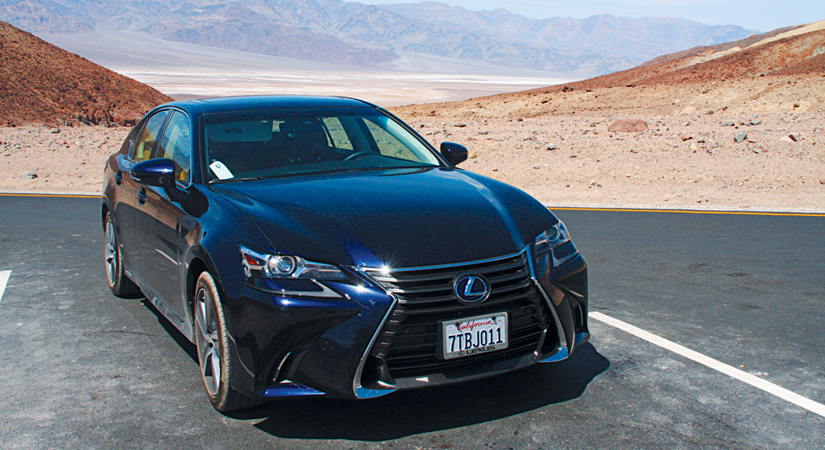
A hot car for the hottest place on earth

Text by Angel Rivero; Photos by Jakob Kurc

THERE’S a strange kind of beauty that one can admire in the barren expanse of Death Valley National Park. It is the largest national park in the USA’s lower 48 states — offering beyond three million acres of protected wilderness, with some parts accessible via approximately 1,000 miles of road. Death Valley’s national park status was established on October 24, 1994, and the park’s borders run from California to Nevada. As the name alludes, this is a land of extremes — the hottest, driest, and lowest national park there is.

Why then, should one even care to visit a land so dry and harsh to life? Well, in my opinion, for that very reason — it is otherworldly and almost absent of life.

Well, almost.

As we all know, life is resilient and fascinating, with creatures managing to survive in the harshest of conditions. There’s one depicted in one of our favorite childhood cartoons — the road runner. It is also only here that one can find the Devil’s Hole pupfish, the world’s rarest fish, able to withstand high salinity and high average temperatures.

Inevitably, there are dangers when visiting this place — primarily related to heat stroke and dehydration. Therefore, as a rule of thumb, it is important to choose the appropriate season for visiting, based on your tolerance of high temperatures. One may also choose to visit the sights found in areas of higher elevation (and relatively milder temperatures). Otherwise, all visitors just need to be vigilant and to bring plenty of drinking water. More sensitive people can choose to stay within the air-conditioned shelter of their car.

Which brings me to declare how important it is to choose a comfortable and mechanically reliable vehicle for visiting a place like this. Mine was the Lexus GS 450h — a hybrid version of the conventional GS sedan — particularly because the Lexus badge is a fail-safe guarantee of superior vehicle comfort. In this case, it was a premium I did not want to compromise for a rather logistically tricky adventure.

A vessel that exuded the Lexus brand’s legendary refinement, the GS 450h proved impeccably quiet, comfortable, and luxurious on the inside. The seats were wrapped in soft, fine leather, and the seat cushions had perforations that could ventilate or heat your behind, based on your climate control settings. Both front seats offered 10-way power adjustments, and I loved the thoughtful thigh support as my legs tend to feel uncomfortable after long driving hours without them.

The GS 450h uses a 3.5-liter V6 engine mated to a hybrid CVT; in my opinion, it is one of the most fuel-efficient luxury sedans available. Fuel consumption begins to matter a bit more when you know you’re traveling large distances; and it also helps to know that while admiring nature, you’re keeping your carbon footprint at bay.

The Lexus GS 450h is a well-rounded and attractively priced rear-drive hybrid sedan that pampers with the accoutrements of the GS while offering the generous torque of a hybrid drivetrain.

The car demonstrated versatility with three easily interchangeable drive modes that varied the throttle input and steering response, depending on the selection: Eco, Normal, or Sport. It also had great forward visibility; and did very well in the darkness of the desolate landscape, with its intelligent, high-beam headlights.

Among the sights one must certainly not miss while visiting Death Valley are the Mesquite Flat Sand Dunes. It is easy to reach, and is practically the only place where sand boarding is allowed in the park. Revel at, and take pictures of, the smooth dunes that rise up to a hundred feet high from the flat. And if you’re lucky, listen to the songs of the sand (yes, they sometimes sing) if you’re high enough on a dune cliff, and the wind comes blowing the sides.

Next, do not fail to walk the lowest point in North America, Badwater Basin, at approximately 282 feet below sea level! The basin is so low, that it serves as the final catch of rainwater that erodes minerals dissolved from surrounding rocks. The result? A surreal, thick layer of salt on the valley, as if it were snow — salty snow.

Then there’s Devil’s Golf Course, except that it isn’t a golf course at all. It’s a bizarre, vast, rugged terrain that looks like it was tilled by some behemoth, and then sprinkled with salt. The salt crystals have hardened around the edges of the soil, that they’re actually sharp and can easily slice through skin. It’s tricky and evil; only the Devil could play golf here.

Zabriskie Point, with amazing vistas of golden-colored badlands with chocolate marbling, is best viewed and hiked under the gentle, morning sun.

One of my ultimate favorites in this park, however, is Artist’s Drive — a one-way, nine-mile drive that tours you through some absolutely beautiful, multi-hued hills. It is as if an artist painted a masterpiece on them. The truth is, they’re actually oxidized, natural mineral deposits — so mother nature was the true artist here. Do not miss at all cost.

Finally, you must know that Death Valley has some of the darkest skies accessible to modern man, far away from light pollution. It is actually rated as one of the premier night-sky viewing points of the world. Go stargazing when there’s a new moon. You’ll practically be able to view our beautiful Milky Way, and perhaps even realize how insignificant we really are in the vastness of the universe.

Denial of Nokia’s tax refund claim affirmed

THE Court of Tax Appeals (CTA) affirmed the denial of the P24.9-million tax refund claim of Nokia (Philippines), Inc.

In a four-page resolution on Feb. 20, the court, sitting en banc denied for lack of merit the motion for reconsideration of Nokia for not raising “meritorious argument.”

“In sum, petitioner failed to raise meritorious arguments to warrant the reconsideration of the assailed Decision. Hence, the denial of the same is in order,” said the resolution penned by Associate Justice Juanito C. Casteñeda, Jr.

Nokia is claiming refund or issuance of tax credit certificate allegedly representing its unutilized creditable input value-added tax (VAT) allocated to its zero-rated sales for 2012.

The court’s third division in October 2017, denied for insufficiency of evidence the petition of Nokia, saying that the company failed to establish that it is a VAT-registered entity.

The court en banc in its decision in August last year affirmed the decision and resolution of its division.

Nokia maintained that its alleged Certificate of VAT Registration, Exhibit P-34, should be considered by the court because it is a “certified faithful reproduction of its original and a public document which is self-authenticating.”

However, the appellate court affirmed that it cannot be considered, noting that the court in division did not commit error when it found that the evidence was not admitted since it was not identified by a competent witness during trial. The court in division also said that it was not a certified true copy as it was a “mere color-printed scanned copy.”

The court also said even granting that the evidence is a public document, which does not need to be identified, it will still be rendered inadmissible for not being a certified copy issued by a public officer with its custody, as stated in the Rules of Court.

“Hence, considering that petitioner’s Exhibit ‘P-34’ is not a certified copy issued by the public officer in custody thereof, the same cannot be accorded any probative weight,” the court said.

According to the court, to be entitled for refund of excess of input VAT traced to zero-rated sales, the taxpayer should be VAT-registered and engaged in zero-rated sales. The input taxes should have been paid, are not transitional input taxes, and have not been applied against output taxes. The proceeds for the sales should also be accounted for in acceptable foreign currency in line with rules of the central bank.

The court also said that the input taxes cannot be directly attributable to the sales and are to be proportionately allocated based on sales volume, and the claim was filed within two years after the close of the quarter when the sales were made.

Associate Justices Erlinda P. Uy, Cielito N. Mindaro Grulla, Ma. Belem M. Ringpis-Liban, and Jean Marie A. Bacorro-Villena concurred in the decision while Presiding Judge Roman G. del Rosario, Associate Justices Catherine T. Manahan, Maria Rowena Modesto-San Pedro dissented. Associate Justice Esperanza R. Fabon-Victorino was on leave. — Vann Marlo Villegas

Shanghai Fashion Week to go ahead online as virus spreads

BEIJING/SHANGHAI — Shanghai Fashion Week, initially postponed due to the coronavirus outbreak, will go ahead as scheduled online in a tie-up with Alibaba Group’s Tmall marketplace, its organizers said.

The event, which last October hosted eight couture shows in its Spring/Summer season, was among numerous trade and business events in Asia that announced changes to their dates this month due to the coronavirus.

The recent Fashion Weeks in London, Milan, and Paris have been hit by the absence of many Chinese attendees.

However, the Shanghai Fashion Week committee said on Thursday in a statement on their official WeChat account the event will go ahead as planned between March 24-30. It told Reuters that people can participate by watching livestreams.

It said it was currently accepting applications from brands and expects that more than 100 Chinese designers and brands will eventually display their 2020 Autumn/Winter designs and also use livestreaming to market their Spring/Summer products.

“We hope this new form will allow designers to try different ways to display their design and different channels to market and sell,” the vice-secretary of Shanghai Fashion Week Committee, Lu Xiaolei, told industry publication Business of Fashion.

Alibaba’s Tmall marketplace has cooperated closely with emerging Chinese designers and commercial brands in past years. Last year, a collection of Chinese brands showcased their products at New York, Milan and Paris’ Fashion Week events via China Cool, a project initiated by Tmall.

Selling through livestreaming, which sees telegenic and chatty hosts market products to consumers on e-commerce platforms, has surged in popularity among Chinese consumers in recent years. Besides Alibaba, JD.com and Pinduoduo also have livestreaming offerings. — Reuters

Vietnam coffee prices edge up on scarce supply

HANOI/BANDAR LAMPUNG, INDONESIA — Domestic coffee prices in Vietnam edged higher this week on scarce supply, while trading activities in Indonesia remained sluggish, traders said on Thursday.

Farmers in the Central Highlands, Vietnam’s largest coffee-growing area, sold coffee at 32,000 dong ($1.38) per kg, up from 31,500 dong last week.

Coffee shipments from Vietnam were estimated at 150,000 tonnes in February, slightly higher than last month’s 145,000 tonnes, traders said. However, exports would be lower in the next two months.

“We are struggling to buy beans for the upcoming deliveries,” said a trader based in Ho Chi Minh City.

“Farmers are not willing to sell at current prices but we couldn’t offer higher given the low London prices and the coronavirus epidemic that has shaken global markets.”

May robusta coffee settled up $22, or 1.73%, at $1,295 per tonne on Wednesday.

“Prices have been exceptionally low, staying below $1,400 per tonne for nearly three months,” said another trader based in the Central Highlands.

Traders in Vietnam offered 5% black and broken grade 2 robusta at a premium of $130 per tonne to the May contract on Thursday, compared with $125 last week.

Meanwhile, traders in Indonesia’s Lampung province said Sumatran robusta was offered at a $350 premium to the May contract this week and a $250-$270 premium to the July to December contracts. That compared with a $340–$400 premium offered last week for the May contract.

Traders in Sumatra island are still waiting for coffee harvest. — Reuters

Debt yields decline on BSP easing bets

By Marissa Mae M. Ramos
Researcher

YIELDS ON government securities (GS) fell across-the-board last week following comments by Bangko Sentral ng Pilipinas (BSP) Governor Benjamin E. Diokno on the possibility of cutting key policy rates by more than 25 basis points (bps) to shield the economy from the negative economic impact of the coronavirus disease 2019 (COVID-19) outbreak.

Debt yields went down by an average of 5.8 bps week on week, based on the PHP Bloomberg Valuation (BVAL) Service Reference Rates as of Feb. 28 published on the Philippine Dealing System’s website.

At the secondary market last Friday, yields were lower than week-ago levels across-the-board. In the short end of the yield curve, the 91-, 182-, and 364-day Treasury bills (T-bills) declined by 2.4 bps, 1.3 bp, and 2.3 bps to fetch 3.076%, 3.407%, and 3.846%, respectively.

At the belly of the curve, rates of the three-, four-, five-, and seven-year Treasury bonds (T-bonds) fell by 8 bps (3.863%), 10.5 bps (3.956%), 9.4 bps (4.037%), 6.7 bps (4.117%), and 3 bps (4.249%).

In the long end, yields on the 10-, 20-, and 25-year T-bonds went down by 4.3 bps (4.309%), 9.4 bps (4.763%), and 6.5 bps (4.864%).

“Philippine benchmark interest rates continued to ease week-on-week…after BSP Governor Diokno signaled possible further cuts on local policy rates and on banks’ RRR (reserve requirement ratio) if economic conditions worsen due to coronavirus concerns,” Rizal Commercial Banking Corp. (RCBC) Chief Economist Michael L. Ricafort said in a mobile phone message.

Mr. Ricafort noted how benchmark bond yields in the US and other developed economies easing to record lows as investors sought safer investments amid the expected negative effects of COVID-19 on the global economy.

“Local interest rate benchmarks also eased amid lower global crude oil prices to among 14-month lows as the coronavirus concerns could also slow down demand for oil,” he added.

This view was shared by a bond trader, which attributed last week’s bond rally to “safe-haven buying” amid growing concerns over the spread of COVID-19 outside China.

South Korea reported 376 new confirmed coronavirus cases on Sunday, raising the country’s total number of infections to 3,526, the Korea Centers for Disease Control and Prevention (KCDC) said, Reuters reported.

Sunday’s new cases follow the 813 infections recorded on Saturday, the biggest daily jump in South Korea, which is grappling with the largest outbreak of the virus outside China. KCDC said it will update numbers later in the day.

Other cases have been reported in countries such as Italy, which has the highest incidence of the virus in Europe with 888 cases, while Brazil also confirmed its first case of infection last week.

Back home, BSP’s Mr. Diokno said last Thursday they will reassess how the virus could hit the Philippine economy as the outbreak worsens.

He told reporters that there would “definitely” be another 25-bp cut in key rates and said they were not ruling out a cut of as much as 50 or 75 bps. The central bank chief also said additional cuts in the RRR are on the table.

Mr. Diokno earlier said the central bank will likely trim rates by another 25 bps as early as the second quarter.

The BSP’s Monetary Board already moved to slash key interest rates by 25 bps on its Feb. 6 policy meeting after its 75-bp reduction last year which partially reversed the 175 bps worth of hikes in 2018 to stem strong inflationary pressures that time.

For this week, the bond trader said yields might continue to fall amid growing concerns over the COVID-19 outbreak and increasing expectations of more easing moves from the BSP and other central banks.

“Likely weaker US economic data releases may also weigh down on interest rates. However, this decline could be capped by likely stronger local inflation in February,” the bond trader said.

The Philippine Statistics Authority will report February inflation data on Thursday.

Likewise, another bond trader interviewed anticipates local GS yields to go down further to mirror the decline in US Treasuries as investors “flock to safer assets.”

For RCBC’s Mr. Ricafort: “Lower oil prices could ease inflationary pressures and support lower interest rates,” he said, adding that markets will also look to inflation results as a source of new leads for this week’s trading session.

Peso to weaken further on virus

THE PESO may continue to weaken this week with markets following developments related to the spread of the coronavirus disease 2019 (COVID-19) outside China and as they factor in key local data to be released this week.

The local unit finished trading at P50.97 versus the dollar on Friday, shedding 15.50 centavos from its Thursday finish of P50.815, according to data from the website of the Bankers’ Association of the Philippines.

Week on week, the currency also depreciated by three centavos from its P50.94-per-dollar close on Feb. 21.

Analysts attributed the weaker local unit to risk-off sentiment in the market amid fears due to new cases of the COVID-19 outside China.

“The peso seems to be tracking global markets again as fears continue to heighten with fresh evidence that COVID-19 is spreading outside China,” UnionBank of the Philippines, Inc. Chief Economist Ruben Carlo O. Asuncion said in a text message.

South Korea reported 376 new confirmed coronavirus cases on Sunday, raising the country’s total number of infections to 3,526, the Korea Centers for Disease Control and Prevention said.

Several cases and deaths have also been reported in other countries in Europe, Middle East and in the United States.

In China, infections rose by 573 on Feb. 29 which is the highest daily increase in a week, from 427 new cases on Feb. 27, according to the National Health Commission on Sunday. Nearly 99% of the new cases were concentrated in Wuhan.

Meanwhile, Rizal Commercial Banking Corp. (RCBC) Chief Economist Michael L. Ricafort noted that market worries have caused a sell-off in many parts of the world.

“The peso exchange rate weakened today to close at the weakest in a month amid latest declines in the stock market [and] continued global risk aversion amid lingering concerns that the coronavirus…that caused further sell-off in riskier assets worldwide such as global stock market and in other emerging markets,” he said in a text message.

For this week, the peso’s movement will depend on the market’s reaction to developments related to COVID-19 as well as the release of some local data, according to analysts.

“The local currency is still expected…to be resilient as the coronavirus continue to wreak havoc on market sentiments worldwide,” UnionBank’s Mr. Asuncion said.

RCBC’s Mr. Ricafort also cited the coronavirus as a major catalyst for peso movement this week as markets monitor its “effects on the riskier assets such as the global stock markets.”

“The markets will also take cue on the latest inflation data due on March 5, as a source of new leads.”

A BusinessWorld poll of 17 economists yielded a median estimate of three percent for February headline inflation, which is within the upper end of the 2.4-3.2% forecast range given by the Bangko Sentral ng Pilipinas (BSP).

If realized, the print will be slightly quicker than the 2.9% logged in January but still slower compared to the 3.8% in February 2019. The BSP targets 2-4% headline inflation for the year, forecasting an average of 2.9%.

UnionBank’s Mr. Asuncion sees the peso moving within P50.70-P51 agains the dollar this week, while RCBC’s Mr. Ricafort expects the local unit to end within the P50.80-P51.20 levels. — Luz Wendy T. Noble with Reuters

Coronavirus stings world’s top honey makers in China

BEIJING — Beekeepers in China, the world’s top honey producer, are bracing for a bleak start to the key spring pollinating season as travel curbs aimed at containing a coronavirus outbreak keep them at home while their bees go without food for weeks.

Jue, a beekeeper from Xinjiang in northwest China, said he has not slept for days, worrying about his 300 beehives that are stuck in wooden boxes about 200 miles from where he has been confined due to the curbs.

“I am really anxious,” said Jue, who wanted to be identified only by his family name. “If all my bees die, I will lose my entire year’s income,” the 55-year-old nomadic beekeeper added.

Jue’s pain is widely shared.

Bees missing the flowering phase of plants due to virus-related curbs, together with a drop in bee numbers, threatens to hurt the livelihood of China’s 300,000 beekeepers as well as the output of honey and crops that rely on bees for pollination.

Acknowledging losses due to virus measures, the Apicultural Science Association of China has urged beekeepers to contact local authorities if they need to move or arrange feeding trips.

“You must not take your life, no matter what,” it said after a beekeeper from China’s southwestern Yunnan province, Liu Decheng, recently hanged himself.

China makes about 500,000 tonnes honey annually, or about a quarter of global output, making it the world’s top producer.

It exports more than 100,000 tonnes to places like Europe and the United States.

But the outlook for production is grim this year.

Normally, beekeeper Jue would be tending to his bee colonies now to prepare them to pollinate apricots in Turpan in March, before they go on a flower-chasing journey starting from pear orchards of Korla, the No. 2 city of Xinjiang, in spring to Ruoqiang to collect nectar from the famous red dates in May.

Jue, however, said that this time he was running a “devastating” three weeks behind schedule.

“ALL BITTERNESS”
Like Jue, Zhang Miaoyan, from Jinhua in Zhejiang province south of Shanghai, is also struggling to reach her 120 cases of bees that have been starving for over 20 days.

“We beekeepers always say that we are in a bitter-sweet business. But this year, probably it is all bitterness,” Zhang said, noting the virus had also put a dampener on sales during Lunar New Year period.

China’s honey output has already been falling amid climate change, an ageing labor force and overuse of pesticides.

Jue, a 30-year veteran beekeeper, makes around 60,000–70,000 yuan ($9,982) in good years doing a job that entails driving in the evening and sleeping in a tent in barren places.

“None of the young people want to do this job. There is too much hardship,” Jue said.

TOO LATE?
Beijing has asked local governments to minimize disruptions to transportation of animal feed and livestock, and specifically mentioned bees. But implementation has been slow amid the severity of the outbreak.

The flu-like virus can be transmitted from person to person, and has killed more than 2,700 people and infected about 80,000, mainly in China.

Jue is still trying to coordinate with the local government to rescue his bees, while Zhang got a go-ahead from local authorities over the weekend to save her beehives.

But it might be too late.

“Wild osmanthus here are in their prime time now. You can smell the sweetness,” said Zhang.

“But the best flowering phase is passing now. Once you miss it, you can only wait for the next year,” Zhang said. — Reuters

POGO crackdown, virus weigh on Megaworld stock

THE CRACKDOWN on Philippine offshore gaming operators (POGOs) by both Philippine and Chinese governments, coupled with the outbreak of the new coronavirus disease 2019 (COVID-19), led investors to sell their shares in Megaworld Corp.

A total of 179.28 million Megaworld shares worth P622.92 million were traded last week, data from the Philippine Stock Exchange showed.

Megaworld shares closed at P3.40 apiece on Friday, down 10.5% from P3.8 a week ago. Year to date, the stock’s share price is down 13.3%.

“Being the largest office leasing company in the Philippines [with almost two million square meters (sq.m.) of leasable area)], investors fear that Megaworld’s earnings and occupancy figures may take a hit from the lesser influx of POGO firms and employees due to the coronavirus outbreak and current crackdown of the Philippine and Chinese government on the POGO industry…,” Mandarin Securities Corp. Research Analyst Zoren Philip A. Musngi said in an e-mail.

According to him, Megaworld’s fundamentals “are currently tilting to the bearish/negative side” because most of their businesses — which include residential, office and mall spaces — will likely be hit by the COVID-19 fears and POGO industry crackdown.

“However, one upside we see from the stock is that the impact of the POGO crackdown may be less severe than investors expect, considering that most POGO tenants pay out their rents in advance for one to two years (according to industry executives) and that most of the crackdown are on illegal Chinese workers and POGOs not paying taxes,” Mr. Musngi added.

In a phone interview, AP Securities, Inc. Senior Research Analyst Rachelle C. Cruz noted other listed firms connected to POGOs were affected, but that the price movement was “magnified” for Megaworld as “most of its projects are leasing office spaces for POGOs.”

Although Megaworld’s exposure to POGO is about four percent of its pre-tax earnings, Ms. Cruz said the potential flight of POGOs in the country could lead to lower lease rate and future selling prices of condominiums.

According to Leechiu Property Consultants, POGOs cornered the largest office stock at 738,000 sq.m. or 44% of the total office space supply in 2019. This was 67% more than the sector’s 443,000-sq.m. net take-up in 2018. The POGO industry is largely powered by Chinese employees.

Moreover, the Chinese embassy, on its Facebook page last Feb. 23 clarified earlier reports that the Ministry of Public Security of China has canceled the passports of thousands of suspected Chinese nationals working in POGOs.

It did not confirm whether China has canceled the passports or deported some of its citizens, but noted the said ministry holds a list of Chinese nationals suspected of committing long-term “telecommunication fraud crimes” in different countries “who are classified as the persons prohibited from exiting China.”

The embassy said that the Chinese and Philippine authorities are working closely to combat crimes that include telecommunications fraud, illegal online-gambling, money-laundering, illegal employment, and kidnapping, among others.

Meanwhile, a suspension of POGOs has been recommended by a Senate panel over tax issues. In a hearing at the Senate Committee on Labor, Employment and Human Resources Development on Feb. 11, the Bureau of Internal Revenue said around P50 billion is lost for POGO’s failure to pay corporate tax and franchise tax, among others.

Megaworld’s attributable net income stood at P12.8 billion in the nine months to September 2019, up 13.9% from the P11.24 billion in the same period in 2018.

Mandarin Securities’ Mr. Musngi expects Megaworld’s fourth-quarter net earnings to be around P4.4 billion, driven by “sustained growth” across the firm’s residential, office, and malls businesses.

“The hit to profitability will likely come in succeeding quarters, considering that its competitor Ayala Land already signaled that [first-quarter 2020] earnings is weaker due to lesser foot traffic and occupancy in their malls and hotels,” he said.

AP Securities’ Ms. Cruz expects Megaworld’s net income to hit P17.4 billion for 2019.

For the week, analysts said Megaworld’s announcement on its P5-billion share buyback program last Friday would have an upside impact on its share price.

“We expect the price to bounce by [this week] and may reach around the P3.60-per-share level, especially after the company recently announced a P5 billion share buyback program,” said Mandarin’s Mr. Musngi.

He placed the stock’s support level at P3.30, while resistance levels “will likely be in the P3.70 and P4.00 levels.”

For AP Securities’ Ms. Cruz: “The [buyback program] will support the stock’s price [this week]. We might not see a sharp decrease compared to what was seen in the earlier part of [last] week.” — Carmina Angelica V. Olano

Dashboard (03/02/20)

Ford PHL adds new Everest variant

FORD PHILIPPINES grows its SUV lineup with the addition of a new Everest variant.

The new Ford Everest Trend bears a new front grille, rearview camera, power liftgate, LED projector headlamps with daytime running lamps, and additional driver knee air bag to bring the total to seven.

Said company Managing Director PK Umashankar in a release: “We are expanding our SUV lineup to provide customers with another reliable Ford Everest variant that suits their diverse needs and lifestyles. The new Everest Trend comes with features… that make it one of the most competitive and feature-packed mid-size SUVs for its pricing.”

The new Everest Trend is powered by Ford’s proven 2.2-liter TDCi diesel engine delivering up to 160ps and 385Nm of torque. Mated to a six-speed automatic transmission, it “offers power and smooth acceleration while staying fuel-efficient.”

The variant also comes with 18-inch alloy wheels, rain-sensing wipers, power folding and power adjustable mirrors with side-turn indicators, side steps, roof rails, and front and rear splash guards. It also boasts leather seats, an eight-inch color touchscreen, USB ports, as well as SYNC3 with Apple CarPlay and Android compatibility. SYNC is Ford’s voice-activated system that allows ease of access to the vehicle’s entertainment system and connected devices while driving on the road.

The new Everest Trend also has DATs and safety features which include cruise control, electronic stability control with anti-lock brakes, electronic brake-force distribution, roll stability control, and hill launch assist.

The variant is available in all Ford dealerships nationwide with a starting retail price of P1.738 million. It comes in four colors: Absolute Black, Aluminum Metallic, Arctic White, and Meteor Gray.


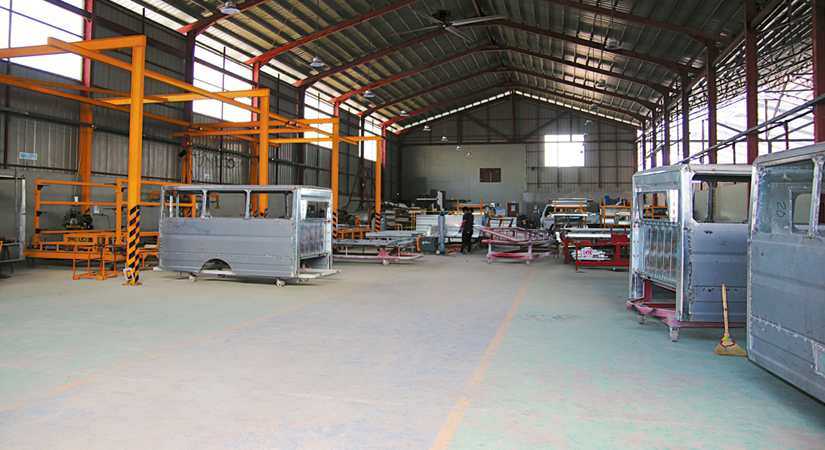
A portion of Autoitalia’s assembly plant in Cabuyao, Laguna

Autoitalia to assemble Piaggio Ape locally

LAST FRIDAY, a ceremonial signing of a technical licensing agreement to assemble CKD (complete knocked-down) kits happened at the Manila Golf and Country Club between Autoitalia Philippines Enterprises, Inc. and Piaggio India.

The deal “aims to change the light commercial vehicle landscape in the Philippines by providing an innovative platform to all transport, mobile businesses and delivery needs,” said Autoitalia in a release.

The contract paves the way for Piaggio’s three-wheeled vehicles to be registered to the Board of Investments (BoI) under Executive Order (EO 156) or the Motor Vehicle Development Program (MVDP) to assemble, manufacture and distribute the same to the Philippine territory. These will be in a (CKD) state of importation from Piaggio Vehicle Private Limited (PVPL), Inc. in India and subsequently provide Autoitalia the opportunity to export the products to ASEAN countries like Laos and Cambodia.

The signing of technical licensing agreement gives Autoitalia the privilege to do both domestic and export sales, and open ownership to Piaggio for infusion of capital. The joint venture and Autoitalia will remain domestic oriented.

Autoitalia will be licensed to assemble and distribute Ape vehicles in the ASEAN and other territories agreed upon.

Regional value content (RVC) is 40%, meaning that this percentage of CKD components should come locally or be sourced from the ASEAN region. This would allow exports to ASEAN territories to use the duty-free ASEAN rate. This would mean that Piaggio would have to do sourcing and manufacturing and assembly operations including painting and welding of major components of the vehicle here.

Present during the event were the top executives from Piaggio India, Autoitalia and BoI in the Philippines: Autohub President and CEO Willy Tee Ten, Senior Vice-President and Group General Manager Miguelito Jose, PVPL Vice-President for Export Sudhanshu Agrawal, Piaggio Group Country Manager for Export Sales Sunil Singh, DTI Undersecretary and Chief of Staff Rowel Barba, BoI Governor Angelica Cayas, Executive Director of Industry Development Services Ma. Corazon Dischosa, Director for Manufacturing Industries Service Evarise Cagatan, Industry Development Group of Manufacturing Industries Service Lourdes Chan, and Chief Investments Specialist of Manufacturing Industries Service Melania Dingayan.

Also present were members of SBH Virgo Corp.: owner of the facility to rent for the assembly plant Richard “Dennis” Hain, SBH Virgo incorporator Dondon Hain, SBH Virgo Sales Executive Bong Baetiong, and SBH Plant Specialist and Product Development Associate Joven Tabarangao.

Currently, Autoitalia has dealers located in Tagaytay, Cavite, Pampanga, Dumaguete, Cebu, Bohol, Davao, Cagayan de Oro, and Zamboanga — with plans to open in more locations nationwide.

Style (03/20/20)

2 glasses for the price of 1

Vision Express’ Buy One, Get One deal allows clients to take home two pairs of eyewear for the price of one. Vision Express also provides the most advanced and the most comprehensive 7-Step Eye Exam administered by its in-store eye experts. Clients may choose from a list of international brands for both prescription eyewear and sunglasses. For details, check out visionexpress.ph, and follow @VisionExpressPH on Facebook and Instagram.

Coach’s Ombré Metal shades, available at Vision Express

Denim at M&S

Discover Britain’s favorite denim at Marks & Spencer, with improved fits introduced for a collection of super soft, figure-flattering denim, designed in a choice of authentic washes and fits. The most popular fits from the M&S Denim Collection: Skinny, Slim, and Straight have been given three different female names: Ivy, Sienna, and Lily. These three fits have been crafted with plenty of stretch and designed in the softest denim to flatter the figure and ensure the perfect fit around the waist. The Ivy is a skinny fit, with a comfortable stretch waistband; the Sienna is a versatile straight fit in a new authentic wash; and, the Lily is a leg-lengthening slim fit that creates a flattering silhouette. The Straight jeans are available in the Shangri-La, Glorietta, Greenbelt, Trinoma, MOA, Rockwell, Cebu and ATC branches; the Skinny jeans are available at the Shangri-La, Glorietta, Greenbelt 5, Trinoma, Rockwell, Malate, Megamall, Cebu, ATC, The Block, Abreeza, Eastwood and Marquee branches; and the Slim are available in Shangri-La, Glorietta, Greenbelt, Trinoma, MOA, Rockwell, Megamall. Cebu, ATC, The Block branches.

Shares to extend decline on coronavirus impact

By Denise A. Valdez
Reporter

LOCAL SHARES are seen to keep dropping this week as the impact of the coronavirus disease 2019 (COVID-19) outbreak continues to haunt investors.

Following a decline to the 6,900 level on Wednesday, the Philippine Stock Exchange index (PSEi) fell further to close 6,787.91 on Friday, down 179.93 points or 2.58% from the previous session. This translates to an 8% drop on a weekly basis.

Last week’s trading saw the market’s worst weekly loss since 2011, AAA Southeast Equities, Inc. Research Head Christopher John Mangun in a market note.

“We could say that investors have capitulated and are not taking any chances despite prices already at multi-year lows prior to the selloff,” he said. “Even retail investors picked up on the unusual selling pressure and decided to take cash off the table.”

Online brokerage 2TradeAsia.com also pointed out the massive volatility in the market last week, having a range variance of 482 points (6,788-7,270) from 180 points in the week prior (7,292-7,472).

Value turnover grew 28% to P7.8 billion on average, and net foreign selling swelled to P2.36 billion from P249 million a week ago.

“Fund managers could only anchor on medical experts to come up with ways in containing coronavirus’ spread… There is no telling when such epidemic would come to a halt, including its overall impact on global commerce and trade,” 2TradeAsia.com said.

Despite this, the brokerage believes some investors remain watchful of opportunities to do bargain hunting. “With emotions running high, it is common to find some participants go risk-averse. However, seasoned investors who are more able to discern a different angle along this page are eager for an expected bounce and are just waiting to position on this stampede,” it said.

Philstocks Financial, Inc. Senior Research Analyst Japhet Louis O. Tantiangco thinks the same way, noting the PSEi is already at oversold levels. “[T]his could compel a few episodes of bargain hunting backed by 2019 corporate earnings,” he said in a text message.

But AAA Southeast Equities’ Mr. Mangun is more worried. He said the general sentiment has now worsened from fear to panic, and this is pushing investors to let go of profits to return to cash.

“Bears are completely in control of this market and the only question is how low it can go… We may see the market lose another 1,000 points or more if we ever see an outbreak on our shores,” he said.

Mr. Tantiangco said aside from news of COVID-19 developments, the drivers of the market this week will be the continued release of 2019 corporate earnings, the manufacturing purchasing managers’ index (PMI) data, and the February 2020 inflation data. He expects the PSEi to trade within the 6,600 to 6,800 level.

For 2TradeAsia.com, immediate support is 6,500 to 6,700 and resistance is at 6,850 6,950.

ADVERTISEMENT
ADVERTISEMENT