Home Blog Page 97

BSP bills’ average yield edges up despite oversubscription

BW FILE PHOTO

THE Bangko Sentral ng Pilipinas’ (BSP) one-month securities fetched a higher average rate on Friday despite strong demand as it made a partial award to cap the rise in accepted yields.

The 28-day BSP bills attracted bids amounting to P101.405 billion, above the P90 billion auctioned off and the P67.024 billion in tenders for the same offer volume a week prior. However, the central bank awarded only P81.405 billion in papers.

Accepted yields were from 4.968% to 5.045%, narrower than the 4.95% to 5.05% band seen in the previous auction. With this, the weighted average accepted rate of the 28-day papers inched up by just 0.66 basis point to 5.0106% from 5.0040%.

The BSP did not offer the 56-day tenor for the fifth consecutive week. It last auctioned off both the 28-day and 56-day BSP bills on Oct. 24.

The central bank uses the BSP securities and its term deposit facility to mop up excess liquidity in the financial system and to better guide short-term market rates towards its policy rate.

The BSP bills also contribute to improved price discovery for debt instruments while supporting monetary policy transmission, the regulator has said.

The central bank started auctioning off short-term securities weekly in 2020, initially offering only a 28-day tenor and adding the 56-day bill in 2023.

In August, BSP Governor Eli M. Remolona, Jr. said they are gradually shifting away from the issuance of short-term papers to manage liquidity as they want to boost activity in the money market.

Data from the central bank showed that around 50% of its market operations are done through its short-term securities. — K.K. Chan

Style (12/01/25)


Flying Tiger presents European Christmas

DANISH brand Flying Tiger Copenhagen introduces its Designed With Love in Denmark collection to the Philippines, a new range created under the vision of the brand’s Head of Product Design, Lovorika Banovic. The range celebrates the charm of Scandinavian simplicity, functionality, and craftsmanship. Flying Tiger’s Christmas 2025 Collection features a festive mix of drinkware, décor, gifting essentials, kitchen items, and kids’ crafts. The drinkware line-up offers a range of playful and cozy holiday mugs, with designs inspired by Santa, Christmas trees, penguins, and classic “ugly sweater” patterns. The collection also includes creative options such as a DIY mug set that allows customers to paint and bake their own personalized design. Holiday decorators can choose from themed string lights, classic ornaments, and whimsical glass baubles in shapes such as gingerbread houses, candy canes, and even a festive sausage dog. Complementing these pieces are paper garlands, evergreen-style wreaths with red accents, and a cheerful LED Santa with a light-up Christmas tree. The kitchen and hosting range includes festive ceramic plates, embossed drinking glasses, and a variety of holiday-ready baking essentials, from tree-shaped tins and silicone molds to a complete Christmas baking kit with cutters and a rolling pin. Practical yet decorative items like Santa snack boxes, cookie jars, and gold-topped spoons add an extra seasonal touch. Highlights for soft decor and accessories include plush cushions and stockings in gingerbread and teddy-inspired designs, along with a multi-colored tote bag made from recycled cotton. Sustainable gifting options feature reusable cotton drawstring bags, embossed holiday gift bags, and a variety of recycled cotton ribbons. Wrapping papers come in festive motifs such as string lights, Christmas trees, and holiday stars, offering stylish and eco-friendly ways to present holiday gifts. The kids’ section includes DIY ornament sets, an interactive felt Christmas tree, and build-your-own baubles with wooden inserts. Fun stocking stuffers such as novelty pens, penguin erasers, themed pencils, plush notebooks, and snow globe-topped pens bring a twist to holiday gifting. In the Philippines, Flying Tiger Copenhagen is exclusively distributed by Stores Specialists, Inc., and is located at Glorietta 3, Alabang Town Center, Ayala Malls Manila Bay, Ayala Malls Feliz, Ayala Malls Vermosa, Ayala Malls Central Bloc Cebu, Ayala Malls Harbor Point, Ayala Malls Capitol Central, Ayala Malls Centrio, TriNoma, UP Town Center, SM Mall of Asia, SM Bicutan, SM Megamall, SM Manila, SM North EDSA, SM Sta. Mesa, SM Dasmariñas, SM Bacoor, SM Seaside Cebu, SM La Union, SM Davao, SM Laoag, Evia Lifestyle Center, Eastwood City Mall, Lucky Chinatown, Bonifacio High Street, Robinsons Galleria, Gateway Mall 2, Festival Mall, Century City Mall, Marquee Mall, Estancia Mall, Robinsons Manila, Limketkai Mall, and Vista Mall Sta. Rosa.


A gift of beauty from Rustan’s

LIGHT UP someone’s season with the gift of glow with products from Rustan Marketing Corporation. Start with Artdeco’s No Color Setting Powder that refines and perfects with its light-reflecting pigments. For hair concerns, the BaByliss Travel Pro Hair Dryer delivers salon-quality results in a portable size. Complete any hair routine with the Denman Brush Collection, featuring tools for every step: the D6 Shampoo Brush for cleansing, D90L Tangle Tamer Ultra for detangling, D3 Classic Styling Brush for that perfect blowout, and the D81M Grooming Brush for the finishing touch. For the head-to-toe radiance, Nuxe Huile Prodigieuse Or offers a golden glow that hydrates and illuminates the face, body, and hair with its signature blend of botanical oils and shimmer. Meanwhile, Filorga’s NCEF-Revitalize Serum works by harnessing advanced skincare science to restore firmness, tone, and luminosity. Top it all off with Givenchy Beauty’s Rose Perfecto Shine Serum Lipstick, a hybrid of makeup and skincare that leaves lips glossy, hydrated, and plump. For a final festive flourish, OPI’s Holiday 2025 Collection turns nails into a candy-coated dream, from peppermint reds to gingerbread browns. For fragrance, check out Mercedes-Benz Sea Eau de Parfum, Lacoste L.12.12 Silver Duo featuring Silver Grey (for him), and Silver Rose (for her). Other options include Kenzo L’Eau Pure Eau de Parfum with notes of mandarin, white lavender, and musk. Maison Margiela Replica Never-ending Summer Eau de Toilette has notes of bright citrus and a hint of sea breeze. Finally, try Van Cleef & Arpels Moonlight Patchouli Eau de Parfum, which blends patchouli, suede, and rose. For more information, visit www.rustanmarketingcorp.com.ph.


Gift local through Shopee

SHOPEE’S 12.12 sale has proudly Pinoy finds crafted by local entrepreneurs. From handcrafted accessories to artisanal treats, these items add a personal touch while supporting Filipino talent. Bring comfort and style with handwoven baskets, rattan organizers, and artisanal home pieces from Ilokana Handicrafts. Maybe they’d like the gift of natural, eco-friendly skincare sets from Human Nature, which include brightening face washes to soothing lotions. Artisanal tablea or single-origin coffee beans bring the taste of Philippine cacao and coffee from different regions, also available on the platform. Add a touch of sparkle to your friends’ holiday looks with handcrafted jewelry from Tala by Kyla, which has minimalist gold pieces, constellation necklaces, and themed collections. Friends who care about the planet might appreciate handcrafted vegan leather handbags, wallets, and accessories from Jacinto & Lirio. Wrapping up the eco-conscious gifts, try everyday bags and woven organizers from Remdavies, made from upcycled water hyacinth plants. “Every local product purchased this holiday season helps support a livelihood and uplifts the community behind it,” said Vincent Lee, country head of Shopee Philippines.

ACMobility opens Lucena EV charging station

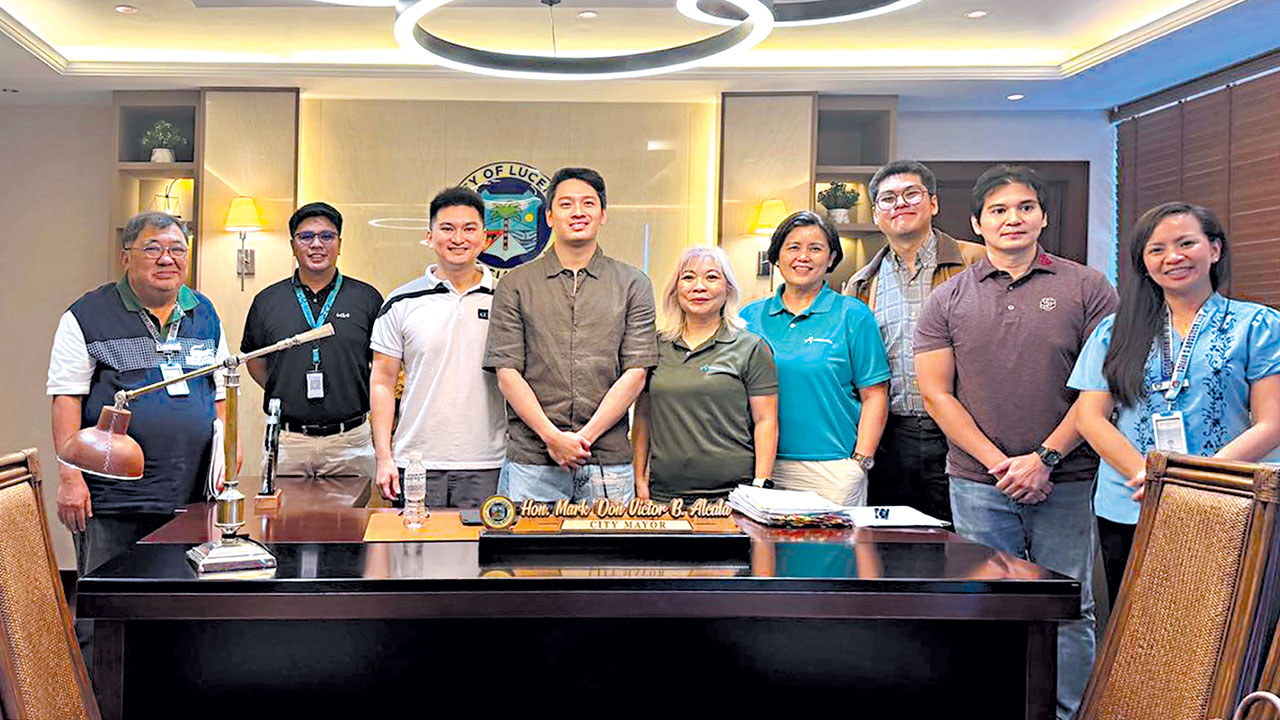
From left are Lucena City Mayor’s Office Operations Supervisor Atty. Euclides Forbes, Kia BGC Sales Consultant Christian Balongo, Almonds Group of Companies Director Giordan Almendras, Lucena City Mayor Mark Alcala, ACMobility Regulatory and Government Affairs Officer Yvonne Castro, ACMobility Account Manager for Mobility Infrastructure Elise Tinio, ACMobility Government Projects Manager Dennis Betito, Almonds Group of Companies Director Grant Almendras, and Lucena City Assessor’s Head Tina Ederon. — PHOTO FROM ACMOBILITY

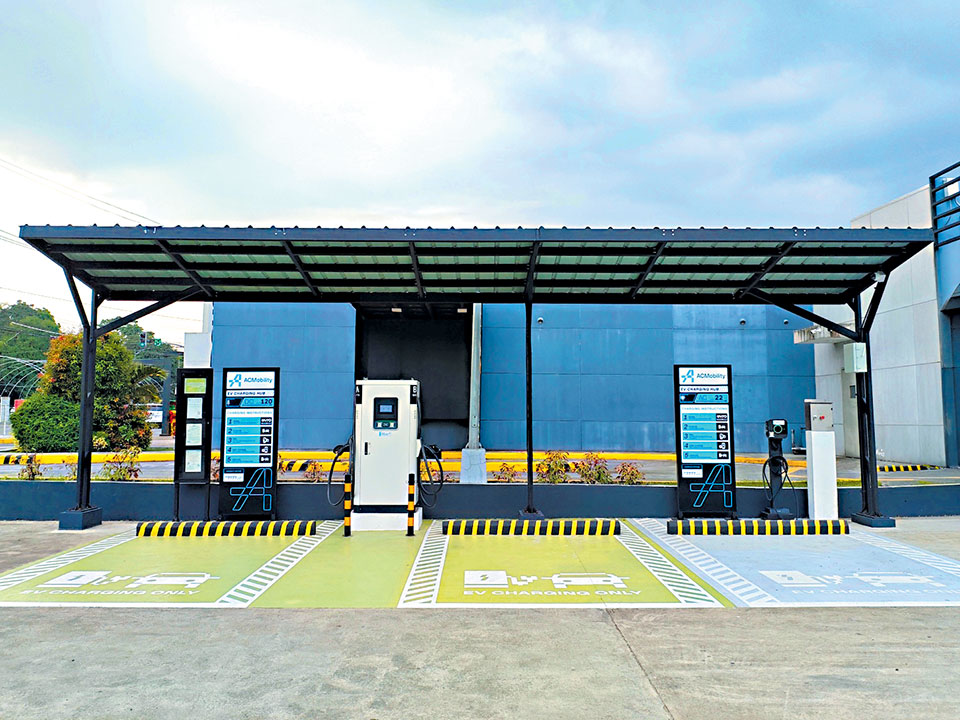
ACMOBILITY, Ayala’s mobility arm and the leading provider of electric vehicle (EV) charging solutions and infrastructure in the Philippines, expanded its nationwide EV charging network with the launch of a new charging station in Lucena City. Located within PTT Lucena and just across the Lucena City government complex, the “charging hub strengthens connectivity between the region, making long distance EV travel to South Luzon and Bicol possible.”

Traditionally, EV travel from Manila to Bicol — a distance of around 450km to 500km — has been challenging due to limited charging options, said ACMobility in a release. “The Lucena station now serves as a critical stopover that supports long-distance journeys along the southern corridor of Luzon.”

As more EV charging hubs continue to open in strategic locations across Luzon, motorists can now travel farther with less range anxiety. The Lucena site, added ACMobility, also “offers a comfortable break for travelers, with nearby restaurants and convenience stops that make it an ideal pitstop for long drives.”

The Lucena station is equipped with modern charging facilities that cater to a range of EV needs. These include a 120-kW DC fast charger with two charge points for rapid charging and a 22-kW AC charger with one charge point for standard use. ACMobility promised that capacity will soon increase within the Lucena City area with the addition of two more AC chargers in the Giant Lucena station along Evo Tourism Rd. to serve more residents, travelers, and future EV users. All chargers are supported by the Evro app, allowing users to locate stations, check availability, charge, and pay with ease.

The site is also said to be built for future e-mobility solutions, capable of supporting not only private EVs but also upcoming electrified public transport such as e-jeepneys, fleets, and LGU-led mobility initiatives.

With its proximity to the new Lucena City Hall, the station also supports Lucena’s efforts to advance cleaner and more efficient mobility for its communities. The site gives the local government convenient access to EV charging infrastructure that can complement future electrified transport programs and other sustainability initiatives.

“We are building up Lucena City as a gateway location for wider interregional mobility in the country,” remarked Lucena City Mayor Mark Alcala. “With this new charging infrastructure built at the heart of Lucena, we are enabling more EV owners to travel confidently from South Luzon all the way to Bicol, helping build a more sustainable and connected transport ecosystem.”

The city government is also mulling the installation of additional EV charging stations on LGU-owned properties across the city — to make EV charging more accessible to residents and visitors alike. By integrating EV infrastructure into city-owned spaces, the local government hopes to encourage more EV adoption and support the transition to a low-carbon mobility ecosystem.

The Lucena charging points form part of ACMobility’s continued expansion of the Philippine EV Spine, the largest EV charging network in the country, connecting major cities, transport hubs, highways, and key destinations nationwide.

“Every new station means more freedom for EV drivers to go farther and explore more. We want Filipinos to enjoy the journey as much as the destination, with the confidence that they can charge reliably along the way, anywhere in the country,” stated ACMobility Head of Mobility Infrastructure Carla Buencamino.

Those interested in establishing an ACMobility charging station or exploring partnership opportunities may visit https://acmobility.ph/.

Samsung Electronics Philippines unveils Top 10 finalists of Solve for Tomorrow 2025

Samsung Electronics Philippines revealed the Top 10 finalists of its global program, Solve for Tomorrow competition — now on its 3rd year in the Philippines, and 15th year globally.

Bringing fresh ideas to real-world challenges, Samsung continues its mission to inspire the Filipino next-gen heroes with the return of Solve for Tomorrow 2025, partnering with the Department of Education (DepEd) to showcase innovative solutions from all government science high school students in grades 8 to 10, addressing challenges faced by their local communities.

The teams that will move forward to compete for the top 3 grand-winning prizes are: FloodSafe Routes AI from Philippine Science High School — Caraga Region Campus; Mangrove Health Monitor (MaHeMo) from Cavite Science Integrated School; SINAG from Bansud NHS — Regional Science High School; SARIMAX from Pasay City Science High School; The S.W.E.A.T Project from Philippine Science High School Main Campus; ShellTer from Philippine Science High School — Central Luzon Campus; VITALBAND from Marikina Science High School; S.A.G.I.P from Cavite Science Integrated School; BANTALAY from Tuguegarao City Science High School; and EGGNovation from Cavite Science Integrated School.

With this year’s focus on developing real-world solutions through the power of technology and artificial intelligence, the program inspires students to uplift their local communities.

Samsung garnered over 300 submissions, involving more than 1,000 students from across the Philippines. Each team, with up to four student members, was tasked to create a proposal following this year’s themes: Environmental Sustainability through Technology, Social Change through Tech and Sport, and Solving Community Problems with Artificial Intelligence (AI).

To evaluate this year’s entries, Samsung convened with a distinguished panel of industry leaders from the fields of technology, innovation, and education. The panel includes Monchito Ibrahim, the executive member of the National Innovation Council; Michelle S. Alarcon, president of Analytics & Artificial Intelligence Association of the Philippines; Alwyn Rosel, executive director of IdeaSpace Foundation and QBO Innovation; and Rachelle Perez, the campus program lead of DEVCON Philippines; together with Dianne Capuz, head of Consumer and Market Insights from Samsung Electronics Philippines.

The 10 finalists will now embark on an idea mentorship with Samsung experts, collaborating with their assigned coach to refine proposals, build proof-of-concepts, and create mock-ups ahead of the final presentation.

This December, they will be presenting their proposals live for a chance to win over P2 million in cash prizes and Samsung devices for their schools, teams, and teacher advisers.

Joining the judging panel for the final round is Julius Arguson, head of Product Engineering and Technical Compliance at Samsung Electronics Philippines.

“We are very happy with the increasing interest in Solve for Tomorrow, as we can see from the growing number of entries and teams joining the competition every year. It shows that more and more students from science high schools nationwide are harnessing their STEM knowledge and skills to help solve the issues their communities face, so we can have a better tomorrow,” shared Minsu Chu, president of Samsung Electronics Philippines.


SparkUp is BusinessWorld’s multimedia brand created to inform, inspire, and empower the Philippine startups; micro, small and medium enterprises (MSMEs); and future business leaders. This section will be published every other Monday. For pitches and releases about startups, e-mail to bmbeltran@bworldonline.com (cc: abconoza@bworldonline.com). Materials sent become BW property.

Triconti, Levanta to build wind farm in Quezon

ECC-ENEWABLES.COM

SINGAPORE-BASED LEVANTA Renewables Pte. Ltd. is joining Filipino-Swiss developer Triconti Windkraft Group to build the P8.7-billion Atimonan Wind Farm in Quezon province.

“Partnering with Triconti brings together their deep local knowledge and Levanta’s proven development track record across Southeast Asia,” Levanta Renewables Chief Executive Officer Pramod Singh said in a statement on Sunday.

The 1,539-hectare project is designed to generate 100 megawatts (MW) of electricity and is targeted to start commercial operations in 2028.

The facility secured a contract under the government’s green energy auction, allowing it to supply power for 20 years.

“By combining Triconti’s local expertise with Levanta’s disciplined development approach, we are well-positioned to deliver reliable clean power while engaging regulators, local governments, and host communities to ensure lasting value,” said Ravi Chandran, head of the Philippine task force for Levanta Renewables.

Levanta Renewables, backed by global investment firm Actis Rubyred (Singapore) Pte. Ltd., operates across the onshore wind and solar markets in the region. The company is also developing a P5-billion solar farm with battery storage in the Visayas that could generate 166 MW.

“Working with Levanta gives us the strength and expertise to deliver efficiently and ensure this wind farm brings lasting benefits to communities while advancing the country’s energy independence,” Triconti Windkraft Group President and Chief Executive Officer Lila M. Rosenberger said.

Triconti Windkraft Group, a Filipino-Swiss joint venture, has a pipeline of over 4 gigawatts of onshore and offshore wind projects nationwide. It is developing five onshore wind farms with up to 350 MW of combined capacity in Bulacan, Aklan, Quezon and Bohol. — Sheldeen Joy Talavera

A corruption scandal is engulfing the Philippines

VARIOUS student organizations converged at the University of the Philippines in Diliman, Quezon City on Nov. 17 to call for accountability in anomalous flood control projects worth billions of pesos. — PHILIPPINE STAR/MIGUEL DE GUZMAN

By Karishma Vaswani

THE PHILIPPINES is one of the most graft-riddled countries in the world, routinely scoring toward the bottom of global corruption indices, alongside the likes of Sierra Leone and Angola. But even by its own troubled standards, the past few months have exposed how deep the rot goes.

The archipelago is in the grip of a scandal involving government ministers, senators, members of Congress and wealthy businesspeople. Two presidents, including the current leader’s father, were toppled by public uprisings over misrule. Will Ferdinand Marcos, Jr. be next?

Earlier this month, hundreds of thousands of Filipinos packed Manila’s Rizal Park, demanding accountability for billions in missing flood-control funds. The movement is gaining strength: there were similar protests in September and more are planned including Sunday’s rally. Marcos was elected in 2022 on the back of high public expectations. But that goodwill is swiftly fading as Filipinos learn that many projects touted during his administration were defective, or worse — never built.

For a country battered by flooding and about 20 typhoons a year, the stakes couldn’t be higher. Now that voters know the extent of the government’s failure to properly manage disaster mitigation efforts, the question is: Can Marcos turn this around?

Protesters are demanding the arrest of those implicated in the graft and the return of stolen public money. Government officials say that over the past decade, losses due to corruption exceed a trillion pesos ($17 billion). Authorities have detained several suspects and more are being pursued. The President has pledged to jail those responsible by Christmas to contain the crisis that’s rapidly engulfing his administration — he’s already lost two ministers over corruption allegations (that they deny).

Each new case that comes to light shows how systemic the mismanagement is. “To have a government that makes dams that will break, or flood dikes that are substandard — or simply not build them — it feels like a deep betrayal when your country is so vulnerable,” Priyanka Kishore, founder and principal economist at Asia Decoded, told me.

Investor confidence has been rattled. The peso has weakened and the scandal has hit the economy, with GDP slowing to 4% in the third quarter, the weakest pace since 2021. Consumer confidence has taken a hit, with household spending declining to a four-year low.

There are other reasons to be concerned. Last week, Alice Guo, a former mayor of Bamban, an agricultural town of about 78,000 people, was convicted and sentenced to life in prison for human trafficking over her role in setting up a scam center. The case has highlighted how dysfunctional governance has become.

Some officials have alleged Guo might be a Chinese national who assumed a Filipino name to qualify for office, while others have suggested she could be a spy. Bamban lies near a Philippine military base that has hosted US forces, adding a sensitive strategic dimension in a country that is a key American ally. Washington and Manila’s regional partners will be following the fallout with growing unease. It’s difficult to rely on a government to fully participate in an alliance to counter China when it’s fighting so many fires at home.

Marcos is trying to reassure citizens that he is in charge, but risks to his credibility are growing. He first mentioned the graft scandal during his annual State of the Nation Address to Congress in July, and promised to put a stop to the corruption. This is a far cry from the image he projected during his 2022 election campaign. I was struck back then by how much he leaned on nostalgia to evoke the myth of perceived prosperity during his father’s authoritarian era. Many young voters, with little memory of martial law, bought into it. But surveys show sentiment is shifting.

He must act quickly if he’s serious about restoring trust. Fast-tracking cases and bringing more culprits to justice would go a long way toward assuaging public rage. The anti-graft body he created must have teeth to go after offenders, otherwise it will remain a vanity project.

There are well-managed measures elsewhere in Asia. In Vietnam’s Mekong Delta, often beset with flooding, local communities are engaged to monitor projects to ensure transparency. Japan, a case study in effective disaster management, has built vast underground flood tunnels beneath Tokyo that are backed by strict audits and oversight.

The Philippines won’t be able to replicate those systems overnight. But building one that citizens can trust is essential. History has shown their patience will run out. This president shouldn’t wait for the past to repeat itself.

BLOOMBERG OPINION

Dairy tycoon bets on Southeast Asia for next leg of growth

A FARM FRESH dairy production facility in Pahang, Malaysia. — BLOOMBERG/IAN TEH

MALAYSIA’S largest dairy producer Farm Fresh Bhd. is stepping up its expansion across Southeast Asia to grab a bigger slice of the region’s more than half a billion consumers.

The company has built a presence in the Philippines and recently seized an opening in Cambodia after border tensions with Thailand disrupted milk supplies and is preparing to open a plant in the country. It is now eyeing opportunities in Indonesia, where it sees room for rapid growth amid President Prabowo Subianto’s $30-billion free lunch plan and ambitious economic targets.

Farm Fresh has applied to set up a 230-hectare (568 acres) farm in Bandung on Indonesia’s island of Java and is on the lookout for potential partnerships to establish local distribution. “The growth can be quite big” in these markets in three to five years, Chief Executive Officer Loi Tuan Ee said in an interview on Nov. 19.

The regional push is central to Mr. Loi’s goal to sustain 10% to 20% annual growth even as revenue is expected to top 1 billion ringgit ($240 million) this financial year. Macquarie Group Ltd. recently raised its earnings estimates for Farm Fresh, citing easing cost pressures and overseas expansion among key drivers.

“Malaysia will still remain an important market for us,” Mr. Loi said. But “five, 10 years down the road, the regional contribution will be far bigger than Malaysia. That’s what we hope to achieve,” he said.

Mr. Loi, who started the company in 2010 with 60 imported cows from Australia, is also actively expanding into new product categories to capture market share. Its widening offerings include chilled milk, UHT milk, ice cream, butter and infant formula.

“I also want to start a plant for cream cheese,” he said. Such  products, developed in Malaysia, can be easily shipped to the other markets, the founder added.

Malaysia currently makes up about 85% of group revenue, which rose 21% year on year to 981 million ringgit for the financial year ended March. Net profit jumped 67% to 106 million ringgit.

Farm Fresh shares have climbed more than 30% this year, boosting the value of Mr. Loi’s roughly 40% stake — held with his siblings — to around $440 million.

Khazanah Nasional Bhd., an early investor in the company, has also reaped gains. The sovereign wealth fund is said to have made close to 900 million ringgit after progressively selling off its 30% stake. Khazanah did not immediately respond to a request for comment.

To be sure, consumer sentiment remains uncertain as the impact of US tariffs ripples through regional economies. Growth in the Philippines, where Farm Fresh has production facilities, has also slowed sharply. Meanwhile, fluctuations in raw material prices may weigh on margins.

Still, Farm Fresh is likely to benefit from local brand momentum in Malaysia as consumers seek less expensive domestic products, Macquarie analyst Amanda Foo wrote in a note at the end of October. A consumer survey “indicates 74% of Malaysians have traded down to cheaper brands in at least one category over the last 12 months. This environment is favorable for Farm Fresh,” she said.

The company is poised to commence operations in its factory in Cambodia in April, and has plans to establish farms in the country in one to two years. These may eventually serve the northern markets of Vietnam and Laos.

Growing a business “is like cycling uphill,” said 62-year-old Mr. Loi. “You cannot stop pedaling.” — Bloomberg

RCBC sees increased credit card usage

RIZAL COMMERCIAL BANKING CORP.

RIZAL COMMERCIAL Banking Corp. (RCBC) saw increased use of credit cards among its clients leading up to the holidays, showing sustained consumer confidence and retail activity.

At end-September, the bank’s issuing billings grew by 32% year on year while its receivables rose by 37%, it said in a statement on Sunday.

RCBC’s active cardholders also jumped by 19% to 1.4 million in the period.

Cardholders have been spending more on travel, dining and online commerce platforms, it said, adding that digital payments adoption continues to drive credit card growth.

It also saw more electronics and gadgets purchases amid several year-end promos and installment options from merchants.

“RCBC Credit Cards continue to appeal to discerning customers who expect more from their cards, whether that means access to exclusive dining privileges, worry-free travel, or instant rewards with every purchase,” RCBC Credit Cards President and Chief Executive Officer Arniel Vincent B. Ong said in a statement.

“In addition, our cardholders have the ability to manage their credit card accounts at their fingertips with the RCBC Pulz app, which provides 24/7, real-time access to payment management features such as on-demand installment purchase conversion (Unli Installment) and the ability to use the card’s limit to pay sellers who do not accept card payments (UnliPay). Our expanding customer base reflects the strong confidence our clients place in the RCBC brand.”

RCBC is part of the first batch of card issuers in the country to offer Google Pay via their Visa and Mastercard debit and credit cards. The service was launched to the public on Nov. 19 and 20, respectively.

The bank’s credit card portfolio accounts for 39% of its total retail loans, positioning it as the main driver of its consumer lending segment.

Mr. Ong earlier said they expect their cards business to continue growing by about 30-40% until next year. — K.K. Chan

Well-known faces to join the royals for Princess Kate’s annual carol service

THE Princess of Wales visiting children’s mental health charity Anna Freud on Nov. 27. — PA VIA REUTERS

ACTORS Kate Winslet, Hannah Waddingham and Chiwetel Ejiofor will be among the stars joining the British royals for the annual Christmas carol service at London’s Westminster Abbey hosted by Kate, the Princess of Wales, her office said on Saturday.

The “Together At Christmas” service, which will be held on Friday and is the fifth such event that Kate has spearheaded, heralds individuals across the country who have given their time to help others, and brings people together to “celebrate love in all its forms,” Kensington Palace said.

Some 1,600 people who have supported people in their communities will join the royals, while the Abbey’s choir will perform carols and there will also be performances by the likes of Ms. Waddingham and singer Katie Melua.

Kate’s husband, heir to the throne Prince William, will be among those who deliver readings.

The event will be broadcast on Britain’s ITV on Christmas Eve, while 15 community carol services supported by the couple’s Royal Foundation charitable arm will also be held across Britain during December.- — Reuters

Black Friday consumers go online, rather than stand in line

BARGAIN-HUNTING Americans clicked their way through Thanksgiving, spending $8.6 billion online so far on Black Friday, as more consumers turned to laptops and phones instead of braving brisk weather to snap up deals over the crucial shopping weekend.

Adobe Analytics, which vets e-commerce transactions online, covering over 1 trillion visits to US retail sites, expects US shoppers will spend between $11.7 billion and $11.9 billion online on Black Friday.

While early online sales figures showed a promising trend for spending, at major retailers — a bulk of Black Friday shopping has happened between 10 a.m. and 2 p.m. ET, according to data from Adobe Analytics, with another surge expected in the evening. Many of those who ventured out said they were on a budget, fearful of overspending at a time when inflation remains above-trend and the labor market is softening.

“I’m being much more careful,” said Grace Curbelo, 67, of New Rochelle, New York, who was at the Woodbury Common outlet center in Central Valley, New York, on Friday morning. “I’m not sure how the economy will turn, and I don’t want to put myself in debt.”

CAUTIOUS CONSUMERS, HIGHER PRICES
Strong Black Friday spending has been driven by deeper-than-expected discounts, Adobe said. Online shopping has diluted Black Friday’s significance, with promotions geared towards the event spread across weeks. Adobe Analytics expects Cyber Monday to drive $14.2 billion in online sales, up 6.3% from last year, making it the biggest online shopping day of the year.

Shoppers are leaning heavily on promotional codes found online through social media influencers to squeeze out extra discounts during Cyber Week, said Vivek Pandya, director of Adobe Digital Insights at Adobe Analytics. The specter of higher prices hovered over the day. US retail sales increased less than expected in September, in part due to elevated prices, and President Donald J. Trump’s tariffs have contributed to this trend, adding roughly 4.9 percentage points to retail prices, according to the nonprofit Tax Foundation.

Software firm Salesforce said its early data showed prices in the United States rising faster than worldwide. The average online selling price for goods was 8% higher than last year, compared with 5% globally, a sign of both the effect of tariffs and spending from affluent households, who have continued to shop while most income groups say their consumer confidence is low.

“This is the only market where we’re seeing such high increases in average selling price. So there absolutely is a component of retailers trying to save margins because of the impact of the tariffs,” said Caila Schwartz, director of consumer insights at Salesforce. With unemployment near a four-year high, shoppers have also become more selective. US consumer confidence sagged to a seven-month low in November, according to economic research group The Conference Board, with fewer households planning to buy motor vehicles, houses and other big-ticket items over the next six months, or to make vacation plans.

The richest 10% of Americans — those earning at least $250,000 annually — accounted for about 48% of all consumer spending in the second quarter of 2025, a steady increase from around 35% of spending in the mid-1990s, according to Moody’s Analytics.

“Higher income consumers are a little more resilient, and that’s why we’re seeing strong growth in categories like furniture and luxury,” said Ms. Schwartz.

Heather Cheatham, 50, of Lynchburg, Virginia, started her Black Friday shopping by sampling scents and hunting for Armani eye tints in LVMH’s Sephora at Crabtree Valley Mall in Raleigh, North Carolina. Ms. Cheatham did not give herself a budget, and she has already purchased gifts for her daughter at apparel company American Eagle Outfitters’ Aerie, stereo equipment for her son and a golf putter for her other son.

QUIET AT SUNUP
Black Friday looked different this year, according to Marshal Cohen, chief retail adviser at Circana, who spent the morning visiting stores and malls across New York and New Jersey. Gone were the early-morning rushes and long lines outside retailers.

Among the retailers Mr. Cohen visited, Target “won the morning,” he said, because it handed out swag bags to the first 100 customers. Walmart gained momentum later in the day as traffic picked up.

About an hour before sunup in freezing temperatures, Quantavius Shorter, 40, a diesel engine mechanic from Atlanta, was one of the first of only a dozen people waiting in line at 5:59 a.m. at the local Walmart in Atlanta’s Gresham Park neighborhood.

Mr. Shorter bought a Roku flat-screen smart TV for $298, a perfect discount for his smaller Christmas budget.

“This is usually $500,” said Mr. Shorter. “I’m here early because I expected it to sell out.” In Europe, the shopping day was marked by strikes at Amazon warehouses in Germany, with separate protests also planned outside Zara stores in Spain. Meanwhile, Starbucks’ workers union also said they were escalating their ongoing indefinite strike to 26 more stores in the US on Black Friday. — Reuters


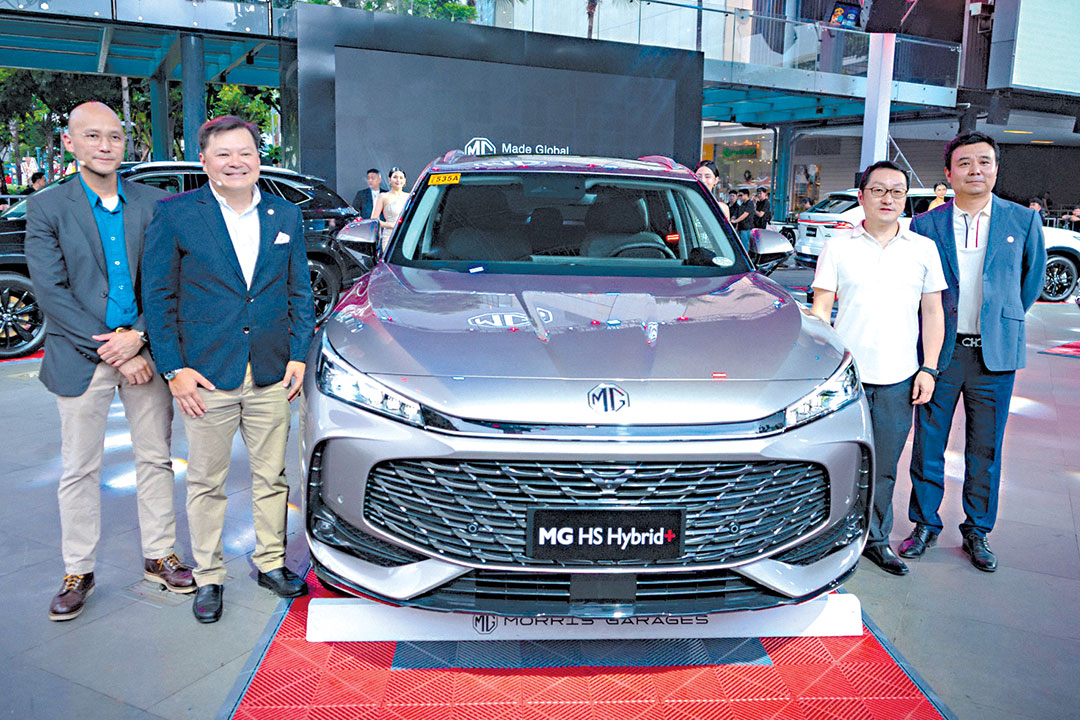
Second-gen, hybrid MG HS boasts long range, five-star safety ratings

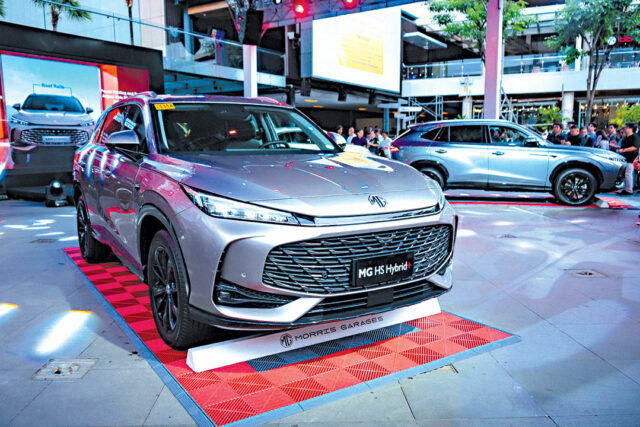
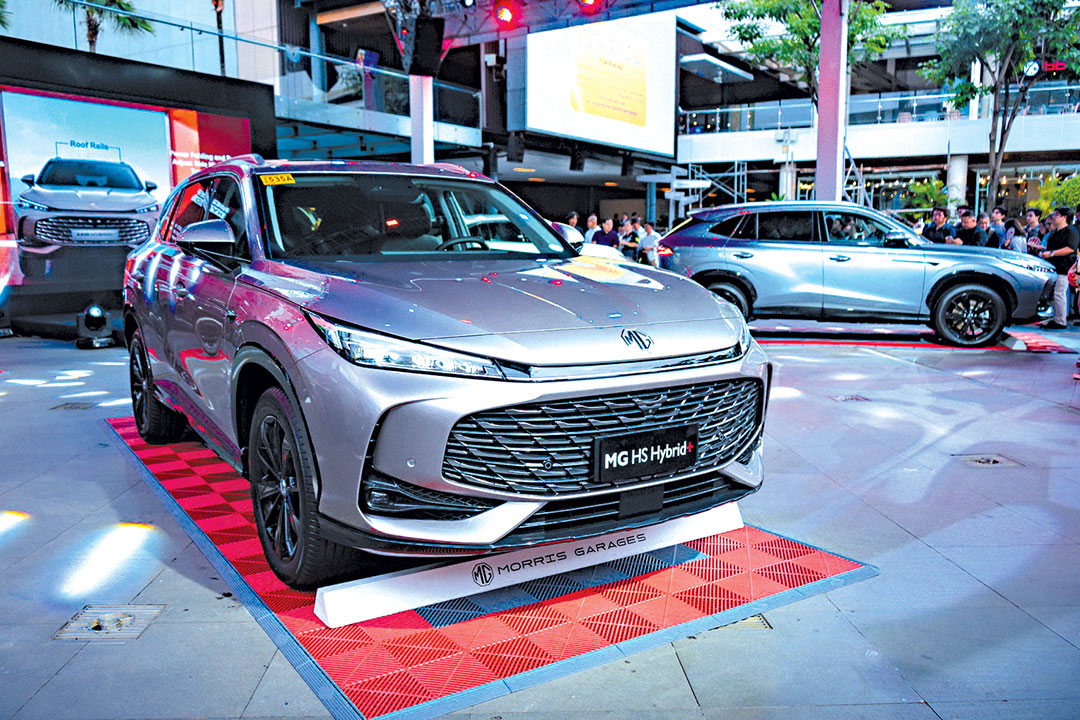
Coming in a single Hybrid+ variant, the MG HS is priced (for now) at P1,388,888. — PHOTO BY KAP MACEDA AGUILA

By Kap Maceda Aguila

IT WOULD BE no exaggeration to say that, as the initial hype over battery electric vehicles (BEVs) is plateauing for a number of reasons, hybrid powertrains are becoming sort of the de facto poster child for electrification. This is, of course, helped along by friendlier government policy, such as zero import duty on hybrids.

Then there’s that niggling concern of range anxiety for BEVs — largely wrought by a public charging infrastructure that honestly leaves much to be desired. If charging points cannot be ubiquitous, then many car buyers will remain on the fence when mulling over a BEV purchase — even with the declared range of newer models on the uptrend.

Last weekend, MG Motor Philippines added to the growing local selection of traditional hybrid options with the unveiling of the MG HS, which comes in a sole Hybrid+ variant. A larger sibling of the highly successful MG ZS, the five-seater first arrived in the Philippines in Q1 of 2022 — back when the Morris Garages brand was still administered locally by The Covenant Car Company, Inc. (TCCCI).

The HS nameplate was first revealed globally in 2018, with the second generation presented last year. Interestingly, it’s a rebadged, redesigned version of the Roewe RX5. If you recall, the MG RX5 also made it to the Philippines. Roewe, of course, is another brand of China-headquartered Shanghai Automotive Industry Corp. (SAIC), along with, yes, MG. In a previous interview with this writer, SAIC Motor Philippines President Felix Jiang had intimated that MG is able to bring in a wider mix of vehicles because of its membership in the SAIC family of brands. For example, the multipurpose vehicle Maxus G50 was reincarnated as the MG G50 Plus.

For sure, the HS will figure heavily in MG’s continued sales push as well as the “greening” of its lineup. Year-to-date MG sales, per the Philippine Automotive Dealership Association’s latest report, stands at 7,578 units as of October — helping it stay in the top 10.

The all-new version of the MG HS comes in with established credentials. Declared MG Motor Philippines Vice-President for Operations Karl Magsuci in his speech after the model’s unveiling at the Bonifacio Global City Amphitheater in Taguig, “It has earned an impressive reputation in Europe, consistently ranking as one of MG’s top-performing and most beloved models.” One of the key points MG Motor Philippines highlights about the new HS is a five-star rating from both the European New Car Assessment Program (Euro NCAP) and Australasian New Car Assessment Program (ANCAP). This nod to its safety is on top of a nomination for European Car of the Year 2025. “In Europe, the HS has consistently been one of MG’s best-selling models, and in the United Kingdom, it has secured a place in the top 10 best-selling cars both last year and again this year to date,” added the executive.

As with its predecessor, the all-new HS Hybrid+ gets a turbocharged 1.5-liter — this time paired with a high-output electric motor hooked up to a 1.83-kWh battery. Compared to the outgoing HS, the Hybrid+ boasts more power (224ps vs. 169ps) and torque (340Nm vs. 250Nm). The result, claimed MG, is “smooth acceleration and effortless performance across any road.” Reported Mr. Magsuci, “The fuel consumption test that we have conducted under the supervision of the Automobile Association of the Philippines (AAP) resulted in a fuel consumption of 21.55kpl, offering a total driving range of over 1,000 kilometers.” This is expected to be yet another strong selling point of the HS.

The powertrain features an “intelligent two-speed Dedicated Hybrid Transmission” which “seamlessly” shifts the vehicle from all-electric, hybrid, and internal combustion engine power. Meanwhile, eight “intelligently managed propulsion modes” are said to optimize performance and fuel efficiency.

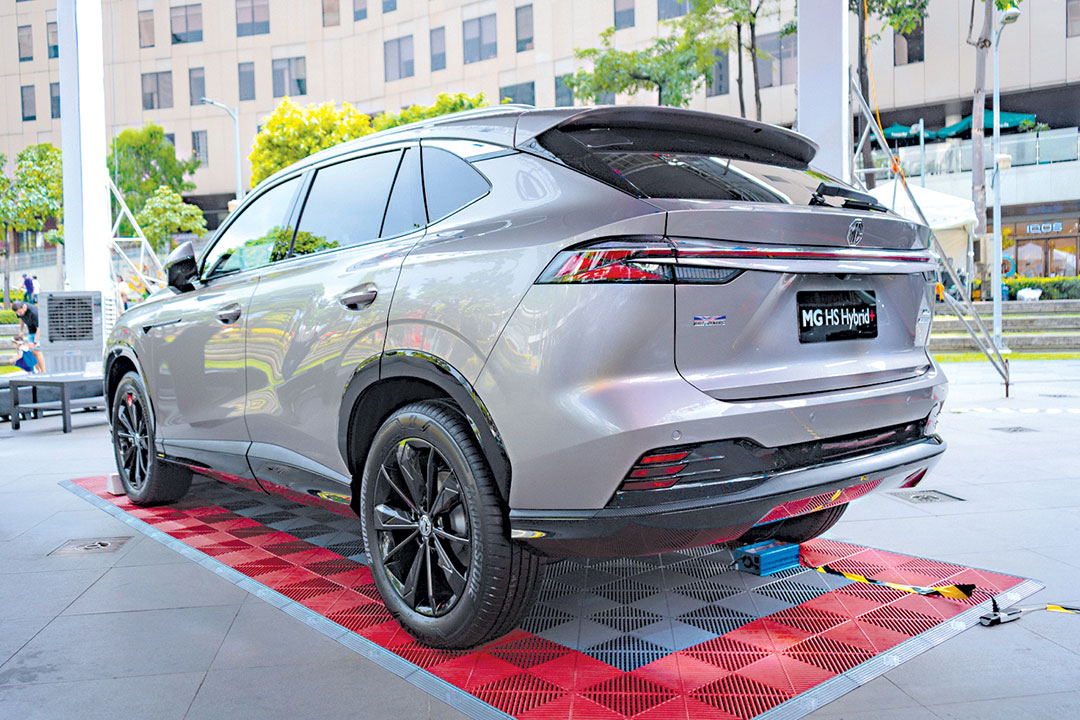
Exterior highlights are Digital Matrix LED lighting, a functional roof rail with 75-kg capacity, and 19-inch black-painted alloy wheels. In the cabin, occupants are greeted by a dual 12.3-inch digital instrument panel and touchscreen infotainment system with Apple CarPlay and Android Auto connectivity. Other accoutrements include wireless charging, dual-zone automatic climate control with an air purifier, and leather seating with six-way electric adjustment, four-way lumbar support, and multi-position memory for the driver’s seat. There’s also a panoramic sunroof, hands-free power tailgate, and reverse auto-tilting mirrors.

Advanced driver assistance system (ADAS) features tucked into the brand’s MG Pilot suite include adaptive cruise control, traffic jam assist, autonomous emergency braking, forward collision warning, lane keep assist, blind spot detection, rear cross traffic alert and braking, and a 360-degree camera. In addition, the HS gets a range of active and passive safety measures: driver and front passenger, side, and curtain air bags; autobrake hold; anti-lock brakes; electronic brakeforce distribution; cornering brake control; traction control; vehicle dynamics control; and active rollover protection.

“The MG HS Hybrid+ is more than just a new model — it is our statement of intent for the future of mobility in the Philippines,” said MG Motor Philippines President Felix Jiang in a statement. “It brings together modern design, world-class safety, and next-generation hybrid technology in one premium package.”

The MG HS Hybrid+ is available in Black Pearl, Lunar Gray, Pearl White, Champagne Silver, and Diamond Red at an introductory price of P1,388,888. For more information or to book a test drive, visit www.mgmotor.com.ph.

Globe uses AI for smarter, more efficient network

PHILSTAR FILE PHOTO

GLOBE TELECOM, INC. is using artificial intelligence (AI) to improve energy efficiency across its network and facilities while cutting operating costs, the Ayala-led telecommunication company said.

“Tech allows us to respond in real time,” Joel R. Agustin, Globe head of service planning and engineering, said in a statement on Sunday. “It’s a smarter way to manage energy because the system knows when to ramp up or slow down depending on demand.”

The company said AI and other machine learning tools have helped reduce electricity use across cell sites and buildings by automatically adjusting power consumption where needed.

Globe said these AI-driven adjustments resulted in 11.3 million kilowatt-hours of electricity savings in 2024, translating to about P125 million in savings.

Last week, Globe announced a partnership with AC Mobility Holdings, Inc., the Ayala Group’s mobility arm, to deploy 20 hybrid electric vehicles.

The step forms part of Globe’s broader sustainability effort as it moves toward its net-zero goal. The company has started shifting more than 3,000 cell sites and other low-energy facilities to renewable sources.

Globe said the gradual switch to renewables is expected to cut greenhouse gas emissions by 5.5 million kilos per year and supply about 80 million kilowatt-hours of clean power annually.

Globe’s attributable net income slipped 12.79% in the third quarter to P5.25 billion from a year earlier, while revenue dipped 1.68% to P44.36 billion.

For the nine months ending September, net income fell 14.04% to P17.69 billion, while gross revenues eased to P131.59 billion from P134.74 billion. — Ashley Erika O. Jose