Home Blog Page 9669

Stocks decline as COVID-19 cases rise

LOCAL SHARES closed lower on Wednesday ahead of the two-day break due to Holy Week amid rising coronavirus disease 2019 (COVID-19) infections in the country.

The 30-member Philippine Stock Exchange index (PSEi) declined 2.46% or 139.18 points to end at 5,510.83, while the broader all shares index fell 1.78% or 60.61 points to 3,332.44.

PNB Securities, Inc. President Manuel Antonio G. Lisbona said in a text message that stocks decline amid higher COVID-19 cases in the country.

“The past two days saw some investors re-enter the market on the back of a perceived slowdown in new cases only to have their hopes dashed once again by the most recent reports,” Mr. Lisbona said.

As of Wednesday afternoon, the Department of Health reported 3,870 confirmed COVID-19 cases, while deaths stood at 182.

Philstocks Financial, Inc. Research Associate Claire T. Alviar said even as the local bourse ended in the red, bargain hunters are expected to return next week. 

“PSEi is above (the) 5,500 support line and today’s value turnover is approximately 9% lower than the year-to-date average of P6.5 billion,” Ms. Alviar said in a text message on Wednesday.

“The market broke below the 5,600 level as investors chose to cash in their positions ahead of the Holy Week holidays, as net foreign selling activity ballooned to P1.68 billion,” Timson Securities, Inc. Head of Online Trading and Trader Darren Blaine T. Pangan said in a text message.

Net foreign selling totalled P1.68 billion on Wednesday, more than the P357.15 million in net outflows seen on Tuesday.

All sectoral indices declined save for the industrials counter which registered an increase of 0.33% or 23.77 points to 7,073.16.

Property fell 4.61% or 137.26 points to 2,838.40; financials went down 3.42% or 41.08 points to 1,157.37; holding firms shrank 1.58% or 88.63 points to 5,510.79; services dropped 1.36% or 16.86 points to 1,222.24; and mining and oil gave up 0.85% or 37.11 points to 4,320.96.

Decliners beat advancers, 102 to 88, while 37 names closed unchanged.

Some 490.73 million shares worth P5.95 billion traded hands on Wednesday, lower than the P6.36-billion value turnover the previous day.

“We may have to see if the 5,500 support level holds next week. If not, the next support may be pegged at the 5,120 area,” Mr. Pangan said. — R.M.D. Ochave

AC Health recommends ‘selective approach’ for COVID-19 rapid testing

AYALA Corp.’s healthcare unit AC Health recommends a “selective testing approach” in using rapid test kits for the detection of the coronavirus disease 2019 (COVID-19), with priority to be given to those who have recovered.

AC Health, in a report released Wednesday, said available scientific literature and guidelines on the use of Rapid Tests for screening showed that “overall, it is used for surveillance and monitoring but not for diagnosis.”

“Rapid Testing has generated much interest — we recommend a selective testing approach, contingent on ensuring access to confirmatory tests,” it said.

The firm said confirmed COVID-19 patients or persons under investigation (PUI) who are in recovery should be prioritized in rapid testing to help in deciding when they are fit to return to work.

Frontliners who are possibly asymptomatic should also be considered for rapid testing as long as there is a capacity to do confirmatory tests.

The Food and Drug Administration (FDA) approved five rapid test kits that can be used by health professionals, but the results are subject to confirmatory tests.

The results of rapid test kits still have to be verified as these only measure antibodies in a patient’s blood sample and may yield a negative result.

“Antibody testing is recommended for surveillance and monitoring — there is no evidence to support use in diagnosis or mass testing,” the healthcare unit said.

The Department of Health is using reverse transcriptase polymerase chain reaction technique (RT-PCR)-based test kits wherein genetic material is extracted from throat and nose swabs to diagnose a patient for the COVID-19 virus. — Vann Marlo M. Villegas

DoLE relaxes wage payment proof requirement for gov’t subsidy program

EMPLOYERS will no longer be required to submit their company payroll in order to avail of the government’s cash assistance for workers affected by the disruption from the coronavirus disease 2019 (COVID-19) pandemic.

In a briefing Wednesday, Cabinet Secretary Karlo Alexei B. Nograles said Labor Secretary Silvestre H. Bello III has announced that “any proof of payment of salaries and wages will be sufficient compliance with the requirement.”

“Secretary Bello also announced that the DoLE (Department of Labor and Employment) is no longer strictly requiring the submission of the company payroll in the establishment report,” said Mr. Nograles, spokesperson of the Inter-Agency Task Force for the Management of Emerging Infectious Diseases (IATF-EID).

DoLE’s cash subsidy program for workers affected by the lockdown in Luzon, the COVID-19 Adjustment Measures Program (CAMP), must be applied for by employers.

It covers a one-time cash assistance of P5,000 per employee.

The IATF-EID recently approved an additional P5 billion on top of the P2 billion allocated for worker assistance programs amid the COVID-19 pandemic.

Based on DoLE’s data as of April 4, a total of 102,895 formal sector workers have received their subsidy under CAMP. — Gillian M. Cortez

Political prisoners seek temporary release amid COVID-19 threat

MORE THAN 20 political prisoners who are considered vulnerable and at high risk of being infected with the coronavirus disease 2019 (COVID-19) asked the Supreme Court to allow their temporary release during the quarantine period based on humanitarian grounds.

The 23 petitioners are elderly, sick, or pregnant prisoners detained in places where COVID-19 precautions such as physical distancing cannot be observed.

In their 62-page petition, they asked the high court to release them, including those who are similarly situated but are not among the petitioners, for “human consideration” while the entire Luzon is on lockdown to prevent the spread of COVID-19.

They also asked the court to direct their release on bail, as alternative, and direct the creation of a Prisoner Release Committee to study and implement the release of all prisoners who are at high risk of contracting the disease.

“Petitioners are praying for a fair chance at surviving the devastating impact of the COVID-19 outbreak in spaces that are not blighted with overcrowding and lack of access to hygiene measures and medical care,” the petition read.

The petitioners noted that the court has previously ruled several times to allow bail on humanitarian grounds regardless of the nature of the offense.

“While they are charged with common crimes, the arrest, detention and charges against the petitioners are due to their political beliefs. They are not hardened criminals. They will not evade trial nor flee from the charges,” they said.

They also noted that while humanitarian considerations are not among the grounds for the grant of bail, the court “must exercise equity jurisdiction in the case at bar.” — Vann Marlo M. Villegas

Nationwide Round-up

Duterte staying in Manila during Holy Week holiday

PRESIDENT RODRIGO R. Duterte is staying in Malacañang and attending to duties during the coming long weekend holiday in observance of the Catholic Holy Week days, according to his spokesperson. “He will continue to function and perform his duties as President. He will continue to monitor and then give directives,” Presidential Spokesman Salvador S. Panelo said in a briefing Wednesday, belying reports that Mr. Duterte is flying back to his hometown Davao City. Mr. Panelo said the President is staying in the capital to focus on the government’s measures against the coronavirus disease 2019. — Gillian M. Cortez

TESDA institutions busy making face masks, disinfectant

TECHNICAL Education and Skills Development Authority (TESDA) institutions have been producing personal protective equipment (PPEs) and disinfectant to aid frontliners against the coronavirus disease 2019 (COVID-19) threat, the agency’s director general said. “What we did immediately is that I issued a directive sa lahat ng ating (to all) TESDA technology institutions saka mga (and) provincial training centers… to produce itong mga (these) face masks (and) other personal protective equipment (and) disinfectants,” Secretary Isidro S. Lapeña told radio DZBB on Wednesday. As of April 4, Mr. Lapeña said the TESDA centers have made 90,000 washable face masks, which were distributed throughout the country. He said they cannot accept new trainees at the moment given the suspension of classes, but those who are already employed will continue to produce PPEs. — Genshen L. Espedido

DTI assures stable supply of goods in extended quarantine

THE DEPARTMENT of Trade and Industry (DTI) assured there will be a stable supply of goods amid the extension of the enhanced community quarantine (ECQ) in Luzon, which includes Metro Manila. “We keep on monitoring mga manufacturers and many of them actually are operating close to 80-90%,” DTI Secretary Ramon M. Lopez told DZMM radio on Wednesday. He said production has been quicker, noting improvements in employees ability to report for work and in cargo movement. The luzon-wide lockdown, intended to mitigate the spread of the coronavirus disease 2019 (COVID-19), was initially set to end on April 12 but has been extended to April 30. At the start of the ECQ, business groups said movement of goods was hampered, including a supermarket association that said their supply had been delayed in checkpoints and ports. — Jenina P. Ibañez

Filing of administrative cases suspended during ECQ

THE FILING of administrative cases is suspended for the duration of the enhanced community quarantine (ECQ), according to an order released by the Palace on Wednesday. Administrative Order No. 29, signed by President Rodrigo R. Duterte on April 8, prescribes guidelines on the interruption periods for filing of administrative cases, appeals, petitions for review and other pleadings, while the entire Luzon island is on lockdown. “Since the implementation of the ECQ, the mobility of people over Luzon and even in certain jurisdictions in Visayas and Mindanao has been heavily restricted, and lawyers, law firms, and postal services have not been included in the list of exempted individuals, entities, and services from the ECQ,” the AO said. The suspension is retroactive, with its effectivity beginning March 17 when the Luzon ECQ started. The reglementary period for commencement of appeals, petitions for review, and administrative disciplinary cases, pleadings, appearances, motions, and other papers will be deemed interrupted for the whole period of the ECQ, based on the order. Same will go for judgments, resolutions, and orders that will fall within the ECQ period. Proceedings scheduled during the ECQ will be rescheduled after the lockdown is lifted. — Gillian M. Cortez

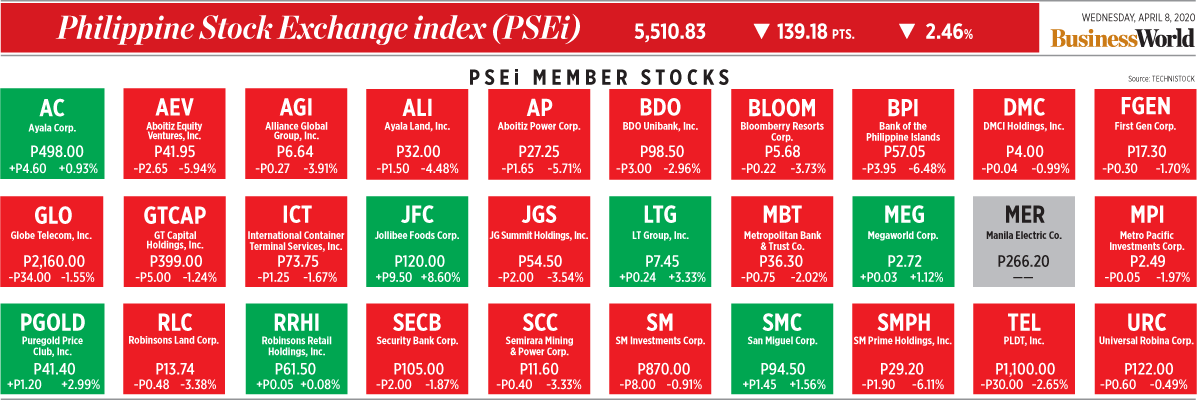
How PSEi member stocks performed — April 8, 2020

Here’s a quick glance at how PSEi stocks fared on Thursday, April 8, 2020.


BSP trims smaller lenders’ liquidity ratio requirement

THE CENTRAL BANK has trimmed the minimum liquidity ratio (MLR) requirement of smaller lenders until the year’s end in a move to boost their stash of money amid the impact of the coronavirus disease 2019 (COVID-19) and the enhanced community quarantine (ECQ) on the industry.

“The BSP recognizes that the COVID-19 outbreak and community quarantine implemented to combat the spread of the disease has elevated the liquidity risk exposures of banks arising primarily from higher demand for funds by depositors, borrowers or both,” Bangko Sentral ng Pilipinas (BSP) Governor Benjamin E. Diokno said in a memorandum dated April 7.

The MLR requirement of standalone thrift, rural and cooperative banks now stands at 16% from the 20% prescribed by the Manual of Regulations for Banks effective until the end of the year, unless revoked by the BSP.

“Owing to the BSP’s adoption of liquidity standards, banks are largely seen to have entered this stress situation in a strong liquidity position, with buffers ready to absorb the recent and coming liquidity shocks,” Mr. Diokno said.

The central bank chief said lenders that will see their MLR drop below 16% due to a shortfall in the stock of eligible liquid assets for three banking days within any two-week rolling calendar period should notify the central bank immediately.

The 20% MLR requirement of standalone smaller lenders has been in place since 2019. The MLR is computed as the percentage of the lenders’ eligible stock of liquid assets versus its total qualifying liabilities.

On the other hand, thrift, rural and cooperative banks part of a bigger firm have been subjected to a minimum liquidity coverage ratio of 100% since 2019.

For Rizal Commercial Banking Corp. Chief Economist Michael L. Ricafort, the BSP’s move to reduce the MLR of smaller standalone banks will boost liquidity for rural areas, which most of these lenders service.

“This is a de facto infusion of more peso funds inuring to the benefit of the depositors and borrowers of these banks in terms of greater amount of cash infused into the economy as well especially in rural areas…to better deal with any economic fallout largely brought about by the unprecedented COVID-19 pandemic,” Mr. Ricafort said in an e-mail.

The BSP earlier reduced the reserve requirement ratio (RRR) of big banks by 200 basis points (bps) to 12% effective last Friday to boost liquidity in the market amid the lockdown.

The central bank said it will look at lowering the RRRs of smaller lenders as the Monetary Board has authorized Mr. Diokno to cut reserve ratios by a total of 400 bps for 2020.

The reserve ratios of thrift and rural banks are at four percent and three percent, respectively.

Amid the extension of the Luzon lockdown to April 30, BSP Deputy Governor Chuchi G. Fonacier said the banking industry continues to be stable, with liquidity in the financial system still sufficient.

“The banks were able to build up buffers even before the ECQ. So, the industry would be able to handle the extended lockdown,” Ms. Fonacier said in a text message. — L.W.T. Noble

IC relaxes identification requirements for insurers’ clients

THE INSURANCE Commission (IC) has relaxed the requirements for customer identification documents until June 30 amid the lockdown in various places due to the coronavirus disease 2019 (COVID-19) pandemic.

The IC issued Circular Letter (CL) 2020-37 stating that “the requirements on valid identification documents under Section 24 D of CL 2018-48 as amended shall be relaxed and subject to conditions.”

Among the conditions are that the annual premium price payable on the policy should not exceed P50,000 and that the client should be a permanent resident of areas placed under enhanced community quarantine (ECQ) or community quarantine (CQ).

Customers will also have to submit a certification that they do not have a valid identification document. This does not need to be notarized. 

The IC said insurers will have to monitor clients’ accounts for potential abuse of the relaxed requirements. Any suspicious transactions should be reported to the Anti-Money Laundering Council.

“The relaxation of identification document requirements shall not apply whenever there is suspicion of money laundering or terrorism financing, or where specific higher risk scenarios apply,” the circular dated April 7 read.

The IC said the directive applies to all of its regulated entities including insurance and reinsurance firms and brokers, mutual benefit associations (MBA), trusts for charitable uses, pre-need companies, as well as health maintenance organizations (HMOs).

According to CL 2018-48, customers and authorized signatories of a company that will enter into a financial transaction with an IC-regulated entity are still required to submit an official identification document which the latter will use to validate the information provided by the former. 

However, the relaxation of documentary requirements as allowed by CL 2020-37 is only valid “during the period of ECQ/CQ and until 30 June, 2020.”

NONLIFE FIRMS

Separately, the IC also issued on Tuesday guidelines for nonlife insurers’ conduct of business during the ECQ period.

For instance, the regulator allowed nonlife firms to sell their products online, through information and communication technology (ICT) channels and other means for remote communication. This does not need prior approval from the regulator. 

Remote communication could also be used to collect minimum customer information and identification documents.

However, nonlife insurers still need to register their initiatives to the IC via a letter advising the regulator of the initiative and its mechanics.

“This commission shall require a non-life insurance company to recall its initiatives if, at any time after review, this Commission shall find a violation of or non-compliance with any provision of law, circular letters or existing rules and regulations,” the rules read. — B.M. Laforga

Peso gains as BSP boosts small banks’ liquidity

THE PESO appreciated against the greenback on Wednesday before the Holy Week break on the back of positive sentiment due to the central bank’s move to boost liquidity and amid lower coronavirus disease 2019 (COVID-19) infections in some countries.

The local unit ended trading at P50.585 per dollar on Wednesday, rising by 9.5 centavos from its P50.68 close on Tuesday, according to data from the Bankers Association of the Philippines.

The peso was also stronger by 29.5 centavos versus its P50.88 close last Wednesday and by 13.5 centavos from its Friday finish of P50.72 per dollar.

The currency opened Wednesday’s session at P50.60 per dollar. Its weakest showing was at P50.695 while its strongest was at P50.58 against the greenback.

Dollars traded increased to $521 million from $455.9 million on Tuesday.

A trader said the peso’s strength continued its recent trend of appreciation on the back of the Bangko Sentral ng Pilipinas’ (BSP) announcement of a cut in the minimum liquidity ratio for smaller banks.

“The strengthening was more of a continuation of the trend of peso’s strength. A little bit of risk on for us because there was a recent announcement for liquidity ratio cut for thrift banks so it’s a bit of easing so it’s a positive for peso,” the trader said in a phone call.

The BSP slashed the minimum liquidity ratio (MLR) requirement for smaller lenders to 16% from 20% until end-2020 to boost the war chests of thrift, rural and cooperative banks amid the extended lockdown in Luzon.

“The BSP recognizes that the COVID-19 outbreak and community quarantine implemented to combat the spread of the disease has elevated the liquidity risk exposures of banks arising primarily from higher demand for funds by depositors, borrowers or both,” BSP Governor Benjamin E. Diokno said in a memorandum dated April 7.

Earlier, the central bank cut universal and commercial banks’ reserve requirement ratio by 200 basis points to 12% effective on April 3.

Meanwhile, another trader attributed the peso’s gains to global optimism amid what seemed like a plateau in the number of infections in some virus hotspots, as well as some profit taking before the two-day break.

“The peso appreciated from prevailing market optimism that coronavirus-related cases are already plateauing in major global hotspots. There was also some cautious profit taking ahead of possible coronavirus developments during the Holy Week break,” the second trader said in an e-mail. — LWTN

Feeding the frontliners: ‘We do what we can and we do what we must’

In the days before the pandemic, Waya Araos-Wijangco’s restaurant, Gourmet Gypsy Art Cafe, specialized in eclectic global cuisine. The restaurant’s bohemian interiors served as a perfect backdrop to dates. Now, Gourmet Gypsy’s kitchens are working on something more urgent than promoting romance: they produce food for frontliners and communities affected by the pandemic.

BusinessWorld interviewed Ms. Araos-Wijangco via Zoom last week to talk about their efforts. Along with her team, Ms. Araos-Wijangco has elected to stay isolated inside the facility. Remarking that they were like soldiers assigned to barracks, she laughed with much-needed cheer and said, “Right now? Yes!”

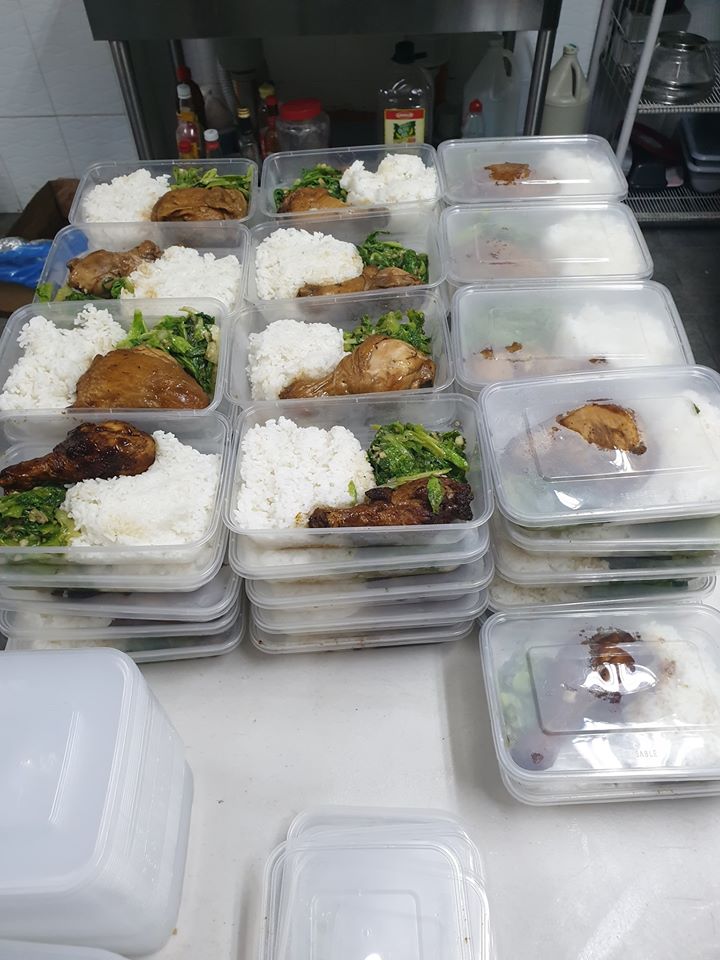
Gourmet Gypsy’s staff gets chicken ready for 350 meals which will be delivered to hospital workers at the Lung Center, Heart Center, National Kidney and Transplant Institute, East Avenue Medical Center, and Quirino Memorial Medical Center.

All the efforts are concentrated in her allied vocational school, Open Hands, which has amenities and roomy quarters “that are socially distant from each other,” she pointed out. All the employees wear masks and gloves at all times. All the employees still continue to get compensation. “Ako lang ang volunteer!,” she laughs. Taking a serious tone, she noted, “They’re all breadwinners. We have to make sure that their families are fed too.”

The food and donations are picked up and delivered with a no-contact protocol. All these measures were taken to ensure that the meals they prepare will be safe from the virus. “Even before the lockdown started, we locked down our kitchen,” she said.

On April 1, 50 frontliners at the Cardinal Santos Hospital tucked into their lunch of daing na bangus and ginisang kalabasa, sitaw at malunggay. On the menu for breakfast on Palm Sunday were quesadillas and choriburgers. And sometimes frontliners are in for a sweet treat — frontliners at Lourdes Hospital received boxes of macarons this week.

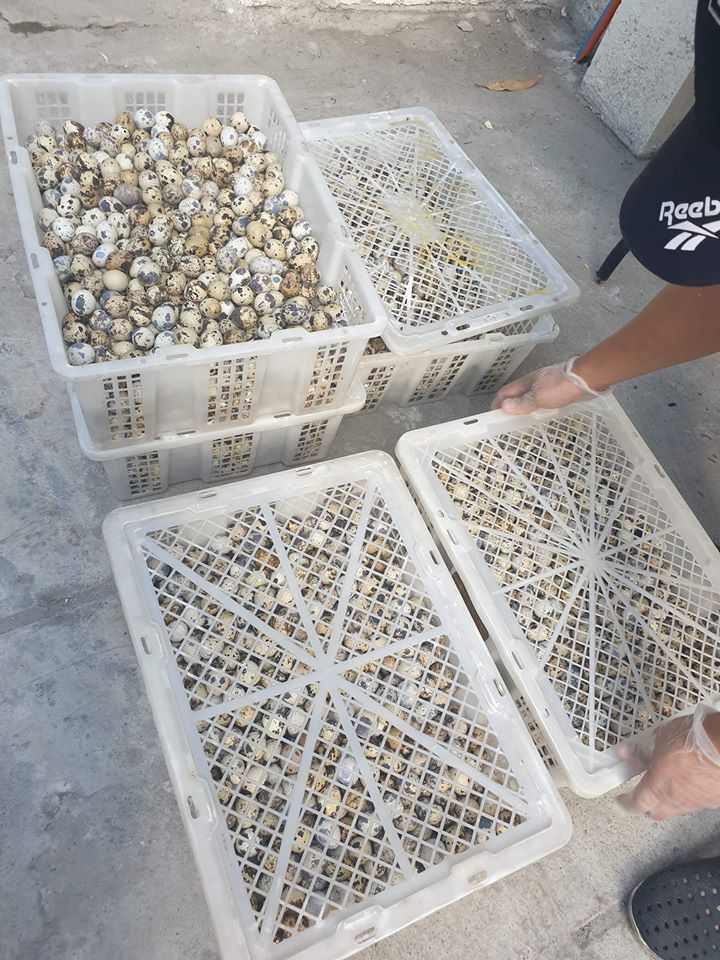
Thousands of donated quail eggs.

“We make an effort to really make our meals as nutritious as possible. We try not to resort to shortcuts,” Ms. Araos-Wijangco said. “It’s really a challenge to do the menu planning,” she said, because they always have to work with whatever arrives at their doorstep. “You have to put together a meal that’s nutritious, does not spoil easily — right? And it has to be palatable and delicious.” 

Cash and in-kind donations are received by them through the help of organizations like Frontline Feeders Ph (under RockED) and Salamat PH Healthcare Heroes. “They’re the ones who look for donors, and then they send us money so that we can keep producing the food.” Sometimes, they receive donations from private individuals, especially donations in kind like rice and meat. Bigger organizations have also helped — on March 30, they received 1.7 tons of fruits and vegetables from the Pilipinas Shell Foundation, which had bought the produce from farmers in Rizal. Another time they received 6,000 quail eggs. Donors have sent herbs from their gardens. She noted that a donation of six tons of vegetables was due to arrive early this week. 

As of the time of writing, according to her, they have produced 15,000 meals for more than 20 hospitals. 

While a large part of their efforts go to medical frontliners, Ms. Araos-Wijangco makes sure that the food goes to where it is most needed. She cites, for example, that some prestigious hospitals will have a lot of people backing them up, while less-famous hospitals might have to do with less. “We keep a database of the hospitals, and who donates to the hospitals, so that no food is wasted,” she said. “We look for the hospitals who really need it, because they’re not known in circles of donors.” Some of the food also goes towards communities with feeding programs. “We’re facing the urgency of the needs of frontliners and the needs of communities. We need to make sure that people are fed… para hindi tayo magkaroon ng unrest (so we don’t have unrest).”

Ms. Araos-Wijangco, as a small business owner, acknowledges the challenges that will face her and other business owners once the quarantine is lifted. “We’re going to come back to a changed world,”  she said. “Of course, there’s constant worry about what we are going to do when this is all over, and we reopen. We need to lobby with the government for support of SMEs. When we go back, we’re going to be deep in debt.”

“I can’t really dwell on what to do about that yet. Baka maiiyak na ako (I might cry). We’re doing what we can, given our skills, given what we can do at the moment — this is the most urgent need, and so we address it.”

Asked for how long she can keep doing it, she said, “Well, as people keep supporting us, we’ll keep going. The need is there, and we have the capacity. We do what we can and we do what we must.”

According to Ms. Araos-Wijangco, donation details can be found and can be coursed through the Facebook pages of Frontline Feeders Philippines under RockED and Salamat PH Healthcare Heroes. 

The show goes online

A virus outbreak and enhanced community quarantine (ECQ) have inspired more creativity than hindered it. While the audience is temporarily avoiding going to the theater, new stories are going to them online instead.

The Philippine Educational Theater Association (PETA) launches Charot! The Unwanted Prequel today at noon on its official Facebook page. “Since the lockdown, we’ve been trying to keep our presence online through the Facebook page,” PETA’s artistic director Maribel Legarda told BusinessWorld in a video interview. “It’s our small contribution to this confinement that there is some kind of entertainment and educational activity,” she added. 

During the first week of quarantine, Charot! The Musical (2019)’s playwrights Michelle Ngu and J-mee Katanyag suggested coming up with a story where Charot’s characters find themselves in the current pandemic situation. 

The new story is set a month prior to the events in Charot! The Musical which was set in May 2020 and tackled moving towards a federal form of government. In Charot! The Unwanted Prequel, the country known as “P.I.” has been under the governance of Papsy for four years, and the nation is faced with dealing with the “Charona veerus.” 

The story will be told through a series of video episodes which will be uploaded on PETA’s Facebook page weekly.

Ms. Ngu said that the script draws its inspiration from current events, trending topics on social media, and citizens’ reactions to the news.

The first episode features how Nanay and Tita Mary Grace are coping with the enhanced community quarantine. The story focuses on the disparity between socioeconomic classes and how some sectors are left behind despite given solutions. 

Ms. Ngu said that the actors are given instructions on how to shoot scenes on their own based on the script. Their videos are then sent to an editor. 

“It’s interesting since we are being forced to reinvent theater in another way all of a sudden,” said Ms. Legarda, citing challenges on how theater adapts to digitalization. “It’s interesting to work in different spaces, but you’re still trying to create this piece together.” 

The second episode will feature a FAQs session about health and wellness with the Beki Cab Driver; while the theme for the third episode is still in the works. 

Ms. Legarda and Ms. Ngu hope that the platform “will be able to speak about current happenings,” and “inspire critical thinking and vigilance.” 

“Right now we have three episodes. Hindi pa namin alam if madadagdagan (We are not certain if more episodes will be added). I guess, we’re open to that,” Ms. Ngu said. 

ONLINE WORKSHOPS AND DONATIONS

Meanwhile, PETA’s Let’s Get Creative online workshops, moderated by the company’s actors and teachers, will resume on April 13. The workshops cover a variety of topics such as dance, music, acting, and crafts. The start of PETA’s summer Workshop Express classes have been pushed back from May 2 to June 7. 

Aside from creating online content, the theater company is also conducting two donation efforts. The first is for the distribution of rice to 300 families in Brgy. Kristong Hari, Quezon City, the barangay where PETA’s theater center is located. As of April 7, PETA was able to distribute P66,800 worth of rice. The second donation drive is meant for healthcare workers. PETA artists’ have come up with a collaborative version of  the song “Munting Parangap” from the musical Rak of Aegis, which was released together with a call for donations for medical equipment such as personal protective equipment which will go to the frontliners of the East Avenue Medical Center. 

To stream the show and for more information on donation efforts, visit https://www.facebook.com/PETATHEATER/. — Michelle Anne P. Soliman

Doing good: More helping hands

The government says that the best thing a civilian or non-frontliner can do to fight COVID-19 is to stay at home and wash your hands, but as the quarantine continues, there are those who feel that they can help the fight even from the sidelines. Here are more organizations who are supporting our frontliners.

LANDERS SUPERSTORE

Supermarket chain Landers, alongside Popeyes, Kuya J, 8990 Holdings Inc., Isla Sugbu Seafood City, and Majestic Restaurant, distributed 595 boxes of Landers Central pizza, 315 buckets of Popeyes Chicken, and 46 bags of groceries containing essential items like toiletries and snacks to 34 hospitals and six army checkpoints. 

“Each box of pizza and bag of groceries contain heartfelt messages of thanks and encouragement from the staff and members of Landers Superstore,” a company statement read.

Among those that received donations are the Philippine General Hospital, San Lazaro Hospital, Asian Hospital and Medical Center, The Medical City, St. Luke’s Medical Center QC and BGC, Cardinal Santos Medical Center, and East Avenue Medical Center, along with other hospitals in Cebu and Laguna.

Army checkpoints in Alabang and Susana Heights, among others, also received donations.

“The project aims to reach out to more hospitals and checkpoints in the next few days as we reach the critical stages of the enhanced community quarantine,” the company said.

ALLIANZ-PNB LIFE

Similarly, insurance company Allianz-PNB Life provided meals for the Lung Center of the Philippines and the company said in a statement that it will continue to do so for three more weeks.

“We are grateful for the dedication of our doctors, nurses, and service staff during these challenging times. We salute them for their hard work,” Alexander Grenz, Allianz-PNB Life CEO, said in a statement.

“The meals we are offering is Allianz’s small way of showing our gratitude. This initiative was also made possible with our partnership with Mr. Andreas Meneghetti, Managing Director of Boehringer Ingelheim Business Services Philippines, and our caterer, Roje Charesse Ortega of DJLH Lechon House,” he added.

THE ORIENTAL HOTELS AND RESORTS

Filipino hotel chain The Oriental Hotels and Resorts announced that it is offering free accommodations to medical frontliners. The group has hotels in Albay, Bataan, and Leyte.

“We have opened up all our hotels for free to all working medical frontliners, we have to protect them because they are our first line of defense. I hope other hotel owners will follow suit, the sooner we get all our acts together, the earlier this will all end and the sooner we can all get back to normalcy,” The Oriental Hotels and Resorts Group Chairman Wilbert  Lee said in a statement.

DLSU ENGINEERING

Faculty members of De La Salle University’s (DLSU) Gokongwei College of Engineering are developing face shields for hospitals and the Philippine National Police using 3D printing.

The university’s program is a response to the urgent request of De La Salle University Medical Center, Philippine General Hospital (PGH), and the PNP Explosive Ordnance Device/K9 (EOD/K9) Group for Personal Protective Equipment (PPEs).

The team’s face shield is based on universal specifications prescribed by medical practitioners, and the design is available online. 

Currently, the program has distributed 50 face shields for the DLSU Medical Center and 50 for PGH, and have also started giving out face shields for the PNP.

SECURITY BANK

Security Bank donated three negative pressure ambulances to the Philippine Red Cross to be used to transport suspected COVID-19 cases from their homes to medical facilities. The donation is said to be worth P11.4 million.

Negative pressure ambulances serve high-risk patients to protect patients and paramedics from cross-contaminating one another. To reduce the risk of cross-infection, the vehicles are equipped with tools to lower air pressure and disinfect and filter the air.

ADVERTISEMENT
ADVERTISEMENT