Home Blog Page 9493

Pre- and post-lockdown public transport concerns

While the national government has downgraded the capital region’s lockdown category from ECQ to MECQ to GCQ, a number of challenges—such as limited public transport—still stand as bumps on the road to recovery. Last week, SparkUp interviewed four business owners on what they had to say about this topic:

Joma Ablay, WaveDigital

Digital Marketing Firm

No.of employees: 13

“The worker’s point-of-view has to be considered when drafting guidelines. Not everyone has cars and some areas have no access to shuttles.”

“Prior to the ECQ, we worked in our office in Paranaque with flexible working hours and a work-from-home (WFH) scheme twice a week. Nowadays we WFH entirely, with team huddles and client meetings through Zoom. We plan to continue working from home and carpool when it’s necessary to report at the office.”

“I hope bus lines that provide P2P services can be helped in adjusting to the new normal so they can resume operations. We are gradually building new commuter behaviors. The authorities must ensure health and safety measures are well-implemented in public places. This is an opportunity for the government to implement progressive programs and policies on public transport.”

Karla Singson, Scalewind Corporation

Full-House Creative Production Agency

No.of employees: 30

“We [have] divisions in tech and support with 30 employees. Our creative team does the day shift; our call center  does the night shift; our tech team reports as needed. All our business operations have had to shift to remote work due to the pandemic. We are considering carpooling services as we have a transport allowance for teammates and we can use that to subsidize transport. We hire within the vicinity so most will just bike to work.”

“My suggestion is for NCR to have more bike lanes and better guidelines for mass transport. Most of our teammates can’t afford taxis and cars, and we’d rather put our transport budget towards better forms of employee engagement such as bonuses and perks. Though, if safe bike lanes existed, I’d personally support giving our employees a bike subsidy.”

Michael Galang, Intego Insurance Company

General Insurance Agency

No. of employees: 10 (full-time)

“We’ve been conducting our business nowadays purely via emails and voice calls with weekly Zoom meetings.”

“As long as public transport is suspended, most employees can’t physically report to work. A shuttle is impractical for us as they come from all over the metro; so is biking. Some are from Rizal and Novaliches. A practical solution is to allow back riding because I noted that most of our staff have relatives with motorbikes.”

Tina Khoe Ang, Platino 950 Inc. 

Retail Jewelry

No. of Employees: 45

“Our staff are mostly women with an average age of 30 years and above. It would be impractical for them to walk, bike, or ride a motorcycle. That’s punishing them. Pinipilit lang.

“We really need public transport to operate… Jewelry is a brick-and-mortar business. Customers need to try on the goods first before making a purchase. For basic operations, we need to have a few critical personnel come in.”

“Under the GCQ, public transport will open albeit at a limited capacity. As of today (May 29), buses and jeeps are still not allowed to operate. This means unless the government changes its policy, the first few days of GCQ will be a total shit show for one plain reason—bottlenecks. Everyone will be crowding to find public transport to get to where they want to be. Given the limited number of public transport available, it’s going to be a mess of epic proportions.”

“The best way is to do GCQ and allow buses and jeeps to operate, albeit in an organized manner, following strict social distancing protocol. Help the buses and jeeps practice social distancing by placing “No Sitting” stickers on the seats. Stick them on the seats you want unoccupied. Then ensure that the MMDA checks that these seats with stickers remain unoccupied. Problem solved.”

Limiting transmission vectors of the disease 

According to Department of Transportation Assistant Secretary Goddess Hope Libiran, it is the responsibility of employers and business owners to provide shuttle services or accommodations for their employees.

“Ang guidance ng IATF, kung walang kapasidad ang employer or business owner na mag-provide ng shuttle service o mag-arrange ng pansamantalang accommodation para sa kanilang mga empleyado, ‘wag na munang mag-bukas o mag-operate,” she said.

“We are limiting the movement of people, and one way of ensuring that is to limit the number of transport modes available. Primary consideration is health and safety. We do not want public transport to become transmission vectors of the disease.”

SparkUp also reached out to representatives from the DILG and DTI for comment, but neither department has responded as of publishing.

Moving forward, stringent sanitary measures have been set, and will be strictly enforced, for public transportation in areas under GCQ. The complete and updated Public Transport Guidelines and Protocols for the road transport sector may be perused here.

BUSINESSWORLD INSIGHTS: Recovery despite post-COVID uncertainties

By Adrian Paul B. Conoza
Special Features Writer

Charting the path to recovery from the coronavirus disease 2019 (COVID-19) crisis involves planning ahead for underlying uncertainties and opportunities, the panelists of the recent session of BUSINESSWORLD INSIGHTS have concurred.

Starting off its second phase titled “Winning The Fight: COVID-19 Lessons”, BUSINESSWORLD INSIGHTS returned with the first of three sessions, discussing with industry experts across various sectors how working towards recovery from the pandemic should go beyond merely surviving.

The online forum was moderated by BusinessWorld‘s editor-in-chief Wilfredo Reyes, and was participated by Simon Wintels, partner at McKinsey and Company Singapore; Gary De Ocampo, president of Kantar Philippines, Inc.; Carl Winn Everhart, president and general manager of Coca-Cola Philippines; Nicky Gozon, director of Entrego Express Corporation; and Vincent Tempongko, vice president for site acquisition and management at Globe Telecom.

Reimagining in an uncertain future
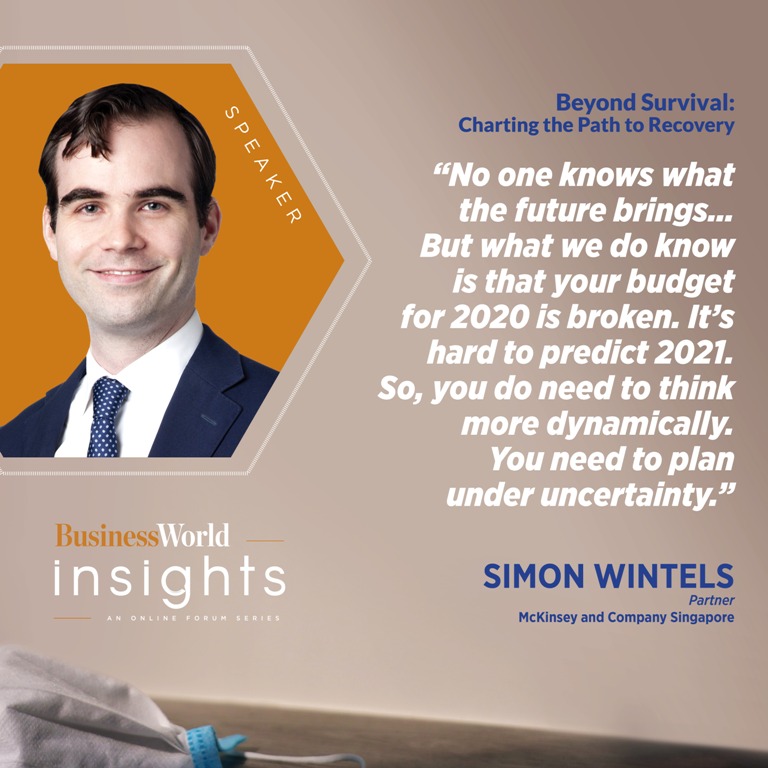
McKinsey’s Mr. Wintels, who leads its COVID-19 business team response for consumer goods companies across Asia, started off by noting that the crisis brings a due imperative of saving both lives and livelihoods.

In managing the crisis, he added, most companies have managed to resolve and to be resilient, so the next steps they should take involve returning and reimagining what the new normal looks like.

Their research across Asia have shown significant changes across how consumers behave, according to the researcher.

These changes include the shift to at-home consumption; a shift to online shopping and food delivery; more emphasis on affordability; a drop in discretionary spending; choosing safe, healthy, and fresh items and shopping environments; and a shock to loyalty.

“Because of lockdowns, people have changed their primary stores for shopping, as well as changed their brands,” Mr. Wintels observed about the loyalty shift, which he finds to be temporary. “Filipinos have proven to be brand loyal, and most of them are going back to their primary brands after the lockdown ends.”

When asked how fast will consumers’ confidence bounce back, Mr. Wintels finds it will depend on two main drivers of gross domestic product growth or decline, namely the effectiveness of getting the virus under control and the impact of economic policy.

“If we look at the last 100 years of crisis, consumer uncertainty about what’s next is the real driver of consumer sentiment, and consumer sentiment is the real driver of consumption,” he added. “The faster an economy, a market, or a government is able to settle the uncertainty about what’s going to come…the quicker we can come back.”

The McKinsey partner also laid out a checklist that could guide businesses in planning ahead: re-engaging their customers, shoppers, consumers in a more digital facet; reimagining their offers and making them safer, healthier, and more affordable; keeping the agility of decision-making in a new operating model; and accelerating digital across the business.

Mr. Wintels also stressed that in stepping into recovery, the future remains uncertain, even with observed behavioral shifts that will either become permanent or will revert to what they were before.

“You do need to think more dynamically. You need to plan under uncertainty,” he advised, adding that the crisis makes it necessary to develop teams that will plan ahead and echo the point that every crisis is rich in opportunity.

Sending reassuring signals
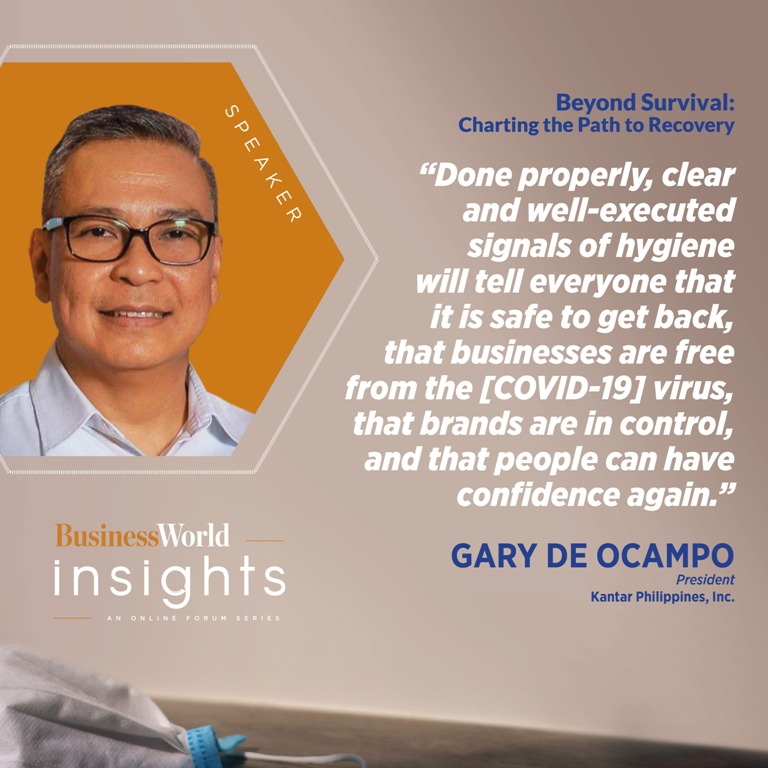
Mr. de Ocampo of Kantar Philippines shared the observations their firm has spotted from online Filipino adults during COVID-19. One of these is the heightened worry among Filipinos, which was seen to have been sustained despite getting accustomed to a certain extent to working and living from home.

“The sustained anxiety is largely coming from expected long-term economic impacts, which would be exacerbated by the dreaded second wave,” he said.

In coping with the crisis, Mr. de Ocampo continued, Filipinos are stocking up on items such as food with long shelf-life, sanitizing items, vitamins, and supplements.

Filipino adults are also claiming to be eating healthier, he added, trying out new recipes, sleeping more, exercising more, and focusing on personal development.

Kantar Philippines’ findings also spotted an overall decline in purchase across all channels, albeit a third of online Filipino adults tried out e-commerce for the first time. Many are also found to be compelled to switch to buying in groceries near their homes or preferring deliveries.

In terms of viewing consumption, the findings further revealed, TV viewing has spiked. Moreover, the Philipines has posted the highest increase in the use of radio, Facebook, Messenger, and YouTube.

Regarding their plans in the future, Mr. de Ocampo added, respondents expressed their plans to decrease travel or commutes, while they give the highest consideration to making investments and subscribing to on-demand media and home broadband Internet.

While a great majority look forward to meeting friends and relatives and going back to houses of faith, he continued, Filipinos are set to make hard decisions between wanting to step out of their homes and needing to ensure their safety.

Relating these findings to how businesses can recover, Mr. de Ocampo finds that bringing back demand from consumers is the big task they have to tackle, and delivering unmistakable signals that tell consumers it is safe to enter the marketplace again unleashes this opportunity.

“Every business in every category must remake itself, then, in order to send the signals that will reactivate demand,” he said. “And it’s not just about advertising messages, but also about every aspect of the brand’s physical, digital, societal, and retail presence. It is about signaling reassurance in every possible way.”

In sending those right signals to activate demand, Mr. de Ocampo continued, businesses should focus on hygiene and self-sufficiency.

“Hygiene will impact any form of interaction and engagement. Everything people touch will have to offer assurance that it is sanitized well, because hygiene has become a life-saving tactic,” he said, noting that consumers are anxious for signals that show a brand’s commitment to protection.

“Done properly, clear and well-executed signals of hygiene will tell everyone that it is safe to get back, that businesses are free from the virus, that brands are in control, and that people can have confidence again,” he later added.

Mr. de Ocampo also stressed that readiness is set to be the new sign of success, noting that people will want to be ready and not caught in surprise again.

The Kantar Philippines president also emphasized the need for planning for multiple scenarios, which he said is the only thing individuals have control over. This kind of planning, he added, helps individuals and organizations become flexible.

Grounded on purpose, prioritizing people
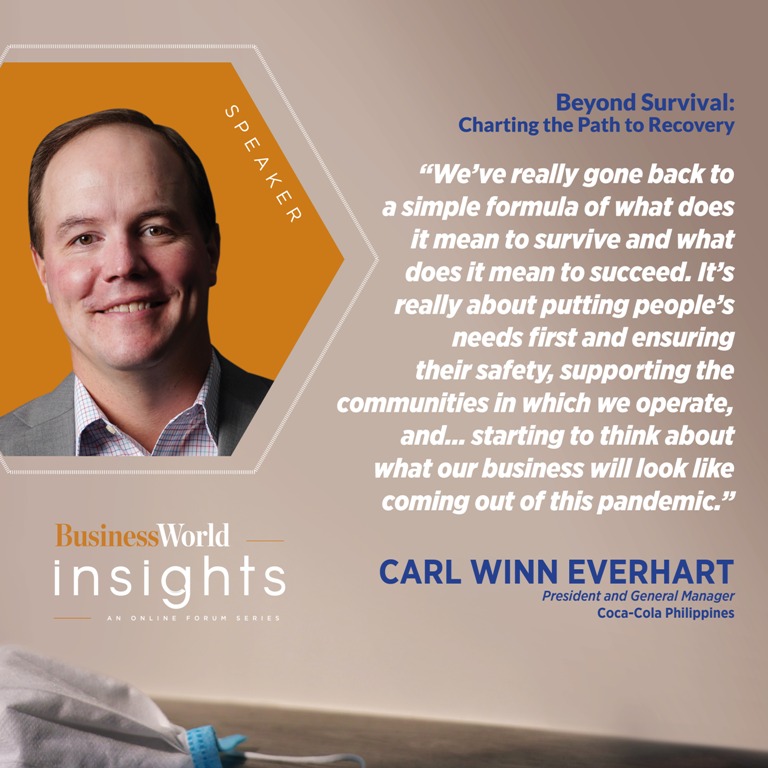
Mr. Everhart of Coca-Cola Philippines, meanwhile, shared how the company is paving their path to recovery as it intensively serves its purpose of refreshing the world and making a difference during this crisis.

“As we think about the long history that we’ve had across the world and here in the Philippines, we’ve really gone back to a simple formula of what does it mean to survive and what does it mean to succeed,” he said. “It’s really about putting people’s needs first and ensuring their safety, supporting the communities in which we operate, and starting to think about what our business will look like coming out of this pandemic.”

The CEO shared that the company has been assuring that its workforce stays healthy, whether they work from home or at their factories, distribution plants, or trucks.

Believing that Coca-Cola is only as strong and as sustainable as the communities in which we serve, Mr. Everhart continued, the company has been assuring that its partners are also well-protected and empowered. In addition, he recalled the company’s shift in spending from advertising to helping communities in the country.

Furthermore, the CEO noted a recurrence in at-home consumption, having observed that consumers are venturing out less although they buy more.

Affordability is ringing very true with our customers, he added, as seen in consumers collecting larger size items. “For sure there is going to be huge affordability component within the Philippines that we should be mindful of,” he said.

Mr. Everhart also said Coca-Cola has definitely felt the decline amid the stable position in at-home consumption, as this is was not enough to offset the traffic decline in distribution to outdoor use such as restaurants and sporting events.

The CEO, nonetheless, remains optimistic about the company’s recovery as he sees a great opportunity for the company to emerge stronger by expanding its platforms, especially digital ones, in a rapidly changing landscape.

“Our belief is we’re going to be stronger based on the strategies we have in place today,” he said.

Opening a blank page for new beginnings
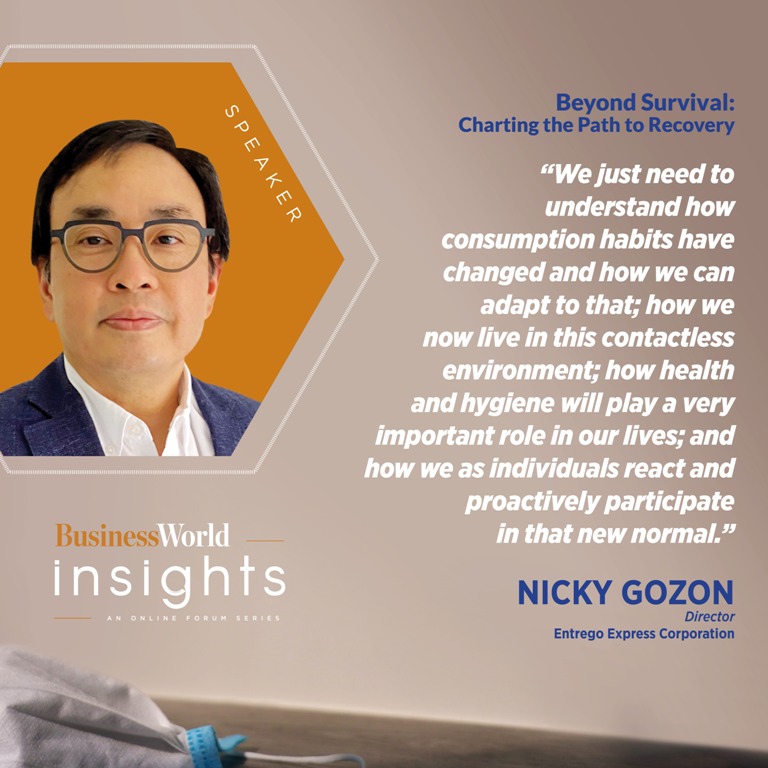
Understanding the current situation with other players is essential for Entrego’s Mr. Gozon, as the present crisis leaves one with no playbook on how to cope with the new normal.

“We all have to help each other understand where we are. And, more importantly…we all have to be patient with each other,” he said. “We all have to understand that we ourselves are all trying to chart this new course in these new seas.”

“Understanding where we are will allow us to gauge and assess things we need to do to create our own reentry strategies into our own markets, [which will help] us build processes and make us more resilient after we have reentered the market and [will] allow us to transform and build our business and adapt to this new normal,” he added.

For Mr. Gozon, the logistics company is an enabler in the new normal as it serves as the ‘hands and legs’ of businesses, bringing goods to customers and allowing customers to be engaged with them even in a contact-less environment.

“We started delivering essentials even at the height of the lockdown because logistics plays a very important role in ensuring that the links of the supply chain are not broken,” he added.

Mr. Gozon also stressed that as businesses go into the new normal, they have to make sure that employees will feel confident re-entering the market. “At the end of the day, the success of any endeavor in any business will require the employees’ support,” he noted.

Citing trend forecaster Li Edelkoort, Mr. Gozon also finds the COVID-19 offering “a blank page for new beginnings”, and so he encourages businesses to become resilient, adaptive, and more prepared.

“We need to understand how consumption habits have changed and how we can adapt to that, how we now live in this contactless environment, how health and hygiene will play a very important role in all our lives moving forward, and how we as individuals react and proactively participate in that new normal,” he said.

Pressing demand for connectivity
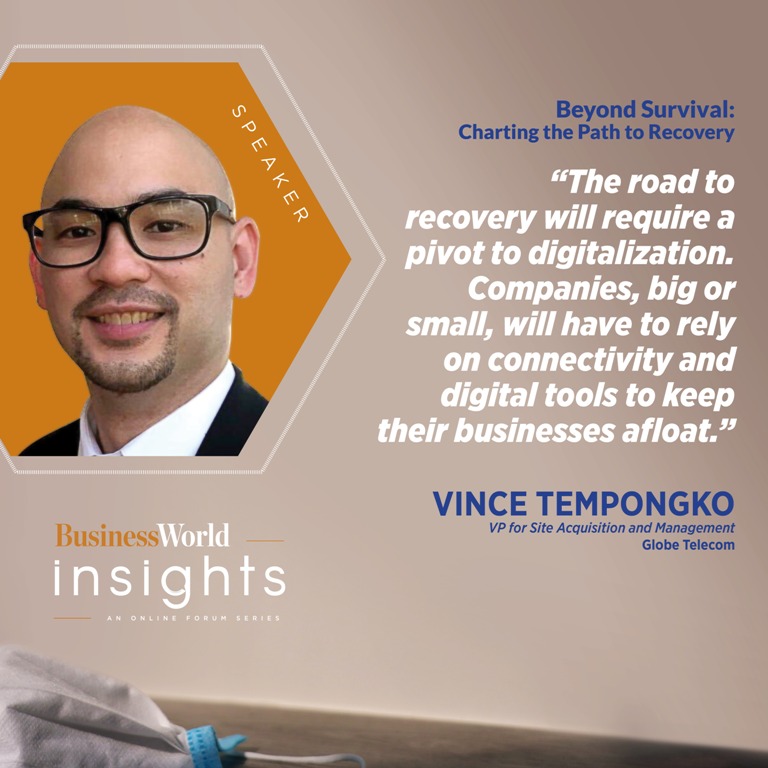
Connectivity has become a top priority as it is essential to keep people’s lives and businesses going during the community quarantine, according to Mr. Tempongko of Globe.

With a sudden shift from physical to digital interactions and transactions evident across different sectors, he continued, pivoting to digitalization is necessary to keep companies of all sizes afloat.

“Business recovery through digitalization demands better connection, better service, and better experience,” he said.

Mr. Tempongko added that business players should be able to identify key business processes and enter reactions that can be enabled and streamlined digitally so that they can be capable to run their businesses remotely and reach out to their customers even with limited physical interaction.

Moreover, the Globe executive shared that Globe has been enhancing its customer experience through digital means, while it has been empowering the local economy by providing appropriate technologies, infrastructure, and solutions.

Globe has been aggressively investing in and expanding its network, Mr. Tempongko added. He sees a challenge, however, in the permitting processes of local government units (LGUs) which he finds are tedious and slow.

“The Philippines suffers from having low site density compared to other countries due to lack of cell sites in relation to the number of Internet users,” he noted.

He expressed optimism over some LGUs who have started working towards the digitalization of their communities which eventually allows Globe to build its infrastructure in those areas, while he also remains hopeful that other LGUs will realize the need for ICT and network facilities in this new reality.

“We also appeal to our consumers and the communities to accept and allow our facilities as we need these facilities as near as possible to the consumers, so that we can enjoy better and faster Internet,” he added.

Upcoming BUSINESSWORLD INSIGHTS sessions will discuss “Improving the Country’s Healthcare and Welfare System” on June 3; and “Focusing on the Value of the Labor Market and MSMEs” on June 10. The sessions can be viewed on the Facebook pages of BusinessWorld and The Philippine STAR

BUSINESSWORLDINSIGHTS Phase 2 is made possible by SM, Globe, Entrego, Unilab, The Philippine STAR and Olern with the support of Management Association of the Philippines, Philippine Chamber of Commerce and Industry, Philippine Association of National Advertisers, Bank Marketing Association of the Philippines and CFA Society Philippines.


[B-SIDE Podcast] Q1 GDP: Not a pretty picture

Follow us on Spotify BusinessWorld B-Side

The COVID-19 pandemic ended a 21-year growth streak in the Philippine economy as strict lockdown measures aimed at containing the coronavirus outbreak brought economic activity to a near standstill.

Shortly after Q1 GDP data was released in early May, Research Head Leo Uy asked Geoffrey Ducanes, an Associate Professor at the Ateneo de Manila University Department of Economics, and Sarah Lynne Salvador Daway-Ducanes, an Associate Professor at the University of the Philippines School of Economics, to break down the data to see how the first two weeks of lockdown affected the Philippine economy.

After parsing the numbers, they also shared their outlook for the second quarter and beyond. Both agree that it’s going to be a long, tough road to recovery: Q2 is probably going to be worse than Q1, as the numbers will reflect the brunt of the lockdown.

TAKEAWAYS
Q1 GDP was bad. Q2 GDP will probably be worse.
Using the new base year of 2018, gross domestic product (GDP) contracted 0.2% in January to March, ending 84 quarters or 21 years of uninterrupted growth. The last time GDP fell into negative territory was in the fourth quarter of 1998, when the economy contracted by 3% amid the Asian financial crisis. Q2 is shaping up to be even worse as consumption, which accounts for 75% of GDP, will likely be in negative territory due to quarantine measures. “It looks pretty bleak. There’s really not a lot of room for maneuvering,” said Mr. Ducanes, who added that a contraction of more than 10% in Q2 is possible.

The government’s revised targets for the Philippine economy are “optimistic.”
The Development Budget Coordination Committee (DBCC) expects the Philippine economy to shrink by 2% to 3.4% this year. The Ducaneses believe that even the low end of this projection is optimistic. These targets, while possible, will be “very, very difficult to achieve.”

The COVID-19 pandemic makes it unlikely for the Philippines to reach its goal of reducing the poverty rate to 14% by 2022.
Post-pandemic simulations show that poverty incidence will more than double from the 2018 level, and the effect on the poverty gap and severity will triple or quadruple.

Remittances won’t save us.
Remittances from Overseas Filipino Workers (OFWs) acted as a lifeline for the Philippine economy during the 1997 Asian financial crisis and the financial crisis of 2007–08. That is not the case now as the pandemic has displaced thousands of OFWs (around 300,000 are expected to return home this year). According to projections, remittances may fall by as much as 30%.

Recorded remotely on May 14. Produced by Nina M. Diaz, Paolo L. Lopez, and Sam L. Marcelo.

Follow us on Spotify BusinessWorld B-Side

COVID-19 and sexual and reproductive health 

By AliyyaSawadjaan
Features Writer, The Philippine STAR

The pandemic brought by the coronavirus disease 2019 (COVID-19) created major challenges to hospitals around the world, including the Philippines. With an overwhelmed health system, most hospitals around the country are struggling to keep normal operations while still treating patients from the virus. World Health Organization (WHO) director general TedrosAdhanom emphasized that “All countries must strike a fine balance between protecting health, minimizing economic and social disruption, and respecting human rights.” This includes women’s choices and rights to sexual and reproductive health care.

The worries and stress brought by COVID-19 have affected sexual and reproductive health care, including access to contraceptive information and services during the pandemic.

COVID-19 and sex 

With the enhanced community quarantine (ECQ) placed in Luzon and other parts of the country from March 16 to May 31, couples are quarantined together. Studies are still being conducted on COVID-19. One of them found traces of the virus in the feces of people who are infected, while another study found the coronavirus in the semen of men who had active infections and those who recovered. However, it still isn’t clear if the disease can be sexually transmitted or not.

Experts say that sex can still be performed but with precautions. Masturbation is a safe way to go about it as this will not spread COVID-19 to another person, provided appropriate preventative measures are observed.

If two parties are healthy and are living together, had no exposure to anyone with the virus, or traveled to countries suffering from the pandemic, then physical intimacy is still considered safe. But if it’s someone outside of the household, it is still advised to avoid close contact.The use of contraceptives is also recommended to avoid unintended pregnancies and sexually transmitted infections.

But if either or both partners are sick with COVID-19 — recovering or recovered — the US’ Centers for Disease Control and Prevention (CDC) shared the following ways to prevent the spread of the virus: not sharing bedding and bed, and abstaining from all intimate contact until: at least seven to 14 days after symptoms first started, when other symptoms have improved, and fever-free for at least 72 hours without the use of any medications.

If a person is sick, he or she should self-quarantine and observe the necessary preventative measures, including limiting the use of common spaces.

COVID-19 and family planning 

With the ECQ placed in Luzon since March 16, the Department of Health (DOH) reminded people to continue practicing family planning methods. Contraceptives are still safe to use despite the COVID-19 outbreak.

Health Undersecretary Maria Rosario Vergeire said that even in areas under ECQ, family planning services, devices and advice are available to the public in health centers. Barangay health workers can also hand out three-months-worth of condoms and birth control pills.

Contraception and family planning information and services are life-saving and important at all times — with or without a pandemic.

COVID-19, pregnancy and childbirth 

Studies are still determining what COVID-19 does to a developing pregnancy. Giving birth is already challenging and stressful, but going through it during a global crisis heightens it. Many expecting mothers are considering giving birth at home due to the country’s strained health systems. However, home births may be difficult for high-risk pregnancies.

Research is still on-going to determine whether pregnant women can get infected with the virus, but it is important to take precautions.

A safe and positive experience for pregnant women during pregnancy and childbirth include: being treated with respect and dignity, having a companion of choice present during delivery, clear communication by maternity staff, appropriate pain relief strategies, and mobility in labor where possible and birth position of choice. For pregnant women who are suspected or confirmed to be positive for COVID-19, WHO advised that caesarian section deliveries should only be performed when medically justified.

If COVID-19 is suspected or confirmed, health workers should take all appropriate precautions, including hand hygiene and appropriate use of protective equipment, to reduce the risks of infection to themselves and others.

Close contact and breastfeeding are also supported by WHO, even for COVID-positive mothers. As such, they should be supported to breastfeed safely with good respiratory hygiene, hold their newborn skin-to-skin, and share a room with their baby. WHO also reminds mothers to keep surfaces clean and to wash their hands before and after touching their babies.

New tool to open blocked arteries without bypass operation

Recently developed procedure uses sonic waves to break up cholesterol buildup

Blocked or narrowed heart arteries is the top 3 killer disease in developed countries. The narrowing is caused by deposits of cholesterol in the walls of the arteries. These areas of cholesterol narrowing are known as ‘plaques.’ In the past, the treatment would have been a bypass operation. However, these days, the standard of care is ‘angioplasty’ commonly known as ‘stenting’ or ‘ballooning.’

This is a very low-risk procedure when a balloon is used to push aside the cholesterol and then a ‘stent’, a kind of metal tube, is placed to hold the artery opened.

This procedure may become a lot more complicated, however, for ‘hardened’ plaque, as Tan Chong Hiok, a cardiologist at Mount Elizabeth Hospital in Singapore, observed.

“Some patients may see a doctor late, for reasons like ignoring their symptoms, or not going for regular checkups,” Dr. Tan explained.

“Over time, say, three years or more, calcium gradually gets deposited onto this cholesterol plaque, making it rock hard. This ‘hardened’ plaque does not allow the balloon to expand.”

Previously, these cases would be treated by using a tiny drill. This is like a dentist’s drill spinning at high speed. It gradually drills away the calcium deposits. But the device can be cumbersome to use. The procedure also carries other risks such as tearing the blood vessels. “Because of these issues, some doctors may be hesitant to recommend this drill procedure or to perform it,” Dr. Tan said. The patient is recommended to undergo a bypass operation instead.

Technological development paved the way for a new medical procedure that offers a safer way to treat hardened plaques for these patients.

The procedure, called intravascular lithotripsy (IVL), involves using a balloon that delivers sonic pulses to break up the hardened plaque in the arteries.

Said Dr. Tan, who is among the first doctors to apply the technique in Singapore, IVL is a simpler and much lower risk device compared to the drill.

It is similar to angioplasty in that it also delivers a balloon to the site of narrowing. Instead of balloon just expanding and squeezes the plaque aside, it also sends out shock waves that crack the calcium like eggshell. This softens the plaque and allows a stent to be expanded.

Shock waves has been utilized since the 1980s to break up kidney stones into smaller fragments so that it can pass out in urine. In this way, patient does not need to undergo an open surgery.
This is exactly the same concept for IVL. Except that the shock wave is not delivered from outside the body. It is delivered inside the arteries when the calcium deposits are deposited.

As of December 2019, Dr. Tan has used the IVL device to treat eight patients. Other public hospitals in Singapore have also started offering the procedure.

For more enquiries, please contact our Patient Assistance Centre (Manila) at manila.ph@parkwaypantai.com or +63 917 526-7576.

90 Chinese, 2 Malaysians nabbed for violating lockdown guidelines

PHILIPPINE police arrested 90 Chinese and two Malaysians for allegedly violating health and safety guidelines on the coronavirus after law enforcers raided an illegal offshore gaming operator in Bacoor City in Cavite province on Friday.

Agents of the Criminal Investigation and Detection Group (CIDG) raided an apartelle in the village of Mabolo 1 in the afternoon of May 29, according to police.

The operation stemmed from a tip that Chinese nationals had been seen loitering outside the apartelle, said Brigadier General Rhoderick Armamento, CIDG deputy director for administration.

The foreigners were allegedly not wearing face masks and did not observe physical distancing. Village officials thought the building was a quarantine facility, Mr. Armamento said.

“They should not be operating yet because of the quarantine,” he said by telephone.

Acting on the tip, agents of the CIDG’s Anti-Organized Crime Unit raided the building. “The workers failed to provide pertinent records such as passports and working permits that could prove the legality of their online gaming operation,” CIDG said in a report.

The agency is preparing charges against the suspects for violating a law on illegal gambling and another that requires one to report certain diseases to authorities.

The Department of Health (DoH) reported 590 new infections on Saturday, bringing the total to 17,224.

The death toll rose to 950 after eight more patients died, it said in a bulletin. Eighty-eight more patients have gotten well, bringing the total recoveries to 3,808, it added.

Of the new cases, 338 had been reported late, the agency said. It said 218 came from Metro Manila, and 111 from the other regions. Nine were returning overseas Filipinos.

The presidential palace urged the public to observe health guidelines against the coronavirus disease 2019 (COVID-19) as the lockdown in Metro Manila is eased to a general quarantine starting June 1.

President Rodrigo R. Duterte locked down Luzon island in mid-March, suspending work, classes and public transportation to contain the pandemic. People should stay home except to buy food and other basic goods, he said.

The President extended the so-called enhanced community quarantine twice for the island and thrice for the capital region where coronavirus infections are concentrated.

Metro Manila and key cities and regions were kept under a modified lockdown from May 16 to 30, while some businesses were allowed to reopen with a skeletal workforce.

More people are expected to go back to work, when most parts of the country are placed under a more relaxed lockdown.

“Let us take care of each other by wearing face masks/face shields, maintaining physical/social distancing, staying at home if/when need be and avoiding crowded places,” presidential spokesman Harry L. Roque said in a statement.

Mr. Roque said the government cannot fight the COVID-19 virus alone.

Based on an order issued by an inter-agency task force made up of Cabinet secretaries on Saturday, Metro Manila, Pangasinan, Cagayan Valley, Central Luzon, Calabarzon (Cavite, Laguna, Batangas, Rizal and Quezon), Central Visayas, and the cities of Zamboanga and Davao were placed under a general community quarantine.

Other areas will be under a modified general community quarantine, or the “transition to the new normal.”

Barbershops and salons will be allowed to reopen starting June 7 at 30% capacity. — Gillian M. Cortez and Emmanuel Tupas, Philippine Star

Inflation seen holding steady in May

RISING FOOD and oil prices were major upside risk factors for inflation in May, analysts said. — REUTERS

By Luz Wendy T. Noble, Reporter

INFLATION likely remained stable in May, despite an uptick in some food items and a slight recovery in pump prices, according to analysts.

A poll of 17 economists by BusinessWorld held last week yielded a median estimate of 2.2% for May headline inflation, unchanged from April and slower than the 3.2% logged in May 2019.

If realized, this would be closer to the lower end of the central bank’s forecast range of 1.9%-2.7% for the month, and slightly slower than its 2.3% point projection.

The central bank’s inflation target for this year is at 2-4%, although it gave a 1.75% to 3.75% projection as the economy is expected to slow down due to the pandemic.

In the first four months of 2020, inflation averaged 2.6%.

The Philippine Statistics Authority (PSA) is set to report May inflation data on June 5.

Analysts said the rise in food and oil prices were major upside risk factors for inflation in May.

“Timely data suggest fuel prices crept back up, while rice prices rose further,” Alex Holmes, an economist at Capital Economics said.

Oil prices have slightly recovered since the nearly 20-year low in April as major oil producers committed to reduce production by 10 million barrels per day or about 10% of global supply in May.

Domestic pump prices also jumped after the government imposed an additional 10% levy on imported crude oil and petroleum products, according to UnionBank of the Philippines, Inc. Chief Economist Ruben Carlo O. Asuncion.

Meanwhile, PSA data showed the average farmgate price of palay or unmilled rice edged up by 0.75% week on week to P18.81 per kilogram in the first week of May, jumping by 1.95% year on year.

Average wholesale price of regular-milled rice also rose by 0.88% to P35.40 per kilo, while the retail price inched up 0.11% to P37.90. For well-milled rice, prices slightly increased by 0.64% to P39.28 per kilo, while the retail price was 0.38% higher at P42.34.

A 60-day price freeze on basic necessities that began in mid-March ended on May 15. The rule covered basic goods including rice, corn, meat, agricultural products, medical devices and drugs, among others.

Some parts of the country saw a relaxation of lockdown measures during May, which may have boosted demand and led to some price increases.

“[M]arket activities slowly emerge from hibernation with the easing of quarantine measures in some parts of the country,” Security Bank Corp. Chief Economist Robert Dan J. Roces said.

On the other hand, Jiaxin Lu, an economist from Continuum Economics, said the pickup in prices of non-basic commodities such as alcoholic drinks and tobacco, restaurant and miscellaneous goods and services was unlikely amid crimped demand during the lockdown.

As the country continues to ease quarantine restrictions, analysts said the Bangko Sentral ng Pilipinas (BSP) will likely have to wait to see the resulting impact of the reopening of the economy before looking at another rate cut.

“We expect the BSP to hold its monetary policy stance in its June meeting as it pauses to see the impact of measures already taken and look at high-frequency indicators to gauge the speed of recovery in economic activity as more segments of the economy move towards less stringent quarantine measures,” Thatchinamoorthy Krshnan, an economist at Oxford Economics, said.

For Mitzie Irene P. Conchada, an economist from the De La Salle University, the transition to general community quarantine is likely to boost consumer demand as well as investor confidence.

“The BSP might have to wait to see the impact of slowly opening up the economy before adjusting policy rates,” she said.

UnionBank’s Mr. Asuncion said the presence of some inflationary pressures may push the BSP to consider the use of its liquidity tools and likely hold off rate cuts in the second quarter.

On the other hand, some analysts say the central bank’s recent signals as well as the continued benign inflation point to a possible rate cut, although reserve requirement ratio (RRR) is likely to be untouched.

“BSP is expected to cut policy rates by 25 basis points at the June meeting given [BSP Governor Benjamin E.] Diokno’s recent dovish comments,” ING Bank N.V. Manila Senior Economist Nicholas Antonio T. Mapa said.

“Easing inflation will provide further room for the BSP to ramp up its monetary stimulus amid a weakening economy,” Continuum Economics’ Ms. Lu said.

The BSP has taken a pause in easing after aggressively slashing rates by a total of 125 basis points from February to April, which brought down the overnight reverse repurchase to a record low of 2.75% in order to provide support to the economy during the crisis. Lending and deposit rates have likewise been trimmed to 3.25% and 2.25%, respectively.

On the other hand, the RRR for big banks has been cut by 200 basis points in April to 12% to provide liquidity during the lockdown. Reserve requirements for thrift and rural banks were maintained so far at four and three percent, respectively. The Monetary Board said it can cut RRR by up to 400 bps for the whole of 2020.

The next rate-setting meeting of the Monetary Board is scheduled on June 25.

Analysts’ May inflation rate estimates (2020)

Analysts’ May inflation rate estimates (2020)

INFLATION likely remained stable in May, despite an uptick in some food items and a slight recovery in pump prices, according to analysts. Read the full story.

Analysts’ May inflation rate estimates (2020)

Economic recovery still uncertain even as lockdown eases

Shopping malls are adapting to the “normal” as lockdown restrictions ease in Metro Manila. Courtesy of Trade department

By Beatrice M. Laforga, Reporter

AS the lockdown eases in many parts of the country, experts are divided on how quickly the Philippine economy will rebound from the coronavirus crisis.

Starting today, the National Capital Region (NCR) and a handful of provinces will now be under a general community quarantine (GCQ), a move the government hopes will gradually restart a stalled economy.

“Since many areas are under GCQ in June, including NCR, prospects are better,” Socioeconomic Planning Acting Secretary Karl Kendrick T. Chua said via Viber when asked for his outlook on economic recovery.

Mr. Chua in May said he hoped for a V-shaped recovery this year, as more businesses reopen when quarantine protocols have been relaxed.

For UnionBank of the Philippines, Inc. Chief Economist Ruben Carlo O. Asuncion, the economy may face a sluggish recovery as business activity will remain lackluster as people continue to adhere to physical distancing rules.

“Without a vaccine discovery and its consequent administration to all population, it is difficult to imagine a V-shaped recovery. I do expect a sluggish recovery even as the economy reopens. We have to keep dancing with COVID-19 (coronavirus disease 2019) and keep it at bay as much as we can,” Mr. Asuncion said.

Ronald U. Mendoza, dean of Ateneo School of Government, said the recovery of the Philippine economy would depend on several factors including the health systems’ capacity to prevent a bigger wave of infections, and the psychology of consumers, investors and the rest of the population.

“The ‘psychology of recovery’ depends critically on our trust in the systems that we should have been strengthening during the lockdown. The lockdown was meant to merely buy us time to boost those systems — the surge capacity of the health system and the inclusiveness and effectiveness of the social safety nets,” he said in an e-mailed response.

Mr. Mendoza pointed out the government is only halfway in reaching its target to conduct 30,000 tests per day, while data remains unclear whether the country has flattened the curve.

As of Saturday, the Health department said total deaths stood at 950, while confirmed cases have reached 17,224. Total recoveries now stand at 3,808.

“Social protection is still catching up with the massive task of covering 18 million households (and now OFWs need help too), and up to 300 private hospitals have declared that they are at risk of bankruptcy,” he said.

“This suggests recovery may be tentative and fragile.”

Gross domestic product (GDP) shrank by 0.2% in the first quarter and is expected to contract further in the second quarter as strict lockdown continued through May.

The government is projecting the 2020 GDP to contract by 2-3.4% as economic losses is expected to hit P2.2 trillion due to the pandemic.

Business groups, exporters want corporate income tax cut to 20% by 2025

By Jenina P. Ibañez, Reporter

BUSINESS GROUPS and exporters are asking Congress to consider a longer transition period from the current tax incentives system and to accelerate the corporate income tax cut, in an effort to restore fiscal certainty to investors amid the pandemic.

Six foreign chambers and four other business groups on May 27 wrote a letter to Sen. Pilar Juliana S. Cayetano, the chairperson of the Committee on Ways and Means, to express their support for the reduction of corporate income tax (CIT) to 25% from 30% by July, and to propose the CIT be cut to 20% as soon as 2025.

The Senate is currently tackling the proposed Corporate Recovery and Tax Incentives for Enterprises (CREATE) Act which accelerates CIT reduction from the earlier proposal of a gradual reduction to 20% over a decade under the previous version called Corporate Income Tax and Incentives Rationalization Act (CITIRA).

Under CREATE, CIT will remain at 25% up to 2022, before lowering at one percent each year until it reaches 20% by 2027.

The groups asked for an additional five years to retain existing tax incentives, in addition to the sunset provisions. CREATE allows for a four- to nine-year sunset period.

The previous incentives scheme allowed companies to pay 5% tax on gross income earned, in lieu of other national and local taxes.

The business groups also said the 5% tax on gross income earned can be maintained after the sunset provision, if companies continue to meet conditions such as exporting 90% of its output and employing at least 10,000 people.

GRAVE CONCERN
The groups expressed “grave concern” about the Finance department’s proposal to tailor-fit incentives, saying it will aggravate apprehension from foreign investors that do not know what incentives they will be able to negotiate from the government.

Trade Secretary Ramon M. Lopez last week expressed his support for tailored incentives under CREATE, saying it will help the Philippines match other countries’ incentives packages.

The business groups believe that tailor fitting incentives can help attract foreign investments if they are done in addition to a minimum set of incentives, such as retaining the existing tax incentives for at least five years.

For existing investors, they asked for an additional two years on income tax holiday, and to increase the maximum period for this to 20 years for new investments in less developed areas.

The groups said the Fiscal Incentives Review Board (FIRB), which would be put in charge of approving incentives and overseeing investment promotion agencies, should have these expanded functions only after five years.

They recommended this because they believe this could help the country respond quickly to foreign investors moving their supply chains from China.

“Definitely, this is not the time to experiment and transfer the power and functions of existing efficient IPAs (investment promotion agencies) like PEZA (Philippine Economic Zone Authority) to a body that has no proven track record, much less, experience. We need to be agile and efficient at this point when companies are scrambling to move out of China.”

They ask that the FIRB be given authority to approve incentives only for investments over $500 million, noting that investment promotion agencies should retain their authority to process and approve applications under the strategic investment priorities plan.

Groups that signed the letter include the American, Australian-New Zealand, Canadian, European, Japanese, and Korean foreign chambers. The Information Technology and Business Process Association of the Philippines (IBPAP), Semiconductor and Electronics Industries in the Philippines, Inc. (SEIPI), the Confederation of Wearable Exporters of the Philippines (CONWEP), and the Philippine Association of Multinational Companies Regional Headquarters, Inc. also signed on.

“In such dire and challenging circumstances, the Congress faces a dual responsibility to provide for relief and stimulus to the population and to restore fiscal certainty to current and future investors, especially to foreign investors, during a period when major realignments of their Asian regional manufacturing footprint are underway,” they said.

The business groups noted the Philippines has not benefited from the shift of supply chains from China.

“(The country) has yet to be seriously considered as an alternative to Vietnam and India. BOI (Board of Investments) reports only a few dozen enquiries and a handful of firms deciding to relocate to sites in the Philippines,” they added.

The BoI reported that the country attracted almost P1.6 billion in seven realized investment projects that have relocated from China, most of which were approved in late 2019.

Offshore investors may avail of REITs through central bank

By Denise A. Valdez, Reporter

NON-PHILIPPINE residents are allowed to invest in real estate investment trusts (REITs) through the central bank, bourse operator Philippine Stock Exchange, Inc. (PSE) said.

In a memo on its website, the PSE said those residing abroad may participate in local REIT offerings by registering with the Bangko Sentral ng Pilipinas (BSP) through authorized agent banks.

Following guidelines in the BSP Manual of Regulations on Foreign Exchange Transactions, the PSE said REIT securities are considered “equity securities issued onshore by residents that are listed at an onshore exchange.”

Thus, interested investors in Philippine REITs but are living abroad may avail of full and immediate repatriation of capital and remittance of earnings using foreign exchange resources of the banking system.

At least two Philippine companies have confirmed plans to launch REIT offerings since the guidelines were revised in January: Ayala Land, Inc. (ALI) and DoubleDragon Properties Corp.

ALI has a live REIT application with the Securities and Exchange Commission for the offering of three commercial buildings in Makati City, namely: Solaris One, Ayala North Exchange and McKinley Exchange.

The application involves the primary offer of up to 47.86 million shares, a secondary offer up to 430.78 million shares, and an over-allotment option of up to 23.93 million shares, each offered at P30.05, which would raise up to P15.1 billion in net proceeds.

DoubleDragon, on the other hand, has a plan to do an P11-billion REIT offering in the fourth quarter involving 200,000 square meters (sq.m.) worth of leasing assets.

The company plans to raise a total of P66 billion from REITs by doing an annual offering starting 2020 to 2025. It currently has 803,000 sq.m. of leasing assets and plans to keep expanding in the coming years.

The government has amended rules for REIT offerings this year in hopes of attracting property developers into launching the investment vehicle. The Philippines legislated its REIT law in 2009 but it failed to take off due to stringent requirements.

The Department of Finance believes REITs can fund property development to push economic growth. “We democratize wealth by opening access for thousands of small investors wanting to be shareholders in secure and profitable real estate projects,” Finance Secretary Carlos G. Dominguez III said in January at the launch of the new REIT guidelines.

House panel OK’s bill strengthening gov’t banks

THE HOUSE Banks and Financial Intermediaries Committee approved on Friday a bill seeking to expand the loan assistance program, rediscounting and other credit accommodation facilities of government financial institutions to help micro, small and medium enterprises (MSMEs) cope with the effects of the coronavirus disease 2019 (COVID-19).

House Bill 6795 or the Government Financial Institutions Unified Initiatives to Distressed Enterprises for Economic Recovery (GUIDE) Act was filed by Quirino Rep. and House banks and financial intermediaries committee chair Junie E. Cua.

The bill directs the Philippine Guarantee Corp. (PGC) to expand its guarantee program for MSMEs by increasing the maximum loan guarantee coverage per borrower and reducing guarantee fees. To implement this, the measure mandates the government to increase its subscription to PGC’s authorized capital stock by an additional P20 billion.

The bill also directs the Development Bank of the Philippines (DBP) to expand its loan program for qualified MSMEs affected by COVID-19, provided that these enterprises are engaged in infrastructure, services and/or manufacturing businesses. DBP’s authorized capital stock will be expanded to P100 billion from P35 billion to accommodate capital infusion.

Land Bank of the Philippines (LANDBANK) is also mandated to expand its loan program to MSMEs engaged in the agribusiness value chain. Both DBP and LANDBANK are allowed to rediscount loans to eligible enterprises.

The proposed measure also authorizes the LANDBANK and DBP to create a special holding company to be named Accelerate Recovery to Intensify Solidarity and Equity (ARISE) to provide liquidity by being a “major player” in the financial and capital markets.

“For this purpose, the special holding company shall be authorized to invest or place funds in equity, execute convertible loans or purchase convertible bonds and/or other securities…as well as to incorporate subsidiaries,” part of the bill’s explanatory note read.

To ensure that funds are properly used, the bill imposes restrictions on companies to be invested in, requiring that the number of employees are not reduced by a certain level, limiting its ability to declare dividends, restricting the increase in salary and other benefits of the board officers and ensuring investments of LANDBANK and DBP are not diluted and time-bound with a definite “exit-mechanism,” among others.

Meanwhile, to ensure effective implementation, the bill grants tax exemption and reduced registration and transfer fees on the following qualified transactions: those relating to the loan assistance program, rediscounting and other programs of DBP and LANDBANK, including dation in payment (dacion en pago) by the borrower or by a third party; investment transactions of the special holding company and its subsidiaries; and sales or transfers of rediscounted loans/other credit accommodations, subject to a limited three-year entitlement period.

The bill also exempts any procurements of the PGC, LANDBANK, DBP and the special holding company from the procurement law for three years.

The special holding company will also be exempted from the government-owned and -controlled corporations (GOCC) Governance Act of 2011 and the Philippine Competition Act for three years.

The measure appropriates P55 billion to infuse additional capital to PGC (P5 billion), LANDBANK (P35 billion) and DBP (P15 billion).

“Enterprises, whether MSMEs or large enterprises, were heavily impacted by the disruption in travel and transport of goods and services as a result of the COVID-19 outbreak. These enterprises which belong to or operate in certain industries or sectors that are strategically important to economic recovery would require financial assistance in order to ensure their continued viability and, in turn, create a ripple effect to reverse the economic downturn,” Mr. Cua said in his explanatory note.

The measure will be transmitted to the House Defeat COVID-19 Committee for its consideration. Once approved, it will go to the plenary for debates. — Genshen L. Espedido

ADVERTISEMENT
ADVERTISEMENT