Home Blog Page 9254

Explain overbilling complaints, MWSS orders Maynilad, Manila Water

THE METROPOLITAN Waterworks and Sewerage System (MWSS) Regulatory Office has served a show-cause order to Manila Water Co., Inc. and Maynilad Water Services, Inc. in response to over 400 billing complaints filed by the customers of the two water providers.

In a statement, Wednesday, MWSS Chief Regulator Patrick Lester N. Ty ordered the water concessionaires to explain their noncompliance to the regulatory agency’s directive to check for billing irregularities, to verify the consumption patterns of customers, and to withhold any customer billing statements with significant deviation from the said patterns.

Further, Mr. Ty ordered Maynilad and Manila Water to submit an explanation regarding their failure to communicate all information concerning the directives to their customers and concerned stakeholders.

MWSS gave the two water providers until the end of this week to issue an official explanation and to resolve the observed violations.

In a statement, east zone water concessionaire Manila Water said it was confident that it had followed every guideline issued by the MWSS on the implementation of average billing during the lockdown and the actual billing after, including the provision of installment payments and disconnection grace periods.

Manila Water said that based on the data it gathered from June 1 to July 27, only 7% or 73,588 of its 1 million customers have asked for clarifications on their billing statements.

“Of these, 90% were resolved by the call center or by business area frontliners. Only 0.7% of customers, or 7,937, have cases that were endorsed for further handling and of these, 6,246 were verified to have been billed based on actual consumption of customers,” Manila Water said.

“We take all our customers’ concerns seriously and have always strived to respond and resolve these above and beyond regulatory standards,” it added.

Meanwhile, west zone water provider Maynilad said that it had actively implemented measures to avoid customer confusion on how water consumption during the stricter lockdown period will be computed.

In a statement, Maynilad added that its field personnel had postponed the issuance of water bills that deviated from usual consumption patterns for verification and appropriate adjustments.

“These interventions helped, given the minimal number of bill-related inquiries and concerns raised — only 1.33% of 1.46 million accounts,” Maynilad said.

Both water concessionaires said they would comply with the show-cause order and deadline set by MWSS.

On July 23, the MWSS issued a “notices to explain” to Manila Water and Maynilad over the rising number of customer complaints it received with regard to water bills.

Average billing policy was applied by the two water concessionaires after meter reading and billing activities were suspended due to the coronavirus disease 2019 (COVID-19) pandemic.

Metro Pacific Investments Corp., which has majority stake in Maynilad, is one of three Philippine units of Hong Kong-based First Pacific Co. Ltd., the others being Philex Mining Corp. and PLDT, Inc.

Hastings Holdings, Inc., a unit of PLDT Beneficial Trust Fund subsidiary MediaQuest Holdings, Inc., has interest in BusinessWorld through the Philippine Star Group, which it controls. — Revin Mikhael D. Ochave

First Gen expects to start building import terminal for LNG in second half

LOPEZ-LED First Gen Corp. is expecting to start building its liquefied natural gas (LNG) terminal project in Batangas in the second half of the year.

“We are hoping to start construction in the second half of this year,” said First Gen President Francis Giles B. Puno during the company’s annual stockholders’ meeting, Wednesday.

In March, the company’s subsidiary FGEN LNG Corp. submitted to the Department of Energy (DoE) its application for a permit to construct, expand, rehabilitate, and modify (PCERM) for its gas terminal project.

The construction kickoff is dependent on the approval of the said permit, Mr. Puno said.

First Gen is developing an interim offshore LNG terminal within its Clean Energy Complex in Batangas City.

The project will modify its existing liquid fuel jetty to become multi-use and build an adjunct gas-receiving facility.

Once completed, the terminal will utilize a floating storage and regasification unit (FSRU), a carrier that is capable of storing LNG and returning it back to its gaseous state.

On July 16, First Gen told the stock exchange that it chose three foreign firms to likely participate in its bid invitation for the lease of the project’s FSRU. The bidding will commence in September.

The potential bidders are BW Gas Ltd. of global gas shipping company BW Group; New York-listed GasLog’s unit GasLog LNG Services Ltd.; and Hoegh LNG Asia Pte Ltd., owned by the Norwegian LNG carrier provider Hoegh LNG Holdings.

Since January, the company spent $60 million out of the allotted $300-million budget for the project.

“The remainder of the amount will be disbursed over the next two to three years. This is likewise contingent on receiving the permit to construct from the [DoE],” Mr. Puno said.

The government’s Energy Investment Coordinating Council declared the LNG terminal project as an Energy Project of National Significance under Executive Order No. 30.

Meanwhile, First Gen has earmarked $18 million for its gas plants in 2021. This includes a $2.5-million budget for the life extension of its Santa Rita and San Lorenzo plants and another $2.5 million for the 97-MW Avion generator.

On Wednesday, shares in First Gen grew by 5.91% to close at P26 each. — Adam J. Ang

Apple’s new services off to a slow start in first year

APPLE, INC.’s newest services have yet to generate meaningful revenue, making it harder for the largest technology company to expand beyond the iPhone and other hardware.

Last year, the Cupertino, California-based company launched four new services: TV+, Arcade, News+ and the Apple Card. After a few quarters on the market, the offerings haven’t contributed much to Apple’s top line.

When Apple reports results on July 30, investors will be looking for updates on these offerings. Services growth has been a bright spot in recent years as iPhone sales have slowed. For the fiscal third quarter, analysts forecast $13.1 billion in revenue from services, up 15% from a year earlier. Most of those gains will come from existing services, such as the App Store and licensing deals, rather than the new offerings.

The TV+ videostreaming service, which launched last November, has had no blockbusters yet, though some shows and movies have been well-received. Apple offered a one-year free trial with the purchase of a new iPhone or other hardware. Sanford C. Bernstein analyst Toni Sacconaghi estimated earlier this year that fewer than 15% of eligible customers had signed up.

During a keynote presentation at last month’s WWDC conference, Apple said little about the streaming service, according to Mr. Sacconaghi. He said there’s “potential need for a strategic reevaluation of TV+” and suggested the company should consider spending more on original content.

Apple introduced its Arcade mobile game subscription last September with 100 titles and praise from reviewers. However, the company recently shifted strategy, canceling contracts for some games in development while seeking other titles that it believes will better retain subscribers. Some developers said that suggests subscriber growth has been weaker than expected so far.

The Apple Card came out in the US last August. It has no annual fee, but the company likely takes a cut of the interest charged by partner Goldman Sachs Group, Inc. The bank accumulated about $2 billion in credit lines since launch, a fraction of other co-branded cards, according to a February update by the Nilson Report.

The News+ subscription offering may be the least successful so far. When it launched in March 2019, the highest-profile US newspapers — The New York Times and The Washington Post — didn’t take part. Since then, several publishers have complained about lower-than-expected income from the app. The head of business for Apple News stepped down, Bloomberg reported earlier this year.

These new services may grow more later. For now, the company is relying a lot on its App Store and third-party developers to spur revenue growth beyond hardware. That’s been going well lately, leaving the company on track to exceed $50 billion in annual Services revenue soon.

The App Store generated $32.8 billion in the first half of 2020 for developers, up more than 20% from a year earlier, according to Sensor Tower estimates. Paid subscriptions topped 515 million in the fiscal second quarter.

Apple takes a cut of 30% from all paid apps downloaded from the App Store as well as purchases made inside of apps. It also takes 30% from in-app subscriptions, or 15% after the first year. Apple requires billing to be done through its system, but it makes exemptions for apps offering music and videostreaming, books, and some cloud services where a user may have already bought a subscription from the developer directly.

Ride-sharing and food delivery apps also aren’t required to use Apple’s payment network. And some social media apps like Snapchat and Instagram make money from advertising, which prevents Apple from taking a cut.

When Apple App Store executives meet with high-profile developers, they sometimes encourage them to implement in-app purchases and subscriptions. The message is interpreted by some this way: Your app has enjoyed the benefits of the App Store without contributing to its financial success, according to a person familiar with the meetings.

That idea was echoed in June when an update to the e-mail app Hey was barred from the App Store because the developer refused to implement a way to sign up in the app, which would give Apple up to a 30% cut of revenue.

“We understand that Basecamp has developed a number of apps and many subsequent versions for the App Store for many years, and that the App Store has distributed millions of these apps to iOS users,” Apple told Hey’s developer. “These apps do not offer in-app purchase — and, consequently, have not contributed any revenue to the App Store over the last eight years.”

After the developer complained publicly, Apple said the app can stay as long as it follows the app review guidelines, regardless of implementing in-app purchases or subscriptions. — Bloomberg

Ayala affiliate raises stake in Australia’s Infigen

AN AFFILIATE company of Ayala Corp.’s energy arm now owns a material interest in an Australian power firm, which it initially aims to fully take over.

UAC Energy Holdings said it received 20% shareholding interests in Infigen Energy Ltd. from the share purchases of its A$0.86-per-share bid, as of Wednesday.

The energy firm, which is 75% owned by AC Energy, Inc., seemingly conceded the full acquisition of Infigen to its rival bidder Iberdrola, S.A., which hiked its offer price to A$0.92 per share last week upon receiving more share tenders.

Still, the company is “pleased” to have met its objective of securing a material stake in Infigen.

“The offer was not predicated on control, and was therefore not subject to a minimum acceptance condition,” UAC Energy Chairman Anton Rohner said.

UAC Energy’s total investment in Infigen is valued at A$178 million, or about US$128 million, based on Iberdrola’s offer price.

The investment provides an “attractive” means of improving the company’s exposure to the Australian clean energy bloc, according to Jose Maria P. Zabaleta, AC Energy chief development officer and a director of UAC.

He added that AC Energy has a more strengthened outlook for its Infigen investment as Iberdrola is poised to become its largest shareholder.

Currently, the Spanish multinational utility owns a fourth of the renewables firm’s total securities. It has extended until Aug. 7 the acceptances for its bid.

To recall, UAC Energy and Iberdrola pounced on the renewable energy company after its share prices dropped with the fall in power prices in the country. Infigen owns and operates wind farms with a total of 670 megawatts in capacity, along with gas, battery and contracted assets.

Iberdrola is one of the biggest energy players in the world having over 55 gigawatts of installed capacity in Spain, the United Kingdom, South America, and the United States. It powers around 34 million consumers worldwide.

UPC\AC Renewables Australia, the joint-venture firm of the AC Energy and Hong Kong-based UPC Renewables Group, holds the remaining interest in UAC Energy.

In the first half of the year, AC Energy commenced the construction of some 700-megawatt renewables projects in the Philippines, Vietnam, India and Australia which have a combined cost of A$1.23 billion.

“We are committed to the Australian renewables sector, which will continue to form part of our core strategy,” said AC Energy Chief Executive Officer Eric T. Francia.

Shares in Ayala Corp. inched up 0.14% to close at P723 apiece on Wednesday. — Adam J. Ang

Lockdown pushes cloud data protection in PHL

THE LOCKDOWN in the Philippines has caused an acceleration towards cloud data protection as small banks lag behind in technology adoption compared to their Southeast Asian peers.

Kamal Brar, vice-president and general manager for Asia-Pacific and Japan for cloud data management company Rubrik, said in an online interview earlier this month that the country is behind its Southeast Asian neighbors in terms of cloud data adoption.

“It’s usually the smaller-sized banks or smaller-sized organizations that are still lagging behind where we think would be acceptable compared to the ASEAN region,” he said.

He said financial technology companies and other startups have been ahead in terms of cloud adoption and some banks are “moving at a good pace,” but traditional organizations are still modernizing.

“The complexity for them is much higher. They don’t have the same nimble, agile approach as a startup. So I think they’re taking a more structured approach, but they do really see the need for it and they do wanna make some investments,” he said.

Mr. Brar said the pandemic has accelerated cloud adoption among those companies. Retail companies continue to modernize to ensure they are able to compete in e-commerce.

“With COVID (coronavirus disease 2019), what we’re seeing is customers are moving to the cloud. So when you have the emergence of cloud, very different type of application usage, where it’s social media or whether it’s IoT (Internet of Things), the type of data that’s being stored or being managed is very different from 20 years back.”

He said success in work-from-home operations would work best with employee training, in addition to data protection technology.

“I think (Philippine companies) can do better. We do have various facets of challenges they need to address. Firstly, there is a very strong following in the Philippines in open-source technologies… so I think leveraging the cloud is one really key to that. I think that’s an area that the Philippines continues to grow but it’s still an area that can do better,” he said.

“(The) Philippines still has very large complex enterprise systems in play…. Those companies are still early in the cloud motion or modernization so a lot of their systems are still not built to cater for some of the most sophisticated attacks that can exist in today’s environments.”

Worst-case scenarios for companies without data protection, he said, would create financial damage.

“If I’m a bank and I have a ransomware attack, and my ATMs are down, that’s a very severe impact from a financial standpoint. Consumers unable to access their money, and what would be worse is any type of data loss, you’d have a serious issue in terms of integrity of the data base or their core banking systems.”

The Philippines is experiencing a spike in data breaches. Data breach notifications received by the National Privacy Commission at universities and colleges alone reached 19 in the first six months of the year, exceeding the 18 notifications in full-year 2019. Student portals of Far Eastern University and Polytechnic University of the Philippines were hacked last month. — Jenina P. Ibañez

Term deposit yields inch down as demand soars

YIELDS ON THE Bangko Sentral ng Pilipinas’ (BSP) term deposits slipped further on Wednesday as bids climbed amid ample liquidity in the market.

Bids for the BSP’s term deposit facility (TDF) hit P549.345 billion on Wednesday, going beyond the P360-billion offering. This also surpassed the P526.55 billion in tenders last week for the P320 billion on the auction block.

The one-week term deposits lured tenders totaling P214.785 billion, higher than the P140 billion up for grabs as well as the P198.595 billion in bids seen last week.

Yields on the seven-day papers ranged from 1.75% to 1.7564%, a slightly slimmer band compared to the 1.75% to 1.7588% margin last week. This caused the average rate for the tenor to settle at 1.7535%, down by 0.19 basis point (bp) from last week’s 1.7554%.

Meanwhile, the 14-day papers fetched bids amounting to P210.68 billion, going beyond the P140-billion offering and also beating P201.9 billion in tenders last week for the P110 billion on the auction block.

Banks asked for returns ranging from 1.75% to 1.762%, a wider band compared to the 1.75% to 1.757% logged a week ago. This caused the average rate for the two-week papers to settle at 1.7543%, inching down by 0.06 bp from the 1.7549% fetched last week.

For the 28-day tenor, tenders hit P123.88 billion, higher than the P80-billion offering as well as the P126.06 billion in bids on July 22 versus P70 billion up for grabs.

Lenders sought yields from 1.75% to 1.798%, a tad wider than the 1.75% to 1.76% band seen last week. With this, the tenor’s average rate stood at 1.7594%, inching up by 0.34 bp from the 1.756% recorded a week ago.

The TDF is the central bank’s primary tool to mop up excess liquidity in the financial system to better guide market interest rates.

Wednesday’s auction results show there is enough cash in the system, said BSP Deputy Governor Francisco G. Dakila, Jr.

“Sustained market interest in the TDF indicated continued ample liquidity in the financial system amid the ongoing public offering of the Bureau of the Treasury’s five-year retail Treasury bonds (RTB),” Mr. Dakila said in a statement.

National Treasurer Rosalia V. de Leon last week said the amount raised from the RTB offer has already surpassed the P310 billion in three-year RTBs sold in February.

The five-year RTBs have a fixed coupon rate of 2.625% and are available for investors until Aug. 7 through selling agent banks and several online platforms.

Meanwhile, the stronger peso “may have also helped the slightly lower TDF auction yields recently,” said Rizal Commercial Banking Corp. Chief Economist Michael L. Ricafort.

The peso has been trading within the P49-per-dollar range these past weeks despite market volatility. It closed at P49.19 on Wednesday, unchanged from its finish on Tuesday.

This was the peso’s strongest finish in nearly three years or since the P49.17-per-dollar close on Nov. 15, 2016. — Luz Wendy T. Noble

Corporate regulator warns against easy-money schemes

THE Securities and Exchange Commission (SEC) is warning the public against engaging in groups that offer easy-money schemes that are found violating government regulations.

In separate advisories on its website, the SEC told the public to be cautious in dealing with representatives of Royal Online Generation (ROG) and Ecolife Biz/Ishared Ecolife/Ishared Technologies Ecolife (Ecolife).

These groups, it said, offer the public an opportunity to invest their money in them in exchange of monetary rewards.

In the case of ROG, the SEC said it found that the group is handled by the same people behind RCashOnline, OnlineBiz and Elite Entrep Blue Print. The three names it used in the past had been flagged by the SEC in previous advisories.

In its advisory about ROG, the SEC said the group operates through Facebook by encouraging the public to invest in product packages in exchange for a P1-million insurance coverage, health insurance, travel incentives and cash bonuses.

However, it noted ROG’s business strategy is unsustainable as it earns money through recruitment. The group is also not registered with the SEC and does not have authority to solicit investments from the public.

On the other hand, Ecolife runs its operations through its own websites but employs a similar scheme as ROG. The group invites the public to buy packages priced P1,000-P10,000 in exchange of a 60% return on investment every seven days. It also offers referral bonuses and incentives such as smartphones and cars.

The SEC warned that the profit of Ecolife “does not come from the outcome of a legitimate business activity.” It likewise did not register with the commission nor did it obtain a secondary license to solicit investments.

Because of their unauthorized easy-money operations, both ROG and Ecolife violated the Securities Regulation Code, which spells punishment for their activities: a maximum P5-million fine, up to 21 years of imprisonment, or both.

The SEC said those who invited or recruited others to invest in these groups may incur criminal liability. The public is advised not to invest or stop investing in ROG and Ecolife. — Denise A. Valdez

Pandemic forces Japan’s analog businesses to turn to digital solutions

THE CORONAVIRUS pandemic may be a drag on economies across the globe, but in Japan it’s bringing long-overdue change in work habits and tools.

About 90% of Japanese refiner Idemitsu Kosan Co.’s non-manufacturing employees have worked from home. Department store chain Isetan Mitsukoshi Holdings Ltd. is using video chats to offer shopping suggestions online, while smaller enterprises are embracing digital tools. Digital signatures are finally taking hold, replacing official stamps and seals.

Despite being at the forefront of technologies ranging from imaging chips to electric vehicle batteries, Japan ranked 23rd out of 63 nations in digital competitiveness last year, according to the International Institute for Management Development. While a chronic labor shortage caused by a declining population was already spurring businesses to automate, the COVID-19 (coronavirus disease 2019) outbreak is pushing the transition to the digital workplace into higher gear.

“Many companies, small and large, have talked about digitization as being important, but put it off,” said Miku Hirano, chief executive officer of Cinnamon, Inc., an AI-based business solution services provider. “Now, the pandemic is making them take up the mission.”

Although Prime Minister Shinzo Abe lifted Japan’s state of emergency in late May, companies such as Hitachi Ltd. and Nippon Telegraph and Telephone Corp. plan to keep work-from-home measures in place for better operational efficiency. Earlier this month, Fujitsu Ltd. said it would halve its office space over the next three years, encouraging the electronics maker’s 80,000 staffers to work primarily from home.

Small- and mid-sized companies, which make up more than 90% of the nation’s enterprises, are also embracing change. While it closed its doors during April and May, the Szechwan Restaurant chain used the time to ditch manual schedules and set up spreadsheets instead, and hold meetings via video chats. “A quick shift to digital tools wasn’t possible without the pause because we were too busy with regular restaurant operations,” said Deputy Director of Marketing Ayami Kotani.

Japan’s government is also playing catch-up, with plans to upgrade the digital infrastructure of ministries and public services next year after the pandemic revealed the dated nature of its administrative operations.

Yasutoshi Nishimura, the minister of economy and minister in charge of the coronavirus response, called on companies to have 70% of their employees work from home, shift work hours to avoid peak commuting periods and refrain from large gatherings for meals.

And industries such as real estate and retail, which once sought out third-party providers to develop tools, have started to look for their own engineers to develop in-house software and systems, according to Shiro Hayasaki, a manager at Recruit Holdings Co., a staffing and internet services company. Recruit Sumai Company Ltd., a related unit, said in April that 47% of employees and public servants are teleworking, up from 17% in November.

The push to work more efficiently is also forcing companies to be more decisive, according to Shinji Asada, the former head of Salesforce Ventures in Japan who recently started his own venture firm, One Capital. “For digital companies, the infrastructure is in place to make quicker decisions,” he said. — Bloomberg

Dog influencers take over Instagram after pandemic puppy boom

MOCHI has an eager smile, an enviable wardrobe, and some killer dance moves. He hangs out at the pool a lot and sometimes takes trips to local vineyards, all of which he documents for his 8,000 Instagram followers. He is also a dog, one of the many new canine users on the platform.

On the heels of the pandemic puppy boom, Instagram has swelled with a new crop of dogfluencers. Mochi’s a good example: His owners had planned to get a puppy in the fall, but sweeping coronavirus restrictions left them with time on their hands and nowhere to go. They brought Mochi home in April and started his Instagram account immediately.

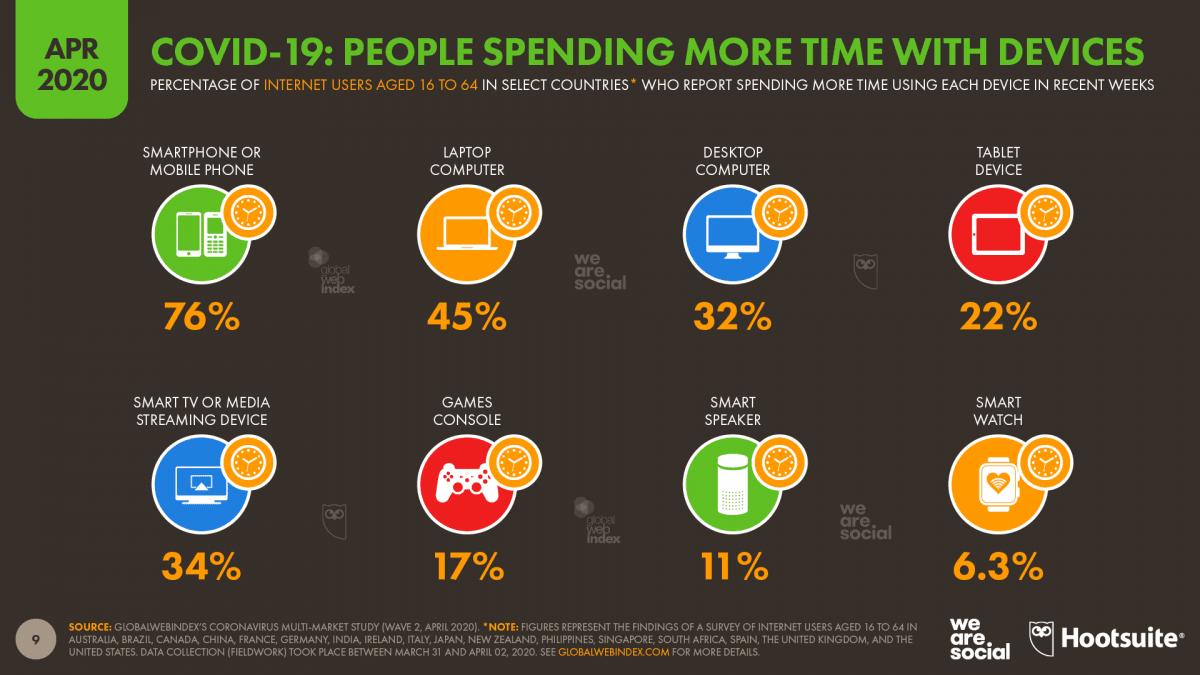
If a pandemic is a good time to get a dog, it’s also a good time to build the dog’s following. Stuck at home, people are spending lots more time online. In one global survey at the end of March, 43% of people said they were browsing social media more because of the pandemic, second only to streaming movies and TV shows.

That social media enthusiasm isn’t equally distributed. In the US, dogs are more popular than cats on and off Instagram, and right now, puppies are ascendant. According to social-monitoring tool CrowdTangle, the number of posts mentioning puppies jumped 38% in the last week of March, compared with the year-to-date weekly average. “Dog” rose a more modest 11%. “Cat,” meanwhile, showed an even smaller increase, slowly and indifferently rising over the next three weeks to a pandemic peak, up 9%.

That’s boosting the value of Dog Instagram, says Loni Edwards, a former lawyer who in 2015 founded a talent company to represent the human beings eager to monetize their pets’ adorability. “People are starting more accounts, they’re following more accounts, they’re liking, they’re engaging more, they’re spending more time on social media, which is just making the space more valuable,” she says.

In an otherwise bleak year for advertising, pet brands have become a bright spot, increasing spending on digital, TV and print promotions by 51% between January and March 23 compared with the same period in 2019, according to MediaRadar. As other Instagrammable industries — travel, beauty, dining, fashion — struggle to adapt their social media strategies to a stay-at-home world, cute animals remain, blissfully uncontroversial and increasingly attractive to advertisers.

“There’s a lot going on in the world. Just being able to take a mental break and see this adorable content is a wonderful thing,” says Edwards.

Hearts & Bones, a rescue based in Dallas and New York City, says it regularly has around 40 dogs in its care. Now there are just three, including Buddy Valastro, a Basset Hound mix named after the Cake Boss star. The organization is experiencing an “unprecedented level of interest in adoption,” it says. Puppies and dogs get snapped up as soon as their photos hit the web.

Shelter-in-place has resulted in animal shelters being emptied out, as the newly housebound seek furry friends to offset the loneliness of lockdown, or take advantage of weeks of work-from-home to raise their pups. Waiting lists at established breeders have surged. Online searches for puppies available for adoption and for sale are up sharply since March.

After searching out dogs online, new owners are eager to share their own. Fluffy white clouds of Samoyeds parade, English Bulldogs wiggle, and shy Shiba Inus get caught peeking out. Photos and, increasingly, videos, capture pups playing, eating, and sleeping. Like anything else on Instagram, it’s a carefully curated version of puppydom; gross parts are rarely shown. A whole new vocabulary — zoomies, bleps, sploots — describes their exploits. Trending hashtags like #TongueOutTuesday are self-explanatory.

“All of our friends have been adopting dogs recently and it’s like you have to start an account,” says Brittni Vega, who started the @harlowandsage account in 2013 to chronicle the contrast between her elderly Dachshund and younger Weimaraner. “It’s just so fun and you get attached to these dogs and it’s fun to see their daily life and nice to see them in happy homes.”

The sudden interest in all things canine has even caught the eye of Wall Street, with financial analysts more accustomed to crunching P/E ratios now pondering the popularity of Pomskies and Goldendoodles. “Prices of easy to look after crossbreeds such as Cockapoos have more than doubled,” declared BCA Research in a note sent to clients last month.

The ProShares Pet Care exchange-traded fund, better known as PAWZ, has surged 53% since the market bottomed in early March, outperforming the broader index. Animal-care prices are now one of the few areas where you can find inflation.

“It’s getting more and more saturated,” says Devon Noehring, who runs a 97,000-follower strong Instagram account for her Corgi pup, Willo. She says she earns about $400 per sponsored Instagram post. The major pet accounts can get up to $15,000 according to Edwards, the agent. “I’ve even started creating YouTube videos to help people who want to get into the Dog Instagram business,” says Noehring.

Golden retrievers and Labradors are America’s favorite breeds, but you wouldn’t know it from Instagram. The most popular pups on the network are French bulldogs, pugs, and bulldogs, with their genetically engineered bug-eyes and smushed faces, according to a study this year. What’s good for the ’gram isn’t always good for the dog, however. Many of these brachycephalic breeds come with significant respiratory issues and other health problems, making actual ownership a more expensive and high-maintenance proposition than social media might suggest.

Hilary Sloan, a rescue advocate who runs the enormously popular @ellabeanthedog account, points out that the media has always had a tendency to spawn trends. Demand for Dalmatians spiked after the release of Disney movies and Cavalier King Charles Spaniels got a boost from Sex and the City. “Social media is part of our daily life in a way that’s maybe more consistent, so it clearly has an impact,” she says.

The popularity of dogs with “merle” coats — a genetic quirk that results in a dappled appearance that looks particularly fetching in photos — seems to have soared in recent years. That fad also has an unfortunate side effect: the accidental breeding of “double merle” dogs at risk of severe hearing and vision impairment, occasionally born without eyes at all. “The number of merle and double merle pit bull-type dogs we have seen recently is astounding,” says Rose Adler, a professional dog trainer who co-runs a rescue organization for deaf and blind dogs called Keller’s Cause.

Social media also doesn’t reward prudence or patience. With many animal shelters emptied out and growing waiting lists for breeders, animal advocates say they’re concerned that eager pup parents will opt for instant gratification via pet stores and puppy mills. Frauds are also on the rise. The Better Business Bureau’s scam tracker showed 1,649 scams involving puppies between March and July 23, nearly triple the 586 logged in the same period last year.

Still, most dog loyalists believe that Instagram can be a rare force for good in the social media universe. Vega says that since the pandemic began, engagement has been higher on her accounts, including @harlowandfosters where she encourages adoption and shows off available dogs. Sloan, who lost her father to COVID-19 (coronavirus disease 2019) this year, feels the platform can help educate people about responsible dog ownership.

August Yocher, Mochi’s owner, is also enthusiastic. She’s used Instagram to track down Mochi’s littermate (@zoeyloaf) and arrange a playdate, and is running giveaways to mark new milestones in followers. “For right now, it’s just a fun thing to do,” she says. “But I get a lot of messages, at least 10 a day, for sponsorships.” — Bloomberg


BSP launches enhanced banknotes

THE BANGKO SENTRAL ng Pilipinas (BSP) launched the latest generation of banknotes equipped with heightened security features, distinction for better recognition and enhanced designs portraying indigenous culture.

Among the key features of the enhanced New Generation Currency (NGC) series are short horizontal lines to help distinguish the denominations, the BSP said. The NGC banknotes series now in circulation was first issued in December 2010.

“These banknotes are equipped with the latest anti-counterfeiting technology and embedded with tactile marks that will make it easier for the elderly and persons with disabilities to differentiate each denomination,” BSP Governor Benjamin E. Diokno said in his speech at the online launch on Wednesday.

“The banknotes without the enhanced features will remain legal tender and shall co-exist with the enhanced banknotes,” the BSP said in a statement.

The BSP said the enhanced banknotes were set to be released to banks after yesterday’s launch.

Each bill has short horizontal bands engraved at the extreme right and left sides of the note. The P50 bill features one pair of marks; two pairs for the P100 bill; three pairs for the P200 bill; four pairs for the P500; and five pairs of the tactile mark for the P1,000 banknote.

“We added tactile marks to the banknotes specifically intended to help the elderly and visually impaired to quickly identify the value or denomination of the banknote,” Mr. Diokno said.

The P500 and the P1,000 bills will now feature a roller bar effect on their value panels, making counterfeiting of these denominations more difficult.

Other features of the enhanced bills include dynamic movement of design patterns as well as color-shifting inks.

The banknotes also feature indigenous Filipino weaves in the windowed security thread to showcase the country’s culture.

“The BSP is confident that, with these features, the public will benefit in terms of the banknote security, its ease of recognition and inclusivity,” BSP Senior Assistant Governor D. Luna said.

Mr. Diokno said central banks generally redesign or enhance their banknotes every 10 years on average to protect the integrity of their currencies. The BSP in December unveiled a P20 coin and an enhanced design for the P5 coin for easier distinction from the P10.

Despite the enhanced features of the bills, Mr. Diokno said the central bank did not see a significant uptick in the cost of producing the new bills.

“We estimate that there is an average increase of 1% in the cost of production,” Mr. Diokno said.

The central bank chief said cash remains the choice for some Filipinos when purchasing and paying for services despite a recent shift towards digital transactions amid the pandemic.

“It is equally our priority to ensure that banknotes and coins are accessible, recognizable, and easily authenticated,” Mr. Diokno.

The BSP has also formed a technical working group to study the feasibility and policy implications of a central bank digital currency, he added. — L.W.T. Noble

Smart dangles 5G service

PLDT, INC.’s wireless arm Smart Communications, Inc. announced on Wednesday that its fifth-generation (5G) service will be commercially available to its subscribers in key commercial districts of Metro Manila starting July 30.

Smart will also be launching its initial lineup of 5G-certified handsets from Huawei, Samsung, RealMe and Vivo.

In a statement, the company said the devices will be available with Smart Signature plans in select Smart Stores.

“Starting July 30th, the 5G mobile phone network of Smart Communications is going live as a commercial service. In this initial phase of its commercial deployment, Smart Signature, Infinity and other Smart postpaid subscribers will be able to enjoy the super-fast data service of Smart 5G in key business districts of Metro Manila using Smart-certified handsets with 5G-activated SIMs,” the wireless services provider said.

Smart’s 5G service will be available in Araneta City, SM Megamall, Mall of Asia Bay Area, and the central business districts (CBDs) of Makati and Bonifacio Global City.

“Smart 5G is also being rolled out in key high-traffic areas such as North Avenue in Quezon City and Taft Avenue in Manila, as well as in Ortigas CBD, and Clark Green City in Pampanga,” the company said.

The announcement was made two days after President Rodrigo R. Duterte threatened to shut down Smart and Globe Telecom, Inc. if they fail to improve their services by December.

In June, PLDT Spokesperson Ramon R. Isberto said the 5G service will be launched by the fourth quarter of the year.

“As we roll out 5G in more areas of the country, this will complement the deployment of our 4G/LTE network, which is already the fastest and most extensive in the country. To date, Smart 4G/LTE and 3G coverage serves 95% of the country’s population,” Alfredo S. Panlilio, PLDT chief revenue officer and Smart president and chief executive officer, was quoted as saying in the statement.

2020 CAPEX TO REACH P70 BILLION
Smart said its 5G deployment plan requires steady investment efforts.

It noted that PLDT and Smart had spent some P260 billion in total capital expenditures (capex) over the last five years.

“In 2019 alone, the PLDT Group’s capex reached a record P72.9 billion. Moreover, the 2020 capex is expected to reach P70 billion despite the slowdown in network rollout due to the quarantine controls imposed in the second quarter of this year,” Smart said.

The capex program has made it possible for both PLDT and Smart to build the infrastructure for the deployment of 4G/LTE and 5G services.

Hastings Holdings, Inc., a unit of PLDT Beneficial Trust Fund subsidiary MediaQuest Holdings, Inc., has a majority stake in BusinessWorld through the Philippine Star Group, which it controls. — Arjay L. Balinbin

Tencent offers $2.1 billion for Chinese search giant Sogou

TENCENT Holdings Ltd. has offered to buy out and take private search engine Sogou, Inc. in a $2.1-billion deal, adding to a slew of Chinese technology giants seeking to delist from US bourses.

Shares of the social media heavyweight climbed as much as 4.7% on Tuesday, buoyed by speculation it will more closely integrate Sogou’s AI technology with its own services and devices to gain an edge on rivals like TikTok-owner ByteDance Ltd.

Tencent has in past years come under pressure from ByteDance and other up-and-coming rivals in the emergent short-video arena. Beijing-based Sogou — whose name translates as “search dog” — has long been the default in a slew of Tencent products including its marquee social app WeChat. It’s also been making a push into artificial intelligence.

A takeover of Sogou also raises the prospect of a lucrative listing in Hong Kong or Shanghai in the future, on the heels of well-received debuts by Alibaba Group Holding Ltd. and JD.com, Inc. It’s become an increasingly attractive route for tech giants such as Jack Ma’s Ant Group, which is speeding toward what could be the city’s biggest float in years. Sogou Chief Executive Officer Wang Xiaochuan in 2018 declared his ambition to list on mainland bourses when regulations permit.

Chinese internet companies are exploring listings closer to home after a proposed US bill threatened to force them to delist from New York by imposing stricter disclosure requirements — a prospect that looks increasingly plausible as the Trump administration amps up action against Beijing on multiple fronts. Online gaming company Changyou.com Ltd. got taken private this year by Sohu.com Ltd., and 58.com, Inc. is being bought out by a private equity consortium for $8.7 billion.

The “market has been anticipating more companies to pursue secondary listing in Hong Kong,” Jefferies analysts led by Thomas Chong wrote. “We consider there will be more synergies between Sogou and Tencent in search and smart devices in the future.”

Tencent is offering $9 in cash for each American depositary share it doesn’t already hold in Sogou, backed by fellow internet giant Sohu. That’s a 57% premium to the target company’s Friday close. Sogou said in a statement it was considering the takeover offer, though Tencent already owns about 39.2% of Sogou but controls a majority of voting power.

Sogou, founded in 2005 and merged with Tencent’s Soso search business in 2013, has counted on its partnership with the larger company to help it catch search leader Baidu, Inc. Its 2017 IPO also helped bankroll a longer-term AI effort — about three quarters of its employees are now involved in research and development, according to its website.

Sohu’s shares gained 40% in New York, their most in a decade, while Sogou leapt a record 48% to close the gap with the offer price. — Bloomberg

ADVERTISEMENT
ADVERTISEMENT