UNITED NATIONS — UN Secretary-General Antonio Guterres warned on Tuesday that the world faces a “generational catastrophe” because of school closures amid the coronavirus pandemic and said that getting students safely back to the classroom must be “a top priority.”
Mr. Guterres said that as of mid-July schools were closed in some 160 countries, affecting more than 1 billion students, while at least 40 million children have missed out on pre-school.
This came on top of more than 250 million children already being out of school before the pandemic and only a quarter of secondary school students in developing countries leaving with basic skills, he said in a video statement.
“Now we face a generational catastrophe that could waste untold human potential, undermine decades of progress, and exacerbate entrenched inequalities,” said Mr. Guterres as he launched a UN “Save our Future” campaign.
“Once local transmission of COVID-19 is under control, getting students back into schools and learning institutions as safely as possible must be a top priority,” he said. “Consultation with parents, carers, teachers and young people is fundamental.”
The UN recommendations for getting global education back on track come as US President Donald Trump pushes for schools to reopen in the face of opposition from some teachers and parents while COVID-19 is surging in many parts of the country.
The coronavirus, which first appeared in China late last year, has infected 4.6 million people in the US and killed more than 155,000 Americans since February, according to a Reuters tally. Deaths rose by over 25,000 in July and cases doubled in 19 states during the month.
Globally the coronavirus has infected at least 18.1 million people and there have been more than 689,000 known deaths worldwide, according to the Reuters tally. — Reuters
ANTHONY DAVIS scored 42 points and grabbed 12 rebounds Monday, and the Los Angeles Lakers clinched the no. 1 seed in the Western Conference playoffs with a 116-108 victory over the Utah Jazz at the ESPN Wide World of Sports Complex near Orlando.
LeBron James contributed 22 points and nine assists, and Dwight Howard added 11 points as the Lakers improved to 2-1 in restart games, rebounding from a loss to the defending champions Toronto Raptors on Saturday.
Donovan Mitchell scored 33 points, 21 of which came in the first half, and Mike Conley added 24 as the Jazz lost their second consecutive game after winning the opening game of the National Basketball Association’s return in central Florida on Thursday.
The Lakers (51-15) took control of a tight game with a 14-0 run late in the third quarter, turning a deficit into an 81-71 advantage. The period ended on a 19-5 Lakers run.
In their three games of the restart, the Lakers have not faced a team below the top four spots in either conference. They defeated the Western Conference’s second-place team, the Los Angeles Clippers, on Thursday before falling to the Raptors, the no. 2 team in the East.
The Jazz (42-25) entered play Monday tied for fourth in the West, though they slipped to no. 5 behind the Houston Rockets (42-24) with their loss.
The Lakers shot 50% from the field Monday and 34.6% from 3-point range, one game after shooting 35.4% and 25% in those categories, respectively.
Davis was more involved from the outset. He scored 14 points and took just seven shots from the field against the Raptors, but he had 13 points and 14 shots from the field in the first quarter against the Jazz. He finished 13-of-28 from the field, including 4-of-8 from 3-point range.
The Jazz shot 44.6% from the field and 27.9% from 3-point range, one game after shooting 39.1% and 25.8% in those categories, respectively, in a defeat to the Oklahoma City Thunder on Saturday.
Rudy Gobert scored 16 points and pulled down 13 rebounds for Utah while Royce O’Neale added 13 rebounds. — Reuters
THE government agency tasked with regulating and supervising professional sports and allied activities in the country, the Games and Amusements Board (GAB) is continuing to build its legs to better deliver on its responsibilities, especially during this time of the coronavirus pandemic.
This was the assurance made by GAB Chairman Baham Mitra as he graced the online Philippine Sportswriters Association Forum on Tuesday.
Busier of late as different professional sports organizations and stakeholders turn to them for direction amid the ongoing coronavirus disease 2019 (COVID-19) pandemic, Mr. Mitra said the GAB is holding its own, taking on the challenge head-on and adjusting accordingly.
“We’re not saying that we’re total ready but we’re getting there. We know this is a health issue and among the things we’re doing is mobilizing our medical group, making it stronger to be of assistance for groups seeking our help,” said Mr. Mitra.
As an organization, the GAB oversees the affairs of pro sports and activities like association football, boxing, basketball, billiards and esports as well as cockfighting and horse racing.
Among its duties is to combat and prevent the existence and proliferation of different forms of organized illegal gambling connected with all play-for-pay sports and amusement games, issue licenses to pro sports practitioners, and grant permits to holding of pro sports events and activities.
Recently, the GAB, along with the Department of Health and Philippine Sports Commission, was tasked by the government to come up with a Joint Administrative Order (JAO) to be used during the pandemic.
The JAO contains the implementing guidelines governing the conduct of professional and nonprofessional sports training while the country is under community quarantine, and grants approval for organizations which sought for the document to resume some activities.
The Philippine Basketball Association, Philippines Football League, Chooks-to-Go 3×3 Pilipinas, and the Philippine SuperLiga have been given a JAO and are preparing to resume activities once conditions permit them.
Mr. Mitra said what they are doing during this time of the pandemic is just a continuation of their push in the last few years, anchored on making necessary changes for improvement and adapting with the times.
“Many have noticed that a lot of changes have been happening within GAB and it is related to the call of the government to institute changes and we’re taking cue from that,” the GAB chairman said.
“Well we have been employing a reorganization, adapting with the times in how certain sports and activities are being done. We are also doing automation in our processes,” Mr. Mitra added.
Mr. Mitra went on to say that just like the country’s sporting community, they, too, in GAB cannot wait for sports activities to resume but recognize that because of the uncertainty brought about by COVID-19 things have to be rightfully and carefully done.
“We just have to follow government rules in relation to the pandemic. We don’t want sports to take the blame in case there are new cases that come up. Hopefully things get better at the end of the year,” Mr. Mitra said. — Michael Angelo S. Murillo
THERE will be no automatic qualification for FIBA Basketball World Cup 2023 co-host Indonesia. This, after the world basketball governing body ruled that the Southeast Asian country has to earn its spot in the global hoops spectacle.
In an announcement released on Monday, the FIBA Executive Committee said unlike its co-hosts the Philippines and Japan, which have earned direct qualification for the World Cup, Indonesia’s men’s national team needs to work their way to the tournament proper, particularly having to finish in the top eight at the FIBA Asia Cup happening next year.
The ruling deviates from the usual process of allowing the host direct entry to the tournament. Unlike the Philippines and Japan which have competed in the World Cup, the most recent last year in China, Indonesia has yet to make it to the tournament.
The FIBA Asia Cup is Asia and Oceania’s premier men’s national team competition and for the first time ever national teams need to qualify for the competition through a number of home-and-away qualifiers, which began in February this year.
Next year’s edition of the Asia Cup will take place from Aug. 17 to 29, with a total of 16 teams.
Currently, Indonesia, which incidentally is being handled by former Gilas Pilipinas coach Rajko Toroman, is struggling in the FIBA Asia Cup Qualifiers with a 0-2 record in Group A.
Indonesia lost to the Philippines and Korea in its first two assignments before the proceedings were halted early this year because of the coronavirus disease 2019 (COVID-19) pandemic.
The top two teams in the six groups in the qualifiers advance directly to the FIBA Asia Cup while the third-place teams battle it out in the second round for the remaining four spots.
In FIBA Asia Cup 2021, if Indonesia achieves the target of making the top eight, the number of qualification spots for the FIBA Basketball World Cup 2023 Asian Qualifiers will be reduced by one. If Indonesia does not achieve the target, the general rules for qualification to the FIBA Basketball World Cup 2023 applicable to other Asia and Oceania National Federations shall apply, FIBA said.
For the first time in the competition’s history, the FIBA Basketball World Cup 2023 will be staged in more than one host country. The Group Phase will take place in Indonesia, Japan and the Philippines, with the Final Phase to follow in Manila.
The tournament will once again feature 32 national teams from around the world. Qualification for the FIBA Basketball World Cup 2023 will take place from November 2021 to February 2023, with 80 national teams competing for a spot in the World Cup. — Michael Angelo S. Murillo
MUMBAI/BENGALURU — Players need assurance that they would not face mandatory quarantine upon returning to Europe from the US Open before traveling to New York amid the COVID-19 pandemic, former world number one Andy Murray has said.
Organizer United States Tennis Association (USTA) will set up a strict bio-security “bubble” to minimize the risk of contracting the novel coronavirus during the Grand Slam, which will be played from Aug. 31-Sept. 13.
The Western & Southern Open, which was relocated from Cincinnati this year because of COVID-19, will also be held in New York from Aug. 20-28 and will serve as a tune-up for the hardcourt Grand Slam.
Murray, a two-time champion at Cincinnati, was on Monday awarded a wildcard at the Western & Southern Open which has the likes of Novak Djokovic, Rafa Nadal and Daniil Medvedev also in the field.
Mandatory quarantine would rule out players’ participation in other ATP and WTA claycourt events scheduled in Europe before the French Open from the end of September.
The two major claycourt events in the leadup to Roland Garros are in Madrid (Sept. 13-20) and Rome (Sept. 20-27).
While Spain does not require mandatory quarantine, Italy would need travelers to quarantine for 14 days if coming from the US. The USTA has said the organizers are working with relevant authorities to resolve issues.
“My understanding is that it would be sorted before we go to America. But things can change in the next 10 to 12 days,” Murray told British media.
“Hopefully before we leave, the players will have the assurances that, when they come back from America, they won’t have to quarantine for two weeks.
“If that is the case, and if you do well in the US Open, you can’t just arrive on the Sunday before the French Open starts on the Monday. That’s not going to work.”
Unites States has over 4.68 million confirmed cases of COVID-19 with more than 155,000 deaths.
Murray, a three-time Grand Slam winner, has not played competitively since November due to hip problems but took part in some exhibition events recently with the professional circuit shut.
The 33-year-old said he is willing to take the travel “risk” as he missed playing in big events.
“The situation I’ve been in the last few years, I’ve not had opportunity to play in many Slams. I don’t know how many I’ll have left,” Murray said.
“So, while I’m feeling relatively decent … obviously there is a risk there, but I want to try and play in them and enjoy the biggest events again.” — Reuters
PARTICIPANTS who registered for the canceled PRURide PH 2020 can start claiming their refund beginning this month till November, organizers have said.
Set to happen from March 11-15 at Mimosa Drive in Clark, Pampanga, the cycling festival was forced to be scrapped by life insurer Pru Life UK because of the ongoing coronavirus disease 2019 (COVID-19) pandemic, citing health and safety concerns.
PRURide PH 2020 was touted to be another exciting event, featuring more than 2,500 cyclists, including 18 local and international professional teams, who will race in 10 categories.
Among the categories on offer were the Virtual PRURide, and PRURide Criterium which features different races, including fixed gear, road bike, and mountain bike races.
Bannering the PRURide PH 2020 would have been the PRURide UCI 2.2 Stage Races, a three-day race accredited by world governing body Union Cycliste Internationale (UCI), where cyclists could chalk up points to advance to bigger international competitions.
For the refund of registration fees, registered participants are requested to send an e-mail to info@pruride.ph with the subject “Refund Request – (insert 6-digit transaction number)” with the following details: Registered name; name of bank; branch of account; bank account type; bank account name; and Bank account number (including all zeros at the beginning).
Despite the cycling event being canceled, Pru Life UK is still encouraging people to take up an active lifestyle and develop passion for cycling through its all-in-one health management app called Pulse.
Through the app they can register and join the Cycling – PRURider Community for free. They can also get further announcements and updates on PRURide PH. Pulse is currently available for free download by all users of Android and iOS devices. — Michael Angelo S. Murillo
It’s hard to deem a play occurring with more than half the fourth quarter still to be negotiated as pivotal. Even in a close match, such a turn of events can easily be tabbed run of the mill; the extremely fast pace of pro hoops typically produces bang-bang sequences from opening tip to final buzzer. Nonetheless, there can be no doubting the impact the flagrant foul slapped on the Heat’s Kelly Olynyk off a rebound battle with 6:56 remaining in the payoff period had on the set-to, and not simply because the immediate aftermath — two free throws (from supposedly offended party Kyle Lowry) and a basket — saw the Raptors turn a tie into a lead it would not relinquish.
True, the Heat fought and clawed until the very end. They were even able to bring the deficit down to one with 41.4 ticks left on the clock; unfortunately, the effort required proved too much — and the time too little — for them to overcome. And it’s with no small measure of irony that the Raptors’ margin of victory would equal the number of points gained from the controversial call. In this regard, the admission of referee David Guthrie that he erred in whistling Olynyk for the flagrant foul doesn’t help, and actually adds insult to injury. Imagine being handicapped by a mistaken assessment that was upheld even after a supposedly thorough video review.
That said, the Raptors deserve major props for taking advantage of the opportunities given them. There will be missteps from the men in gray; the action is just too fast, and the contact too furious, for three impartial watchers to oversee with complete accuracy and fairness. Judgments are made on the fly, with sins of commission and omission part and parcel of the so-called breaks of the game. Under the circumstances, the better teams separate themselves from the dregs of the National Basketball Association by knowing how to roll with the punches, generate momentum in the face of adversity, and stay focused on the task at hand regardless of developments.
For longtime followers of the sport, the Raptors need no propping up. If they’re not talked about a lot in media, it’s because their workmanlike style does not appeal to casual observers. The results are clear, though — beginning with the Larry O’Brien Trophy they earned (and for which departed star Kawhi Leonard is accorded too much credit), continuing with their remarkable consistency, and possibly ending with another stint at the top. For all the interest generated by more fashionable picks like the Bucks and Celtics — and even the Sixers — in the East, they possess the bragging rights until they’re dethroned.
Frankly, the Raptors don’t care. They’re fine with letting such notables as the Lakers hog headlines. After all, they know the real score; as they showed all and sundry throughout their shellacking of the purple and gold over the weekend, they can hang with the best. And, in manifesting their unshakable self-assurance, they aim to do so until they’re again declared first among equals.
Anthony L. Cuaycong has been writing Courtside since BusinessWorld introduced a Sports section in 1994. He is a consultant on strategic planning, operations and Human Resources management, corporate communications, and business development.
The hospitality industry has to re-skill and upskill to weather the COVID-19 pandemic, said experts.
“That is the best possible thing that anyone can do right now: to position yourself with the right skills and the right knowledge to jump immediately back in the industry,” said John Lohr, director of development, school relations at global hospitality network Hosco, in a recent webinar.
Health and hygiene protocols have received more attention because of the pandemic. International and local hospitality companies, such as Hilton and Marivent Resort Hotel, Inc.,are already implementing safety standards at their accommodations based on guidelines from public and private health organizations. The workforce must keep up with new knowledge if they hope to be chosen and retained by employers.
Soft skills like leadership, agility, stress resistance, and optimism are also in demand. Aside from allowing hospitality workers to manage their mental health, these skills are valuable in dealing with customers and colleagues.
“As it gets harder and they have to lay people off, how do they deal with that… What skills do they need to manage their people better and to have empathy and to understand?” said Andy Cuthbert, general manager of the Jumeirah Creekside Hotel in the United Arab Emirates. “It’s understanding what is the reaction to your action,” he added. The hotel conducts leadership training sessions for their employees online.
According to Mr. Lohr, there will be a talent shortage in the hospitality industry during the pandemic recovery period. The École hôtelière de Lausanne, a Swiss hospitality management school, reported that anincreasing expectation for workers to use technology has pushed out older talent and those who are less familiar with technology.
To address this gap, hospitality companies and organizations should consider partnering with academia to create curricula. This relationship will also shorten the time it takes for students to enter the workforce. One possible execution is offering short courses backed by a school.
“It’s about more bite-sized learning and learning additional skills without necessarily going through school for two to three years, which takes people out of the workplace,” said Jeremy Dahdi, executive director for international and digital credentialing at City & Guilds, an organization for work-based qualifications.
Another option is to certify workers who acquired their skills by learning on the job instead of attending school. City & Guilds, for example, offers global hospitality certification for jobs across culinary, food and beverage, front of house, and housekeeping.
“One of the great things about the global certification is that you can achieve a digital credential to recognize your skills that is transportable. You can then take that anywhere in the world and still be recognized,” said Mr. Dahdi.
Held this July, the “The Future of Work in Hospitality” webinar was part of Food & Hotel Digital Week, organized by Saladplate, an online marketplace designed for food and hotel professionals.
White House adviser Peter Navarro, one of the top administration opponents to the TikTok deal, to argue that Microsoft may not be the best suitor for the unit of China-based ByteDance Ltd., or that Microsoft should perhaps be made to divest its Chinese holdings should it acquire TikTok in the US.
Microsoft Corp.’s attempt to buy TikTok’s US operations represents the latest step in a careful dance the software maker has performed to meet the demands of the Chinese and US governments while doing business in both places, a balancing act that has grown increasingly fraught in the political conflict between the countries.
China hawks in the Trump administration oppose any purchase of the social-media service by Microsoft, which wants the popular app to expand its consumer internet business in the US. But the company also wants to maintain its robust business in China, the world’s most populous country.
Microsoft entered China in 1992, helping to engineer the government’s computer systems and installing special versions of Windows operating systems that would comply with the country’s censorship controls. Early on, the company launched a massive research operation in China, churning out a feeder system of tech executives who would go on to start or work at many of China’s biggest tech companies. The large presence endeared the Redmond, Washington-based company to Chinese officials, who allowed Microsoft to maintain the only major Western-run search engine and social media companies in Bing and LinkedIn, albeit censored versions.
The company also operates cloud services under a joint venture with a Chinese company and its Xbox console was the first of that type of video-game device approved for sale in China, again through a joint venture. In September, Microsoft president Brad Smith criticized US President Donald Trump and his administration for what he called unfair treatment of Chinese telecom giant Huawei Technolgies Co., raising the ire of some Republican senators.
That longstanding relationship has prompted White House adviser Peter Navarro, one of the top administration opponents to the TikTok deal, to argue that Microsoft may not be the best suitor for the unit of China-based ByteDance Ltd., or that Microsoft should perhaps be made to divest its Chinese holdings should it acquire TikTok in the US.
“Whose software does the People’s Liberation Army and China run on? Microsoft,” Mr. Navarro told CNN on Monday. “The Chinese Communist Party, whose software do they use to do all the things they do? It’s Microsoft. So this is not a white hat company. It’s an American company, it’s clearly a multinational company, that’s made billions in China, that enables Chinese censorship through things like Bing and Skype.
“Microsoft is one of one of four or five American technology companies, Yahoo, Google, Cisco and others, who helped China originally build the Great Firewall of China, which is used to surveil, track, monitor, censor and imprison the Chinese people,” Mr. Navarro said. “But more importantly, one of the few surviving search engines from America in China is Bing and Microsoft owns Bing so we know that there’s some some fishy stuff going on there.”
The Great Firewall of China is the term used to describe the combination of regulation, technology and human monitoring used to control and restrict the internet in the country. Internet products such as Google’s search engine and Facebook Inc.’s main social network aren’t available in China due in part to the reluctance of the US companies to censor information for the Chinese government.
A Microsoft spokesman declined to comment.
Microsoft has emerged as a top contender to buy TikTok partly because Facebook, Alphabet Inc.’s Google and other tech giants are being scrutinized by US regulators and lawmakers over antitrust issues. Microsoft, which settled antitrust cases almost two decades ago, now occupies an enviable position of relative trust among big tech companies. Rival Slack Technologies Inc. has made a complaint against Microsoft in Europe and may do the same in the US, so that could change.
While it has sued the Trump administration several times on issues surrounding cloud data privacy and immigration, Microsoft also has maintained friendly relations, particularly through large contracts with the government. It was recently awarded a massive Defense Department cloud contact over rival Amazon.com Inc., which Amazon is alleging in a lawsuit stemmed from Trump’s bias against the e-commerce giant, and unlike Google, Microsoft hasn’t avoiding bidding for military technology deals.
Over the weekend, Microsoft Chief Executive Officer Satya Nadella held talks with Trump, which for the time being salvaged Microsoft’s efforts on TikTok after Trump told reporters Friday night that he planned to ban the app from the US
Microsoft has faced challenges with the Beijing government, too, and has struggled to contain software piracy in the country. Its offices were raided in 2014 as part of an anti-monopoly investigation that ran for several years. The Windows operating system had been banned at times from Chinese government computers, leading Microsoft to offer an altered version that allows the government to use its own encryption and removes some apps and features. And while China accounts for about 18% of the world’s population, it’s less than 2% of Microsoft’s sales, partially because the Chinese market isn’t fully open to US companies, Mr. Smith said at a conference in January.
Still, Microsoft’s approach differs from rival Google, which pulled its search engine from China in 2010 over concerns about censorship and has since scrapped some search and cloud initiatives it was working on for that market. Last year, the company ended a secretive project, called Dragonfly, to build a new search app in China. In May, Google shut down a plan to offer a new cloud service in China and other politically sensitive countries due, in part, to concerns over geopolitical tensions, sources told Bloomberg News last month. Microsoft and Amazon both offer this kind of cloud service, which lets countries keep data stored locally. Still, at a congressional antitrust hearing last week, multiple lawmakers hammered Google for its recent efforts in China, including setting up an AI lab in Beijing.
For a company to successfully acquire TikTok in the US, it will have to pass national security and antitrust muster with Beijing and Washington. Microsoft’s careful work with both governments may make it one of the few that can thread the needle. At the same time, it’s bound to arouse suspicion from both sides that it’s too close to the other. — Bloomberg
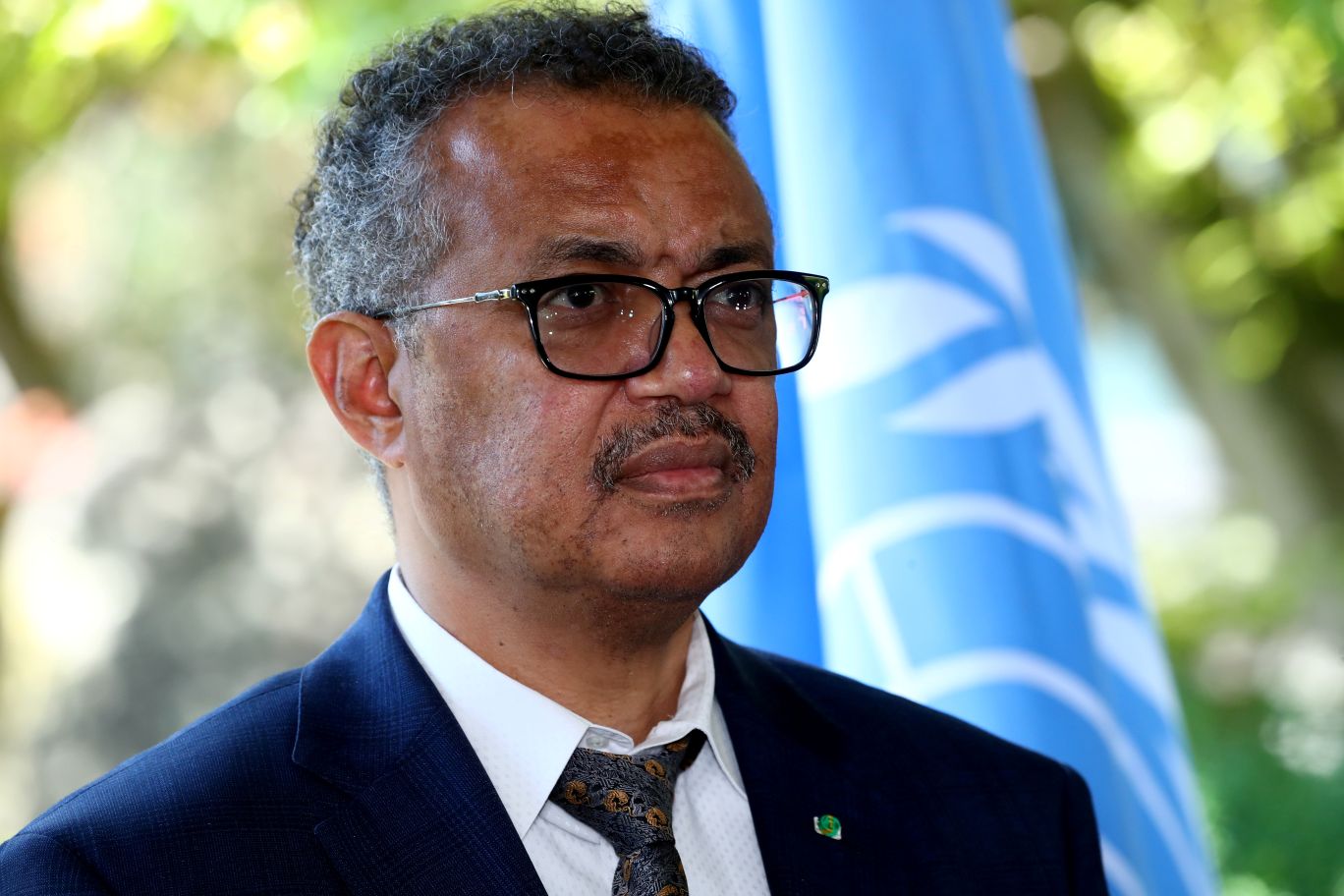
WHO Director-General Tedros Adhanom Ghebreyesus said that, while the coronavirus was the biggest health emergency since the early 20th century, the international scramble for a vaccine was also “unprecedented.” Image via Reuters.
GENEVA — The World Health Organization (WHO) warned on Monday that there might never be a “silver bullet” for COVID-19 in the form of a perfect vaccine and that the road to normality would be long, with some countries requiring a reset of strategy.
More than 18.14 million people around the world are reported to have been infected with the disease and 688,080 have died, according to a Reuters tally, with some nations that thought they were over the worst experiencing a resurgence.
WHO Director-General Tedros Adhanom Ghebreyesus and WHO emergencies head Mike Ryan exhorted nations to rigorously enforce health measures such as mask-wearing, social distancing, hand-washing, and testing.
“The message to people and governments is clear: ‘Do it all’,” Mr. Tedros told a virtual news briefing from the UN body’s headquarters in Geneva. He said face masks should become a symbol of solidarity around the world.
“A number of vaccines are now in phase three clinical trials and we all hope to have a number of effective vaccines that can help prevent people from infection. However, there’s no silver bullet at the moment—and there might never be.”
The WHO head said that, while the coronavirus was the biggest health emergency since the early 20th century, the international scramble for a vaccine was also “unprecedented.”
But he underscored uncertainties. “There are concerns that we may not have a vaccine that may work, or its protection could be for just a few months, not more. But until we finish the clinical trials, we will not know.”
‘THE WAY OUT IS LONG’ Mr. Ryan said countries with high transmission rates, including Brazil and India, needed to brace for a big battle: “The way out is long and requires a sustained commitment,” he said, calling for a “reset” of approach in some places.
“Some countries are really going to have to take a step back now and really take a look at how they are addressing the pandemic within their national borders,” he added.
Asked about the US outbreak, which White House coronavirus experts say is entering a “new phase,” he said officials seemed to have set out the “right path” and it was not the WHO’s job to do so.
The WHO officials said an advance investigation team had concluded its China mission and laid out the groundwork for further efforts to identify the origins of the virus.
The study is one of the demands made by top donor the United States which plans to leave the body next year, accusing it of being too acquiescent to China.
A larger, WHO-led team of Chinese and international experts is planned next, including in the city of Wuhan, although the timing and composition of that was unclear. Mr. Ryan said China had already given some information but knowledge gaps remained. — Reuters
Companies are studying the impact of the forced work-from-home experiment on productivity, morale, culture, costs, and other factors to determine how they might modify their practices going forward.
We log longer hours. We attend more meetings with more people. And, we send more e-mail.
From New York City to Tel Aviv, the telecommuting revolution has meant a lot more work, according to a study of 3.1 million people at more than 21,000 companies across 16 cities in North America, Europe and the Middle East.
The researchers compared employee behavior over two 8-week periods before and after COVID-19 lockdowns. Looking at e-mail and meeting meta-data, the group calculated the workday lasted 48.5 minutes longer, the number of meetings increased about 13% and people sent an average of 1.4 more e-mail messages per day to their colleagues.
In a few cities, such as Los Angeles and Chicago, the average workday length returned to its pre-pandemic levels. But longer days persisted in New York City, San Jose, and most of Europe well into May.
“People have adjusted their work patterns,” said Jeff Polzer, a professor in the organizational behavior department at Harvard Business School, one of the study’s five co-authors.
During the two month time frame, there was one part of working that did improve: Those additional meetings were shorter, according to the analysis by researchers at Harvard Business School and New York University. The study was published by the National Bureau of Economic Relations this July.
Companies are studying the impact of the forced work-from-home experiment on productivity, morale, culture, costs, and other factors to determine how they might modify their practices going forward. Other analyses looking at VPN data found people were putting in three additional hours in the US and logging in at odd hours. People who spoke to Bloomberg News attributed their harried schedules to child care demands, blurring boundaries between work and home, and the stresses of an economic recession.
The group from Harvard and NYU said their research represents one of the largest studies so far and included data from 16 metropolitan areas.
Mr. Polzer from Harvard says more research is needed to see if habits have changed permanently, but he doesn’t expect behavior to return to pre-pandemic levels anytime soon. “It’s not like we’re going to back to normal times,” he said. — Bloomberg
With mounting evidence that some COVID-19 survivors face months, or possibly years, of debilitating complications, healthcare experts are beginning to study possible long-term costs. Image via Reuters.
NEW YORK — Late in March, Laura Gross, 72, was recovering from gall bladder surgery in her Fort Lee, New Jersey, home when she became sick again.
Her throat, head, and eyes hurt, her muscles and joints ached and she felt like she was in a fog. Her diagnosis was COVID-19. Four months later, these symptoms remain.
Ms. Gross sees a primary care doctor and specialists including a cardiologist, pulmonologist, endocrinologist, neurologist, and gastroenterologist.
“I’ve had a headache since April. I’ve never stopped running a low-grade temperature,” she said.
Studies of COVID-19 patients keep uncovering new complications associated with the disease.
With mounting evidence that some COVID-19 survivors face months, or possibly years, of debilitating complications, healthcare experts are beginning to study possible long-term costs.
Bruce Lee of the City University of New York (CUNY) Public School of Health estimated that if 20% of the US population contracts the virus, the one-year post-hospitalization costs would be at least $50 billion, before factoring in longer-term care for lingering health problems. Without a vaccine, if 80% of the population became infected, that cost would balloon to $204 billion.
Some countries hit hard by the new coronavirus—including the United States, Britain and Italy— are considering whether these long-term effects can be considered a “post-COVID syndrome,” according to Reuters interviews with about a dozen doctors and health economists.
Some US and Italian hospitals have created centers devoted to the care of these patients and are standardizing follow-up measures.
Britain’s Department of Health and the US Centers for Disease Control and Prevention are each leading national studies of COVID-19’s long-term impacts. An international panel of doctors will suggest standards for mid- and long-term care of recovered patients to the World Health Organization (WHO) in August.
YEARS BEFORE THE COST IS KNOWN More than 17 million people have been infected by the new coronavirus worldwide, about a quarter of them in the United States.
Healthcare experts say it will be years before the costs for those who have recovered can be fully calculated, not unlike the slow recognition of HIV, or the health impacts to first responders of the Sept. 11, 2001 attacks on the World Trade Center in New York.
They stem from COVID-19’s toll on multiple organs, including heart, lung and kidney damage that will likely require costly care, such as regular scans and ultrasounds, as well as neurological deficits that are not yet fully understood.
A JAMA Cardiology study found that in one group of COVID-19 patients in Germany aged 45 to 53, more than 75% suffered from heart inflammation, raising the possibility of future heart failure.
A Kidney International study found that over a third of COVID-19 patients in a New York medical system developed acute kidney injury, and nearly 15% required dialysis.
Dr. Marco Rizzi in Bergamo, Italy, an early epicenter of the pandemic, said the Giovanni XXIII Hospital has seen close to 600 COVID-19 patients for follow-up. About 30% have lung issues, 10% have neurological problems, 10% have heart issues and about 9% have lingering motor skill problems. He co-chairs the WHO panel that will recommend long-term follow-up for patients.
“On a global level, nobody knows how many will still need checks and treatment in three months, six months, a year,” Mr. Rizzi said, adding that even those with mild COVID-19 “may have consequences in the future.”
Milan’s San Raffaele Hospital has seen more than 1,000 COVID-19 patients for follow-up. While major cardiology problems there were few, about 30% to 40% of patients have neurological problems and at least half suffer from respiratory conditions, according to Dr. Moreno Tresoldi.
Some of these long-term effects have only recently emerged, too soon for health economists to study medical claims and make accurate estimates of costs.
In Britain and Italy, those costs would be borne by their respective governments, which have committed to funding COVID-19 treatments but have offered few details on how much may be needed.
In the United States, more than half of the population is covered by private health insurers, an industry that is just beginning to estimate the cost of COVID-19.
CUNY’s Mr. Lee estimated the average one-year cost of a US COVID-19 patient after they have been discharged from the hospital at $4,000, largely due to the lingering issues from acute respiratory distress syndrome (ARDS), which affects some 40% of patients, and sepsis.
The estimate spans patients who had been hospitalized with moderate illness to the most severe cases, but does not include other potential complications, such as heart and kidney damage.
Even those who do not require hospitalization have average one-year costs after their initial illness of $1,000, Mr. Lee estimated.
‘HARD JUST TO GET UP’ Extra costs from lingering effects of COVID-19 could mean higher health insurance premiums in the United States. Some health plans have already raised 2021 premiums on comprehensive coverage by up to 8% due to COVID-19, according to the Kaiser Family Foundation.
Anne McKee, 61, a retired psychologist who lives in Knoxville, Tennessee and Atlanta, had multiple sclerosis and asthma when she became infected nearly five months ago. She is still struggling to catch her breath.
“On good days, I can do a couple loads of laundry, but the last several days, it’s been hard just to get up and get a drink from the kitchen,” she said.
She has spent more than $5,000 on appointments, tests and prescription drugs during that time. Her insurance has paid more than $15,000 including $240 for a telehealth appointment and $455 for a lung scan.
“Many of the issues that arise from having a severe contraction of a disease could be 3, 5, 20 years down the road,” said Dale Hall, Managing Director of Research with the Society of Actuaries.
To understand the costs, US actuaries compare insurance records of coronavirus patients against people with a similar health profile but no COVID-19, and follow them for years.
The United Kingdom aims to track the health of 10,000 hospitalized COVID-19 patients over the first 12 months after being discharged and potentially as long as 25 years. Scientists running the study see the potential for defining a long-term COVID-19 syndrome, as they found with Ebola survivors in Africa.
“Many people, we believe will have scarring in the lungs and fatigue … and perhaps vascular damage to the brain, perhaps, psychological distress as well,” said Professor Calum Semple from the University of Liverpool.
Margaret O’Hara, 50, who works at a Birmingham hospital is one of many COVID-19 patients who will not be included in the study because she had mild symptoms and was not hospitalized. But recurring health issues, including extreme shortness of breath, has kept her out of work.
Ms. O’Hara worries patients like her are not going to be included in the country’s long-term cost planning.
“We’re going to need … expensive follow-up for quite a long time,” she said. — Reuters