

Home Blog Page 9207

Why public institutions matter in pandemic and non-pandemic times

The Philippines is at a critical juncture in its history as the COVID-19 virus continues to wreak havoc on our health and economy. Last week, the Philippine Statistics Authority reported that gross domestic product (GDP) dropped by 0.7% during the first quarter and 16.5% during the second quarter of 2020. The announcement confirmed the country’s descend into economic recession given two consecutive quarters of negative growth.

The last time the GDP sank dramatically was during the dying years of the Marcos regime when GDP dived by 10.5% during the first quarter of 1985. The economic crisis under authoritarianism was fomented by the unchecked exercise of executive discretion, widespread crony capitalism, and the absence of strong public institutions for rules-based governance which drove investors away.

A key role of public institutions is to level the playing field in both political and economic competition. Institutions enable the effective application of rules, constraints and incentives that govern the behavior of actors in a system. To function well, institutions should be able to exercise independence from particularistic interests in society. It is important for them to maintain their integrity, transparency and accountability. In the Stratbase ADRi forum on “Continuing Political Development Towards a Better (New) Normal: Making Public Institutions Matter” last week, Dr. Ronald Mendoza, Dean of the Ateneo School of Government, emphasized that power in politics and economics, when left in the hands of the few, can lead to abuse and failure.

The prevalence of captured institutions and abuse of power brought the economy to its knees during the authoritarian years. The unimaginable amounts of money wasted in corruption at that time was fueled by what Dr. Belinda Aquino, Asian Studies Emeritus Professor of the University of Hawaii, referred to as the politics of plunder. The restoration of democracy in 1986 brought hope that the reinstitution of a system of checks and balances, independent media, and rule of law would provide a better environment for the economy to grow. While corrupt practices have persisted, they have been moderated by the presence of oversight audit, legislative, and executive bodies. While political clans have remained, they must compete in regular electoral exercises.

It has taken more than two decades to establish credible institutional mechanisms to regain investor confidence in the Philippine economy. According to Dr. Mendoza, these required slow, painstaking moves for reforms that were pushed and carried over across the single-term presidential administrations. Among the crucial reforms were the creation of an independent Central Bank, the installation of a Competition Commission, the setting up of an effective fiscal and treasury system, building strong checks and balances, and oversight provisions in public procurement, public-private partnership tenders, and government-owned and controlled corporation activities.

The results of these reform efforts were certainly worth the wait. The legacy of the authoritarian years that saw a decrease in GDP per capita after 1982 lingered for two decades until 2003 when the same GDP per capita level was reached and higher levels registered in the succeeding years. GDP growth rates averaged at more than 6% for the past five years. The pursuit of a judicious borrowing and disciplined repayment program over the years earned the country a good sovereign credit rating.

The steady growth rate of the economy now grinds to a halt with the vicious COVID-19 pandemic. Many countries, including the Philippines, call for emergency authority and funds for the executive to swiftly and efficiently respond to the health crisis. As huge public funds are now being allocated and used to address the health crisis and deteriorating economic conditions, it is important that institutional safeguards for transparent and accountable governance, checks and balances, and strong audit and legislative oversight are in place.

Institutional reforms to prevent the excesses of the authoritarian years and create a level economic playing field should be defended. In addition, there is a need to pass more legislation to improve transparency and accountability in governance, including the Freedom of Information Act, the Budget Modernization Act, and the Whistleblower’s Protection Act.

Sustaining the efforts to level the economic playing field will need deep reforms that will level the political playing field. For Dr. Julio Teehankee, Professor of International Studies of De La Salle University, these require the passage of long-overdue legislation on anti-political dynasties, political party reform, and campaign finance reform. In the absence of these measures, personality-based politics continue to be the norm. Political parties should be strengthened as representative institutions to aggregate interests, produce evidence-based policies, and foster adherence to rules-based governance. The passage of these legislative bills would go a long way to enhance the circulation of new leaders and ideas in our democratic system. Deepening the reforms in leveling the political and economic playing field are critical in making public institutions matter in pandemic and non-pandemic times.


Dr. Francisco A. Magno is a Trustee and Convenor of the Right Governance and Open Governments Program, Stratbase ADR Institute
Brent Scowcroft never hated his enemies

By James Stavridis

AS I WAS PREPARING to assume duties as supreme allied commander at NATO a decade ago, the two people I sought out for counsel were both generals: Colin Powell and Brent Scowcroft.

The advice from Powell, the former secretary of state and chairman of the Joint Chiefs of Staff, was essentially personal, and it boiled down to: “Don’t start to think you are Charlemagne over there, Stavridis.” Meaning, don’t let your ego get out in front of you, and listen to your mentors and the chain of command.

Scowcroft, who had served as national security adviser for Presidents Gerald Ford and George H.W. Bush, spent a couple of hours with me and laid out a detailed geopolitical picture. Reflecting on his time served in half a dozen presidential administrations, the general provided a balanced, sensible and practical approach to take with both the Russian Federation and our European allies. As we concluded our lengthy talk, he patted me on the shoulder and said: “You’ll do well over there, Jim. Don’t let the Russians get under your skin.”

Scowcroft, who died on Thursday, was a slight, understated man — an outward appearance that belied his iron will and ability to stay calm in any situation. The book he and the first President Bush wrote about the end of the Cold War, A World Transformed, is the best volume about America’s role in the world in the 21st century. During my four years at NATO, and in the years afterward as dean at the Fletcher School at Tufts, I talked to him often. In thinking about his passing, it occurred to me that his life and career epitomized a certain kind of American public servant in three important ways — each with a lesson for US foreign policy today.

First and most importantly, the general was humble, self-effacing, and kind. He knew each member of his team wherever he was stationed, and took the time to make each of them feel important and valued. There was never a shred of arrogance in Brent Scowcroft, despite all the accolades, degrees, heady positions, medals, and eventually a presidential Medal of Freedom and an honorary British knighthood. He loved his country deeply, but saw America in its complexity and acknowledged its failed moments — including the invasion of Iraq in 2003, which he opposed.

A second quality was his unemotional, analytic approach to the world, sometimes called realpolitik. Scowcroft earned his spurs around former Secretary of State Henry Kissinger, and took Kissinger’s place the first time he became national security adviser. When he told me not to let the Russians get under my skin, he meant to stay calm and be the adult in the room. As Don Corleone puts it in Mario Puzo’s The Godfather: “Never hate your enemies — it affects your judgment.”

This lesson in realism remains a striking and necessary lesson for the US today, from dealing with the dangerous adventurism of Vladimir Putin to the irascible behavior of North Korean dictator Kim Jong Un.

Finally, the general advocated an international outlook. He was a keen student of history, and in that 2009 talk he pointed out to me that a century earlier, the world was on the verge of two global conflicts in three decades. His prescription was simple: to best protect the nation and serve its interests, America had to remain engaged in the world — not as the world’s policeman, but as a source of leadership when it mattered.

The isolationism that arose after World War I, including the rejection of the League of Nations and the trade wars of the late 1920s and 1930s, enabled the rise of fascism. As messy and complex as today’s world is, Scowcroft would remind us, we cannot simply turn our backs and withdraw from it.

In the last few years, I saw the general from time to time — his office was near mine on Farragut Square in Washington. Although he was in his 90s, he took time to stop and chat about the world, and America’s place in it. I will miss him deeply, and I hope that the lessons of his extraordinary life will help America to stay calm, to re-engage with the world, and to shed the arrogance and bluster that is underminin2g its ability to lead in these challenging times.

BLOOMBERG OPINION

Russia becomes first country to approve a COVID-19 vaccine, says Putin

President Vladimir Putin said the vaccine, developed by Moscow’s Gamaleya Institute, was safe and that it had even been administered to one of his daughters. It has stirred concerns that Russia may be putting national prestige before sound science and safety.

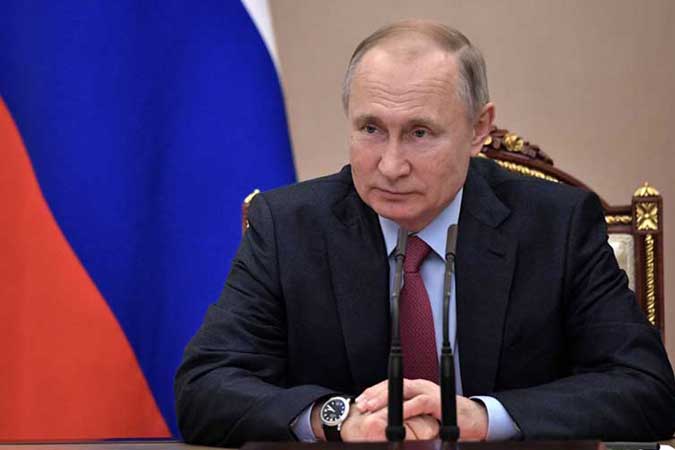
MOSCOW — President Vladimir Putin said on Tuesday that Russia had become the first country in the world to grant regulatory approval to a COVID-19 vaccine after less than two months of human testing, a move hailed by Moscow as evidence of its scientific prowess.

The development paves the way for the mass inoculation of the Russian population, even as the final stage of clinical trials to test safety and efficacy continue.

The speed at which Russia is moving to roll out its vaccine highlights its determination to win the global race for an effective product, but has stirred concerns that it may be putting national prestige before sound science and safety.

Speaking at a government meeting on state television, Mr. Putin said the vaccine, developed by Moscow’s Gamaleya Institute, was safe and that it had even been administered to one of his daughters.

“I know that it works quite effectively, forms strong immunity, and I repeat, it has passed all the needed checks,” said Mr. Putin.

He said he hoped the country would soon start mass producing the vaccine.

Its approval by the health ministry foreshadows the start of a larger trial involving thousands of participants, commonly known as a Phase III trial.

Such trials, which require a certain rate of participants catching the virus to observe the vaccine’s effect, are normally considered essential precursors for a vaccine to receive regulatory approval.

Regulators around the world have insisted that the rush to develop COVID-19 vaccines will not compromise safety. But recent surveys show growing public distrust in governments’ efforts to rapidly produce such a vaccine.

Russian health workers treating COVID-19 patients will be offered the chance of volunteering to be vaccinated soon after the vaccine’s approval, a source told Reuters last month.

More than 100 possible vaccines are being developed around the world to try to stop the COVID-19 pandemic. At least four are in final Phase III human trials, according to WHO data. — Reuters

Singapore facing biggest recession in its history

SINGAPORE — Singapore’s record recession was deeper than first thought in the second quarter, data showed on Tuesday, signaling a lengthy path to recovery as the coronavirus pandemic dealt a major blow to Asia’s trade-reliant economies.

The city-state has been hit hard by COVID-19 (coronavirus disease 2019) with the country under a lockdown for most of the second quarter to curb the spread of the virus.

“The painful truth is this — we are not returning to a pre-COVID world. Recovery will be some time yet,” said Trade Minister Chan Chun Sing.

The government said it now expects full-year gross domestic product (GDP) to contract between 5% and 7% versus its previous forecast for a 4% to 7% decline. The transport and tourism hub is facing the biggest downturn in its history, expected to wipe out years of previous economic expansion.

“The forecast for 2020 essentially means the growth generated over the past two to three years will be negated,” said Mr. Chan, adding that the data was the economy’s worst quarterly performance on record.

GDP fell a record 13.2% year on year in the second quarter, revised government data showed, versus the 12.6% drop seen in advance estimates.

The economy plunged 42.9% from the previous three months on an annualized and seasonally adjusted basis, also a record and larger than the 41.2% contraction in the government’s initial estimates.

The slump marked the second consecutive quarter of GDP contraction for the global finance hub — having declined 0.3% year on year in the first quarter and 3.1% quarter on quarter — meeting the definition for a technical recession.

The data pointed “to a slower and sluggish economic recovery,” said Chua Hak Bin, an economist at Maybank.

He said strict border controls, social distancing rules and foreign worker shortages will weigh on the pace of the recovery, even though lockdown measures have been relaxed.

The Monetary Authority of Singapore (MAS) had eased its monetary policy in March, while the government pumped in nearly S$100 billion ($72 billion) worth of stimulus to blunt the impact of the pandemic.

MAS chief economist Ed Robinson said on Tuesday that its monetary policy “stance remains appropriate including and forestalling a broadening or deepening of disinflationary pressures.” He added that MAS’ key currency gauge, called NEER, had remained near the middle of its policy band since April.

Singapore is one of the world’s most open economies, with exports equating to about 200% of output.

The grim data comes as other large Asian economies, such as Japan, are also set to report steep descents into recession.

Meanwhile, South Korea’s exports extended double-digit declines in the first week of August.

Economies were starting retighten measures after the fresh emergence of outbreaks, said Selena Ling, OCBC Bank’s head of treasury research and strategy.

“That is going to dampen, if not potentially kill off, any of the recovery hopes that people were looking forward to,” she said. — Reuters

Sinovac launches late-stage trial for potential COVID-19 vaccine in Indonesia

JAKARTA/BEIJING — China’s Sinovac Biotech Ltd. launched on Tuesday a late-stage human trial involving as many as 1,620 patients in Indonesia for a COVID-19 (coronavirus disease 2019) vaccine candidate that it is developing with Indonesian state-owned peer Bio Farma.

The candidate, known as CoronaVac and previously PiCoVacc, is among few potential vaccines that have entered late-stage trials for a large-scale study to gather proof of efficacy for regulatory approval.

CoronaVac is already undergoing a late-stage trial in Brazil slated for as many as 9,000 people.

Its Indonesia trial comes as Southeast Asia’s most populous country grapples with spiking infection numbers, with over 127,000 cases recorded as of Tuesday. The trial has so far recruited 1,215 people and will last six months.

A ceremony for the launch on Tuesday in Bandung, West Java, was attended by Indonesia’s President Joko Widodo.

“The threat of COVID-19 will not subside until a vaccine is given to all the people,” Mr. Widodo said.

Sinovac expects to also test the vaccine candidate in Bangladesh.

Separately, Sinovac late on Monday released details from a mid-stage, or Phase 2, study in which it said the vaccine candidate appeared to be safe and induced detectable antibody-based immune responses in subjects.

In the Phase 2 clinical trial involving 600 participants in China, the candidate did not cause any serious side effect and the rate of fever was relatively low compared with other COVID-19 candidates, the paper showed ahead of peer review.

Sinovac has to test its vaccine abroad because China is no longer a satisfactory site for late-stage trials due to the low number of new infection cases. — Reuters

Global coronavirus cases hit 20 million

GLOBAL coronavirus cases pushed past 20 million on Monday, according to a Reuters tally, with the United States, Brazil and India accounting for more than half of all known infections.

The respiratory disease has infected at least four times the average number of people struck down with severe influenza illnesses annually, according to the World Health Organization.

The death toll from COVID-19 (coronavirus disease 2019), meanwhile, at more than 728,000 has outpaced the upper range of annual deaths from the flu.

The Reuters tally, which is based on government reports, shows the disease is accelerating. It took almost six months to reach 10 million cases after the first infection was reported in Wuhan, China, in early January. It took just 43 days to double that tally to 20 million.

Experts believe the official data likely undercounts both infections and deaths, particularly in countries with limited testing capacity.

The United States is responsible for around 5 million cases, Brazil 3 million and India 2 million. Russia and South Africa round out the top ten.

The pandemic is accelerating fastest in Latin America which accounts for almost 28% of the world’s cases and more than 30% of deaths, according to the Reuters tally.

With the first wave of the virus yet to peak in some countries and a resurgence of cases in others, governments are still divided in their responses. Some countries are reintroducing strict public health measures, while others continue to relax restrictions.

Health experts expect dilemmas about how to proceed with school, work and social life to last — and restrictions to fluctuate — until a vaccine is available.

The vaccine race has more than 150 candidates being developed and tested around the world with 25 in human clinical trials, according to the World Health Organization.

In the United States, children began returning to their classrooms last week, even as controversy over school safety swirled.

Britain has added both Spain and Belgium to a list of countries from which returning travelers must quarantine at home for 14 days because of fresh upticks in some European locations.

In Asia, China continues to squash surges using strict, local lockdowns, bringing its daily numbers down into the low double digits on the mainland.

Australia has introduced a strict lockdown and night curfew in the city of Melbourne, aiming to stifle an outbreak there. Neighboring New Zealand, where life has largely returned to normal, on the weekend recorded 100 days with no new cases of local transmission. — Reuters

Most Americans unlikely to get coronavirus vaccine until well into 2021

EVEN if the most optimistic projections hold true and a Covid-19 vaccine is cleared for U.S. use in November, the vast majority of Americans won’t be able to get the shots until spring or summer next year at the earliest.

That likely timeline, based on interviews and remarks from top specialists including Anthony Fauci of the White House Coronavirus Task Force, means businesses, schoolchildren and families will continue to wait.

In an interview, Fauci, who has also been involved with White House’s “Operation Warp Speed” vaccine program, said it may take until well into 2021 for vaccines to reach the much of the general public.

“I would hope that by the time we get well into the second half of 2021 that the companies will have delivered the hundreds of millions of doses they have promised,” said Fauci.

The reasons are many. U.S. health regulators will have only a tiny sliver of the usual safety and efficacy data. The leading products require two doses, which will limit how many people early supplies can help. And government health officials are still developing a plan for who will get the shots, how they’ll be distributed, and how their effectiveness and safety will be tracked afterward.

“For three, to six, to nine months, there will be more people wanting a vaccine than there are vaccines,” said Stephane Bancel, chief executive officer of Moderna Inc., the biotechnology company developing one of the furthest-along inoculations.

Bancel said he expects his company’s product may get an emergency authorization from the Food and Drug Administration for “a very narrow population at very high risk.” Vaccines for the general population will need full FDA approval, which will likely take significantly longer, he said in an interview.

Those comments run counter to the timeline portrayed by President Donald Trump, who has said a vaccine may be ready by election day on Nov. 3.

“I’m pushing everybody. If you had another president other than me, you wouldn’t be talking vaccines for two years. I will push it very hard,” Trump said last week during a radio interview with Geraldo Rivera. “But I’m not doing it for votes, I’m doing it because that’s the right thing to do and I’m doing it to save lives.”

On Monday in Washington, Trump echoed his ambitious timeline: “I feel strongly that we will have a vaccine by the end of the year and it’ll be put in service maybe even as we get it, because we’re all set militarily, we’re using our military to distribute the vaccine.”

LIMITED ACCESS
Operation Warp Speed seeks to do what’s never been done before: research, develop and produce a vaccine for a new virus in months. It’s a monumental, risky undertaking that will probably result in billions of dollars of waste, but could shave years off of typical development timelines. But even if it’s successful, warp speed will move faster for some people than others. Two other key government officials described a gradually widening trickle of access over months and months, not the sudden, widespread availability of a vaccine.

During an Aug. 7 presentation to a panel of experts convened by the National Academy of Medicine, which is helping decide who will be first in line for a shot, Operation Warp Speed chief adviser Moncef Slaoui said significant production ramp-up should start in November. It will continue accelerating over the following months until it is producing a “very large number of doses” on a monthly basis in the second quarter of 2021, Slaoui said.

Along with $8 billion in U.S. funds granted for vaccine development and manufacturing through Warp Speed, the Health and Defense departments have doled out contracts totaling almost $500 million to increase domestic manufacturing of vials and prefilled syringes for Covid-19 vaccines. The consulting company Deloitte also has a $15 million contract to track vaccine distribution and administration. The firm didn’t respond to a request for comment.

On July 27, National Institutes of Health Director Francis Collins warned that the first round of vaccines will be carefully allocated.

“There will be tens of millions of doses at the time that the first vaccine gets approved,” Collins said. “It won’t be enough for everybody, and so decisions will have to be made about priorities.”

Vaccine trials typically require tens of thousands of patients and months of follow up to show they’re safe enough to give to healthy people. A lack of long-term data could limit access until health officials can better assess any risks.

Moderna’s trial has signed up about 10% of the 30,000 people it aims to enroll, Fauci said on Aug. 6. Trial participants need to get the shots, which are spaced apart, and then be monitored to find out if they get infected or have any side effects.

By the early fall, the FDA may only have a few weeks of data. That may be enough to give the shot to health-care and other front-line workers and other groups at higher risk from the virus, but it almost certainly won’t be enough for lower-risk people.

That data won’t come until next year, said Geoffrey Porges, an analyst at SVB Leerink, in a July 20 note to clients.

The first announcement of federal clearance for a vaccine will more likely become a political event “with the reality of the availability, effectiveness and utility of the vaccine falling far short of the promotion by government officials,” he said.

EARLY PLANS
Despite the demand for a vaccine and the logistical challenges of rolling it out to hundreds of millions of Americans, the Trump administration is still early in the planning phases for how that immense effort will go.

The Department of Defense and the Centers for Disease Control and Prevention are expected to be heavily involved, and the role of the private sector is less clear.

“It may not be going through CVS,” Fauci told Bloomberg, referring to the drugstore chain CVS Health Corp. “The DOD together with the CDC is getting very involved in how you get the supply chain to the people. That has not yet been worked out.”

The Warp Speed program is also looking at using the military, said Jonathan Hoffman, the Pentagon’s chief spokesman, said during a press briefing July 30.

The Defense Department is examining “how do we take advantage of the commercial capability of the private sector to handle things like distribution, and where will either the DOD step in to help manage that process, or if necessary will DOD be required to step in and actually physically deliver items itself,” he said.

At least four states, California, Minnesota, North Dakota and Florida, are helping develop the early stages of a plan to distribute vaccine once it’s available, CQ Roll Call reported on Monday. The early stage plan is meant to explore “model approaches” on vaccine distribution, the publication reported, describing the program as a highly preliminary effort.

In a message to Bloomberg, California’s Department of Public Health described the program as a “joint planning mission.” Florida’s health department confirmed its participation, though said no agenda for the meeting had been set.

In the meantime, companies and scientists developing the vaccines are rushing to get data to back their use, or move onto more promising targets.

Pfizer Inc. and BioNTech SE, which have a competing vaccine, are also signing up patients. Pfizer CEO Albert Bourla said at a Washington Post event last week that the drugmaker expects rapid approval from the FDA, at least for emergency use, and will have enough of the shot to begin distribution this fall.

“The main goal right now is to make sure we have a vaccine,” Bourla said. “There are two enemies — the virus, and time.” — Bloomberg

Fighting Maroons going for sustainability in their program

By Michael Angelo S. Murillo, Senior Reporter

NO longer the perennial whipping boys at the University Athletic Association of the Philippines (UAAP), the UP Fighting Maroons are aware of the need to have things sustained for now and the future so as not to let their efforts go to waste.

Speaking at the Power & Play radio program of former Philippine Basketball Association commissioner Noli Eala last Saturday, University of the Philippines men’s basketball coach Bo Perasol shared that he is happy to see their vision of having State U be competitive anew at the UAAP steadily bearing fruit and that he hopes they get to stay the course.

“The renewed basketball program of UP started five years ago. Prior to that there was not really a solid program to speak of. At the onset what we were talking about is how to have a sustainable program, which extends up to this day now that we are doing well,” said Mr. Perasol, who is the coach of the Fighting Maroons since 2016.

“We wanted to emulate what others were doing, like Ateneo, La Salle and FEU (Far Eastern University) which are not personality-based. Meaning, let’s say a particular coach leaves, the program continues. It was [not the case] for UP in years past. We’re just trying to make it sustainable and for the team not to revert to the days when it cannot win games. Instead we want to give ourselves a chance to compete at a high level each season,” he added.

The coach, who also played for UP in college, went on to say that the formation and the coming on board of nowhere to go but UP Foundation, Inc. have done wonders to the school’s sports programs, paving the way for the school to be considered by potential recruits as a destination to showcase their wares.

“This system we are having in UP is a very unique model. We are a public school with very little funding, if at all, for our varsity teams. What we did in the last few seasons is get as a model what Ateneo and La Salle were doing where their funding comes mostly from their alumni. But what we did differently was institutionalize the sponsorship,” Mr. Perasol said.

“Nowhere to go but UP is a pioneering group of people who just want  to help UP. Through it we are assured that we stay with one program to follow and it’s not going to be different people or groups supporting each time,” he added.

Given the situation they are in right now as an organization, Mr. Perasol said he believes that they are in firm position to compete but was quick to say that work has to be put in to be in a better position to make everything fall into place.  

“I’m excited for the season (Season 83) whenever it will start. I think we can compete and it’s very reassuring that we have new blood in our fold now,” he said.

UP has been busy in the offseason, welcoming new players in preparation for the future when their current stalwarts move on.

Recently the Fighting Maroons secured commitments from “super juniors” Carl Tamayo and Gerry Abadiano from the Nazareth School of National University, who Mr. Perasol is very high on.

“They (Tamayo and Abadiano) have the experience, championship experience. We were able to play against them and their bodies are ready for the seniors. But of course they have to continue working to fulfil their potential,” the UP coach said of their latest recruits.

Apart from Tamayo and Abadiano, UP also now has Xavier School’s Miguel Tan, Fil-Canadians Alonso Tan and Anton Eusebio, Fil-Australian center Ethan Kirkness, Fil-Am guard Sam Dowd, and Gilas Youth cadet RC Calimag as well as transferees Joel Cagulangan and Malick Diouf.

The last two UAAP seasons have an eventful one for the Diliman-based school, barging into the finals after a three-decade absence in Season 81 and last year making it to the Final Four for the second straight season.

Tuason Racing, partners lend support to health frontliners

RECOGNIZING that continuous help goes a long way during this time of the coronavirus pandemic, Tuason Racing, long-time pro racing school in the country, and its partners came to the aid of health frontliners in different barangays.

Tuason Racing, Phoenix Fuels, Family Mart Philippines and STET-VIP recently provided personal protective equipment (PPE), health and food supplies to their partner communities to sustain the latter in their fight against the coronavirus disease 2019 (COVID-19) pandemic.

The pro racing school, one of the top proponents of the sport of motor racing locally, used the money raised from its virtual Race for Frontliners event to buy the PPEs and medical supplies such as masks, gloves, sanitizing agents, and gowns for the healthcare workers.

Race for Frontliners was able to raise P408,906. The virtual competition was staged as a way for Tuason Racing to keep the excitement and interest in motor sports alive among enthusiasts during the time of the pandemic and do its share in the fight against COVID-19, which has at least 136,000 confirmed cases in the Philippines as of this writing.

Among the partner beneficiaries of Tuason Racing’s Race for Frontliners were Brgy. Valencia, Quezon City; Brgy. Caa, Las Piñas City; Brgy. Tatalon Dos, Las Piñas City; Brgy. Malagasang II-B in Imus, Cavite; Brgy. Tunasan, Muntinlupa City; Brgy. Western Bicutan, Taguig City; Brgy. San Antonio in Sucat, Parañaque; Brgy. San Isidro, Las Piñas Cty; Philippine General Hospital, Armed Forces of the Philippines, PNP Maritime Group, Philippine Coast Guard, and Ospital ng Muntinlupa.

As COVID-19 remains a concern in the country, Tuason Racing said it is tapping on the digital platform, holding virtual races, seeing its potential thriving among the Filipinos. — Michael Angelo S. Murillo

Kuzma’s trey carries Lakers past Nuggets

KYLE KUZMA’S 3-pointer with 0.4 second left lifted the Los Angeles Lakers to a 124-121 victory over the Denver Nuggets on Monday night near Orlando.

LeBron James had 29 points and 12 assists for the Lakers, who snapped a three-game losing streak. Anthony Davis finished with 27 points, and Kuzma contributed 25.

Reserve guard PJ Dozier had 18 points to lead the Nuggets, who had eight players reach double figures. Michael Porter, Jr. had 15 points on 6-of-6 shooting, including 3-of-3 on 3-pointers. Jamal Murray had 14 points, Paul Millsap scored 13 and Nikola Jokic chipped in 12 for Denver.

The Nuggets rested their starters for much of the fourth quarter, and the loss left them 1 1/2 games back of the Los Angeles Clippers for the no. 2 seed in the Western Conference with two games remaining. The two teams meet Wednesday.

RAPTORS 114 – BUCKS 106
Chris Boucher had a career-best 25 points to go with 11 rebounds, and Toronto defeated Milwaukee for the first time this season as both teams played without key players.

Matt Thomas added a career-best 22 points for the Raptors and Norman Powell had 21 points and eight rebounds. Pascal Siakam added 14 points for Toronto.

Kyle Korver scored 19 points for Milwaukee, Khris Middleton had 17, and George Hill netted 14.

SUNS 128 – THUNDER 101
Devin Booker scored 35 points and Phoenix continued its surprising undefeated run through the NBA bubble, cruising past short-handed Oklahoma City.

Booker, who sat out the fourth quarter, notched his 90th career 30-point game and tied Suns legend Walter Davis for most 30-point games in franchise history. Mikal Bridges and rookie Cameron Johnson added 18 points each for the Suns, who have won all six seeding games in the bubble and remain in the thick of the race for a postseason berth.

Darius Bazley’s 22 points and 10 rebounds led the Thunder. Oklahoma City, which lost a 15-point lead in the first half, has already clinched a playoff spot and is 3-3 in the bubble.

MAVERICKS 122 – JAZZ 114
Tim Hardaway, Jr. led Dallas with 27 points and Seth Curry added 22 to lead the Mavericks to a victory over Utah.

Boban Marjanovic added 20 points and nine rebounds and J.J. Barea chipped in 18 for the Mavericks, who rallied from a 22-point deficit.

Jordan Clarkson scored 18 points to lead Utah. Rayjon Tucker added a career-high 17 points while Emmanuel Mudiay added 14 and Georges Niang chipped in 13 for the Jazz, who blew a late double-digit lead for a second straight game.

HEAT 114 – PACERS 92
Jimmy Butler, returning from a three-game injury absence, had game highs with 19 points, 11 rebounds and four steals to lead Miami past Indiana and into sole possession of fourth place in the Eastern Conference.

Butler, who also had five assists in 29 minutes, had been out with a sore right foot. The teams were tied at halftime, but the Heat led by as many as 18 points in an explosive third quarter and cruised from there, cooling off Pacers star T.J. Warren along the way.

Warren entered Monday as the league’s top scorer in the restart, averaging an impressive 34.8 points on 60.5% shooting from the floor and 55.6% on 3-point attempts. However, Miami held him to 12 points on 5-for-14 shooting, including 2-for-6 on 3-point attempts. Victor Oladipo led Indiana with 14 points. — Reuters

Kang captures LPGA Marathon Classic crown

DANIELLE KANG profited from a late Lydia Ko collapse to win the Marathon Classic by one shot on Sunday and become the first player to win back-to-back events on the LPGA Tour since Shanshan Feng in 2017.

Kang, who won last week’s Drive On Championship, looked out of contention as she trailed New Zealander Ko by five shots with six holes to play but a few words of encouragement from her caddie turned things around.

“My caddie looked at me and said, ‘You’re right in it,’” the 27-year-old American said.

Her final round of three-under-par 68 saw her finish at 15-under 269, one stroke better than Ko (73) and England’s Jodi Ewart Shadoff (67).

Ko led by four heading into Sunday’s finale and looked on course to end her two-year wait for a title before bogeys at 14 and 16 and a double-bogey at the 18th tripped her up. — Reuters

Jump rope association making case for activity as a sport

MORE than just a cardio tool for one’s fitness regimen and a fun physical activity, jump rope is an exciting and intricate pursuit worthy to be considered a sport where Filipinos can excel in.

This is what the newly organized Philippine Jump Rope Association (PJRA) wants to highlight in making a case for the activity as a legitimate sports discipline and sharing the passion for it.

Noel Agra, PJRA president, shared during his session at the online Philippine Sportswriters Association Forum on Tuesday that doing jump rope is a worthwhile activity to pick up by anybody who wants to have an all-around body workout, especially now the country is in under various forms of lockdown amid the coronavirus pandemic.

“The PJRA built this association during the ECQ (enhanced community quarantine) period and we want to share our love for doing jump rope. I have been doing this for the past five years and it has been life-changing for me. Actually I lost 50 pounds doing it. Through the federation we want to share the love for jump rope both as a lifestyle and as a sport,” Mr. Agra said.

Currently the newly formed association has 148 members nationwide and it is continuously accepting members and working with other groups to steadily build the legs for jump rope in the country.

Mr. Agra said they are in the process of preparing to hold different online events for now to foster the jump rope community locally and introduce the activity to more people.

The PJRA, too, is bent on legitimizing jump rope as a sport and it has already applied for membership with the International Jump Rope Union (IJRU), the international federation for competitive jump rope or rope skipping.

Mr. Agra shared that from their going around, he is very confident that Filipinos can excel in jump rope and that push for it just needs to be enhanced.

“We are in the process of finding jump rope athletes. It is a challenging sport which needs a lot of commitment and hard work. We actually have a lot of athletes who have not been exposed or highlighted,” the PJRA president said.

Despite the limitations presented by the pandemic, Mr. Agra said they at the PJRA are determined to see what they want to achieve for jump rope through.

“The quarantine lockdown is really a challenge because we are limited in what we can do. But the potential is there and there is progress,” he said.

PJRA is looking at staging a series of online events beginning in September.

For more information on jump roping and PJRA, follow the group on Facebook @jump.pjra. — Michael Angelo S. Murillo

ADVERTISEMENT
ADVERTISEMENT