Home Blog Page 9159

Nationwide round-up

Bayanihan II bill expected at Presidents desk by Tuesday

THE PROPOSED second law covering response measures for the coronavirus crisis is expected to be received by the President by Tuesday for review. “I believe the earliest that it can reach the desk of the President will be tomorrow,Palace Spokesperson Harry L. Roque said in a briefing on Monday. The House of Representatives ratified on Monday the proposed Bayanihan to Recover as One Act (Bayanihan II), which sets up to P165 billion to address the impact of the coronavirus disease 2019 (COVID-19), including assistance to affected sectors and the governments stimulus plan. The measure hurdled the bicameral conference committee last week and was subsequently ratified in the Senate. The reconciled version of House Bill No. 6953 and Senate Bill No. 1564 will have a P140-billion appropriation and a P25-billion standby fund.

PATHETICALLY MEAGER
Albay Rep. Edcel C. Lagman said that while he voted for the Bayanihan II, the stimulus plan is pathetically meager. This is less than 60% of the P275-billion appropriation for Bayanihan 1 when the contagion started, and is only 12% of the P1.3-trillion appropriation for the ARISE (Accelerated Recovery and Investments Stimulus for the Economy) bill,Mr. Lagman said in a statement. He also asked state economic managers about the loans and financial aid granted to the Philippines, which may be tapped as additional fund source for the pending stimulus package. The bill will also grant special powers to President Rodrigo R. Duterte, including the authority to realign items of the 2019 and 2020 national budgets. The measure will, among others, continue granting the P5,000-8,000 emergency subsidy to affected low-income households, allocate P13.5 billion to health-related responses, P13 billion for cash-for-work programs, and P9.5 billion for programs under the Department of Transportation. Meanwhile, the tourism industry and the education department will each receive P4 billion. About P39.4 billion will go to  government financial institutions to allow them to extend loans to hard hit businesses, particularly micro, small and medium enterprises. The Department of Agriculture will also receive P24 billion for direct cash assistance or loan interest rate subsidies. Gillian M. Cortez and Charmaine A. Tadalan 

US marine withdraws appeal on homicide case

CONVICTED US Marine Lance Corporal Joseph Scott Pemberton withdrew his appeal before the Supreme Court over his conviction for the killing of Filipino Jennifer S. Laude in 2014. In a notice dated June 15, the courts third division said it granted the motion to withdraw filed by Mr. Pemberton on June 2, rendering the case closed and terminated. (A)fter thoughtful consideration of the circumstances of this case, he has decided to withdraw his petition, both as to criminal and civil aspects of the appeal, and accepts and recognizes that his conviction will become final and executory,the court said, citing the motion. Mr. Pemberton was convicted of homicide in November 2015 for the killing of transgender woman Laude in Olongapo City. A local trial court sentenced him to six to 10 years in prison and directed him to pay the heirs of the victim P4.3 million in damages for loss of earning capacity. The Court of Appeals upheld his conviction and the damages, and further ordered him to pay the heirs of Ms. Laude P75,000 for civil indemnity and moral damages. Mr. Pemberton is detained at Camp Aguinaldo in Quezon City. — Vann Marlo M. Villegas 

Duterte wants quiet lifeafter his term

PRESIDENT Rodrigo R. Duterte is not interested in leading a revolutionary government as he is looking forward to a quiet life after his term ends in 2022, his spokesperson said. A group calling itself the Mayor Rodrigo Roa Duterte-National Executive Coordinating Committee last week urged the President to lead a revolutionary government. “Hes looking forward to the end of his term and he wants to live a quiet life again. So sa tingin ko po (I think it is) moot and academic as far as the President is concerned,Spokesperson Harry L. Roque said in a briefing on Monday. Mr. Roque said on Sunday that the administrations priority at this time is addressing the coronavirus crisis. — Gillian M. Cortez 

Exporters urged to take advantage of Russia GSP

THE Trade department’s export marketing group is encouraging exporters to take advantage of preferential tariffs to sell to Russia.

“One of our strategies in expanding exports is to venture into non-traditional partners like Russia. Thus, we encourage exporters to maximize the benefits from the EAEU GSP,” Department of Trade and Industry – Export Marketing Bureau Director Senen M. Perlada said in a press release on Monday.

Under the Eurasian Economic Union Generalized System of Preferences, or EAEU GSP, the Philippines can export certain products to member countries at a 25% discount on customs duties.

Members of the union include Armenia, Belarus, Kazakhstan, Kyrgyzstan, and the Russian Federation.   

Food products eligible for the customs discount include meat, fish, fruits, coffee, cacao, coconut products, sauces, and condiments. Furniture and houseware goods include wood, basket ware, artificial flowers, statuettes, ceramics, and imitation jewelry. Industrial goods like natural rubber are included.

Given the pandemic restrictions, the EAEU will allow exporters to submit either an electronic or paper copy of Certificate of Origin Form A, a document that would allow exporters to avail of the preferential tariff. The exporter will then have six months from the registration date to submit the original form to the customs authority.

In 2019, Russia was the Philippines’ 21st biggest trading partner. It was the country’s 32nd biggest export destination and 18th biggest source of imports.

The Philippines’ top exports to Russia include electronics, ignition wiring sets, activated carbon, new pneumatic tires, and watches as well as agricultural products such as desiccated coconut, carrageenan, and other fruits and nuts. — Jenina P. Ibañez

PHL, Indonesia study copper, textile tieups

REUTERS

THE PHILIPPINES and Indonesia will discuss cooperation between their copper and textile industries, sharing best practices to better attract manufacturing investment and technology transfer.

The two sides met on Aug. 11, the Philippines’ first since the start of the lockdown, the Department of Trade and Industry (DTI) said in a statement Monday.

The DTI said that the two countries will work on complementing each others’ strengths and resource endowments in copper and textiles.

Expected to be held within the year, the industry dialogues will cover best practices, regulation, and collaboration between the government and private sector.

“In the long term, these dialogues are seen as avenues to boost the manufacturing capabilities of our industrial sectors through the infusion of investment and technology,” DTI said.

Representatives from the two countries also spoke about possible partnerships in investment promotion, quality assurance for halal products, and the creative economy this year.

The two sides also discussed fisheries and border trade.

“The Philippines is committed to consider the proposals given its relevance to both the Philippines and Indonesia as archipelagic states with common borders and taking into account the developments in sub-regional integration,” DTI Undersecretary Ceferino S. Rodolfo said.

The joint working group on trade, investments, handicrafts, and shipping also discussed improving the countries’ business environments.

“Convening the (Joint Working Group) with Indonesia is of strategic importance to the Philippines given the many commonalities we share. With the challenging times ahead, working together as two of the biggest economies in ASEAN to address the unprecedented crisis is the best recourse,” Mr. Rodolfo said.

Indonesia was the Philippines’ eight-largest trading partner in 2019 and the 13th largest export market.

Indonesia was the Philippines’ sixth-largest source of imports last year, valued at $6.6 billion or 6.1% of the total. — Jenina P. Ibañez

PHL, EU sign P1.4-billion grant deal for BARMM, Marawi rehab

THE government and the European Union (EU) have signed a new financing agreement worth 24.5 million euros (P1.405 billion) in the form of grants to support the rehabilitation of Marawi City and the Bangsamoro Autonomous Region in Muslim Mindanao’s (BARMM) coronavirus containment effort.

The Department of Finance (DoF) said in a statement Monday that 5 million euros will help fund the recovery and rehabilitation of Marawi City, while 3 million euros will boost BARMM’s coronavirus disease 2019 (COVID-19) response.

The project will be implemented by the Office of the Presidential Adviser on the Peace Process and the Bangsamoro Transition Authority over five years or 60 months after the agreement is sealed.

The DoF said the agreement was signed on Aug. 11 by Secretary Carlos G. Dominguez III on behalf of the Philippines and Pierre Amilhat, the director for Asia, Central Asia, Middle East/Gulf and the Pacific of the European Commission’s Directorate-General for International Cooperation and Development to represent the EU.

Asked where the rest of the grants will be allocated, the office of the DoF had not responded at deadline time.

“This third grant from the EU this year underpins this major economic bloc’s unwavering commitment to the attainment of genuine and lasting peace and development in the Southern Philippines along with the speedy recovery of conflict-devastated Marawi City,” Mr. Dominguez was quoted as saying.

This brings the EU’s total grants for the government’s peace and development efforts in Mindanao to 85 million euros so far this year.

Meanwhile, proposals on how the 3 million euros earmarked for BARMM’s COVID-19 response will be used have been submitted to the EU by the Philippine Red Cross and the French humanitarian organization Agency for Technical Cooperation and Development.

The DoF said the EU committed to start talks with the European Commission and the World Bank which could serve as third-party administrators of the Bangsamoro Normalization Trust Fund — a multi-donor trust fund where international partners can send funds for the BARMM.

Last month, the EU and the Philippines signed two financing agreements worth 60.5 million euros that will fund selected development programs in Mindanao.

EU officials have said they will be “reorienting” up to 15 million euros worth of grants to the Philippines to support the coronavirus containment effort.

Finance Undersecretary Mark Dennis Y.C. Joven had said the country’s active grants from the EU total 150 million euros so far, with 20-30 million euros more in the pipeline.

The EU is the country’s 11th biggest source of official development assistance. As of March, it had provided grants worth $138.15 million. — Beatrice M. Laforga

Energy efficiency industry asserts eligibility for 10 years’ worth of incentives

THE energy efficiency industry said it is seeking fiscal incentives for 10 years, claiming that the industry is eligible for such treatment under the law regulating the sector as well as the Philippines’ investment priority plan.

The broader energy industry is convening for a two-day virtual consultation to aid the Department of Energy (DoE) in updating the Philippine Energy Plan with the goal of attracting more investment over the next two decades.

The Philippine Energy Efficiency Alliance (PE2) said it wants the plan to reflect the importance of energy efficiency and conservation (EEC) projects in order to ensure a stable investment environment.

“The long-term predictability of EEC tax-based fiscal incentive packages is crucial to mobilizing debt and equity capital investments in the EEC asset class, amid legislative efforts to rationalize fiscal incentives,” the group said in its presentation.

Renewable energy, including energy efficiency technologies, is recognized as a priority sector by the Philippine investment authorities.

Republic Act No. 11285 or the EEC Act provides for a 10-year inclusion of energy efficiency projects in the Board of Investments’ investment priority plan, which lists sectors entitled to tax breaks.

Separately, PE2 asked the DoE to defend the granting of pioneer status for all EEC projects, entitling them to incentives.

Executive Order No. 226, or the Omnibus Investments Code, provides for a six-year tax break for pioneering projects which use a design, formula, scheme, method, process, or system of production that is new and untried in the Philippines.

The industry added that third-party investments of energy service companies (ESCOs) and other investors in EEC assets installed in non-owned and non-leased premises “will need at least six years of income tax holiday for them to approach commercial viability as far as after-tax equity returns are concerned.”

PE2, which advocates for EEC technologies’ integration into the generation mix, claims that EEC projects can produce savings of 182 million tons of oil equivalent by 2040, equivalent to $726 billion.

The industry is also seeking a share of the stimulus package during the post-pandemic recovery. — Adam J. Ang

Northbound section of Skyway Extension seen completed by Dec.

SAN MIGUEL Corp. (SMC) said Monday it expects to complete the northbound section of the P10-billion Skyway Extension project by December.

“Despite delays brought on by the ongoing COVID-19 (coronavirus disease 2019) global pandemic, SMC is on track to deliver the entire northbound section of the Skyway Extension project by December this year,” the company said in a statement, referring to the section of the project from the Soldiers’ Hills area to the Sucat Mainline Toll Plaza.

It said construction at the northbound section is now at an “accelerated pace” to meet the target.

“Originally, target completion for the section was July 2020, but this was delayed due to the enhanced community quarantine starting mid-March,” SMC noted.

The company expects to complete the entire Skyway Extension project by the “middle of next year.”

The project aims to extend the Skyway from Susana Heights on the South Luzon Expressway to Sucat and back and provide direct access to the elevated section of the Skyway. Construction of the four-kilometer elevated viaduct started in June last year.

Once fully completed, the project’s three new northbound lanes will be able to accommodate an additional 4,500 vehicles per hour. The two additional southbound lanes will be able accommodate an additional 3,000 vehicles per hour.

SMC President Ramon S. Ang said: “Because of the delays and restrictions brought on by the lockdown, we’ve had to make a lot of adjustments. But we are on track to deliver the entire northbound section of the Skyway Extension by the end of this year.”

“When we open this northbound section, motorists will enjoy smoother and faster trips from Calamba going to Makati and other parts of Metro Manila. By improving traffic flow and reducing congestion, this project will also help in accelerating trade and tourism, particularly south of Metro Manila. That is something we need to further help our economy during this pandemic, and after it,” the businessman added.

The company said it will have to close starting Aug. 24 at 10:00 a.m. the northbound Skyway on-ramp section before Sucat in the vicinity of Amkor Anam.

“With the closure, northbound class 1 vehicles (ordinary cars) may continue to access the steel ramp towards the elevated section of the Skyway. All class 2 vehicles including buses and vans meanwhile should take the At-Grade section,” it added.

A new traffic scheme will be implemented to ease travel conditions during the closure of the northbound on-ramp.

Open 24/7 are Steel Ramp (for class 1 vehicles only), Hillsborough Southbound Ramp, and Alabang – Zapote Southbound Ramp.

The Steel Ramp Southbound will be open from 4:00 p.m. to 9:00 p.m.

The Alabang-Zapote Northbound Ramp will be open from 9:00 p.m. to 4:00 p.m. the following day.

“To ensure responsiveness to actual traffic situations at any given time, Skyway said that the traffic scheme may be changed from time to time depending on traffic volume,” SMC said. — Arjay L. Balinbin

Implications of COVID-19 pandemic on permanent establishments

The global pandemic has been an ordeal for our society and economy. Recently, the government presented a range of measures to contain the impact of COVID-19, including various forms of quarantine such as the enhanced community quarantine (ECQ), modified enhanced community quarantine (MECQ) and general community quarantine (GCQ) as well as travel restrictions.

The continued implementation of these measures raises several international tax issues related to cross border workers or the unintended creation of permanent establishments (PEs). Due to airport closures and the suspension of international flights, many foreign employees assigned to the Philippines have been trapped for an undetermined length of time. The presence of these foreign nationals in our country poses a risk of creating a PE for their employees.

The concept of PE is applicable to a foreign corporation which is organized in a jurisdiction not governed by the law of the Philippines and is not engaged in trade or business within the Philippines, which is classified, for tax purposes, a nonresident foreign corporation (NRFC). It also applies to a person who is non-resident and not engaged in trade or business in the Philippines.

PE as defined in most treaties means a fixed place of business through which a resident of one of the contracting states engages in trade or business. It especially includes a place of management; a branch; an office; a factory; a workshop; and a mine, an oil or gas well, a quarry or any other place of extraction of natural resources. Its existence, however, requires permanency and cannot be merely temporary or transitory, and through which the business of an enterprise is being carried out.

The term PE also includes the furnishing of services, including consultancy services, by an enterprise through employees or other personnel engaged by the enterprise for such purpose, but only if the activities of that nature continue for a period or periods aggregating of more than, generally, 183 days in any 12-month period. This is the most common source of a PE.

When a foreign enterprise carries out business in the Philippines through a PE, the income that is due to that PE is subject to income tax in the Philippines. As such, income taxes due on their income derived from sources within the Philippines shall also be subject to final withholding taxes. Accordingly, the Philippine customer/payor of the income shall be required to withhold final tax on the gross amount of income.

In order to address the unintended creation of a PE due to Philippine lockdowns, the Bureau of Internal Revenue (BIR) recently issued the Revenue Memorandum Circular (RMC) No. 83-2020, “Tax implications of Measures Being Implemented to Prevent the Spread of New Coronavirus Disease 2019 (COVID-19) on Cross-Border Matters.”

According to the RMC, because of the pandemic, many employees of foreign enterprises in the Philippines are working at home in compliance with the government imposition of strict home quarantine measures and not in compliance with the enterprise’s requirements. Working from home will not create a PE, since a PE should have a degree of permanency and be at the disposal of an enterprise for it to be considered a fixed place of business.

In our case, working from home is only temporary in nature and is only because of the government mandate due to the pandemic. Moreover, the government imposed the working set-up and not the foreign enterprise.

For example, based on the RMC, Mr. X, a non-resident alien was sent by his Singaporean employer to the country on Jan. 1, 2020 to work for a domestic company for 90 days. He was supposed to return to Singapore on March 31, but because of the travel restrictions imposed in the Philippines he was prevented from leaving the country. He has been renting an apartment in Makati City.

Under the Philippine-Singaporean tax treaty, the State where the employment is exercised may tax the employee on his employment income if he is present in the host state for more than 183 days. However, given the exceptional conditions, the Philippines will relax the application of the relevant treaty provisions on employment income. Therefore, even if Mr. X stays here for more than 183 days, his tax residence will not change due to temporary dislocation. Singapore shall still exercise its exclusive right to tax the employment income of Mr. X, except when the domestic company appears to be the real employer or when his remuneration is borne by a permanent establishment of the Singaporean employer in the Philippines.

On the other hand, the temporary interruptions on construction activity in the Philippines due to COVID-19 will be included in computing the duration of a site and in determining whether such a construction site constitutes a PE.

Furthermore, in order for a person to be considered a dependent agent of a PE the following conditions needs to be present: a person acts in a Contracting State on behalf of an enterprise; in doing so, that person habitually concludes contracts, or habitually plays the principal role leading to the conclusion of contracts that are routinely concluded without material modification by the enterprise (it must be established that the presence of a foreign enterprise in the Philippines is not merely transitory); and these contracts are either in the name of the enterprise or for the transfer of the ownership of, or for the granting of the right to use, property owned by that enterprise of that the enterprise has the right to use, of for the provision of services by that enterprise.

To better understand, let us look at this example given by the RMC.  Mr. X is an employee of ABC Company, a foreign corporation incorporated and based in Japan. He was in the Philippines for a two-week vacation when the Philippine government imposed travel restriction and was prevented from leaving the country. His duties and obligations involve concluding contracts on behalf of his foreign employer. While in the Philippines during the travel restrictions, he would habitually conclude contracts on behalf of his employer. Would this result in the creation of PE in the Philippines?

The answer is no, according to the RMC, because Mr. X would not have been present in the Philippines save for COVID-related travel restrictions. His stay in the Philippines is only a result of the COVID-19 pandemic, therefore, his habitual conclusion of contracts in the Philippines on behalf of ABC Company is not considered to constitute a PE of the foreign company in the Philippines because his stay here is only temporary. Had it not been for the travel restrictions, Mr. X would have been regularly performing his duties in Japan.

Hence, when an employee, partner or agent of a non-resident foreign corporation continues to be present in the Philippines because of the travel restrictions related to COVID-19, his stay will not be considered in counting the taxable presence of the non-resident foreign corporation in the Philippines.

However, the effect will, be different if the employee, partner or agent was habitually concluding contracts on behalf of the enterprise in the Philippines before the COVID-19 crisis.

Briefly, the effects of COVID-19 will not result in the creation of PE if the following requisites are present: the non-resident foreign company did not have a PE in the Philippines before the effects of COVID-19; there are no other changes in the company’s circumstances save for the extended stay of its employee, partner or agent in the Philippines because of travel restrictions; and the employee, partner or agent should leave the country as soon as the circumstances would permit.

The RMC was issued on the assumption that the COVID-19 pandemic is exceptional and provisional in nature. If the pandemic continues and the situation today will become the “norm” rather than exception. In that case, this assumption may need to be re-visited and re- evaluated. No one knows when this pandemic will end, but what the Philippine government can do is the continued issuance of relevant regulations that can eliminate or at least lessen the effect of the pandemic in cross border transactions.

Let’s Talk Tax is a weekly newspaper column of P&A Grant Thornton that aims to keep the public informed of various developments in taxation. This article is not intended to be a substitute for competent professional advice.


Grace L. Turqueza is an associate from the Tax Advisory & Compliance division of P&A Grant Thornton, the Philippine member firm of Grant Thornton International Ltd.


pagrantthornton@ph.gt.com

Fixing PhilHealth

PhilHealth is in a deep mess and it needs all the help it can get.

It is in the midst of a crisis and it calls for crisis management.

More worrisome is the growing consensus that the institution is afflicted with corruption which must be addressed urgently.

For a better perspective, it would serve us well to look back at the evolution of PhilHealth.

HISTORY
PhilHealth’s precursor, the Medicare Program, was established under the Philippine Medical Care Act of 1969 consisting of two programs: Program 1 for Social Security System (SSS) and Government Service Insurance System (GSIS) members, and Program 2 for those not covered by Program 1.

SSS and GSIS members contributed 2.5% of Monthly Salary Credit for Medicare (50% from employees, 50% from employers) that would go to Health Insurance Funds managed by SSS and GSIS to cover member Medicare claims. A Philippine Medical Care Commission had oversight of the program.

I was the CEO of SSS from 1990 to 1998 and fraudulent Medicare claims were practically non-existent then or even before, thanks to the SSS’ tight controls, careful processing and strict audit. The Health Insurance Fund of the SSS grew to over P16 billion, a testimony to the actuarial viability of the program, although the contribution was low, and benefits modest.

In 1998, the Health Insurance Funds and membership contribution collection were transferred from SSS and GSIS to PhilHealth, in accordance with Republic Act 7875.

Besides managing SSS for eight years, I also had the opportunity to turn around a distressed financial institution and a failing manufacturing firm. Drawing from my experience as a former management and social security practitioner, I wish to take the opportunity to offer my unsolicited advice on PhilHealth.

DIAGNOSIS
The Senate, which did a thorough investigation of PhilHealth, is apparently dismayed with its state of affairs, and may soon complete its findings and recommendations.

Senator Panfilo “Ping” Lacson commented that corruption in PhilHealth may be systemic and may have been going on for years, if not decades, with losses probably running in the billions of pesos.

A prior full-blown investigation of PhilHealth, principally on fake dialysis treatment claims in the billions of pesos, may have triggered a management change, with President Rodrigo R. Duterte designating Brigadier General Ricardo Morales as PhilHealth President a year ago.

With the recent pandemic, Congress allocated to PhilHealth tens of billions of pesos for COVID-19 patients, which may have escalated into huge fake COVID-19 claims. “Ang malas naman natin.” (We are so unlucky.)

The investigation exposed some favored hospitals and clinics which received significant reimbursements from PhilHealth immediately and regularly, while others starved for working capital because of delayed reimbursements. “Kawawa naman sila.” (How pitiful they are.)

It also exposed thousands of ghost patients, 135-year-old patients, young persons posing as seniors for medical benefits, extended treatment, and other tricks of the trade.

Worse, PhilHealth reportedly advanced hundreds of millions of pesos intended for COVID-19 patients to dialysis centers which, no doubt, are not equipped to treat COVID-19 patients now, or in the future. So guess what? Per the Senate investigation, a dialysis center reportedly outsourced its COVID-19 patients to a nearby tertiary hospital, probably for a handsome commission with no risks at all. “Ang swerte naman nila!” (They are so lucky!)

To add insult to injury, PhilHealth reportedly issued an internal memorandum giving hospitals and clinics, including these dialysis centers, more time to liquidate their COVID-19 advances. Then, “voila,” another memorandum reportedly followed informing them there is no need to liquidate said advances anymore. “Libre na ba?” (Is it free now?)

Then, there is this allegation of an “overpriced” IT system worth over P2 billion. In their report, Commission on Audit (CoA) auditors discovered that the budget for five ICT (Information and Communications Technology) resources were overpriced by P98 million. It also noted that an Adobe software, costing P168,000 per unit, was listed at P21 million each. Moreover, the price of application servers and licenses was increased from P25 Million to P40 Million.

During the hearing, President Morales revealed the existence in PhilHealth of a “mafia” involved in corrupt practices. In a radio interview, he said, “Kahit si Superman ay hindi kayang talunin ang korupsiyon sa Philhealth (Even Superman is not capable of beating the corruption in PhilHealth).” Senate President Vicente “Tito” Sotto III rejected this in a Tweet, “Tanggalin mo lahat ng corrupt, hindi kailangan si Superman! (Take out all the corrupt, you do not need Superman.”

There were also questions whether the financial statements reflect the true financial state of PhilHealth, with overtones that significant figures are changed from time to time making one wonder whether the books are being “window-dressed.”

It was also reported that the way things are going, Philhealth will run out of funds by next year.

MY TAKE
First, there appears to be failure in governance and management in PhilHealth. Hence, a board and management revamp is called for. If I were in PhilHealth, I would probably resign before the axe falls, as some officers did.

All those involved in the end-to-end reimbursement process must go. Also, those who keep the books must be replaced.

An independent management and full blown audit must be done by a reputable private audit firm, not by CoA which may have exposed some shenanigans but failed to stop the continuing operation of the “mafia.”

Second, PhilHealth does not have a regulatory or supervisory oversight, unlike banks which are supervised by Bangko Sentral ng Pilipinas (BSP).

Philhealth should have regulatory or supervisory oversight as an additional line of defense against fraud. An alternative is to return the oversight of PhilHealth to SSS under the able leadership of Chairman Carlos Dominguez III and President Aurora Ignacio.

SSS has a solid reputation for prudential management, effective controls, a robust IT infrastructure, and excellent ID system with biometrics. PhilHealth can ride on the SSS IT and ID infrastructure to reduce fraud and stop corruption.

Another option is to put it under the Office of the Insurance Commissioner, PhilHealth being a Health Insurance Program.

Third, the report that PhilHealth will run out of funds next year indicates a flawed business model. Clearly, PhilHealth badly needs an actuarial study to determine its long term viability. Otherwise, the government will just have to continue subsidizing the Medicare program.

Fourth, the case of “overpriced IT system” appears to have been properly documented at the Senate investigation.

When asked why he did not raise the red flag right away when he was advised about the overprice, President Morales claimed he is not an IT expert. Well, in any proper bidding, whether on IT systems or others, resources are classified and priced according to specifications, so one does not have to be an expert to see any overprice.

Fifth, the existence of a “mafia” inside the organization means that the structures, policies and procedures, systems, and controls allow and encourage corruption. Obviously, these structures, policies and procedures, systems, and controls must be demolished and replaced.

For example, erring hospitals and clinics should not only be suspended; they should be closed.

A PhilHealth member should have a reliable EMV ID card or mobile virtual ID with biometrics and a digital wallet. The biometrics will eliminate ghost patients and identify erring ones, while the digital wallet will enable the member to directly pay the hospital for services without going through bureaucratic layers, while providing an audit trail.

For example, a member taps in with his EMV (Europay, Mastercard, Visa) ID card or mobile virtual ID card on a hospital Point-Of-Service (POS) or mobile device to check in; a camera can record the procedure; the PhilHealth allowance can be loaded in the member’s digital wallet; and the member can pay for treatment directly by tapping out with his EMV ID card or mobile virtual ID on the same hospital mobile or POS device.

CONCLUSION
Diagnosis and possible prescriptions for treatment have been given. Of course, the patient may opt for a second opinion.

Now, it is the government’s move.

This article reflects the personal opinion of the author and does not reflect the official stand of the Management Association of the Philippines or the MAP.


Renato “Rene” C. Valencia is the Chair of the OmniPay, Inc., a graduate of the Philippine Military Academy, and was formerly the President and CEO of the Social Security System (SSS).

map@map.org.ph

rcv3313@gmail.com

http://map.org.ph

There’s no winning the coronavirus recovery

By Daniel Moss

MANY of the governments once lauded for their textbook COVID-19 (coronavirus disease 2019) responses, replete with strict lockdowns, sophisticated contact-tracing apps, and clearly articulated policies, got tripped up by something in the end. In Singapore, it was an outbreak in foreign worker dorms. In South Korea, it was the premature reopening of nightclubs. Then there were other countries that did nothing glaringly wrong and still suffered. It only goes to show that there’s no winning the coronavirus recovery.

Malaysia is a good example from column B. Despite doing a lot of things right, it has seen the steepest collapse of major East Asian economies, with a decline in gross domestic product of 17.1% from a year earlier. Malaysia moved quickly to implement tough movement control orders, while policy makers made big interest rate cuts and introduced supplementary budgets, in addition to loan moratoriums. A fairly well-developed health system managed to suppress infections: Cases numbered 9,240 as of Thursday, lower than many in the region, and there have been 125 deaths. Yet the country stands out for the depth and breadth of its contraction. Not only were exports and consumer spending holed, but the government’s ability to put a floor under activity was barely noticeable.

Bank Negara Governor Nor Shamsiah Mohd Yunus is right not to embellish the rebound that she says is under way. Her Aug. 14 press conference discussing the second-quarter fiasco was cluttered with qualifiers and caveats describing activity now: Words like “gradual” and “cautious” were deployed liberally.

Malaysians might reasonably ask: Where is the dividend for doing the right thing? For a nation that aggressively curtailed social and commercial life, the economy looks pretty grim on this side of lockdown. The contraction will still be significant this year, between 3.5% and 5.5%, the central bank reckons. Quite the contrast to the prior forecast that held out hope of at least minimal growth.

Across the region, the second quarter was supposed to be the nadir. Regardless of whether clampdowns were hard or soft, irrespective of their prescience or tardiness, contractions were sharper than expected. Only the Philippines came close to Malaysia, notching a 16.5% drop compared with a year earlier. Thailand, often maligned for its dependence on tourism, escaped with a mild downturn by comparison. Japan, Singapore, and Indonesia all took big hits, differing in magnitude.

The recoveries now depend as much on the globe as home-grown initiatives. Exporters like Malaysia find their economies are waking up to a less-than-stellar world. People still seldom use the “V” letter and should give up on alphabet soup, period. But Malaysia could benefit from any boom in telecommunications equipment as more employees around the world work from home; the country is one of the biggest semiconductor exporters, having made a big bet on electronics manufacturing just as the age of globalization was dawning in the 1970s.

Despite difficulties getting fiscal stimulus out into the real economy, Malaysian politicians have pledged to keep at it. The opposition party has even signaled its support for raising the country’s debt limit. Meanwhile, the central bank remains open to doing more: “Should there be a second outbreak, there is room for targeted policy measures to complement the ones implemented earlier,” Shamsiah said. “For example, the bank’s policy levers can be expanded or extended within this mandate.”

Some have interpreted that as a veiled reference to the prospect of bond purchases to buttress an extended period of fiscal expansion. Once a no-no for serious technocrats, significant central bank buying has caught on recently in places like Indonesia and the Philippines.

It wouldn’t be the first time Malaysia acted as a rebel in times of economic and financial distress. In the depths of the Asian financial crisis in 1998, officials defied convention by fixing the exchange rate and slapping some controls on capital. Many predicted it would end in tears, a view I concurred with at the time. We were wrong.

Having done the hard yards on the virus and suffered economically, few can blame Malaysia for feeling shortchanged. The nation emerged from hibernation into a world whose recovery prospects are tougher than envisaged. Some kind of reinvention — monetary or otherwise — is in store.

BLOOMBERG OPINION

This devastating spill is a big problem for oil

By Julian Lee

DON’T DISMISS the leak of oil from the MV Wakashio that ran aground last month on a reef off the Indian Ocean island of Mauritius so quickly. The volume lost may seem tiny, but its location, mixed with other pressures already faced by the oil industry, means that it will have an impact far beyond its size.

The empty bulk carrier was 11 days into a month-long voyage from Singapore to Brazil, where it was due to pick up a cargo, when it ran aground just a mile off the island’s southern tip on July 25. About three-quarters of the oil in its tanks — some 3,900 tons of very low-sulfur fuel oil, 200 tons of diesel and 90 tons of lubricant — was transferred off the vessel. The rest leaked into the sea — much of it coming ashore in the Ile aux Aigrettes nature reserve, home to the last remnants of Mauritius’s dry coastal forest and the endangered species that depend on it.

Compared to the biggest oil spills from tankers hauling as much as 300,000 tons of crude across the world’s oceans, the volume of oil that spilled from the Wakashio is a drop in the ocean. But size isn’t everything.

The Exxon Valdez, probably the most infamous tanker spill in American waters, doesn’t even make a list of the 30 biggest oil spills from tankers worldwide — it comes in at number 36. All spills are eclipsed by the 1.5 million tons of crude deliberately leaked into the Persian Gulf in 1991 by Iraqi forces seeking to forestall a possible amphibious invasion after their occupation of neighboring Kuwait. Even the fabled 1901 Spindletop discovery in Texas leaked more than three times as much oil as the Exxon Valdez before it was brought under control.

Mauritius, an island about the size of the city of Jacksonville, Florida, is located on the shipping lane between the southern tip of Africa and the northern entrance to the Strait of Malacca, which connects the Indian and Pacific Oceans. It’s the route of choice between the huge markets and manufacturing centers of China, Japan, South Korea and the rest of Asia in the east and the resource-rich regions of West Africa and Latin America, or the markets of Europe and North America, in the west.

Blue Bay, where the ship ran aground, was the one remaining area of undamaged coral reef off the coast of Mauritius. Declared a marine park in 1997, it’s the perfect place to spot colorful coral beds and an abundance of underwater life. The oil spill “may have caused irreversible environmental damage to the southeastern coast of Mauritius,” oceanographer Vassen Kauppaymuthoo told my Bloomberg News colleague Kamlesh Bhuckory.

We don’t know yet why the Wakashio was so close to shore that it hit the reef, but it wasn’t an isolated incident. A similar accident happened four years ago at a spot less than 10 miles away.

Most vessels plying that route pass much farther from the island, with few coming less than 20 miles from shore. The Wakashio, like the MV Benita in 2016, got much closer. The reasons for its proximity will form part of the investigation that is now under way and has seen the arrest of the ship’s captain.

Because the ship wasn’t carrying oil as a cargo, Mauritius may have little hope of a big settlement if it wins one. Compensation could be limited to as little as $18 million under the 2001 Bunker Convention, according to global law firm Clyde & Co. That’s a pitifully small amount to offset the cost of the cleanup and the damage caused to fragile and unique species on Ile aux Aigrettes. (The ship’s owner, Nagashiki Shipping, has said it “will respond in good faith to any damages in accordance with applicable law,” according to an e-mailed statement.)

The accident will once again focus attention on the oil industry, as companies come under increasing pressure to bear responsibility for pollution caused by their product, as well as that resulting from their operations. Ships account for about 5% of global oil use and burn one of the heaviest, stickiest fractions of the barrel.

Steps have already been taken to reduce the amount of sulphur in ship fuel and targets set to halve the carbon footprint of shipping from 2008 levels by 2050. If that goal is to be met, we’ll need to find a new, clean ship fuel within the next decade, according to the Getting to Zero Coalition.

As my Bloomberg News colleagues Ryan Hesketh and Jack Wittels wrote, there is no obvious alternative fuel for ocean-going vessels like the Wakashio on long voyages. Alternatives such as ammonia, hydrogen, natural gas, or nuclear reactors either take up much more space than oil to provide the same amount of energy, are far more dangerous to carry or are a lot more expensive.

One thing is certain, though, images of oil-fouled beaches and wildlife from a pristine Indian Ocean island will add more pressure for change and a move away from a fuel that is increasingly seen to be unsustainable for reasons of local, as well as global, pollution. Imposing exclusion zones around vulnerable islands may provide some protection, but this latest accident is another loud call for a shift to less polluting ship fuels.

BLOOMBERG OPINION

Manila Doctors’ CSR arm offers free surgery for ovarian and uterine tumors

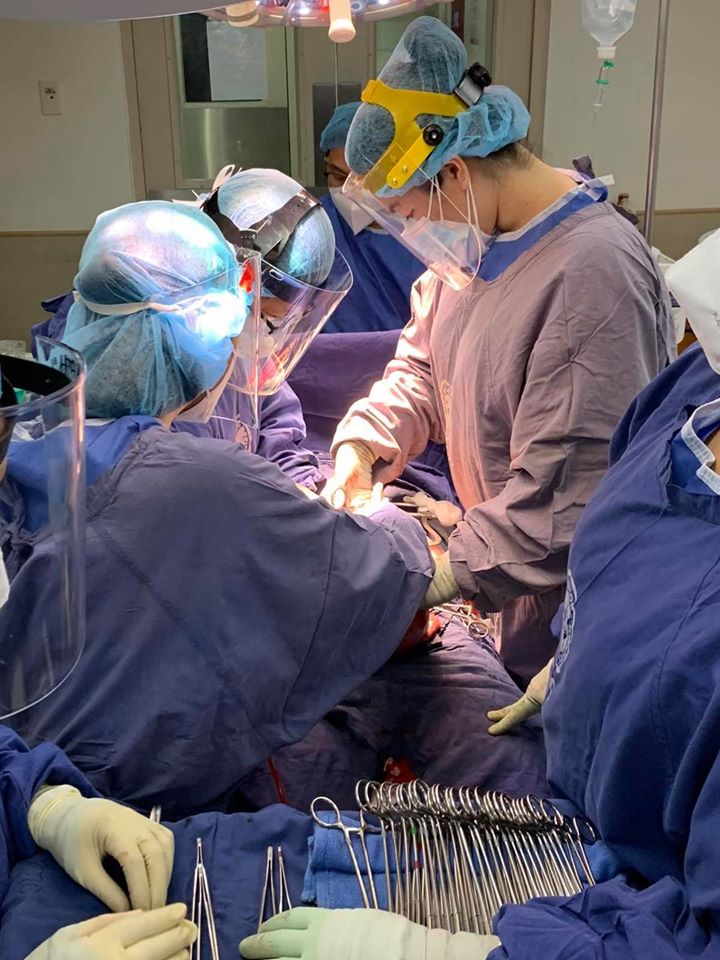
Aside from offering free surgery for ovarian and uterine tumors, the corporate social responsibility program of Manila Doctors Hospital also covers the treatment of thyroid problems, cataracts, cleft lips and palates, hernias, and gallstones. Image via Facebook/MDH – WE SHOUT

Manila Doctors Hospital is offering free surgery for ovarian and uterine tumors for indigent patients. 

Ovarian and uterine tumors can be either benign or malignant. According to the World Health Organization, the number of cancer cases in the Philippines in 2018 was at 141,021, with 5,069 cases of ovarian cancer and 4,048 cases of cancer of the corpus uteri (the main body of the uterus). 

Aside from offering free surgery for ovarian and uterine tumors, the hospital’s corporate social responsibility program also covers the treatment of thyroid problems, cataracts, cleft lips and palates, hernias, and gallstones. They are open to all indigent patients regardless of whether they reside in Manila—beneficiaries have come from all corners of the country, including Batanes and Sulu.

The beneficiary selection process involves a free telemedicine consultation, discounted face-to-face consultation, and a phone interview with social workers. Once qualified, patients have to undergo preoperative diagnostic tests for medical clearance before being scheduled for surgery.

The program, dubbed WE SHOUT (Women Empowerment through Surgical Help for Ovarian and Uterine Tumors), is on its tenth year. Surgeries were previously scheduled every May and November. Due to COVID-19, however, the applications and surgeries are now done on a rolling basis. Screening for WE SHOUT is ongoing. For more information, send an SMS to the Manila Doctors OB-GYN Department at 0945 510 8217. — Patricia B. Mirasol

Doncic’s OT buzzer-beater leads Mavs against Clippers

Raptors sweep Nets; Celtics oust Sixers in four games

LUKA DONCIC’S 3-pointer at the buzzer in overtime lifted the Dallas Mavericks to a 135-133 victory over the Los Angeles Clippers and even up the teams’ first-round Western Conference playoff series as two games apiece on Sunday in the NBA bubble near Orlando.

Doncic shook off the effects of a sprained left ankle sustained Friday and recorded his second consecutive triple-double with 43 points, 17 rebounds and 13 assists. He carried the Mavericks to the win despite playing without Kristaps Porzingis (knee).

Trey Burke added 25 points and Tim Hardaway, Jr. scored 19 of his 21 in the second half for the Mavericks, while Seth Curry chipped in 15 points.

Lou Williams had 36 points and Kawhi Leonard finished with 32 points for the Clippers, who blew a 21-point first-half lead. Ivica Zubac contributed 15 points, while Paul George managed just nine points on 3-of-14 shooting. He scored two points in the second half. Game 5 is on Tuesday.

RAPTORS 150-NETS 122
Reserve Norman Powell scored a career playoff high 29 points and Toronto completed a four-game sweep of undermanned Brooklyn in their first-round Eastern Conference playoff series.

Serge Ibaka added a playoff career best 27 points off the bench and grabbed 15 rebounds for the Raptors, who swept a best-of-seven playoff series for the first time in their 25-year franchise history. The Raptors will play the Boston Celtics in the Eastern Conference semifinals.

Caris LeVert led Brooklyn with 35 points and added six assists and six rebounds. Tyler Johnson added 13 points for the Nets, who were without several top players.

CELTICS 110-76ERS 106
Boston completed a four-game sweep of Philadelphia in the first round of the Eastern Conference playoffs, riding Kemba Walker’s game-high 32 points and a 14-point run bridging the third and fourth quarters.

The third-seeded Celtics will move on to the Eastern semifinals and face second-seeded Toronto, which also finished off a sweep of its first-round opponent, Brooklyn, on Sunday.

Jayson Tatum finished with 28 points, including seven inside the final 3:20 of the third period, during which the Celtics broke from a 77-all tie to take an 89-77 advantage into the fourth quarter. Joel Embiid led the way for the 76ers with 30 points, but misfired on four of his five 3-point attempts.

JAZZ 129-NUGGETS 127
Donovan Mitchell scored 51 points and dished out seven assists to help Utah outlast Denver and take a 3-1 lead in their Western Conference first-round playoff series.

Mitchell posted his second 50-point game in the series, becoming just the third NBA player, joining Michael Jordan and Allen Iverson, to score 50 points twice in the same playoff series.

Mike Conley scored 26 points and Jordan Clarkson added 24 off the bench for the Jazz. Rudy Gobert chipped in 17 points and 11 rebounds. Jamal Murray exploded for 50 points, 11 rebounds, and seven assists to lead Denver. Nikola Jokic added 29 points, seven rebounds and six assists in the loss. — Reuters

ADVERTISEMENT
ADVERTISEMENT