Home Blog Page 9157

Three-decade economic boom comes to a sudden halt in Vietnam

For the past three decades, Vietnam has known only good—or great—economic news. The nation’s consistent growth as an exporter, propelled by Communist leaders who began embracing market-oriented policies in the late 1980s, pushed many into the middle class.

The coronavirus pandemic changed all that. With garment companies seeing orders slashed and other sectors hit with sudden export declines, Vietnam’s workers are enduring the downside of being tethered to the global economy. The economic slowdown in the US and other markets Vietnam depends on for growth is being felt on the streets of Ho Chi Minh City and Hanoi, as well as in villages and tourist centers.

Le Thi Hoa, who sells pineapple and mango slices outside Ho Chi Minh City’s Ben Thanh Market in the heart of the commercial hub, is among those wondering where the good times have gone.

“Now people don’t go out,” said Hoa, 55, wearing a face mask and sitting on a plastic chair next to fruit baskets in front of a closed seafood restaurant. “I can only sell about a third of what I did before the epidemic.”

Vietnam has been one of globalization’s stars, transforming itself from a largely agricultural economy to a manufacturing powerhouse within the span of a few decades. With exports equivalent to the size of its GDP, Vietnam has seen its economy grow as fast at 7.02% in 2019. Now it’s bracing for the slowest growth in two decades, of 2.4% this year. During the second quarter, it expanded by just 0.36% from a year earlier.

“Vietnam has experienced a tsunami of good news over the past 30 years,” said Ralf Matthaes, managing director of Infocus Mekong Research, who has lived in the country since 1994. “This is the first time since joining the global economic community two decades ago that Vietnam is experiencing a significant economic downturn.”

Vietnam’s abrupt slump highlights the sweep of the epidemic’s financial fallout and how even countries that have been relatively successful in containing the virus are unable to avoid its economic afflictions. Such economies won’t be able to return to business as usual until the rest of the world does.

“It’s likely to be quite bumpy,” said Sian Fenner, a Singapore-based economist at Oxford Economics, which forecasts an 8% contraction in global trade for 2020. “Countries that are export-oriented will remain vulnerable.”

In April, Vietnam’s exports plummeted 14% from a year earlier, followed by a drop of 12.4% in May as global commerce came to a standstill, according to the Department of Vietnam Customs. For the seven months through July, exports rose just 1.5% compared with 8% in the same period last year.

TRADE TETHERED
Vietnam’s leaders, though, show no signs of reversing economic course after signing more than a dozen trade agreements in recent years and making the nation a magnet for foreign investment.

The government, grappling with an outbreak in the coastal city of Danang that has spread to 14 provinces and cities, has garnered international respect for its virus containment. Until July 31, the country hadn’t reported a single infection death. It confirmed 1,029 virus cases and 27 deaths as of Aug. 25 as officials employ tough anti-virus measures, while allowing manufacturing businesses to stay open.

Though Vietnam is in better shape than other economies in Asia, where the virus has been far more deadly and disruptive, its reliance on foreign markets and a growing tourism industry have given its residents a lesson in global volatility.

In recent years, Vietnam has become a key cog in the global supply chain. It has opened factories for companies including Intel Corp., Samsung Electronics Co., and LG Electronics Inc., as well as solar panel makers and garment producers. Vietnam’s exports in 2019 reached $264.3 billion—a fourfold jump since 2008. Average annual salaries rose from $1,154 to about $2,800 in that period, according to government data.

The pace of Vietnam’s shipments to the US, its largest market representing about 23% of exports in 2019, slowed in the first half of 2020 compared with the same period last year. The government reported a 14.6% increase in exports to the US, about half the rate of shipment growth in 2019.

Many of the sectors that have been hard hit, such as garments and textiles, employ millions of low-skilled workers. Samsung’s Vietnam unit, whose electronics products represented about 20% of the country’s total exports last year, revised its 2020 exports forecast to $45.5 billion, a $13.5 billion drop from 2019, according to the industry and trade ministry.

TOURISM WOES
Meanwhile, the tourism industry, which represents about 9% of the economy, had a 55.4% revenue drop during the first seven months of the year. Given the pounding to the manufacturing and hospitality industries, almost a third of the population—31 million workers—endured a financial fallout during the second quarter.

The global economic pain has been exacerbated by the virtual lockdown of the economy for much of April and restrictions amid the new outbreak.

With millions of assembly-line employees out of work, some local governments worry about the potential for social unrest, said Fred Burke, managing partner at the Baker McKenzie law firm in Ho Chi Minh City. He recalled that Minister of Planning and Investment Nguyen Chi Dung recently pleaded with Vietnam Business Forum members not to fire their workers but to hold on to them as long as they could.

Given the disruptions, consumer confidence is at its lowest point in 25 years, according to Infocus Mekong Research. Two-thirds of Vietnamese residents are deferring or deciding not to make big purchases. And 63% of Vietnamese are considering taking out loans as they seek financial lifeboats, the research firm said.

“Everyone is saving and we don’t go out so much,” said Bui Viet Nam, a 34-year-old executive with a Ho Chi Minh City garment manufacturer. “Incomes are going down and people are thinking about ways to earn more money through selling things online or getting a second part-time job. It’s a new world.” — Bloomberg
 

Need a visa to visit the US? Expect much longer wait times, officials warn

The US agency in charge of processing immigration applications said on Tuesday that it had avoided a planned furlough of 70% of its staff but warned that it still faced financial hardship that could result in some applicants experiencing longer wait times.

US Citizenship and Immigration Services (USCIS), the agency in charge of processing work permits, so-called green cards, and other visas, said that it had avoided furloughs planned for Aug. 30. But aggressive spending cuts the agency planned to put in place would impact all operations, including naturalizations, it said in a statement.

USCIS is dependent on fees from new immigration applications. The agency reported a 50% drop in fees in June due to less immigration during the novel coronavirus pandemic.

But immigration experts and former officials say even before the onset of the pandemic, the agency had seen revenues fall sharply as a result of slowdowns in processing and other limits placed on immigration applications.

Republican President Donald J. Trump has made curbing immigration a priority during his nearly three-and-a-half years in office.

USCIS Deputy Director for Policy Joseph Edlow warned in the statement there was no guarantee the agency can avoid future furloughs and called on the US Congress to ensure that the agency had sufficient funding for fiscal year 2021, which starts in October.

USCIS had asked for a $1.2 billion bailout from Congress in May to avoid the projected furloughs, but lawmakers pushed back, arguing that the agency had the funding it needed to continue operations through the fiscal year. — Reuters

South Korea orders striking doctors back to work amid surge in coronavirus cases

SEOUL — South Korea ordered doctors in the Seoul area to return to work on Wednesday as they began a three-day strike in protest of several government proposals, including one to boost the number of doctors to deal with health crises like the coronavirus.

Trainee doctors have been staging ongoing walkouts, and thousands of additional doctors were due to stage a three-day strike starting on Wednesday.

The strikes come as South Korea battles one of its worst outbreaks of the coronavirus, with 320 new cases reported in the 24 hours to midnight Tuesday, the latest in more than a week and a half of triple-digit increases.

The walkouts on Wednesday forced South Korea’s five major general hospitals to limit their hours and delay scheduled surgeries, Yonhap news agency reported.

Earlier in the week, the doctors reached an agreement with the government to continue to handle coronavirus patients, but failed to find a compromise on the broader issues.

“The government now has no choice but to take necessary legal actions such as an order to open business to not put the citizens’ lives and safety in danger,” Health Minister Park Neung-hoo said in a briefing. “We urge all trainee and fellow doctors to immediately return to work.”

He said the Korean Medical Association (KMA) and the Korean Intern Resident Association (KIRA) had rejected several of the government’s offers.

In a statement, KMA said the medical community was always open to all possibilities in talks with the government, and that the doctors did not want to have to strike.

“We sincerely do want to return,” the statement said. “We ask you citizens to listen to our voice so that we can meet our patients as soon as possible.”

KMA and KIRA members have said they oppose government plans to boost the number of medical students over several years, establish public medical schools, allow government insurance to cover more oriental medicine, and introduce more telemedicine options.

The government said its goal to increase the number of medical students by 4,000 over the next 10 years is necessary to better prepare for public health crises like the coronavirus pandemic.

Student doctors, however, said the plan would unnecessarily flood an already competitive market, and that the extra funding would be better spent improving the salaries of existing trainees, which would encourage them to move out of Seoul to rural areas where more health professionals are needed. —  Reuters

Philippines risks losing in vaccine race as it battles worst outbreak in Southeast Asia

The Philippines is trying to secure access to a vaccine in development against COVID-19 as it battles the worst outbreak in Southeast Asia.

While other regional countries like Indonesia have already inked deals with frontrunner vaccine candidates, the archipelago’s lack of capacity to locally manufacture vaccines has disadvantaged its bid.

“We are the last in the line because we can’t develop our own vaccines,” the Philippines’ former health chief Esperanza I. Cabral said. “If we had the capability to make vaccines, we would come first.”

The country is banking on a vaccine to contain its surging outbreak that has infected over 197,000 people after testing gaffes and poor tracing rendered one of the world’s longest lockdowns ineffective. President Rodrigo R. Duterte has begun easing restrictions despite cases doubling this month to rescue the local economy that’s heading for its deepest slump since 1985.

The Philippines will test 14 vaccines for clinical trials helmed by the World Health Organization, Health Undersecretary Maria Rosario S. Vergeire told a local news channel on Monday. Moscow’s Sputnik V vaccine is expected to start mass-scale Phase 3 trials in the Philippines in October.

Negotiations are also on with 16 makers of potential COVID-19 vaccines to procure supplies. The government intends to stock up shots worth $400 million and is in talks with the US, UK, and China for supplies.

Regional competition, meanwhile, is heating up. A state-owned drugmaker in Indonesia is gearing up for human trials of Sinovac Biotech Ltd.’s coronavirus vaccine while Singapore and Thailand are developing their own candidates. Malaysia has picked local drugmakers for packaging and distribution of vaccine doses when available.

Local manufacturing is still a possibility, according to Ms. Vergeire. The Research Institute for Tropical Medicine in Manila has applied for an Asian Development Bank grant to study the feasibility of setting up a vaccine facility.

In the meantime, the government could also partner with the private sector to fund a modular vaccine packaging facility to get its foot in the door of the global vaccine supply chain, she said.

“Vaccine security will be a challenge. You cannot ensure that even if you have the money, you can get the vaccine you need,” said Lulu C. Bravo, executive director of the Philippine Foundation for Vaccination. “The whole world is going to try to get the vaccine for itself.” — Bloomberg

Strong support for COVID-19 frontliners

Security Bank addresses needs of medical sector amid COVID-19

The past few months have been very tough for medical institutions as they fight the battle against COVID-19. Since the outbreak, hospitals have been coping with shortage of staff and full occupancy of rooms. Medical practitioners have also been dealing with irregular duty hours,on top of personal protective equipment (PPEs) shortage.

Security Bank saw the needs of the medical sector and immediately sought out avenues where it can provide support to frontliners. Anchored on its #GetBetter campaign in response to COVID-19, the Bank embarked on strategic partnerships with various institutions to help address three important aspects of the COVID-19 response–protection, testing, and treatment.

Meeting the demands for protection

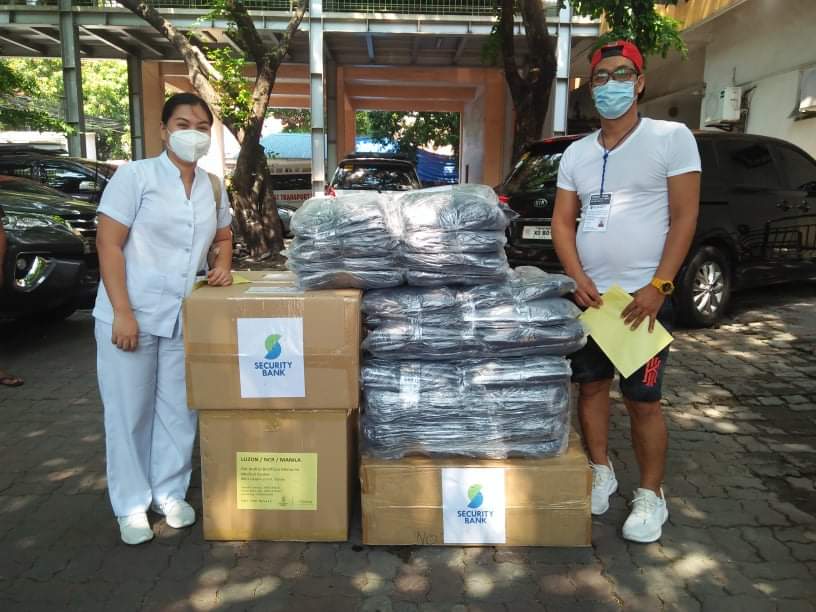
First on Security Bank’s list was to help meet the increasing demand for protective gears. With the help of The Outstanding Women in Nation’s Service Foundation Inc. (TOWNS) and UP Medical Foundation,the Bank was able to provide PPEs to public hospitals across the country.

The medical frontliners of Gat Andres Bonifacio Memorial Medical Center received Personal Protective Equipment from Security Bank through the Outstanding Women in the Nation’s Service (TOWNS) Foundation and the UP Medical Foundation. Gat Andres Bonifacio Memorial Medical Center and Eastern Visayas Medical Center are two of the ten hospitals nationwide where Security Bank donated PPE’s.

Ensuring that the recipients were those most in need, ten targeted hospitals—those with the greatest number of COVID-19 patients—benefitted from the PPE reinforcements. These were Gat Andres Bonifacio Memorial Medical Center, Eastern Visayas Regional Medical Center, Davao Regional Medical Center, Region 1 Medical Center, Baguio General Hospital and Medical Center, Mandaluyong City Medical Center, Vicente Sotto Memorial Medical Center, Southern Isabela Medical Center, Ospital ng Makati, and San Juan Medical Center.

Rehana V. Pallingayan, a surgeon medical specialist at Region 1 Medical Center,shared that the donated PPEs were a great relief to their hospital, stating that the protective gears enabled them to provide optimal care to their patients. “Our anxiety level was high prior to receiving the donation; and to cope with the shortage of PPEs, my fellow doctors and I turned to our DIY skills in creating makeshift face shields using acetate sheets from folders,” Pallingayan recalled.

Ramping up testing capacities

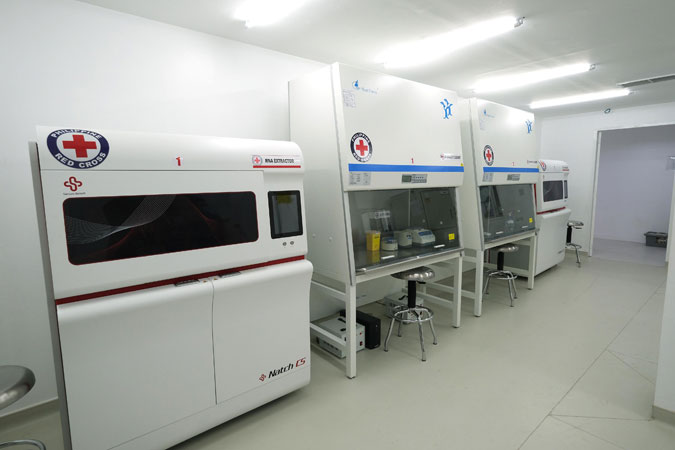
Security Bank Foundation Inc (SBFI), in partnership with the Philippine Red Cross (PRC), has inaugurated the largest molecular laboratory for coronavirus disease 2019 (COVID-19) testing in the Visayas region on Thursday, July 16, 2020.

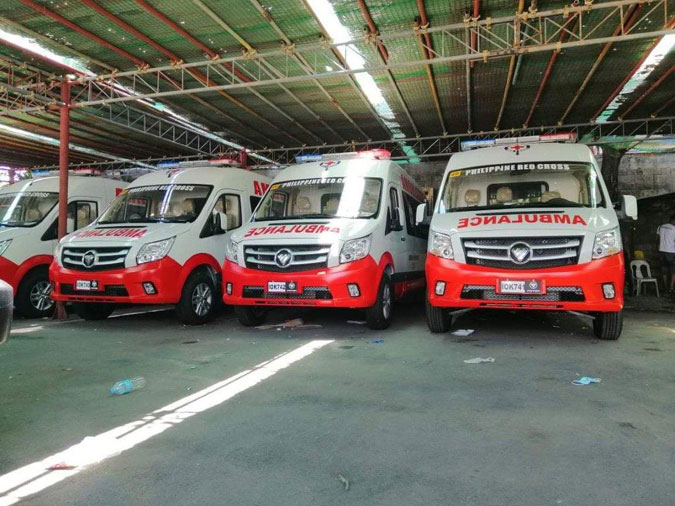
Security Bank, through its corporate social responsibility arm Security Bank Foundation, Inc. (SBFI), also supported the need for increased protection and testing by donating negative pressure ambulances and a molecular laboratory in Cebu, in partnership with the Philippine Red Cross (PRC).

Three negative pressure ambulances, worth PHP 11.4 million, were provided to help transport suspected COVID-19 patients from their homes to COVID-19 healthcare facilities. Equipped with tools that lower air pressure and disinfect and filter the air, this type of ambulance protects patients and paramedics from cross-contamination.

An additional PHP 15 million was donated to PRC to fund the construction of a molecular laboratory that will function as an additional COVID-19 testing site. Last July 16, PRC inaugurated the molecular laboratory and it is now currently serving patients from Cebu City and its nearby provinces. The laboratory allows testing of up to 4,000 samples per day, boosting the region’s testing capacity and, at the same time, decongesting laboratories in other areas.

“The need for testing cannot be overemphasized in order to unmask the virus and prevent or control its spread,” PRC Chairman Richard Gordon said. “I thank Security Bank Foundation for partnering with us in this endeavor which would save the lives of our countrymen in the Central Visayas.”

Security Bank has also partnered with Manila HealthTek, the leading local rapid test kit producer, to fund test kits for the less fortunate sectors of society.

Additional donations were gathered by the Bank’s Treasury Group through the“Deals for Donations” campaign it spearheaded; wherein certain transactions equated to a donation of a test kit. During Security Bank’s anniversary, employees who won in an internal competition also chose to donate test kits to Manila HealthTek.

The test kits purchased will be donated to the Philippine Genome Center and UP National Institutes of Health where they will be used for testing of those suspected of COVID-19 and as well as those who are probable cases.

Enabling accessible treatment for all

Security Bank has also supported treatment initiatives of hospitals, particularly the convalescent plasma transfusion therapy of St. Luke’s Medical Center (SLMC) for COVID-19 patients who exhibit severe symptoms.

Dr. Benjamin S.A. Campomanes, chief medical officer of SLMC, noted that its exclusive partnership with Security Bank will help those who really need the treatment but do not have immediate access to it. “With their support, we will be able to extend the convalescent plasma treatment to indigent COVID-19 patients,” he said.

Less fortunate Filipinos now have a fighting chance to completely recover from COVID-19 as they undergo convalescent plasma treatment, a procedure where COVID-19 antibodies are introduced into their body. As of July 16, 10 qualified patients have already received treatment, and more patients are being assessed.

Security Bank helps give Filipinos a better future through its programs focused on medical aid. The bank is one with the nation in striving to overcome this pandemic and adapting to the new normal. Together we can get better. For more information on Security Bank’s COVID-19 efforts, go to https://www.securitybank.com/Get-Better/

Quality snacking time

Mondelez Philippines Promises Snack Products You can Trust

As a snacks company, safety and quality are two words which Mondelez Philippines lives by. The Company’s purpose is to empower people to snack right, with the right snack, for the right moment, and made the right way. ‘Making it the right way’ means ensuring the Company’s snacks are not only delicious, but also made with the highest quality and safety standards.

The Company’s snack brands don’t need an introduction. They’re beloved and iconic products we’ve had in our kitchens for many years: TANG powdered beverage, EDEN Cheese, CHEEZ WHIZ spread, OREO cookies, TIGER biscuits and crackers, and TOBLERONE and CADBURY DAIRY MILK chocolates. These names stand for deliciousness, but also for being trusted brands.

“Our success depends on the trust of our consumers,” shares Toff Rada, Mondelez Philippines’ CGA Country Manager. “When consumers purchase our products, they trust that we’re providing them delicious and safe food. It is our duty and mission to keep strengthening that trust. Our commitment to safety involves two areas: Ensuring high quality food and a safe working environment for our people. Safety begins with our people; we want to build a world-class safety culture to ensure our people have the best environment to make consumers’ favorite snack products.” On July 31, 2020, Mondelez Philippines celebrated 7.5MM safe hours, which translates to 3 years and 4 months without safety incidents in its manufacturing plant and among its people.

“With our people empowered by our safety culture, they’re able to produce safe and high-quality food,” adds Rada. “We make snack products that moms give their kids, or that friends share with each other. We want to make sure that Moms can feel confident about giving a cookie to her daughter. Or that friends can share a delicious treat enjoyably and safely.”

Making Great Snacks for Everyone

Quality snacks isn’t just about making food that’s safe to eat. Mondelez Philippines works to strengthen its snacks leadership by making food that’s safe and meets everyone’s needs, whatever they may be.

“Safe food for us means what’s inside a product pack, as well as what’s outside of it,” adds Conchita Andoy, Quality Assurance Lead for Mondelez Philippines. “Inside, our snack products are made by following a global food safety certification program. We also adhere to our own global Mondelēz  International quality policies, local regulatory requirements and global manufacturing standards.”

Andoy continues, “Outside – or what you see on our packaging – also provides information for consumers’ safety. Our products are clearly labelled with ingredients, serving size, as well as expiry or best before dates. In addition, we also have allergen information, for people with food allergies to be guided on what our products contain. We also make products that are Halal certified, and that certification can be clearly seen on the front of our products.For products with vitamins and minerals, this information is also prominently displayed. Lastly, we also provide calorie information per serving size, to help guide consumers to snack mindfully.”

The Company is similarly working with the Food and Drug Administration of the Philippines(FDA) to ensure that selling of adulterated and misbranded food items cease. These types of selling practices endager consumers, and that’s cause for concern for the Company. As such, sellers of these products have been identified and reported to the FDA for their action. The FDA will also issue an advisory for consumers about the unscrupulous selling of these types of products.

Because upholding the quality of their products is critical to the Company, they are also encouraging consumers to be part of this mission. The Company is calling out consumers to report unauthorized sale of tampered/expired products or suspected counterfeits to their Consumer Response hotline at 02 8820-2866 or through the email at phconsumercare@mdlz.com.  Counterfeit items are those that use a brand’s logo and name to make it appear to be the same product. These items must be reported to ensure consumers only buy quality and safe food products for their families.

For Mondelez Philippines, quality is about more than the taste. It’s also about providing consumers with quality information about the product they’re about to consume. So that you and your loved ones can have quality snack times.

Neil Gregorio named Widescope’s music and entertainment director

Widescope Advertising Agency is proud to welcome Mr. Neil Gregorio as the team’s new Music & Entertainment Director! 

A powerhouse with over twenty years of experience under his belt, Gregorio has been a fixture in the local and international entertainment industry. He has lent his skills in the field to multiple acclaimed projects and programs including: The Ellen Degeneres Show (USA), Little Big Shots (USA & Paris), Asia Song Festival (Korea), Youtube Stars (Singapore), and The Singer (China) among many others. 

Gregorio is also a constant collaborator of many of the Philippines’ top recording artists. As a Multi-Platinum awarded record producer, he has been credited in the production of several hits performed by OPM hard-hitters like: Rico Blanco, Darren Espanto, Juan Karlos, and EbeDancel to name a few. His most recent achievement in music production includes several nominations in this year’s 33rdAwit Awards in several categories, including Record of the Year. 

As a respected leader and creative professional, Gregorio has held the positions of Domestic Label Director in MCA Music Inc (Universal Music Group) as well as the role of Senior A&R Manager in Warner Music Philippines (Warner Music Group), both known as big music companies worldwide.

Gregorio now joins Widescope’s top management team and is poised to transform the agency’s new Widescope Entertainment branch. With the expertise Gregorio brings to the table, the Widescope team is more ready than ever to reach greater heights.

Regional Updates (08/25/20)

Red alert raised in southwestern Mindanao after Jolo bombing

SECURITY FORCES have been placed on red alert in the southwestern Mindanao area following Monday’s twin bombings in Jolo where 14 people died and 72 wounded. The Philippine Coast Guard (PCG) commandant, Admiral George V. Ursabia, Jr., said they are augmenting military and police forces for the implementation of tighter security measures in Zamboanga on mainland Mindanao and the island provinces of Basilan, Tawi-Tawi- and Sulu, where Jolo is located. “PCG K9 units, safety inspectors, and patrol boat operators are directed to be extra vigilant in securing ports, harbors, and other waterways in the region. Several K9 units of the Coast Guard are also ready for deployment as soon as requested by the AFP (Armed Forces of the Philippines),” Mr. Ursabia said in a statement.

CASUALTIES
Meanwhile, the police confirmed on Tuesday that the fatalities consisted of seven AFP personnel, one police special action force member, and six civilians. Those injured were 48 civilians, 18 AFP, and six police. “While we express our heartfelt condolences to the bereaved family of the deceased and sympathy to the wounded, we assure them of our keen resolve and commitment to bring to justice those responsible for this vicious attack,” Police General Archie Francisco F. Gamboa said. The two bombings, using improvised explosive devices, are suspected to have been carried out by members of the extremist and kidnap-for-ransom group Abu Sayyaf. Lieutenant General Cirilito E. Sobejana, head of the Philippine Army, said re-imposing martial law in Sulu could help isolate and track down the Abu Sayyaf network. Martial law was lifted at the end of last year in Mindanao, which includes Sulu, two-and-a-half years after it was imposed to fight Islamic State-inspired militants who took over Marawi City. “The situation dictates, calls for it, with that recent incident with many casualties, to better control the population,” Mr. Sobejana told reporters. “It is wise to declare martial law again.”— with reports from Emmanuel Tupas/PHILSTAR and Reuters

San Miguel gets nod to collect fees for TPLEX Pozorrubio-Rosario

PRIVATE INFRA Dev Corp., a San Miguel-controlled company, has received the green light  from the toll Regulatory Board (TRB) to collect fees beginning Sept. 1 for the Pozorrubio, Pangasinan to Rosario, La Union segment of the Tarlac-Pangasinan-La Union Expressway (TPLEX). For class 1 vehicles such as cars, jeepneys, taxis, and vans, the toll from Pozorrubio to Rosario will be P41, while class 2 vehicles (buses and small trucks) will pay P103. Class 3 vehicles or large trucks and trailers will pay P124. Private Infra Dev, now SMC TPLEX Corp., will start its collection at 12:01 a.m. on Sept. 1, the TRB notice published on Tuesday said.  “Any interested expressway user shall have the right to file, within a period of 30 days from the date of the first publication of the notice, a petition for review of the applicable toll rate for Segment 8 (Pozorrubio, Pangasinan to Rosario, La Union) with the TRB,” it added.

Also on Tuesday, San Miguel Corp. (SMC) said it is hoping that its two projects —  the 420-kilometer South Luzon Expressway Tollroad 5 (SLEX TR5) that will connect Quezon province and the Bicol region and the 19.40-kilometer Pasig River Expressway (PAREX) that will connect the eastern and western sides of Metro Manila — will help boost the economy amid the coronavirus pandemic. “As we said before, San Miguel is fully committed to helping our country overcome this crisis. A big part of that is to continue, and not hold back, on new investments. These projects will deliver hundreds of thousands of jobs and put money in the hands of the Filipinos,”  SMC President and Chief Operating Officer Ramon S. Ang said in a statement. SLEX TR5 will take four years to complete, while PAREX will be three years. — Arjay L. Balinbin

Neighbors Baguio and La Trinidad to synchronize testing of workers

THE LOCAL governments of Baguio City and its neighboring town La Trinidad will coordinate for the targeted testing of residents who cross their border for work. The workers for priority testing are those in supermarkets and banks, which Baguio has tagged as business establishments vulnerable to the coronavirus. “As it is we have lots of employees who are from La Trinidad and the other way around.  This fact is evident in our cases where a number are workers in Baguio but are residents of the town.  And even if they are not statistically included in our tally, they are still included in our contact tracing because most of their contacts are in Baguio,” Baguio Mayor Benjamin B. Magalong said in a statement released Sunday evening.  “As neighbors, we have to work together and protect each other.” Mr. Magalong also said “synchronization and cooperation in this aspect is crucial as both localities and the whole of BLISTT function in a similar ‘eco-system’ and anything that happens in one locality impacts the others. BLISTT, also referred to as the Metro Baguio area, covers the city and the Banguet towns of La Trinidad, Itogon, Sablan, Tuba, and Tublay. Baguio issued directives starting July that requires all banks and supermarkets to conduct company-subsidized swab tests among its workers, and La Trinidad recently released a similar order.

2021 Spending Priorities

THE Budget department submitted to Congress on Tuesday the P4.506-trillion spending plan for 2021, where allocations for the Public Works and Transportation departments were increased significantly as the government hopes an aggressive infrastructure push will drive post-pandemic economic recovery. Read the full story.

2021 Spending Priorities

DPWH, DoTr budgets get big boost

Infrastructure agencies will get higher allocations under the 2021 national budget. — PHILIPPINE STAR/MICHAEL VARCAS

THE Budget department submitted to Congress on Tuesday the P4.506-trillion spending plan for 2021, where allocations for the Public Works and Transportation departments were increased significantly as the government hopes an aggressive infrastructure push will drive post-pandemic economic recovery.

The House of Representatives is aiming to pass the national budget in “record time” or before the end of September,  and signed into law by President Rodrigo R. Duterte by mid- to late November.

“We expect the whole September that we will be busy. We will try to pass it in record time,” Speaker Alan Peter S. Cayetano said during the turnover ceremony at the House of Representatives, Tuesday.

“While we’re implementing Bayanihan II this September, October, November, December, we will try to finish the budget before the end of September — a very ambitious schedule.”

With the theme “Reset, Rebound, and Recover: Investing for Resiliency and Sustainability,” the P4.5-trillion budget is equivalent to 21.8% of the gross domestic product (GDP). It is also 10% higher than the P4.1 trillion allocated for this year.

The Development Budget Coordination Committee (DBCC) in its July 28 meeting expects GDP to grow by 6.5-7.5% in 2021, bouncing back from an up to 6.6% contraction this year. Next year’s revenues are projected to reach P2.72 trillion or 13.2% of GDP, while disbursements are seen to rise P4.47 trillion or 21.6% of GDP. The deficit target is at 8.5% of GDP for 2021.

The national budget will focus on “improving healthcare systems, ensuring food security, creating more jobs by investing in labor intensive projects, enabling a digital government and economy as well as help communities cope and prevail in these trying times,” Budget Secretary Wendel E. Avisado said during the turnover of the National Expenditure Program for 2021.

The Department of Education and attached agencies still get the lion’s share with a P754.4 billion budget, 16% higher than the P650.2 billion set aside this year. This will cover the implementation of the free tuition law and the learning continuity plan.

The Department of Public Works and Highways’ (DPWH)budget for next year has been increased by 50% to P667.3 billion, while the Department of Transportation’s (DoTr) budget surged by 70% to P143.6 billion. This as the government pins its post-pandemic recovery hopes on the “Build, Build, Build” (BBB) infrastructure program.

The DBM said a total of P1.107-trillion has been allocated for BBB projects, such as the P157.5-billion Network Development Program, P125.9-billion Flood Management Program, and P106.3 billion for rail transport development.

The Department of Interior and Local Government will get a P246.1-billion budget, up by 4%, while the Department of National Defense’s budget jumped 16% to P209.1 billion.

As the coronavirus pandemic continues, the allocation for the Health department rose only by 14% to P203.1 billion. Mr. Avisado said P71.4 billion has been set aside for the National Health Insurance Program, P16.6 billion for hiring health workers, and P2.5 billion for the procurement of a vaccine for the coronavirus disease 2019 among others.

Also, the Department of Social Welfare and Development budget has been slashed by 53% to P171.2 billion next year, while the Agriculture department’s allocation fell by 6% to P66.4 billion.

More than a third of the national budget or P1.664 trillion will go to the social services sector, up 11% from this year’s allocation. Another third or P1.347 trillion will be funneled into the economic services sector, while P724.2 billion will be allocated to the general public services, P560.2 billion for debt burden, and P210.6 billion for defense.

ACT-CIS Rep. Eric Go Yap said the House Appropriations Committee will work on the immediate passage of the general appropriations bill.

Layon nating maisaayos agad ang pagpasa ng budget at tiyakin na hindi lamang sa panahon ng pandemya mararamdaman ang tulong kundi sa pang araw-araw na buhay rin ng bawat Pilipino,” he said. “We intend to sustain our economic growth and build on our previous gains while facing the pandemic head-on.”

Senator Juan Edgardo M. Angara said the Finance Committee can hold parallel hearings, provided the committee report is finalized in the plenary until the House version is approved.

“We can start the budget briefings in a few weeks as is the custom in the Senate even as the House is also tackling it,” he said in a mobile phone message.

“As required by the Constitution we cannot finalize the committee report for plenary discussion until the House has passed the budget measure on 3rd reading, usually towards October.”

The 18th Congress is working to avoid a repeat of the nearly four-month delay in the passage of the 2019 budget, which prompted the government to operate on a reenacted budget. — C.A. Tadalan

2021 Spending Priorities

Finance charge cap seen to hurt banks

By Luz Wendy T. Noble, Reporter

THE proposed cap on credit card finance charges will weigh heavily on banks amid the coronavirus crisis, an analyst said.

Despite this, industry groups on Tuesday backed the Bangko Sentral ng Pilipinas’ plan to implement a 24% interest rate limit on credit card installment payments and cash advances in a bid to provide relief to consumers.

Fitch Ratings director for APAC-Banks Willie Tanoto said the move to cap credit card finance charges, if implemented, will be “significant” during a crisis when lenders are experiencing slimmer margins and slower demand.

“The effect of an interest rate cut [on credit cards] will be significant, especially during a time when banks are facing narrower (net interest margins) and lower credit demand,” Mr. Tanoto said in an e-mail.

The Bankers Association of the Philippines (BAP) and Management Association of the Philippines (MAP) expressed support for the BSP’s proposal.

“We welcome this initiative of the BSP and hope that this collective effort of the banking industry will help ease the burden of our credit cardholders during these challenging times,” BAP President and Bank of the Philippine Islands President and Chief Executive Officer Cezar P. Consing was quoted as saying.

“[The] BSP Governor’s (Benjamin E. Diokno) proposal, coupled with the 60-day payment deferment under the Bayanihan to Recover as One Act, will provide big relief to businesses and individuals using credit cards, many of whom have found themselves jobless as a result of the pandemic,” MAP President Francisco E. Lim said in a separate statement.

Mr. Diokno has said some credit card charges rise to “about 40%,” which is “unacceptable.”

“It’s for fairness, and maybe as a result, more will be inclined to use the credit cards with much lower interest rates,” Mr. Diokno said in an interview with ANC on Monday, noting key policy rate or overnight repurchase facility is at a record low of 2.25%.

From a consumer perspective, Fitch’s Mr. Tanoto said lower interest rates will have a limited impact on bringing down risks related to credit card defaults as borrowers face lower income and unemployment.

Mr. Tanoto said banks may tighten approval criteria for credit card applications and trim reward offerings as well.

“A bank could conceivably also make up for some of the lower revenues via other non-finance charges means, e.g. from higher late payment charges, higher loan service fees, etc. Until the BSP formally provides implementation guidelines, it is unclear if these will be similarly restricted,” he added.

Joyce Ong, an analyst at the Financial Institutions Group of Moody’s Investors Service, said the proposal’s impact will be “diluted” for banks with lending that are more focused on large corporates. However, this could dent growth for lenders that are seeking to expand their credit card businesses, she added.

“Banks that have been growing their SME (small and medium-sized) and retail portfolios, including unsecured credit card loans, as part of yield-enhancement and diversification strategies are more affected,” Ms. Ong said in an e-mail.

On the other hand, S&P Global Ratings analyst Nikita Anand said the proposed cap will have a “marginal impact” on credit cards as they only make up about 4% of the industry’s total loan portfolio.

“With the proposed cap, credit card interest rates will be broadly comparable to peers in the region,” Ms. Anand said, noting the caps on credit card charges with different levels are already imposed in Malaysia, Thailand, and Indonesia.

Lending disbursed by big banks totaled P9.28 trillion in June, up by 9.6% from the P8.47 billion a year ago but lower by some P107 billion from the May level, data from the BSP showed.

Credit card loans grew 28.4% to P410.39 billion in June, a slower growth against the 34.3% expansion seen in May when the loan disbursements for the segment hit P418.885 billion.

New rules on corporate debt vehicles OK’d

THE Securities and Exchange Commission (SEC) approved new rules for the creation of investment firms that will buy corporate debt papers of large and medium enterprises.

SEC Memorandum Circular No. 23 sets the guidelines on corporate debt vehicles (CDV), which the regulator says will help companies maintain liquidity amid the coronavirus disease 2019 (COVID-19) pandemic.

A CDV is defined as a closed-end investment company that offers securities in the form of shares or units of participation. It will use the proceeds to invest in bonds, notes, or any other debt papers of corporations and medium-sized enterprises operating in the Philippines.

It may also invest in any corporate debt guaranteed by a domestic corporation or by the Philippine government and/or its agencies, or by multilateral agencies that involve SEC-exempt securities.

“CDVs can play a significant role in the survival and recovery of our economy from the impact of the COVID-19 pandemic by providing large corporations and medium-sized enterprises the necessary funding to meet their obligations, sustain their operations and preserve jobs,” SEC Chairperson Emilio B. Aquino said in a statement.

To be qualified as CDV, it must have a minimum subscribed and paid-up capital of P50 million. If it is part of a group of investment companies with at least a five-year track record, its minimum subscribed and paid-up capital may be P1 million.

A CDV may invest in up to 25% of the net asset value of a corporate debt issued by a single enterprise. In the case of single group entities, a CDV’s investments may reach up to 50%. It will be computed based on the total proceeds of the securities sold within the initial offering period.

Large corporations will be considered as those with total assets above P350 million or total liabilities above P250 million. Medium-sized enterprises will be companies with total assets more than P100 million to P350 million or total liabilities more than P100 million to P250 million.

A CDV is prohibited from investing in securities that it will be issuing, and investing in corporate debt of corporations where any of its directors or officers are members.

Buyers can include banks, registered investment houses, insurance cowmpanies, individuals with an annual gross income of at least P10 million, or individuals that have gross assets of P100 million.

Subscription to CDV securities may be done through an initial public offering with redemption at maturity. A CDV may offer several securities managed as separate asset pools but have the same investment objectives.

The securities may be issued in tranches, with the first tranche issued within six months from the SEC approval. The subsequent tranches must be issued within three months from the submission of the CDV’s current report and updated simplified prospectus to the SEC.

The distribution will be done by a registered mutual fund distributor and certified investment solicitor.

The CDV will not be required to list or trade at an exchange, but it will be required to submit a monthly report to the SEC detailing information such as its net assets, corporate debts acquired and outstanding balance of investments. — Denise A. Valdez

ADVERTISEMENT
ADVERTISEMENT