Home Blog Page 911

A top cognac brand has ambitions to be the next Hermès

LOUISXIII-COGNAC.COM

FOR YEARS, Louis XIII has had an unusual problem.

The maison hasn’t had enough of its $4,600 Cognac to meet growing demand, and it’s impossible to create more. Each distinctive decanter contains hundreds of eaux-de-vie — some a century old — so even if the Rémy Cointreau SA brand were to dramatically increase the amount of spirit it distills and ages, it would take decades to have significantly more stock to sell while retaining the ultra-premium Cognac label’s quality.

Its solution: exquisite porcelain plates.

“The vision for Louis XIII is to be a true luxury brand, like Hermès,” Executive Director Anne-Laure Pressat says of the extension into a non-endemic product; it already sells cut crystal glasses and a branded cigar cutter.

“No one is asking Hermès, ‘Why do you do makeup?’” she continues. “When they first started, they were saddlemakers. Now they do everything. And the vision for Louis is the same, to be a luxury brand as such that goes beyond Cognac.”

Ms. Pressat, previously director of innovation for Louis XIII, has a keen sense of what collectors are looking for and how to expand. It’s a strategy led by gastronomy and honed through lavish dinners at top restaurants and boutiques around the world. To launch the $50,000 Rare Cask 42.1 decanter in 2023, for example, it hosted top clients in Venice for a multiday extravaganza. These regular dinners have also been a way for clients to refill (for 10% off) their bottles using the brand’s Infinity Wheel program.

The Art de la Table collection is “for l’art de vivre,” she says, what she terms “the whole experience” Louis XIII drinkers are seeking.

“Our clients are asking, ‘I have all of the Louis XIII decanters, why don’t you do more?’” says Ms. Pressat.

To create the dinnerware collection, Louis XIII partnered with J.L Coquet, a historic house in Limoges, France, renowned for its extra-white porcelain and voluminous designs. If you’ve eaten at a multi-Michelin-starred restaurant, there’s a good chance you’ve eaten off its Hemisphere collection.

J.L Coquet crafted two designs inspired by Louis XIII. The first collection, the Soil Is Our Soul, focused on the terroir, quite literally, by using a 3D scanner on the grounds of the domaine and imprinting the contours of the earth onto the edges of the porcelain plates. Each piece was glazed, then brushed to remove some of the glaze from the textured areas. It took three to four weeks to create each plate, including 15 steps by 40 artisans.

The second collection, Light of Time, took 20 steps and includes a first for the porcelain house. Louis XIII wanted to focus on light and transparency, so J.L Coquet designed plates that are so fine they let light shine through them. They also carved facets on the underside of the lip to echo the shimmering effect of cut-crystal Cognac glasses. The edge of each plate has a hand-painted copper lining that references the copper stills used in production.

Six pieces in each collection will be sold online either separately (from $500) or as a set ($3,400 to $4,000): a large plate, soup plate, rice plate, dessert plate, and tea and coffee sets. And J.L Coquet will produce a limited 750 sets per collection, with each piece numbered and dated with the year. (Why 750? The special tierçon barrel Louis XIII uses to age its eaux-de-vie yields 750 decanters.)

Ms. Pressat says the plan is to introduce something new in the Art de la Table collection every two years. Cognac lovers will have to stay tuned on that lipstick. — Bloomberg


Salmon raises $50M in fresh funding to expand PHL consumer banking business

FINANCIAL TECHNOLOGY company Salmon Group Ltd has raised $50 million through an oversubscribed Nordic bond issue, which it will use to expand its consumer banking business in the Philippines.

This followed a $60-million inaugural issuance in April and brought its total bond financing to $110 million under its $150-million Nordic bond framework.

The latest issuance was two times oversubscribed, which Salmon said showed strong global investor confidence in its growth prospects.

Pareto Securities was the sole bookrunner and underwriter for the transaction.

“We are opening a new chapter for Philippine financial services built on innovation, inclusion, and trust. As the Philippines stands at the heart of Southeast Asia’s growth story, with its young consumer base, strong regulators, and digital-first mindset, we see tremendous opportunity to reshape the industry,” Salmon Co-founder Raffy Montemayor said in a statement.

“Through Salmon Bank and Sunprime Finance, we are proud to lead this transformation by offering products that meet the everyday needs of Filipinos, including credit lines, cards, consumer and moto loans, and now high-yield deposits.”

The company operates Salmon Bank (Rural Bank), Inc., formerly known as Rural Bank of Sta. Rosa (Laguna), Inc., and financing company Sunprime Finance, Inc. in the Philippines, offering products like revolving credit lines, credit cards, consumer loans, moto loans, and deposits.

“This successful bond issuance validates the confidence that international investors have in both the Philippines and Salmon’s long-term vision. With this new funding, we are poised to scale faster, bring world-class financial services closer to millions of Filipino families, and redefine what banking can mean in our region,” Mr. Montemayor added. — A.M.C. Sy

Power Mac Center opens 9th Apple Premium Partner store in SM Lanang, Davao

Power Mac Center in SM Lanang Premier — POWER MAC CENTER

POWER MAC CENTER has opened the first Apple Premium Partner store in Mindanao in SM Lanang Premier, Davao City.

The new branch opened last week brings the total number of Apple Premium Partner (APP) stores in the country to nine.

Power Mac Center is still the only reseller in the Philippines that is authorized to open Apple Premium Partner stores that carry retail offers and provide service and training to customers.

“Our APP stores are dedicated spaces where Apple fans find all their digital lifestyle essentials, a community hub where they can celebrate technology in the way that matters to them. This expansion initiative brings forth that unique experience to a wider customer base, starting with Mindanao,” Power Mac Center Director for Marketing and Product Management Joey Alvarez said in a statement.

The reseller added that including service and training allow it to provide employment opportunities to local talents wherever they open new stores.

“While an APP store is already able to do more for customers, it has an even broader scope, specifically in bridging the implementation of the Apple ecosystem in workplaces, schools, colleges, and universities,” it said.

“Organizations in Davao City and Mindanao looking to increase their operational efficiency and deliver better services for their stakeholders can seek assistance at the APP store in SM Lanang to be connected to PMC’s Education and Enterprise groups for expert advice and service from Apple-authorized providers.” — BVR

Dining In/Out (10/02/25)


The Pen’s The Bar gets a touch of Albania

THE PENINSULA’S The Bar will be taken over by Albanian bartender Sofokli Gali of Nouvelle Vague on Oct. 3, starting 8 p.m. The Tirana bar is the first from the Balkans to make the World’s 50 Best Bars extended list. For one night only, he will be showing Manila why he shook up his city with the Tirana Cocktail Fest, how he built MUSE from the ground up, and claimed a spot in Drinks International’s Bar World 100.


Exploding Galaxies republishes Sarap and Palayok

EXPLODING GALAXIES is republishing two vital books on Filipino food culture — Sarap: Essays on Philippine Food and Palayok: Philippine Food Through Time, On Site, In the Pot, by Doreen G. Fernandez and Edilberto N. Alegre — and is launching both simultaneously on Oct. 11. Exploding Galaxies focuses on republishing the lost classics of Philippine writing. The publication of Sarap and Palayok marks its first push outside the orbit of fiction and the beginning of what may be many rediscovered titles on food. Until these new editions in 2025 by Exploding Galaxies, these two books have not been published again since Sarap first came out in 1988, and Palayok in 2000. Sarap features essays written and compiled by Ms. Fernandez and Mr. Alegre about the life and ways of Filipino food. In this new edition it is accompanied by the work of four illustrators: Gianne Encarnacion, Kitty Jardenil, Elle Shivers, and Eva Yu. The book was designed by Kristian Henson. Meanwhile, Palayok: Philippine Food through Time, on Site, in the Pot by Ms. Fernandez presents the origins and evolution of Philippine cuisine. In this new edition, Ms. Fernandez’s writing is accompanied by photographs by Jilson Tiu of the eateries and arteries of Manila, of first catches and ferments, of kitchens, tables, and fiestas all over the country. The book was designed by Miguel Mari. Starting Oct. 15, the books will be available to purchase via the website, www.explodinggalaxies.com, and in select branches of National Book Store, Fully Booked, Kultura, Mt. Cloud Bookshop (Baguio), and Everything’s Fine (Makati).


Crystal Dragon’s Mid-Autumn Fest menu

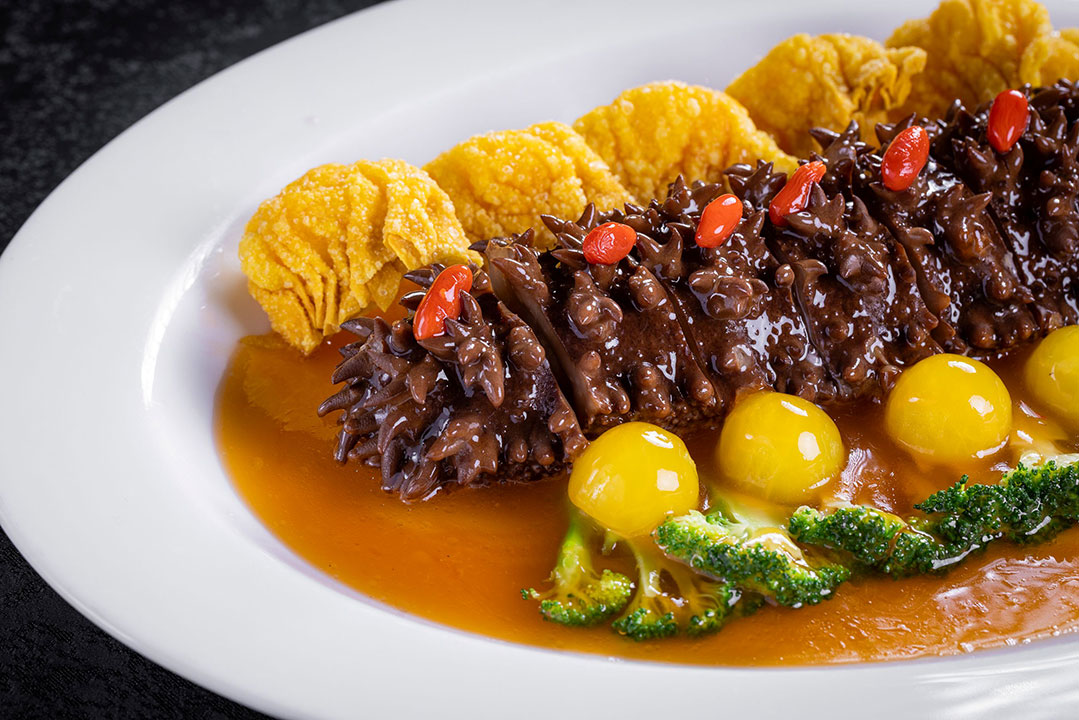
CRYSTAL DRAGON, luxury integrated resort City of Dreams’ restaurant for Cantonese and regional Chinese cuisine, presents a special ala carte menu in celebration of Mid-Autumn Festival. Available from Oct. 1 to 19 for lunch and dinner, the celebratory menu is designed to strengthen togetherness with loved ones featuring seasonal dishes. These include Double-boiled 10-head Abalone with fish maw, blaze mushroom, cordyceps flower and baby pork ribs; Braised Stuffed Whole Sea Cucumber with minced pork in supreme oyster sauce; Deep-fried Live Sea Grouper with saffron orange peel vinaigrette; Braised Fresh Water Crayfish, Szechuan style; and Tea-smoked Eight Treasures Rice wrapped in dehydrated lotus leaf. A menu highlight is the dessert, featuring the mooncake tradition offered as a set of Cranberry Mango Lava Snow Skin Mooncake and Oven-baked Traditional Mini Red Bean Mooncake, with Chilled Honey Lemon Tea with fresh pomelo and malva nut. Limited-edition White Lotus Seed Paste with Double Egg Yolk Mooncakes are also available at Café Society throughout the whole month of October. The mooncakes are encased in a gift box of four. Crystal Dragon is open daily from noon to 11 p.m., while Café Society is open from 10 a.m. to 9 p.m. daily except Tuesdays when it opens at 8 a.m. For inquiries and reservations, call 8800-8080 or e-mail guestservices@cod-manila.com; or visit www.cityofdreamsmanila.com.


Goldilocks unveils new Signature Chocolate

GOLDILOCKS launches its newest creation, the Signature Chocolate cake. This combines four layers of black velvet cake wrapped in chocolate frosting. Each slice has cashew praline between layers, adding a unique texture to the cake. It is topped with bittersweet chocolate curls atop a base of chocolate droplets. Now available for P750, the Signature Chocolate can be enjoyed in Goldilocks stores nationwide, or delivered through www.goldilocksdelivery.ph, GrabFood, and foodpanda.

Western Union rolls out mobile app in PHL

WESTERN UNION on Wednesday launched its new mobile application in the Philippines, which it expects to help boost fund flows and make remittances more convenient.

The app, which is now available on the App Store and Google Play, features both send and request capabilities with a daily limit of P820,000. It also offers competitive foreign exchange rates.

The Philippines is the first market where Western Union introduced the app.

“I think the Philippines is a great market to innovate,” Gregory Laurent, Western Union vice-president for the Philippines, Japan, Australia, New Zealand and Pacific Islands, said during the launch event.

“Digitization in the country is fast-paced, innovation is fast-paced, [and] the regulatory body is supporting such innovation. So, for us, it was actually an obvious choice to take the Philippines as the first market to announce this new receiver and sender app,” he added.

App users can send money to another user from other countries manually or using QR Ph. Meanwhile, the fund request feature is available in countries that host large numbers of Filipinos, such as the United States, Australia, Singapore and the United Kingdom.

Receivers can access the money via cash withdrawal or deposit the funds to a bank account or a digital wallet. Users will be get a transaction tracking number via the app.

Mr. Laurent said the P820,000 transaction limit applies only to transactions made through the app. — Katherine K. Chan

Integrity, blockchain, and the birth of the people chain

STOCK PHOTO | Image from Freepik

On Tuesday, at the Asian Institute of Management in Makati, we launched something historic: the Integrity Chain. It is the world’s first private sector-led blockchain initiative dedicated to ensuring transparency in government budgets. More than 50 presidents and leaders of respected business, academe, civic, and faith-based organizations signed the Statement of Support, joining the Department of Public Works and Highways (DPWH) as it became the first agency to commit its Foreign Aid Projects to the chain.

At the ceremony, DPWH Secretary Vince Dizon declared his agency’s commitment to transparency and accountability. The Department of Information and Communications Technology (DICT) secretary, Henry Aguda, likewise expressed support, recognizing the alignment of this initiative with the administration’s push for digital transformation and good governance.

The presence of these leaders, combined with the active participation of over 50 organizations, underscored a shared message: integrity cannot be delayed, outsourced, or left solely to the government. It must be built, enforced, and validated by all sectors of society — and technology now allows us to do so.

Over the past weeks, I have read and heard criticisms against blockchain-related bills filed in the Senate and Congress. Detractors have been quick to dismiss these proposals as premature, unnecessary, or misguided. But here is the real question: if we do not try, if we do not test, if we do not innovate, then what is the alternative? Endless whining and complaining will not clean up corruption. Passing judgment before consultation even begins is not only unfair but also counterproductive. Our legislators deserve the chance to engage stakeholders, refine their proposals, and explore how emerging technologies like blockchain can serve the Filipino people. Instead of criticizing, why not propose solutions? Why not enrich the debate with constructive input rather than blanket dismissals? It is easy to attack an idea. It is harder — but more meaningful — to help shape it into something workable.

This was the spirit that led us to launch the Integrity Chain. Rather than wait for government to act, the private sector banded together to build a platform that demonstrates how blockchain can safeguard transparency. On its technical level, the Integrity Chain is simple. By placing DPWH’s Foreign Aid Project budgets on the blockchain, every peso spent is immutably recorded, visible to auditors, civil society, and the public. This eliminates the possibility of tampering and makes “ghost projects” nearly impossible. Each entry is permanent, unalterable, and auditable in real time.

But what makes the Integrity Chain different from other blockchain initiatives is not the technology. It is the People Chain that powers it. More than 50 organizations — chambers of commerce, universities, civic groups, and professional associations — signed on to become validators of these budget transactions. Each organization serves as an independent eye, a moral compass, and a public witness to ensure that what is recorded on the chain reflects the truth. Critics often say, “Technology cannot solve a people problem.” They are right. Corruption is not simply a technical failure — it is a moral one. But this is exactly what the Integrity Chain addresses. It is not only blockchain; it is people checking on people. It is collective vigilance embedded into the system itself.

C.S. Lewis once wrote: “Integrity is doing the right thing even when no one is watching.” This has become one of the most quoted lines on ethics and morality. But on that day, standing in a room with more than 50 organizational leaders and two Cabinet Secretaries, I realized that integrity gains another dimension in our time. In the age of transparency, integrity becomes unbreakable when everyone is watching. This is the promise of the Integrity Chain. It transforms integrity from a private virtue into a public system. It does not replace conscience, but it supports conscience with technology, validation, and scrutiny. It does not eliminate the role of individuals, but it strengthens them through collective oversight.

Skeptics may ask: why is the private sector doing this? Shouldn’t integrity be the job of government? Yes, but here lies the problem: government alone cannot solve corruption. Bureaucracy is often slow, and internal checks can be compromised. By contrast, a private-sector collective can act faster, innovate quicker, and, most importantly, check on each other to avoid conflicts of interest. This is not to replace government, but to complement it. By starting with DPWH’s Foreign Aid Projects, we send a signal: the private sector is not merely complaining about corruption, it is offering a solution. And by doing so, we help the government regain credibility in the eyes of the people.

The launch was also significant because it was the first initiative of its kind in the world. Other countries have experimented with blockchain pilots in budgeting or procurement, but nowhere else has the private sector itself convened, designed, and committed to validating government projects on-chain. This makes the Philippines a pioneer. In an era where headlines often portray our country as lagging behind in governance and innovation, the Integrity Chain tells a different story: here, in Makati, we set a global example.

Of course, challenges remain. Technology is only as strong as the will to use it properly. The governance structure for the Integrity Chain will need to be defined. Roles must be clarified. Resources must be sustained. But Tuesday’s signing showed that the will is there. In the coming weeks, we will reconvene the founding organizations to form a governance team that will oversee implementation, assign responsibilities, and ensure continuity. From there, we hope to expand beyond the DPWH, so that other agencies and budgets can also be placed on the chain. The road will not be easy. But then again, fighting corruption has never been easy. What makes this moment different is that now, we are not just fighting with words — we are building with systems.

The Integrity Chain is not perfect. It is not the final answer to corruption. But it is a start — a bold one. And in a country where cynicism often paralyzes reform, a start is exactly what we need. So, to those who criticize blockchain bills and reform initiatives, I say: stop dismissing, start contributing. Instead of asking “why blockchain,” ask “how can we make blockchain work for transparency?” Instead of assuming technology cannot solve human problems, ask how technology and people together can reinforce integrity.

On Tuesday, we showed what is possible when the government, the private sector, and civil society stand together. The Integrity Chain is not just a piece of technology. It is a commitment, a covenant, a collective act of conscience. It is, above all, a People Chain — a movement where integrity is no longer optional, and accountability is no longer invisible.

C.S. Lewis was right: integrity is doing the right thing when no one is watching. But in Makati on Tuesday, we proved something new: integrity becomes unbreakable when everyone is watching.


Dr. Donald Lim is the founding president of the Blockchain Council of the Philippines and the lead convenor of the Philippine Blockchain Week. He is also the Asian anchor of FintechTV.

Chevron Philippines names new country manager

Pongtron “Bon” Tangmanuswong

CHEVRON PHILIPPINES, INC. (CPI), a downstream oil company and marketer of the Caltex brand of fuels and lubricants, has appointed Pongtron “Bon” Tangmanuswong as its new general manager and country chairman.

In a media release on Wednesday, CPI said Mr. Tangmanuswong will lead the company’s nationwide operations and oversee more than 600 Caltex stations, 450 AutoPro workshops, major commercial accounts, and five Chevron proprietary terminals.

“The Philippine market is dynamic, competitive, and full of untapped potential. I’m committed to leading with vision, energy, and a spirit of collaboration,” Mr. Tangmanuswong said.

He succeeds Billy Liu, who led the company for nearly five years and is now taking a new role at Chevron’s headquarters in Houston.

Mr. Tangmanuswong joined Chevron in 2008 and has held leadership roles in procurement, supply chain, engineering, asset optimization, and special projects across Asia-Pacific markets.

He most recently served as general manager and country chairman of Chevron (Cambodia) Ltd., overseeing terminal operations, product supply, distribution, and marketing. — Sheldeen Joy Talavera

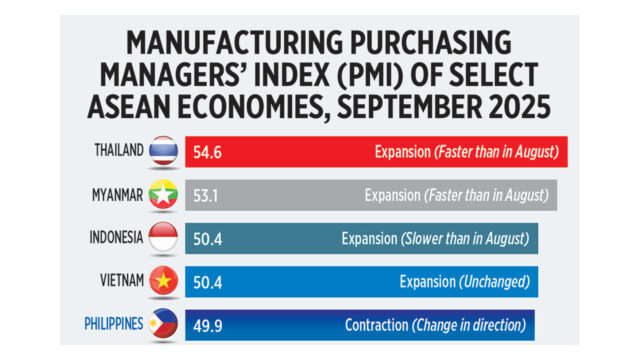
Manufacturing Purchasing Managers’ Index (PMI) of Select ASEAN Economies, September 2025

FACTORY ACTIVITY in the Philippines contracted for the first time in six months in September, as manufacturers saw a drop in output and new orders, S&P Global said on Wednesday. Read the full story.

Manufacturing Purchasing Managers’ Index (PMI) of Select ASEAN Economies, September 2025

How PSEi member stocks performed — October 1, 2025

Here’s a quick glance at how PSEi stocks fared on Wednesday, October 1, 2025.


Powerful earthquake rocks central Philippines, killing at least 69 people

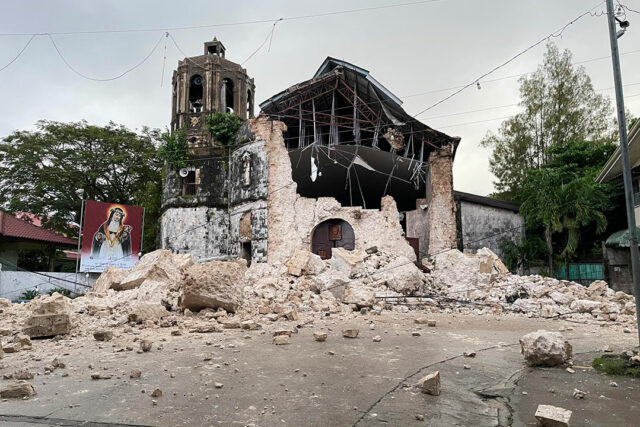
THE Archdiocesan Shrine of Santa Rosa de Lima in Daanbantayan, Cebu sustained heavy damage from the Sept. 30 quake. — ARCHDIOCESAN SHRINE OF SANTA ROSA DE LIMA FACEBOOK PAGE

A 6.9-MAGNITUDE earthquake struck the central Philippine province of Cebu on Tuesday night, leaving at least 69 people dead, according to the local disaster agency.

Most of the deaths were caused by fallen debris and occurred mostly in Bogo City, which was closest to the epicenter of the earthquake, and nearby municipalities including San Remigio, Office of Civil Defense (OCD) officer-in-charge Bernardo Rafaelito R. Alejandro IV told a news briefing on Wednesday.

He said authorities were focused on rescuing as many people as possible during the “golden hour” period — the first 24 hours after a quake when survival is more likely.

“We have already mobilized and deployed responding units from our uniformed personnel like the Armed Forces, Coast Guard, Philippine National Police and Bureau of Fire Protection,” he added.

At least 147 people were injured, according to the National Disaster Risk Reduction and Management Council.

President Ferdinand R. Marcos Jr. pledged swift aid for survivors, saying Cabinet secretaries were on the ground leading relief operations, as he offered condolences to families who lost loved ones.

Cebu, a province of 3.4 million and one of the country’s top tourist hubs, sustained heavy damage, including on heritage churches, residential houses and schools, though Mactan-Cebu International Airport — the Philippines’ second-busiest gateway — remained open.

All ports and airports in the Visayas were fully operational, the Department of Transportation (DoTr) said in a statement.

“The Civil Aviation Authority of the Philippines and Philippine Ports Authority (PPA) immediately inspected our airports and ports in the Visayas after the earthquake,” Acting Transportation Secretary Giovanni Z. Lopez said.

A yellow alert was declared over the Visayas grid after 27 power plants tripped because of the quake.

In an 8 a.m. advisory on Wednesday, the National Grid Corp. of the Philippines (NGCP) said the grid lost 1,444 megawatts (MW) after the plants tripped.

This was on top of 16 plants that have been unavailable before the quake, while one plant was running on derated capacity, bringing the total unavailable capacity to 1,654.7 MW, the agency said.

A yellow alert is issued when the operating margin is insufficient to meet the transmission grid’s contingency requirement. The NGCP said the Luzon and Mindanao grids were operating normally.

PRICE FREEZE
In a statement, the Department of Energy (DoE) said it was coordinating with power generation, transmission and distribution companies to ensure continued electricity supply in affected communities.

It ordered a 60-day price freeze on basic petroleum products in the province, including on liquefied petroleum gas (LPG) and kerosene.

“Stability of fuel prices and availability of supply are vital in times of disaster,” Energy Secretary Sharon S. Garin said in the statement. “The department is working closely with all partners to make sure that families and frontliners have access to essential energy resources they need during relief and recovery operations.”

As of 1 p.m., NGCP reported power failures at four transmission lines, including the Daanbantayan-Tabango 230-kV Line 1 and Line 2, Daanbantayan-Compostela 230-kV Line 1 and Line 2, Tabango-Kananga 230-kV Line 1 and Line 2 and Leyte-Luzon 350-kV HVDC Line.

Five generating units had come back online, it added.

Ms. Garin separately told lawmakers at her confirmation hearing that she would send a task force to the province to help restore power.

“They have to prepare, they have to create a team,” she said. “All their equipment will be transported. It will take them a day or two just to get to the area.”

Separately, Health Secretary Teodoro J. Herbosa said they would use the agency’s quick-response fund to send out a team to quake-affected areas.

The Health department’s medical teams in Tacloban and the Philippine Emergency Medical Assistance Team were on standby, he told a Senate budget hearing.

The Philippine Coast Guard in a statement said it had deployed 36 doctors, nurses and first responders along with thousands of food packs to Bogo City.

Meanwhile, the Trade department said it had ordered a 60-day price freeze on basic goods across the entire province of Cebu.

This is in line with the President’s order to fully mobilize state assets for the relief and rescue of affected residents, it said in a statement.

The agency sent teams to inspect markets, verify prices and guarantee adequate and continuous supply of basic goods in affected communities, it added.

Cultural agencies were coordinating with the Cebu Archdiocese and affected local government units to assess the damage on churches and heritage structures, the National Commission for Culture and the Arts said in a statement.

“While full attention remains focused on relief and rescue operations, we encourage our local partners to take initial protective measures such as safeguarding movable heritage, retrieving significant fragments and documenting the extent of the damage for future reference,” National Historical Commission of the Philippines Chairman Regalado Trota Jose, Jr. said in a separate statement.

The Philippines lies in the so-called Pacific Ring of Fire, a belt of volcanoes around the Pacific Ocean where most of the world’s earthquakes strike. — Edg Adrian A. Eva, Sheldeen Joy Talavera, Ashley Erika O. Jose, Adrian H. Halili, and Brontë Lacsamana

Philippine priority bills may risk missing structural fixes

President Ferdinand R. Marcos, Jr. led the first meeting of the Legislative-Executive Development Advisory Council for the 20th Congress in Malacañang on Tuesday. — PCO

By Chloe Mari A. Hufana, Reporter

PRESIDENT Ferdinand R. Marcos, Jr.’s administration has set 44 priority measures for Congress, but critics say the package risks falling short of addressing the Philippines’ deep economic weaknesses despite promises of stronger governance, wider social services and energy security.

The Legislative-Executive Development Advisory Council (LEDAC) outlined the bills late Tuesday, framing them as a roadmap to attract investment and modernize state institutions.

The list includes a proposed general tax amnesty, amendments to the Bank Deposit Secrecy Law and Anti-Money Laundering Act and fresh levies such as an excise tax on single-use plastics.

Also on the agenda are the proposed Cybersecurity Act, National Land Use Act, Blue Economy Act and fiscal reforms requiring civil servants to waive bank secrecy rights. The palace said the measures would “modernize institutions, strengthen fiscal discipline and ensure energy security.”

But Jose Enrique A. Africa, executive director of the research group Ibon Foundation, said the package leaned heavily on investor-friendly reforms while offering little for agriculture, redistribution or industrial development.

“The agenda lacks a coherent development framework to promote redistribution, agricultural growth and Filipino industrialization,” he said in a Viber message on Wednesday. “Tax amnesties are deeply problematic policy instruments that encourage tax avoidance and impunity rather than compliance.”

Mr. Africa added that while proposals to ease bank secrecy rules and tighten anti-money laundering standards are welcome, questions remain about whether they will be applied consistently.

“The current selectivity of the administration’s anti-corruption drive does not give confidence that there is really an intent to institutionalize effective anti-corruption measures,” he said.

The Marcos government has highlighted governance reforms as central to the agenda, citing bills that would compel civil servants to disclose bank accounts, a Progressive Budgeting law to tighten fiscal discipline, and a Magna Carta for villages.

The palace said such measures are needed as the Philippines contends with a widening corruption scandal in infrastructure spending.

Other legislative items target the fast-growing digital economy. These include proposals on digital payments, regulation of online gambling and the use of artificial intelligence in elections.

The palace said the bills would “secure online transactions, promote innovation and ensure the safe and responsible use of digital platforms in governance and public life.”

In a Viber message, Finance Secretary Ralph G. Recto said the gambling bill would prioritize regulation over taxation.

Energy and climate resilience also feature in the list, with bills promoting biofuels, waste-to-energy projects and amendments to the Electric Power Industry Reform Act.

A proposed excise tax on single-use plastics seeks to curb waste and raise revenue, while the proposed National Land Use Act and Blue Economy Act are positioned as frameworks for balancing growth with environmental protection.

Other measures include a master plan for infrastructure and national development, reforms to strengthen the Bases Conversion and Development Authority and changes to the Magna Carta for micro, small and medium enterprises. These are meant to bolster competitiveness, create jobs and broaden access to credit.

Still, Mr. Africa warned that without stronger redistributive reforms, the legislative program risks reinforcing elite and corporate control over key sectors such as water, healthcare and energy.

On the other hand, Michael L. Ricafort, chief economist at Rizal Commercial Banking Corp., said the priority bills could help boost the Philippines’ investment climate and bolster fiscal management.

“These are important reform measures that would provide a more conducive environment for further economic growth and development,” he said in a Facebook Messenger chat.

He said the bills are meant to draw in foreign investment, create jobs and boost economic activity. He added that the measures could also strengthen fiscal discipline and debt management, supporting the nation’s economic fundamentals. — with ARAI

Tropical Depression Paolo forms, may hit Luzon by Friday — state weather bureau

PAGASA.DOST.GOV.PH

By Edg Adrian A. Eva, Reporter

TROPICAL Depression Paolo has developed from a low-pressure area east of Catanduanes in the Bicol region and was expected to make landfall over Isabela or northern Aurora on Friday, the state weather bureau said on Wednesday.

As of 2 p.m., Paolo was spotted 695 kilometers east of southeastern Luzon with maximum sustained winds of 55 kilometers per hour (kph) near the center and gusts of up to 70 kph, the Philippine Atmospheric, Geophysical and Astronomical Services Administration (PAGASA) said. It was moving westward at 25 kph.

PAGASA weather specialist John A. Manalo said the country’s 16th cyclone this year was projected to strengthen into a severe tropical storm as it nears the country and could further intensify into a typhoon.

“As it approaches our country, our analysis shows that it will continue to strengthen and intensify into a severe tropical storm,” he told a news briefing.

There was a possibility of raising Tropical Cyclone Wind Signal No. 1 over the eastern portions of Northern and Central Luzon by Wednesday afternoon or evening, which could escalate to Signal No. 3 or even No. 4 as Paolo crosses land, he added.

While the cyclone was unlikely to directly affect the country within 24 hours, rains were expected in Northern and parts of Central Luzon starting Friday morning. Authorities also warned of possible flooding and landslides in areas along the storm’s path.

PAGASA issued Storm Surge Warning No. 1 over Aurora, Cagayan and Isabela, warning of a minimal to moderate risk of storm surges between one and two meters over the next 48 hours.

Residents in coastal areas were advised to stay away from beaches and suspend sea activities. Local governments were urged to prepare evacuation centers and pre-position relief goods as the storm approaches.

ADVERTISEMENT
ADVERTISEMENT