Home Blog Page 9085

Stocks rebound on economic recovery hopes

THE MAIN INDEX closed higher on Friday as investors gained some optimism before heading into the weekend.

The benchmark Philippine Stock Exchange index (PSEi) picked up 65.57 points or 1.11% to close at 5,967.96, while the broader all shares index added 23.82 points or 0.67% to end at 3,577.38.

The PSEi dropped to a low of 5,888.36 early in the day but quickly entered green territory where it stayed for the rest of the session, reaching a peak of 5,967.96 upon closing.

“Local shares closed higher as investor hopes for a further recovery took precedence over weak labor market data and a lack of progress on another fiscal stimulus bill in Washington,” Regina Capital Development Corp. Head of Sales Luis A. Limlingan said in a mobile message.

Economic data released recently point to some recovery: the unemployment rate went down to 10% in July from a record 17.7% in April, foreign portfolio investments rose 42% in May after a three-month decline, and cash remittances grew 7.7% in June after contracting since March.

These data, along with the relative slowdown in local coronavirus cases this week, helped improve investor sentiment.

The PSEi’s movement was also in line with some Asian markets, such as Japan, China and Hong Kong, which were trading in green territory when the local bourse closed.

Meanwhile, US stocks fell on Thursday. The Dow Jones Industrial Average, S&P 500 and Nasdaq Composite indices went down by 1.45%, 1.76% and 1.99%, respectively.

Most sectoral indices at the local bourse ended Friday’s session with gains. Holding firms rose 117.08 points or 1.92% to 6,212.94; services grew 16.50 points or 1.12% to 1,487.51; property climbed 16.68 points or 0.61% to 2,733.67; and industrials improved 41.13 points or 0.51% to 8,071.54.

However, mining and oil shed 18.37 points or 0.30% to 5,991.36 and financials dropped 2.91 points or 0.25% to 1,150.90 at the end of trading.

Some 1.11 billion issues valued at P4.18 billion switched hands on Friday, growing from the previous day’s 770.87 million issues worth P5.96 billion.

Decliners narrowly beat decliners, 92 against 90, while 51 names ended unchanged.

Foreign investors returned to selling on Friday, posting net outflows of P527.02 million versus net purchases worth P420.91 million on Thursday. — Denise A. Valdez

Metro Manila-based manufacturers of critical goods to get tax breaks

Metro Manila-based investment projects involving the manufacture of critical goods such as test kits, personal protective equipment (PPE) and medicine may now avail of tax perks amid the coronavirus pandemic, according to the Board of Investments (BoI).

In Memorandum Circular no. 2020-006 dated Sept. 4, the BoI said it can revise the 2017 Investment Priorities Plan (IPP) that identifies projects that are given income tax holidays.

Based on the memorandum, identified goods and services addressing the pandemic will now be exempt from the “locational restriction policy” or the rule that incentives are not applied to most projects in the National Capital Region.

BoI said these projects will also now be exempt from the modernization requirement, or the policy to improve facilities and processes that will result in a 25% substantial reduction of production cost.

These projects include the production of medicine considered critical by the Health department; medical equipment like thermometers and test kits; PPE such as masks, goggles and face shields; and surgical equipment; laboratory equipment. Also covered are projects involving the manufacturing of medical supplies such as alcohol, sanitizer, hand soap, cleaning materials, and common medicine such as paracetamol, vitamins and mefenamic acid.

Raw and packaging materials used for the production of these goods as well other supplies identified by the Health department will also be included. Support and maintenance services for laboratory and medical equipment are also covered by the circular.

The policy is considered in effect “during the existence of the pandemic” and can be extended in cases of national interest or emergency.

Under the 2017 investment priorities plan, BoI said that it selects projects with substantial benefits to the economy for incentives. The income qualified for the income tax holiday is limited to the income directly attributable to eligible revenue from the registered project. — Jenina P. Ibañez

Phoenix taps Petarmina for petroleum supply, regional opportunities

Phoenix Petroleum Philippines, Inc. has entered into a strategic partnership with a subsidiary of Indonesia’s state-owned PT Pertamina (Persero) for the supply of petroleum products and exploration of regional opportunities.

The company told the exchange on Friday it has signed a new deal with Pertamina International Marketing and Distribution Pte. Ltd.

Pertamina International will be supplying petroleum products to Phoenix in the Philippines and Singapore. The partnership also allows them to “explore and co-develop other international downstream business opportunities in the region.”

Pertamina International, which was formed in 2019, is being used by PT Pertamina for overseas sales and marketing. The Indonesian firm has six refinery units with a total capacity of more than 1 million barrels a day.

“We are proud and happy to work with Pertamina as our supply partner,” Phoenix Petroleum President Henry Albert R. Fadullon said in the statement.

“As both homegrown oil companies, we believe that the synergy between Phoenix and Pertamina will bring mutual and complementing value and opportunities, especially since the Philippines and Indonesia are geographically situated close to each other,” he added.

Phoenix currently operates units in Singapore and Vietnam and has existing partnerships with other firms within the ASEAN.

During the first semester, Phoenix swung to an attributable net loss of P367.8 million, reversing its attributable net profit of P903.94 million in the same period last year.

Shares in the company at the stock exchange closed flat on Friday at P11 each. — Denise A. Valdez

Cavitex to open new entryway next week

The operator of the Manila-Cavite Expressway (CAVITEx) is opening an alternative entrance to the expressway next week to brace for increased traffic with the relaxed quarantine restrictions.

Cavitex Infrastructure Corp. (CIC) said the Pacific Drive, a 300-meter entryway from D. Macapagal Boulevard to CAVITEx, will be open starting Sept. 14 (Monday).

Pacific Drive is intended to help ease traffic coming from Roxas Boulevard and nearby roads, as traffic along CAVITEx has been increasing since quarantine restrictions were relaxed for Metro Manila and Calabarzon, CIC President Roberto V. Bontia said in the statement.

CIC is part of Metro Pacific Tollways Corp. (MPTC), which also operates the Cavite-Laguna Expressway (CALAX), the North Luzon Expressway (NLEx) and the Subic-Clark-Tarlac Expressway (SCTEx).

The group will be implementing a 100% cashless toll starting Nov. 2, requiring all users to buy RFID (radio frequency identification) to pass through its expressways.

In a media briefing on Friday, Mr. Bontia said the whole tollways group expects an additional 500,000 new RFID subscribers in the coming months.

“In May, we had about 30% RFID usage. Latest figure is almost 40% penetration already. I think we will be able to hit the almost 100% RFID by November,” Mr. Bontia said.

“When we started the intensified program, we had about 700,000 subscribers. To reach 100% RFID, we are more or less eyeing close to 1.1 to 1.2 (million subscribers), so roughly additional 500,000 new subscribers (will come in),” he added.

The RFID program is part of the government’s order to toll road operators to use cashless payments to avoid the spread of the coronavirus.

MPTC the tollways unit of Metro Pacific Investments Corp., one of three key Philippine units of Hong Kong-based First Pacific Co. Ltd., the others being Philex Mining Corp. and PLDT, Inc.

Hastings Holdings, Inc., a unit of PLDT Beneficial Trust Fund subsidiary MediaQuest Holdings, Inc., has a majority stake in BusinessWorld through the Philippine Star Group, which it controls. — Denise A. Valdez with inputs from Arjay L. Balinbin

Filinvest concludes $200-million bond issuance

Filinvest Development Corp. (FDC) has re-entered the international bond market with the recent issuance of $200-million fixed rate notes.

In a statement on Friday, the Gotianun family-led conglomerate said it concluded the offer of five-year senior unsecured notes, which will finance its capital expenditures and refinance maturing loans.

The bonds have a fixed coupon of 4.1250% payable semi-annually, and were priced at a re-offer yield of 4.25%.

Proceeds of the issuance will support the company’s plans for digitalization, water, desalination, waste water and renewable energy projects, a joint venture for a district cooling system, and other infrastructure projects.

“We are pleased with the outcome of the successful issuance which confirms the confidence and strength of FDC’s name and track record in the Philippines. This bond issuance will further optimize our capital structure, as well as position us to pursue new investments in infrastructure and sustainable solutions such as solar energy, water and wastewater,” FDC President and CEO Josephine Gotianun Yap said in the statement.

“The issuance allows us to diversify our funding sources, partially refinance existing debt, and gives us flexibility in managing our maturity profile,” FDC Chief Financial Officer Nelson M. Bona added.

The issuance marks FDC’s re-entry into the dollar bond market for the first time since 2013. Its coupon is also its lowest for an international bond issuance.

The company tapped UBS AG Singapore Branch as the offering’s sole global coordinator, and with Standard Chartered Bank, as joint bookrunners.

China Bank Capital Corp., Metropolitan Bank & Trust Co., PNB Capital & Investment Corp. and Union Bank of the Philippines were the domestic lead managers.

During the first half, FDC posted a 24% growth in attributable income to P7.2 billion, as its banking and sugar units remained strong through the coronavirus pandemic.

Shares in FDC at the stock exchange closed flat on Friday at P8.53 apiece. — Denise A. Valdez

Las Pinas COVID lab now open

The COVID-19 testing lab which is expected to serve patients in the South of Metro Manila is now opening its doors and starting operations to help improve the country’s testing capacity and recovery rate for the new coronavirus disease.

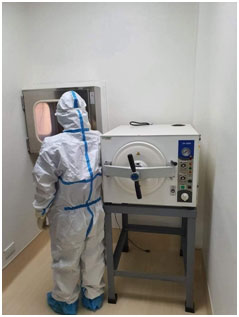
Specimen receiving area/specimen processing area pass box

A team of experts went to the COVID testing facility of the Las Pinas General Hospital and Satellite Trauma Center (LPGH-STC) to assess the facility and to conduct a proficiency testing.

Both the GeneXpert and RT- PCR machine passed the assessment. The laboratory personnel also passed the proficiency exam and were found to be competent to handle the testing using the GeneXpert technology.

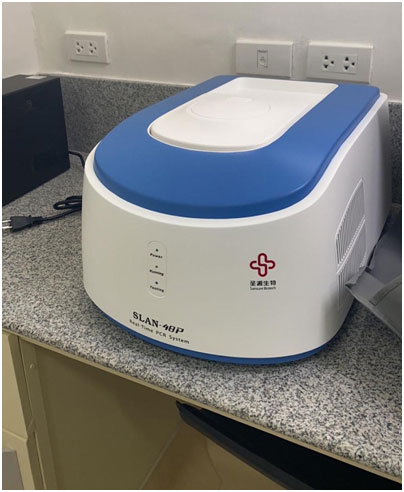
PCR machine

Next week, the personnel will undergo a proficiency exam in using the real-time reverse transcription polymerase chain reaction (RT-PCR) COVID-19 testing machine.

Sen. Cynthia Villar, whose family donated equipment to capacitate the hospital to operate its own COVID testing center, welcomed the development and expressed hope that similar facilities would be set up and accredited in other areas in the Philippines.

“More hospitals and private laboratories have shown interest in setting up their own testing centers, I hope the Department of Health could fast-track their application

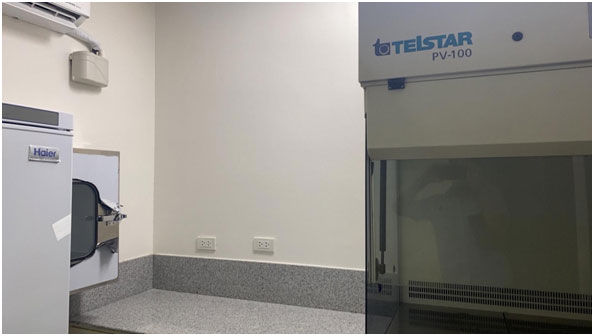
Specimen receiving/ processing area freezer and biological refrigerator

because we really need to improve our testing and tracing capacity and the accuracy of reporting of cases in this fight against COVID-19,” Villar said.

The Las Pinas facility just like the other facilities applying for accreditation, needs to go through a multi-stage process of laboratory assessment.

Pass box going to the PCR and reagent prep rooms

“With this testing center, patients in the South of Metro Manila will no longer have to travel far and wait long for results,” Villar said.

The Villar family has donated a laboratory freezer, biological refrigerator, autoclave sterilizer and passbox to the facility.

They also provided assistance in ensuring that the renovation or retrofitting of the area assigned as a Covid testing laboratory will conform to the standards approved by the DOH and World Health Organization.

Automated RNA extraction machine

The RT-PCR machine was donated by the San Miguel Foundation to LPGH-STC and will start to operate next week. The foundation reached out to Public Works Sec. Mark Villar identified the LPGH-STC as a beneficiary of its program to help the government with COVID-19 testing by donating test kits to local government units and RT-PCR machines to government hospitals.

Reagent Room

Once fully operational, the Las Pinas laboratory will have the capacity to process 50 specimens a day and have results within two to three days.

Four tips on running a business with your spouse

Pandemix, a food and pastry business, was established at the Litang family’s home during the lockdown—by accident.

When husband and wife Jun and Jo-anne Litang ran out of roti for their shawarma, they decided to make their own from scratch instead of buying. The simple act of baking their own bread brought them a lot of joy. Soon, they were baking banana bread and chocolate cakes.

Pandemix was officially up for business on May 1, initially selling to close family and friends. Mrs. Litang was in charge of baking while Mr. Litang took care of the legwork. As months passed and the venture got bigger, the couple faced more challenges in managing it together.

“Men handle things differently from women. Men think, ‘That’s okay already…’ As a woman, you want everything to be organized and documented,” said Mrs. Litang during “Partners in Life: At Home and in Business,” a recent webinar organized by incubator and accelerator StartUp Village.

It’s possible for a couple to run a business together, said the Litangs, who shared tips on how to do it smoothly and effectively.

1. Be professional.

Even if their business is home-based, the couple maintains boundaries for work. The Litang family, for instance, knows not to disturb Mrs. Litang when she is in the kitchen. “Baking is precise… When you’re counting and your child suddenly calls on you, you lose track of how much salt you had put in,” she said.

Mr. Litang also supports how invested Mrs. Litang is in the business, giving her space while she’s researching and taking online classes on baking. “I let her do what she wants to do,” he said. 

2. Listen effectively to your partner.

To avoid being stuck in an echo chamber, keep an open mind to the thoughts of one’s partner. “Sometimes, you feel like everything that you do is correct. If you don’t listen, you won’t know what’s wrong and right,” said Mrs. Litang.

Active listening is a technique wherein one consciously tries to understand the complete message being communicated instead of just hearing the words. Pay full attention while one’s partner is talking and show interest through body language, such as nodding occasionally. Provide feedback only when one’s partner is done talking; make sure that it’s honest and that it acknowledges the points that were raised.

3. Be a pillar of support.

Every business has its highly stressful moments. Mr. Litang recalled how his wife came back home crying one day, not knowing what to do when a cake that she was delivering got ruined on the way.

These situations call for a partner that can be strong and rational amidst the chaos. “That’s what I teach her, that you shouldn’t panic when there’s a problem… I tell her, ‘Relax. You won’t be able to do [your task] if we’re like this. You need to focus,’” said Mr. Litang.

4. Put each other and your family at the center.

Being focused on work doesn’t mean that family becomes less of a priority. As a gesture of love, Mrs. Litang prepares food for her family whenever she can. She also ensures that they all eat together during meals, with no business talk at this time.

This dedication was put to the test when remote classes first began for their ten-year-old son. Thinking that he could manage on his own as he had always done, Mrs. Litang went on with her usual work schedule. But when Mr. Litang brought up how online learning required constant parental supervision, the couple immediately made adjustments.

Now, Mrs. Litang frees herself up during her child’s offline learning hours. “By the afternoon, I should be done with all of my baking. I do it either the night before or early in the morning,” she said. — Mariel Alison L. Aguinaldo

Globe At Home, DepEd equip selected public school teachers with connectivity for digital learning 

To ensure the safety of the learning community in this time of pandemic, the Department of Education (DepEd) has decided to move the classes for the upcoming school year online, and allowed the adoption of distance learning. For teachers, this means they have to make use of the internet as their main platform to conduct classes, upload learning materials, and monitor their students’ progress online.

Globe At Home recognizes this pressing demand of educators for a fast, reliable, and affordable internet connection. Through its WiFi2Teach program, Globe heeds DepEd’s call to support their Distance Learning program by making a donation of 1,000 Globe At Home Prepaid WiFi modems to equip selected public school teachers with connectivity, ensuring that education remains unhampered in the country despite the current global health crisis. WiFi2Teach is also part of the telco’s ongoing efforts and contribution under the Brigada ng Ayala – Ayala Group of Companies’ group wide participation in the DepEd’s Oplan Balik Eskwela (OBE) and Brigada Eskwela (BE) programs.

“The migration to digital learning poses a lot of challenges for us at DepEd and most especially to public schools and teachers who commonly have limited access to the Internet  and online learning tools,” shared Abraham Abanil, Director at DepEd. “With Globe’s WiFi2Teach program, we can gradually address these challenges and help more public educational institutions and teachers to become more adapted to the new normal of remote, online learning for the upcoming academic year.”

Individuals may also extend help to teachers, even at home, by buying a Globe At Home Prepaid WiFi modem from Globe’s official store on Lazada LazMall. For every purchase, PhP 100 will be donated to fund the need for internet connection of public school teachers. Interested customers may purchase a modem and support the program until September 15, 2020.

“The new normal has compelled all of us to transform our households to centers of productivity and learning,” shared Barbie Dapul, Vice President and Head of Marketing for Globe At Home. “WiFi2Teach is designed to assist public school teachers in carrying out their work and duty of teaching students remotely. Like our partners from DepED, we advocate for quality, accessible, and relevant education to help uplift the lives of more Filipinos as we continue accelerating the country’s digital transformation.”

Aside from its efforts to provide the needed connectivity and access for teachers at home, Globe launched its eLibrary platform with DepEd to give K-to-12 students, educators, and parents around the country  free and quick access to hundreds of  ebooks and educational videos. The eLibrary includes international titles under public domain, as well as local titles provided by DepEd.  This will allow for continuous learning during the enhanced community quarantine which prompted many schools in Luzon and other parts of the country to suspend classes.

Further, the telco giant has been working with DepEd to support various skills development programs for teachers nationwide. One of these is Global Filipino Teachers, a component of the department’s learning continuity plan. Globe, together with DepEd’s regional offices, has rolled out a series of training sessions that focuses on 21st Century skills needed by teachers most especially in the new normal, including digital literacy and overall capacity-building to maximize the digital tools available to them.

The partnership between Globe and DepEd also involves conducting training of teachers for Psychological First Aid as well as How to be Responsible Online Citizens under the Digital Thumbprint Program (DTP). DTP is an award-winning series of workshops designed to educate learners, parents and educators alike on digital citizenship, online safety, and the responsible use of the internet.

Learn more about this story and how you can help power digital learning for public schools nationwide via https://www.globe.com.ph/help/broadband.

###


For more information, please contact:

Yoly C. Crisanto
Head, Corporate Communications
Globe Telecom, Inc.
Email Address: gtcorpcomm@globe.com.ph
Globe Press Room: www.globe.com.ph/about-us/newsroom
Twitter: @talk2GLOBE │ Facebook: www.facebook.com/globeph

From Wall Street to Silicon Valley, LGBT+ investment on the rise

When Michele Bettencourt stepped down as chief executive of a billion-dollar cyber-security firm to begin her transition from male to female, she thought her career was over.

Two years later, Ms. Bettencourt is not only living as a transgender woman, but she was also named chairwoman of the board of directors for an up-and-coming tech company.

“I’m not worried about hiding my secret,” Ms. Bettencourt told the Thomson Reuters Foundation. “I wore my red Dior dress on a Zoom call—it’s so liberating to be me and not worry about it.”

Ms. Bettencourt is part of a growing number of LGBT+ executives, investors, and entrepreneurs in the United States who are using their financial capital and corporate savvy to support LGBT+ friendly firms—and promote greater inclusion in the process.

Some 17 million people in the United States are LGBT+ and they spend $1.1 trillion a year, according to LGBT+ Capital, one of a growing number of specialist asset management firms.

“The (LGBT+ investment) space is expanding,” said Nicole Douillet, senior advisor at LGBTQ Loyalty, an LGBT-focused financial services company that last year created the LGBTQ100 Index of the top 100 gay- and trans-friendly public companies.

“People really care not just about earning top dollar with their investment, I think people are starting to see that you can do well financially while doing good in the world.”

Among them is Ms. Bettencourt, who as an angel investor looks to finance minority- and women-led startups.

“If there were two investment opportunities and one was LGBT-run, and the other was (not), and both were equal, I would go the LGBT,” she said.

“If you look at the panoply of investment opportunities, why would you just invest in white males?”

SOCIALLY RESPONSIBLE

While data on LGBT-specific investment is not widely available, analysts say it is part of a wider trend towards environmental, social, and governance (ESG) investing, such as avoiding fossil fuel companies.

ESG investment in Europe, the United States, Japan, Canada, Australia, and New Zealand hit $30.7 trillion dollars in 2018, up by more than a third in two years, said the Global Sustainable Investment Alliance, a group of investment organizations.

“Back in the ’80s and ’90s … the investment opportunities around socially responsible investing were pretty much limited,” said Stuart Armstrong, a financial planner with Centinel Financial Group, an investment firm.

“But increasingly you’re seeing Black Rock and other global firms that specifically have (those) kind of ESG, socially responsible portfolios.”

Gaingels, a network of some 700 investors, like Ms. Bettencourt, who fund gay- and trans-inclusive firms, has seen its investments grow 10-fold in just two years: from $5 million in 2018 to about $50 million in the first eight months of 2020.

For managing director Lorenzo Thione, LGBT+ investing is not just about generating strong economic returns, it is also about having an impact in business and on society at large.

“If you create financial-economic empowerment that drives through and flows to people who are supportive of causes of equality … you are making the lives of every other LGBTQ person better,” he said.

SUPERIOR EDGE

Although many LGBT+ rights have been won in the courtroom—including gay marriage in 2015 and protection from discrimination at work in June—business has also been at the forefront of social change.

When the Human Rights Campaign, an LGBT+ advocacy group, began ranking US companies on their inclusive policies, such as health care benefits for same-sex partners, just 13 firms achieved a 100% rating in 2002.

This year, 686 firms achieved the top score.

Growing LGBT+ acceptance in the business world has opened up new possibilities for socially conscious investors, both gay and straight, who are keen to advance LGBT+ rights, analysts said.

Pro-LGBT+ investors have a history of successfully using shareholder proposals to boost protections for LGBT+ workers.

“Once you have shareholders, who are shareholders because of these LGBT issues specifically, it can push those companies to do even more and go even further to be LGBTQ-friendly,” said Ms. Douillet from the financial services company LGBTQ Loyalty.

Research suggests firms that promote LGBT+ equality in the workplace tend to also have improved employee recruitment and retention, better consumer perceptions, and higher profitability and productivity.

“Employees bringing their whole selves to work tend to be more engaged at work, they tend to be more loyal to the company,” said Ms. Douillet. “All of those things should lead to a better economic outcome.”

The LGBTQ100 Index outperformed the S&P 500 Index benchmark—which tracks the stocks of 500 large US companies—by 3.4% in the first six months of 2020, LGBTQ Loyalty said.

Ashley Flucas, a Gaingels member with a portfolio of more than 100 companies, agrees that LGBT+ entrepreneurs are a smart investment.

“Chances are … you really had to hustle and grind your way, facing challenges that, for example, a straight, white male founder would never have to face,” she said. “I think that gives you an invaluable, superior edge.”

SUCCESS

As the majority of investors backing startups are white, some pro-LGBT+ groups are also promoting inclusion by helping gay and trans entrepreneurs from ethnic minorities get ahead.

“It’s hard to be an entrepreneur in the first place,” said Stephanie Imah, community engagement manager at StartOut, a non-profit which mentors LGBT+ entrepreneurs.

“When you’re constantly stepping into rooms with people that don’t look like you and who don’t want to invest in you … how many times do you want to do that?”

Gaingels partners with other minority investors like Harlem Capital, which finances Black, Latino, and women entrepreneurs, and supports the Diversity Rider initiative which requires startups to include co-investors from minority groups on deals.

Initiatives like these, said Mr. Thione of Gaingels, are proof the industry is beginning to change.

“People who would’ve found it twice as hard 20 years ago to start a business—trans people, people of color, people who are LGBT— … are now finding it easier,” he said.

“You get more stories of success.”

Ms. Bettencourt recognizes the impact of simply showing up to work in her red Dior dress.“If there are trans success stories—of folks who thought they were done, went back, got the job, made good things happen, have good reputations—then that should be a beacon for everyone trans thinking about going to work,” she said. — Thomson Reuters Foundation


As Citi taps Fraser, Wall Street’s poor record on diversity is put in focus

NEW YORK — Citigroup Inc.’s appointment of Jane Fraser as its next chief executive on Thursday was celebrated on Wall Street as the first woman to lead one of the top US banks. Yet this is a glass ceiling that corporate America shattered decades ago.

It was 1972 when the Washington Post, then a Fortune 500 company, named Katherine Graham as its CEO. While progress for female leaders has been slow, 36 of the Fortune 500 companies are now run by women, including automaker General Motors Co., chocolate maker Hershey Co., and Northrop Grumman Corp., according to corporate governance services firm BoardEx.

But the male-dominated financial services industry has fared poorly. Even beyond the major banks, only four of the 200 largest public US financial services companies—Synchrony Financial, Franklin Resources Inc., Nasdaq Inc. and CIT Group Inc.—have female CEOs, according to BoardEx.

Women are also underrepresented in CEO roles at financial firms when smaller companies are included. Of the 551 financial companies in the Russell 3000 index, 19, or 3.4%, are led by a woman, compared to 5.4% when counting all Russell 3000 companies, according to The Conference Board, a non-profit representing corporations, and Esgauge, a data-mining firm.

The only sector with a lower representation of women as CEOs is real estate, where there are five female chief executives out of 196 companies, according to The Conference Board and Esgauge.

“These are really positions that women have not pursued because of the work-life balance. We have seen years and years of struggle for women who have to choose,” said Charlotte Laurent-Ottomane, executive director of the Thirty Percent Coalition, which encourages diversity in corporate boardrooms.

CEO candidates typically come from roles in finance, operations, or running a business line, where there are few women leaders, according to a study from accounting and consulting firm Deloitte.

Women have higher representation in roles that historically have not been heavily recruited for the top job, such as in legal or human resources departments, according to the study.

Ms. Fraser, 53, has been a rising star in the financial industry, with a career that spans investment banking, wealth management, troubled mortgage workouts, and strategy in Latin America—a key business for Citigroup. She was being groomed for the top job after she was elevated to Citigroup president last year.

Among the Citigroup board directors who tapped Fraser as CEO, eight of 17 are women, compared to about a quarter at most other US banks. — Reuters

La Nina may disrupt global food supply, send prices higher

The La Nina weather system could roil global food production, sending prices higher, as potential droughts and floods bring upheaval to a suite of key agricultural commodities from Southeast Asia to South America.

The highly anticipated phenomenon has officially formed, the US Climate Prediction Center said Thursday, after the last significant La Nina event occurred in 2011.

During that period, upheaval in commodity production led to steep increase in world food prices, with the United Nations’ Food & Agriculture World Food Price Index surging to a record in February 2011, up 37% from the end of 2009.

La Nina typically affects a broad range of farm commodities, as it brings above-average winter-spring rainfall in Australia, particularly across eastern, central and northern regions, as well as in Southeast Asia, with the potential for flooding.

It can also dry out the southern US through winter, bringing cooler temperatures and storms across the north. In South America, croplands in Argentina can become more arid, with drought possible across parts of Brazil.

“The weather phenomenon disrupts production of a broad range of agricultural produce, such as soybeans, corn, rapeseed, sugar, coffee and rubber,” said Bloomberg Intelligence’s Alvin Tai.

WHEAT

The 2010–11 La Nina brought Australia’s wettest two-year period on record, according to the country’s Bureau of Meteorology, and with it a strong 2011-12 winter wheat crop. This season, the crop could climb 78% year-on-year to 27 million tons, the US Department of Agriculture Foreign Agricultural Service said in July.

“A wet spring will support pasture development and grain fill for the winter crop,” Rabobank said in its September agribusiness report. “However, if wet conditions continue into harvest, it can reduce crop quality.”

A late-season La Nina is unlikely to have any impact on the current winter crop in Australia, forecaster Abares said in its June outlook. The country’s harvest of grains including wheat and barley is due to start within weeks.

La Nina may also exacerbate a bout of dryness in Argentina, jeopardizing what was supposed to be a record wheat crop in one of the world’s top exporters.

SOYBEANS

Soy growers in the US might escape damage, with harvests typically complete by November. Brazilian soy may be more at risk “if drought and high temperatures weaken conditions for planting, which stretches from mid-August to mid-December,” said Mr. Tai.

The US, Brazil and Argentina account for about 80% of soybean production and smaller harvests can raise prices, according to Mr. Tai. In the 2011–12 season, Brazil’s soy production declined 12%.

PALM

Additional rains in Southeast Asia could boost palm oil production, while the industry could also benefit from lower output of rival soy oil, Mr. Tai said.

There has already been more rain in Southeast Asia, particularly in Sabah and Kalimantan, since June, said Ling Ah Hong, director of plantation consultant Ganling Sdn. La Nina’s impact on the palm crop would depend on how strong it is, Mr. Ling said.

“A weak to moderate La Nina is usually beneficial to palm production in the following year,” he said. “However, the heavy rains, if any, may cause immediate short-term disruption to harvesting and crop quality.”

Palm oil production usually declines in December and January, after rising in August and September, said Derom Bangun, chairman of the Indonesian Palm Oil Board. More rain in those typically drier months could be positive for monthly output, providing conditions aren’t extreme, he said.

COFFEE

La Nina and El Nino events can lead to steep differences in coffee prices. During the last big La Nina, arabica prices surged as much as 127% between 2010 and 2012, while robusta gained as much as 105%.

Arabica is mostly grown in Brazil, which can be hit with drought during La Nina, while the premium narrows during El Nino years, as robusta crops in Vietnam and Indonesia are hit by drought, said Tai.

The coffee output from Brazil, Colombia, and Indonesia fell 5–10% during the same period, while Vietnam’s output climbed as more areas were planted with beans, Mr. Tai said.

La Nina tends to bring adverse above-average rains to many parts of Colombia, and its effect may start to show up from October to December, said Roberto Velez, chief executive officer of Colombia’s National Federation of Coffee Growers.

While that may benefit areas that traditionally get less rain, the darker days caused by excess clouds reduce the luminosity necessary for flowering to occur, eroding overall yield potential.

Higher humidity can also trigger outbreaks of coffee-leaf rust, which happened between 2010–12, curbing output. However, about 80% of the plants in the second-largest arabica producer are now resistant to rust, compared with a very low percentage during the last La Nina, he said.

Still, Indonesia’s coffee production may decline, as the rain causes coffee cherries to fall or rot, especially if rain occurs more than 10 days straight, said Moelyono Soesilo, head of specialty coffee and processing at the Association of Indonesian Coffee Exporters and Industries.

SUGAR

Sugar output from Australia, Brazil, and Thailand could be affected, Tai said. Drought could cut production in Brazil, with yields down 12% during the last big La Nina. In Australia, it’s heavy rain in the country’s north that could create harvest delays.

The crush is almost halfway done in Australia’s growing regions and “La Nina years can bring an unwanted wet end to the domestic crushing season,” said Charles Clack, a Rabobank commodities analyst, in the September report.

COTTON

For cotton, drier-than-normal conditions in southern and western Brazil and northern Argentina could have a negative impact on crops there, while more rain could benefit Australian fiber, according to Donald Keeney, senior meteorologist with Maxar in Gaithersburg, Maryland. — Bloomberg

Singapore Air cuts 20% of workforce as virus smashes travel

Singapore Airlines Ltd. (SIA) is eliminating about 4,300 jobs, or 20% of its workforce, as the coronavirus outbreak devastates the aviation industry.

The cuts will be made at Singapore Airlines and its SilkAir and Scoot units. Discussions are underway with unions and arrangements will be finalized as soon as possible, the carrier said in a statement late Thursday.

The job losses are the first at Singapore Airlines since the SARS outbreak in 2003.

“Having to let go of our valuable and dedicated people is the hardest and most agonizing decision that I have had to make in my 30 years with SIA,” Chief Executive Officer Choon Phong Goh said. “The next few weeks will be some of the toughest in the history of the SIA Group.”

The decision shows that even the world’s top carriers can’t evade the biggest financial crisis in the industry’s history after the pandemic eviscerated air travel. The International Air Transport Association doesn’t expect passenger traffic to recover to pre-pandemic levels until 2024. Singapore Airlines is particularly vulnerable because it has no domestic market to fall back on.

The carrier’s shares slipped 0.6% early Friday following a 1.1% loss Thursday. They are down 45% this year.

WHO WILL SURVIVE?

“When the battle against COVID-19 began, none of us could have predicted its devastating impact on the entire aviation industry,” Mr. Goh said. “Eight months on, the number of carriers that have collapsed continues to rise. It is still not clear who will ultimately survive this crisis.”

The job losses come despite the airline raising about S$11 billion ($8 billion) through loans and a rights issue in June, and receiving aid from a government job-support program. The Ministry of Finance said it spent about S$15 billion as of July to help companies in the city-state pay staff.

Unlike many of its peers, Singapore Airlines initially managed to resist job cuts, though some staff were redeployed to work in hospitals, social services and on Singapore’s transport network.

HIRING FREEZE

It also imposed a hiring freeze in March and offered early retirement and voluntary redundancies that eliminated some 1,900 positions. As a result, the potential cuts across the group have been reduced to about 2,400, the airline said Thursday.

Singapore Airlines expects to be operating at less than 50% of capacity at the end of this financial year.

The job cuts could initially save the airline S$13 million a month until March, when the government’s job support program is due to end, and almost S$20 million after, according to James Teo, an analyst with Bloomberg Intelligence in Singapore.

“I think these cuts are overdue and the delay was likely due to the time taken to finalize voluntary departures,” Mr. Teo said.

The carrier suffered a record S$1 billion operating loss in the first quarter through June, with revenue passenger kilometers plunging more than 99%. The virus woes are exacerbated by fuel-hedging losses, with as much as 79% of its needs locked in at $71-$74 a barrel for jet fuel and $58-$62 for Brent, Mr. Teo wrote earlier Thursday, before the job-cuts announcement.

GLOBAL PAIN

Few in the aviation industry have been spared by the coronavirus, with the likes of British Airways, Deutsche Lufthansa AG, Emirates and Qantas Airways Ltd. announcing thousands of dismissals and unpaid leave programs. Many more are expected in the US after a moratorium on job cuts—one condition of a $50 billion government bailout—is lifted at the end of September.

Since January, airlines globally have flagged that as many as 400,000 people will either be let go or furloughed, according to data compiled by Bloomberg. In North America alone, some 130,000 jobs are expected to be lost. United Airlines Holdings Inc. said last week it will eliminate 16,370 jobs in October as it shrinks operations, adding to the 19,000 staff cuts planned by American Airlines Group Inc.

Singapore Airlines is reviewing its fleet size and network. In July, it agreed with Airbus SE to defer deliveries of some aircraft and reschedule some payments, while it is in similar talks with Boeing Co. — Bloomberg

ADVERTISEMENT
ADVERTISEMENT