Home Blog Page 901

Pag-IBIG Fund heeds PBBM’s call, mobilizes calamity loan for members affected by Typhoon Crising

Pag-IBIG Fund has mobilized its Calamity Loan Program to assist members affected by Typhoon Crising, in line with the directive of President Ferdinand Marcos, Jr. to deliver immediate support to Filipinos in disaster-hit areas.

“We are ready to assist our members affected by Typhoon Crising through the Pag-IBIG Calamity Loan,” said Secretary Jose Ramon P. Aliling, head of the Department of Human Settlements and Urban Development and chairperson of the 11-member Pag-IBIG Fund Board of Trustees. “We continue to closely monitor developments and are prepared to provide immediate aid in areas that may be declared under a state of calamity in the coming days. This is part of our continuing effort in heeding the call of President Marcos to deliver timely relief and support to those in need.”

Under the Pag-IBIG Calamity Loan Program, qualified members may borrow up to 90% of their total Pag-IBIG Savings, which consist of their monthly savings, employer counterpart contributions, and earned dividends. The loan carries an interest rate of 5.95% per annum, the lowest for cash loans in the market, and is payable over a period of up to three years, with a three-month grace period before the first payment is due. Members may file their loan applications within 90 days from the declaration of a state of calamity in their area.

Pag-IBIG Fund Chief Executive Officer Marilene C. Acosta, meanwhile, stated that Pag-IBIG branches are now in coordination with local government units in their respective areas for the deployment of the agency’s mobile branch, the Lingkod Pag-IBIG On-Wheels, to receive applications for loans from members, as well as insurance claims from current Pag-IBIG Housing Loan borrowers whose properties have been damaged due to the typhoon.

“When calamities strike, we at Pag-IBIG understand that our members in affected areas need immediate financial assistance. For this reason, we make sure that all our services and benefits remain accessible to our members. Even while our offices and personnel in typhoon-hit areas have also been affected, our branches remain open and are ready to receive loan applications and housing loan insurance claims. We are also set to deploy our Lingkod Pag-IBIG On-Wheels to initially go around these areas once roads are accessible, to further bring our services closer to our members who are most in need. And, for members who have internet access, the Virtual Pag-IBIG is ready to accept their Calamity Loan applications online. During these trying times, our members can continue to count on Lingkod Pag-IBIG,” said Ms. Acosta.


Spotlight is BusinessWorld’s sponsored section that allows advertisers to amplify their brand and connect with BusinessWorld’s audience by publishing their stories on the BusinessWorld Web site. For more information, send an email to online@bworldonline.com.

Join us on Viber at https://bit.ly/3hv6bLA to get more updates and subscribe to BusinessWorld’s titles and get exclusive content through www.bworld-x.com.

China’s Q2 smartphone shipments down 2.4%, says Counterpoint

STOCK PHOTO | Image by Martin from Pixabay

 – Smartphone shipments in China were down 2.4% for the second quarter compared with a year ago, Counterpoint Research said on Tuesday.

Apple’s sales in China fell 1.6% year-on-year while Chinese mobile maker Huawei’s sales rose 17.6%, Counterpoint said in a press statement.

Huawei, the top vendor had a shipment share of 18.1%, followed by Vivo, Oppo and Xiaomi. – Reuters

US set to deport permanent residents over alleged support to Haitian gang leaders

JAKOB OWENS-UNSPLASH
Photo By U.S. Department of State – https://www.flickr.com/photos/statephotos/54295399868/, Public Domain, https://commons.wikimedia.org/w/index.php?curid=160957686

 – U.S. Secretary of State Marco Rubio on Monday paved the way for the United States to deport certain lawful permanent residents, saying Washington determined some had supported Haitian gang leaders connected to a U.S.-designated “terrorist” organization.

Mr. Rubio in a statement said certain U.S. lawful permanent residents had supported and collaborated with gang leaders tied to Viv Ansanm, the armed alliance that controls most of Haiti’s capital, Port-au-Prince, which President Donald Trump‘s administration labeled a Foreign Terrorist Organization in May.

Following the determination, the Department of Homeland Security can pursue the deportation of the lawful permanent residents, also known as green-card holders, Rubio added. It was unclear how many people could be targeted for deportation, and no individuals were named in his statement.

The U.S. Department of Homeland Security said late on Monday that its Immigration and Customs Enforcement officials arrested Pierre Reginald Boulos, a lawful permanent resident of the U.S. and citizen of Haiti, over alleged engagement in violence and contribution to “destabilization of Haiti.”

The Miami Herald described Boulos, 69, as “an influential Haitian businessman and controversial political powerbroker” who was an American-born entrepreneur and physician.

The move by Mr. Rubio comes as the Trump administration has sought to ramp up deportations as part of its wide-ranging efforts to fulfill the president’s hardline immigration agenda, with the secretary of state making unprecedented use of his power to try to revoke the visas and green cards of pro-Palestinian student protesters.

“The United States will not allow individuals to enjoy the benefits of legal status in our country while they are facilitating the actions of violent organizations or supporting criminal terrorist organizations,” Mr. Rubio said on Monday.

Stephen Yale-Loehr, a retired immigration law professor at Cornell University, said that prior to this Trump administration, trying to take away someone’s permanent-resident status in this manner was “very rare” but that the administration had shown a willingness to target students.

He said it seemed unlikely that many Haitians would have their green card revoked as a result of the policy because of the difficulty of identifying them and then proving the affiliation in immigration court.

“Three years from now, how many people from Haiti will be deported under this ground? I think very few,” he said.

Haiti’s transitional government did not immediately respond to a request for comment.

Almost 5,000 people have been killed in Haiti between October 2024 and June 2025 amid worsening gang violence nationwide, according to a U.N. High Commissioner for Human Rights report.


IMMIGRATION CRACKDOWN

The surge in violence is deepening Haiti’s humanitarian crisis, destabilizing the country and raising concerns of spillover effects in the region.

The gang conflict in Haiti has been met with little international response, while neighboring countries, including the U.S., have continued to deport migrants back to the Caribbean nation despite pleas by the United Nations to stop the practice, citing humanitarian concerns.

Mr. Trump has taken several steps to strip deportation relief and work permits from Haitians in the U.S., although a federal judge earlier this month blocked an attempt to end Temporary Protected Status for more than half a million Haitians.

During his 2024 presidential campaign, Mr. Trump falsely said during a debate that Haitians in Springfield, Ohio, were eating people’s pets.

Washington’s designation of Viv Ansanm and Gran Grif as terrorist groups followed similar measures made recently for Latin American drug cartels and was intended to isolate the groups, denying them access to financing from U.S. people or companies. – Reuters

In South Korea’s ‘apple county’, farmers beg not to be sacrificed for US trade deal

STOCK PHOTO | Image by Alfons Landsmann from Pixabay

 – The apples grown in the South Korean county of Cheongsong in the country’s southeast are so renowned for their flavor that they are often given out in neatly-packaged gift boxes during national holidays.

But apple farmers, who account for about a third of the roughly 14,000 households in the sleepy rural area, worry that their way of life could be under threat from an influx of cheap U.S. imports.

Fanning concerns, South Korea’s trade minister suggested last week that Seoul could make concessions on some agricultural imports, although he said sensitive items should be protected, as part of any deal to eliminate or reduce punishing U.S. tariffs on cars, steel and other key exports.

“U.S. apples are very cheap. We can’t compete with them,” said Shim Chun-taek, a third-generation farmer who has been growing apples for two decades.

He now fears South Korean farmers risk being sacrificed to appease the U.S. and support the country’s manufacturing sector.

The United States has long called for better market access for its farm products from beef to apples and potatoes. U.S. President Donald Trump in April slammed steep tariffs on rice in South Korea and Japan.

South Korea has taken steps to open its market and is now the top buyer of U.S. beef and the sixth-biggest destination for U.S. agricultural exports overall.

Still, Washington has complained about persistent non-tariff barriers.

South Korea’s quarantine agency is still reviewing U.S. market access requests for apples more than 30 years after they were filed, sparking calls by Washington to expedite the approval process for a range of fruits and potatoes.


SURGING PRICES

Any opening up of the sector would increase pressure on apple farmers already wrestling with a host of problems, from climate change to an ageing population and wildfires, which have led to rising costs, smaller harvests, and higher prices.

Bank of Korea governor Rhee Chang-yong last year said runaway prices of apples and other farm goods were contributing to inflation and that there was a need to consider more imports.

The central bank noted South Korea’s grocery prices were higher than the average for OECD countries, with apple prices nearly three times higher than the OECD average.

“I think it is difficult to justify absolute protection to certain agriculture sectors simply because of its high sensitivity,” said Choi Seok-young, a former chief negotiator for the Korea-U.S. free trade deal.

It was hard to view the delayed quarantine process as “rational based on science and international norms,” added Choi, who is now a senior adviser for law firm Lee & Ko.

Agriculture has emerged as one of the sticking points in U.S. trade talks with South Korea and Japan, after countries such as Indonesia and Britain agreed to allow more agricultural imports from the U.S. in recent trade deals.

Seoul has long restricted shipments of U.S. beef from cattle older than 30 months. Massive protests from South Koreans worried about safety due to mad cow disease followed a 2008 agreement with the United States to lift the restrictions.

Shim, 48, who wakes at 3 a.m. every morning to work on his orchards, said it would be impossible to find alternative crops to grow in the mountainous area.

The tariff talks have already fueled protests from farmers’ groups. There could be more to come.

“We oppose the imports of apples no matter what,” Youn Kyung-hee, mayor of Cheongsong county, told Reuters, adding that people will not “sit still” if Seoul opens up the market. – Reuters

Heavy rains expected as Tropical Storm Wipha approaches Vietnam’s northern coast

STOCK PHOTO | Image by Bruno from Pixabay

 – Tropical storm Wipha was set to cross Vietnam’s northern coastline on Tuesday morning, with almost 350,000 soldiers on standby as the state weather agency forecast up to 50 cm (20 inches) of rainfall that could cause flooding and mudslides.

As of 06:00 a.m., Wipha was 60 km off the coast of Haiphong City with wind speeds of up to 102 kph (63 mph), and was moving southwest at a speed of 15 kph, according to the national weather forecast agency.

After making landfall in Hung Yen and Ninh Binh provinces, Wipha is forecast to weaken to a low-pressure event on Tuesday night, the agency said.

No casualties or damage have been reported so far. Witnesses in Haiphong, an industrial base that is home to key ports, said the wind and rain were moderate on Tuesday morning.

“We are able to go outdoors this morning as the wind is not too strong,” said a resident of Cat Ba Island in Haiphong.

On Sunday, Prime Minister Pham Minh Chinh put coastal provinces on emergency footing for Wipha, saying it could cause flooding and landslides.

Airlines have cancelled and rescheduled dozens of flights, and some airport, port and train services have been suspended.

With a long coastline facing the South China Sea, Vietnam is prone to typhoons that are often deadly. Last year, Typhoon Yagi killed around 300 people and caused $3.3 billion of damage. – Reuters

Bessent calls for deeper US bank regulatory reforms, scrapping dual capital requirements

GIORGIO TROVATO/ TOMMAO WANG/UNSPLASH
STOCK PHOTO | By United States Department of the Treasury – https://home.treasury.gov/about/general-information/officials/scott-bessent, Public Domain, https://commons.wikimedia.org/w/index.php?curid=164418338

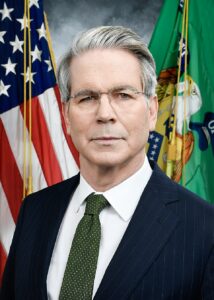
 – U.S. Treasury Secretary Scott Bessent on Monday called for deeper reforms of what he called an antiquated financial regulatory system and said regulators should consider scrapping a “flawed,” Biden-era proposal for a dual capital requirement structure for banks.

Speaking at the start of a Federal Reserve regulatory conference, Mr. Bessent said excessive capitalization requirements were imposing unnecessary burdens on financial institutions, reducing lending, hurting growth and distorting markets by driving lending to the non-bank sector.

“We need deeper reforms rooted in a long-term blueprint for innovation, financial stability, and resilient growth,” Mr. Bessent said in prepared remarks.

The Trump administration is pursuing a broad reform agenda aimed at cutting rules governing financial institutions, including capital requirements, arguing that such actions will boost economic growth and unleash innovation.

Mr. Bessent said regulators have for too long pursued a “reactionary approach” that has weakened competitiveness and led to byzantine regulations.

The Treasury chief, who earlier on Monday called on the Fed to review its operations to safeguard its monetary policy independence, said the Treasury would take a stronger role in driving reform efforts by regulators, including the Fed.

“To that end, the department will break through policy inertia, settle turf battles, drive consensus, and motivate action to ensure no single regulator holds up reform,” Mr. Bessent said of the Treasury.


REDUCING CAPITAL REQUIREMENTS

Banking regulators should consider abandoning the dual structure proposed in July 2023, but never enacted, that would have seen banks comply with the higher of two different methods of measuring their risk capital requirements.

The proposal, which came after the high-profile failure of Silicon Valley Bank and other institutions in 2023, would have significantly increased the amount of capital banks needed to set aside for potential losses. It drew intense opposition from the industry.

“This dual-requirement structure did not derive from a principled calibration methodology. It was motivated simply to reverse-engineer higher and higher capital aggregates,” Mr. Bessent said. “It also was at odds with capital reform as a modernization project because it would have preserved the antiquated capital requirements as the binding floor for many, perhaps most, large banks.”

Mr. Bessent also called for regulatory capital relief not just for large banks but also at the smaller, community bank level. One solution, he said, would be to allow any bank not subject to modernized capital requirements a choice to opt in.

“This would result in a meaningful reduction in capital for those banks,” Mr. Bessent added.

While he said Treasury would prioritize financial regulatory policy that puts American workers first and prioritizes growth, he said regulators needed to carry out statutory mandates for financial safety and stability and consumer protection.

“Rationalizing and tailoring regulation does not have to amount to regulatory weakening,” Mr. Bessent said. – Reuters

Philippines set for first coal power decline in 17 years amid rising LNG use

UNSPLASH

SINGAPORE – The Philippines is on track for an annual decline in coal-fired electricity output for the first time in nearly two decades, an analysis of market and government data showed, driven by rising liquefied natural gas-fired power generation.

The Philippines has the most coal-dependent grid in Southeast Asia but its electricity tariffs, which are not subsidised, are the second highest in the region behind Singapore.

The archipelago’s liberalized market enables power retailers to pivot to LNG, analysts say, unlike in Indonesia and Malaysia, where cheap coal keeps subsidies manageable.

Gas-fired generation surged more than 25% in June year-on-year and rose 5.2% to 10.36 terawatt hours (TWh) in the first half of this year, data from the Independent Electricity Market Operator of the Philippines (IEMOP) showed.

That helped push the share of gas-fired power output to 17.5% in the first half of 2025, up from a record low of 13.9% in 2023, which was due to depleting reserves at the key Malampaya field, according to government data dating back to 2003.

LNG is expected to meet a rising share of the Philippines’ projected 5% annual growth in power demand over the next decade as coal-fired power output is set to peak in 2030 due to a moratorium on new coal capacity construction, said James Ha, head of research for Asia-Pacific at Aurora Energy Research.

In 2020, the Philippines stopped accepting new proposals for coal-based power projects to encourage investment in other energy sources like natural gas and renewables.
Higher LNG imports will drive annual gas-fired output up by 65% by 2030 from 2024 levels, Aurora’s Ha said.

Philippine consortium LNGPH signed the country’s first long-term LNG deal in March with global trader Vitol, doubling down on improved prospects for the super-chilled fuel in the country of 114 million people.

Consultancy Energy Aspects expects the Philippines’ LNG import demand in 2025 to rise by more than 50% to 2.1 million metric tons from 2024 due to the addition of new gas-fired capacity, senior LNG analyst Kesher Sumeet said.


COAL’S RETREAT

Price-sensitive Asian nations with high reliance on coal have largely boosted renewable additions to slash emissions and address growing power demand instead of using LNG as a transition fuel.

However, the Philippines has instead bet on LNG, whose usage has started inching up after it began importing the fuel in mid-2023. The country registered a 40% increase in the generation capacity of its gas-fired power fleet in 2024 from end-2023 levels, IEMOP data showed.

Meanwhile, coal-fired power output fell 5.5% to 33.8 TWh during the period, IEMOP data showed, with generation falling for the fourth straight month in June and its share of the power mix dropping to 57.2% from 61.9% in 2024.

Falling coal-fired power demand led to the first decline in coal imports since the COVID-19 pandemic during the six months ended June, while LNG imports rose 51% in the same period, Kpler data showed.

Coal’s retreat – the first since 2008 – was also compounded by hydropower generation accounting for a higher share of Philippines’ electricity mix during the first half of the year.
Asian spot LNG prices LNG-AS have fallen about 13% this year on tepid demand, further boosting the competitiveness of the fuel against coal. IEMOP data also showed a wave of planned outages in early 2025 at coal-fired power plants, which helped to boost the share of gas.

“We think that the rising power demand in the Philippines will outpace renewables’ growth and that combined with the coal phase-out policy would sustain Philippines’ call on LNG in coming years,” Energy Aspects’ Sumeet said.

Electricity generated from renewable sources in the Philippines has been rising, but growth has fallen well short of its ambitious targets. – Reuters

Platinum Karaoke unveils the Platinum Soundscape Concept Store at SM Makati to celebrate 25 years of Filipino innovation in music and entertainment

Ribbon-cutting for the grand launch of the 1st Platinum Karaoke Concept Store at the SM Cyberzone, 2nd floor, SM Makati Mall. Shown on photo are Platinum Karaoke VIPs and guests.

In celebration of its 25th anniversary, Platinum Karaoke, the Philippines’ homegrown leader in karaoke segment, opens the doors to its first-ever platinum soundscape Concept Store at SM Makati Cyberzone. This is a pioneering retail space that elevates how Filipinos and music lovers around the world experience sound, connection, and innovation.

For a quarter of a century, Platinum Karaoke has been more than a brand. It has been a part of every Filipino home, celebration, and memory. From barkada karaoke nights to family reunions and solo sing-along sessions, Platinum Karaoke has united generations through the power of music. Now, with the launch of the Platinum Karaoke Concept Store, the brand ushers in the next chapter in Filipino entertainment, one where cutting-edge technology, tradition, and togetherness come alive in immersive, accessible, and future-ready ways, highlighting the brand’s expansion into the broader audio entertainment category.

Platinum Karaoke celebrates 25 years with the opening of its 1st Platinum Karaoke Concept Store and festivity with the media. From left are Platinum Karaoke Executives: President Dipak Asudani, Founder Kim Jong and General Manager Allan Espinas.

“Platinum Karaoke is built on Filipino pride, created by Filipinos, for Filipinos, and now reaching music enthusiasts across the globe. With the launch of our first Concept Store, we are proud to mark this milestone, to broaden our footprint in the audio entertainment space along with the unparalleled karaoke experience that has defined our brand,” said Bianca Teodoro, brand manager, Platinum Karaoke.

“Our distinctive Platinum Karaoke experience affirms our commitment to constant innovation not just to keep up with the times, but to elevate how families, friends, and communities connect and entertain, through music and sharing fun and memorable moments, whether at gatherings and parties at home or event venues or across digital platforms,” Ms. Teodoro added.

Platinum Karaoke Concept Store

An immersive karaoke room at the 1st Platinum Karaoke Concept Store at the SM Cyberzone at SM Makati Mall.

Located at SM Makati Cyberzone, the Platinum Karaoke Concept Store is designed for everyone. From Gen Z creators and on-the-go vloggers, podcasters to karaoke-loving titos and titas, and grandparents reliving timeless classics. It features a dedicated KTV Room for hands-on product trials, sing-along sessions, and immersive sound experiences across the brand’s wide range of innovations.

The Platinum Karaoke Concept Store showcases its most advanced systems, including the Alpha 2, a flagship all-in-one entertainment hub that combines karaoke, Android TV, digital TV, and smart features like voice assistants, YouTube streaming, Pro Score singing duels, and custom pitch effects. Customers can also explore portable speakers, wearable audio gear, wireless mics, amplifiers, and soundbars for home theaters, podcasts, parties, and everyday entertainment on the go.

Daryl Ong Performs Live and Sings with Fans through Platinum Karaoke Experience

At the opening of the Platinum Karaoke Concept Store were SM Executives (from left) Gladdys Ramos, Kathleen Anne Cruz and Mina Torres, together with Platinum Karaoke President Dipak Asudani (2nd from left).

As part of the anniversary celebration, Daryl Ong, one of the country’s most soulful and versatile balladeers will perform at the launch event. With over 1 million YouTube subscribers, viral covers, and millions of views for songs like “Stay,” “Ikaw na Nga,” and “All of Me,” Daryl has earned a loyal global following for his emotional vocal style and heartfelt performances. At the event, he will not only perform live but also join customers in intimate karaoke sessions, bringing the Platinum Karaoke soundscape to life.

Over the years, Platinum Karaoke has been endorsed by beloved Filipino entertainers including Vice Ganda, Angeline Quinto, Morisette, the phenomenal love team AlDub composed of Maine Mendoza and Alden Richards, and the love tandem of KathNiel the once inseparable Kathryn Bernardo and Daniel Padilla, cementing its place in pop culture history.

Sound Made in the Philippines, Designed for the World

Platinum Karaoke continues to innovate and expands to a full lineup of audio entertainment offerings along with its cutting-edge karaoke system at its Concept Store at SM Cyberzone in SM Makati Mall.

What truly sets Platinum apart is not just technology, but the way it brings people together. Every innovation is made with the intention to foster harmony through music and sound wherever they are and across continents.

For more information and to find out the latest updates, visit https://platinumkaraoke.com/ or follow on Facebook, Instagram and the Official TikTok account.


Spotlight is BusinessWorld’s sponsored section that allows advertisers to amplify their brand and connect with BusinessWorld’s audience by publishing their stories on the BusinessWorld Web site. For more information, send an email to online@bworldonline.com.

Join us on Viber at https://bit.ly/3hv6bLA to get more updates and subscribe to BusinessWorld’s titles and get exclusive content through www.bworld-x.com.

PHL eyes P200-B RTB offer in Q3

REUTERS

THE GOVERNMENT is planning to raise P200 billion from its first retail Treasury bond (RTB) offering this year, which it could launch within this quarter, Finance Secretary Ralph G. Recto said.

“I think, we’ll issue now the retail Treasury bonds. I think this quarter, within the quarter,” Mr. Recto told reporters last week.

He did not give more details.

The government’s last RTB offering was in February 2024. It raised a record P584.86 billion from its offering of five-year RTBs.

RTBs are medium- to long-term debt securities issued by the government available to retail investors, especially ordinary Filipinos. It is usually sold in minimum denominations of P5,000.

Mr. Recto noted that the upcoming RTB offering will not likely be the last this year.

Analysts expect high demand for the new RTB offering, citing favorable yields and accessibility, while suggesting a tenor of five years may be optimal.

Ruben Carlo O. Asuncion, chief economist at Union Bank of the Philippines, said the RTB offering is expected to attract strong investor interest.

“RTBs remain attractive due to their accessibility to retail investors, relatively high yields compared to savings products, and their reputation as low-risk instruments,” Mr. Asuncion said in a Viber message.

Last May, National Treasurer Sharon P. Almanza said the Bureau of the Treasury (BTr) plans to launch GBonds, which allow retail investors to buy and sell government securities on e-wallet giant GCash by the second half of the year.

This will allow the platform’s 94 million registered users to invest a minimum of P5,000 for RTB and P500 for Treasury bills through the app.

“A tenor of 5 to 7 years would be appropriate, offering a balance between competitive returns and manageable duration risk, while aligning with the government’s medium-term funding strategy,” Mr. Asuncion said.

Meanwhile, a trader said good demand is expected for this issuance, “since the target is lower than the expected maturity.”

“If the yield is attractive enough, I think the BTr can issue up to P400 billion,” the trader said in a Viber message.

It also added that a tenor of 5 to 5.5 years would be suitable for the offering.

The government is looking to hike its borrowing program to P2.6 trillion this year from P2.55 trillion previously, to fund the ballooning budget deficit.

It is still targeting to source 80% of its borrowings domestically and 20% externally.

The latest data from the Treasury showed that the National Government’s gross borrowings fell by 6.67% to P1.33 trillion in the five-month period this year.

Domestic gross borrowings fell by 12.74% year on year to P1.02 trillion.

TWO MORE RATE CUTS
Meanwhile, Recto, who also sits on the Monetary Board, said the Bangko Sentral ng Pilipinas (BSP) has room to deliver two more 25-basis-point (bp) rate cuts this year amid subdued inflation.

“I think the BSP is clear that we expect a 50-bp rate cut all the way till the end of the year,” Mr. Recto said, adding these will likely be delivered in two increments.

“Inflation is down right now,” he added.

Headline inflation averaged 1.8% in the six-month period.

The central bank’s remaining policy meetings are scheduled for Aug. 28, Oct. 9, and Dec. 11.

BSP Governor Eli M. Remolona, Jr. earlier signaled two more rate cuts in 2025, citing inflation falling within the 2-4% target and expected lower economic growth.

At its June 19 meeting, the central bank delivered a second straight 25-bp cut this year, bringing its policy rate to 5.25%.

It has now lowered interest rates by a cumulative 125 bps since it started its easing cycle in August 2024.

However, Mr. Recto said the government remains cautious ahead of the Federal Reserve’s policy meeting later this month.

“We just don’t know what happens in the US right now, what’s going to happen there. We’ll be closely monitoring that as well,” he said.

US President Donald J. Trump has been pushing Federal Reserve Chairman Jerome H. Powell to lower borrowing costs, targeting a 1% policy rate.

However, recent US inflation data may complicate the Fed’s easing trajectory. The US consumer price index picked up to 2.7% from a year ago in June, after rising to 2.4% in May.

“Trump wants to change the Fed, right? He wants a rate cut. That’s what happens there. But for us, as we’re looking at our own inflation data, so far that looks good,” he said.

Asked whether the central bank would proceed with easing even if the Fed holds rates steady, Mr. Recto said: “I think we have room to cut.”

“Maybe not two, depends on what happens in the US as well. But as of today, I would assume that we’re okay for a two rate cuts.” — Aubrey Rose A. Inosante

Marcos seeks support from semiconductor execs ahead of Trump meeting

Semiconductor chips are seen on a circuit board of a computer in this illustration picture taken on Feb. 25, 2022. — REUTERS/FLORENCE LO/ILLUSTRATION

PHILIPPINE President Ferdinand R. Marcos, Jr. is set to meet with top executives of US semiconductor companies this week as he seeks to further strengthen economic ties with the US, Manila’s envoy to Washington said on Sunday.

Mr. Marcos will hold talks with Semiconductor Industry Association President John Neuffer this week, Philippine Ambassador to the US Jose Manuel G. Romualdez said during a press briefing in Washington, DC. A video of the briefing was posted by Radio Television Malacañang (RTVM) on YouTube.

“We’ll be talking to the semiconductor industry, which is very important for us. [It’s] one of our biggest industries [with which we have] economic ties with the United States,” he added.

US President Donald J. Trump has imposed a 20% tariff on Philippine-made goods entering the country starting Aug. 1, higher than the 17% previously announced.

For now, semiconductors are excluded from the new reciprocal tariffs. Semiconductors and electronics are the Philippines’ top exports to the US.

Mr. Marcos is hoping to secure support from US semiconductor firms to shield the Philippine electronics sector from potential disruption. He is also set to meet with Mr. Trump to discuss the tariff issue.

Mr. Marcos met with Mr. Neuffer last December 2024, where he stressed the need to advance the Philippines’ position in the semiconductor value chain to keep pace with global technological shifts.

Manila is one of seven countries that the US is partnering with to diversify its semiconductor supply chain under the CHIPS and Science Act.

Mr. Marcos is also scheduled to meet on Monday afternoon (US time) executives of top US companies that are planning to boost investments in the Philippines.

Mr. Romualdez said the president’s meetings will include investors that are interested in the infrastructure sector.

“We also have some of those in infrastructure, which is part of the Luzon Corridor. So those… are part of his (Mr. Marcos’) business meetings that he will conduct in between important official meetings on Monday,” he said.

The Luzon Economic Corridor project is being undertaken via a trilateral commitment among the Philippines, US and Japan. The project seeks to enhance the connectivity of Luzon’s key economic areas — Subic Bay, Clark, Metro Manila and Batangas. It is widely seen to counter China’s Belt and Road Initiative.

Josue Raphael J. Cortez, diplomacy lecturer at the De La Salle-College of St. Benilde’s School of Diplomacy and Governance, said Manila can boost its semiconductor sector by ensuring fair competition and leveraging its partnership with the US under the CHIPS Act to enhance production capabilities and adopt best practices.

However, he added that to protect its broader economic interests, the country should maintain balanced trade ties with China, especially in mineral resources, agriculture, and raw materials, rather than relying solely on US investments.

“In the case of China, given that there could be a conflict of interest regarding chip production, we must strategize on how we can bolster our trade with Beijing, particularly on mineral resources, agricultural products, and raw materials, which are among our top exports to the country,” he said via Messenger chat.

China remains the Philippines’ largest trading partner, with the US coming in third. However, the territorial dispute with Beijing complicates the prospect of deeper cooperation.

Mr. Marcos’ trip to Washington could also position Manila as the potential lead during trade negotiations between the Association of Southeast Asian Nations (ASEAN) and the US, especially as Manila assumes chairmanship in the regional bloc in 2026, said Mr. Cortez.

This visit could enable Manila to drive a regional economic balancing strategy that leverages Southeast Asia’s strengths to benefit both ASEAN and the US while countering the economic impact of the US tariffs and China’s regional dominance, he added.

Meanwhile, Mr. Romualdez said Manila is not planning to pursue a free trade agreement at this time with Washington, as lowering the “reciprocal” tariffs is the current priority, in addition to defense and security matters.

“That’s still very far in the sense that we have to get over this particular discussion first on the tariff,” he said. “After that, we’re hoping that the free trade agreement will probably come into play.”

Mr. Romualdez also cited other agreements with the US, including security pacts on the Mutual Defense Treaty signed in 1951, the Visiting Forces Agreement signed in 1999, and the Enhanced Defense Cooperation Agreement signed in 2014.

“[There] will be more discussions on how we can continue to cooperate with the United States, our major ally. At the same time, also, I think President Marcos would like to see how we can work with the United States and other countries that have the same mindset as far as the West Philippines is concerned,” he added.

“We can’t negotiate on the basis of what we can get from another country. We have to focus on what is good for both countries.” — Chloe Mari A. Hufana

InstaPay, PESONet transactions increase by 40% in first 6 months

STOCK PHOTO | Image by Pikisuperstar from Freepik

By Luisa Maria Jacinta C. Jocson, Senior Reporter

THE VALUE of transactions conducted via InstaPay and PESONet jumped by 39.5% year on year in the first half of the year, the latest data from the Bangko Sentral ng Pilipinas (BSP) showed.

Transactions coursed through the automated clearing houses surged to P11.1 trillion in the January-June period from P7.98 trillion a year prior.

PESONet is mainly used for high-value transactions and may be considered as an electronic alternative to paper-based checks.

Meanwhile, InstaPay is a real-time, low-value electronic fund transfer facility for transactions up to P50,000 and is mostly used for remittances and e-commerce.

Central bank data showed the volume of transactions made via InstaPay and PESONet more than doubled (138.7%) to 1.58 billion at end-June from 660.7 million in the same period a year ago.

The value of transactions done through PESONet climbed by 31.1% to P6.15 trillion in the six-month period from P4.69 trillion the year earlier.

The volume of transactions that went through the payment gateway likewise increased by 16.8% year on year to 56.28 million from 48.18 million.

Meanwhile, the total value of InstaPay transactions stood at P4.98 trillion during the six-month period, surging by 51.5% from P3.29 trillion in the previous year.

The volume of transactions done through InstaPay soared by 148.3% to 1.52 billion in the first six months from 612.52 million a year ago.

InstaPay and PESONet are automated clearing houses that were launched in December 2015 under the central bank’s National Retail Payment System framework.

“The continued double-digit growth in transaction value may still largely reflect the continued growth in online commerce, which accelerated since the pandemic,” Rizal Commercial Banking Corp. Chief Economist Michael L. Ricafort said in a Viber message.

“This also reflects the increased use by more Filipinos of e-wallets in both physical and digital stores, as these are also accessible with larger amounts in bank accounts.”

The latest data from the BSP showed the share of online payments in monthly retail transactions stood at 57.4% in terms of volume, up from 52.8% in 2023. In terms of value, the share of online payments in monthly retail transactions rose to 59% in 2024 from 55.3% in 2023.

“The surge is driven by greater adoption of digital payments across both consumers and businesses,” John Paolo R. Rivera, a senior research fellow at the Philippine Institute for Development Studies, said in a Viber message.

He also cited “broader mobile and internet penetration, and growing trust in the convenience and security of real-time fund transfers.”

The BSP wants online payments to make up 60-70% of the country’s total retail transaction volume by 2028. The share of Filipinos with bank accounts reached 65% of the adult population in 2022.

“Government digitalization efforts and private sector innovations, such as QR payments and app-based banking, have also helped normalize digital financial behavior,” Mr. Rivera said.

“This trend reflects a more financially connected economy and supports the BSP’s push for greater financial inclusion.”

The World Bank’s The Global Findex Database 2025 report released on Wednesday showed that only 50.2% of approximately 82 million Filipinos aged 15 years old and above had financial accounts in 2024, lower than the 51.4% recorded in 2021.

This was also well below the 83.3% average account ownership rate for East Asia and Pacific and the 70.4% for lower middle-income countries.

CMEPA seen to boost PERA adoption among Filipinos

BW FILE PHOTO

THE Securities and Exchange Commission (SEC) expects more Filipinos to grow their retirement funds under the Personal Equity and Retirement Account (PERA) with the recent implementation of Republic Act No. 12214 or the Capital Markets Efficiency Promotion Act (CMEPA).

“The CMEPA strengthens the role of PERA by offering stronger incentives for long-term savings,” SEC Chairperson Francisco Ed. Lim said in an e-mailed statement on Monday.

“It encourages companies to support their employees’ retirement planning while simultaneously increasing the capital available in the financial system, stimulating the local stock market,” he added.

One of the CMEPA’s provisions is a 50% additional tax deduction for private employers who contribute an amount equal to or greater than their employees’ PERA contributions.

PERA, created under Republic Act No. 9505, is a voluntary retirement saving program. This is aimed at complementing the existing retirement benefits from the Social Security System, Government Service Insurance System and employer-sponsored plans.

“The program offers contributors tax benefits not available in other retirement investment products, encouraging Filipinos to save for their future,” the SEC said.

In January, DoubleDragon Corp.’s stock brokerage arm DragonFi Securities, Inc. became the first SEC-accredited PERA administrator after the corporate regulator issued guidelines on the accreditation of PERA market participants in September last year.

The SEC guidelines expanded the categories of entities eligible to register as PERA administrators to include securities brokers, investment houses, and investment company advisers or fund managers.

Under the SEC guidelines, a PERA administrator should have maintain a net worth of at least P100 million at all times, and have the adequate systems and technological capabilities, as well as the necessary technical expertise and personnel to administer all types of PERA investment products.

“Take-up of PERA is still relatively low in recent years. Hopefully, the CMEPA would further provide greater motivation to increase PERA in view of the additional incentives,” Rizal Commercial Banking Corp. Chief Economist Michael L. Ricafort said in a Viber message.

Data from the Bangko Sentral ng Pilipinas showed that PERA contributions increased by 24% to P491.4 million as of end-2024 from P396.3 million as of end-2023.

CMEPA took effect on July 1 after being signed by President Ferdinand R. Marcos, Jr. on May 29.

Among the law’s provisions is the reduction of the stock transaction tax to 0.1% from 0.6% as well as the decrease in the documentary stamp tax on the original issuance of shares of stock to 0.75% from 1% of par value.

The law also standardized the final withholding tax on interest income at 20% and harmonized the capital gains tax to a flat 15% on shares of foreign corporations.

“At its core, CMEPA is designed to align the Philippine capital markets more closely with regional peers by removing long-standing barriers to investor participation,” Mr. Lim said.

“This supports the commission’s mission to continue introducing reforms that will increase the local market’s competitiveness. The strict implementation of provisions under CMEPA is key toward ensuring broader public participation in the capital market and fostering a deeper investment culture among Filipinos,” he added. — Revin Mikhael D. Ochave