Home Blog Page 888

Macron wanders alone by the Seine as grip on his future slips away

FRENCH PRESIDENT EMMANUEL MACRON — REUTERS

PARIS – Hours after his latest prime minister was forced to resign — unable to form a cabinet that lasted more than a day — French President Emmanuel Macron was spotted walking alone by the Seine in the chilly autumn morning.

Bodyguards kept their distance ahead and behind as he wandered out through a wrought iron gate onto the stone embankment in a black overcoat.

The scene, captured from afar on video and shown on French TV, evoked images of Charles de Gaulle seeking solace in the wind-swept plains of Ireland after his resignation in the late 1960s — a leader retreating inward as his political era drew to a close.

Macron is president until 2027, but the resignation of Sebastien Lecornu, his fifth prime minister in two years, has raised the chances that the one-time golden boy of French politics fails to make it to the end of his final term.

Macron appeared determined to avoid that fate on Monday, giving Lecornu two days for last-ditch talks with the opposition to try to chart a path out of the morass.

By asking Lecornu to give it one last shot, Macron signalled his distaste for the only other options he faces – fresh parliamentary elections that could hand power to the far right, or his own resignation, a measure he has repeatedly ruled out.

As his options have narrowed, the unpopular Macron has become increasingly isolated domestically, watching erstwhile allies distance themselves as they seek to bolster their own chances of succeeding him in the 2027 election.

Nearly half of French people blame Macron for the current crisis, while 51% of them believe his resignation could break the stalemate, according to an Elabe poll for BFMTV on Monday.

“Macron now finds himself isolated, without direction or support. He must draw the consequences: either resignation or dissolution,” far-right National Rally lawmaker Philippe Ballard posted on X.

FAILED 2024 ELECTION DECISION SPARKED ONGOING CRISIS
Since last year’s failed gamble to call a snap legislative vote, which produced a hung parliament split between three ideologically opposed blocs, Macron has tried to muddle through with minority cabinets.

Determined to preserve his economic legacy of tax cuts and a pension overhaul at a time of growing investor concern about France’s yawning deficit, Macron has appointed premiers from an ad-hoc alliance of conservatives and centrists.

For over a year, these governments struggled to pass deficit-reduction measures. Two prime ministers fell over their inability to fix public finances, but the so-called socle commun — or “common platform” — endured.

That changed with the dramatic rebellion of Bruno Retailleau, the conservatives’ most high-profile figure, who late on Sunday publicly criticised Lecornu’s cabinet hours after it was named.

Macron is hoping Lecornu can lure back the conservatives to the table, giving him a lifeline. If not, he could appoint a left-leaning prime minister, but the Socialists’ insistence on a wealth tax and reversing the pension reform makes them a hard sell for other parties.

PRESSURE ON MACRON NOT GOING AWAY
Despite Monday’s appeal to Lecornu, the pressure on Macron is unlikely to let up.

Marine Le Pen, leader of the far-right National Rally (RN)quickly called for a dissolution of parliament and new elections. Polls show her party leads voting intentions.

“The RN benefits from the centre’s collapse and picks up protest votes, seeing dissolution as a unique opportunity to finally govern,” said political analyst Stewart Chau.

Calls for Macron’s resignation, once confined to the fringes, are now entering the mainstream.

“France’s national interest demands that Emmanuel Macron set a date for his resignation, in order to preserve the institutions and unblock a situation that has been unavoidable since the absurd dissolution,” said David Lisnard, the mayor of Cannes and a rising conservative figure, on social media.

Macron has repeatedly said he intends to serve out his full term. But faced with few palatable options, he may yet choose to end his presidency with a dramatic gesture — just like de Gaulle, who stepped down in 1969. — Reuters

Immune system breakthrough wins Nobel medicine prize for US, Japan scientists

WIKIPEDIA

STOCKHOLM – American scientists Mary Brunkow and Fred Ramsdell and Shimon Sakaguchi from Japan won the 2025 Nobel Prize in Physiology or Medicine on Monday for work shedding light on how the immune system spares healthy cells, creating openings for possible new autoimmune disease and cancer treatments.

Their discoveries relate to peripheral immune tolerance, or “how we keep our immune system under control so we can fight all imaginable microbes and still avoid autoimmune disease”, said Marie Wahren-Herlenius, a rheumatology professor at Sweden’s Karolinska Institute, the awarding body.

The institute said all three laureates brought to the fore so-called regulatory T cells, a class of white blood cells that act as the immune system’s security guards that keep immune cells from attacking our own body.

RESEARCH INTO WHAT STOPS IMMUNE SYSTEM ATTACKING ITSELF
Brunkow, who found out she had won after being woken by her dog barking at a news photographer on the front porch of her Seattle home, said she, Ramsdell and their colleagues had isolated a gene called FOXP3 that could be used as a marker for the cells.

“They’re rare, but powerful, and they’re critical for sort of dampening an immune response,” she said in an interview, describing the cells as a braking system that prevents the body’s immune system from tipping over into attacking itself.

Sakaguchi expressed surprise at a press conference in Osaka, western Japan, because he felt any major recognition would have depended on more development advances.

“I used to think that some sort of reward may be forthcoming if what we have been doing will advance a little further and it will become more beneficial to people in clinical settings,” he said in a calm voice, cracking a smile now and then.

The press conference was interrupted for Sakaguchi to take a congratulatory phone call from Japanese Prime Minister Shigeru Ishiba, who asked him how effective immunotherapy could be for cancer treatment in the future.

“I believe the time will come when cancer is no longer a scary disease, but a curable one,” said Sakaguchi.

The winners of the award are selected by the Nobel Assembly of the Karolinska Institute, a leading medical university, and receive a prize sum of 11 million Swedish crowns ($1.2 million), as well as a gold medal presented by Sweden’s king.

Brunkow is senior programme manager at the Institute for Systems Biology in Seattle, while Ramsdell is scientific adviser at Sonoma Biotherapeutics in San Francisco. Sakaguchi is a professor at Osaka University.

MORE THAN 200 TRIALS ON HUMANS IN PROGRESS
Jeffrey Bluestone, a decades-long friend of Ramsdell and a co-founder with him of Sonoma Biotherapeutics, told Reuters that his associate’s extraordinary contribution was finding the FOXP3 gene, initially in mice, that controlled the development of regulatory T cells. They described their findings in a paper in 2001.

“Those cells were the master regulators of the tolerance of the immune system,” said Bluestone.

Ramsdell could not be reached by Reuters – nor by Brunkow or Bluestone, with Bluestone saying he may be on a hiking trip in an area without cell phone reception.

After announcing the winners, the Karolinska Institute’s Thomas Perlmann said specific therapies had yet to win market clearance but more than 200 trials on humans involving regulatory T cells were ongoing.

Among companies in the early race, Ramsdell’s Sonoma Biotherapeutics is partly funded and supported by U.S. drugmaker Regeneron REGN.O to work on therapies against diseases including inflammatory bowel disease.

Also targeting that condition, Quell Therapeutics has partnered with AstraZeneca AZN.L. Other biotech firms exploring the approach include Bayer’s BAYGn.DEBlueRock.

MEDICINE THE FIRST PRIZE OF NOBEL SEASON
The Nobel Prizes were established through the will of Alfred Nobel, the Swedish inventor of dynamite and a wealthy businessman.

They have been awarded since 1901 for outstanding contributions in science, literature, and peace. The economics prize was added later and is funded by Sweden’s central bank.

Winners are selected by expert committees from various institutions. All prizes are awarded in Stockholm, except for the Peace Prize, which is presented in Oslo.

Past recipients of the Nobel Prize in Physiology or Medicine include renowned scientists such as Alexander Fleming, who shared the 1945 award for discovering penicillin. In recent years, the prize has recognized major breakthroughs, including those that enabled the development of COVID-19 vaccines.

Last year’s medicine prize was awarded to U.S. scientists Victor Ambros and Gary Ruvkun for their discovery of microRNA and its key role in how multicellular organisms grow and live.

Medicine in accordance with tradition kicks off the annual Nobels. The physics award is next, on Tuesday.

The awards culminate in ceremonies attended by the royal families of Sweden and Norway, followed by lavish banquets held on December 10 – the anniversary of Alfred Nobel’s death. — Reuters

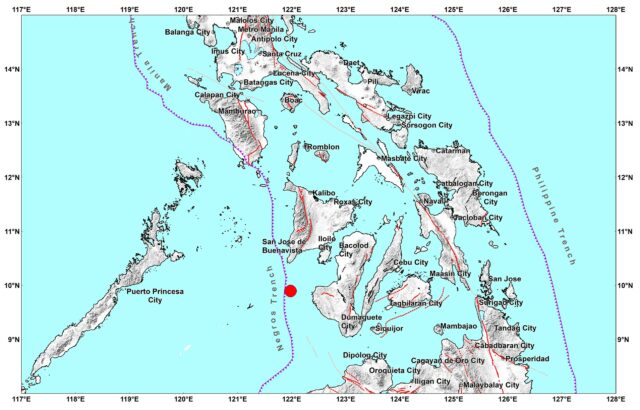
Magnitude 4.9 quake jolts offshore Negros Occidental

PHILVOLCS-DOST FB PAGE

A magnitude 4.9 earthquake was recorded offshore near Negros Occidental on Tuesday morning, according to the Philippine Institute of Volcanology and Seismology (PHIVOLCS).

In an advisory, PHIVOLCS said the tremor’s epicenter was located about 51 kilometers northwest of Sipalay City, Negros Occidental, at 8:04 a.m.

It also said that the quake had a depth of 10 kilometers.

The earthquake was felt in several areas, with Intensity II recorded in Iloilo City and Intensity I in Bago City, Negros Occidental.

State volcanologists said damage and aftershocks are not expected following the earthquake. — Edg Adrian A. Eva

Philippine annual inflation at 1.7% in September

A market vendor arranges assorted vegetables inside the Quinta Market in Manila, Sept. 19. Vegetable prices continued to rise in November. — PHILIPPINE STAR/EDD GUMBAN

MANILA (UPDATE) – Philippine annual inflation quickened for a second month, but it was still below the central bank’s 2% to 4% comfort range for the year, reinforcing expectations that a policy decision this week will be a close call between cutting rates and pausing.

The consumer price index rose 1.7% in September led by higher food prices, up from August’s 1.5%, the statistics agency said on Tuesday. It was below the 2.0% median forecast in a Reuters poll, and brought year-to-date average inflation to 1.7%.

The September rate, the fastest since March, comes just days before the central bank’s penultimate policy meeting of the year on Thursday.

“For the upcoming policy meeting, the Monetary Board will review newly available information and reassess the impact of prior monetary actions in light of evolving economic conditions and their implications for inflation and growth,” the Philippine central bank said in a statement.

At its August policy meeting, the Bangko Sentral ng Pilipinas (BSP) signalled another reduction was still possible this year before it concludes its easing cycle.

Ahead of the data, HSBC economist Aris Dacanay said in a note the October 9 policy decision could be a close call between a pause and another rate cut.

Mr. Dacanay said he expects the BSP to keep its key policy rate unchanged at 5.0%, following three consecutive quarter-point reductions. He added that a 25-basis-point cut remains possible at the BSP’s December meeting.

“While waiting for more data to come, inflation concerns, particularly on food, should also weigh on the decision,” Mr. Dacanay said.

Food inflation in September slightly accelerated to 0.8% from 0.6% in August, driven mainly by higher prices of vegetables, tubers, plantains, and cooking bananas, the statistics agency said.

Core inflation, which strips out volatile food and energy prices, was at 2.6%, close to the previous month’s 2.7%.– Reuters

Greta Thunberg greeted by cheering crowd in Athens after Israel expels flotilla activists

Swedish activist Greta Thunberg, who was part of the Global Sumud Flotilla seeking to deliver aid to Gaza and was detained by Israel, gestures upon her arrival to the Athens Eleftherios Venizelos International Airport, in Athens, Greece, Oct. 6, 2025. REUTERS/LOUISA GOULIAMAKI

Swedish campaigner Greta Thunberg arrived in Greece to a cheering pro-Palestinian crowd on Monday after she and hundreds of other activists captured by Israel on the high seas were deported following an attempt to bring aid to Gaza.

Israel said it expelled171 activists on Monday including Thunberg, bringing the total deported over so far to 341, out of 479 people it detained when it captured the flotilla attempting to break its naval blockade of Gaza.

The Greek Foreign Ministry said 161 of the activists arrived on a flight to Athens on Monday, including Thunberg, 22. They included 27 Greeks, as well as citizens of nearly 20 other countries.

“Let me be very clear. There is a genocide going on,” Thunberg told the crowd at the Athens airport referring to Israeli military action in Gaza.

“Our international systems are betraying Palestinians. They are not even able to prevent the worst war crimes from happening,” she said. “What we aimed to do with the Global Sumud Flotilla was to step up when our governments failed to do their legal obligation.”

The activists attempted to reach Gaza in scores of vessels to bring aid supplies and draw attention to the plight of Gaza, where most of the 2.2 million residents have been driven from their homes and the United Nations says hunger is rampant.

Israel, which rejects accusations it is carrying out genocide in Gaza and says reports of hunger there are exaggerated, has dismissed the flotilla as a publicity stunt benefitting Hamas. It had previously detained Thunberg at sea in a similar attempt to breach the blockade in June.

Earlier, Swiss and Spanish activists from the flotilla said they were subjected to inhumane conditions during their detention by Israeli forces.

Israel’s foreign ministry issued a statement, accompanied by photos of Thunberg at the airport, saying all participants’ legal rights had been upheld and the only violence involved an activist who bit a female medic at Israel’s Ketziot prison.

DEPORTED ACTIVISTS ALLEGE MISTREATMENT
Among nine members of the flotilla who arrived home in Switzerland, some alleged sleep deprivation, lack of water and food, as well as some being beaten, kicked, and locked in a cage, the group representing them said in a statement.

An Israeli foreign ministry spokesperson rejected the allegations.

Spanish activists also alleged mistreatment on their arrival in Spain late on Sunday after being deported.

“They beat us, dragged us along the ground, blindfolded us, tied our hands and feet, put us in cages and insulted us,” lawyer Rafael Borrego told reporters at Madrid’s airport.

Swedish activists said on Saturday that Thunberg was shoved and forced to wear an Israeli flag during her detention, while others said they had clean food and water withheld and had their medication and belongings confiscated.

After she arrived in Athens, Thunberg said she could “talk for a very, very long time about our mistreatment and abuses in our imprisonment, trust me, but that is not the story”.

“What happened here was that Israel, while continuing to worsen and escalate their genocide and mass destruction with genocidal intent, attempting to erase an entire population, an entire nation in front of our very eyes, they once again violated international law by preventing humanitarian aid from getting into Gaza while people are being starved.”

ISRAEL SAYS CLAIMS ARE COMPLETE LIES
Israel’s foreign ministry has described widespread reports of detainees being mistreated after the flotilla was intercepted as “complete lies”.

A spokesperson told Reuters over the weekend that all detainees were given access to water, food, and restrooms, adding: “they were not denied access to legal counsel and all their legal rights were fully upheld”.

On Sunday, the Swiss Embassy in Tel Aviv visited 10 Swiss nationals and said all were “in relatively good health, given the circumstances”.

Former Barcelona Mayor Ada Colau, who was also on the flotilla, said there had been “mistreatment, but that was nothing compared to what the Palestinian people suffer every day”. — Reuters

Philippines eyes 1-month rice import window in January 2026

Workers unload sacks of rice on Dagupan Street in Manila. — PHILIPPINE STAR/RYAN BALDEMOR

By Kenneth Christiane L. Basilio, Reporter

THE PHILIPPINES will implement a one-month rice import window in January and reimpose a ban on imports from February to April, as the government seeks to support the prices of rough rice in the 2026 harvest season.

Agriculture Secretary Francisco P. Tiu Laurel, Jr. said the department is looking to allow about 300,000 metric tons (MT) of rice imports in January 2026, a plan “more or less” approved by President Ferdinand R. Marcos, Jr. following the extension of the rice import ban through end-2025.

“We have to import by January just to be sure,” Mr. Tiu Laurel told lawmakers in Filipino at a House of Representatives hearing. “Our imported stocks, which we stopped in September, are estimated to run out by the end of November and we’ll be running on local stocks in December.”

“That kind of situation is quite risky,” he added.

Mr. Marcos had earlier ordered a 60-day suspension of rice imports starting Sept. 1 to support Filipino farmers during harvest season and to stabilize rice prices. The suspension was originally supposed to end on Nov. 2 and applies only to regular milled and well-milled rice.

“We will extend the rice import stoppage until the end of 2025,” Mr. Tiu Laurel said.

He said the Philippines, the world’s top rice buyer, had imported around 3.5 million MT of rice as of end-September, overshooting this year’s rice import target limit by 800,000 tons.

“We should be at the 2.7 [million MT levels] in imported rice. So, we are… in excess,” he said. “The monthly import volume should only be around 300,000 tons or 3.6 million MT a year.”

Monthly rice imports ranged from 305,000 MT to 517,800 MT in the first eight months of the year, Agriculture Undersecretary Christopher V. Morales said at the same congressional hearing.

The Philippines last year imported about 4.7 million MT of rice, and the US Department of Agriculture in August projected the Southeast Asian nation to bring in about 4.9 million MT of rice for the whole year.

Mr. Tiu Laurel said the Department of Agriculture’s (DA) hands are tied when it comes to regulating rice imports into the country after it was liberalized in 2019 by the Rice Tariffication Law, which replaced quota restrictions with tariffs.

“We have to manage our stocks and our importation versus our production… Full liberalization only puts us in this situation,” he said, alluding to falling farmgate prices of unhusked rice due to the entry of foreign rice imports.

The farmgate price for palay fell by 27.8% to P17.11 per kilo in August from the P23.71 per kilo last year, data from the Philippine Statistics Authority showed.

“In my opinion, we can’t liberalize importation because we’re competing with our own production,” said Mr. Tiu Laurel. “We need to calibrate our imports. We should prioritize our local market first.”

DA farmgate price monitoring data last week showed that palay prices ranged from as low as P7.50 to as high as P18.20 per kilo, while dry rough rice fetched between P11.09 and P25 per kilo, Mr. Morales said.

Mr. Tiu Laurel also said that policymakers should consider hiking the rice tariffs after Mr. Marcos last year cut tariffs to 15% from 35% until 2028 to tame rice prices.

“Our wish is for tariffs to go up again. But this is still being studied by our economic managers, along with its implications,” he said.

The DA chief said the decision to extend the rice import ban until yearend gives the government ample time to determine the appropriate tariff hike, while avoiding potential market shocks.

Meanwhile, the Finance department is still evaluating whether to restore higher rice tariff rates or maintain the current rates, Finance Undersecretary Karlo Fermin S. Adriano said, noting the government could lose about P20 billion in annual revenues under the current tariff level.

“On the revenue foregone due to the import ban, the range is about P1.4 [billion] to P2 billion every month,” he said at the same House hearing.

The decision to extend the rice import ban until yearend may benefit farmers under normal weather conditions, but recent typhoons threaten domestic output and could undermine the country’s ability to meet consumer demand, Roy S. Kempis, retired agriculture economics professor at the Pampanga State Agricultural University, said.

“An extension may be catastrophic once you include in the decision equation the adverse effects of weather conditions,” he said in a Viber message.

For his part, Mr. Morales said the Philippines could have around 3.24 million MT to 4.06 million MT of rice by the end of 2025, enough to cover national consumption for about 85-106 days.

Avoiding rice imports could also strain the Philippines’ trade relations with key suppliers such as Vietnam, former Agriculture Undersecretary Fermin D. Adriano said.

“Sooner or later an exporting country, like Vietnam, will get mad at us,” he said in a Viber message. “We import almost 90% of our rice from Vietnam, and because of our action, it is seeking alternative markets for their rice.”

The Philippines is Vietnam’s top rice export market, shipping about 2.73 million MT in the first nine months of 2025, according to the Bureau of Plant Industry as of Sept. 24.

“Our sources of imported rice may not be quick enough to supply our rice needs when vicious typhoons come, because they could have discounted the Philippines as a consistent buyer,” Mr. Kempis said.

Extending the rice importation could also lead to higher rice prices in the first months of next year due to a possible shortage, said Mr. Adriano.

“We might experience higher rice prices and then limited inventory by the beginning of next year, which will result in a temporary shortage,” he said.

Raul Q. Montemayor, national manager of the Federation of Free Farmers, said banning rice imports alone won’t be sufficient to support local farmers, stressing the need to raise tariffs on imported rice to ensure long-term protection for domestic producers.

“Banning imports is very imprecise. Even if imports stop at harvest time, prices will still be low if importers have brought in large volumes before the seasonal ban, resulting in congested warehouses and tie-up working capital,” he said in a Viber message. “Still, it can help avoid overimportation but tariff rates will also be crucial.”

Gov’t raises ICC review threshold to P5B, expands oversight to PPP projects

PHILIPPINE STAR/MICHAEL VARCAS

THE ECONOMY and Development (ED) Council has overhauled the review and approval process for government programs and infrastructure projects, such as raising the cost threshold and including public-private partnership (PPP) projects.

In a statement, the Department of Economy, Planning, and Development (DEPDev) said the Council, chaired by President Ferdinand R. Marcos, Jr., approved the new guidelines that would be applied to new and ongoing projects that require action from the ED Council or Investment Coordination Committee (ICC).

Under the new guidelines, projects funded by the national budget will now require ICC review if they exceed P5 billion. The previous threshold was at P2.5 billion.

“We have raised the threshold from P2.5 billion to P5 billion already, while at the same time putting safeguards into the various stages of the approval process so that we can spot possible issues or problems that may arise,” DEPDev Secretary and ED Council Vice-Chair Arsenio M. Balisacan said in the Philippine Development Forum on Monday.

The sweeping changes were prompted by a billion-peso flood control scandal that exploited loopholes in government policies to evade scrutiny.

The ICC earlier said that flood control and management projects will now be aggregated by river basin rather than evaluated individually with lower tagged costs.

Under the new guidelines, the ICC’s coverage also includes PPP projects.

The ICC will also conduct a mandatory review of all foreign loan-assisted projects, regardless of loan amount or total cost, except for grant-assisted projects, which are reviewed by DEPDev.

Mr. Balisacan said streamlining the ICC process and clarifying its scope will make project evaluation more rigorous while minimizing delays.

“As we work to ensure that every peso invested by the government delivers maximum value for Filipinos, streamlining the ICC process and clarifying its scope will make project evaluation more rigorous while minimizing delays,” Mr. Balisacan said.

MRT-3 ADJUSTMENTS
Meanwhile, the ED Council also approved “critical” adjustments to the Metro Rail Transit Line 3 (MRT-3) rehabilitation project, including the full replacement of the rails and overhaul of 72 light rail vehicles.

The ED Council said the Department of Transportation (DoTr) requested the approval for these changes in project scope, cost, financing and implementation timeline “to address emerging technical requirements.”

The changes include additional system upgrades, equipment rehabilitation, and facility improvements aimed at enhancing the long-term reliability and safety of the MRT-3 system.

The DoTr had sought the full replacement of main line rails, a general overhaul of 72 CKD-Tatra light rail vehicles, and procurement of bogie frames and assemblies.

The project also involves the integration of the MRT-3 to the MRT Common Station, the deployment of the Dalian trains, and a transition to four-car train operations.

“The MRT-3 is a vital artery in Metro Manila’s transport network. These adjustments are necessary to meet evolving technical demands and ensure that commuters benefit from a safer, more efficient, and more reliable transit system,” Mr. Balisacan said.

Mr. Marcos had also ordered the DoTr to implement safeguards to ensure the operations and maintenance of the MRT-3 in the short and long term, operational sustainability and maintenance of the MRT-3.

The DoTr aims to start the bidding process for the operations and maintenance of MRT-3 within the first half of 2026.

US PROJECTS
Meanwhile, the Council greenlit a $400-million cost increase and an extension for four US-backed projects to ensure continuity after the shutdown of the United States Agency for International Development.

The DEPDev said the request of some government agencies to increase the cost as well as extend the implementation and grant validity period for four US government-assisted development objective agreements.

“The changes are intended to ensure continuity in implementation during the transition of project management from the United States Agency for International Development (USAID) to the US Department of State,” the DepDev said in a statement.

USAID was shuttered in July after the Trump administration dismantled the agency, then froze and cut billions of dollars of foreign aid.

US President Donald J. Trump had wanted to ensure that aid was given only to programs in line with “America First” policies.

“By approving these measures, we are making sure that implementation remains uninterrupted despite the transition in management,” Mr. Balisacan said.

The Council approved a $300-million cost adjustment for the Department of Health’s “Improved Health for Underserved Filipinos” project, raising its budget to $524 million from $224 million.

This aims to sustain better health outcomes among underserved populations and strengthen overall health profile.

The “Enhanced Ecosystem and Community Resilience” project also saw a $100-million increase in funding to $250 million. The project, undertaken by the departments of Agriculture, Energy and Environment and Natural Resources, aims to address the impact of climate change on natural ecosystems.

The Department of Finance’s “Economic Growth and Democratic Governance with Equity’ program and the Department of Education’s ‘Improved Basic Education Outcomes” program were extended until Sept. 30, 2027. — A.R.A.Inosante

Marcos vows ‘no money will go to waste’

President Ferdinand R. Marcos, Jr. attends the Philippine Development Forum 2025 on Oct. 6. Also in photo are Department of Economy, Planning, and Development (DEPDev) Secretary Arsenio M. Balisacan and World Bank Country Manager Zafer Mustafaoglu. — PHILIPPINE STAR/NOEL B PABALATE

PRESIDENT Ferdinand R. Marcos, Jr. vowed to tighten government spending and curb inefficiencies in the use of public funds as he called for faster project implementation and better coordination among agencies on Monday.

Speaking before development partners and senior officials in Mandaluyong City during the Philippine Development Forum 2025, Mr. Marcos said his administration will not tolerate waste or inaction in the execution of government programs.

“We will not tolerate measurement without action, nor will we tolerate the wastage of public funds,” he said in mixed English and Filipino. “No money will go to waste. We will not allow the nation’s coffers to be squandered.”

The President said reforms are underway to accelerate the disbursement of official development assistance (ODA) and ensure foreign-funded projects translate into tangible results.

He also announced the overhaul of Investment Coordination Committee guidelines — the first comprehensive update in a decade, as well as the simplified issuance of Special Authority to shorten approval timelines for ODA-supported programs.

This comes amid a widening probe into allegations of corruption in government infrastructure projects, particularly flood control projects.

Department of Economy, Planning, and Development  Secretary Arsenio M. Balisacan told reporters that he hopes the “corruption issues” will be a temporary thing.

“As I said, we expect to come up with measures that will improve the governance of public spending. And if the short-term cost is compensated by a much-improved environment for the medium term and long term, that’s not bad,” he said.

Mr. Balisacan said the flood control mess is unlikely to affect the Philippines’ credit ratings, adding that the ongoing probe will be viewed positively.

“I’m sure that they know there is some corruption there. But, then again, if I were a credit rating agency, if I see a sense that the government is doing something about it, seriously, then I would, in fact, take that as a positive, and I would not be worried about the future,” he said.

Also, Mr. Balisacan said he is open to publicizing the list of barred contractors amid the billion-peso flood control scandal.

“I think that the public being aware of what is a good partner and a bad partner should be part of the accountability mechanism,” he said.

The World Bank and the Asian Development Bank have a joint agreement to cross-debar contractors found to have violated project guidelines or engaged in questionable conduct.

Meanwhile, World Bank Division Director for the Philippines, Malaysia and Brunei Zafer Mustafaoğlu said the government’s action towards corruption will improve investor appetite and should support long-term growth.

“We also work in the countries, including in the Philippines, to actually enhance transparency, enhance institutional structures to actually deal and reduce corruption,” he said.

In his opening speech, Mr. Mustafaoğlu said that there are opportunities to leverage ODA funding to increase transparency and introduce system improvements for better results and accountability.

“Collectively, the development partners stand ready to extend around $50 billion in support over the next three years, if requested by the government, to accelerate the delivery of better services for Filipino citizens,” he said.

Finance Undersecretary Joven Z. Balbosa said the government can learn from the project cycle and “well-established international process” of development partners. 

“From project preparation, project implementation, execution, and then the monitoring and evaluation, the learnings from it gets to new project proposals and design. Within those cycles, there are missions or what you call intermittent reviews, which looks at the project, ensuring quality of the project delivery and whether they’re on time,” he said. 

For his part, Budget Assistant Secretary Romeo Matthew T. Balanquit ruled out concerns over underspending amid the probe into anomalous flood control projects.

“The worry of underspending is not really there. We still have accounts payable, meaning those projects that were already finished in the previous year and we have to pay them,” he said.

Meanwhile, Gary D. Ador Dionisio, dean of the De La Salle-College of St. Benilde School of Diplomacy and Governance, said the President must implement institutional reforms that enhance financial transparency, strengthen independent oversight and establish comprehensive anti-corruption mechanisms to achieve his administration’s goals. 

These reforms are essential not only to prevent fund misuse but also to ensure that ODA effectively supports infrastructure, social services and inclusive growth, he added.

“There is imperative to strengthen public financial management by fully digitalizing procurement and budgeting processes, enforcing performance-based spending, and ensuring independent audits are transparent and accessible to the public,” he said via Facebook Messenger.

He also noted that oversight bodies like the Commission on Audit and the Office of the Ombudsman should be empowered with greater prosecutorial authority and led by individuals of unquestionable integrity.

Ateneo de Manila University political science lecturer Hansley A. Juliano said Mr. Marcos is working to distance himself from ongoing corruption scandals by projecting an image of impartiality and reform.

This effort, however, is complicated by controversies involving his own family, including former Speaker Ferdinand Martin G. Romualdez and Senator Ma. Imelda Josefa Remedios “Imee” R. Marcos, who is aligned with the rival camp. 

Mr. Marcos’ primary goal, according to Mr. Juliano, appears to be political survival and completing his term to cement a narrative that the Marcoses endured without corruption.

The 17th Philippine President made sweeping anti-corruption statements during his State of the Nation Address last July following a series of rains and flooding in several areas of the country.

He launched a crackdown against anomalous public works projects and established the Independent Commission for Infrastructure to probe such problems. — Chloe Mari A. Hufana and Aubrey Rose A. Inosante

Philippine graft scandal may worsen stocks rout, says PSE president

PSE President and Chief Executive Officer (CEO) Ramon S. Monzon — PRESIDENTIAL PHOTOJOURNALISTS ASSOCIATION (PPA) POOL YUMMIE DINGDING

PHILIPPINE Stock Exchange, Inc. (PSE) President and Chief Executive Officer Ramon S. Monzon has urged a “swift” and “credible” investigation of corruption allegations facing the government, warning they may do further damage to the country’s stock market.

Corruption allegations tied to government spending on flood control projects have triggered mass protests and fueled a broad exit by foreign investors. Global investors have pulled around $684 million from the market this year, according to Bloomberg-compiled data. By Friday, they had been net sellers for six days in a row.

“Until foreign investors see clarity in the results of the investigation, they will continue to price in risks in our market,” Mr. Monzon said in an interview with Bloomberg Television’s David Ingles and Annabelle Droulers on Monday. “A swift, credible and all encompassing” investigation and prosecution are “very important,” he said.

The benchmark Philippine Stock Exchange index was among Asia’s worst performers on Monday, deepening declines for this year to more than 8% in a region where other gauges have zoomed to all-time highs. The Philippine peso also lagged other emerging Asia currencies on Monday, weakening 0.8% against the US dollar.

“Local institutions are following the lead of foreign investors,” Mr. Monzon said. “They’re going to await something significant or meaningful that can come out of these investigations.”

Philippine President Ferdinand R. Marcos, Jr. has created an independent commission to investigate the graft allegations, something that Mr. Monzon said was a bright spot for investors. He also pointed to the upcoming initial public offering of utility firm Maynilad Water Services, Inc. as another positive, saying that it had attracted foreign investors.

The fate of the hearings is uncertain, however, after Senator Panfilo M. Lacson said he would step down as chairman of the Senate committee conducting the probe. Bishops in the predominantly Roman Catholic nation on Monday warned against any whitewash in the investigations.

At a briefing on Monday, Arsenio M. Balisacan — the secretary of the Department of Economy, Planning, and Development — said he hopes corruption issues in the Philippines will be temporary.

“We expect to come up with measures to improve governance of public spending,” he said. “If the short-term cost is compensated by much improved environment in the medium term and long term for investment, that’s not bad.”

The stock market has also been hit by bad weather, a perennial worry for Philippine investors. In September, a super typhoon in the country caused multiple deaths, as well as forcing work suspensions and mass evacuations. — Bloomberg

MPTC eyes P20-B bond offer for tollway projects, debt payment

THE CAVITE-LAGUNA EXPRESSWAY or CALAX is a 4-lane, 44.63-km closed-system tolled expressway connecting CAVITEX and the South Luzon Expressway (SLEX). — MPTC.COM.PH

By Ashley Erika O. Jose, Reporter

METRO PACIFIC Tollways Corp. (MPTC) is targeting to raise up to P20 billion through a bond issuance to fund ongoing tollway projects and refinance existing loan facilities.

In a statement on Monday, the tollways arm of Metro Pacific Investments Corp. (MPIC) said it filed a registration statement with the Securities and Exchange Commission (SEC) for the proposed offering, which will consist of P15 billion in fixed-rate bonds, with an oversubscription option of up to P5 billion.

These will be issued in up to three series with tenors of three, five, and 10 years.

“This bond issuance aims to bolster MPTC’s fiscal position while ensuring capital adequacy to support continued infrastructure investment and operational excellence,” MPTC President and Chief Executive Officer Gilbert F. Santa Maria said.

Net proceeds from the offer will be used to partially finance equity or advances for the Manila-Cavite Expressway (CAVITEX), Cavite-Laguna Expressway (CALAX), and Lapu-Lapu Expressway (LLEX), as well as refinance bridge loan facilities and fund other general corporate purposes.

Net proceeds after fees and expenses are expected to reach around P14.8 billion, or up to P19.7 billion if the oversubscription option is fully exercised, based on the preliminary prospectus.

“We think MPTC’s offering will attract healthy investor demand. They’re a leading infrastructure company with strong debt service capacity, plus there is plenty of liquidity in the local corporate bond market,” China Bank Capital Corp. Managing Director Juan Paolo E. Colet said in a Viber message.

The bonds are intended to be issued at par, with interest computed on a 30/360-day count basis and paid quarterly.

The offer period is targeted to run from Nov. 17 to 21, while the bonds are expected to be issued and listed on the Philippine Dealing and Exchange Corp. (PDEx) on Dec. 2.

BPI Capital Corp. and First Metro Investment Corp. are the joint issue managers for the offer, while BDO Capital & Investment Corp., China Bank Capital Corp., PNB Capital and Investment Corp., and Security Bank Capital Investment Corp. are joint lead underwriters and joint bookrunners.

The bonds have been assigned a credit rating of PRS Aaa with a stable outlook by Philippine Rating Services Corp. (PhilRatings), the highest rating assigned by the credit watcher.

PhilRatings said the rating reflects MPTC’s growing regional footprint and project pipeline, as well as its sustained growth and increasing earnings.

“Obligations rated PRS Aaa are of the highest quality with minimal credit risk. The obligor’s capacity to meet its financial commitment on the obligation is extremely strong,” it said.

MPTC is the tollways unit of MPIC, one of the three key Philippine subsidiaries of Hong Kong-based First Pacific Co. Ltd., along with Philex Mining Corp. and PLDT Inc.

Hastings Holdings, Inc., a unit of the PLDT Beneficial Trust Fund’s MediaQuest Holdings, Inc., has a majority stake in BusinessWorld through the Philippine Star Group, which it controls.

T-bill yields correct higher before inflation data

BW FILE PHOTO

THE GOVERNMENT made a full award of the Treasury bills (T-bills) it offered on Monday even as yields corrected higher amid broad market volatility due to overseas concerns and before the release of September inflation data and the Bangko Sentral ng Pilipinas’ (BSP) policy meeting.

The Bureau of the Treasury (BTr) raised P22 billion as planned from the T-bills it auctioned off as the offering was more than three times oversubscribed, with total bids reaching P74.514 billion. However, this was lower than the P80.475 billion in tenders recorded on Sept. 29.

Broken down, the Treasury borrowed P7.5 billion as planned via the 91-day T-bills as total tenders for the tenor reached P19.925 billion. The three-month paper was quoted at an average rate of 4.983%, increasing by 15.5 basis points (bps) from the 4.828% recorded in the previous auction. Yields accepted were from 4.88% to 5.047%.

The government also raised P7.5 billion as programmed from the 182-day securities as tenders amounted to P30.11 billion. The average rate of the six-month T-bill was at 5.128%, up by 5.3 bps from the 5.075% fetched last week, with accepted rates spanning from 5.08% to 5.175%.

Lastly, the Treasury sold the planned P7 billion in 364-day debt as demand for the tenor totaled P24.479 billion. The average rate of the one-year T-bill rose by 5.7 bps to 5.228% from 5.171% previously. Bids awarded carried yields from 5.18% to 5.265%.

At the secondary market before Monday’s auction, the 91-, 182-, and 364-day T-bills were quoted at 4.9153%, 5.1765%, and 5.3262%, respectively, based on PHP Bloomberg Valuation Service (BVAL) Reference Rates data provided by the Treasury.

T-bill yields corrected slightly higher after 13 straight weeks of decline to track the week-on-week increase seen at the secondary market, Rizal Commercial Banking Corp. Chief Economist Michael L. Ricafort said in a Viber message.

He said this came ahead of the release of the September inflation report on Tuesday (Oct. 7), which is expected to show a faster print from the previous month due to a low base and as prices of some food product may have spiked following the typhoons that hit the country.

A BusinessWorld poll of 12 analysts yielded a median estimate of 1.9% for the September consumer price index (CPI), within the BSP’s 1.5-2.3% forecast for the month. If realized, this would be faster than 1.5% in August but would match the 1.9% clip in September 2024.

Mr. Ricafort added that the market is also awaiting the Monetary Board’s policy meeting on Thursday.

A separate BusinessWorld poll showed that 10 of 16 analysts expect the BSP to pause at this week’s meeting due to emerging inflation risks following three consecutive cuts that brought its policy rate to 5%. The remaining six said the central bank could deliver a fourth straight 25-bp cut to support the economy amid weaker growth prospects.

“The yields noticeably moved higher earlier, likely due to a combination of last Friday’s general uptick in yields (likely due to the US government shutdown), as well as the lack of catalysts until the release of September inflation data as well as the BSP meeting later this week. The decline in demand could also be attributed to the same lack of catalysts,” a trader said in a text message.

The Trump administration will start mass layoffs of federal workers if President Donald J. Trump decides negotiations with congressional Democrats to end a partial government shutdown are “absolutely going nowhere,” a senior White House official said on Sunday, Reuters reported.

As the shutdown entered its fifth day, White House National Economic Council Director Kevin Hassett told CNN’s State of the Union program he still saw a chance that Democrats would back down, averting a costly shutdown and federal employee layoffs that have been threatened by White House budget director Russell Vought.

No tangible signs of negotiations have emerged between congressional leaders since Mr. Trump met with them last week. The shutdown began on Oct. 1, the start of federal fiscal 2026, after Senate Democrats rejected a short-term funding measure that would keep federal agencies open through Nov. 21.

On Tuesday, the government will offer P35 billion in a dual-tenor Treasury bond (T-bond) offering, or P15 billion in reissued seven-year papers with a remaining life of two years and six months, and P20 billion in reissued 10-year debt with a remaining life of nine years and six months.

The BTr is looking to raise P180 billion from the domestic market this month, or P110 billion via T-bills and P70 billion through T-bonds.

The government borrows from local and foreign sources to help fund its budget deficit, which is capped at P1.56 trillion or 5.5% of gross domestic product this year. — Aaron Michael C. Sy with Reuters

To keep true to her vision, Morissette produces own concert

MORISSETTE AMON

Show marks her 15th anniversary in the biz

MORISSETTE AMON, known simply as Morissette, will return to the stage with her self-produced concert Ember at the Smart Araneta Coliseum, Quezon City, on Oct. 28.

Fifteen years since she started her music career, Ms. Amon has cemented her reputation as a powerful voice of her generation. Nicknamed “Asia’s Phoenix,” she has many hits under her belt like “Akin Ka Na Lang” and “Gusto Ko Nang Bumitaw,” both of which had gone viral at some point in her career.

To showcase her vocal brilliance and reflect on her journey, she has decided to perform these hits and more in an arena setting — and for the first time, produce her own show as well.

“For me, one of the reasons I personally wanted to produce the show is that I was afraid other producers wouldn’t believe in my vision of the concert,” Ms. Amon told BusinessWorld before the press conference in Pasay City on Oct. 1. “I wanted to invest in it. I wanted to try and push for it.”

Ember will be her first major solo concert at the Araneta Coliseum since 2018. With Troy Laureta as the musical director, the audience can expect “powerful arrangements with deeply personal storytelling.”

“It’s going to be a vocally tiring show just because all of my hits are there, and none of them are easy to sing!” she said.

The concert will also be a great way to close out the year for Ms. Amon, who starred in her first feature film, the movie musical Song of the Fireflies, and released a rendition of “Golden” for the Netflix animated film KPop Demon Hunters.

TRYING NEW THINGS
This is only the beginning of a new stage for her, however.

“I am trying to break and defy the stereotype that you should only do one type of music throughout your whole career. I’m in the stage of my life where I’m so hungry for growth,” she said.

Drawing from the song “Defying Gravity,” and the character of Elphaba from the musical Wicked, Ms. Amon told BusinessWorld that there is more to her than the high-note belter/diva sound that people expect of her.

“I’ve started writing since the pandemic. These initial releases might not be reaching the same numbers as my hits, but I’m taking baby steps and constantly just wanting to find ways to reinvent myself and grow,” she said.

The concert will also feature the indie-folk band The Ridleys, known for their heartfelt storytelling and devoted following. They will be the opening act and one of the special guests for the concert.

“I’m a fan of their music and I’ve always wanted to showcase them, bring them to a bigger stage and a bigger audience,” Ms. Amon said. “It is actually going to be their first time performing at Araneta!”

Though she refused to spill any more details, she teased that more special guests may possibly join her on stage to mark her 15-year milestone.

Ember on Oct. 28 is presented by Ms. Amon herself and Underdog Music, and co-produced by Gabi Na Naman (GNN) Productions. Tickets are available via Ticketnet online and outlets nationwide and range in price from P999 to P9,499. — Brontë H. Lacsamana

ADVERTISEMENT
ADVERTISEMENT