Home Blog Page 8793

Nationwide round-up (11/22/20)

Probe on safety of resettlement sites sought in House

A RESOLUTION calling for an inquiry into the safety of relocation sites and structural integrity of housing units in areas vulnerable to natural hazards has been filed at the House of Representatives. “There is a need to inquire into the safety of the relocation sites and the integrity of the housing units and other infrastructure in the resettlement areas in the country in order to create laws and regulations that will effectively and efficiently promote the disaster resiliency of our housing resettlements,” Bahay Party-list Rep. Naealla Bainto-Aguinaldo said in a statement over the weekend. Ms. Aguinaldo, who co-chairs the House committee on housing and urban development, filed the still unnumbered resolution after residents of resettlement sites such as Kasiglahan Village in Montalban, Rizal were forced to flee due to severe flooding during the onslaught of Typhoon Ulysses (international name: Vamco) in the second week of November. “There is also information that some structures in the village collapsed during the surge of said typhoon,” the lawmaker said. Ms. Aguinaldo said the government needs to assess whether resettlement sites in the country are “indeed safe… If they are not, then the government may need to consider relocating these communities or take steps to mitigate the threats posed by natural calamities brought about by storms like Typhoon Ulysses.” She noted that Kasiglahan Village was also flooded in 2014 due to Tropical Cyclone Luis. In recent years, there have been multiple flooding incidents reported in the same area. Ms. Aguinaldo also cited in the resolution that Republic Act No. 10121, or the Philippine Disaster Risk Reduction and Management Act of 2010, mandates the creation of coordination mechanisms and programs “with continuing budget appropriation on disaster risk reduction from national down to local levels towards building a disaster-resilient nation and communities.”— Kyle Aristophere T. Atienza

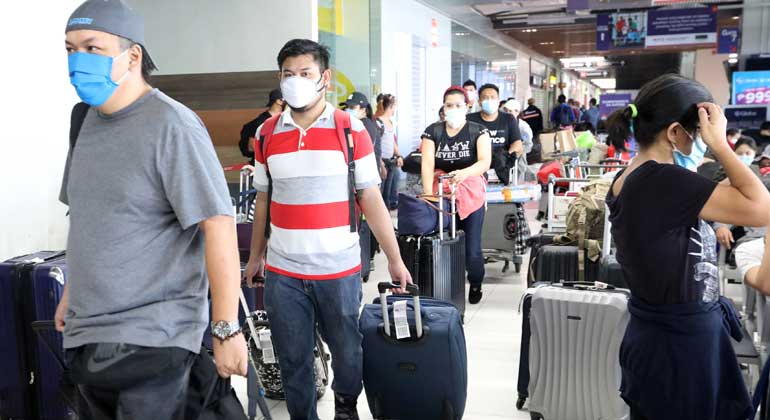
Almost 320,000 OFWs back to hometowns

PHILSTAR/EDD GUMBAN

ALMOST 320,000 overseas Filipino workers (OFW) have returned to their home provinces as of Nov. 21 since the start of the coronavirus pandemic early this year, the Labor department reported on Sunday. In a statement, the Department of Labor and Employment (DoLE) said “319,333 OFWs were transported to their respective provinces as of Saturday,” with assistance from the government. The DoLE provided coronavirus RT-PCR testing, a requirement by most local governments for returning residents and OFWs displaced by the global pandemic. Labor Secretary Silvestre H. Bello III said the OFWs who have come home will also be given support through livelihood programs. “We have also enhanced our livelihood programs for the reintegration of our returning heroes,” Mr. Bello said. — Gillian M. Cortez

House to propose P5-B increase in 2021 calamity fund

THE HOUSE of Representatives will seek an increase of at least P5 billion in the 2021 calamity fund for the reconstruction of areas devastated by recent strong typhoons, Speaker Lord Allan Q. Velasco said over the over weekend. Mr. Velasco said the House will propose the increase during the bicameral conference on the proposed P4.506-trillion national budget for next year. The two chambers of Congress will convene after the Senate approves its version of the budget. Mr. Velasco noted that the House passed the 2021 spending bill before typhoons Quinta, Rolly and Ulysses (international names: Molave, Goni, and Vamco) wreaked havoc in many parts of the country, especially in Luzon. “Given the tremendous damage caused by these successive strong typhoons, it is imperative that we augment the calamity fund in next year’s spending plan. We have to help our people rebuild their lives and their communities,” he said. Mr. Velasco noted that government agencies have so far estimated the damage caused by the three typhoons to infrastructure and agriculture at around P35 billion. Under the budget submitted by President Rodrigo R. Duterte to Congress in August, the calamity fund amounts to P20 billion, up by P4 billion from this year’s P16 billion. Of the total, P5 billion will go to the reconstruction of Marawi City while P6.25 billion would be augmentation for the quick response funds of six agencies. Of the P6.25 billion, P2 billion will go to the Department of Education, P1.25 billion to the Department of Social Welfare and Development, P1 billion to the Department of Agriculture, P1 billion to the Department of Public Works and Highways, P500 million to the Department of Health, and P500 million to the Department of National Defense-Office of Civil Defense. “That’s a total of P11.25 billion that is specifically appropriated, leaving a balance of P8.75 billion President Duterte could use to help victims of calamities and other disasters. That balance is not even enough to rebuild Bicol, which was hard hit by Typhoon Rolly,” Mr. Velasco said.

ALTERNATIVE
If the calamity fund could not be increased, he said, additional allocation could instead be given to agencies involved in the rehabilitation of typhoon-damaged communities. “Alternatively, we can allocate the additional money in the budgets of the agencies involved in reconstruction and helping typhoon victims,” Mr. Velasco said. “There are enough appropriations in the proposed budget from which the needed funds could be taken,” he added. — Kyle Aristophere T. Atienza

Regional Updates (11/22/20)

Abu Sayyaf members surrender

FOUR members of the Abu Sayyaf, a kidnap-for-ranson group that has pledged ties with the extremist Islamic State, surrendered on Saturday in Sulu after another one turned himself in to the military in Tawi-Tawi on Friday. The Western Mindanao Command, in a statement on Sunday, reported that those who surrendered said “their group was greatly weakened by the (recent) neutralization of their leaders and their comrades.”

JICA to review 37-month construction period for Davao Bypass project’s tunnel segment

RDC-XI

THE original 37-month construction period for the first 10.7-kilometer segment of the Davao City Bypass project, which includes a 2.3-km mountain tunnel, will be reviewed in consideration of adjustments arising from the ongoing coronavirus pandemic. Kiyo Kawabuchi, senior representative for the Japan International Cooperation Agency (JICA) in the Philippines, said health-related restrictions may cause delays in procurement, among other factors. The bypass is being funded under Japanese Official Development Assistance through JICA, with the 34.830 billion yen (about P16 billion) loan agreement signed June 16. “Lockdown measures and border controls which prevented the travel and movement of Japanese nationals to the Philippines at the early stages of the pandemic affected the timely processing of the contract for (the first package),” Mr. Kawabuchi said in an email interview. Nonetheless, he said JICA, the Philippine Department of Public Works and Highways, and the contractors and consultants are determined to fast-track the construction. “Despite the challenges brought about by COVID-19 (coronavirus disease 2019), JICA together with DPWH and other government agencies, the contractors and consultants, are all committed to work together to address the pandemic’s impacts and complete the project as soon as possible for the benefit of the Dabawenyos and the entire Mindanao,” he said. The contract for the initial civil works was signed Oct. 29, 2020 by DPWH and the joint venture of Shimizu Corporation, Ulticon Builders, Inc., and Takenaka Civil Engineering and Construction Co. Ltd. “It is expected that Japanese technology such as excavation techniques for tunnel construction will be applied and our Filipino engineers and skilled workers may take advantage of acquiring technical knowledge and expertise in the building of the tunnel that will be the longest in the country once completed,” DPWH Undersecretary Emil K. Sadain said during the contract signing. — Maya M. Padillo

7 unserviceable DoE vehicles up for bidding

THE Department of Energy (DoE), through its Disposal Committee (DC), is again inviting interested parties to bid for the agency’s seven units of unserviceable vehicles with an estimated appraised value of P118,260. In an announcement posted on its website last week, the agency said the vehicles are located within its main premises in Metro Manila. The sale of the properties will be on an “as-is-where-is” basis. Interested bidders can submit their sealed bids at the department’s Supply and Property Management Division on or before December 7, 2020, the same day of bid opening. Bidders must pay a non-refundable fee of P1,000. Before the opening of bids, they must also pay a 10% bid bond in either cash or cashier’s/manager’s check to the Treasury Division. The winning bidder’s bond will be considered as partial payment, and the balance will have to be paid within five working days after receiving the Notice of Award. “The DoE-DC reserves the right to reject any or all bids with or without cause, to waive any defect in them and to award the bidder whose offer is the most advantageous to the government,” DoE-DC Chairperson Robert B. Uy said in a statement. — Angelica Y. Yang

Biden ‘outsourcing tax’ promise clouds outlook for BPO industry

By Jenina P. Ibañez, Reporter

A PROTECTIONIST stance by a Biden administration could come in the form of a tax on outsourced operations, which may dampen the prospects of the business process outsourcing (BPO) industry, the head of an industry advisory firm said.

Democratic presidential candidate Joe Biden, the apparent winner of the Nov. 3 election, has floated an offshoring tax penalty, tax credits for investment that creates domestic manufacturing jobs, and the closure of tax loopholes on foreign profits.

Outsource Accelerator Chief Executive Officer Derek Gallimore in an online interview said if disincentives to outsourcing become a “significant policy” of a Democratic government, it could have a short to medium-term effect on Philippine BPOs.

“With COVID, we’re going to go into probably the biggest economic depression the world has ever seen. So that means people will be justifying or looking to save domestic jobs, so that might motivate (Mr. Biden),” he said.

He said outsourcing, however, still has the potential to grow.

“Fundamentally I don’t think a president changes that much,” he said, adding that the pandemic could also motivate global companies that are cutting costs to consider outsourcing.

Information Technology and Business Process Association of the Philippines (IBPAP) once again reduced its revenue and employment targets up to 2022, as growth is expected to be flat for the rest of the year due to the ongoing quarantine.

The potential effects of US policy on BPOs will still depend on actual measures taken by any incoming administration, delaying any sense of clarity on which particular outsourcing sectors could be affected by reshoring.

“It’s popular for all politicians to say that we’re going to keep jobs at home,” Mr. Gallimore said, but noted that the Biden campaign promoted specific policies on offshoring.

“Whether he follows through on that is a different thing,” he said.

BPO sector remains ‘robust’ during quarantine

By Gillian M. Cortez, Reporter

THE business process outsourcing (BPO) industry is getting by during the lockdown with “robust” growth, if continued hiring activity is any indication, according to tech hiring company Kalibrr.

In an interview with BusinessWorld last week, Kalibrr CEO Paul V. Rivera said the BPO industry “has been growing during this pandemic.”

“We still have a very robust BPO industry and if anything…and we are seeing new job opportunities that are remote job opportunities,” he said.

He added that opportunities are emerging from the BPO sector especially during the COVID-19 crisis, with 50,000 to 75,000 job openings so far in Metro Manila alone.

Mr. Rivera said job posts for the Philippines in general are still down and the rate of recovery has yet to improve. Small and medium enterprises were the most affected, which contributed to the decline in employment. However, Mr. Rivera said like BPOs, other industries saw significant growth like logistics, e-commerce, digital payments, and other allied sectors.

Jobseekers are also increasingly trying their hand at freelance work, Mr. Rivera added.

“BPOs give one view of the employment opportunities but there are many more employment opportunities and freelance opportunities that may not be fully visible in one place but can provide significant livelihood,” he said.

Employers use the free Kalibrr service to find suitable candidates for their job availabilities.

“We want to be the platform where they can discover employment opportunities,” he said.

Plastic industry under pressure from import competition

THE plastics industry is under pressure from import competition at a time of global surpluses for the segment, as well as reduced activity during the lockdown, the industry association said.

Philippine Plastics Industry Association, Inc. President Danny Ngo said lockdown measures have reduced production by constraining the movement of personnel and supplies, especially during the initial months of the public health emergency.

The plastics industry produces mostly pipes and packaging, supplying the food, agriculture, and electronics industries.

The pandemic has increased the global use of plastics as demand for medical goods and take-out containers surged, while the collapse of the oil market made virgin plastic manufacturing cheaper than recycling, alarming environmental advocates.

In the Philippines, importers have the upper hand.

“It’s very hard for us, the local industry, to compete with the foreign brands — especially our ASEAN neighbors. Because of this pandemic, there is a surplus in production from our neighbors. So in order for them to survive, they send their products to us. So the local industry is also suffering,” Mr. Ngo said in English and Filipino in an online video interview.

Plastics manufacturers have also been pushing back against efforts to impose safeguard tariffs on their raw materials, saying that a disrupted resin supply chain could lead to factory closures.

JG Summit Petrochemical Corp. has asked the Trade department to initiate a safeguard measures investigation, claiming that a surge in resin imports in recent years has caused it substantial injury. The Safeguard Measures Act, or Republic Act No. 8800, allows domestic producers to ask the government to conduct an investigation into their import competitors if they claim to have been harmed by excessive imports.

The plastics association said safeguards could lead to the Philippine market being flooded with imported plastic finished goods, as the industry competes with manufacturers based in countries with cheaper production costs.

“It might happen that we also have to lay off workers, because our plastic becomes more expensive and it becomes cheaper to import finished goods,” Mr. Ngo said.

Despite the surge in demand for fast food containers, Mr. Ngo said that overall demand is still down as businesses that remain closed or operate at reduced operations order less plastic packaging.

“When the economy is down, plastic is affected. So demand increased for food packaging because of online orders. But what about the other industries — garments, agriculture, exports? Demand may have increased in one area, but for all others, it declined. The retail industry is not functioning anymore.”

Increased medical and take-out container waste caused by the pandemic has prompted concerns from environmentalists.

The study increased plastic pollution due to COVID-19 pandemic: Challenges and recommendations published at the Chemical Engineering Journal said that mismanaged plastic waste during the pandemic could harm the marine environment and block sewage.

The authors recommended improved waste management, the use of bio-based or biodegradable plastics, and disinfection for safe recycling.

Mr. Ngo said the plastics industry is calling for better waste segregation to improve the facilitate recycling. — Jenina P. Ibañez

ADB study points to favorable outcomes for tricycle drivers borrowing from fintech firms

TRICYCLE DRIVERS that availed of loans from financial technology (fintech) companies en route to owning their vehicles improved their earnings considerably despite working fewer hours compared to those that did not take out loans, according to a survey by the Asian Development Bank (ADB).

According to the survey of 2,487 tricycle drivers in Metro Manila, conducted last year, the ADB said those who obtained fintech loans to purchase their vehicles were able to earn P21,545 a month or a net daily salary of P731 because there were able to expand their businesses and tap other sources of income. They were found to have worked 67 hours per week on average.

This compares with the P6,360 monthly income or P551 net daily salary of tricycle drivers tied to the so-called boundary system, whereby non-owners paid a share of their income to use tricycles owned by others. Fintech loans were also found to return superior outcomes compared to other modes of purchase like conventional loans or drivers that tapped savings. The non-fintech drivers worked an average of 69.2 hours a week.

“Comparing the fintech and conventional drivers, the study found that fintech drivers have more risk appetite, more rationalized working hours, and earn much higher incomes than conventional drivers. They have relatively better access to financing sources and have good financial plans and goals, but face large obligations to loan repayments,” according to the third volume of ADB’s “Asia Small and Medium-Sized Enterprise Monitor 2020” report released over the weekend.

The ADB said fintech loan programs target tricycle drivers that have limited access to bank loans or other financing options because of low credit scores or lack of collateral.

The collateral-free loan program offered by Japanese fintech firm Global Mobility Service uses technology to monitor drivers’ ability to pay on time. Failure to do so deactivates the motorcycle engine.

Drivers that availed of fintech loans, however, reported paying larger amounts for amortization and pay more frequently, typically weekly, compared with monthly payments sought by traditional lenders.

They also faced stricter repayment rules and schedules, such as the deactivation or repossession of their motorcycles in the event of late payment, as opposed to conventional lenders which imposed one-time fees. The ADB said fintech lenders’ strict rules could hurt drivers more but it can also encourage conscientious behavior among borrowers.

“The regression analysis indicated that fintech loans intensify driver work habits. They work more days per week, boost overall income, improve money management, have financial goals, and create more savings for business operations. While the loan repayment burden reduces their incentive to borrow for non-tricycle purposes, fintech loans allow more people to open bank accounts,” it said.

“The survey findings suggest that using fintech loans improves living standards and the social welfare of tricycle drivers — and could potentially support the development of local economies by enhancing financial inclusion,” it added. — Beatrice M. Laforga

Legislator seeks immediate release of Bayanihan II funds for MSMEs

A LEGISLATOR urged the Department of Trade and Industry (DTI) to expedite the release of stimulus funds intended to help small firms stay afloat.

With only one month left before the expiration of Republic Act 11494 or the Bayanihan to Recover as One Act (Bayanihan II), House Deputy Majority Leader Bernadette Herrera-Dy said DTI needs to ensure that struggling micro-, small-, and medium-sized enterprises (MSMEs) will benefit from the P10 billion allocated under the law’s COVID-19 Assistance to Restart Enterprises (CARES) program.

“Congress allocated that amount precisely to help these struggling MSMEs so that they could continue operating and paying their employees,” the legislator, representing Bagong Henerasyon Party-list, said.

“Our economy is slowly opening up again and our MSMEs will play a big role in its revival, so we should provide them with the necessary assistance right away,” she added.

According to the DTI, P8 billion out of the P10 billion allotted for CARES has been released to the Small Business Corp. (SB Corp.).

The P10 billion was intended as assistance to MSMEs and the tourism industry in the form of low-interest loans.

The CARES fund was expected to benefit around 100,000 enterprises and 200,000 workers.

However, the DTI has said that only 6,600 loans have been approved so far, equivalent to P1.2 billion, while 26,000 CARES loan applications remain pending with SB Corp.

“The DTI should push SB Corp. to fast-track the processing of loans and release the money to qualified MSMEs as soon as possible,” Ms. Herrera-Dy said.

She said MSMEs are among the hardest-hit by the pandemic in large part due to the most stringent and longest lockdown in Southeast Asia.

“The pandemic pushed many MSMEs into financial hardship, prompting them to either shut down permanently or lay off some workers just to stay afloat,” Ms. Herrera-Dy said.

Bayanihan II succeeded the Bayanihan to Heal as One Act, which gave President Rodrigo R. Duterte special powers to effectively respond to the COVID-19 pandemic. Bayanihan II expires on Dec. 19. — Kyle Aristophere T. Atienza

Smokestacks in a storm

The appalling human and economic toll of the recent typhoons has led to ritual finger-pointing and recrimination among government agencies. A prominent example is the argument over the role played by the release of dam water, particularly from Magat Dam, in exacerbating the floods experienced in Cagayan and Isabela. The provincial government of Cagayan has now threatened to sue the National Irrigation Administration (NIA), which operates Magat Dam, for the damage the flooding has caused.

And — as called for in the usual script — a congressional fact-finding investigation is also in the offing.

In their own defense, the dam operators point out that not being able to relieve the pressure on the dam would have led to a dam break and an even worse catastrophe. In a possible court case, the province would need to argue that the dam operator’s behavior rose to a threshold of negligence that led to a strict liability. Against this, the dam operator will likely contrapose a defense of statutory privilege (Magat was ordered built by the dictator Marcos in 1978), force majeure (the fact of the typhoon itself), and processes beyond the dam owner’s control (e.g., watershed denudation owing to logging, mining, and the river’s meander).

On the narrow issue of negligence, the dam operators’ main argument is that they followed the letter of the existing protocol for releasing dam water, that is, providing sufficiently early warning about the timing and volume of water about to be released (it is said, via e-mail, text messages, and hard copy). This, after all, was all that was required under their “mandate.”

All these narrow legal points however obscure a larger problem. This much became evident in an Inquirer interview with the Cagayan governor, Manuel Mamba, who was quoted as saying, “Sa amin, we don’t know the extent of the effect on the flooding itself. Kahit na sabihin mo sa aming 6,000 [cubic meters per second of water], kahit sabihin mo sa aming apat na swimming pool per second ang mailalabas niya… ’Di naman [kami] sinabihan na magpa-evacuate na kayo dahil mag-release kami ng ganito, ganito kasi ang mangyayari, they do not even tell us dahil hindi nila alam kung gaano kalalim. ‘Di nila alam kung anong epekto ng binibitawan nila.” (Even if you tell us 6,000 [cubic meters per second of water], even if you say you will release four swimming pools per second… They did not tell us to start evacuating because we will release this much because this will happen, they did not even tell us because they did not know how deep. They did not know what the effect of what they released would be.) The newspaper report then goes on to speculate that the tragedy in question was due to “unclear communication” from the dam operators. But, really, it was more — and worse — than that.

The first and obvious failure was one of science — both its production and use. The governor was complaining that the factual and scientific information provided (i.e., cubic meters of dam water released per second) was insufficient data to act on. The dam operators provided an input into how much they were about to contribute to the river’s flow. But the single crucial variable was the predicted overall rise in the river’s flood level taking everything into account, i.e., not just the dam’s contribution but also how much rainfall there had been, the river’s present carrying capacity, the level of ground saturation, its meander, etc. — all of which in turn depended on longer-term processes such as siltation, changing forest cover, land use especially in the watersheds, and climate change (yes, Nonoy, that too).

A second piece of useful knowledge would have been the areas of settlement at various elevations that were at risk of, say, inundation or landslides given varying levels of rainfall and flood. None of these data were apparently readily available — not even now. Producing the data and making them available, but more importantly piecing them together in actionable form, was a task that fell between chairs: it was viewed as the responsibility of neither the dam operator NIA, nor the local government, nor PAGASA (Philippine Atmospheric, Geophysical and Astronomical Services Administration), nor DENR (Department of Environment and Natural Resources), nor of any single government agency for that matter.

Joel Mokyr, the doyen of the history of technological change, draws a distinction between “propositional knowledge” (episteme) and “prescriptive knowledge” (techne), i.e., the “what” as distinct from the “how.” Propositional knowledge is knowledge of natural laws and of cause-and-effect relations in the abstract — say, that wind loads and wind uplift of a certain force will threaten the integrity of buildings of certain types. Elements of prescriptive knowledge, on the other hand, “consist of ‘do-loops’ replete with ‘if-then’ statements instructing one how to carry out activities…” [Mokyr 2002: 10]. In the case of typhoons, which occur frequently, both types of knowledge are by now established and well-known. The propositional fact that winds of 100-185 kph will rip the roofs off most houses of light materials is coupled with the technological “routine” or prescription that tells people to take shelter in stronger structures once Signal No. 3 is raised in their area.

In the case of the Cagayan-Isabela floods, however, this type of science and technology — particularly the codification of propositional knowledge into prescriptive signals and routines — was clearly absent. There is still a gap in the country’s warning system in that it fails to translate expected rainfall — particularly when typhoon signals are down, as they were in Cagayan — into predicted flood levels on which local governments can base actionable routines.

The type of integrative science required is not unknown, however, and was already exemplified by the late-lamented Project NOAH. That multidisciplinary project under the Aquino administration, led by UP’s Mahar Lagmay and C.P. David and using LIDAR, produced ground-breaking disaster maps under various scenarios for 16 provinces, down to the barangay level. Among its achievements was the establishment of a storm-surge warning system (learning from Yolanda) apart from flood-, wind force-, and landslide-warnings. Unfortunately the program could not be expanded — and therefore did not include Cagayan and Isabela — before its funding support was cut by the incoming Duterte administration in 2017. (The current presidential spokesman cannot now even recall that it existed. Oh, well.)

The second and deeper failure however is one of governance. The government’s typical disjointed approach to preparing for and mitigating disasters and other novel challenges reflects the widespread “silo mentality” or “smokestack syndrome” among its agencies. This refers to the inability or unwillingness of agencies to share information and responsibility. Instead, each entity routinely spews out its customary information or follows an inflexible routine as listed in its “mandate” — in the worst sense of the word bureaucratic — without much regard for whether these are still relevant or adequate to the tasks at hand.

While more or less present in all complex organizations with a division of functions, the smokestack syndrome is particularly acute in the Philippines owing to the deep politicization of the civil service. At the beginning of his term, the president personally appoints thousands of his erstwhile supporters into the bureaucracy — from cabinet secretaries down to bureau directors, a global idiosyncrasy — each claiming to have a more or less direct line to the chief and therefore entitled to their own autonomy and discretion in their own larger or smaller domains. Much like the Holy Roman Empire (i.e., medieval Germany), each prince, whether petty or great, has a direct franchise from the emperor which makes others loath to intervene or cooperate — for good or ill. No surprise therefore that in this environment, any initiative for a joint effort will be in short supply and always dependent on prior clearance from ever-higher-ups — and ultimately the president. More importantly, lower subordinates come to develop a parochial patriotism and servile loyalty towards their specific bosses that kills all initiative and makes cooperation and coordination tedious and long-winded.

Proof that this happens will be seen in the strange penchant among departments and agencies for signing MoAs (memorandum of agreement) not only with non-government entities but revealingly even with each other to accomplish some common function that should have been part of their duties anyway. MoA signings — the obligatory pomp and photo-ops are testimony to the arduous effort required to reach agreement — are homologous to treaties between sovereign states. Hundreds of these exist, e.g., between the NIA and the DENR; between the NIA and PAGASA; between the Department of Finance (DoF) and the money laundering council; the DoF and the Philippine Competition Commission (PCC); the Department of Trade and Industry (DTI) and the PCC; the DTI and the Department of Energy (DoE); the DTI and the telecoms commission, and so forth and so on, with even more for lower-level agencies. And here’s one for the books: there are actually MoAs signed between a department and its own subordinate bureaus! One example is a MoA between the DoF, the Bureau of Customs and the Bureau of Internal Revenue — suggesting that the latter two are virtually independent kingdoms (which they are).

Apply this to the disaster at hand and view it from the vantage of a local mayor. The NIA operates the dam and has a MoA with PAGASA and the DENR but is concerned only with conditions affecting the structural integrity of its dams — not the total runoff and flooding of the local communities. There is a big data hole when it comes to the effects on a mayor’s particular jurisdiction. Of course, local politicians are not blameless, either — they could have pushed politically for the information needed and shown initiative by themselves funding the studies required.

A rare exception that has made the rounds of social media is the case of Mayor Cristina Antonio of Alcala, Cagayan, who earlier on took the initiative to commission a study by UP scientists of the flooding hazards in her town. As even this exemplary case shows, however, although expert advice may exist, implementing it frequently requires powers that challenge the financial and logistical capacities of local governments, as well exceed their jurisdictional authority. The mayor’s plea in her social media post in the midst of desperate flooding contained a gem of wisdom: “The problem being complex, the solution is also a combination of interventions that should be anchored on science and drawn after scientists have studied the Cagayan River itself” (my emphasis). Under the current system, if the mayor had to solve this problem on her own, apart from finding the finance to do it, she would probably have to work for and sign separate MoAs with PAGASA, the DENR, the Department of Public Works and Highways, the NIA, the Department of Agriculture, among others — not leaving much time till the next typhoon.

In any event, the government’s solution to the complex multifaceted problem posed by the recent calamities thus far has been its other favourite response besides MoAs — forming a “task force.” BAYAN’s Rep. Carlos Zarate counts 15 task forces already in existence (the Inquirer counts 18). The so-called “Build Back Better” (actually a post-Yolanda slogan borrowed from the Aquino administration) task force has 24 members — which almost qualifies it to be the entire government. Other observers have rightly observed that the ad hoc, time-bound nature and propaganda imperatives of task forces gives little opportunity for carefully considered solutions to what are in reality complex problems tractable only by well-founded science. The real impact (and danger) of including many agencies in a task force, however, is that it allows a reallocation of budgets to other priorities the task force may decide on. For good or ill, it overrides the priorities these agencies have set and substitutes for them the task force’s own judgement.

In the worst case, a task force will choose and implement priorities that are haphazard and misplaced. As the mayor of Alcala warns, “It is not dredging every which way, it is not putting up a dike here and there. It is knowing, based on sound science, what to do and what not to do…” In the best case, a task force may indeed choose the right priorities for the moment. But task forces will ultimately disband, and once the crisis has passed or media attention dies, the various agencies will go back to emitting their own varicolored smoke — or resting under their own kulambô (mosquito net) — until roused by the next catastrophe. This is no way to build lasting institutions.


Emmanuel S. De Dios is professor emeritus at the University of the Philippines School of Economics. He has no interest in where the president was or what he was doing. Only in things that matter.


Housing as stimulus

“Build, Build, Build” has been the mantra of the Rodrigo Duterte administration, which undoubtedly was instrumental in the high economic growth before the pandemic. “Build, Build, Build” is associated with infrastructure. But “Build, Build, Build” should likewise have been an exhortation to build, build, build homes for the masses, the working classes.

Inexplicably, housing has not been a pillar of “Build, Build, Build,” which has been mainly about road, air, water and rail transport, water resources, and power and energy. Not much attention has been given to the housing sector as an engine of the economy.

To quote Jeffrey Ng, the former chair of the Subdivision and Housing Developers Association (SHDA): “Housing should be considered as important as Build, Build, Build.” Housing programs are quicker and less burdensome to undertake. There are no right of way issues and no procurement processes to contend with.

The housing sector has a huge potential to contribute to create jobs and build homes for the lower and middle classes. According to both government and industry sources — the Board of Investments and SHDA, respectively — the housing backlog by 2030 will reach more than 6.5 million units, assuming no special programs are put in place. The backlog is in economic, low-cost, or socialized housing.

Giving priority to the housing industry has become an imperative in light of the pandemic. It is a good economic stimulus, which will mainly benefit the working classes. The housing sector accounts for 5% of total employment and is linked to 80 allied industries. According to the SHDA, the value creation multiplier from housing is 3.44. That is to say that for every peso spent or invested in housing, the changes in output result in a value of P3.44. That translates into more income and consumption for the people whose work is directly or indirectly associated with housing.

Further, the SHDA forecasts that for the post-pandemic period, the demand for housing remains strong. Thus, the housing industry should be seen as a leading factor in pump-priming the economy.

Housing, as part of a stimulus program, is not just a short-term stabilizer to create jobs and incomes. As society prepares for the post-pandemic world and envisions a better new normal, housing development needs a new direction and orientation. New public housing has to address the high density of population and poor living conditions, making it difficult to meet minimum public health standards, such as social distancing and proper sanitation.

We also need to reaffirm our commitment to the 11th Sustainable Development Goal (SDG) of “Sustainable Cities and Communities,” which aims to ensure access for all to adequate, safe, and affordable housing and basic services and upgrade slums. Securing safe and affordable housing is a way of protecting the population from future pandemics and calamities.

What then can be done? Below, we summarize our main recommendations for the development of the housing sector at this juncture.

1. As part and parcel of a temporary economic stimulus, a suspension of the value-added tax (VAT) for low cost social housing with a cap on values can be accommodated. This is better than the proposal of Senator Ralph Recto to have a permanent VAT exemption for social housing. VAT exemption incurs economic costs. It results in forgone revenues, which otherwise could finance development programs, including housing. The Department of Finance estimates that the revenue impact of a VAT exemption that Senator Recto proposes would amount to P32.5 billion between 2021 and 2024 alone. To repeat, as a temporary measure to serve the stimulus (say, for the duration of the pandemic), an exemption can be tolerated. But it cannot be forever.

Building safe and secure communities should not primarily depend on tax incentives, unless there is a market failure that discourages private investments. The granting of tax incentives has to be subject to rigorous economic criteria, including a cost-benefit analysis.

2. The main form of fiscal support is through a direct subsidy to the eligible social housing beneficiaries through a voucher system. Putting this in place requires a data-driven approach to correctly identify those who are eligible, and match their needs — not just as households, but as communities.

3. The comprehensive land use plan (CLUP), which is determined by the National Land Use Policy, needs swift action from Congress to be enacted. It must integrate transparency and monitoring mechanisms to evaluate the social housing program.

4.  Simplify the permits process for housing, and shorten the process within six to 12 months to address critical bottlenecks.

In closing, we call on the government to include housing as a driver of the economic stimulus. To support the housing sector, the government employs a variety of policy tools, which will include fiscal interventions, but not the type that will lead to fiscal recklessness.


Viviane Apostol is a researcher and Filomeno S. Sta. Ana III is the coordinator of Action for Economic Reforms.

www.aer.ph

Government’s digital migration

I recently met Andrés Ortola, the general manager of Microsoft Philippines. Over lunch, we spoke about how he is adjusting to life in the country and his plans for Microsoft. The Philippines is an important market for the software giant given the size of our population and the country’s rapid pace of economic development. Although Microsoft Philippines has an annual turnover that is slightly lower than its Indonesian and Malaysian counterparts, the prospects for growth are higher here given the wave of digital migrations that is underway in government.

Digitization across all units of government was made a national priority by President Rodrigo Duterte when he assumed office in 2016. This is precisely why the Department of Information and Communications Technology (DICT) was created. Without fail, the President has spoken of the need to hasten government’s digital migration in every state of the nation address.

The pandemic underscored the need to accelerate the digitization process. It will be recalled that the lack of shared data, interoperability, and connectivity between the national government and local government units (LGUs) were among the reasons why the anti-virus response was uncoordinated in many parts. Malacañang has since endorsed the largest budget appropriation to fast-track the digitization program.

Back to Andrés, Microsoft’s head honcho is a native Argentine whose experience in IT spans two decades. Prior to his posting in Manila, he led the commercial business unit of Microsoft Singapore. While his career has taken him to many parts of the world, no other place feels more like home than the Philippines, he intimated. Our people (Argentines and Filipinos) have been through so many trials, be it in the form of natural disasters, political unrest, or economic crisis. Each time, we emerge better and wiser. Our people are resilient, creative and generally optimistic. Andrés proudly declares that the human capital of Argentina and the Philippines assures both nations of a place in tomorrow’s world.

Andrés’ deep concern for the Philippines is palpable. He counts Manila as his home and as such, has made a commitment to contribute to nation building. Giving back to the country is one of the three pillars of Microsoft’s corporate mission under Andrés’ leadership. The other pillars include expanding Microsoft’s business footprint in the country and making sure that its employees are well looked after.

Studies show that for every one dollar invested in digitization, eight dollars worth of productivity is generated. To this end, the Microsoft team has been working closely with the government by providing both engineering counsel and software platforms to help it along its digital journey.

At the heart of Microsoft’s collaboration with the state is a program called “Microsoft para sa Bayan” (Microsoft for the Country). The program aims to up-skill some 25 million government workers and stakeholders on the operations of various software platforms. Done in partnership with the DICT, the program is the first step towards achieving interoperability between national government agencies and LGUs. All these are powered by Microsoft’s cloud platform called Azure.

With government database operating through the cloud, access to data across all governmental units will become immediate. For us citizens, it means no more duplicities in applying for passports, drivers licenses, business permits, tax declarations, and other government-issued certifications. For law enforcement and the justice system, it means quick access to records and historical data. For our economic managers, it means real time information on critical numbers such as trades statistics, poverty rates, and the like. The benefits are enormous. Not only will it make overall governance more efficient, it will also cut red tape and contribute to the economy’s competitiveness.

As I write this, Microsoft is already working with the departments of Education, Justice, Science and Technology, and Finance, the Central Bank, the Social Security System, the Bureau of Internal Revenue, and nearly 400 cities and municipalities on various digital programs, all of which are powered by Azure.

Azure is used by 95% of Fortune 500 companies and numerous governments around the world. It is the world’s preferred platform since its security features are unparalleled. In fact, various software rating agencies have ranked Azure as superior to its competitors in the realms of security, privacy, and compliance with legal requirements. Even the world’s most secretive agency, the US Department of Defense, uses Azure.

The Philippine government has come to appreciate Azure for its scalability. Government agencies or any private user, for that matter, can subscribe according to their required cloud capacity. This makes it cost efficient, especially for smaller LGUs or startup businesses. Above all, it works beautifully with Microsoft 365, although not exclusively. (For those unaware, Microsoft 365 is the world’s leading collection of software that includes Microsoft Excel, Word and Powerpoint, among others.)

During the quarantine, numerous government agencies were rendered paralyzed since their operations required face to face interaction. Among them was the Department of Education (DepEd). The threat of infections caused the government to cancel classes until such time as a viable remote learning system is put in place, especially in far flung provinces.

Without a formal engagement contract, Microsoft took the initiative to assist DepEd. The company provided Microsoft 365 programs to schools all over the country for which remote learning is now enabled by a program called Microsoft Teams. Teams is a platform where people can chat, meet, share files and work from different locations. Two million children are learning remotely through Teams today.

Andrés’ also noted that court cases were piling-up in the Supreme Court, given the prohibition of mass gatherings. Again, upon Microsoft’s initiative, the company introduced the high tribunal to the idea of conducting remote hearings using Microsoft Teams. The Supreme Court has since embraced remote hearings and its caseload has eased.

Microsoft has also assisted the government in its contact tracing efforts as well the Philippine National Police (PNP) for its COVID-19 response requirements.

Curiously enough, despite having provided the DepEd, the justice department, and the PNP with software and training, it is not clear if Microsoft got paid for it. While Andrés hopes that this will lead to deeper collaboration between his company and the government, the fact remains that Microsoft stepped-up and took the initiative to help when no one asked them to. To Microsoft, it is their way of giving back. It is their way of living up to the pillars of their corporate mission.


Andrew J. Masigan is an economist

andrew_rs6@yahoo.com

Twitter @aj_masigan

A poverty beyond Poverty

“How are you doing, my friend? I was worried about you there in Naga, in this terrible Typhoon Rolly — hope you are OK?”

“Almost a week without electricity and no drinking water, but I am OK,” she says. In its wake Rolly swept away the houses of the poor in Catanduanes, Albay, Quezon, and Batangas. Trashed the fields that would have given a good harvest for farmers looking forward to Christmas. Shuttered the small businesses and all economic activity; P17.9 billion in estimated damages. Killed at least 25 people, with 399 injured and six missing.

“You crazy-rich in Manila sit in your cozy homes and condos, aircons run by monster generators, watching all this on uninterrupted television. No problem with water or food — there’s always delivery orders. Everything is online — the shopping never ends. The only ‘slight’ discomfort is having to self-restrict venturing outside the home because of this coronavirus scare.”

She could have said, “shame on you!,” but I knew what my friend meant. And as if to drive home the point, Typhoon Ulysses came lashing in on Nov. 8, a week after Rolly had blown away. Ulysses wreaked havoc on Quezon province, Batangas, and, again, the Bicol region was affected. The storm deluged the low areas as its downpour filled the rivers and dams and overflowed to cover rooftops in Cagayan and Batangas and even the Marikina Valley in Metro Manila.

At least three million individuals were affected by the typhoon’s onslaught, the National Disaster Risk Reduction and Management Council — better known as NDRRMC — reported on Nov. 17. The poor are always the ones affected by disasters — that is what my friend in Naga was taunting me with. Do the non-poor feel enough for the poor?

But the US presidential elections on Nov. 3 were distracting. Yes, in the comfort of home for those who were not directly affected by the twin storms Rolly and Ulysses, it was probably more interesting to watch the close fight for the US presidency between the incumbent, Republican Donald Trump and the Democrat contender Joe Biden. The two were stark contrast to each other in demeanor and in what was perceived to be the principles they stood for — yet public favor seemed so hotly and jealously equal for one and against the other.

Perhaps there is that urgency, after all, for America — an intuition to curb the uneasy compromise of some basic principles and values that had been brought in by a radical strong-man leader who — maybe with good intentions, maybe with not so good intentions — wanted to do things his way. For those who unshakably believed in Trump, they condoned his ways. For the paranoid who feared where he might bring America by his “juvenile delinquency,” they opposed his re-election to a second term.

Social scientists say juvenile delinquents are in “moral poverty” because they lack a grasp on social and moral values from a wrong upbringing or a bad environment. And in the genre of the bad-guy/good guy scenarios prevalent in the movies and entertainment, Trump seems to have lived out in real-life the “bad-ass” way of getting things done and being applauded for it. Some other country leaders are noticeably mimicking (or are natural clones of) Trump for effective control of their nations towards strategic goals in global competitiveness.

But my friend in typhoon-devastated Albay is right. Before political global competitiveness can even be thought of, poverty in the country must be addressed. After Typhoon Rolly, the international poverty watch group Oxfam assessed that at least two million Filipinos or 400,000 families have been affected, with thousands of homes damaged or destroyed, and an estimated 20,000 farmers impacted with the loss of crops.

“The Philippines is a country where 17 million people live below the poverty line. It has persistent high levels of inequality and vulnerability. Further, it is one of the most highly at-risk countries from disasters, with pockets of fragility that threaten its stability and development. (Moreover,) the Philippines is also classified as a lower middle-income country,” Oxfam writes.

The World Bank Poverty and Shared Prosperity Report 2020 reported that COVID-19 was likely to push between 88 and 115 million people into extreme poverty — those living under $1.90-a-day — around the globe in 2020. The United Nations World Food Programme predicts that 200 million people worldwide will lose access to basic food and nutrition in the coming months because of the pandemic. This is on top of the more than 800 million people who experienced food insecurity before the crisis.

According to a Social Weather Station survey, the percentage of Filipinos who were involuntarily hungry in May 2020 (16.7% or 4.2 million families) almost doubled from December 2019 (8.8% or around 2.1 million families). This is the highest percentage since September 2014 (22.8% or 4.8 million families).

A 2009 Asian Development Bank report on chronic poverty in the Philippines notes that economic growth did not translate into poverty reduction in recent years because of deficient targeting and weak implementation of government in various poverty programs, constrained by regional disparity in the concentration of the poor, who usually have large families, with six or more members. Not only the very poor, but Filipino families in the large lower middle class are vulnerable to recurrent shocks and exposure to risks such as economic crisis, conflicts, natural disasters, and “environmental poverty” (e.g., climate change) shocks and risks. Slow government response to alleviate these shocks has exacerbated poverty in this country.

It is the sacrosanct and foremost responsibility of the government to take care of its poor. However, “countries experiencing chronic poverty are seen as natural breeding grounds for systemic corruption due to social and income inequalities and perverse economic incentives,” USAID warned in a November 2003 report, “Corruption and Poverty.” It pointed out that the poor suffered most from corruption in government because of unfair distribution and reduced or lower-quality services and infrastructure decimated by rent-taking and bribes of government functionaries.

But the poor have little choice — “Beggars can’t be choosers.” And the patronage system of politics in the Philippines has exaggerated the dependence of the poor (the “masa”) on individuals in power (rather than on symbolic “government”) who can deliver their needs for survival. As a relevant aside: in this time of the coronavirus crisis, why must government help and support be called “ayuda” — a Spanish term for the Tagalog “tulong” (help)? “Ayuda” reeks of the feudal patronage system that made the peasants (the poor) forever dependent and grateful to the lord of the hacienda for dole-outs for their subsistence and survival.

And we go back to the distraction that a personality like Trump has been, in this world economic crisis and health pandemic. The strongman, bad guy image that he purposely employed garnered near victory for a second term, in what would have been a ratification by the people of what might be compromises towards good governance, even good manners and right conduct. But no more lies, Americans declared on Nov. 3.

Perhaps some might see risqué attraction to certain similar personalities in power in our small, developing country. We must address the poverty situation first, but should the end justify the means? Should patronage and corruption be ever an acceptable compromise to getting things done?

The Transparency International Corruption Perception Index 2019 ranks the Philippines a low 113th of 198 countries, so close to the bottom with the most corrupt. The “cleanliness” score is a pitiful 34/100, shameful against Singapore’s 85/100, who ranks a proud 4th of 198 countries listed from little corruption to heavy corruption.

We must stem the rising moral poverty to truly address economic poverty.


Amelia H. C. Ylagan is a Doctor of Business Administration from the University of the Philippines.

ahcylagan@yahoo.com

G20 seeks to help poorest nations in post-COVID world

BEIJING/DUBAI/WASHINGTON — Leaders of the 20 biggest economies on Saturday vowed to ensure a fair distribution of coronavirus disease 2019 (COVID-19) vaccines, drugs and tests around the world and do what was needed to support poorer countries struggling to recover from the coronavirus pandemic.

“We will spare no effort to ensure their affordable and equitable access for all people, consistent with members’ commitments to incentivize innovation,” the leaders said in a draft G20 (Group of 20) communique seen by Reuters. “We recognize the role of extensive immunization as a global public good.”

The twin crises of the pandemic and an uneven, uncertain global recovery dominated the first day of a two-day summit under the chairmanship of Saudi Arabia, which hands off the rotating presidency of the G20 to Italy next month.

The COVID-19 pandemic, which has thrown the global economy into a deep recession this year, and efforts needed to underpin an economic rebound in 2021, were at the top of the agenda.

“We must work to create the conditions for affordable and equitable access to these tools for all peoples,” Saudi Arabia’s King Salman bin Abdulaziz said in his opening remarks.

G20 leaders are concerned that the pandemic might further deepen global divisions between the rich and the poor.

“We need to avoid at all costs a scenario of a two-speed world where only the richer can protect themselves against the virus and restart normal lives,” French President Emmanuel Macron told the summit.

To do that, the European Union (EU) urged G20 leaders quickly to put more money into a global project for vaccines, tests and therapeutics — called Access to COVID-19 Tools (ACT) Accelerator — and its COVAX facility to distribute vaccines.

“At the G20 Summit I called for $4.5 billion to be invested in ACT Accelerator by the end of 2020, for procurement & delivery of COVID-19 tests, treatments and vaccines everywhere,” European Commission head Ursula von der Leyen said on Twitter.

“We need to show global solidarity,” she said.

Germany was contributing more than €500 million ($592.65 million) to the effort, Chancellor Angela Merkel told the G20, urging other countries to do their part, according to a text of her remarks.

Russian President Vladimir Putin offered to provide Russia’s Sputnik V coronavirus vaccine to other countries and said Moscow was also preparing a second and third vaccine.

China, where the pandemic originated a year ago, also offered to cooperate on vaccines. China has five home-grown candidates for a vaccine undergoing the last phase of trials.

“China is willing to strengthen cooperation with other countries in the research and development, production, and distribution of vaccines,” President Xi Jinping told the G20 Summit.

“We will … offer help and support to other developing countries, and work hard to make vaccines a public good that citizens of all countries can use and can afford,” he said.

US President Donald Trump, who lost the US presidential election but has refused to concede to former Vice President Joe Biden, addressed G20 leaders briefly before going golfing. He discussed the need to work together to restore economic growth, White House Press Secretary Kayleigh McEnany said in a summary released late on Saturday.

She made no mention of any US pledge to support the global vaccine distribution effort. One European source said Mr. Trump’s remarks were focused on what he described as an unprecedented US recovery and the US drive to develop its own vaccines.

PREPARE FOR THE FUTURE
To prepare for future outbreaks, the EU is proposing a treaty on pandemics. “An international treaty would help us respond more quickly and in a more coordinated manner,” European Council President Charles Michel told the G20.

While the global economy is recovering from the depths of the crisis, momentum is slowing in countries with resurgent infection rates and the pandemic is likely to leave deep scars, the International Monetary Fund (IMF) said in a report for the summit.

Especially vulnerable are poor and highly indebted countries, which are “on the precipice of financial ruin and escalating poverty, hunger and untold suffering,” United Nations Secretary-General Antonio Guterres said on Friday.

To address this, the G20 will endorse a plan to extend a freeze in debt service payments by the poorest countries to mid-2021 and endorse a common approach for dealing with debt problems beyond that, the draft communique said.

World Bank President David Malpass warned the G20 that failing to provide more permanent debt relief to some countries now could lead to increased poverty and a repeat of the disorderly defaults of the 1980s.

The G20 debt relief initiative has helped 46 countries defer $5.7 billion in debt service payments, but that is far short of the 73 countries that were eligible, and promised savings of around $12 billion. Private sector participation is seen as critical to ensuring broader use of the initiative.

Debt relief for Africa will be an important theme of the Italian presidency of the G20 in 2021. — Reuters

ADVERTISEMENT
ADVERTISEMENT