

Home Blog Page 8776

Economy may return to pre-pandemic growth by mid-2022


By Beatrice M. Laforga, Reporter

THE Philippine economy may go back to its pre-pandemic growth trend starting mid-2022, on the back of strong fundamentals and an expected rebound in consumer confidence amid optimism that a coronavirus vaccine will be available by next year, experts said on Wednesday.

Socioeconomic Planning Secretary Karl Kendrick T. Chua said they expect the economy to be strong enough to go back to its 2019 levels by mid-2022 — around the time President Rodrigo R. Duterte steps down from his post.

“There will be scars and delays but putting all the numbers together, we are seeing a return in the 2019 levels sometime in the middle of 2022. We can accelerate that further if we can focus on the recovery programs,” Mr. Chua said during a panel discussion at the BusinessWorld Virtual Economic Forum.

Mr. Chua said the economy is projected to grow by 6-7% next year coming from a low base in 2020. The economic team is keeping a 6.5-7.5% growth rate for 2022.

“The opening of the economy appears to be the most important policy that we should be pursuing so long as we do it as safely as possible,” he said.

Since the strict lockdown began easing in June, the government has continued to relax quarantine restrictions to help the ailing economy recover at a quicker pace.

The crisis will leave many economic scars, particularly the impact of delays in education that may hamper future productivity and income of families in the next few years.

Restoring consumer confidence is key to recovery, Mr. Chua said, noting the economy is largely consumption driven.

He said the government will prioritize strengthening the capacity of the healthcare system to accommodate COVID-19 patients, as this would help reassure the public.

As the rebound in consumer and business confidence would depend on the availability of a vaccine, herd immunity can be achieved by vaccinating 70% of the total population, according to Edsel T. Salvana, director of the Institute of Molecular Biology and Biotechnology at the National Institutes of Health at the University of the Philippines Manila.

Mr. Salvana said a vaccination program may start as early as April, prioritizing the vulnerable sector and gradually covering the general population towards the end of 2021.

“So long as we can keep our hospitals from being overwhelmed, we will continue to do better in managing these severe cases. We have been working on vaccines and more data is coming out. The projection is that in the second quarter we will have some vaccine availability. We are learning to live with the virus but the danger is really in complacency and vigilance is crucial,” Mr. Salvana said.

The government plans to borrow P73.2 billion to buy coronavirus disease 2019 (COVID-19) vaccine for 60 million Filipinos.

Global drugmakers such as AstraZeneca and Pfizer, Inc. have reported their coronavirus vaccines were tested to be 90-95% effective.

“With the high efficacy rate that we are seeing with the vaccines, we might be able to eliminate this. I’m very optimistic. We’re now seeing 90-95% so there’s a real chance of herd immunity,” Mr. Salvana said.

Better coordination among the private and public sectors will also play a crucial role in economic recovery according to BusinessWorld President and CEO Miguel G. Belmonte.

“There is growing recognition, and we fully concur, that the impact of COVID-19 is such that it requires a whole-of-government, whole-of-society response,” Mr. Belmonte said in his keynote speech at the start of the BusinessWorld Virtual Economic Forum.

Børge Brende, president of the Word Economic Forum, said the Philippines can capitalize on its vibrant young population and great relationship with the biggest economies as it bounces back from this year’s slump.

“We know that if there is COVID-19 anywhere, it will be everywhere so it’s really a global responsibility to fight this pandemic and in many places in the world, we are still just in the crisis mode. We are not in the recovery phase yet, we are fighting the pandemic,” Mr. Brende said in a separate speech at the same forum.

Bernardo Mariano, Jr., the chief digital and information officer at the World Health Organization (WHO), stressed the need to harness technology in ramping up the response to the pandemic as the health sector also goes through its digital transformation amid the crisis.

“We live in a world where equity, where access to broadband, is still far from ideal. Let’s make sure that those inequities and inequalities are reduced,” he said.

Moving forward, Guillermo M. Luz, the chief resilience officer at the Philippine Disaster Resilience Foundation, said the pandemic has emphasized the importance of establishing business continuity plans, particularly for micro-, small- and medium-sized enterprises.

“It’s not a problem for large corporations because they are used to putting business continuity programs for themselves… so we concentrated a lot on MSMEs (to help in creating plans) and how to keep them going,” he said.

“What we found in this pandemic is that it has forced people to make adjustments, especially on digital transformation, far faster than they originally anticipated,” he added.
House approves bill amending AMLA on 2nd reading

THE House of Representatives on Tuesday evening approved on second reading a measure strengthening the regulations against money laundering, which is key to helping the country avoid being gray-listed by the Financial Action Task Force (FATF).

Anti-Money Laundering Council (AMLC) Executive Director Mel Georgie B. Racela said that House Bill 7904, which amends Republic Act No. 9160 (Anti-Money Laundering Act), may be enough to address deficiencies in current money-laundering regulations but could have been tighter on suspicious real estate transactions.

The FATF gave the Philippines up to February 2021 to address the deficiencies in the AMLA and implement regulations to improve its efforts to curb money laundering and terrorist financing. The original deadline was in October, but it was moved to February due to the pandemic.

President Rodrigo R. Duterte certified the urgency of the proposed anti-money laundering law amendments.

“This will prevent us from being gray-listed and that is very important to us. If we are unable to comply with the findings of the FATF, in so far as the effectiveness and efficiency of the AMLC is concerned, we might suffer the consequences of gray-listing, and that would mean higher cost of operations not only for our overseas Filipino workers, but also our businesses,” Quirino Representative Junie E. Cua House, chairman of the House Committee on Banks and Financial Intermediaries, told BusinessWorld on Wednesday.

Covered transactions under the bill include single cash transactions involving dealers of jewelry and precious stones and metals exceeding P1 million, cold cash exceeding P5 million for casino and real estate transactions of brokers and developers, and any other transactions that involved an excess of P500,000 in just one banking day. Such transactions will be under the tight watch of AMLC and can then be labeled as suspicious, depending on some grounds.

“It is closely and substantially similar to the proposal of the AMLC except for the increase in the covered transaction reporting threshold of  exceeding P1 million (from the original bill) to  exceeding P5 million cash transactions, ” Mr. Racela said in a text message to BusinessWorld.

Mr. Cua accepted the proposal to raise the threshold for covered transactions in the real estate sector from the P1 million backed by the AMLC. A group of developers and brokers earlier claimed such a low threshold would make reporting requirements more burdensome.

At a Senate hearing, Christopher Ryan T. Tan, a board adviser at the Organization of Socialized and Economic Housing Developers of the Philippines, Inc., had requested the exclusion of low-cost and socialized housing where price points are usually below P3 million for the covered transactions. Mr. Tan said they also did not agree to the initial P1-million threshold for covered transactions.

“The Senate says we don’t think of poor Filipinos, our answer is that poor Filipinos don’t bring in cold cash worth  P1 million to purchase real estate. More so now that it was increased to P5 million cold cash,” Mr. Racela said.

Mr. Racela has said the inclusion of real estate brokers and developers as covered persons were considered as they have confirmed that launderers use proceeds from their transactions to purchase properties.

The counterpart measure of the House bill is still pending at the Senate Committee on Banks and Financial Intermediaries. Mr. Racela said the Bicameral Conference Committee will no longer need to convene if the Senate adopts the House version.

Under the bill, suspicious transactions involve a circumstance where “there is no underlying legal or trade obligation, purpose or economic justification, the client is not properly identified, and the amount involved is not commensurate with the business or financial capacity of the client.”

Taking into account all known circumstances, it may be perceived that the client’s transaction is structured in order to avoid being the subject of reporting requirements under the law.

The measure enhances and strengthens the investigative powers of the AMLC, particularly its subpoena and contempt powers.

In the conduct of its investigations, the AMLC may use investigation techniques available to other law enforcement agencies and only through court-approved searches and seizures.

It authorizes AMLC to preserve, manage and dispose of assets subject to freeze orders  or asset preservation orders and to retain forfeited assets pending turnover to the government.

The measure also mandates the AMLC to facilitate the prosecution of persons involved in money laundering activities  wherever committed by extending the government’s cooperation in transnational investigations on anti-money laundering cases and enforce targeted financial sanctions against individuals or entities involved in the financing of the proliferation of weapons of mass destruction, terrorism, and financing of terrorism as designated and listed under United Nations Security Council resolutions.

The measure likewise prohibits courts from issuing temporary restraining orders or writs of injunction against the AMLC in its exercise of freeze and forfeiture powers  with the exception of the Court of Appeals and the Supreme Court.

Under the law, a person whose account has been frozen may file a motion to lift the freeze order and the court must resolve this motion before the expiration of the freeze order.  No court shall issue a temporary restraining order or a writ of injunction against any freeze order, except the Supreme Court.

Mr. Racela is hopeful the revisions to the AMLA will be signed into law at least two months before the February deadline so they can still pursue other matters needed for the law, including its implementing rules and regulation.

“I am confident it [timely passage] will help but then again, it is not enough to just pass the bill into law, we must also demonstrate effective implementation of what FATF describes as  positive and tangible progress,” Mr. Racela said. — Luz Wendy T. Noble, Kyle Aristophere A. Atienza with inputs from Charmaine A. Tadalan

Sy-led SM Prime expands footprint in Mindanao

SM PRIME Holdings, Inc. is opening a new mall in Zamboanga City where the coronavirus-related lockdown has been more relaxed since mid-August.

In a statement on Wednesday, the Sy-led property developer said it is opening SM City Mindpro at the end of this week — its first mall in Zamboanga City and seventh mall in Mindanao.

The building will have nearly 38,000 square meters of gross floor area, where more than 90% of the space-lease has already been awarded to tenants.

“The opening of SM City Mindpro in Zamboanga is a testament to the flourishing economic activities in Mindanao boosting the confidence of SM Prime to continue its expansion plans in the region,” SM Prime President Jeffrey C. Lim said in the statement.

“We are delighted to welcome our fellow Zamboangueños to this newest SM mall, and assure every one of safety protocols implemented in accordance to government guidelines.”

Unlike the lockdown in Metro Manila — where most of SM Prime’s existing mall footprint is located — Zamboanga City has been under a “modified general community quarantine” since mid-August. This is the most relaxed form of lockdown by the government that allows more economic activity.

“The easing of quarantine protocols in various areas in the country has led to the reopening of businesses that will help our economy bounce back quicker. We hope that through SM City Mindpro, which provides a center of convergence for economic, social and cultural activities, Zamboangueños will experience utmost convenience as they seek essential services as well as entertainment during these times,” Mr. Lim said.

SM Mindpro will have four levels and a carpark, with stores and facilities ranging from a department store, a supermarket, foreign retail brands, sports brands, health stores, hardware shops and a cinema, to name a few.

Earlier this month, SM Prime also opened a new mall in Agusan del Norte to tap the growing economic activity in the region.

SM Prime booked P18.3 billion from the operations of Philippine malls in January-to-September, down 57% from a year ago, due to temporary mall closures and low foot traffic.

Its attributable net income dropped 48% to P14.37 billion.

Shares in SM Prime at the stock exchange closed at P37.30 each on Wednesday, lower by P1.20 or 3.12% from the last session. — Denise A. Valdez

PHirst Park launches P1.9-B Pampanga development

CENTURY Properties Group, Inc., (CPG) has launched a new residential property in Pampanga, which offers 1,079 units valued at P1.9 billion.

In a statement on Wednesday, CPG said its affordable housing subsidiary PHirst Park Homes, Inc. recently did a “digital property launch” for PHirst Park Homes Magalang, a 10-hectare masterplanned development in Barangay Santo Rosario, Pampanga.

This expands the company’s presence north of Metro Manila following its 18-hectare PHirst Park Homes Pandi in Bulacan.

“PHirst Park Homes is culminating the year with the very positive reception on the much-anticipated launch of our Pampanga project. Aside from Calabarzon, we are eyeing projects in the key growth areas of Central Luzon where there continues to be strong demand,” PHirst Park Homes President Ricky M. Celis said in the statement.

The first phase of the Magalang project will include 556 house and lot units. It will offer four types of housing, namely the 40-square meter Calista End, the combinable 80-square meter Calista Pair, the 40-square meter Calista Mid and the 54-square meter single-attached Unna. Prices per unit start at P1.5 million.

Some of the amenities in the development are a clubhouse, swimming pool, kiddie pool, basketball court, and other play areas.

“We are on track with our development plans as more Filipinos recognize the value of home ownership as a primary essential and a way to provide a safe and secure place for their families,” Mr. Celis said.

As of end-October, PHirst Park has sold 6,916 house and lot units of the 9,940 from its P12.7-billion inventory. These came from sales in its developments in Cavite, Batangas, Laguna, Bulacan, and Nasugbu.

PHirst Park is a joint venture between CPG and Japan’s Mitsubishi Corp.

In the nine months through September, CPG’s attributable net income slid 2% to P1.03 billion due to a slowdown in real estate activity because of the coronavirus pandemic.

CPG shares at the stock exchange shed 0.5 centavo or 1.05% to 48 centavos each on Wednesday. — Denise A. Valdez

Kaspersky sees emergence of new cyberattack strategies in 2021

INTERNET SECURITY firm Kaspersky on Monday said it expects new cyberattack strategies to emerge next year, which will mainly target network appliances and 5G.

“New attack vectors, such as the targeting of network appliances and the search for 5G vulnerabilities, will happen alongside multi-stage attacks and positive actions against activities enabling cyberattacks, such as zero-day sales,” Kaspersky said in an e-mailed statement on Monday.

The company said its forecast for 2021 was developed based on the changes that its global research and analysis team observed in 2020.

For 2021, Kaspersky anticipates more countries to use legal indictments as part of their cyber strategy.

“Kaspersky’s previous predictions of ‘naming and shaming’ of APT (advanced persistent threat) attacks carried out by hostile parties has come true, and more organizations will follow suit,” it noted.

“Exposing toolsets of APT groups carried out at the governmental level will drive more states to do the same, thereby hurting actors’ activities and developments by burning the existing toolsets of their opponents in an effort to retaliate,” it added.

Kaspersky’s researchers also expect more Silicon Valley firms to take action against zero-day brokers.

“Following the scandalous cases where zero-day vulnerabilities in popular apps were exploited for espionage on a variety of different targets, more Silicon Valley corporations are likely to take a stance against zero-day brokers in an effort to protect their customers and reputation,” it said.

As for the expected increase in the attacks on network appliances, Kaspersky said: “With remote work, organizational security has become a priority, and more interest towards exploiting network appliances such as VPN gateways will emerge.”

It added harvesting credentials to access corporate VPNs through “vishing” work-from-home employees may also emerge.

The company also anticipates changes in ransomware gangs’ strategy.

“Following the success of previous targeted attack strategies, more major ransomware players will start focusing their activities and obtaining APT-like capabilities — with the money the gangs have extorted, they will be able to invest large funds into new advanced toolsets with budgets comparable to that of some of the state-sponsored APT groups,” Kaspersky noted.

More disruptive attacks can also be expected, “as our lives have become even more dependent on technology with a much wider attack surface than ever before,” it added.

Cybercriminals will likewise have a greater incentive to look for vulnerabilities they can exploit, Kaspersky said, referring to 5G.

Such attackers are expected to continue exploiting the coronavirus pandemic crisis. “While it did not prompt changes in tactics, techniques and procedures of the threat actors, the virus has become a persistent topic of interest. As the pandemic will continue into 2021, threat actors will not stop exploiting this topic to gain a foothold in target systems,” the company said. — Arjay L. Balinbin

PLDT partners with ASUS to offer WiFi 6 system 

PLDT HOME has partnered with Asus in bringing WiFi 6 technology and providing faster internet connection speeds to the internet provider’s subscribers starting Nov. 26.

In a virtual launch on Wednesday, PLDT Home will be offering Asus products, namely: the Republic of Gamers (ROG) Rapture GT-AX11000 gaming router and Asus ZenWiFi XT8 mesh router, as add-ons to existing Fibr subscribers who wish to have next level digital experiences at home.

“This partnership is in line with our mission to empower Filipino families to rediscover meaningful experiences and further pursue their passions powered by the strongest Fibr connection at home,” PLDT Senior Vice President Menardo G. Jimenez said.

PLDT Home said that with the routers from Asus, customers will have four times faster WiFi speeds at 1000 megabits per second (mbps), can cover 50% more area up to 270 square meters, and can support up to 50 devices simultaneously.

Asus Regional Marketing Manager John Robert Osorio said the company’s Asus ROG Rapture GT-AX11000 gaming router is the most powerful and most awarded router available in the market today.

Mr. Osorio said the Rapture GT-AX11000 gaming router is capable of 11,000 mbps of data throughput and has features such as a 1.8 gigahertz (GHz) 64-bit quad-core CPU and a 2.5G gigabit gaming port.

Meanwhile, Mr. Osorio said the company’s ZenWiFi XT8 is capable of up to 6,600 mbps throughput. Some of the router’s features include a 1.5 GHz quad core CPU and WP3 security, among others.

“It has increased capacity and efficiency, and has wider coverage, and commercial-grade security,” Mr. Osorio said.

PLDT is now offering bundles for its PLDT Home subscribers who want to avail of the WiFi 6 routers from Asus.

Existing PLDT Home Fibr customers can avail of the Asus ROG Rapture GT AX11000 as an add-on for P1,349 per month for 24 months, P2,599 per month for 12 months, or for a one-time purchase of P26,700.

On the other hand, Asus ZenWiFi XT8 can be purchased by existing PLDT Home Fibr clients for P1,399 per month for 24 months, P2,599 per month for 12 months, or for a single purchase price of P26,299.

PLDT said the two WiFi 6 mesh routers are only available in areas within Metro Manila, Cebu, and Davao.

Hastings Holdings, Inc., a unit of PLDT Beneficial Trust Fund subsidiary MediaQuest Holdings, Inc., has a majority stake in BusinessWorld through the Philippine Star Group, which it controls. — Revin Mikhael D. Ochave

MSI introduces three new laptop lines

TAIWANESE technology company MSI is taking a stab at the growing business and productivity market by introducing several new notebooks, using its “gaming DNA” to develop the new devices.

“Leveraging on our gaming DNA, MSI’s new business and productivity laptops reflect years of research and development, customer feedback, and design improvements, which only underscores our commitment in providing only the best-performing, sleekly designed PCs to its wide range of users regardless of any scenarios, may it be at home or the office,” Rhyan Sy, MSI Philippines’ product manager, said in a statement.

This pivot to business and productivity is also in line with MSI’s headquarters’ attempt to respond to the growing need for machines suited for remote work and distance learning caused by the pandemic, Mr. Sy explained during a press conference on Nov. 20 held via WebEx.

The machines, he added, “balance the power and value” the company is known for and as such they are optimistic that the Philippine market will welcome the new entrants.

MSI is introducing three lines: the Modern series for everyday use; the jack-of-all-trades Prestige series; and the Summit series for those requiring more power.

The Modern series contain 11th Gen Intel® processor and AMD RYZEN 4000 series that aims to combine versatility with high functionality and value. The series is intended for videographers, photographers, and graphic designers because it comes with True Color Technology calibration that delivers “true-to-life images at the highest standards,” according to the release. Battery is said to last up to 10 hours and comes with a fast charging feature.

The Prestige Series is said to be “the best mobile workspace that could cater to people’s every need” as it offers powerful performance, high-range NVIDIA graphics, color-calibrated display, and long durability all within an “ultra-portable and ultra-light design.” The line also contains a fast fingerprint sensor, IR webcam, and a Nahimic feature that “enhances audio performance with virtual surround sound.

Finally, the Summit series is designed for “business leaders and professionals” with devices coming with 11th Gen Intel® Core™ processor and Intel® iRIS Xe graphics. The machines also come with “enterprise-grade security” and are equipped with the latest authentication technologies like fingerprint and facial recognition readers, TPM 2.0 security chips, and BIOS security menu. A highlight feature of the new series is the MSI Summit E13 Flip, featuring a display that flips 360 degrees. It is said to combine the utility of a laptop with the convenience of a tablet to accommodate the many ways people work.

To know more about this lineup, visit https://ph.msi.com/Business-Productivity. Users may get these laptops with up to P9,500 worth of freebies on the ongoing MSI’s Christmas Promotions 2020. Visit www.facebook.com/MSIPhilippines for more information. — Zsarlene B. Chua

AC Health, QualiMed increase COVID-19 capacity

AYALA HEALTHCARE Holdings, Inc. (AC Health) and hospital operator QualiMed have expanded their capacities to accommodate coronavirus disease 2019 (COVID-19) patients in Laguna and Bulacan in preparation for any surge in new cases.

In a statement on Wednesday, AC Health said it doubled its COVID-19 capacity by adding more beds to the QualiMed Hospital — Sta. Rosa in Laguna and the QualiMed Hospital — San Jose Del Monte in Bulacan.

The Laguna facility now has 75 beds dedicated to COVID-19 patients, while the Bulacan facility has 30 beds allocated for the same purpose.

“It has been encouraging to see national and local numbers improving, but our experience has taught us that managing this pandemic requires continuous vigilance,” AC Health President and CEO Paolo Maximo F. Borromeo said in the statement.

“We used this time to increase our capacity even further at QualiMed, and we also expanded our services across AC Health to include telehealth and home services, with the goal of ensuring we are ready to deal with this virus for the long haul,” he added.

Aside from increasing the bed capacity, the two facilities also implemented efforts to strengthen their COVID-19 response, such as updating treatment protocols, implementing comprehensive triaging processes and conducting risk-based testing to frontliners and doctors.

They are likewise looking to build a portable dialysis unit and buy more equipment such as high flow nasal cannula machines, closed circuit ventilators and suction pumps.

“This expansion project signifies another milestone in our partnership with AC Health… This is a necessary addition to our existing initiatives, such as ramping up safety protocols and improving testing capacities, as we support our country’s fight against the health crisis,” QualiMed Health Network President and CEO Edwin Mercado said.

AC Health and QualiMed forged a partnership in April to jointly roll out initiatives to address the COVID-19 pandemic.

Since the beginning of the health crisis, the Laguna and Bulacan facilities have admitted more than 400 COVID-19 patients, triaged more than 21,000 suspect cases and conducted close to 41,000 tests.

In May, AC Health said it is setting aside P300 million for COVID-19 efforts.

The total number of COVID-19 cases in the Philippines stood at 421,722 on Tuesday, accounting for 26,745 active cases, 8,185 deaths and 386,792 recovered patients. Parts of the country remain under varying levels of quarantine to contain the outbreak. — Denise A. Valdez

OPPO unveils concept phone with ‘rollable’ display

CHINESE consumer electronics and mobile communications company OPPO has unveiled its newest concept phone for the second edition of its global conference: one with a proprietary “rollable” display that extends the phone screen seamlessly.

“It’s very elegant, it’s very beautiful. The display is rollable like a scroll — this is a new exploration of ours on form factor, [an] electric rollable screen,” Levin Liu, vice president and head of OPPO Research Institute, said during the Nov. 17 OPPO Inno Day 2020 live-streamed via YouTube and held physically in Shenzhen, China.

“Its unique charm is to give freedom to the users who can, as per their needs, adjust the size of their screens,” he explained before adding that because of this new form factor it’s hard for them to describe the actual size of the screen as it can measure from 6.7 inches up to 7.4 inches.

Called the OPPO X 2021, the phone is a different variation of the now popular foldable smartphone concept by using a screen panel that has a motor-powered sliding mechanism to unroll without creases.

The concept handset includes a roll motor powertrain, a two-in-one plate, and self-developed Warp Track high-strength screen laminate, all of which are proprietary technologies of the company according to a company release.

While an impressive concept phone that presents a new form factor, it seems OPPO has no plans in the near term to build the said phone for the mass market.

“Although there is no plan for its commercialization in the short term, it will serve as a guide for the transformation and evolution of future product form factors. Commercialization requires market research and business justification, and may take some time,” the company told tech website Android Authority on Nov. 23.

Aside from the concept phone, the OPPO Inno Day also saw the launch of the OPPO AR Glass 2021 that has adopted a “brand-new split design” making it compact and ultra-light, according to the company, which posits the device’s weight as “nearly 75% lighter than its predecessor.”

The AR Glass 2021 is also said to be built with a Birdbath optical solution to enhance the immersive experience and includes a stereo fisheye camera, one ToF sensor (for depth mapping), and one RGB camera.

Finally, the company also launched their CybeReal AR Application powered by “real-time, spatial calculation technology enables high-precision localization and scene recognition” which pinpoints the user’s “exact location to the centimeter and one degree.”

“When the user visits any new places, they will find their location through CybeReal as soon as they open the camera,” said the company release. — Zsarlene B. Chua

Something fishy going on

Mega Global celebrates National Sardines Day with CSR effort

ASIDE from celebrating all things fishy, National Sardines Day, as celebrated by Mega Global (the company behind Mega Sardines and Mega Tuna), was about the people. National Sardines Day was celebrated by Mega Global virtually on Nov. 24 via its Facebook page with actor Piolo Pascual and celebrity chef JP Anglo.

The event served to launch its CSR (corporate social responsibility) program, Mega Bigay Sustansya sa Pasko. According to Chief Growth and Development Officer Marvin Tiu-Lim, their goal is to feed 100,000 families nationwide by the end of the year. This is led by the Mega Tiu Lim Foundation and a partnership with Reach Out Feed Philippines, represented in a webinar last week by co-founder Dawn Cabigon. According to Ms. Cabigon, they had drawn up a plan to distribute hot meals to thousands of families, but have had to reshuffle their efforts because of the recent typhoons. They have since realigned their efforts to feed families in typhoon-struck areas, including in Rizal, Bicol, and Catanduanes.

Customers can help too, by purchasing the National Sardines Day Bundle through the official Mega Global stores on shopping platforms Lazada and Shopee. Still available as of the time of writing, the prices of the bundles range from P119 to P264, with P100 from every bundle bought to be donated towards their CSR efforts.

National Sardines Day also served as a backdrop for the groundbreaking of their second processing plant, located in Sto. Tomas, Batangas. According to a release, Mega Global invested over P1 billion to build “its second manufacturing plant in order to meet the growing demand for its canned goods both in Luzon and abroad and to help boost the nation’s economy amidst the pandemic.”

Mega Global Founder William Tiu-Lim said during the webinar, “I can hardly believe that we started with one boat in Bicol. Now, through the grace of God, we have 88 fishing vessels and counting; we are building more.” Mr. Tiu-Lim also pointed out that they employ over 40,000 people. “Aside from growing the business, I’m all the more grateful that we have been given the opportunity to contribute to nation-building.”

“These are very difficult times for the whole world, but Mega Global recognizes that it is the moral responsibility to provide support for the greater community.” — J.L. Garcia

Yields on term deposits decline sharply on surprise easing move

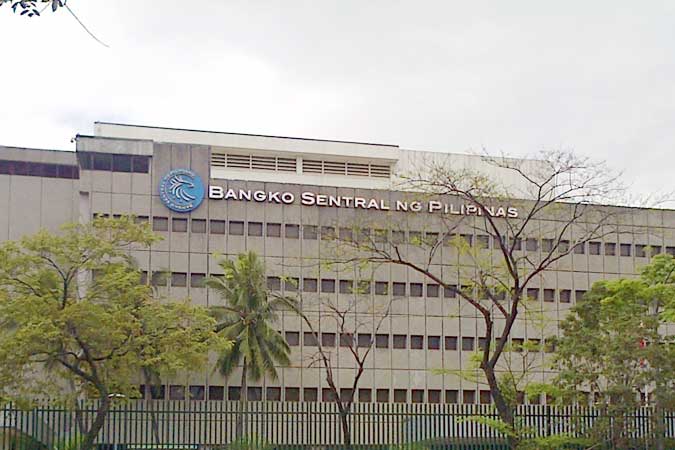
YIELDS on the central bank’s term deposits dropped after last week’s rate decision. — BW FILE PHOTO

YIELDS ON term deposits offered by the Bangko Sentral ng Pilipinas (BSP) dropped on Wednesday following the central bank’s surprise rate cut last week.

Demand for the central bank’s term deposit facility (TDF) reached P602.03 billion on Wednesday, surpassing the P460 billion up for grabs but lower than the P645.585 billion in tenders logged in last week’s auction.

Broken down, the one-week deposits attracted bids amounting to P193.53 billion, going beyond the P170 billion on the auction block but failing to beat the P230.855 billion in tenders recorded last week.

Lenders asked for yields ranging from 1.62% to 1.8%, a lower band than the 1.945% to 2.0095% margin logged a week ago. With this, the tenor’s average rate stood at 1.7479%, dropping by 23.34 basis points (bps) from the 1.9813% logged on Nov. 18.

Meanwhile, tenders for the 14-day papers hit P408.5 billion, higher than the P290-billion offering but also below the P414.73 billion in bids seen a week ago for the P190 billion auctioned off by the BSP.

Accepted rates ranged from 1.64% to 1.7925%, declining from the 1.9% to 2.0455% band logged the previous Wednesday. With this, the two-week paper’s average rate settled at 1.7326%, lower by 26.58 bps from the 1.9984% seen a week ago.

The central bank did not offer the 28-day term deposits for the seventh consecutive week. This follows the start of the central bank’s weekly auctions of its own bills with the same tenor.

The TDF and the BSP’s securities are among the central bank’s main tools to gather excess liquidity in the financial system and to better guide market interest rates.

Term deposit yields declined sharply this week due to the surprise rate cut fired off by the BSP, Rizal Commercial Banking Corp. Chief Economist Michael L. Ricafort said on Wednesday.

The BSP unexpectedly cut benchmark rates to new record lows last week, the fifth reduction this year, citing the continued uncertainty caused by a fresh surge in coronavirus cases globally and the impact of recent typhoons on the struggling economy.

The Monetary Board on Thursday trimmed the rates on the BSP’s overnight reverse repurchase, lending, and deposit facilities by 25 bps to 2%, 2.5%, and 1.5%, respectively.

The latest easing move followed a “prudent pause” by the central bank since its June meeting. The central bank has already cumulatively lowered interest rates by 200 bps this year.

A BusinessWorld poll showed five out of 16 analysts expected the BSP to cut rates by 25 bps.

The central bank upgraded its inflation forecast this year to 2.4% from the 2.3% it gave in the October meeting.

On the other hand, the inflation outlook for 2021 and 2022 were lowered to 2.7% (from 2.8%) and 2.9% (from 3%), respectively, due to the slower-than-expected pickup in domestic activity, the decline in global crude oil prices, and the strengthening of the peso.

Philippine gross domestic product declined by 11.5% in the third quarter, slightly better than the record 16.9% contraction seen in the April to June period. — LWTN

Cavite to evaluate validity of MacroAsia-China firm consortium agreement

THE provincial government of Cavite said on Wednesday, MacroAsia Corp. and its partner China Communications Construction Co. Ltd. (CCCC) have formally submitted their consortium agreement.

“We will evaluate the validity of their [consortium] agreement,” Cavite Gov. Juanito Victor “Jonvic” C. Remulla told BusinessWorld in a phone message.

Mr. Remulla also said the province targets to seal a joint venture agreement with the MacroAsia-CCCC consortium in December.

Cavite expects all issues “joined and settled in 21 days,” he noted.

“We still have PR issues to tackle. I’m going to be hit on all sides because there are other interested parties. I’m confident though that as long as I keep my nose clean and do the right things for the right reasons, good things will happen,” the Cavite governor said further.

The Cavite province initially targeted to break ground for the first phase of the airport project in the second quarter of the year.

The $4-billion first phase of the project covers the construction of a connector road and a bridge to connect the Kawit segment of the Manila-Cavite Expressway to the airport. It also involves the construction of the airport’s first runway.

The airport is rated at 25 million passengers yearly, and is intended to help decongest the Ninoy Aquino International Airport.

It is expected to be fully operational by 2023, with partial operations to start a year earlier. The fourth runway will be opened after six years.

The same consortium will work on the other two phases.

MacroAsia incurred losses of P269.44 million in the third quarter, a reversal of its profits a year ago, as the group’s core business segments “continue to be impacted by the downturn in air travel due to COVID-19-related quarantine and airport restrictions from March 2020 onwards,” the company said in a recent stock exchange disclosure.

In the same quarter last year, MacroAsia recorded an attributable net income of P300.05 million.

MacroAsia shares on Wednesday closed 5.90% lower at P8.13 apiece. — Arjay L. Balinbin

ADVERTISEMENT
ADVERTISEMENT