Home Blog Page 8742

Avocados are the ‘pandemic-proof’ crop in lockdown health craze
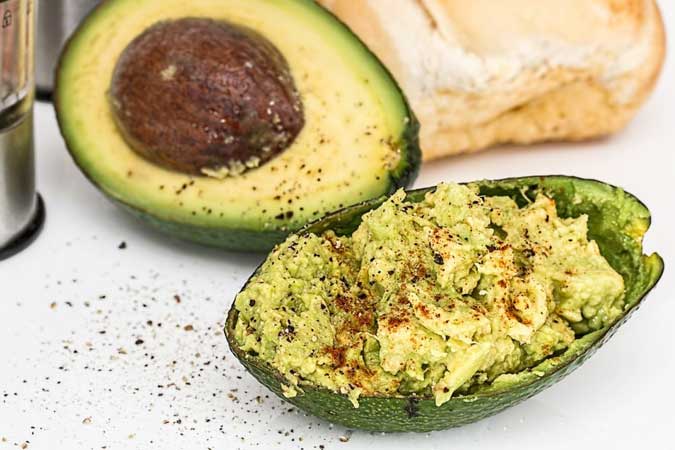
Demand for avocados has accelerated as more consumers eat at home. No longer just a component of guacamole for parties, its use has broadened to salads, burritos and, of course, the hipster cliche of avocado toast.

Health-conscious consumers are eating avocados like never before during the pandemic.

After a brief drop in demand at the start of the COVID crisis, European and US consumption are hitting record highs, according to Xavier Equihua, chief executive officer of the World Avocado Organization, a trade group.

“Consumption is off the charts,” Mr. Equihua said in an interview from California. “People want to eat healthy. The new luxury post-pandemic is going to be eating healthy, and wellness. Even the fashion industry is saying that.”

Demand for the fruit has accelerated as more consumers eat at home. No longer just a component of guacamole for parties, its use has broadened to salads, burritos and, of course, the hipster cliche of avocado toast. Europe’s consumption will jump 12% this year to a record 1.48 billion pounds, according to import data, while US demand will increase 7%, Mr. Equihua said, citing industry projections.

“It’s not only the millennials,” Mr. Equihua said. “They are now having kids and they are eating avocado, too. Gen Z also wants healthy food. We’re going to see a further explosion in the next six to eight years” when Europe may catch up to the top-consuming Americans, he said.

The value of global avocado imports grew the fastest among main fruits over the past decade, according to David Magana, senior analyst for Rabobank International. Global demand for Hass, the most popular variety, will grow at an annual rate of almost 5% through 2025, topping $8 billion globally, the Hass Avocado Board projects.

Luckily for consumers, bumper crops in Mexico and California, the top suppliers to the American market, brought prices down this year after a supply disruption in 2019 sent prices to record, Magana said. From 2010 to 2018, world output rose from 2.87 million tons to 6.4 million, with planted area nearly tripling, according to data from the United Nations’ Food and Agriculture Organization, which excludes Chile, an important producer.

While lower prices have helped demand, US market penetration has room to grow, according to Mr. Equihua. The average American eats 8 pounds a year, compared with Mexico’s 20 pounds, he said.

One of the main challenges for the industry remains to ensure that supply keeps up with demand, to avoid a surge in prices, while also addressing criticism that some countries are expanding production using non-sustainable practices for the environment, he said.

“We’re just scratching the surface in Europe, China, and other parts of Asia and Southeast Asia,” said Steve Barnard, chief executive officer at Mission Produce Inc., the world’s largest supplier, which owns packing facilities and grows fruit as well. “India is starting to explore avocado consumption and based on the population in those areas, the expansion and demand has huge opportunity for growth.”

To secure avocados year-round, the California-based company has been investing in countries such as Guatemala and Peru. Europe “presents a great opportunity and is one of the reasons to be in Guatemala” to support expansion, he said.

The company’s annual sales more than doubled over the past five years, which gives Mr. Barnard reason to be bullish even on China, where challenges remain. The company entered a partnership with a local importer and a fruit retailer, and their Mr. Avocado venture is the first and currently the only supplier of ripe avocados in the Asian giant.

“Chinese consumers are very attracted to the health benefits,” Mr. Barnard said. “Right now, China thinks of avocados as a smoothie and baby-food ingredient, whereas the US thinks of avocado toast and guacamole, so as the country continues to gain access and familiarize themselves with the fruit, consumption will continue to grow.” — Marvin G. Perez/Bloomberg


Moscow rolls out Sputnik V COVID-19 vaccine to most exposed groups

The age for those receiving the Sputnik V COVID-19 shot is capped at 60. People with certain underlying health conditions, pregnant women, and those who have had a respiratory illness for the past two weeks are barred from vaccination. Image via Reuters

MOSCOW — Moscow began distributing the Sputnik V COVID-19 shot via 70 clinics on Saturday to the most exposed groups, marking Russia’s first large-scale vaccination against the disease, the city’s coronavirus task force said.

The Russian-made vaccine will first be made available to doctors and other medical workers, teachers, and social workers because they run the highest risk of exposure to the disease.

“You are working at an educational institution and have top-priority for the COVID-19 vaccine, free of charge,” read a phone text message received by one Muscovite, an elementary school teacher, early on Saturday and seen by Reuters.

President Vladimir Putin has ordered a nationwide voluntary vaccination program to begin next week. He said Russia will have produced 2 million vaccine doses within the next few days.

The head of the Russian Direct Investment Fund (RDIF), Kirill Dmitriev, said in an interview with the BBC on Friday that Russia expects to give the vaccine to about 2 million people this month.

“Over the first five hours, 5,000 people signed up for the jab—teachers, doctors, social workers, those who are today risking their health and lives the most,” Mayor Sergei Sobyanin wrote on his personal website on Friday.

Russia has already vaccinated more than 100,000 high-risk people, Health Minister Mikhail Murashko said earlier this week during a separate presentation to the United Nations about Sputnik V.

Among the first people signing up to the Moscow roll-out, Nadezhda Ragulina, an administrator at a Moscow clinic, said she wanted the vaccine as she had witnessed many COVID-19 patients.

“This is my decision… Some people close to me also have had an experience (of COVID-19). That’s why I want to protect myself, my relatives, to obtain the immunity,” she told Rossiya-24 state TV channel.

Moscow, a city of around 13 million people, has been the epicenter of Russia’s coronavirus outbreak. It reported 7,993 new cases on Saturday, up from 6,868 the day before and well above the daily tallies of around 700 seen in early September.

The age for those receiving shots is capped at 60. People with certain underlying health conditions, pregnant women, and those who have had a respiratory illness for the past two weeks are barred from vaccination.

Russia has developed two COVID-19 vaccines, Sputnik V which is backed by the Russian Direct Investment Fund, and another developed by Siberia’s Vector Institute, with final trials for both yet to be completed.

Scientists have raised concerns about the speed at which Russia has worked, giving the regulatory go-ahead for its vaccines and launching mass vaccinations before full trials to test its safety and efficacy had been completed.

The Sputnik V vaccine is administered in two injections, with the second dose is expected to be given 21 days after the first.

Deputy Prime Minister Tatiana Golikova said on Friday that the vaccinated should avoid public places and reduce their intake of medicine and alcohol, which could suppress the immune system, within the first 42 days after the first jab.

Moscow closed down all public places including parks and cafes, with exception for delivery, in late March, with police patrolling the streets looking for whose violating the rules. Restrictions were eased from mid-June, however.

Russia as a whole reported 28,782 new infections on Saturday, its highest daily tally, pushing the national total to 2,431,731, the fourth-highest in the world.

In October, certain restrictions such as remote learning for some secondary school children and a 30% limit on the number of workers allowed in offices were introduced again. — Vladimir Soldatkin/Reuters

Cuddling in COVID: ‘Hug bubble’ lets seniors feel the magic of touch

The “hug bubble” allows care home residents, isolated from the outside world to protect them the virus, to hold hands and embrace visiting relatives, because at all times they are separated by a hermetically sealed plastic film.

JEUMONT, France — Since the COVID-19 outbreak, French care home resident Colette Dupas’s contact with her daughters has been limited to talking via video call, or through a window.

Now the 97-year-old has been able to feel their touch, thanks to an inflatable tunnel and two plastic sleeves.

The “hug bubble” allows care home residents, isolated from the outside world to protect them the virus, to hold hands and embrace visiting relatives, because at all times they are separated by a hermetically sealed plastic film.

Ms. Dupas ran a bakery in Boussois, 6 kilometers from the nursing home, until her retirement. Her family still runs the business.

When meeting her daughters on Friday, Ms. Dupas entered through one end of the tunnel. She stood in front of the plastic sheet and put her arms through two plastic sleeves stitched into the film at shoulder height.

Her daughters, Marie-Paule Dronsart and Marie-Joseph Marchant, approached from the other side. Each of them put one arm through a sleeve. They patted their mother’s shoulders and stroked her white hair.

Before leaving, they took turns to kiss their mother on the cheek through the plastic.

“It has brought comfort,” said Stephanie Loiseau, a nursing assistant at the care home in Jeumont, near the border with Belgium.

Before the bubble was installed at the home, she added, “residents would see their relatives through a window or through a camera and they were really missing having real contact”.

Once Ms. Dupas and her daughters left the bubble, a care home worker disinfected the plastic, ready for the next encounter: Fabienne Dewille meeting her mother, Raymonde Loire.

Ms. Dewille used the plastic sleeves to grip her mother’s hands. “It feels good to be able to meet like this, doesn’t it?” she said to her mother.  — Reuters

U.S. meats keeps the holidays alive in the new normal

Among the many things that 2020 has shed light on, the desire to come together and bond over great food has become even more apparent for people, especially now that the holidays are fast approaching.  And anyone who has celebrated Noche Buena or any festivities around this time knows that some of the best and most memorable dishes deal with delicious meat, be it your favorite glazed ham or those irresistible ribs.

Thankfully, these traditions don’t have to fade out as U.S. Meats bring in the holiday cheer with their special weekend booths on December 12 and 13, 2020 at Glorietta Activity Center as well as December  19 and 20, 2020 at The Block in SM North EDSA, and their continued presence in locals’ favorite restaurants.

Good Tidings to ‘Meat’ Your Christmas

There is something for everybody, as the delectable U.S. Pork and U.S. Beef are both available and can either be purchased from carrying grocery stores or in the form of dishes prepared by some of the best restaurants in the metro. These exported goodies are well-known for stringent food safety standards that have become even more valuable during these unprecedented times. They have prided themselves in high quality and guaranteed wholesomeness, which is something everyone deserves this Christmas.

For those looking to prep their own homemade meals in celebration of the holidays, U.S. Meats is available in groceries in the form of Johnsonville Sausages, SPAM, and Evergood Sausages. For those who like to go out and eat together at the mall, they can enjoy these premium Pork and Beef options at  Burgoo, Yabu, Soban K-town Grill, Marugame, Outback Steakhouse, Teriyaki Boy, Pepper Lunch, Big City,  Yoshinoya, TGIFriday’s, Number 1 Barbecues, Conti’s, and Jinjoo Korean Grill, among tons of restaurants. All of these restos are up and running, with the proper hygiene and distancing measures set in place to make sure every cheery get-together is safe and customers can focus on the celebration.

Customers should remember to keep those receipts for an extra treat, too, as U.S. Meats will be opening up booths at Glorietta and SM North Edsa – The Block on December 12-13 and 19-20, respectively. At these booths, anyone with a receipt worth at least P500 of U.S. Pork or U.S. Beef dishes from restaurants or U.S. meat products from supermarkets can hand them in and redeem a special holiday present. Any receipt from December 1 to 20 of 2020 will be eligible. There will also be a fun photobooth and menus that can inform visitors about other offers. These booths will have a health check and face mask and shield requirement for all who enter, will maintain social distancing guidelines, and provide a  designated sanitation area with all the necessary equipment.

This holiday season, celebrate with U.S. Meats with great gifts you can get whenever you buy dishes with premium U.S. Beef and Pork from December 1-20, 2020.

For those wondering about the exact quality, taste, and texture of their meat and for those pork and beef connoisseurs out there, U.S. Pork is known for its uniquely sweet taste and tender and juicy meat because of their U.S.-bred pigs fed with freshly sourced corn and soybean. U.S. Beef is well-marbled,  tender, and packs the juice because their cattle are fed on a nutritionally balanced high-energy diet consisting mainly of corn. All of these offers are graded and inspected by the U.S. Department of  Agriculture (USDA).


New COVID-19 cases below 1,000, lowest since Nov. 4

THE Department of Health reported 934 new coronavirus cases on Friday, the lowest since November 4 when it recorded 987.

Prior to early November, the last time the daily case record below 1,000 was in mid-July.

The country now has a coronavirus disease 2019 (COVID-19) tally of 436,345.

An additional 63 deaths were recorded, bringing the total fatalities to 8,509. There were 148 new recoveries for a total of 399,457, the department said.

Active cases are at 28,379 or 6.5% of the total recorded cases.

Of the active cases, 85.4% were mild, 6.9% were asymptomatic, 4.9% critical, 2.5% severe, and 0.28% were moderate.

VACCINE TRIAL
Meanwhile, local trials for COVID-19 vaccines will begin in January, according to the country’s vaccine panel.

“We may start by January, hopefully,” Department of Science and Technology Vaccine Expert Panel Chief Nina G. Gloriani said in a briefing Friday.

Five vaccine manufacturers applying for the conduct of phase 3 trials have submitted the initial requirements, to which the panel had already responded, according to Ms. Gloriani.

She added they are now waiting for the firms’ comments and other technical data such as results of phase 3 trials conducted abroad.

The five firms are: Sinovac Biotech Ltd., Clover Biopharmaceuticals, Gamaleya Research Institute of Epidemiology and Microbiology, Janssen Pharmaceutical Companies of Johnson & Johnson, and AstraZeneca plc.

“All of these vaccine developers are conducting their phase 3 trials and we want their interim data,” she said, noting that the panel prefers to see the technical dossier apart from the published results.

At the United Nations 31st Special Session on Friday morning, President Rodrigo R. Duterte pushed for the inclusion of poor and developing countries
in vaccine access as nations race to obtain limited supplies.

“Life-saving services and products must be made accessible to the most vulnerable: the most to the least,” he said at the virtual event.

“If any country is excluded by reason of poverty or strategic unimportance, this gross injustice will haunt the world for a long time,” he said. — Gillian M. Cortez

Gov’t lifts total ban on conferences, workshops

CONFERENCES, workshops and other similar activities are now allowed in areas under the general quarantine level, a move that will help boost the battered tourism sector.

“While the pandemic has taught organizers to embrace technology, some gatherings in a physical set-up can now proceed, with health and safety protocols in place. We are optimistic that the country’s MICE (Meetings, Incentives, Conferences Exhibitions) sector shall start to thrive again,” Tourism Secretary Bernadette Romulo-Puyat said in a statement on Friday.

Under the eased policy approved by the national task force against the coronavirus, “workshops, trainings, seminars, congresses, conferences, board meetings, colloquia, conclaves, symposia, and consumer trade shows” can be held at a maximum 30% capacity of the venue.

Allowed venues under Resolution No. 87 are “restaurants, in general; restaurants attached to hotels; ballrooms and function halls within hotels; venues within hotel premises; and mall atria.”

Ms. Puyat noted that social events such as birthdays, weddings, Christmas and office parties, pageants, award events, gala receptions, product launch, political gatherings, cultural festivities, and sporting events “are not covered” by the new resolution.

Task Force and Palace Spokesperson Harry L. Roque said the Department of Tourism and the Department of Trade and Industry will issue joint guidelines on the conduct of these events.

The Management Association of the Philippines welcomed the government’s decision, citing its benefit to the economy.

“It is consistent with the government’s desire to return to normalcy. It will lend a helping hand to the hotel and accommodation industry, which is highly impacted by the pandemic,” the group said in a statement on Friday signed by its president, Francis E. Lim.

MONITORING

Meanwhile, the police is deploying more officers in Metro Manila to help ensure the enforcement of health protocols as the holidays draw near and more people are going out of their homes.

“We are focusing on areas of convergence such as markets, public markets, malls, churches, and ports, sea ports, and public transportation,” Police Deputy Chief of Staff Cesar R. Binag, speaking in Filipino, said in a briefing Friday.
Mr. Binag, who is also the Joint Task Force COVID Shield chief, said they are also in talks with the management of shopping malls to strengthen protocols.
Coronavirus cases in the capital region has been on a decline, but it remains one of the country’s epicenters of the outbreak. — Gillian M. Cortez

Transport dep’t signs usufruct agreement for 5 DND properties for Metro Manila Subway project

THE Transportation department and the Department of National Defense (DND) on Friday inked a usufruct agreement covering five properties of the latter, which will be partly used for the Metro Manila Subway project.

Under the agreement, the DND properties that would be expropriated are the Veterans Memorial Medical Center and Golf Course, the AFP Medical Center (formerly known as the V. Luna Hospital), Camp Aguinaldo, Fort Bonifacio, and Villamor Air Base.

These real estate assets will become sites of five of the planned 17 subway stations as well as used for interstation tunneling works and temporary works during construction.

Transport Undersecretary for Railways Timothy John R. Batan, in his speech at the event, said the partnership between the two departments “will contribute to the fast and sure delivery of one of the boldest and most ambitious projects in the Duterte Administration’s Build Build Build Program.”

Defense Secretary Delfin N. Lorenzana and Transport Secretary Arthur Tugade led the signing.

Mr. Batan said the Transport department would pay the DND a recurring annual usufruct fee of 10% of latest zonal value and 5% of gross non-farebox revenues for the subway stations at its properties.

The project, the first subway in the country, will span 34 kilometers from Valenzuela City to the NAIA airport Termina 2.

The flagship project is funded through official development assistance from Japan.

Partial operations is targeted by end-2021 and full project completion is expected by 2025. — Angelica Y. Yang

Anti-corruption task force approves guidelines to speed up complaints processing

THE Department of Justice (DoJ)-led Task Force Against Corruption has approved the guidelines on dealing with corruption-related complaints filed against officials of government agencies and local government units, Justice Secretary Menardo I. Guevara said Friday.

With the approval of the guidelines, the task force operations center is expected to process complaints and reports on corruption more efficiently, Mr. Gueverra told reporters in a Viber group message.

Mr. Guevara also said several agencies have already crafted and strengthened their “internal anti-corruption mechanisms.”

He added that “the more significant complaints so far received from various sources” has been presented to the task force.

Mr. Guevara also said that the Office of the Ombudsman, Commission on Audit, and DoJ have agreed “to explore further the idea of deputizing DoJ prosecutors and CoA auditors as resident ombudsmen in certain corruption-prone agencies.”

President Rodrigo R. Duterte ordered the creation of the task force in October as he called for a “total campaign against corruption.” — Kyle Aristophere T. Atienza

Human rights group Karapatan files charges vs gov’t officials

HUMAN rights group Karapatan on Friday filed criminal and administrative charges against several government officials for allegedly maligning and red-tagging the alliance’s officers and members.

The complaint filed before the Office of the Ombudsman names the following: National Security Adviser Hermogenes Esperon Jr.; General Antonio, Parlade Jr., head of the National Task Force to End Local Communist Insurgency; Overseas Workers Welfare Administration Deputy Executive Director Mocha J. Uson, a former undersecretary of the Presidential Communications Operations Office; and Presidential Communications Undersecretary Lorraine Marie T. Badoy.

The 40-page complaint cites various instances when the respondents allegedly committed “acts that malign, vilify and baselessly red-tag KARAPATAN’s officers and members.”

The complaint said the respondents’ red-tagging of Karapatan Secretary General Cristina Palabay, the group itself, and its members and officers violates the principle of distinction under international and domestic humanitarian law.

The charges are based on provisions of Republic Act (RA) No. 9851 or the Philippine Act on Crimes Against International Humanitarian Law, Genocide, and Other Crimes Against Humanity, and the Ombudsman Act of 1989. — Kyle Aristophere T. Atienza

DoJ wants De Lima, lawyer cited in contempt for talking about trial

THE Department of Justice (DoJ) on Friday filed a motion asking the court to cite detained Senator Leila M. De Lima and her lawyer in contempt over public statements on trial proceedings.

The prosecutors said Ms. De Lima and her lawyer Filibon F. Tacardon violated the sub judice rule, which prohibits parties from discussing trial proceedings.

“The media disclosure by respondents Atty. Tacardon and Senator De Lima of misinformation is therefore considered an affront to the lawful proceedings of the Honorable Court, in their obvious desire to attack or insult the dignity and independence of the Court,” the DoJ said in its 39-page petition filed before the Muntinlupa Regional Trial Court, where Ms. De Lima faces three drug-related cases.

The contempt suit is rooted in Mr. Tacardon’s press releases and statements from September to November, which gave the media access to the testimonies regarding the trial proceedings.

The prosecutors cited the instance where Mr. Tacardon indicated in a public statement that Anti Money Laundering Council financial investigator Artemio L. Baculi Jr. and Philippine Drug Enforcement Agency digital forensic examiner Krystal R. Caseñas told the court that “they did not find any transactions between the senator and the drug lords held at the national penitentiary.”

Such is an “affront to the lawful proceedings” of the court in their “obvious desire to attack or insult” the court’s independence,” they said.

The DoJ said reporters who wrote articles regarding Mr. Fabela’s statements will be presented as witnesses “should the instant petition be given due course.” — Kyle Aristophere T. Atienza

Bill on standard, higher wages for media workers gets House committee approval

A COMMITTEE report on the proposal seeking to give a minimum monthly compensation and additional insurance benefits for media industry workers was approved Friday by the House of Representatives committee on labor and employment.

House Bill No. 2476 or the Media Workers’ Welfare Act guarantees security of tenure for media workers and mandates a P40,000 monthly salary for field reporters who have worked for at least three years. Their monthly minimum wage would gradually increase up to ₱60,000, the bill stated.

Columnists and writers shall be paid at least ₱25,000 to ₱45,000, depending on their experience.

Various media workers, meanwhile, shall be paid at least ₱20,000 to ₱60,000, depending on experience.

Under the bill, all media workers who are assigned to cover dangerous and hazardous events or situations shall be given an additional ₱500 daily pay.

“They will be provided with bullet proof vests and helmets and medical grade personal protective equipment during hazardous coverages,” ACT-CIS Party-list Rep. Nina O. Taduran said in a statement Friday.

The bill also requires private sector employers to give a P200,000 death benefit for media workers who died in the line of duty; up to P200,000 disability benefits for a worker who was injured in the line of duty; and reimbursement of up to P100,000 medical expenses incurred in the line of duty.

The proposed law also creates the Commission on Press Freedom and Media Security under the Presidential Communications Operations Office, which would be responsible for setting up a database of all media workers, conduct training and seminars, and crafting and lobbying for media laws.

Senate President Vicente C. Sotto III has filed a counterpart bill. — Kyle Aristophere T. Atienza

Inflation picks up in November, fastest in 21 months

The overall year-on-year increase in prices of widely used goods accelerated to its fastest pace in 21 months in November, the Philippine Statistics Authority (PSA) reported on Friday.

Preliminary PSA data showed headline inflation at 3.3% last month, picking up from 2.5% in October and 1.3% in November 2019.

The latest inflation result was the fastest pace in 21 months or since the 3.8% reading in February 2019. It also matched the 3.3% print in March 2019.

The latest headline figure is higher than the 2.7% median in a BusinessWorld poll conducted late last week, and exceeds the 2.4%-3.2% estimate given by the Bangko Sentral ng Pilipinas (BSP) for November.

Year to date, inflation settled at 2.5%, still within the BSP’s 2-4% target as well as the 2.4%-2.6% projection range by the Development Budget Coordination Committee for this year.

Core inflation, which discounted volatile prices of food and fuel, stood at 3.2% in November, picking up from three percent the previous month and 2.6% a year earlier. It averaged 3.1% so far this year.

The PSA attributed the pickup primarily to the heavily weighted food and non-alcoholic beverages, which accelerated at an annual rate of 4.3% in November from 2.1% in October.

The alcoholic beverages and tobacco index likewise contributed to the increase with a 12.3% year on year growth in November compared with 11.3% in October.

Inflation on food items likewise picked up to 4.5% in November from 2.1% the previous month. The PSA noted a double-digit annual increase of 14.6% in vegetables following an annual drop of 0.5% recorded in the previous month.

Other food groups that posted faster annual increases include meat (8.2% from 4.7%), fish (5.3% from 3.7%), fruits (5.6% from 4.6%), and sugar, jam, honey, chocolate, and confectionery (0.4% from 0.2%).

Similarly, the November inflation for the bottom 30% of households picked up to 3.6% from 2.9% in October and 0.7% in November 2019. The inflation rate for this segment was the fastest since the 4.3% reading in February 2019.

Despite decelerating to 7.6% in November from 7.9% a month earlier, the transport index was considered to be among the top contributors to November headline inflation along with agricultural products, according to the National Economic and Development Authority (NEDA).

“This is due to the restrictions on public transport as a result of COVID-19 (coronavirus disease 2019), persistence of African Swine Fever, and damage and losses in high-value crops following the onslaught of several typhoons and flooding in November 2020,” NEDA said in a statement.

“[I]nflation for transport services has remained elevated in the last six months, as a result of social distancing directives and reduced passenger capacities in all modes of public transport,” the NEDA statement further read.

In a Viber message to reporters, BSP Governor Benjamin E. Diokno regarded the November inflation result as “transitory.”

“[I]nflation is expected to settle within the government’s target range of [2-4%] for 2020-2022 as the impact of supply disruptions due to recent typhoons is expected to be largely transitory,” Mr. Diokno said.

Sharing Mr. Diokno’s view on the matter, University of Asia and the Pacific Senior Economist Cid L. Terosa expects the Monetary Board to consider the inflation rate for November as a “footnote or ancillary piece of information” in its final meeting this year on Dec. 17.

Moreover, Mr. Terosa said holiday spending this year will be “more cautious and controlled” given uncertainties brought by the pandemic.

“Inflation will definitely show faster, but manageable rates next year when economic and business activities begin to more confidently perk up, which will depend on clear and unequivocal signs that the pandemic can be managed and controlled,” said Mr. Terosa.

For his part, JPMorgan research analyst Milo Gunasinghe said that the cumulative 200 basis point policy rate cuts by the central bank have likely run their course.

“While the jump in today’s inflation print will likely keep the BSP on hold for the remainder of this year, we think that the November statement means the policy stance will remain accommodative in 2021, although its impact may likely be limited, in our view,” he said in a note sent to reporters.

Security Bank Corp. Chief Economist Robert Dan J. Roces said inflation is expected to pick up by December.

“[T]he quicker inflation print and likely demand-pull during the holiday season could weigh against further rate cuts, and the central bank will likely pause when it meets for the last time this year… and assess the general direction of price growth, and the policy transmission of its recent actions,” Mr. Roces said in a separate e-mail. — Jobo E. Hernandez with inputs from Luz Wendy T. Noble

ADVERTISEMENT
ADVERTISEMENT