Home Blog Page 8715

NBA transactions

“I want to retire a Clipper,” a seemingly committed Paul George said in front of the assembled media the other week. His disclosure didn’t raise eyebrows. Quite the opposite, in fact; he had made similar pledges of loyalty during his time with the Pacers and Thunder, so the reaction to his latest vow was tepid at best. He had been there and done that, and even casual observers knew his actions to be far more revealing than his words. It likewise didn’t help that he played poorly in the immediate past playoffs, after which he went about pointing fingers at everybody but himself in defense of his underwhelming effort.

Well, guess what? Six days after George expressed his wish, he took the logical next step to fulfill it. He signed a contract extension that kicks in after the 2020-21 season and is slated to keep him with the Clippers until 2025. He didn’t need to do so; he could have instead waited things out to see if fellow max player Kawhi Leonard re-upped, thus getting a better handle on his prospects. That he didn’t speaks volumes of his mindset moving forward. And, now, he has cause to clap back at critics who hitherto pegged his talk to be cheap. His walk isn’t, he can argue with reason, and not simply because he’s getting a whopping $190 million through the four years he has tacked on to his existing deal.

There are just two problems, though. First, George is who he is. Merely lengthening the duration of his contract isn’t in and of itself a guarantee that he will stay. He did the same while with the Thunder two and a half years ago, only to wind up lasting a single season before bolting for the door. Second, the Clippers are who they are. Merely agreeing to lengthen the duration of his contract isn’t in and of itself a guarantee that they will keep him. They did the same for supposed cornerstone Blake Griffin three and a half years ago, only to wind up shipping him out six months later.

In short, all parties at the negotiating table were well aware that they engaged in a transaction; nothing more, nothing less. George and the Clippers may have thought — even believed — then that they were consummating a partnership for life, but they’re not stupid. Anything can happen in the National Basketball Association, and it would be foolhardy of them not to reassess their respective positions when, and every time, the need arises. Which is why the extension is as much for show as it is for dough.

The hope, of course, is that George will use his upgraded deal as motivation to step up and perform under pressure, and that the Clippers will see the value of their investment. And perhaps it may spur Leonard, their real target, to opt to stay for the long haul as well. If the best-laid plans go awry, however, all and sundry can easily pivot to another position and act accordingly. No judgments are being made in this regard; reality is what it is. Playoff P is the ideal. Pandemic P is a constant threat. The P who will rear his head in the crunch figures to determine the future.


Anthony L. Cuaycong has been writing Courtside since BusinessWorld introduced a Sports section in 1994. He is a consultant on strategic planning, operations and Human Resources management, corporate communications, and business development.

Vaccine ‘D-day’ set to start in US

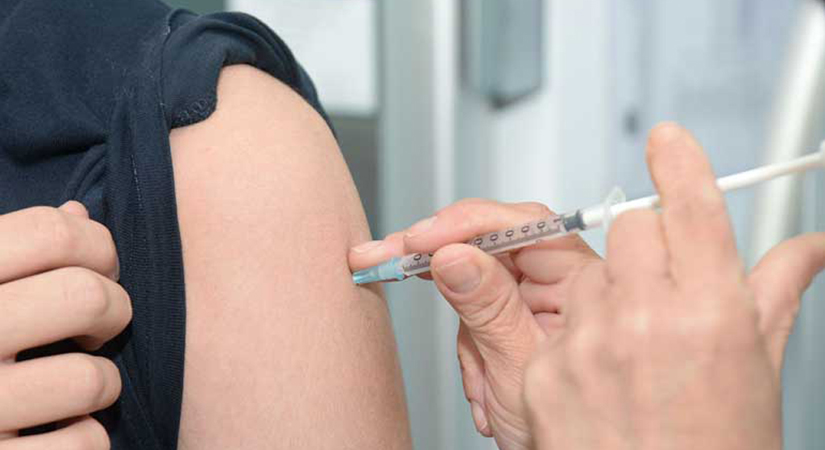
THE FIRST coronavirus disease 2019 (COVID-19) vaccine arrived in record time, an essential step toward ending the pandemic. Now comes the hard part: producing enough shots to immunize the majority of the US population and then getting them into everyone’s arms by next summer.

If successful, the plan could help end a pandemic that’s killed almost 300,000 Americans in the 47 weeks since the first case was recorded. On Saturday, Gustave Perna, the army general who serves as chief operating officer for Operation Warp Speed, said the first doses of the Pfizer, Inc.-BioNTech SE vaccine will be delivered on Monday. The initial delivery will be completed in all 50 states by Wednesday, he said.

It’s an enormous, historic undertaking that’s already been marked by confusion and uncertainty. As late as Friday, some states were saying they weren’t sure how many doses they’ll get. There have also been questions about whether the US has ordered enough shots to meet its ambitious distribution schedule moving into 2021.

“We are not taking a victory lap,” Mr. Perna said in a news briefing Saturday. “We know that the road ahead of us will be tough. We know that situations will occur, but we will figure it out together, collectively, a whole-of-America approach to solve the problems.”

Mr. Perna, dressed in battle fatigues and speaking alone without any preamble from political appointees, compared the moment to D-Day, the Allied invasion of France that marked the turning point in Europe in World War II. “D-Day was the beginning of the end,” he said. “And that’s where we are today.”

The Pfizer shot — and a similar vaccine from Moderna, Inc. that is just a week away from a decision on emergency authorization — will be in short supply initially.

Only 2.9 million doses of the Pfizer vaccine will be delivered in the first shipment, a fraction of what’s needed to vaccinate health-care workers and nursing home residents, who are atop the priority list. Another 2.9 million are being held back to ensure that the second dose, to be given 21 days later, will be available for people who get the first round. Additionally, half a million are being held as an emergency reserve.

‘ULTIMATE CONFIDENCE’
The government is holding up the second dose “just until we have ultimate confidence, and we’ve built up stocks to ensure that we can get the American people a second dose,” Mr. Perna said, adding that he expects both doses could start to be sent out together in mid-January or February.

Complicating the distribution is that the Pfizer vaccine must be stored at ultra-cold temperatures of 94 degrees below zero Fahrenheit until a few days before use. Pfizer has developed special dry-ice containers to make it easier to store for facilities that don’t have the needed equipment.

“Make no mistake,” Mr. Perna said, “distribution has begun,” with 40 million doses available by the end of the month if Moderna’s vaccine is authorized alongside Pfizer’s. “Right now, boxes are being packed and loaded with vaccine,” he added, with the shots set to start rolling out from manufacturing to distribution hubs on Sunday.

Pfizer’s vaccines will be delivered directly to individual facilities identified by the states, Mr. Perna said, with 145 sites set to receive their doses on Monday, 425 on Tuesday and the final 66 sites on Wednesday. He said all states now know how much vaccine they’ll get.

The vaccines weren’t prepositioned, he added, because the operation did not want to begin moving the shots before the US Food and Drug Administration (FDA) approved emergency authorization for the Pfizer-BioNTech shot late Friday.

Each week that follows, “we will have more doses ready for allocation and distribution,” Perna said. “We know that we are not done. We are not done until every American has access to the vaccine, until every American that wants it receives it. This is our only goal.”

The first steps toward delivering the Pfizer-BioNTech vaccine come as an advisory panel to the Centers for Disease Control (CDC)  and Prevention recommended on Saturday that all Americans age 16 and over get vaccinated, helping clear one of the final hurdles before vaccinations can begin in the US.

The CDC advisers urged care providers to monitor people with a history of anaphylaxis, or allergic reactions, for 30 minutes after giving them a shot. They also said pregnant women, lactating women and immunocomprised people can decide whether to get a vaccine despite the lack of specific data on how it performs in those groups.

The advisory panel also urged more support for vaccine distribution, expressing alarm at how few dollars have been allocated for the rollout, compared with the amount of money the federal government invested in researching and manufacturing.

‘ONLY GOAL’
Many states plan to simultaneously deliver shots to front-line health-care workers and long-term health care facilities, Mr. Perna said.

In Virginia, Cindy Williams, vice president and chief pharmacy officer at Riverside Health System, woke around 3 a.m. Saturday to check whether the FDA had issued Pfizer’s emergency use authorization (EUA). She went to sleep before Friday night’s announcement and started working once she saw the news.

Williams read the order and the informational materials that accompanied it so she could finalize the documents Riverside plans to print Monday ahead of its test run. “It’s almost that final, final preparation,” she said.

Riverside plans to use Monday’s test to ensure it’s ready. As of now, Riverside expects to start vaccinating workers on Wednesday.

The health system ordered one container filled with three trays each holding 975 doses, meaning the system of about 10,000 employees should be able to give 2,925 workers the first shot of the two-dose regimen in the coming week. The shipment will arrive at one hospital and two trays will stay there. The third will be split up into smaller quantities and shared among Riverside’s other facilities.

Kits filled with supplies needed to administer the vaccine, including needles and syringes, arrived from McKesson Corp. on Thursday, Williams said.

Operation Warp Speed aims to have enough doses to inoculate 20 million Americans by the end of December, 50 million by the end of January, and 100 million total by the end of March. Alex Azar, the US Health and Human Services Department chief, has said there will be enough supply for any American who wants a vaccine by the end of the third quarter of 2021.

As other vaccines encountered problems, however, it has placed more pressure on the US to vaccinate larger swaths of their population with the two messenger RNA vaccines that have shown the best results — the Pfizer vaccine and a similar one from Moderna Inc. that is likely to be cleared next week.

Because mRNA has never been used in an approved product, mass scale production is just gearing up now, and it is uncertain how quickly mRNA vaccine makers can meet the demands of the world.

Large scale US trials of two other vaccines, from Johnson & Johnson and AstraZeneca Plc are ongoing. But those vaccines aren’t likely to hit the US market until around February. Meanwhile, late stage trials of vaccines using more standard technology — from both Novavax Inc. and another from Sanofi and GlaxoSmithKline PLC — have been delayed.

The US already has ordered 100 million doses of the Pfizer vaccine, enough for 50 million people, but the two sides have been wrangling over how quickly when the US can get more. Pfizer has indicated that it will honor commitments to many other countries.

On Friday, the US government exercised an option to order 100 million additional doses of the Moderna vaccine, in addition to the 100 million doses it had previously contracted for. The additional doses will start arriving in April.

Operation Warp Speed has said the doses will be allocated to states according to their share of the adult population. Officials haven’t publicly detailed how many doses each state will get, though some have published estimates of how many they expect.

In most that have, the number expected in initial shipments amounts to about 1% of their adult populations.

Pennsylvania’s allotment “is still fluid,” Rachel Kostelac, a spokeswoman for the state health department, said in an email late Friday afternoon. The Oregon Health Authority described a “rapidly changing situation” with several different estimates of vaccine allocations provided by the federal government in the last week.

“We know we will continue to adjust our numbers as new information about shipments becomes available,” spokesman Jonathan Modie said in an email Friday. — Bloomberg


Pope commits Vatican to achieve zero carbon emissions in 30 years

VATICAN CITY — Pope Francis urged countries on Saturday to work towards net zero carbon emissions and committed Vatican City — the world’s smallest state — to reaching the target by 2050.

Francis, who has championed environmental causes since his election in 2013, told a UN climate summit the 108-acre (44-hectare) city-state surrounded by Rome would be doing its bit to fight climate change.

“The current pandemic and climate change, which are not only environmentally relevant, but also ethically, socially, economically and politically, affect, above all, the lives of the poorest and most fragile,” he said in a video message to the summit.

“In addition to adopting some measures that cannot be postponed any longer, a strategy is needed to reduce net emissions to zero,” Pope Francis said.

He committed the Vatican “to reducing net emissions to zero by 2050,” as well as intensifying environmental management efforts and furthering the rational use of natural resources such as water and planting more trees.

A Vatican statement said the city-state was moving ahead with plans to substitute all its combustion engine cars with electric or hybrid vehicles.

It said the Vatican, which began installing solar panels in 2008 and banned single-use plastic bags last year, was now recycling 65% of its waste and aimed to reach 75% in 2023.

In his address, Pope Francis said the Holy See was committed to promoting, in Catholic schools and elsewhere, “an education for integral ecology” to favour development and sustainability and encourage economic policies that respect the environment.

In 2015, Pope Francis wrote a landmark encyclical Laudato Si (Praised Be) on the need to protect nature. It backed scientific evidence that human activity was to blame for global warming.

Pope Francis also strongly backed the Paris agreement to limit the global rise of temperatures and has said he was saddened by US President Donald Trump’s decision to withdraw from it. — Reuters

Peru suspends Sinopharm COVID-19 vaccine trial after ‘adverse event’

LIMA — Peru suspended trials for China’s Sinopharm coronavirus disease 2019 (COVID-19) vaccine due to a “serious adverse event” that occurred with one of the volunteers for the study, the Peruvian government said in a statement on Saturday.

The health ministry said the event is “under investigation to determine if it is related to the vaccine or if there is another explanation.”

Sinopharm Group Co Ltd., which is conducting its trials in Peru with some 12,000 volunteers, was about to complete the first stage of the trials in the next few days. Some 36,544 people have died so far in Peru from the coronavirus pandemic.

“The decision to temporarily suspend clinical trials is a safety measure contemplated in the regulations for clinical trials and protocols established to protect the health of research subjects, the health ministry said in the statement.

German Malaga, chief researcher at the local Cayetano Heredia University, which is involved with the study, said one volunteer had experienced decreased strength in his legs among other symptoms. — Reuters

Sweden’s COVID workers are quitting in dangerous numbers

Sweden faces a shortage of health-care workers as the number of resignations ticks up after a relentless year of caring for COVID patients.

Sineva Ribeiro, the chairwoman of the Swedish Association of Health Professionals, says the situation is “terrible.”

Even before the first wave of the pandemic back in March, there was “a shortage of specialist nurses, including at ICUs,” she said in a phone interview.

The development shows that even countries with universal health-care systems are now struggling to keep up with the COVID crisis. This week, Stockholm’s intensive care capacity hit 99%, sending the city into a panic and prompting calls for outside help.

But even if more ICU beds are provided, the bigger concern now is whether Sweden has enough health-care workers with the skills needed to look after the country’s sickest patients.

Ms. Ribeiro says that already back in May, members of her union “warned of an untenable situation.” There are fewer qualified people available now than there were in the spring, “which makes it harder to expand ICU capacity,” she said.

Health-care professionals have emerged as the heroes of the COVID crisis, often drawing cheers from grateful onlookers as they emerge from hospitals after long and grueling shifts.

But increasingly, staff are so desperate for some real time off that they see resignation as the only way out, Ms. Ribeiro said. A survey by broadcaster TV4 showed that in 13 of Sweden’s 21 regions, resignations in the health-care profession are now up from a year ago, at as many as 500 a month.

THE ARMY
Stockholm County Mayor Irene Svenonius says the situation is “extremely tense.” In an interview with Dagens Nyheter on Friday, she acknowledged that health-care workers are overworked, and that there’s a need to add staff. “There’s fatigue,” she said. “You can’t ignore that, so it’s extremely important to get more people.”

It’s uncertain where that extra capacity will come from. Stockholm has asked for additional health-care staff from Sweden’s armed forces, but it’s not clear the military has the resources to help. In the meantime, over 100 staff from a children’s hospital have reportedly been redeployed to intensive care units, meaning that children who had been due to receive non-emergency surgery will now be forced to wait.

Sweden, which has avoided a lockdown since the pandemic started, is also turning to other Nordic countries for help. On Saturday, neighboring Finland said it’s ready to assist by freeing up space for Swedish ICU patients.

The worry is that, despite scientific strides that allow medics to better understand and treat COVID-19, there aren’t enough professionals left to put that knowledge into practice.

“We don’t have the staff to do it,” Ms. Ribeiro said. She described the current health-care crisis facing the country as “unprecedented.”

NURSE’S PAY
Part of the problem is that nurses in particular are increasingly unwilling to subject themselves to the hours and conditions facing them during the COVID crisis, given the average pay level. Sara Nordin, once an assistant nurse at an intensive care unit, told Bloomberg in October that she quit because she couldn’t make ends meet on the $33,600 basic pay she got a year.

“I talked to members in August who said they would resign because it was the only way to get some time off and recover,” Ms. Ribeiro said. “We see high rates of sickness, symptoms of exhaustion, and members who have been infected.”

For Sweden, the danger now is that more people will die because there aren’t enough qualified health-care professionals left to look after them.

“In a work environment where you are so tired, the risk of mistakes increases,” Ms. Ribeiro said. “And those mistakes can lead to patients dying.” — Niclas Rolander/Bloomberg

First US shots in COVID-19 vaccine campaign coming Monday, Army general says

The United States on Friday evening granted an emergency use authorization for the vaccine for people aged 16 and older. The immunization was 95% effective in preventing COVID-19 in a late-stage trial.

The first shots in a massive US COVID-19 vaccine campaign will be administered as early as Monday, with Pfizer Inc. and partners aiming to start shipments across the hard-hit country on Sunday, an Army general organizing the rollout said.

Healthcare workers and elderly people in long-term care facilities are expected to be the main recipients of the first wave of 2.9 million shots this month, with healthcare worker inoculations as soon as Monday and nursing home residents by the end of next week, US Army General Gustave Perna said on a Saturday press call.

Despite months of preparation, distributing and administering the vaccine to as many as 330 million recipients poses a major logistical challenge, he said. The vaccine has complex shipping requirements and must be stored at -70 degrees Celsius.

“We have a lot of work to do. We are not taking a victory lap. We know the road ahead of us will be tough,” Mr. Perna said.

Pfizer’s vaccine was authorized for use by US regulators on Friday. Cases are surging in the United States, with thousands of deaths per day, while hospital intensive care units across the country are nearing capacity. More than 295,000 Americans have died of COVID-19.

Doses of the vaccine from US-based Pfizer and German partner BioNTech will be delivered to 145 locations around the country on Monday, Mr. Perna said.

The remainder of the 636 delivery locations selected by US states and territories will receive doses on Tuesday and Wednesday, he said, adding that every week going forward Pfizer will have more doses ready for distribution and administration.

Within three weeks, the vaccine program known as Operation Warp Speed should be able to get Pfizer’s shots to any healthcare facility in the country, Mr. Perna said.

Pfizer is working with logistics companies United Parcel Service Inc. and FedEx Corp. to distribute the vaccines. They must coordinate deliveries of doses with shipments of other products needed to store and administer vaccines, such as syringes, dry ice, and protective equipment for healthcare workers.

“The final mile is going to be the most difficult. Once it hits the hospital or nursing homes, they also have to keep the vaccine under temperature control,” said Cathy Morrow Roberson, a logistics consultant and former UPS analyst.

“This massive clock is ticking, there is no room for error,” she added.

More US residents will be eligible in January, when those in the highest priority populations are expected to have had an opportunity to receive a vaccine.

With distribution imminent, top regulators sought to reassure Americans that the record fast pace was warranted and had not sacrificed safety.

“We worked quickly based on the urgency of this pandemic, not because of any other external pressure,” US Food and Drug Administration Commissioner Stephen Hahn said during a press conference earlier in the day.

The United States on Friday evening granted an emergency use authorization for the vaccine for people aged 16 and older. The immunization was 95% effective in preventing COVID-19 in a late-stage trial.

It is the first COVID-19 vaccine authorized in the United States. Britain, Canada, and three other countries have already authorized the vaccine.

The Trump administration has poured billions of dollars into developing vaccines and will manage the distribution and allocation to states. Authorities have said general availability of the vaccine is expected by April.

An advisory group to the US Centers for Disease Control and Prevention voted Saturday to recommend the vaccine for patients 16 and over.

The FDA said the vaccine is safe for most Americans with allergies despite reports of severe adverse reactions in the UK in two patients who had a history of serious allergies. — Michael Erman and Carl O’Donnell/Reuters

UN chief urges leaders of every country to declare ‘climate emergency’

With the impacts of climate change increasingly stark since the Paris deal was struck—ranging from wildfires in Australia (pictured) and California to collapsing ice sheets—popular pressure has grown on leaders to listen to warnings from scientists. Image via GLEN MOREY/VIA REUTERS

LONDON/BRUSSELS — United Nations (UN) Secretary-General Antonio Guterres called on every country to declare a “climate emergency” on Saturday, as world leaders marking the fifth anniversary of the Paris climate accord made mostly incremental pledges relative to the scale of the crisis.

Mr. Guterres made his call at a summit aimed at building on momentum behind the Paris deal, buoyed in recent months by renewed commitment from China and the prospect of US President-elect Joseph R. Biden bringing the United States back into the pact.

Nevertheless, the dozens of leaders who spoke mostly offered tweaks to existing commitments or promises of bolder moves before crucial talks in Glasgow in late 2021, rather than breakthrough new policies to hasten the end of fossil fuels.

“Can anybody still deny that we are facing a dramatic emergency?” Mr. Guterres, a former Portuguese prime minister who has made climate change his signature issue, said via video.

“That is why today, I call on all leaders worldwide to declare a State of Climate Emergency in their countries until carbon neutrality is reached.”

With the impacts of climate change increasingly stark since the Paris deal was struck—ranging from wildfires in Australia and California to collapsing ice sheets—popular pressure has grown on leaders to listen to warnings from scientists.

Britain, co-hosting the summit, made one of the clearest new commitments, announcing late on Friday it would stop direct government support for overseas fossil fuel projects.

Campaigners hailed the move for putting pressure on other G7 economies to restrict support for oil and gas companies.

Renewed pledges to back Paris from countries such as India, Germany and France were welcomed less in terms of substance and more for keeping alive hopes of faster action to meet the monumental challenge of halving global emissions by 2030 in line with the Paris deal.

DISAPPOINTMENT ON COAL
Chinese President Xi Jinping, who surprised many in September when he announced the world’s biggest producer of climate-warming emissions would become carbon neutral by 2060, and unveiled targets to speed the expansion of wind and solar power.

“China always honors its commitments,” Xi said.

But China showed no signs of bowing to calls from Guterres and campaigners to wind down finance for new coal-fired power plants, a major source of emissions.

Japan and South Korea, which both pledged in October to reach net-zero emissions by 2050, likewise made no commitments on coal finance—though they did pledge to submit more ambitious emissions targets under the Paris accord.

Pakistan’s Prime Minister Imran Khan, by contrast, drew praise for saying the country “will not have any more power based on coal.” It was not immediately clear what the pledge would mean for Pakistan’s existing plans to build coal plants under a deal with China.

Argentina, Barbados, Canada, Colombia, Iceland, and Peru were among 15 countries who shifted from “incremental” to “major” increases in their emissions pledges, the UN, British and French co-hosts said in a statement.

Climate negotiators say that the Paris process has begun to look far stronger than it did even six few months ago, with countries representing around 65% of global carbon emissions now expected to have committed to reaching net-zero greenhouse gas emissions or carbon neutrality by early next year.

But campaigners pointed to the gulf that still yawns between the pace of action and the Paris goals of capping rising global temperatures quickly enough to avoid catastrophic impacts.

“It is the melting of permafrost; forest fires that hit closer to the home of the climate crisis deniers; droughts that ransack living beings of their resources; floods that reminded many of us that we have no escape,” Selina Neirok Leem, a campaigner from the Marshall Islands, told the summit.

Major emitters Australia and Brazil did not make ambitious enough pledges to qualify to speak, diplomats said.

‘TURN THE CORNER’
Mr. Guterres said economic recovery packages in the wake of the COVID-19 pandemic were an opportunity to act on climate—but said G20 countries had so far spent 50% more of their stimulus on sectors linked to fossil fuels than on cleaner energy.

“This is unacceptable,” Mr. Guterres said. “The trillions of dollars needed for COVID recovery is money that we are borrowing from future generations.”

The European Union, which plans to spend 30% of its 1.8-trillion-euro ($2.2 trillion) budget and COVID-19 recovery fund on climate action, boosted its own 2030 climate pledge on Friday, aiming to cut emissions at least 55% by 2030, from 1990 levels.

British Prime Minister Boris Johnson urged the world to cooperate to tackle the “toxic tea cosy” of greenhouse gases now quilting the planet, while investors and businesses underscored their support for action.

“We call on companies and governments around the world to do all we can to make 2021 the year we turn the corner for good,” said Apple Inc. Chief Executive Tim Cook. — Matthew Green and Kate Abnett/Reuters

China bats for dialogues on sea dispute

China is pushing face-to-face consultations in continuing negotiations on the South China Sea Code of Conduct in time for its target completion in 2021, Chinese Ambassador to the Philippines Huang Xilian said.

Negotiations on the code, which seeks to ease tensions in the disputed water, were delayed by the coronavirus pandemic, but Mr. Huang said an online meeting was recently held to discuss the code.

“Not long ago, a working level online meeting was held successfully,” he said in an e-am. Under the current situation, China hopes that all parties will work harder to speed up the negotiation in a flexible and pragmatic way,” Mr. Huang said in a Viber group message.

“China has proposed to hold face-to-face consultations in China once conditions permit to push forward the second reading of the CoC.”

The first reading of the single draft negotiating text of the code was completed in July 2019.

Mr. Huang maintained China’s position, rejecting the 2016 Hague ruling that invalidated its historic nine-dash line claims over the South China Sea. But China is willing to participate in dialogues with the Philippines to settle the dispute, he added.

“We should avoid misjudgment caused by unilateral actions that would complicate the situation in the disputed waters,” he added.

He also recommended that a bilateral maritime and air liaison mechanism be established for a more effective and immediate response to maritime emergencies.

China has been building artificial islands in dispute areas of the South China Sea. It has set up two new districts in Paracel and Spratly islands, prompting the Philippine government to file diplomatic protests.

Mr. Huang reiterated its stand that US actions create chaos in the region, adding that it is the “biggest driver of militarization” of the South China Sea. “All regional countries should be vigilant, and prevent the region’s hard-won peace and development from being sabotaged.” — Charmaine A. Tadalan

AstraZeneca withdraws clinical trials

British drugmaker AstraZeneca has withdrawn its application for clinical trials of its coronavirus vaccine in the country, according to the chief of the local Food and Drug Administration (FDA).

The vaccine developer was withdrawing because “they have enough data already,” FDA Director-General Rolando Enrique D. Domingo said in a text message.

AstraZeneca was among the three clinical trial applicants approved by the ethics review board of the Science and Technology department.

The private sector, government and AstraZeneca have signed a deal for the purchase of 2.6 million doses of vaccines.

Joey A. Concepcion, presidential adviser for entrepreneurship, told an online briefing last month that half of the vaccines would be given to the private sector and the other half will be donated to the government.

The vaccines are expected to arrive in May or June next year, he said.

Four other vaccine makers are applying for clinical trials in the country.

Meanwhile, Janssen Pharmaceutical Companies of Johnson & Johnson and Chinese drug company Clover Biopharmaceuticals have been approved by both the expert panel and ethics committee and would now go through the FDA process, Health Undersecretary Maria Rosario S. Vergeire told an online news briefing on Friday.

China’s Sinovac Biotech Ltd., the first to get approval from the expert panel, and Russia’s Gamaleya Research Institute of Epidemiology and Microbiology are also applying for clinical trials in the country.

The Department of Health (DoH) reported 1,504 coronavirus infections on Friday, bringing the total to 447,039.
The death toll rose to 8,709 after eight more patients died, while recoveries increased by 273 to 409,329, it said in a bulletin.

There were 29,001 active cases, 85.8% of which were mild, 6.7% did not show symptoms, 4.8% were critical, 2.4% were severe and 0.25% were moderate.

Davao City reported the highest number of new cases at 122, followed by Rizal at 85, Quezon City at 80, Santiago City at 67 and Bulacan at 64.

DoH said five duplicates had been removed from the tally, while one recovered patient was reclassified as death. Twelve laboratories failed to submit their data on Dec. 10, it said. — Vann Marlo M. Villegas

Senator seeks veto of double appropriations

A senator on Friday asked the Executive branch to veto overlapping and double appropriations in the reconciled version of the P4.5-trillion national budget for 2021.

“It is clear that questionable items such as double and overlapping appropriations should be vetoed, along with at least 793 line items for multi-purpose buildings with a uniform P1-million appropriation each,” Senator Panfilo M. Lacson told DzRH radio on Thursday night.

Mr. Lacson, vice chairman of the Senate finance committee and a member of the bicameral conference committee, objected to the ratification of the national budget on Wednesday.

The senator had flagged the provisions during the period of interpellations. He questioned the budget of the Department of Public Works and Highways that increased by P28.35 billion in the reconciled version of the budget bill.

The bicameral conference committee allotted P694.822 billion to the DPWH, higher than P667.3 billion originally.

The questionable provisions had been included as a concession to congressmen and to avoid delays in the budget ratification, Mr. Lacson told an online news briefing on Friday.

He said he plans to write to the Executive branch, identifying the items that he thinks should be vetoed. The senator was among those who questioned a total of P95.3 billion “unconstitutional” items in the 2019 spending plan, which was later vetoed by President Rodrigo R. Duterte.

Mr. Lacson raised some P83.87 billion worth of infrastructure projects that were “migrated” while P55.52 billion “disappeared.” He said the P83.87 billion was used to create new DPWH items or augment other items, while the other P55.52 billion consisted of items that had been completely removed.

“Since there is a difference of P28.35 billion, they had to extract from the programs, activities and projects of other departments or agencies to make up for the shortage,” he said in a separate statement. — Charmaine A. Tadalan

Anti-insurgency budget to help villages

The P19-billion budget for anti-surgency activities would help rehabilitate more than 1,400 villages nationwide, according to a Senate leader.

The 2021 budget, provided to the National Task Force to End Local Communist Armed Conflict would sustain government efforts to cut communist influence in rural communities, Senate President Vicente C. Sotto III said in a statement on Friday.

The Senate earlier kept the agency’s budget intact after some senators proposed channel the fund to the government’s coronavirus vaccine program.

The P4.5-trillion national budget allotted P2.5 billion for vaccines under the Health department budget and P70 billion more in unprogrammed funds.

“We want to sustain rural development programs that the government has already started to carry out in these barangays,” Mr. Sotto said.

Defense Secretary Delfin N. Lorenzana told a separate online news briefing on Friday the budget would be used to build roads, provide water and for street lighting projects, among other things. — Charmaine A. Tadalan

Consumers, companies more upbeat for next year

By Beatrice M. Laforga, Reporter

Consumer sentiment for the last quarter of the year turned less pessimistic, while business confidence improved as lockdowns were eased and companies expected better job and sales prospects, according to the Philippine central bank.

The consumer outlook turned positive for the next quarter and more people and businesses remained optimistic for the next 12 months, the Bangko Sentral ng Pilipinas (BSP) said in a statement on Friday, citing the results of its latest survey.

The consumer confidence index improved slightly to -47.9% in the fourth quarter from -54.5% in the past quarter, signaling Filipinos’ hope for more available jobs and higher income for some family members, Some Filipinos also expected an end to the coronavirus pandemic as vaccines become available.

Business sentiment turned positive this quarter to 10.5% from -5.3% in the third quarter, the BSP said. “The positive reading indicates that respondents with optimistic views increased and outnumbered those with pessimistic views.”

But the reading was still lower than levels before the pandemic, when the business confidence index hit 40.2% in the last quarter of 2019.

The respondents also traced the improved consumer outlook to expectations that state relief programs for affected sectors would continue.

The consumer outlook for the next quarter turned positive at 4.3%, and the optimistic outlook was expected to persist in the next 12 months. The index is seen to settle at 23.6% in the next 12 months compared with the earlier 25.5% expectation.

The outlook on household spending for the next quarter was unchanged at 26.4%, the lowest since the nationwide survey started in 2017, the central bank said.

Meanwhile, the improved confidence among companies was traced to the reopening of more businesses during the so-called new normal, easing restrictions and increased demand during the holiday season.

Companies remained positive for the first quarter of next year, with the confidence index jumping to 37.4% from 16.8% in the previous survey.

“Respondents’ more buoyant outlook for Q1 2021 was associated mainly with expectations of reopening of firms and adapting to the ‘new normal,’” the BSP said. They also expected a pickup in sales as coronavirus vaccines become available, it added.

Business sentiment turned more optimistic for the next 12 months as the confidence index rose to 57.7% from 37.5% in the previous survey.

The employment outlook index for both next quarter and in the coming year also turned positive, indicating that companies were likely to hire more workers.

The central bank interviewed 5,612 households for the consumer expectation survey on Oct. 1-13, while 1,513 companies responded for the survey on Oct. 6 to Nov. 24.

ADVERTISEMENT
ADVERTISEMENT