Home Blog Page 8710

Globe launches virtual donation drive for 12 charitable institutions

The pandemic may drag on but it does not stop Globe from pursuing its annual Christmas tradition of helping various non-profit organizations, this time through a virtual fund-raising drive benefiting 12 charitable institutions.

Through its 12 Days of Giving project, Globe is able to foster volunteering and sharing among its employees using GCash QR Codes which enable them to contribute any amount to the advocacies they believe in even while working from home.

“It is important to the company to enable its employees to contribute to society wherever they may be. We also want the act of giving to be as frictionless as possible. So this Christmas, Globe wishes to continue nurturing this culture by mobilizing our workforce to pay it forward using innovative digital solutions,” said Renato Jiao, Globe Chief Human Resource Officer.

The project also helps non-profit organizations in promoting their donation channels. This year’s beneficiaries have diverse advocacies.

Four of the beneficiaries focus on individuals and families who were severely affected by the recent calamities.  Ayala Foundation’s Project Pananagutan assists Ayala Citizens and vendor partners, Kaya Natin’s Bangon Luzon, provide relief to families,  Kusina ng Kalinga employs existing kitchens in Rizal and Bicol to continue feeding children beneficiaries,  and The Philippine Red Cross monitors and assesses the on-ground situation on disaster-stricken areas and provides assistance.

For climate action, Globe supports Hineleban Foundation Incorporated whose main advocacy is to reforest the high mountain ranges of Mindanao, The Mead Foundation which conducts reforestation in Iba, Zambales, and WWF-Philippines which creates solutions to climate change, provides sustainable livelihood programs, and conserves the country’s richest marine and land habitats.

On the other hand,  Smile Train provides free cleft palate repair surgery and speech therapy to underprivileged youth while Natasha Goulbourn Foundation’s 24/7 Hopeline helps in suicide prevention and emotional crisis hotline.

Meanwhile, in the area of education, Save the Children works with local government units and organizations to provide education to young children in the most deprived and marginalized areas in the country.  Virtualahan provides a virtual school for Persons with Disabilities (PWD) to develop skills to become competitive employees and entrepreneurs using the power of technology.

Another partner, Walang Iwanan Alliance, aims to mitigate hunger in the most vulnerable, dense, and underserved areas of Metro Manila.

In the past two years, Globe has put up a physical tree, called The Purpose Tree, in its Taguig Headquarters. The tree was adorned with GCash QR Codes of partner organizations where employees and guests can donate.

Given the work from home set-up, Globe has transitioned the Purpose Tree to a fully virtual fundraising drive. To make it bigger, Globe expanded the beneficiary base of its internal Christmas donation drive from four to six organizations to 12 this year.

Globe has brought its culture of giving with the new virtual ways of working.  Last March, the company ran its #OneGlobeVsCovid fundraising campaign among its employees where GCash was used as a primary donation platform. By the end of the three-week campaign, Globe, its employees, and Singtel were able to pool Php 27M in total (note that total funds raised from employees Php13M was matched by Singtel and Globe).

As a purpose-led company, Globe is committed to support 10 United Nations Social Development Goals.  To learn more about Globe’s sustainability efforts, visit www.globe.com.ph

Suspected Russian hackers spied on US Treasury e-mails — sources

WASHINGTON — Hackers believed to be working for Russia have been monitoring internal e-mail traffic at the US Treasury and Commerce departments, according to people familiar with the matter, adding they feared the hacks uncovered so far may be the tip of the iceberg.

The hack is so serious it led to a National Security Council meeting at the White House on Saturday, said one of the people familiar with the matter.

US officials have not said much publicly beyond the Commerce Department confirming there was a breach at one of its agencies and that they asked the Cybersecurity and Infrastructure Security Agency and the FBI to investigate.

National Security Council spokesman John Ullyot added that they “are taking all necessary steps to identify and remedy any possible issues related to this situation.”

The US government has not publicly identified who might be behind the hacking, but three of the people familiar with the investigation said Russia is currently believed to be responsible for the attack. Two of the people said that the breaches are connected to a broad campaign that also involved the recently disclosed hack on FireEye, a major US cybersecurity company with government and commercial contracts.

In a statement posted to Facebook, the Russian foreign ministry described the allegations as another unfounded attempt by the US media to blame Russia for cyberattacks against US agencies.

The cyber spies are believed to have gotten in by surreptitiously tampering with updates released by IT company SolarWinds, which serves government customers across the executive branch, the military, and the intelligence services, according to two people familiar with the matter. The trick—often referred to as a “supply chain attack”—works by hiding malicious code in the body of legitimate software updates provided to targets by third parties.

In a statement released late Sunday, the Austin, Texas-based company said that updates to its monitoring software released between March and June of this year may have been subverted by what it described as a “highly sophisticated, targeted and manual supply chain attack by a nation-state.”

The company declined to offer any further detail, but the diversity of SolarWind’s customer base has sparked concern within the US intelligence community that other government agencies may be at risk, according to four people briefed on the matter.

SolarWinds says on its website that its customers include most of America’s Fortune 500 companies, the top 10 US telecommunications providers, all five branches of the US military, the State Department, the National Security Agency, and the Office of President of the United States.

‘HUGE CYBER ESPIONAGE CAMPAIGN’

The breach presents a major challenge to the incoming administration of President-elect Joseph R. Biden as officials investigate what information was stolen and try to ascertain what it will be used for. It is not uncommon for large-scale cyber investigations to take months or years to complete.

“This is a much bigger story than one single agency,” said one of the people familiar with the matter. “This is a huge cyber espionage campaign targeting the US government and its interests.”

Hackers broke into the National Telecommunications and Information Administration’s (NTIA) office software, Microsoft’s Office 365. Staff e-mails at the agency were monitored by the hackers for months, sources said.

A Microsoft spokesperson did not respond to a request for comment. Neither did a spokesman for the Treasury Department.

The hackers are “highly sophisticated” and have been able to trick the Microsoft platform’s authentication controls, according to a person familiar with the incident, who spoke on condition of anonymity because they were not allowed to speak to the press.

“This is a nation-state,” said a different person briefed on the matter.

The full scope of the breach is unclear. The investigation is still its early stages and involves a range of federal agencies, including the Federal Bureau of Investigation (FBI), according to three of the people familiar with the matter.

A spokesperson for the Cybersecurity and Infrastructure Security Agency (CISA) said they have been “working closely with our agency partners regarding recently discovered activity on government networks. CISA is providing technical assistance to affected entities as they work to identify and mitigate any potential compromises.”

The FBI and US National Security Agency did not respond to a request for comment.

There is some indication that the e-mail compromise at NTIA dates back to this summer, although it was only recently discovered, according to a senior US official. — Christopher Bing/Reuters

[B-SIDE Podcast] Curbing the ‘plastic pandemic’ with eco-friendly packaging

Follow us on Spotify BusinessWorld B-Side

The plastic pandemic is only getting worse during COVID-19, the World Economic Forum (WEF) warned in July. As people continue to stay home to avoid getting the coronavirus, we have also become more dependent on courier services. Unfortunately, more food delivery and e-commerce shopping also mean more plastic packaging.

In this episode of B-Side, Inna Serafin and Nikki Sevilla of EcoNest Philippines tell Mariel L. Aguinaldo about biodegradable packaging alternatives that work just as well as plastic. Ms. Serafin is the strategic sales and marketing director of the eco-friendly packaging marketing and distribution company, Ms. Sevilla is its founder and chief executive officer. 

Quoting the WEF report, Ms. Serafin said: “If we are not are careful, short-term thinking during the pandemic could lead to an even larger environmental and public calamity in the future.”

TAKEAWAYS

Beware of greenwashing.

While some products banner themselves as being eco-friendly, not all of them are actually biodegradable or compostable. This misleading practice is called “greenwashing.”

Ms. Sevilla founded EcoNest in 2018 after she realized that the only readily available “eco-friendly” packaging at the time was plastic with plant-based additives mixed in.

“For us, we want it to be fully plant-based,” she said. EcoNest carries “cassabags,” bio-bags made from cassava starch, vegetable oil, and compostable polymers. These bags disintegrate in hot water at 80 degrees Celsius. EcoNest also carries Geami honeycomb wrap, which replaces plastic bubble wrap, and sugarcane food trays.

Eco-friendly packaging improves brand image. It also produces a “green halo” that gives customers a sense of fulfillment and pride.

“People in the Philippines are aware already of plastic pollution,” said Ms. Sevilla. “A lot of people would actually support brands or companies that have a sustainability plan or are already making use of eco-packaging. They feel good that they’re doing what they can in order to protect the environment.”

There are other responsible solutions—aside from eco-friendly packaging—that companies can and must start using. 

“We can’t really eliminate plastic from our lives,” said Ms. Serafin, who pointed out that single-use plastics like surgical masks are crucial during the pandemic. The greater the need, then, to implement sustainable solutions where possible. “Sustainability will dictate how businesses operate in the future,” said Ms. Serafin.

“We are already at a climate crisis and it’s about time that we act on it” added Ms. Sevilla. “Start somewhere: segregation, recycling—there are a lot of solutions already within reach.”

This B-Side episode was recorded remotely on November 18. Produced by Nina M. Diaz, Paolo L. Lopez, and Sam L. Marcelo.

Follow us on Spotify BusinessWorld B-Side

Do’s and don’ts in UITF

Wanda Beltran of Metrobank shares tips on starting UITF investments

For a first-timer, investing can be overwhelming. Since you have little to no experience, you can either be too conservative and lose out on opportunities, or be too aggressive and lose the money you set out to start with. Thus, it’s a good thing that there are Unit Investment Trust Funds or UITFs which you can start with.

There are three major reasons why UITF is ideal for newbies. First, UITFs are professionally managed. This means that experts with the necessary skill and resources are working hard to make it sound and profitable. And since UITFs are regulated by the Bangko Sentral ng Pilipinas (BSP), there is that sense of comfort that such are properly administered and managed. You get to experience and learn about investing without necessarily worrying about the soundness of your investment.

UITFs also provide instant diversification because it represents a pool of funds coming from different contributors/clients, that is invested in several assets/securities, thereby spreading the risks. Using an Equity UITF as an example, there exists in the pool not just one stock but several others from various companies across different industries.

What also makes UITFs an ideal choice is their affordability. Investors can begin buying units with a relatively small amount of money. Some UITFs even allow investors to buy units on a regular basis with even smaller monthly installments.

Now before embarking on your first UITF, you need to make some preparations. Begin by setting your goals, since these determine how long (or short) your horizon is for investing. And while you’re at it, relate your goals to life events so that your investing becomes more purposeful (e.g., getting married at 30, buying your own house at 40, retiring at 50). As you set your goals and understand the time that you will need to realize them, choosing the kind of UITFs to invest into becomes much easier.

Consider investing in the basic ones first, and familiarize yourself with how asset classes behave generally. As your understanding about UITFs broadens and deepens, you can then venture into the more “thematic” funds. You should also focus first on making regular investments rather than aiming for earnings. If you focus solely on making good returns, then you will always doubt your investment decisions whenever your portfolio declines. When it comes to investing, time is your greatest ally. The most successful investors commit to staying invested and saving enough.

In your journey as a UITF investor, keep in mind the following practices:

Understand your risk tolerance. You should only invest within the amount of risk you are willing to bear.

Study the UITF you are investing into. Although UITFs will generally be the same across a particular category and across different banks, there still may be differences in investment policy as well as fund mechanics.

Be cognizant of the fund costs as this also impacts the fund’s performance. Look at historical performance as well, since this gives you a glimpse of how “consistently” the fund has been managed well.

When in doubt, speak to a professional. Remember that as an investor, you are entitled to ask and receive answers on questions related to the UITF you are getting into. As required by the BSP, trust entities must provide resources to respond to investor queries.

Do not invest money you will need in the short term into long-term UITFs. If you do this, you will find yourself losing 99% of the time.

Do not think that you can time the market. No one can absolutely tell you when it’s the best time to buy or sell a UITF. Anytime can be a good time to enter.  The question is how long can you stay invested?

More importantly, do not panic when your UITF is losing. The last thing you want is realizing your losses only to see the market recovering after a few days. Before deciding to cut your losses, assess first the chances of recovering.

In UITFs, as with all investments, losses remain unrealized until you actually sell, and in most cases reversing that loss would be easier if you remain invested.

Whenever you experience a decline in your UITF portfolio, try to understand what’s causing it, and assess whether you can ‘ride it out’. When you are aware of the reasons causing the deterioration, then you become better prepared to plan on how to move forward.

Treat downturns as an opportunity to average down on your costs. Downturns are the best time for you to load up on valuable investments because these will be, most likely, cheaply priced.

Lastly, monitoring your UITFs regularly is helpful in keeping them healthy. Make sure you set a reasonable schedule to periodically check on your investments. And if you can afford it, create a portfolio of UITFs so you can insulate yourself against volatile markets.  It is also advisable that every once in a while, you take profit on your UITFs once you’ve achieved your return objectives.

By following these practices, in time, you can become a master at investing in UITFs.

EDC’s Baslay Coffee Project is CSR Guild’s Best CSR Project for Enterprise Development

Lopez-led geothermal leader Energy Development Corporation’s (EDC) Baslay coffee program in Negros Oriental successfully bagged another award, this time for being the CSR Guild’s best Corporate Social Responsibility Project for Enterprise Development this year.

Organized by the League of Corporate Foundation, the 2nd CSR Guild chose Baslay coffee program for showcasing how it has been brewing a better life for members of the Baslay Farmers Association in Dauin, Negros Oriental and its customers for over 30 years now.

Through EDC’s constant training and guidance, their founding members were transformed from being slash-and-burn farmers or kaingineros into forest stewards by learning about the value and income potential of taking care of the forests that also take care of them.

“This recognition means a lot to us because it came from our peers that also have their laudable CSR initiatives. We are grateful to the LCF for recognizing our team’s decades of hard work as well as the Baslay Farmers Association’s (BFA) remarkable transformation and huge role in the preservation of our forests in Dauin, Negros Oriental,” said Atty. Allan V. Barcena, head of EDC’s Corporate Social Responsibility and Public Relations team.

The BFA is the first farmers’ association in Negros Oriental to produce premium and quality organic coffee recognized by globally trained baristas from various parts of the Philippines. To enable more people to savor the taste of its delicious coffee, BFA opened its own coffee shop near the Baslay Hot Springs where both foreign and local tourists frequent in 2018.

In the same year, BFA was likewise accredited by the Department of Tourism Region 7 as the only agroeco-tourism site in the province of Negros Oriental.

“We owe most of our success and awards to EDC for patiently guiding and supporting BFA all these years,” said Ruel Perez, BFA’s community leader.

The BFA has already won several awards including the Grand Anvil award from the prestigious Public Relations Society of the Philippines and the Lopez Achievement Award for its exemplary program.

Perez likewise expresses his gratitude to the Department of Trade and Industry, Department of Agriculture, and the Department of Agrarian Reform for all the capacity training that they gave them, ranging from bookkeeping and financial management to biodiversity conservation, which made the Baslay coffee program even more sustainable.

Through EDC’s intervention, Baslay’s community forest is now a refuge to 113 species of birds and one of the primary sources of quality coffee (robusta and arabica) in Central Visayas. More importantly, the former kaingineros are now masters of interplanting coffee with native tree species.

“Little did we know that our Baslay coffee program was one of our earliest regenerative practices that was forged through successful collaboration with our partner community in Baslay,” said Barcena. “With our new mission that seeks to elevate everything we touch, we will continue to find ways to help BFA expand its enterprise not only for its own gains but to enable more people to enjoy their cup of exquisite Baslay coffee.”

Bautista was referring to the new mission of EDC and the rest of the Lopez group of companies that aims to forge collaborative pathways for a decarbonized and regenerative future. Their new chosen path calls for the entire conglomerate to uplift the state of everything they touch and everyone they partner with.

EDC owns and operates the 222.5-megawatt Negros geothermal facility, the company’s 2nd biggest site located in Negros Oriental that has been providing uninterrupted supply of clean, renewable power to Negros Island and to the rest of the Visayas region for over 37 years.

In total, EDC generates over 40% of the Philippines’ renewable energy output and serves about 10% of the country’s overall electricity demand with its installed capacity of 1,499MW. Its 1,200MW geothermal portfolio accounts for 62% of the country’s total installed geothermal capacity and has put the Philippines on the map as the world’s third largest geothermal power producer

Homegrown fintech startup SquidPay secures P200 Million in funding

Local startup SquidPay Technology Inc. has recently signed Php 100 Million in Series A and Php 100 Million line of credit arranged by Eastern Securities Development Corporation (ESDC) for its first round of funding this December, at a post-money valuation of 1.1 Billion Pesos.

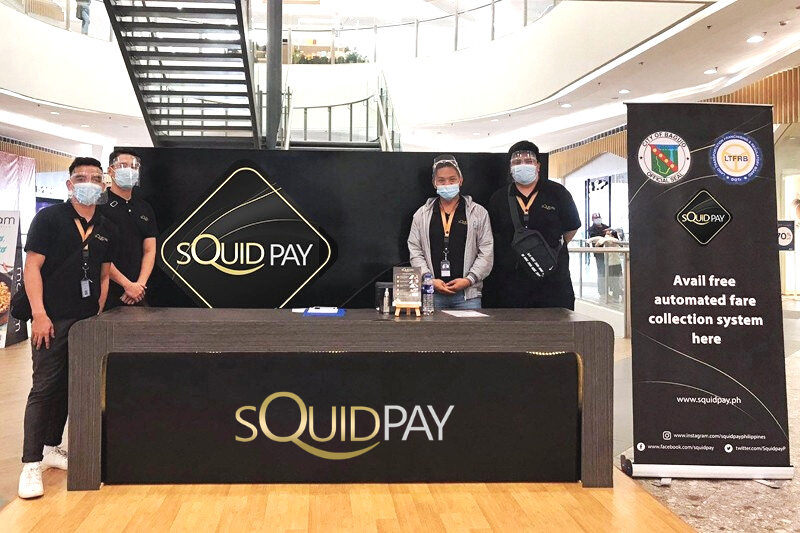
SquidPay automated fare collection system registration kiosk at SM City Baguio

“This news surprised us too. We did not expect any funding to come until the late first quarter of next year,” says SquidPay Technology Inc. CEO Marvin Dela Cruz. “This gives us confidence that there are people who strongly believe in what SquidPay can achieve.”

Proceeds from the fund will allow  SquidPay to quickly widen its reach and accessibility by establishing kiosks and business centers in key areas around the country by 2021.

Distribution of free SquidPay cards to riders and citizens nationwide

Launched in May 2020, SquidPay provides a convenient and efficient contactless payment that empowers every commuter,  merchant, transport group, and LGU to bounce back healthier and safer.

With a  vision of building a cashless society grounded on a free payment platform, SquidPay provides advanced end-to-end instantaneous electronic payments and collections with stored value cards,   QR   codes,   and mobile applications.   With contactless payments,  expense monitoring, and contract tracing capabilities, SquidPay aims to help both the private and public sectors adjust to the new normal.  SquidPay has partnered with national agencies,  local government units,  banks,  private entities,  public utility vehicle operators, and other transport systems to offer a suite of fintech services.

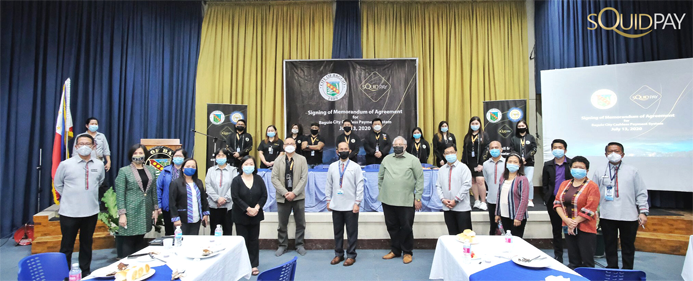
SquidPay launch and memorandum of agreement signing. Baguio City Hall. July 13, 2020

As of  November  2020,  SquidPay has been working closely with model  City  Baguio and estimates  35%  of the population as registered users. With the city government’s initiative to convert  Baguio  City into the country’s first  Smart  City,  SquidPay foresees to tap 50% of all Baguio residents by year-end.  Users can use their SquidCard to commute, shop, and enjoy local dining.

Digital payments are poised to grow rapidly in the coming years in line with the Bangko Sentral ng  Pilipinas’  (BSP)  goal of migrating from cash to a  digital-based economy.  SquidPay endeavors to achieve the BSP’s vision by reaching out to unbanked and underserved Filipinos – providing everyday solutions to financial services, accessible through a simple and easy to use fintech platform.


Download SquidPay for free from these links:
Play Store: https://bit.ly/squidpayplaystore
App Store: https://bit.ly/squidpayappstore

Website: https://squidpay.ph
FB: https://www.facebook.com/squidpay
IG: https://www.instagram.com/squidpayphilippines/
Twitter: https://twitter.com/SquidpayP

#SmartCity
#BaguioCity
#NewChristmas
#WeHealAsOne

Things to ponder on before your retirement

There are people who retire, only to come out of retirement in a few months or years. When asked for the reason, some will say they got bored or they miss the challenge. Unfortunately, a good number will say the reason is financial in nature. Yet, not all will have the luxury of having access to a job anytime he or she wants — that is why we really need to prepare for our retirement.

Preparing for retirement is no easy task, and I would say it is more of an art rather than a science. What will work for one person might not necessarily be true for another.

I have observed that individuals normally procrastinate on this matter, saying “I’m too young to be planning for retirement” and preferring to enjoy life as it goes on. There’s nothing wrong with enjoying our careers, but we must bear in mind that retirement is not always our choice, especially under the situation we are currently in. I myself will be retiring in eight years, and I have been spending a good amount of my free time asking myself if I will be ready by then.

How prepared are you?
Being prepared for retirement largely involves financial preparedness. A big part of financial preparedness will be a function of your chosen lifestyle, the timing of your retirement, and your health condition when you retire. Your chosen lifestyle and time of retirement are both within your control, while health conditions can potentially alter your preparedness. For instance, there are cases where the retirement money was completely wiped out because of medical expenses.

How, then, will you assess your preparedness for retirement? Asking yourself the following questions can help you gauge if you are almost ready: Will I have an outstanding mortgage that I will need to amortize after my retirement? Will my kids be done with their education by then, or will they take up further studies? What is the minimum amount I will need to cover my day-to-day expenses? (You have to factor in inflation for that)

Moreover, ask yourself how much retirement money you will get and what will be the interest rate at that time. Gone are the days when we can live on interest. You should also figure out if you have enough insurance coverage, and whether you have passive income other than your SSS pension.

In addition, check on your health and determine whether you have medical coverage after retirement. Determine as well your estimated life expectancy.

To further assess your financial preparedness, imagine how your life will be if you retire. If your concern will be what to do with your idle time rather than how you will deal with the basic necessities (e.g., paying bills), then you are likely prepared. The ‘idle time’ concern can be easily addressed as long as you have financial security, while the latter concern will be a bigger problem because it will cause you anxiety.

While financial preparedness will be a more pressing concern for those nearing their retirement, those who are still far from retirement should also consider this. Regardless of how long you’ve been in your career, you should realize that you would retire at some point. You will not be working forever. The sooner you realize this, the earlier you can prepare for your eventual retirement.

Preparation for starters
Retirement can be either a personal or a mandatory choice. Ideally, we prepare for it as early as we can. But, in reality, there are a good number of us who are very close to retirement age who have not given it much thought.

If this is your situation, you have to start somewhere. For starters, you should have a clear idea of your estimated years of work before retirement. Then, you have to determine if you will be eligible for retirement pay.

If you have been switching jobs, there is a high chance that you will not be getting substantial retirement pay. So, you’ll just have to rely on whatever savings you have through the years.

Once you have determined your remaining work years and eligibility for retirement pay, you have to consult financial experts. Set up a meeting with your trusted banker or financial advisor, and have an honest-to-goodness conversation on how they can help you manage and grow your existing savings and retirement pay. 

In addition, you can consider setting up your own business, as this is another alternative source of passive income; but you need to ensure you have a solid business model. It is also advisable not to put your entire retirement money at risk.

Financial tools will always be there to help you plan your retirement, but it will all boil down to how much you can set aside on a monthly basis. Depending on the amount you have saved and your risk appetite, you can choose to invest in time deposit/unit investment trust fund, equities, property, and insurance with medical coverage, to name a few.

Of course, to begin with, you should make sure you have funds to invest. Then, you have to ensure you have a good understanding of the financial products out there.

In case you are not yet fully aware of these tools, it is never too late to reach out to your banker or financial advisor who will be more than willing to share their knowledge with you. Financial advisors can help tailor-fit solutions to cater to your specific requirement. Make sure you give time for open conversation with them on where you are in your retirement plan.

Metrobank can help you with these specific needs. We have highly trained investment specialists who can recommend products based on your need. You can also be referred to our Trust Banking services or our partner AXA Insurance for insurance-related solutions.


The author has more than 20 years of banking experience particularly in Corporate
Banking and Treasury/Markets. He is a B.S. Management Graduate from Ateneo De
Manila University and earned his Post Graduate Degree from Asian Institute of
Management.

BSP likely to keep rates steady — poll

The Monetary Board is likely to keep policy rates steady at its meeting on Thursday, taking into account the faster inflation trend. — PHILIPPINE STAR/MICHAEL VARCAS

By Luz Wendy T. Noble, Reporter

THE CENTRAL BANK is likely to keep its key policy rates at the record low levels on Thursday, as it considers the recent uptick in the country’s inflation rate, according to analysts.

With recovery prospects remaining bleak in the fourth quarter, analysts expect the Bangko Sentral ng Pilipinas (BSP) to resume policy rate cuts as early as the first quarter of 2021 to boost a sagging economy.

A BusinessWorld poll last week showed all 15 analysts do not expect the Monetary Board to go for another rate cut at its seventh and final policy meeting for the year on Dec. 17.

“We expect BSP to leave its policy rate unchanged at 2%, as a weather-related rise in food prices led to a higher-than-expected pickup in inflation in November,” Nomura Holdings, Inc. Chief ASEAN Economist Euben Paracuelles said.

Philippine National Bank Head of Research Alvin Joseph A. Arogo said the BSP would likely keep rates untouched to allow time for the last rate cut in November to work its way through the economy.

“Moreover, the real reverse repurchase rate is now at a deeper level of -1.30%, which is one of the lowest in Asia,” he said.

This was justified by the 11.5% contraction in economic output in the third quarter, which was one of the worst in the region, he added.

Inflation in November quickened to 3.3% from 2.5% in October, the second month of a faster rise in the consumer price index. This also means real interest rate is now in negative territory as the RRP had been slashed to 2% by mid-November.

The BSP unexpectedly slashed rates by 25 basis points (bps) last month, citing the need to provide support amid continued uncertainty caused by new virus cases globally and the impact of a recent string of typhoons.

The central bank has lowered policy rates by 200 bps this year. The overnight lending and deposit facilities stand at 2.5% and 1.5%, respectively.

“A 200 bps easing in policy rate has not been able to arrest the slide in credit growth this year,” said ANZ Research Economist Khanika Batnagar, who expects the central bank to leave rates unchanged on Thursday.

Latest BSP data showed lending growth was at 1.9% year on year in October, easing further from 2.6% in September and the slowest since 1.9% in September 2006. Banks have been imposing stringent credit standards to guard against bad loans amid the economic slowdown.

Analysts, however, believe the pause will be momentary, taking cues from dovish signals from officials.

“It is suspected that the BSP will patiently wait for the fourth-quarter GDP growth rate release in February, at the same time, monitoring more forward-looking economic indicators to better ascertain the shape of the economic recovery,” UnionBank of the Philippines, Inc. Chief Economist Ruben Carlo O. Asuncion said, noting the surprise cut followed the release of the third-quarter GDP data in early November.

The central bank will also keep a close eye on fiscal policy, analysts said.

“As [BSP] Governor Diokno has implied, he would like to see fiscal policy do its part in stimulating the economy, but that can come only in 2021,” University of Asia and the Pacific Economist Victor A. Abola said. “I think they will be on hold until they see inflation go back to below 2.5%,” he added.

Data from the International Monetary Fund, which keeps track of policy measures meant for the pandemic response, show fiscal packages in the Philippines are equivalent to 3.9% of the GDP. This is lower than fiscal policies of neighbors such as Thailand (at least 9.6% of GDP), Indonesia (4.4%), and Malaysia (4.9%).

“Even as BSP is prepared to implement additional policy measures, fiscal policy should play a more significant role in helping restore market confidence,” Mr. Diokno said earlier this month.

The P4.5-trillion national budget for 2021 is 9.7% higher than this year’s spending plan.

President Rodrigo R. Duterte is expected to sign it into law by yearend.

In an “extreme scenario” where fiscal measures continue to lag, the BSP may be pressured to trim rates once more by mid-2021, said ING Bank N.V. Manila Senior Economist Nicholas Antonio T. Mapa.

“BSP will likely still be mindful of financial system stability as well as price stability, but with the economy mired deep in recession, [Mr.] Diokno will continue to have an eye on helping out where he can in terms of monetary support,” he added.

Big banks continue to be challenged in Q3 as asset growth slows and issued loans decline

THE COUNTRY’S biggest banks became less profitable in the third quarter as they continued to boost loan loss reserves amid an increase in bad loans and tighter lending standards. Read the full story.

Big banks continue to be challenged in Q3 as asset growth slows and issued loans decline

Banks see smaller returns, more soured loans in Q3

By Jobo E. Hernandez, Researcher

THE COUNTRY’S biggest banks became less profitable in the third quarter as they continued to boost loan loss reserves amid an increase in bad loans and tighter lending standards.

The latest edition of BusinessWorld’s quarterly banking report showed the combined assets of 45 universal and commercial banks grew by 5.13% to P18.191 trillion in the third quarter, from P17.302 trillion in the same three months last year. This was slower than 7.56% growth in the second quarter and 9.89% in the third quarter of 2019.

Money lent by banks in the form of loans and receivables reached P9.434 trillion in the July to September period, 0.74% less than P9.505 trillion last year.

Big banks continue to be challenged in Q3 as asset growth slows and issued loans decline

The third-quarter result marked historical lows. For assets, this was the most sluggish growth in almost 13 years, or since the 0.56% decline in the first quarter of 2008 and the 3.78% growth in the fourth quarter of 2007.

For loans, this was the first decline in almost 11 years, or since the first quarter of 2010 when it went down by 0.15%. The last time it recorded a quicker decline was in the fourth quarter of 2003 when loans decreased by 4.17%.

In terms of profitability, the median return on equity (RoE) further slipped to 4.13% from 4.89% in the second quarter and 6.95% in the third quarter of 2019. RoE measures how well a company makes use of the funds from shareholders to generate income and is calculated as the ratio of net profit to average capital.

BDO Unibank, Inc. continued to have the most assets among big banks at P3.252 trillion, followed by Metropolitan Bank & Trust Co. (Metrobank) at P2.362 trillion. State-run Land Bank of the Philippines (LANDBANK) came in third at P2.260 trillion, surpassing Bank of the Philippine Islands’ (BPI) P2.188 trillion.

In terms of loans issued, BDO remained on top with P2.136 trillion, followed by BPI at P1.377 trillion and Metrobank at P1.198 trillion.

Among banks with assets of at least P100 billion, the Manila branch of Japan’s MUFG Bank Ltd. and government-run Development Bank of the Philippines (DBP) posted the fastest year-on-year asset growth at 48.31% and 34.74%, respectively. Robinsons Bank Corp. came in next with 29.16%.

MUFG Bank likewise had the fastest year-on-year loan growth of 70.98%, followed by DBP with 15.12% and Robinsons Bank with 13.15%.

BDO had the most deposits with P2.575 trillion, with LANDBANK and Metrobank following suit with P1.977 trillion and P1.735 trillion.

In terms of deposit growth, DBP came in first with 50.28% followed by MUFG Bank’s 45.62% and Robinsons Bank’s 30.52%.

BAD LOANS GROW
Bad loans held by banks as of the third quarter grew as nonperforming loans reached P286.877 billion. This was 35.14% more than the P212.283 billion posted at the end of the second quarter, as well as 80.8% more than the P158.671 billion posted at the end of the third quarter 2019.

The bad loan ratio — gross bad loans in proportion to total gross loans — worsened to 3.57% in the third quarter from 2.02% in the preceding three months and 1.66% last year. This was the highest since the BSP introduced a new reporting standard that took effect in the first quarter of 2013.

Before this, banks presented bad loan numbers that already excluded loans that were fully provisioned as of the last BSP examination. The current method does not allow this, and distinguishes bad loans without deductions (gross nonperforming loans, which are used in this report) and to bad loans minus specific allowance for credit losses (net nonperforming loans). 

Similarly, their nonperforming asset (NPA) ratio — or the nonperforming loans and foreclosed properties in proportion to total assets — rose to 1.24% from 0.91% in the previous quarter and 0.75% in the third quarter of last year. This was also the highest since the current reporting standard.

As a percent of total assets, foreclosed real and other properties inched down to 0.29% in the third quarter from 0.30% on the previous quarter.

Total loan loss reserves among big banks reached P294.805 billion in the third quarter, more than P261.538 billion in the second quarter and P171.316 billion in the third quarter of 2019.

The banks’ bad loan coverage ratio, which is the ratio of the total loan loss reserves to gross nonperforming loans, fell to 102.76% compared with 123.2% in the previous quarter and 107.97% last year.

On the other hand, banks’ ability to absorb losses from risk-weighted assets also improved as their median capital adequacy ratio rose to 21.02% from 20.65% in the preceding quarter.

The ratio remained well above the regulatory minimum of 10% set by the BSP as well as the international minimum standard of 8%.

Bank of China Ltd. was not included in the report because its statement of condition had not been available when the compilation of financial data was concluded on Nov. 27.

BusinessWorld Research has been tracking the financial performance of the country’s big banks on a quarterly basis since the late 1980s using banks’ published statements.

The full version of BusinessWorld’s quarterly banking report will soon be available for download on www.bworldonline.com.

Digitalization seen to boost PHL trade with key partners

DIGITALIZATION in the 15-country mega trade deal could improve trade systems with key partners, a research fellow from the Philippine Institute for Development Studies (PIDS) said.

The world’s biggest trade deal, the Regional Comprehensive Economic Partnership (RCEP), was signed by China, Australia, New Zealand, Japan, South Korea and all 10 Association of Southeast Asian Nations (ASEAN) member countries last month.

“For me, RCEP is a means of improving our systems so that we can engage in trade with key partners in the region,” PIDS Research Fellow Francis Mark Quimba said in an e-mailed reply to questions.

“With RCEP, it is imperative that we adopt digitization in trade facilitation and remove the structural barriers.”

He said that the Philippines is the last economy to implement the ASEAN Single Window, a regional initiative that connects national electronic trade platforms. The country joined the regional single window on Dec. 30, 2019.

A discussion paper published by PIDS in 2013 titled Regional Comprehensive Economic Partnership: Reform Challenges and Key Tasks for the Philippines called on policy makers to address the low utilization of free trade agreements.

The paper by PIDS President Gilberto M. Llanto and Ma. Kristina P. Ortiz said there needs to be more awareness and training on trade deals, use of electronic data to simplify certification procedures and financial support for upgrading technology and related skills.

The Philippines is currently part of ASEAN+1 trade deals among the 10 member countries and a major trading partner of Japan and South Korea.

“I think RCEP will attempt to organize all these ASEAN+1s so that utilization would be easier to implement,” Mr. Quimba said.

The Trade department has said the deal would increase Philippine market access for garments, automotive parts and agricultural products such as canned food and preserved fruit, especially since the agreement seeks to simplify trade procedures.

The agency said the deal covers intellectual property, e-commerce, small business, government procurement and competition.

Analysts see the deal either as a positive for the Philippine economy because it expands exports or a potential risk for the balance of trade.

Caesar B. Cororaton, a research fellow at the Virginia Polytechnic Institute and State University, said exports would increase every year, especially for semiconductors, fruits and vegetables.

But United Nations Conference on Trade and Development Senior Economist Rashmi Banga said that imports could increase by around $600 million a year, while exports are only projected to increase by $4.3 million.

She said the governments should prioritize saving their domestic financial resources, using tariffs to increase revenue and regulating the imports of luxury items.

The agreement will be implemented after a ratification process, which could take up to two years. — Jenina P. Ibañez

Chiming in on a Changan


The Alsvin is priced right and performs well. Is it designed to make the competition sweat?

HAVE YOU heard of Changan? It’s one of the latest Chinese car brands that’s been launched in the country. It is initially featuring a five-model lineup that consists of an entry-level subcompact sedan, three iterations of crossover SUVs, and an electric car.

The brand is headquartered in Chongquing, China, is state-owned, and is also a Chinese domestic top-seller. The build of its vehicles, its attractive styling, value-enhancing features, and hard-to-beat price tags all constitute a good value proposition for discerning customers who wish to squeeze the most bang out of their buck. Indeed, a lot of China-made cars have truly emancipated themselves from the stereotypes of old, and proven themselves worthy considerations for the modern, practical buyer — and this brand is one of them.

It was therefore a pleasure to test-drive one of its products — the Alsvin five-speed MT, which is the brand’s entry-level subcompact sedan — on my way to The Farm at San Benito, which is roughly an 88-km drive (per way) from Manila. To be honest, I did not choose this model and variant myself, as I may have been more inclined to opt for an automatic transmission (which would be realized via their Alsvin Platinum edition, which comes with more bells and whistles for about an additional P100,000) considering the typical holiday traffic and highway ruckus. But the unit was appointed to me, and I obliged. And boy — was I glad that I did! I did not suspect that it would be this fun and surprising.

The Alsvin 1.4-liter MT was its own little box of humble joy — the shifts were crisp and precisely locked gears into place, the clutch pedal was super soft (I did not experience any long-drive knee discomfort), and the transmission, responsive. Sure, its maximum power was at a modest 100ps, but that’s not bad for a roomy sedan currently priced at a convincing P539,000. I found the power sufficient to keep me at speed on the highway (approximately 80-100kph) although, admittedly, I would consider it primarily for my city drives. Inside the car it felt airy and roomy — with my six-foot-four-inch-tall husband telling me that his headroom was sufficient, with extra room to spare.

Unlike the Alsvin Platinum 1.5-liter variant which flaunts leather seats and a sunroof, my basic Alsvin 5MT had fabric seats, and I found them comfortable to my satisfaction. A seven-inch touchscreen display with Bluetooth and USB connectivity was nicely seated on the dash, and the audio output was via two speakers (you get four in the Platinum variant). I’d like to point out that I was especially delighted with the fact that despite its bargain of a price, this bundle of fun is already equipped with a proper reverse camera — a feature you would sometimes find lacking in more expensive competitors in the segment. This manual variant is also gifted with a handy tire-pressure monitoring system, which I also think is a feature found more often in pricier vehicles.

Oh, and did I mention that it was fun to drive? The journey to The Farm — which is nestled in the greener heart of Lipa in Batangas — involves a lot of narrow, hilly roads with tight turns and abrupt ascents. With the proper manipulation of engaged gears and wise use of the car’s momentum, navigating through these slithering roads is a walk in the park. Plus, the car is light and fun to maneuver. It was definitely more engaging (from a driver’s perspective) than say, driving an automatic where there would be less driver input involved. Of course, it all depends on your mood. But what I wanted to share is that a form of driving exhilaration is still possible, even with simple, no-frills vehicles — provided that the tuning is good and the gears properly click into place. This Alsvin 5MT also had suggestive shifting displayed within the instrument cluster.

Moreover, I found the (electric-powered) steering to be delightfully light — making it easy to maneuver into parking slots. If anything, I think the headlights could be brighter — but then again it is easy to adjust these things with aftermarket products.

And another one of the characteristics that most impressed me about this variant? It is extremely… fuel… frugal. I received this unit bearing a full tank; then drove it around Makati CBD in the morning, and then to The Farm in Lipa, which is about 88 kms away via the SLEX and StarToll as my highway route. I actually got lost en route to The Farm and this cost me an additional 30-minute detour. On the way back to Manila, I followed a convoy which also detoured for an extra 15-minute drive before heading straight back to Makati. At the end of these trips, the Alsvin’s digital fuel reading still had not been reduced even by one block/unit. Is it the car or is it the driver? Maybe it’s a bit of both! I am now excited to try driving the rest of the vehicles in Changan’s interesting product lineup!

ADVERTISEMENT
ADVERTISEMENT