The Villar SIPAG (Social Institute for Poverty Alleviation and Governance) aims to bring Filipinos out of poverty and hunger, and this year, it recognized 22 cooperatives for their contribution in improving the quality of life of Filipinos, especially in the countryside.
Former senate president Manny Villar and Sen. Cynthia Villar led the virtual turnover ceremony which featured cooperatives from different parts of the country. The event capped the birthday celebration of Manny, the founding chairman of Villar SIPAG.
Villar SIPAG Chairman Manny Villar and Managing Director Senator Cynthia Villar
The awardees each received P250,000 in cash. Three cooperatives, which received special citations, were granted P100,000 each.
“Cooperatives play a significant role in realizing the aspirations of our countrymen, especially those from rural areas. They are the true epitome of Sipag at Tiyaga, values that have helped me succeed in my career as a businessman and a public servant,” Manny said.
“Through this recognition, we hope to inspire and encourage cooperatives to continue with their work to uplift the lives of their communities,” added Senator Cynthia, the director of Villar SIPAG.
One of the awardees is the Golden Group Gabay Puhunan Brotherhood MPC from San Fernando City, Pampanga. The credit cooperative started its humble beginnings in 1990, when a group of 15 market vendors pooled their resources to help each other improve their economic plight through savings or paluwagan with low-interest rates and cross patronage of their products and services.
It has now grown to more than 5,000 members composed of market vendors, farmers and fisherfolk, service providers, and micro-, small-, and medium-sized enterprises (MSME), with total assets amounting to P796 million. The cooperative has expanded to include real estate and solar power generation in their business.
Another awardee, the CAMSUR Multipurpose Cooperative from Pili, Camarines Sur, has been supporting its farmer and MSME members, who have grown to nearly 2,500 since it was established in 2000. With assets amounting to P195 million, the cooperative helps create jobs, promotes business opportunities, and sustains the farm production of its members. The group has taught its members’ entrepreneurial skills and financial literacy while advancing the production of organic fertilizers to improve soil condition.
The 2020 Winners of the Villar SIPAG awardees on Poverty Reduction:
Mandaluyong Traders Development Cooperative (Inocentes St., Barangay Pag-asa, Mandaluyong City)
Segunda Mana (2002 Jesus St., Pandacan, Manila c/o Fr. Anton Pascual)
Lamut Grassroots Savings and Development Cooperative (LAGSADECO) (Poblacion East, Lamut, Ifugao)
Cassava Growers Processor Association or CAGAPA (Dapitan City, Zamboanga Del Norte)
Panabo Multipurpose Cooperative (Panabo City, Davao Del Norte
Kapalong Cooperative (Kapalong, Davao Del Norte)
San Francisco Growth Enhancement Multipurpose Cooperative (San Francisco, Agusan Del Sur and now has branches in Caraga, Compostella Valley, and in Misamis Oriental).
Recipients of the Villar SIPAG Special Awards are:
With the coronavirus pandemic severely limiting trips abroad, some in Singapore this holiday season are going “glamping,” or glamourous camping, staying overnight in luxury tents at the retail and leisure wing of the city-state’s Changi Airport. Image via Changi Airport / Instagram
SINGAPORE — Staying overnight at an airport isn’t unheard of, especially if you miss a flight. But choosing to spend your holidays there in a tent is something entirely different.
With the coronavirus pandemic severely limiting trips abroad, some in Singapore this holiday season are going “glamping,” or glamorous camping, staying overnight in luxury tents at the retail and leisure wing of the city-state’s Changi Airport.
“Usually we go out of the country every holiday but since we can’t travel much and it’s a school holiday, I thought why not do something different for the children,” said Fadlina Musa, standing under twinkling fairy lights.
Her husband, Khairil Anuar Malek, said it was nice to get out of the house. “It has been very tough for all of us, so we wanted to experience closeness at a different level,” he said.
Glamping isn’t cheap. Guests spend up to S$360 ($269) a night for queen-sized beds, shopping discounts, a cool box for picnics, and plenty of festive Christmas lights. Private bathroom facilities are not provided.
Air-conditioned gardens, walking trails, and an indoor waterfall provide a sense of the great outdoors, minus the bugs, rain, and humidity.
Serene Beh, an accounting manager visiting the mall with her family, said she liked the idea, at the right price.
“I will look at the package,” she said. “If it’s worth it, then I think it’s a good experience for the children who have never been camping before.”
The “glamp-cations” at Changi Airport were sold out until Dec. 28, reflecting appetite among Singapore residents for creative distractions that have included flights and cruises limited to the country’s airspace and waters. — Travis Teo and Lee Ying Shan/Reuters
TIME AFTER TIME this year, South Korea prevented the coronavirus from spreading uncontrollably, applying its elite testing-and-tracing practices that have become a global model for managing the pandemic without draconian, economy-sapping lockdowns.
Now, this “living with the virus” strategy — as the nation of 51 million calls it — is being tested like never before.
While case numbers are still small compared to the US and parts of Europe, Korea saw new infections top 1,000 for five consecutive days through Sunday, a staggering jump from an average of about 100 in past months. The fierce winter wave has alarmed a country that’s drawn pride from being globally lauded for its coronavirus disease 2019 (COVID-19) response.
South Korea reported a drop in new cases on Monday after posting a record of more than 1,000 infections on Sunday and Prime Minister Chung Sye-Kyun said implementing the strictest level of social distancing measures is a last resort.
Korean health officials concede the latest outbreak has been particularly challenging to combat as small clusters of infections are more widespread and sprouting across the country. Prior surges were concentrated in a region or among specific groups such as churchgoers or young clubbers.
In an attempt to prevent a year-end surge, Prime Minister Chung Sye-kyun said Tuesday the country will shut down ski resorts and other tourist spots during the upcoming holiday season, and will restrict entrance to nursing-homes that are typically more vulnerable to virus infections.
The latest measures come a day after Seoul Metropolitan Government announced that it and its neighboring Gyeonggi Province and Incheon city will ban holiday parties with five or more people from Dec. 23 to Jan. 3. Weddings and funerals are exempt.
Health experts say South Korea has been hit with a perfect storm: a public tired of restrictions, a government wary of imposing more severe measures and colder weather that makes people spend more time indoors where the virus spreads more efficiently.
The setback comes as other places that previously steered clear of lockdowns like Japan and Sweden also face persistent winter waves, suggesting the virus is testing more laissez-faire strategies that emphasized voluntary actions rather than top-down restrictions.
Korea and Japan, which doesn’t have the legal power to force a lockdown, have dropped out of the top five in Bloomberg’s COVID Resilience Ranking, which scores economies on their handling of the virus with the least social and economic disruption. In contrast, places that pursued heavier-handed strategies aimed at eliminating the virus like Australia, New Zealand and China are not seeing cases flare to the same degree.
“Perhaps there is overconfidence with the K-Quarantine,” said Kim Woo Joo, professor of infectious disease at Korea University’s Guro Hospital, referring to a term coined after the country’s K-Pop.
After extensive testing and tracing, Korea contained multiple surges including two major outbreaks in early spring in the southern city of Daegu and then over the summer in Seoul. Daily new cases were brought down to double digits after those outbreaks.—
But as the weather began to cool, virus clusters started to emerge and spread — many of them at restaurants, spas and fitness centers as more people withdrew indoors, where poor ventilation and close confinement can fuel transmission.
BY THE BOOK As cases inched up, health authorities returned to their tried-and-true playbook. The government gradually raised the virus alert level, triggering stricter social-distancing measures, including limiting the number of people who can attend sporting events or group gatherings.
But this time, the gradual escalation isn’t having the same impact as before, said Ki Moran, an epidemiology professor at the Goyang-based National Cancer Center. South Koreans who diligently wore masks and refrained from dining out during earlier outbreaks seem to be no longer adhering strictly to the social-distancing rules.
“Before, people were alarmed when cases reached just 100 and urged closing day care centers,” Ki said. “Now, even when cases top 1,000, people are complaining that if day care centers close, there will be no other place they can take their kids. People are not as wary of the virus anymore and there is fatigue with the government measures. People are not listening.”
Temperatures dipping below freezing also aren’t helping health authorities fight the surge, health experts said.
“The virus is getting stronger in the winter while the public is getting less alert,” Ki said.
At the same time, the Korean government has been reluctant to move toward stricter restrictions because of the potential blow to the economy, said Jung Ki-suck, former head of Korea’s Center for Disease Control & Prevention who is now a professor at Hallym University Medical Center.
The economy has fared better than in other developed countries because of Korea’s strategy of managing the pandemic rather than pursuing virus elimination, as places such as China and New Zealand have done — an approach that requires lockdowns.
“When South Korea eased social-distancing measures in the fall, the decision was made in consideration of the economy,” Jung said. “So when the virus started to spike, those who argued for containing the virus first and saving the economy later were not heard.”
Last week, senior health ministry official Yoon Tae-ho said in a briefing that while the criteria for raising the virus alert to the highest level was met — reaching a weekly average of 800 or more new cases a day — the government was still weighing the decision because the “social and economic impact would be too great.”
Raising the alert level to 3 could mean closing or restricting operations of as many as two million businesses, according to South Korean government officials.
Health authorities are instead focused on expanding testing: setting up nearly 200 temporary diagnosis centers and doubling the number of people tested to almost 50,000 a day. They’re also boosting the country’s army of contact tracing investigators.
“The increase in preemptive tests and finding hidden patients early will inevitably lead to a temporary increase in the number of confirmed cases,” Yoon said. “But this is an effective strategy to reduce the number of confirmed cases as soon as possible.”
On Monday, Prime Minister Chung said there were “positive signs” that the playbook may be working again. Based on tracking of mobile phone use, vehicle traffic and credit card transactions, there has been a noticeable fall-off in people moving about outdoors. The proportion of confirmed Covid-19 patients age 60 or older is also gradually decreasing, he said.
“The effectiveness of large-scale preemptive testing is being confirmed,” Chung said in a briefing Monday, when daily infections declined to 926, the first time they’ve dipped below 1,000 in a week. — Bloomberg
NEW YORK — The evening sky over the Northern Hemisphere treated stargazers to a once-in-a-lifetime illusion on Monday as the solar system’s two biggest planets appeared to meet in a celestial alignment that astronomers call the “Great Conjunction.”
The rare spectacle resulted from a near convergence of the orbits of Jupiter and Saturn that happened to coincide with Monday’s winter solstice, the shortest day of the year. For those able to observe the alignment in clear skies, the two frozen-gas spheres appeared closer and more vibrant — almost as a single point of light — than at any time in 800 years.
Jupiter — the brighter and larger of the pair — has been gradually nearing Saturn in the sky for weeks as the two planets proceed around the sun, each in its own lane of an enormous celestial racetrack, said Henry Throop, an astronomer at National Aeronautics and Space Administration headquarters in Washington.
“From our vantage point, we’ll be able to be to see Jupiter on the inside lane, approaching Saturn all month and finally overtaking it on Dec. 21,” Mr. Throop said in a statement last week.
At the point of convergence, Jupiter and Saturn appeared to be just one-tenth of a degree apart, roughly equivalent to the thickness of a dime held at arm’s length. In reality, of course, the planets remained hundreds of millions of miles apart, according to NASA.
A conjunction of the two planets takes place about once every 20 years. But the last time Jupiter and Saturn came as close together in the sky as on Monday was in 1623, an alignment that occurred during daylight and was thus not visible from most places on Earth.
The last visible great conjunction occurred long before telescopes were invented, in 1226, halfway through construction of the Notre Dame cathedral in Paris, France.
The heightened brightness of the two planets as they almost merge in the sky has invited the inevitable speculation about whether they formed the “Christmas star” that the New Testament describes as having guided the three wise men to the baby Jesus.
But astronomer Billy Teets, acting director of Vanderbilt University’s Dyer Observatory in Brentwood, Tennessee, said a Great Conjunction is only one of several possible explanations for the biblical phenomenon.
“I think that there is a lot of debate as to what that might have been,” Teets told WKRN-TV in Nashville in a recent interview.
Astronomers suggested that the best way to view Monday’s conjunction was by looking toward the southwest in an open area about an hour after sunset.
“Big telescopes don’t help that much, modest binoculars are perfect, and even the eyeball is okay for seeing that they are right together,” Jonathan McDowell, an astronomer at the Harvard-Smithsonian Center for Astrophysics, wrote in an email to Reuters.
The next Great Conjunction between the two planets — though not nearly as close together — comes in November 2040. A closer alignment similar to Monday’s will be in March 2080, McDowell said, with the following close conjunction 337 years later in August 2417. — Reuters
BERLIN — BioNTech Chief Executive Ugur Sahin said on Monday he was confident a coronavirus disease 2019 (COVID-19) vaccine co-developed by his company would be effective against a variant of the coronavirus that has emerged in Britain.
He said on Bild TV that the German company would investigate the mutation in the coming days but that he viewed the matter with “with a degree of soberness.”
Countries across the globe shut their borders to Britain on Monday due to fears about a highly infectious new coronavirus strain, causing travel chaos and raising the prospect of food shortages in the United Kingdom.
Mr. Sahin was speaking shortly after the European Union (EU) cleared regulatory hurdles for the vaccine, co-developed with Pfizer, to be rolled out after Christmas.
The note of calm from the CEO about the UK mutation echoed the World Health Organization (WHO), which cautioned against major alarm, saying this was a normal part of a pandemic’s evolution.
Mr. Sahin said he hadn’t yet been immunized but would like to be. He said it was more important that his employees get the vaccine so they can continue to do their jobs. — Reuters
The following is a roundup of some of the latest scientific studies on the novel coronavirus and efforts to find treatments and vaccines for COVID-19, the illness caused by the virus.
Oxygen level while walking identifies at-risk patients
It can be helpful to assess blood oxygen levels in patients when they are walking if that level is normal when they are sitting, a new study suggests. A low level of oxygen in the blood, or hypoxia, contributes to shortness of breath and worsening illness in patients with COVID-19.
At 10 Chicago-area hospitals, doctors studied 531 COVID-19 patients whose blood oxygen levels were normal at rest. Roughly one in four developed hypoxia when they got up and walked. These individuals were nearly five times more likely to eventually need basic oxygen support and nearly eight times more likely to need advanced oxygen therapy, compared to patients whose blood oxygen levels held steady while walking.
The drop in blood oxygen levels while walking could be detected an average of 12 hours before patients required extra oxygen, researchers found. So-called ambulatory hypoxia “may serve as an early, non-invasive physiologic marker for the likelihood of developing moderate to severe disease and help clinicians triage patients and initiate earlier interventions,” the researchers proposed in a paper posted on Thursday on medRxiv ahead of peer review.
Cancer patients should get vaccine priority
Cancer patients who get COVID-19 are at high risk for poor outcomes and should be considered for priority access to coronavirus vaccines, according to The American Association for Cancer Research COVID-19 and Cancer Task Force.
The task force reviewed available data on fatality rates of patients with cancer who developed COVID-19 and based their recommendation on 28 publications. Their position paper was published on Saturday in the journal Cancer Discovery.
A separate Italian study reiterated that fear of infection should not be a reason to delay cancer treatments. Among nearly 60,000 cancer patients treated early this year in Italy, fewer than 1% developed COVID-19, they reported on Thursday in JAMA Oncology.
Early reports from China indicated a much higher risk of contracting COVID-19 among patients getting cancer therapy, Dr. Carlo Aschele of Ospedale Sant’Andrea in La Spezia told Reuters. “In Italy, oncologists, and patients as well, were terrified, expecting to face a huge amount of infections and death, particularly among patients receiving chemo or immunotherapy,” he said. The reassuring results will allow oncologists and patients to make informed decisions regarding antitumor treatment during this pandemic, he added.
EU regulators urge caution for vaccines, treatments in pregnant women
The European Medicines Agency said on Monday that the COVID-19 vaccine developed by Pfizer Inc. and BioNTech SE should only be given during pregnancy “on a case by case basis” because there are not enough data yet on the potential risks to pregnant women.
The US Centers for Disease Control and Prevention (CDC) had already acknowledged the issue on its website. It advises that “getting vaccinated is a personal choice for people who are pregnant.”
There is also a lack of data for COVID-19 treatments in pregnant women, according to a paper published on Wednesday in The Lancet Global Health. Researchers who reviewed clinical trial registries found that of 722 COVID-19 treatment studies, 538 (75%) specifically excluded pregnant women.
“Without explicit and proactive efforts to recruit and retain pregnant women in therapeutic trials for COVID-19, expectant mothers will suffer from having fewer medical options available to them, because we are not including them in clinical trials,” coauthor Dr. Melanie Taylor from the World Health Organization and CDC said in a statement. “There is a very real possibility that treatment (for COVID-19) could become approved … without evidence-based guidance for use in pregnant women.”
Low reinfection risk for those who test positive for antibodies
A study of more than three million people adds to evidence that people with COVID-19 antibodies have a significantly lower risk of future infection with the new coronavirus.
Working with healthcare data analytics companies HealthVerity and Action, as well as commercial labs Quest Diagnostics and LabCorp., researchers at the US National Cancer Institute (NCI) had access to results of more than 50% of commercial COVID-19 antibody tests conducted in the United States through August. Overall, 11.6% of the tests were antibody-positive.
When researchers looked at study subjects who returned to the labs for repeated tests, they found people who were antibody-positive on the first test had a roughly 10-fold lower risk of having evidence of new infection compared to people with a negative first test.
“This finding suggests that people who have a positive antibody test result … have significant immunity to SARS-CoV-2 and are at lower risk for future infection,” said the NCI’s Dr. Norman Sharpless. His team’s report was posted on medRxiv on Sunday ahead of peer review. — Nancy Lapid/Reuters
Making a vehicle represents a supply chain challenge even for Apple, a company with deep pockets that makes hundreds of millions of electronics products each year with parts from around the world, but has never made a car.
Apple Inc. is moving forward with self-driving car technology and is targeting 2024 to produce a passenger vehicle that could include its own breakthrough battery technology, people familiar with the matter told Reuters.
The iPhone maker’s automotive efforts, known as Project Titan, have proceeded unevenly since 2014 when it first started to design its own vehicle from scratch. At one point, Apple drew back the effort to focus on software and reassessed its goals. Doug Field, an Apple veteran who had worked at Tesla Inc., returned to oversee the project in 2018 and laid off 190 people from the team in 2019.
Since then, Apple has progressed enough that it now aims to build a vehicle for consumers, two people familiar with the effort said, asking not to be named because Apple’s plans are not public. Apple’s goal of building a personal vehicle for the mass market contrasts with rivals such as Alphabet Inc.’s Waymo, which has built robo-taxis to carry passengers for a driverless ride-hailing service.
Central to Apple’s strategy is a new battery design that could “radically” reduce the cost of batteries and increase the vehicle’s range, according to a third person who has seen Apple’s battery design.
Apple declined to comment on its plans or future products.
Making a vehicle represents a supply chain challenge even for Apple, a company with deep pockets that makes hundreds of millions of electronics products each year with parts from around the world, but has never made a car. It took Elon Musk’s Tesla 17 years before it finally turned a sustained profit making cars.
“If there is one company on the planet that has the resources to do that, it’s probably Apple. But at the same time, it’s not a cellphone,” said a person who worked on Project Titan.
It remains unclear who would assemble an Apple-branded car, but sources have said they expect the company to rely on a manufacturing partner to build vehicles. And there is still a chance Apple will decide to reduce the scope of its efforts to an autonomous driving system that would be integrated with a car made by a traditional automaker, rather than the iPhone maker selling an Apple-branded car, one of the people added.
Two people with knowledge of Apple’s plans warned pandemic-related delays could push the start of production into 2025 or beyond.
Shares of Tesla ended 6.5% lower on Monday after their debut in the S&P 500 on Monday. Apple shares ended 1.24% higher after the news.
Apple has decided to tap outside partners for elements of the system, including lidar sensors, which help self-driving cars get a three-dimensional view of the road, two people familiar with the company’s plans said.
Apple’s car might feature multiple lidar sensors for scanning different distances, another person said. Some sensors could be derived from Apple’s internally developed lidar units, that person said. Apple’s iPhone 12 Pro and iPad Pro models released this year both feature lidar sensors.
Reuters had previously reported that Apple had held talks with potential lidar suppliers, but it was also examining building its own sensor.
As for the car’s battery, Apple plans to use a unique “monocell” design that bulks up the individual cells in the battery and frees up space inside the battery pack by eliminating pouches and modules that hold battery materials, one of the people said.
Apple’s design means that more active material can be packed inside the battery, giving the car a potentially longer range. Apple is also examining a chemical for the battery called LFP, or lithium iron phosphate, the person said, which is inherently less likely to overheat and is thus safer than other types of lithium-ion batteries.
“It’s next level,” the person said of Apple’s battery technology. “Like the first time you saw the iPhone.”
Apple had previously engaged Magna International Inc. in talks about manufacturing a car, but the talks petered out as Apple’s plans became unclear, a person familiar with those previous efforts said. Magna did not immediately respond to a request for comment.
To turn a profit, automotive contract manufacturers often ask for volumes that could pose a challenge even to Apple, which would be a newcomer to the automotive market.
“In order to have a viable assembly plant, you need 100,000 vehicles annually, with more volume to come,” the person said.
Some Apple investors reacted to the Reuters report on the company’s plans with caution. Trip Miller, managing partner at Apple investor Gullane Capital Partners, said it could be tough for Apple to produce large volumes of cars out of the gate.
“It would seem to me that if Apple develops some advanced operating system or battery technology, it would be best utilized in a partnership with an existing manufacturer under license,” Mr. Miller said. “As we see with Tesla and the legacy auto companies, having a very complex manufacturing network around the globe doesn’t happen overnight.”
Hal Eddins, chief economist at Apple shareholder Capital Investment Counsel, said Apple has a history of higher margins than most automakers.
“My initial reaction as a shareholder is, huh?” Mr. Eddins said. “Still don’t really see the appeal of the car business, but Apple may be eyeing another angle than what I’m seeing.” — Stephen Nellis, Norihiko Shirouzu and Paul Lienert/Reuters
Tens of thousands of undocumented migrants in South Korea are overworked, unable to access healthcare, and unlikely to report exploitation for fear of being deported, said Thai officials.
BANGKOK/SEOUL — The deaths of hundreds of mainly undocumented Thai migrant workers in South Korea have been uncovered by the Thomson Reuters Foundation, prompting the United Nations (UN) to call for an inquiry into the fate of migrants known as “little ghosts.”
At least 522 Thais have died in South Korea since 2015—84% of whom were undocumented— found data from the Thai embassy in Seoul obtained via a freedom of information (FOI) request.
Four in 10 deaths were recorded as due to unknown causes while others were health-related, accidents and suicides.
The number of worker deaths hit a record annual high this year—122 as of mid-December— according to the newly revealed data from the Thai embassy, amid growing concerns about the impact of the coronavirus pandemic on labor conditions.
More Thais died in South Korea—283—than any other foreign country between 2015 and 2018, according to data obtained via a separate FOI request to Thailand’s foreign ministry. Statistics were not available for 2019 and 2020.
“(The data) is concerning and requires attention and investigation,” said Nilim Baruah, a specialist on labor migration at the UN International Labour Organization (ILO).
“Undocumented migrant workers are the least protected and their health and safety are a concern.”
Current and former migrant workers, campaigners, and Thai officials said tens of thousands of undocumented migrants in South Korea were overworked, unable to access healthcare, and unlikely to report exploitation for fear of being deported.
Data on migrant deaths is not made public by either government so there is little attention on labor conditions or scope to improve the situation at a time when the fallout from COVID-19 has left more foreign workers at risk, activists said.
The UN International Organization for Migration (IOM) said it was “concerned” about the data uncovered by the Thomson Reuters Foundation and was monitoring the situation.
The South Korea ministries for labor, justice, and foreign affairs declined to comment on the data. The South Korean embassy in Bangkok did not respond to request for comment.
At least 460,000 Thais work abroad, legally and illegally, data from Thailand’s foreign ministry shows. South Korea is the top destination, home to about 185,000 Thai migrants who can earn significantly more than they would receive in Thailand.
While a visa-free travel arrangement between the two nations was established in 1981, labor experts said many Thais migrated for work ahead of the 2018 Pyeongchang Winter Olympics and ended up staying as undocumented workers at factories and on farms.
DIFFICULT AND DIRTY WORK About a tenth of the 185,000 Thai migrants in South Korea work there legally through a labor migration scheme called the employment permit system (EPS), the Thai embassy in Seoul said.
The rest are migrants without legal documentation—called “phi noi” or “little ghosts” in Thai— who pay brokers in Thailand hefty recruitment fees to organize jobs abroad. The payment can include flights and accommodation in South Korea.
These migrants—who become undocumented after overstaying a 90-day limit for visa-free travel for Thais in South Korea—said they could earn at least 1.2 million Korean won ($1,100) a month, which is more than triple the minimum wage in Thailand.
Thailand’s foreign affairs ministry said its embassies were duty-bound to look after Thai people regardless of their status, but gaining access to undocumented workers was difficult.
The Thai embassy in Seoul compiles data on migrant deaths based on reports from hospitals or police for deaths that occur at work or home. All deaths are followed up with an autopsy but the results are not made public, according to the embassy.
“Many illegal Thai workers die unexpectedly during sleep, likely due to overworking and personal health problems without proper medication,” said Thai official Bancha Yuenyongchongcharoen, a minister at the embassy in Seoul.
“These workers undertake hard and dirty work and do not have access to state healthcare,” Bancha said by phone.
The Asan Migrant Workers Center (AMWC) said there were concerns that undocumented workers from other nations such as Nepal, Indonesia, and Vietnam were also dying of unknown causes.
“If you have no visa, your access to medical care is cut off and it’ll cost you 10 million won ($9,140) to go to the hospital and get surgery,” said Woo Sam-yeol, manager of the civic group.
“So many undocumented migrants who are ill, including Thais, swallow their pain until it takes a lethal toll on them.”
After the death of a Burmese worker in 2018, South Korea’s human rights commission made recommendations to the justice ministry on how to stop further deaths, such as taking responsibility for accidents and suspending crackdowns on undocumented workers.
The ministry was responsive to some of the recommendations, saying it would clarify its safety protocol for crackdowns and improve education for officials, according to the commission.
The justice ministry did not provide comment on the commission’s recommendations to the Thomson Reuters Foundation.
‘WE ARE LITTLE GHOSTS’ The Thomson Reuters Foundation spoke to seven current and former undocumented Thai migrant workers in South Korea who described being paid less than the minimum wage and working long days in difficult conditions, ranging from dirty to dangerous.
Nid—who did not give her real name for fear of retribution—was working as a cleaner in a motel in the central city of Cheongju when she fell ill with a fever in July.
Having worked 15-hour shifts with only one day off a month—in violation of Korean labor laws— the 32-year-old said her fevers left her unable to work for almost four months.
“I thought I would go to sleep and never wake up,” said Nid, who now works as a masseuse—her tenth job since 2016 when she paid brokers 100,000 baht ($3,330) to find work in South Korea.
Nid said she contacted the Thai embassy in Seoul after falling ill and asked for assistance to return home. She said she was placed on a waiting list, which currently contains about 10,000 Thais in South Korea, according to data from the embassy.
“It’s as if they already made a judgment—we are phi noi (little ghosts) and chose to come here illegally, so we have to put up with the situation,” she said by phone.
Some organizations, such as the Namyangju City Migrant Welfare Center, provide free healthcare to undocumented migrants but said the coronavirus pandemic had disrupted their services.
“For example, there are many undocumented workers who need medicine for their diabetes, but since we cannot roll out our free services now due to COVID-19, their conditions are worsening,” said Lee Young, a priest who works with the group.
In April, South Korean health authorities vowed to fight “quarantine blind spots” by guaranteeing undocumented migrants access to coronavirus testing without fear of repercussions.
South Korea’s justice ministry told the Thomson Reuters Foundation that undocumented migrants were able to voluntarily leave the country without any penalties after the onset of the pandemic, but said that the option came to an end in June.
The Thai embassy in Seoul said it had helped at least 10,000 migrants to return to Thailand from South Korea this year.
OUTSIDE THE LAW The Thai labor ministry said people who migrate to South Korea through the EPS—and their families—are eligible for government compensation in case of illness or death.
“The problem is most people are illegal workers and are therefore outside the protection of the law,” said Suchat Pornchaiwiseskul, head of the ministry’s employment department.
The Thai government said it has introduced several measures to prevent its citizens from working illegally abroad in recent years, such as producing educational videos and cracking down on unscrupulous online recruitment websites.
But labor rights campaigners said such measures would not solve the problem of illegal migration and urged the Thai government to make it easier for people to work legally abroad.
“There is stigma associated with irregular migrants, who are not human beings in the eyes of Thai people,” said Roisai Wongsuban from The Freedom Fund, an anti-slavery organization.
“The Thai government does not have an understanding of the importance of making migration safer,” the program advisor said.
One former migrant worker—who asked to remain anonymous—said he paid 120,000 baht ($4,000) to a Thai broker in 2014 for a job in South Korea, and ended up working on a pig farm in the southeastern city of Daegu where he was allowed no days off.
When he didn’t get paid his salary after three months, the 51-year-old decided to run away. Before leaving, he said he wrote a message in Thai on his bedroom wall to warn others.
“To Thai friends: if you are sent to work here, beware that you won’t get paid,” it read. — Nanchanok Wongsamuth and Grace Moon/Thomson Reuters Foundation
With the holidays fast approaching, it is important for people to plan their shopping trips accordingly to avoid crowds and observe curfew hours, especially during this time. To avoid any problems when shopping for gifts for the family and for Christmas essentials, please take note of these malls schedule for this holiday season:
Vista Mall Global South, Vista Mall Las Piñas, Vista Mall Lakefront, Vista Mall Taguig:
December 1-23: Weekdays, 10 a.m. – 9 p.m.; Weekends, 10 a.m. – 10 p.m.
December 24: 9 a.m. – 8 p.m.
December 25: 10 a.m. – 10 p.m.
December 26-30: Weekdays, 10 a.m. – 9 p.m.; Weekends, 10 a.m. – 10 p.m.
December 31: 9 a.m. – 8 p.m.
January 1: 10 a.m. – 10 p.m.
Vista Mall Daang Hari, Vista Mall Dasmariñas, Vista Mall General Trias, Vista Mall Kawit, Vista Mall Sta. Rosa:
December 1-23: Weekdays, 10 a.m. – 8 p.m.; Weekends, 10 a.m. – 9 p.m.
December 24: 9 a.m. – 8 p.m.
December 25: 10 a.m. – 9 p.m.
December 26-30: Weekdays, 10 a.m. – 8 p.m.; Weekends, 10 a.m. – 9 p.m.
December 31: 9 a.m. – 8 p.m.
January 1: 10 a.m. – 9 p.m.
Vista Mall Tanza:
December 1-23: 10 a.m. – 9 p.m.
December 24: 10 a.m. – 8 p.m.
December 25: 10 a.m. – 9 p.m.
December 26-30: 10 a.m. – 9PM
December 31: 10 a.m. – 8 p.m.
January 1: 10 a.m. – 9 p.m.
Vista Mall Antipolo:
December 1-23: 10 a.m. – 9 p.m.
December 24: a.m. – 8 p.m.
December 25: 10 a.m. – 10 p.m.
December 26-30: 10 a.m. – 9 p.m.
December 31: 9 a.m. – 8 p.m.
January 1: 10 a.m. – 10 p.m.
Vista Mall Bataan:
December 1-23: 10 a.m. – 8 p.m.
December 24: 9 a.m. – 8 p.m.
December 25: 10 a.m. – 10 p.m.
December 26-30: 10 a.m. – 8 p.m.
December 31: 10 a.m. – 8 p.m.
January 1: 10 a.m. – 10 p.m.
Vista Mall Iloilo:
December 1-23: Weekdays, 9 a.m. – 8 p.m.; Weekends, 9 a.m. – 9 p.m.
December 24: 9 a.m. – 8 p.m.
December 25: 10 a.m. – 9 p.m.
December 26-30: Weekdays, 9 a.m. – 8 p.m.; Weekends, 9 a.m. – 9 p.m.
December 31: 9 a.m. – 8 p.m.
January 1: 10 a.m. – 9 p.m.
Vista Mall Malolos:
December 1-23: Weekdays, 10 a.m. – 8 p.m.; Weekends, 10 a.m. – 9 p.m.
December 24: 9 a.m. – 8 p.m.
December 25: 10 a.m. – 9 p.m.
December 26-30: Weekdays, 10 a.m. – 8 p.m.; Weekends, 10 a.m. – 9 p.m.
December 31: 9 a.m. – 8 p.m.
January 1: 10 a.m. – 10 p.m.
Vista Mall Naga:
December 1-23: 10 a.m. – 8 p.m.
December 24: 9 a.m. – 8 p.m.
December 25: 10 a.m. – 8 p.m.
December 26-30: 10 a.m. – 8 p.m.
December 31: 9 a.m. – 8 p.m.
January 1: 10 a.m. – 8 p.m.
Vista Mall Pampanga:
December 1-23: 10 a.m. – 10 p.m.
December 24: 9 a.m. – 8 p.m.
December 25: 10 a.m. – 10 p.m.
December 26-30: 10 a.m. – 10 p.m.
December 31: 9 a.m. – 8 p.m.
January 1: 10 a.m. – 10 p.m.
Starmall Alabang:
December 1-23: 9 a.m. – 9 p.m.
December 24: 9 a.m. – 8 p.m.
December 25: 9 a.m. – 9 p.m.
December 26-30: 9 a.m. – 9 p.m.
December 31: 9 a.m. – 8 p.m.
January 1: 9 a.m. – 9 p.m.
Starmall EDSA-Shaw, Starmall San Jose Del Monte:
December 1-23: 10 a.m. – 10 p.m.
December 24: 9 a.m. – 8 p.m.
December 25: 10 a.m. – 10 p.m.
December 26-30: 10 a.m. – 10 p.m.
December 31: 9 a.m. – 8 p.m.
January 1: 10 a.m. – 10 p.m.
Starmall Talisay Cebu:
December 1-23: 9 a.m. – 9 p.m.
December 24: 9 a.m. – 8 p.m.
December 25: 10 a.m. – 9 p.m.
December 26-30: 9 a.m. – 9 p.m.
December 31: 9 a.m. – 8 p.m.
January 1: 10 a.m. – 9 p.m.
Evia Lifestyle Center:
December 1-23: Weekdays, 10 a.m. – 9 p.m.; Weekends, 10 a.m. – 10 p.m.
December 24: 9 a.m. – 8 p.m.
December 25: 10 a.m. – 10 p.m.
December 26-30: Weekdays, 10a.m. – 9 p.m.; Weekends, 10 a.m. – 10 p.m.
December 31: 9 a.m. – 8 p.m.
January 1: 10 a.m. – 10 p.m.
NOMO – A Vista Lifestyle Center:
December 1-23: Weekdays, 10 a.m – 8 p.m.; Weekends, 10 a.m. – 9 p.m.
December 24: 9 a.m. – 8 p.m.
December 25: 10 a.m. – 9 p.m.
December 26-30: Weekdays, 10 a.m. – 8 p.m.; Weekends, 10 a.m. – 9 p.m.
December 31: 9 a.m. – 8 p.m.
January 1: 10 a.m. – 9 p.m.
These malls’ health and safety protocols remain in place so customers are advised to wear their face mask and face shield when inside mall premises and observe proper physical distancing at all times. Their safety remains to be a priority at Vista Mall and Starmall. It is the malls’ intention to ensure that customers’ shopping and dining experience at these malls continue to be safe and enjoyable.
Follow facebook.com/vistamallofficial and facebook.com/StarmallOfficial to know more about #ANewKindOfChristmas.
GENEVA/ZURICH — The World Health Organization cautioned against major alarm over a new, highly infectious variant of the coronavirus that has emerged in Britain, saying this was a normal part of a pandemic’s evolution.
WHO officials even put a positive light on the discovery of the new strains that prompted a slew of alarmed countries to impose travel restrictions on Britain and South Africa, saying new tools to track the virus were working.
“We have to find a balance. It’s very important to have transparency, it’s very important to tell the public the way it is, but it’s also important to get across that this is a normal part of virus evolution,” WHO emergencies chief Mike Ryan told an online briefing.
“Being able to track a virus this closely, this carefully, this scientifically in real time is a real positive development for global public health, and the countries doing this type of surveillance should be commended.”
Citing data from Britain, WHO officials said they had no evidence that the variant made people sicker or was more deadly than existing strains of COVID-19, although it did seem to spread more easily.
Countries imposing travel curbs were acting out of an abundance of caution while they assess risks, Ryan said, adding: “That is prudent. But it is also important that everyone recognizes that this happens, these variants occur.”
WHO officials said coronavirus mutations had so far been much slower than with influenza and that even the new UK variant remained much less transmissible than other diseases like mumps.
They said vaccines developed to combat COVID-19 should handle the new variants as well, although checks were underway to ensure this was the case.
“So far, even though we have seen a number of changes, a number of mutations, none has made a significant impact on either the susceptibility of the virus to any of the currently used therapeutics, drugs or the vaccines under development and one hopes that will continue to be the case,” WHO Chief Scientist Soumya Swaminathan told the briefing.
The WHO said it expects to get more detail within days or weeks on the potential impact of the highly transmissible new coronavirus strain. — Emma Farge and Michael Shields/Reuters
Boost your start-up team’s potential with Lark as an all-in-one remote working solution
The future presents great potential for start-up businesses. These start-ups, specifically those in the tech and internet industries, have been able to provide solutions for new needs that emerged in 2020, and their relevance is only seen to increase in the coming year and beyond. From EdTech and AI to e-commerce and virtual entertainment, future trends and advances in technology are opening up even more opportunities for innovative start-ups to thrive.
With the growth of these start-ups comes the rise of a new generation of business leaders, one that is younger, more aggressive, and digital savvy. While their vision and mindset, along with their go-getter attitudes help drive these young entrepreneurs and business leaders towards success, employing the right people, and an ideal set of tools to get work done are important factors too, especially now that working from home has become the norm.
A productivity app with essential tools for remote work is an ideal solution for work-from-home employees and young CEOs of start-ups. One such tool is Lark, a next-gen collaboration suite that combines the important functions that teams need to stay in sync, work efficiently, and be the first to market, even without a physical office.
Here are three top reasons why start-ups should consider using Lark for your business.
1. Lark increases your team’s agility
Most start-ups that are led by young CEOs also employ a millennial workforce. These businesses and teams are resilient and agile, able to quickly adapt to internal and external disruptions, and remain productive and efficient despite facing change.
Because Lark is fully optimized for mobile, agile teams and even digital nomads may use it to work anytime, anywhere, and from any device. Collaboration is easily done through shared Lark Docs that multiple users can edit simultaneously, and in real-time. To establish a sense of urgency on immediate tasks, team members can tag one another within a document to alert users when something needs to be addressed right away. A free Lark account gives teams 200GB of secure cloud storage for documents and files.
2. Lark empowers your remote team
Every member of your startup’s remote team is empowered to do their best work online through the tools provided by Lark. Communication and coordination is done seamlessly through Lark Messenger, Lark Mail and Lark Video Call. Anyone can easily launch and join a Video Call meeting right from Lark Calendar, and each meeting can accommodate up to to 100 participants, with no time limit.
The integrated Lark Calendar allows team members to see each others’ schedules and project timelines for greater transparency within remote teams. The entire team’s availability can be seen at a glance, with the ability to view multiple time zones, making scheduling easy for teams located in different areas around the world.
3. Lark is built to scale, and adjusts as your business grows
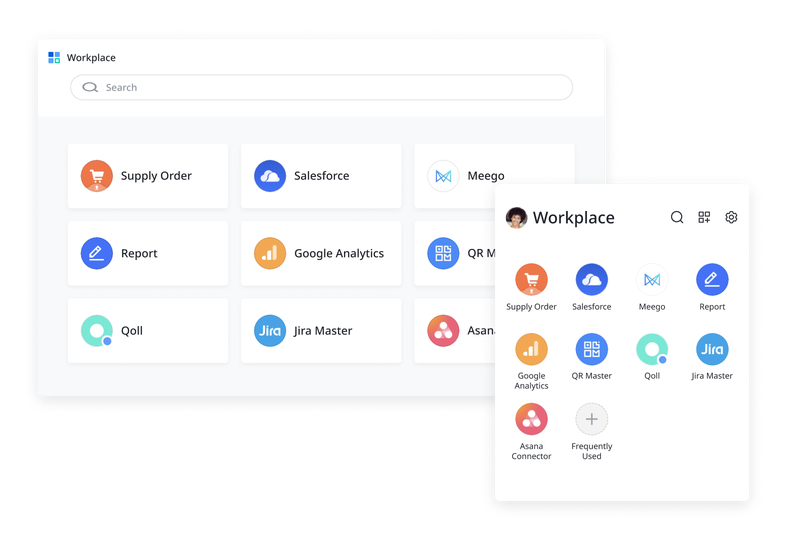
When you need to add essential tools into your digital workspace, you can do so using Lark Workplace, which allows the integration of 3rd party software into the app. It even lets you create your own custom apps with minimal coding knowledge required. Increasing your online storage is possible, too, when the free cloud storage capacity is no longer sufficient for your growing start-up.
For tasks and processes that are outsourced for greater efficiency, you can easily onboard external teams and partners on Lark by enabling external access on work files and folders, as well as as messenger groups and video meetings. Because access for external teams is limited, your sensitive information and data remains protected within Lark.
One successful start-up that has been using Lark to their advantage is Nas Daily, whose global production team creates videos that make an impact in today’s world. Their team uses Lark Calendar to schedule video shoots, Lark Docs for sending and editing scripts, Lark Messenger for instant communication, and Lark Video Calls for meetings.
Discover more of what Lark can do to help your start-up business thrive. Visit www.larksuite.com to learn more.
Lark is available on Mac, PC, iOS, and Android. Click here to start using Lark today.
Master-planned township Iloilo Business Park has everything businesses need to grow on this side of Western Visayas
It doesn’t take a lot to fall in love with Iloilo City, especially if you aim to make your business endeavor a huge success.
Cited as the city with the most business-friendly local government unit in the country outside Metro Manila during the recently concluded 46th Philippine Business Conference of the Philippine Chamber of Commerce and Industry (PCCI), Iloilo City stands out as the only city in the Visayas that boasts this special recognition. This is a perfect follow-up to the city’s distinction after being named the “Most Business-Friendly Highly Urbanized City” also by PCCI in 2019.
Described as a “high-achieving, progressive urban center,” Iloilo City has been attracting a lot of attention from local and international business while also being a haven for ecology and cultural identity.
However, it takes more than a proactive local government for any business to prosper. Equally important is the abundance of a high-quality workforce, a continuously improving infrastructure, and a location that puts you in the center of sustained economic activity.
Within Iloilo City in Mandurriao is Iloilo Business Park (IBP), a 72-hectare township master-planned by property giant Megaworld, the biggest developer of office spaces in Iloilo. Megaworld Premier Offices (MPO) has approximately 100,000 square meters of gross leasable area in IBP to date, with 98% of its existing spaces currently occupied by local and international firms.
An abundance of prime office spaces in IBP
This comes as no surprise as the township concept proves very advantageous to most businesses that flock to Iloilo as it helps ensure convenience, sustainability, and ease of movement necessary to retain both clients and employees.
With 301 prime office units for sale, the 19-storey International Corporate Plaza can be the next home of your business within the city’s bustling central business district, that is Iloilo Business Park.
“So far, the International Corporate Plaza will be the most modern and state-of-the-art office tower in Western Visayas. Here, companies including entrepreneurs can own their office spaces and enjoy its generous facilities never been seen before in any office building in the region,” says Jennifer Palmares-Fong, vice president for sales and marketing, Iloilo Business Park.
With office spaces ranging from 26-65 square meters, ICP is set to rise in the 9-hectare Commercial and Boutique Hotel District within Iloilo Business Park.
The International Corporate Plaza is one of more than 70 office buildings under MPO’s portfolio. Today, MPO is handling over 1.3 million square meters of office spaces spread across more than 10 cities all over the Philippines.
Aside from ICP, Iloilo Business Park also plays host to several other office buildings in the city, including the Richmonde Tower, One Global Center, and Two Global Center, One Techno Place, Two Techno Place, and Three Techno Place, and One Fintech Place and Two Fintech Place.
The 19-storey International Corporate Plaza houses 301 prime office spaces with generous amenities, including co-working spaces and breakout areas, especially tailored for the new normal of doing business.
Excitement beyond business A dynamic business landscape is only a fraction of what Iloilo Business Park offers as the township carries Megaworld’s signature live-work-play lifestyle concept within its very DNA. Currently, the township plays host to residential condominiums Saint Dominique, One Madison Place, Lafayette Park Square, The Palladium, and Saint Honore.
The township also features world-class hotels Courtyard by Marriott Iloilo, Richmonde Hotel Iloilo, and soon Belmont Hotel Iloilo. Meetings, incentives, conferencing, and exhibition (MICE) events set in Iloilo have also found a home at the1.7-hectare Iloilo Convention Center (ICC), which is dubbed as the biggest convention center in Western Visayas.
There’s also the three-level Festive Walk Malland the 1.1-kilometer Festive Walk Parade, iconic components of the township that bring another dimension to the shopping and leisure lifestyle landscape in Western Visayas. Another centerpiece in the township is the Iloilo Museum of Contemporary Art (ILOMOCA), which showcases masterpieces from acclaimed local and international artists. ILOMOCA is housed inside the iconic Casa de Emperador building, which is also adorned by the bronze statue of local hero, Gen. Martin Delgado.








 The integrated Lark Calendar allows team members to see each others’ schedules and project timelines for greater transparency within remote teams. The entire team’s availability can be seen at a glance, with the ability to view multiple time zones, making scheduling easy for teams located in different areas around the world.