Home Blog Page 839

South Korean presidential policy chief ‘optimistic’ about US tariff talks

STOCK PHOTO | Image by Vitamin from Pixabay

SEOUL — South Korea’s chief presidential policy adviser said on Thursday he was “optimistic” about ongoing talks to finalize a trade deal with the US, in the latest remarks by officials suggesting progress in negotiations that had stalled for months.

Kim Yong-beom and Industry Minister Kim Jung-kwan spoke to reporters before departing for the United States. They will be joining Finance Minister Koo Yun-cheol and Minister for Trade Yeo Han-koo for follow-up negotiations in Washington.

Kim’s comments echo Minister Koo’s remarks earlier this week that there was “huge progress” and Foreign Minister Cho Hyun saying there were “positive signals” in reaching a deal.

On the US side, Treasury Secretary Scott Bessent said on Wednesday the countries were close to finalizing a trade deal and he expected an announcement in the next 10 days. Seoul has been seeking to reach a deal by late October when US President Donald Trump is due to visit the country for an Asia-Pacific summit.

South Korea agreed in late July a preliminary deal with Trump lowering US tariffs on imports to 15% from 25%, in return for South Korean investment of $350 billion in U.S. strategic industrial sectors.

A promised cut in US tariffs on auto imports to 15% from 25%, however, has not been implemented for South Korea amid stalled negotiations over the details of the investment package, while rival Japan secured this last month after finalizing its deal including $550 billion investments in the US.

Seoul has been concerned over the foreign exchange implications and the structure of the investment package and asked Washington for a safeguard, such as a currency swap line, to prevent any currency market impact.

South Korea’s benchmark KOSPI stock index rose as much as 1.9% to a record high on Thursday, as shares of Hyundai Motor surged 9.6% to a one-year high and sister automaker Kia jumped 8%.— Reuters

Philippines says Chinese forces harassed patrol plane near Scarborough Shoal

A People's Liberation- Navy helicopter flies below a Philippine Coast Guard maritime patrol plane in the South China Sea, based on a handout image released by Manila's coast guard on Oct. 15. PCG

By Kenneth Christiane L. Basilio, Reporter

Chinese forces harassed a Philippine maritime patrol aircraft near the disputed Scarborough Shoal in the South China Sea, Manila’s coast guard said late Wednesday, in the latest flare-up of tensions that have simmered since Sunday.

The Philippine Coast Guard (PCG) said a Chinese fighter jet harassed its patrol plane and endangered its “safe flight path,” while a People’s Liberation Army-Navy helicopter flew directly beneath it during a maritime domain awareness (MDA) mission that spotted a floating buoy at the northern tip of Scarborough Shoal.

“The PCG’s MDA flight was subjected to aggressive interference by forces from the People’s Republic of China,” it said in a statement.

The Chinese Embassy in Manila did not immediately reply to a Viber message seeking comment.

The Wednesday encounter was the latest in a string of confrontations between the Philippines and China in the South China Sea, where tensions have persisted since Sunday’s collision between a Chinese coast guard vessel and a Philippine government ship within what Manila said were its territorial waters off Thitu Island in the Spratlys.

A China Coast Guard (CCG) spokesman said Beijing took “necessary control measures” to expel ships that allegedly intruded into the disputed Sandy Cay near Thitu, the biggest Philippine-held island in the Spratly Islands.

Competing claims between the Philippines and China in the disputed waters have led to frequent confrontations involving repeated use of water cannons and sideswiping maneuvers by Chinese vessels against Philippine ships.

Beijing claims nearly all of the South China Sea via a 1940s nine-dash line map that overlaps with the exclusive waters of the Philippines and neighbors like Vietnam and Malaysia despite a 2016 ruling by the Permanent Court of Arbitration in The Hague that voided its claims.

The maritime surveillance flight was conducted to follow up on a first buoy it had spotted earlier this week at the center of Scarborough Shoal, which the Philippines calls Panatag. Manila’s coast guard said the finding indicates there are “ongoing activities in the area.”

The secondary buoy was spotted at the northern tip of Scarborough Shoal, the PCG said.

In September, China approved the creation of a 3,500-hectare nature reserve at the northeast rim of Scarborough, which it said is intended to preserve the ecological diversity of one of the most contested areas in the South China Sea.

Chinese maritime forces have repeatedly barred Filipino fishermen from accessing Scarborough, which lies within Manila’s 200-nautical mile exclusive economic zone. The atoll is a vast fishing lagoon near major shipping lanes that China seized in 2012 after a standoff with Philippine troops.

The contested feature lies about 222 kilometers west of Luzon Island and is nearly 900 kilometers away from Hainan, the nearest major Chinese landmass.

US economic activity little changed, employment stable in recent weeks, Fed says

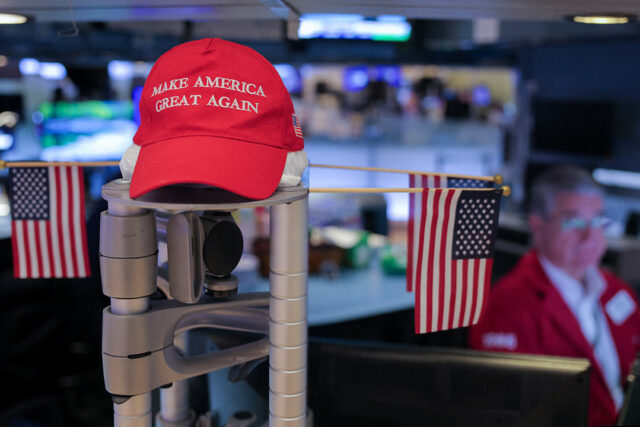
A “Make America Great Again” hat is seen on display on the trading floor at The New York Stock Exchange. — REUTERS

US economic activity was little changed and employment was largely stable in recent weeks, the Federal Reserve said on Wednesday, but there were emerging signs of weakness including more layoffs and middle- and lower-income households pulling back on spending.

“In most Districts, more employers reported lowering headcount through layoffs and attrition, with contacts citing weaker demand, elevated economic uncertainty, and, in some cases, increased investment in artificial intelligence technologies,” the Fed said in its latest “Beige Book” report, a compendium of survey results, interviews, and other qualitative data from the 12 regional Fed banks.

“Nevertheless, labor supply in the hospitality, agriculture, construction, and manufacturing sectors was reportedly strained in several Districts due to recent changes to immigration policies.”

Published two weeks ahead of each Fed interest-rate-setting meeting, the report is meant to help central bankers assess the nation’s health with more timely, and often more colorful, insight than is available in the official statistics.

With the data vacuum left by the government shutdown, the Beige Book may get more weight than usual in Fed policymaker deliberations, following their decision last month to reduce the policy rate a quarter of a percentage point.

The report landed on the day that the Bureau of Labor Statistics had been scheduled to release a key inflation report, now delayed by the government shutdown until October 24. All other federal economic data, including a monthly retail sales report due Thursday, won’t be published until the government is reopened.

The Beige Book said that overall national consumption “inched down,” particularly on retail goods. Five of the Fed’s 12 regions reported lower consumer spending.

“Some retailers were cautiously optimistic about the upcoming holiday sales season, but a few expect holiday sales to be ‘meh,’ and noted that tariffs may soon cause prices to rise, resulting in further softening of demand,” said the Atlanta Fed, one of five banks reporting lower consumer spending. “Diners continued to pull back by skipping desserts and/or alcoholic beverages.”

Spending patterns diverged along wealth and income lines, with lower- and middle-income households showing heightened sensitivity to inflation and upper-income consumers accounting for most spending gains in some districts.

“Community contacts report rising food pantry usage among both low- and middle-income households, growing reliance on ‘buy now, pay later’ services, and elevated credit card delinquency rates,” the St. Louis Fed reported. “A hotel owner in Missouri reported that travel demand had dipped in the past few months, especially among middle-class consumers, and described the current environment as a ‘middle-class recession’ that is affecting select-service hotels.”

The latest Beige Book summarizes information collected from the commercial and community contacts of each of the Fed’s 12 regional banks through October 6.

Its mention of layoffs lines up with a rise in unemployment insurance claims estimated by Wall Street firms as they track state-by-state reports in the absence of nationwide reporting. Fed policymakers say their recent rate cut, and the likelihood of more reductions to come, stems from downside risks in the labor market.

“A South Carolina home builder reported a decline in demand due to increased prices, which they said would result in imminent layoffs,” the Richmond Fed said. “One manufacturer said that they had postponed layoffs while waiting for industrial production to recover but could not delay cuts any longer,” reported the Cleveland Fed.

At the same time, prices continued to rise, driven largely by tariffs.

“Tariff-induced input cost increases were reported across many Districts, but the extent of those higher costs passing through to final prices varied,” the Fed said in the report, which featured the word ‘tariff’ 64 times, fewer than the previous report.

In the Fed’s August Beige Book, “tariff” arose 100 times.

Meanwhile there were fresh hints that companies were dealing with a smaller pool of available workers due to the Trump administration’s immigration crackdown, as well as uncertainty about or outright softening in demand for their services and products.

“A few contacts in construction and manufacturing noted more difficulty finding workers for their entry-level positions, and they attributed that to reduced immigration,” the San Francisco Fed said.

“Outlooks deteriorated with slowing demand, policy uncertainty, and inflation highlighted as the top concerns for businesses,” the Dallas Fed reported.

Though financial markets are betting heavily on another interest-rate reduction at the Fed’s October 28-29 meeting, central bankers appear closely divided and say they are tracking conversations with business and community leaders particularly closely.

“Anecdotes become data,” St. Louis Federal Reserve President Alberto Musalem said last week. “Sometimes you have moments where you have been hearing a story for the past six or 12 months, but suddenly a new story emerges and you get these inflection points and, you often get those in the conversations before you get them in the data.” — Reuters


Pentagon journalists vacate workspace as new restrictions take effect

THE PENTAGON is seen from the air in Washington, US, March 3. — REUTERS

Dozens of journalists who cover the US Defense Department vacated their offices in the Pentagon and returned their credentials on Wednesday as new restrictions on press access took effect.

The Defense Department had set a Tuesday deadline for news outlets to either sign a new Pentagon access policy or lose access to press credentials and Pentagon workspaces.

At least 30 news organizations, including Reuters, declined to sign the new policy, citing a threat to press freedoms and their ability to conduct independent newsgathering on the world’s most powerful military.

The policy requires journalists to acknowledge new rules on press access, including that they could be branded security risks and have their Pentagon press badges revoked if they ask department employees to disclose classified and some types of unclassified information.

The Pentagon Press Association, which represents more than 100 news organizations, including Reuters, said in a statement that Wednesday was “a dark day for press freedom that raises concerns about a weakening US commitment to transparency in governance, to public accountability at the Pentagon and to free speech for all.”

Chief Pentagon spokesperson Sean Parnell said in a statement on Monday: “The policy does not ask for them to agree, just to acknowledge that they understand what our policy is. This has caused reporters to have a full-blown meltdown, crying victim online. We stand by our policy because it’s what’s best for our troops and the national security of this country.”

The Pentagon declined to make additional comment on Wednesday.

Journalists described the press area at the Pentagon on Wednesday as unusually quiet, as they removed furniture, computer servers, TV studio soundproofing material and other contents.

“I’ve never seen that place not buzzing like a beehive,” said JJ Green, National Security Correspondent at Washington news radio station WTOP.

Green, who has worked as a national security correspondent for 20 years, turned in his press credential Wednesday morning. Television outlets have until Friday to remove their gear.

Credentialed reporters have traditionally been limited to unclassified spaces in the Pentagon and have worked across the hallway from the Pentagon press office, which has allowed them access to department spokespeople. Press badges signify that they have gone through a background check.

“We’ve never been allowed to just bolt right on into classified areas or people’s offices,” said Stephen Losey, a reporter who covers the Air Force for Defense News. “I don’t know anybody who would purposely eavesdrop or anything like that, which is what some people have made it seem like we’re doing.”

Some journalists interviewed by Reuters said the new restrictions won’t keep them from reporting on the US military.

“The irony of irony is that Pentagon reporters are not having conversations about controlled information in the hallways,” said a member of the Pentagon Press Association speaking on condition of anonymity. “We’re doing it over (the encrypted app) Signal.”

The Pentagon’s new policy is the latest expansion of restrictions on press access under Defense Secretary Pete Hegseth, a former Fox News host. Fox News is among the news organizations that has refused to sign on to the new press restrictions.— Reuters

Dozens still missing days after Mexico’s mass flood

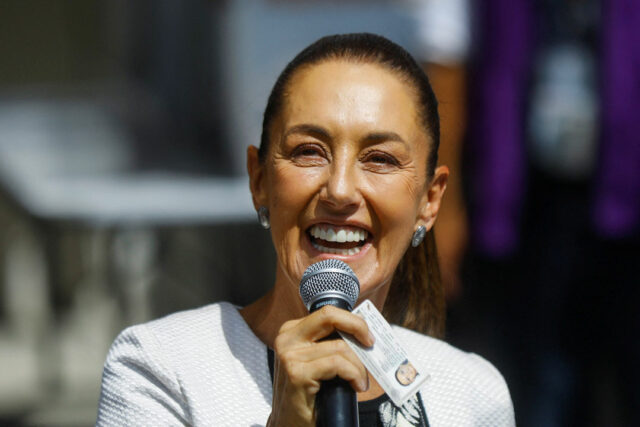
Mexico President Claudia Sheinbaum — REUTERS

MEXICO CITY — Five days after historic floods that killed at least 66 people and affected 100,000 homes, Mexico is still scrambling to get help to the worst-hit communities and locate 75 missing people amid criticism of the government’s handling of the crisis.

After a year of meteoric approval ratings, the disaster is a test for Mexico’s President Claudia Sheinbaum, who has encountered rare hostile crowds and heckling on visits to affected areas.

The disaster began when torrential rains in the central and eastern parts of the country set off landslides, caused rivers to overflow and bridges to collapse. Whole streets were washed away.

Antonio Ocaranza, a political analyst based in Mexico City, said that while he has been impressed by Sheinbaum’s willingness to be on the ground during the recovery, it belies a bigger problem.

“There is a problem of competence in the initial reaction to the tragedy,” he said, adding that officials were slow in providing necessary machinery to some areas.

SCRAPPING OF DISASTER FUND
The disaster has also fueled questions about the government’s reliance on the military to handle a growing list of responsibilities, from managing airports to constructing major infrastructure projects and distributing disaster relief.

Sheinbaum’s predecessor and political mentor, Andres Manuel Lopez Obrador, spearheaded the elimination of the country’s Natural Disaster Fund (Fonden), saying it was beset by corruption. Sheinbaum defended that decision, saying on Tuesday that “defending Fonden is like defending corruption.”

But the dismantling of Fonden has raised questions of where her government will find the money needed for the response.

She said the federal government has 19 billion pesos ($1.03 billion) available for emergencies, of which around 3 billion pesos have been used. “There are sufficient resources to address the emergency.”

On Wednesday, in the state of San Luis Potosi, Sheinbaum said government aid would be given in two stages: cleanup, which she said would happen next week, followed by “support” depending on the damage suffered by each home. After that, the government would help with roads and drainage.

In 2023, following the devastating Hurricane Otis in the resort town of Acapulco, the government gave cash transfers of between $400 and $3,250 per affected household depending on the level of damage.

Deputy Gibran Ramirez of the opposition center-left Citizens’ Movement party criticized the government’s response to the latest disaster as unprepared and “lamentable.”

“There’s no capacity to respond. It’s always the same response – improvisation,” he said. “And just like in Guerrero after Hurricane Otis, the government will make direct cash transfers to calm the social anger.”

FLOODS CAME WITHOUT WARNING
The floods largely caught the government flat-footed. “There were no scientific or meteorological conditions that could have indicated to us that the rainfall would be of this magnitude,” Sheinbaum told reporters on Monday, adding that the government had been focused on two separate storms off the Pacific coast.

The torrential rains off the Gulf Coast came toward the end of the rainy season, battering land and bursting rivers that had already been soaked by months of rain. The worst-affected states are Veracruz, Hidalgo and San Luis Potosi.

On Sunday, Sheinbaum confronted an angry crowd of people searching for their relatives in the southeastern state of Veracruz, where at least 29 people have died. Some yelled that they had been in the zone for three days looking while others pushed photos of missing people at her.

Struggling to make herself heard, Sheinbaum said: “Everyone will be attended to. We are not going to hide anything.”— Reuters

Cash remittances hit $2.98B in Aug.

A man accepts Philippine peso bills at a money remittance center in Makati City, Metro Manila, Philippines, Sept. 19, 2018. — REUTERS/ELOISA LOPEZ

By Katherine K. Chan

MONEY SENT HOME by overseas Filipino workers (OFW) went up by 3.2% year on year in August, as the weaker peso drove up the value of remittances, data from the Bangko Sentral ng Pilipinas (BSP) showed.

In a statement, the BSP said cash remittances coursed through banks increased by 3.2% to $2.977 billion in August from $2.885 billion in the same month last year.

Despite the annual growth, remittances declined by 6.4% month on month from the seven-month high of $3.179 billion in July.

Overseas Filipinos’ Cash Remittances

The August tally was the lowest in three months or since the $2.658-billion remittances in May.

“Cash remittances from overseas Filipinos continued to grow… This developed on account of higher inflows from both land-based and sea-based workers,” the BSP said in a statement on Wednesday.

Money sent home by land-based workers climbed by 3% year on year to $2.35 billion in August, accounting for the bulk of cash remittances.

Remittances from sea-based workers likewise rose by 3.8% year on year to $626 million in August.

“Cash remittances rose 3.2% year on year in August to $2.98 billion, supported by steady overseas employment and resilient inflows from key markets like the US, Singapore, and Saudi Arabia,” Union Bank of the Philippines  Chief Economist Ruben Carlo O. Asuncion said in a Viber message.

Robert Dan J. Roces, an economist at SM Investments Corp., said the 3.2% year-on-year increase in cash remittances in August indicates a “modest pickup” versus the 3% growth in July.

“This suggests that remittance flows have some resilience despite global headwinds, and reflects, in part, a lower comparative base or mild fluctuations in monthly flows,” he said in a Viber message.

Mr. Roces said the weak peso drives higher remittances in dollar terms as recipients “gain more local-currency value.”

“Evidence from BSP studies have highlighted the positive role of exchange rate depreciation as a driver of remittances,” he added.

In August, the peso averaged P57.2525 versus the greenback, weakening from the P56.7523-per-dollar average in July.

On the other hand, Mr. Asuncion said the month-on-month dip in remittances reflects “seasonal normalization after back-to-school spending and a less volatile peso.”

Meanwhile, personal remittances, which include both cash coursed through banks and informal channels as well as in-kind remittances, stood at $3.307 billion in August, rising by 3.2% from $3.204 billion a year earlier.

Workers with contracts of one year and above sent home the bulk of personal remittances at $2.54 billion, up 3% year on year.

Personal remittances from workers with contracts of less than one year also rose by 4% year on year to $690 million.

EIGHT-MONTH PERIOD
In the eight months to August, cash remittances from migrant Filipinos climbed by 3.1% to $22.909 billion from the $22.217 billion posted in the same period last year.

Remittances from land-based workers grew by 3.3% year on year to $18.32 billion as of end-August, while sea-based OFW remittances rose by 2.5% to $4.59 billion.

Money sent home from the United States accounted for 40.4% of the remittances in the first eight months of the year.

This was followed by Singapore (7.1%), Saudi Arabia (6.3%), Japan (4.9%) the United Kingdom (4.8%), the United Arab Emirates (4.5%), Canada (3.4%), Qatar (2.9%), Taiwan (2.8%) and South Korea (2.6%).

Meanwhile, personal remittances went up by 3.1% to $25.51 billion in the eight-month period from $24.74 billion the previous year.

“With year-to-date growth slightly ahead of target and holiday inflows ahead, remittances remain on track to meet BSP’s full-year growth forecast,” Mr. Asuncion said.

Mr. Roces said remittances typically rise in the September-to-December period, which may boost the full-year tally.

The BSP expects cash remittances to grow by 3% to $35.5 billion this year.

DoF vows to address businesses’ tax concerns

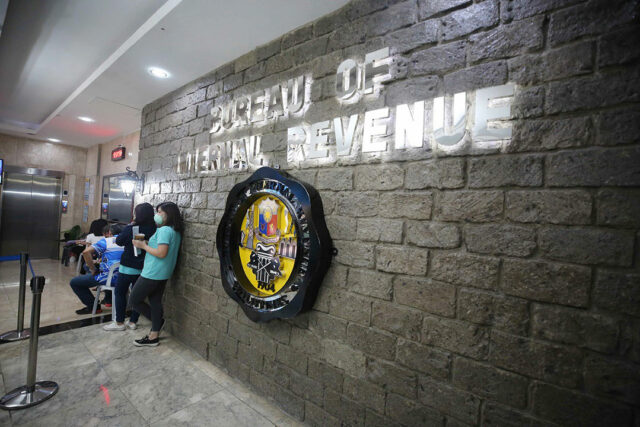
TAXPAYERS line up at the Bureau of Internal Revenue office in Intramuros, Manila, April 18, 2022. — PHILIPPINE STAR/RUSSELL PALMA

FINANCE SECRETARY Ralph G. Recto has ordered the formation of a multi-sectoral working group to address tax woes raised by business leaders, the Department of Finance (DoF) said.

According to a DoF statement, Mr. Recto gave the order after a dialogue with the Makati Business Club on Oct. 14, where corporate executives flagged key policy concerns and proposed solutions to improve the investment climate.

The working group will be led by the DoF and include private sector representatives, giving the business community a chance to raise any tax concerns.

“We want to support the government in its quest to make this a very good business environment and investment destination. That’s our overall aim. We’re here to support you,” Makati Business Club (MBC) Executive Director Rafael ASG Ongpin was quoted as saying in the DoF statement. “We’re here because this government has been very open and very collaborative, and we really see the value of that.”

The meeting included representatives of multinational firms such as Mondelez Philippines, Inc.; Unilever; SGV & Co.; Pepsi-Cola Products Philippines, Inc.; the American Chamber of Commerce of the Philippines; Texas Instruments, Inc.; and e-commerce platform Shopee.

One of the concerns raised by business leaders was the implementation of Revenue Memorandum Circular (RMC) No. 5-2024, which outlines taxation of cross-border services involving foreign corporations.

In February last year, 10 business groups including the Philippine Chamber of Commerce and Industry and Management Association of the Philippines had urged the Bureau of Internal Revenue (BIR) to rescind the circular, which would raise the cost of doing business in the Philippines.

They had said the circular violates existing income tax treaties entered into by the Philippines with various countries.

“These treaties generally provide that business profits of a treaty resident shall not be taxed in the Philippines if the foreign treaty resident does not have a permanent establishment in the Philippines,” the business chambers had said.

In response, Mr. Recto pledged to review existing tax circulars and explore digital tools aimed at improving transparency and efficiency in tax assessments.

BIR Commissioner Romeo D. Lumagui, Jr., who also attended the meeting, acknowledged concerns raised over the mentioned tax memorandum and backed Mr. Recto’s proposal for amendments.

In addition, the Finance chief reaffirmed the government’s push to accelerate digitalization to curb corruption and increase efficiency in the delivery of public services to business leaders.

“The government is only 20% or 25% of the economy — you’re 75%. Today, you have more than 50.1 million people working, with more than 32 million in the private sector,” Mr. Recto said.

He also called for stronger private sector engagement in the DoF’s digitalization program, particularly in the BIR, Bureau of Customs and Bureau of the Treasury.

“Whatever support you think we can provide — inputs, technology, we’d be more than happy to do that,” MBC Chairman Edgar O. Chua was quoted as saying. — Aubrey Rose A. Inosante

Financial system resources jump by  6.3% at end-August

BW FILE PHOTO

THE TOTAL RESOURCES of the Philippine financial system climbed by 6.3% year on year in the first eight months, preliminary data from the Bangko Sentral ng Pilipinas (BSP) showed.

Resources held by banks and nonbank financial institutions rose to P34.577 trillion in the January-to-August period from P32.513 trillion the prior year.

However, it dipped by 0.04% from the P34.592 trillion recorded as of end-July.

These resources include funds and assets such as deposits, capital, and bonds or debt securities.

Based on preliminary central bank data, banks’ resources increased by 6.6% to P28.586 trillion as of end-August from P26.809 trillion a year ago.

Broken down, resources held by universal and commercial banks went up by 6.2% to P26.632 trillion at end-August from P25.087 trillion last year.

Thrift banks’ resources likewise jumped by 21.8% year on year to P1.38 trillion at end-August from P1.133 trillion a year ago.

On the other hand, resources of rural and cooperative banks went down by 11.3% to P424.9 billion in the eight months to August from P478.9 billion in the comparable year-ago period.

Resources of digital banks increased by 35.1% to P149 billion from P110.3 billion a year ago.

Meanwhile, the latest available data showed nonbank financial institutions’ (NBFI) resources rose by 5% to P5.991 billion as of end-March from P5.704 billion seen at end-August last year. There were no data for NBFIs as of end-August this year.

Nonbanks include investment houses, finance companies, security dealers, pawnshops, and lending companies.

Institutions such as nonstock savings and loan associations, credit card companies, private insurance firms, the Social Security System, and the Government Service Insurance System are also considered NBFIs.

Rizal Commercial Banking Corp. Chief Economist Michael L. Ricafort attributed the higher resources in August to the double-digit growth in bank lending, particularly consumer loans.

BSP data showed bank lending grew by 11.2% year on year to P13.62 trillion in August. This was the slowest growth since the 11.1% posted in November 2024.

“However, the slight month-on-month decline could be attributed to weather-related disruptions after the series of storms that reduced business days, thereby reducing banking and other economic transactions,” Mr. Ricafort said in a Viber message.

He noted that further easing by the BSP and the US Federal Reserve could boost the financial system’s resources in the coming months.

The central bank last week unexpectedly trimmed its benchmark interest rate by 25 basis points (bps) to 4.75%, the lowest in three years.

The Monetary Board has now reduced borrowing costs by a total of 175 bps since August last year.

BSP Governor Eli M. Remolona, Jr. said one more cut is possible at their last meeting in December. He also left the door open for policy easing next year as he sees the neutral nominal policy rate to be closer to 4% than their earlier projection of 5%.   

Meanwhile, the US Federal Reserve is expected to deliver two more cuts until yearend following its first 25-bp reduction this year in September, which brought its policy rate to 4-4.25%. — Katherine K. Chan

Gov’t urged to fulfill its commitments under CARS program

REUTERS

By Justine Irish D. Tabile, Reporter

THE GOVERNMENT should fulfill its commitments to car manufacturers to ensure that the Philippines remains a competitive investment destination for foreign investors, business groups said.

“We need investors. And if that can be another issue against us, we should settle that,” Sergio Ortiz-Luis, Jr., president of the Philippine Exporters Confederation, Inc. told BusinessWorld.

Mr. Ortiz-Luis said the government should resolve these issues surrounding car manufacturers to ensure the country can still compete for investments.

“With all the issues against us, the ease of doing business, and then this commitment, we shouldn’t allow that because we are already lagging behind in investments. Let’s not add to the issues,” he added.

The Board of Investments (BoI) told a Senate hearing on Monday that the government is yet to pay the participants of the Comprehensive Automotive Resurgence Strategy (CARS) program.

Under the CARS program, the government promised to provide the participants fixed investment support and production volume incentives, of which P1.4 billion was already paid for by the government, while P3.987 billion remains unfunded.

However, CARS program arrearages were only allocated P225 million in the proposed budget of the Department of Trade and Industry for 2026.

BoI Investment Promotions Services Executive Director Evariste M. Cagatan said that the department initially requested the full amount for the 2026 budget, but the allocation was reduced due to lack of “fiscal space.”

“We want to pay them, because the participants in CARS are also the ones that we are also targeting for the Revitalizing the Automotive Industry for Competitiveness Enhancement (RACE) program,” she said.

“If they are not paid, they will not have the confidence to [participate in] our RACE program as well as the Electric Vehicle Incentive Strategy (EVIS) for parts makers,” she added.

Senator Sherwin T. Gatchalian said he is “very concerned” over this issue as it hurts the country’s image among foreign investors.

Pag masama experience nila, kakalat ’yan sa buong mundo, wala nang maniniwala sa atin next time (If they have a bad experience, it will be known around the world and no one will believe us next time),” he said.

“We have to make sure that we always remain true to our commitments to our investors.”

Philippine Chamber of Commerce and Industry President Enunina V. Mangio said that the government should find a way to settle the payments for CARS participants.

“If our image will be damaged or will be tainted by this nonperformance of our commitment, it would not be worth it to the Filipino people, especially hearing all these kinds of problems as far as corruption is concerned,” she told BusinessWorld. 

“So, the government must, by all means, provide and pay for this commitment,” she added.

Trade Secretary Ma. Cristina A. Roque said that she will be coordinating with Budget Secretary Amenah F. Pangandamanan to find out ways on how the government can address this matter.

“We really plan to get it from the budget, so I am in talks with the Department of Budget and Management, and I am also in talks with Toyota and Mitsubishi, so everything is okay,” she told reporters on Wednesday. 

Toyota Motor Philippines Corp. and Mitsubishi Motors Philippines Corp. were participants in the CARS program.

“We have already talked about different ways to pay, and we are still coordinating. That is what we owe to them, so definitely the government will pay them,” Ms. Roque said.

SM Prime to open 89th mall in La Union on Oct. 17

SM CITY LA UNION FACEBOOK PAGE

LISTED property developer SM Prime Holdings, Inc. (SMPH) will open its new mall in La Union on Oct. 17, expanding its portfolio to 89 malls nationwide as part of its ongoing regional growth strategy.

“This is our ninth mall in Northern Luzon, and we designed it to serve as a landmark for both residents and tourists,” SM Prime President Jeffrey C. Lim said in a statement on Wednesday. “As the surfing capital of the region, La Union deserves a retail center that reflects its vibrant lifestyle and rich culture.”

The new SM City La Union, located along Diversion Road, Barangay Biday in San Fernando City, offers more than 51,000 square meters (sq.m.) of leasable space, with over 80% already taken up.

According to the company, the mall will house major tenants such as SM Store, SM Markets, Ace Hardware, Toy Kingdom, Levi’s, Watsons, Surplus, Pet Express, Adidas, Miniso, Sports Central, SM Appliance Center, Puma, Uniqlo, National Bookstore, and BDO.

A highlight of SM City La Union is the Sandbox, a 1,348-sq.m. outdoor area designed for sports tournaments, concerts, yoga, Zumba, and other community activities.

A bike lane running parallel to a manmade sandbar is also part of the development.

The mall will feature an SM Foodhall serving Ilocano, Filipino, and international dishes, and will introduce the province’s first Director’s Club cinema.

“With our diverse and unique offerings, we hope to strengthen La Union’s position as both a tourism and economic hub in Northern Luzon,” Mr. Lim said.

In 2024, La Union’s tourism industry generated over P1 billion in revenues, driven by higher visitor spending and longer average stays of 1.39 days from 1.33 days a year earlier, the company said.

The province recorded more than 500,000 tourist arrivals, with San Fernando City, San Juan, and Bauang ranking as its top destinations, it added.

Over the next five years, SM Prime plans to open a series of flagship malls, including SM Sta. Rosa in Nuvali by 2026, Harrison Plaza in Manila by 2027, SM Malolos in Bulacan by 2028, a Cavite mall by 2029, and another in Pasay by 2030.

Apart from new developments, the company is also pursuing redevelopment and expansion projects to reach its goal of 100 malls by 2027.

SM Supermalls, the retail arm of SM Prime, is among Southeast Asia’s largest mall developers.

SM Prime earlier reported a 10% increase in its second-quarter net income to P12.8 billion, bringing first-half earnings to P24.5 billion, up 11% from a year earlier. The growth was driven mainly by higher rental income, real estate sales, and ancillary revenues.

Consolidated revenues for the April-to-June period rose by 4% to P35.3 billion, while first-half revenues climbed by 5% to P68 billion from P64.7 billion a year ago.

Rental income from its malls, offices, hospitality, and MICE (meetings, incentives, conferences, and exhibitions) businesses accounted for 60% of total revenues, followed by real estate sales at 29%, and cinema, food and beverage, and amusement revenues at 11%.

Its mall business remained the main earnings contributor, accounting for 69% of total profit at P17 billion — up 14% year on year — supported by new openings, increased foot traffic, and strong occupancy rates.

On Wednesday, shares of SM Prime Holdings slipped by 0.87% or 20 centavos to close at P22.80 each. — A.G.C. Magno

Megawide bags Megaworld deals for Uptown Bonifacio, Newport projects

MEGAWIDE.COM.PH

SAAVEDRA-LED Megawide Construction Corp. (MWIDE) has secured two new contracts from property developer Megaworld Corp. to build residential towers in its township developments in Taguig and Pasay.

The contracts cover civil, structural, architectural, and mechanical, electrical, plumbing, and fire protection works, Megawide said in a disclosure to the stock exchange on Wednesday.

The projects include Uptown Modern, a high-rise residential tower in Uptown Bonifacio in Taguig City, and One Portwood, a condominium development in Newport City, located near the Ninoy Aquino International Airport (NAIA) in Pasay City.

“These will also be among the numerous developments both companies have worked on in the past,” Megawide President and Chief Executive Officer Edgar B. Saavedra said, noting that the partnership with Megaworld “is built on the shared pursuit of sustainability, excellence, and speed-to-market.”

Megawide said it will apply its pre-cast and integrated construction technologies to the projects, similar to those used in previous Megaworld developments such as The Worldwide Plaza, Albany Luxury Suites, Newport Link, International Finance Tower, and Gentry Manor.

The new contracts form part of the P20 billion worth of projects Megawide has been negotiating to raise its order book to P50 billion by yearend.

Other potential clients include Trans Aire Development Holdings Corp., a subsidiary of San Miguel Corp.; DoubleDragon Properties Corp.; 8990 Holdings, Inc.; Landers Superstore; and Citicore Power, Inc.

The company said it continues to pursue a mix of residential, commercial, industrial, and infrastructure projects to maintain a balanced, sustainable, and diverse order book that supports long-term revenue visibility.

Shares in Megawide rose by 7.49% or 23 centavos to close at P3.30 apiece on Wednesday. — A.G.C. Magno

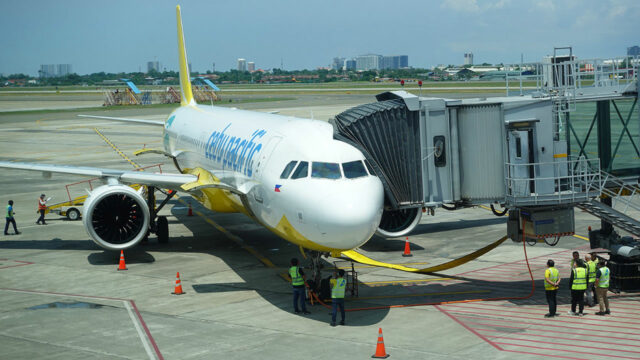
Cebu Pacific says Q3 passengers up 2.6%

JGSUMMIT.COM.PH

CEBU AIR, Inc., the listed operator of budget carrier Cebu Pacific, said its passenger volume rose by 2.6% to 1.83 million in the third quarter (Q3), supported by strong domestic travel demand.

“The airline is entering the fourth quarter with stronger aircraft availability and greater capacity — adding flight frequencies and deploying widebody aircraft on high-demand routes — to better capture the anticipated surge in holiday travel and optimize revenue performance,” Cebu Pacific President and Chief Commercial Officer Alexander G. Lao said in a statement on Wednesday.

The company attributed the growth in domestic passenger volume to higher capacity and sustained demand across its network.

Cebu Pacific’s seat load factor, which measures the percentage of occupied seats, stood at 81.1% in the third quarter, slightly lower than the 82.6% a year earlier, following a 4.4% expansion in total seat capacity.

Broken down, domestic passenger traffic rose by 1.3% to 1.38 million from 1.36 million a year earlier, while international traffic increased by 6.7% to 446,000 from 418,000 previously.

“September’s results reflected the typical lean travel period in the Philippines, which we use strategically to complete aircraft maintenance and prepare our fleet for the peak season,” Mr. Lao said.

For the nine months to September, passenger traffic climbed by 13.9% to 19.95 million from 17.51 million in the same period last year.

Domestic passengers rose by 12.7% to 14.88 million, while international passengers grew by 17.7% to 5.07 million.

For the first half, Cebu Air’s attributable net income more than doubled to P8.97 billion from P3.55 billion a year ago, as gross revenues rose by 23.1% to P63.33 billion.

Passenger revenues accounted for P44.23 billion, while cargo and ancillary revenues contributed P3.51 billion and P15.59 billion, respectively.

At the local bourse on Wednesday, shares in Cebu Air slipped by 1.11% or 35 centavos to close at P31.05 apiece. — Ashley Erika O. Jose

ADVERTISEMENT
ADVERTISEMENT