


Philippine National Bank sets stockholder’s meeting via remote communication

Jobless Filipinos hit 4.2M in Feb.
By Lourdes O. Pilar, Researcher
THE RANKS of jobless Filipinos increased in February, a month before the government tightened lockdown restrictions in Metro Manila and nearby provinces due to a surge in coronavirus disease 2019 (COVID-19) cases, according to the latest data on jobs.
Preliminary results of the Philippine Statistics Authority’s (PSA) February 2021 round of the Labor Force Survey (LFS) released on Tuesday showed there were about 4.187 million unemployed Filipinos. This was more than the 3.953 million recorded in the January round.
This put the unemployment rate at 8.8% in February, up from 8.7% in January.

The February reading was the third highest since the jobless rates recorded in April 2020 and July 2020 at 17.6% and 10%, respectively.
The February survey round marked the first of the monthly surveys to be conducted by the PSA to closely monitor the current job situation in the country amid the pandemic. In previous years, the surveys were conducted and released quarterly.
Meanwhile, the underemployment rate — the proportion of those already working but still looking for more work or longer working hours — worsened to 18.2% in February from 16% in January. This translated to 7.85 million underemployed Filipinos, more than the 6.589 million in the previous survey.
“Although the unemployment rate marginally increased to 8.8% in February 2021 from 8.7% in January 2021, the gradual reopening of the economy allowed more people to rejoin the labor force,” Acting Socioeconomic Planning Secretary Karl Kendrick T. Chua, Finance Secretary Carlos G. Dominguez III, and Budget and Management Secretary Wendel E. Avisado said in a joint statement.
The size of the labor force was about 47.341 million in February, up from 45.201 million in January. This brought the labor force participation rate to 63.5% from 60.5%.. This was the highest since April 2020, according to the PSA.
The employment rate — the proportion of the employed to the total labor force — stood at 91.2% in February, down from 91.3% in January. In absolute terms, however, the number of employed Filipinos increased to 43.153 million from 41.248 million in January.
“This means we have surpassed our pre-pandemic employment level of 42.6 million in January 2020,” the economic managers said.
The employment rate in the service sector increased to 58.4% in February from 57.2% in the previous month. On the other hand, those in agriculture and industry slipped to 23.9% (from 24.4%) and 17.7% (from 18.4%), respectively.
In absolute terms, there were 1.6 million jobs restored in services, followed by 259,000 in agriculture and 46,000 in industry. The economic managers said this trend “signals rising economic activity.”
“Around 8.7 million jobs were lost when we imposed the strictest quarantine from March to May 2020. As we carefully relaxed our restrictions, more jobs were gradually restored and the total number of jobs created since April last year at 9.3 million led to employment exceeding pre-COVID levels in February 2021,” they said.
Working hours averaged 38.9 a week, fewer than the average of 39.3 in January.
Full-time workers, or those who worked for at least 40 hours a week, made up 59.9% of the total employed in February. This was lower than 61.4% in January.
Meanwhile, part-time workers accounted for 38.5%, up from the previous month’s 38.1%.
“Even as the economy has been said to be reopening [at the beginning of 2021], these February employment numbers are seemingly telling a different story,” UnionBank of the Philippines, Inc. Chief Economist Ruben Carlo O. Asuncion said in an e-mail.
“Reopening should mean the return of jobs, but instead, unemployment has risen including underemployment,” he said. “This may mean that more firms are probably shedding off jobs or are closing down resulting in direct unemployed people or people employed in ‘part-time’ jobs. These part-time jobs may mean that people work fewer hours or full-time jobs but have lower pay due to the pandemic challenges,” he added.
In a separate e-mail, ING Bank N.V. Manila Branch Senior Economist Nicholas Antonio T. Mapa said regardless of the level of lockdown, economic activity and the job market would remain subdued and challenged “given the substantial loss of momentum in the economy.”
“The overall negative sentiment has caused households to cut back on spending to just the bare necessities and perhaps modest discretionary spending, limiting economic activity,” he said. “Meanwhile, with firms pressured by the downturn, not too many are in expansion mode, limiting job opportunities available for job seekers,” Mr. Mapa said.
“We are well past the stage that lockdowns are causing hunger and unemployment, the economy is stuck in low gear,” he added.
Asked on the prospects of jobs data going back to pre-pandemic levels, both economists were not so upbeat.
“Until we see the economy charging again at its former breakneck speed, we will predict that unemployment will remain above its medium-term average of 5.3%. Unless the economy is expanding fast enough to absorb the slack in labor, jobs for Filipinos will be few and far between,” Mr. Mapa said.
UnionBank’s Mr. Asuncion said unemployment and labor force participation “may worsen” due to the challenges posed by the ongoing pandemic.
“We are expecting recovery (normalization) of jobs set back further because of the re-imposition of restrictions lately. The initial expectation was to return to pre-pandemic GDP (gross domestic product) level by [the second half of 2022], thus, this may be moved farther to the end of 2022,” Mr. Asuncion said.
“Any form of people movement restriction can undermine jobs recovery, and we continue to hold the view that the quick and effective rollout of COVID-19 vaccines is a main driver of economic recovery and consumption and investment confidence,” he added.
The Philippine economy slumped to a record 9.5% last year as it implemented one of the longest and most stringent lockdowns in the world.
This year was seen to be a period of economic recovery as the government gradually reopens sectors of the economy. Recent developments, however, put a damper on this outlook.
The government has placed Metro Manila and the provinces of Bulacan, Rizal, Cavite, and Laguna under enhanced community quarantine, the strictest lockdown level, for two weeks until April 4 due to a surge in COVID-19 infections.
The Department of Health reported 9,296 new COVID-19 cases on Tuesday, bringing the total number of cases to 741,181 and active cases to a record 124,680.
Philippines back to square one a year into pandemic as virus cases surge
By Norman P. Aquino, Special Reports Editor
and Vann Marlo M. Villegas, Reporter
SARAH J. FERNANDEZ (names have been changed) invited several relatives and friends to her house in Manila for her 38th birthday this month, while the capital and nearby cities were experiencing a fresh surge in coronavirus infections.
Several days later, she developed flu-like symptoms and had difficulty breathing. She and her two brothers got hospitalized and were found to have been infected with the coronavirus.
Meanwhile, the Santiago family in the village of Doña Josefa in Las Piñas City invited friends over to a party, a week before President Rodrigo R. Duterte placed the capital region and nearby provinces under a strict lockdown this month.
 Guests without face masks were seen spilling into a portion of the street while the loud party went on into the wee hours of the morning.
A year into the pandemic, daily infections in the Philippines are at their peak and highly contagious variants of the COVID-19 virus are sweeping the nation, largely due to a slow vaccine rollout and widespread complacency.
Health authorities reported 10,016 coronavirus infections on March 29, the highest daily tally since the pandemic started last year. About 732,000 people in the Philippines have gotten sick from the virus, while more than 13,000 have died.
The increase in infections is not unique to the Philippines, World Health Organization (WHO) Country Representative Rabindra Abeyasinghe told an online news briefing this month.
He cited widespread complacency because of “vaccine optimism” after the government started its vaccination drive on March 1 using 600,000 CoronaVac doses donated by China.
“It’s the small changes at the individual level, but at a community level it has opened a room for the virus transmission to increase,” Mr. Abeyasinghe said. “We need to become more vigilant and more compliant with the requirements.”
Rising infections might also be due to the circulation of more contagious coronavirus variants, he said.
Fredegusto Guido P. David, a research fellow at the OCTA Research Group from the University of the Philippines, earlier said daily cases might hit 11,000 by end-March due to people’s failure to comply with health protocols.
The group also expects total bed and intensive care units for coronavirus patients in Metro Manila to reach full capacity this week if the current rate of transmission continues.
“These projections suggest that the current surge in the capital is at a critical juncture,” he said in an e-mailed report.
Mr. Duterte locked down the entire Luzon island in March last year, suspending work, classes and public transportation to contain the pandemic. People should stay home except to buy food and other basic goods, he said.
‘IT’S THE VIRUS’
It took several months before quarantines were relaxed and businesses were allowed to reopen. Now, it’s back to square one despite a vaccination program that prioritizes health workers.
The President again put Manila, the capital and nearby cities and provinces under a strict weeklong lockdown until April 4 to ease pressure on dwindling hospital beds amid a spike in daily cases.
Active coronavirus cases in the Philippines may almost quadruple to 430,000 by the end of April if stricter quarantine measures were not imposed, the Department of Health (DoH) said on Monday.
Metro Manila and the provinces of Bulacan, Cavite and Rizal were at “critical risk” given the swift rise in infections, while Laguna is at high risk, Health Undersecretary Maria Rosario S. Vergeire told an online news briefing.
“It’s not because of the government,” Presidential Spokesperson Herminio “Harry” L. Roque, Jr., who said the state response against the pandemic had been “excellent,” said this week. “It’s because of the virus,” he added, blaming COVID-19 variants that are more contagious.
On Monday night, Mr. Duterte said he would allow private companies to import coronavirus vaccines amid the slow rollout of the government’s vaccination program.
“I have ordered Secretary Carlito Galvez to sign any and all documents that would allow the private sector to import at will,” he said in a televised speech. “Whatever amount they want,” he said in Filipino.
The private sector would be allowed to buy vaccines immediately because state vaccine supply had been limited amid a “ruckus” in the global vaccine trade, Mr. Duterte said.
The government had prevented companies from importing coronavirus vaccines unless it was in coordination with the Health department.
Mr. David noted that while strict quarantines are frowned upon because of its effects on the economy, there’s no doubt that it’s very effective in controlling the pandemic.
“We don’t support lockdowns totally because it affects the economy,” he said in a Zoom Cloud Meetings interview. But it was the only way to slow infections at the height of the pandemic last year and maybe now as well.
“Since we didn’t know what was happening, the lockdown was the only method,” he said. “It’s a primitive method but it was the only way to curb the pandemic.”
Antonio L. Dans, a member of Health Professionals Alliance Against COVID-19, said “there’s no question that it was the right move.”
“If we had not called for that lockdown in March, by November in Metro Manila alone, we would have seen 10 million infected, two million hospitalized and 180,000 deaths,” he said in a Zoom interview. “We averted those by going on a lockdown.”
Critics have said the Philippines could have avoided more lockdowns — one of the longest and strictest in the world — had the government aggressively negotiated access to the vaccines being developed last year.
Filipinos generally distrust vaccines and science, with only 25% Metro Manila residents willing to get vaccinated against the coronavirus, according to a poll by OCTA in December. About 47% of the respondents were undecided, while 28% said they would not get the shot.
The Philippine government had been unable to vaccinate at least 250,000 Filipinos daily to meet its 50 million goal this year due to supply problems. Only 656,331 people have been vaccinated against the coronavirus as of March 27, according to DoH.
Mr. Duterte has said rich countries were being prioritized by drugmakers.
With a gross domestic product (GDP) per capita of $9,471, the Philippines ranked 76th among the poorest countries last year.
But poorer nations such as Bangladesh, Cambodia and Còte d’Ivoire, with a GDP per capita of $5,028, $4,664 and $4,457, respectively, got their vaccines before the Philippines, according to the website Our World in Data.
Nicholas Antonio T. Mapa, a senior economist at ING Bank N.V. Manila, said lockdowns might be needed to control the surge.
“However, they do inflict severe damage on the economy,” he said in an e-mail. “Thus, it’s important for us to address the health issue.”
Mr. Mapa expects the Philippine economy to recover by the end of next year. “Any delays to the vaccine rollout will push this back further.”
Jarlien Valdez, a 36-year-old sales staff in Manila, is worried about losing her job if the enhanced quarantine in the capital was extended. “I need to feed three kids, so it’s difficult,” she said in a Facebook Messenger chat.
She lost her job temporarily when the shop she works at was shut down at the height of the pandemic last year. She returned to work four months later but got a pay cut because of the shortened work days.
Ms. Fernandez, mentioned at the outset, regrets being careless.
“I wish I was more careful and avoided social events,” she said. “I was lucky to have recovered, along with my brothers. I think I’ve learned my lesson.”
Deficit balloons in Feb. as spending picks up
By Beatrice M. Laforga, Reporter
THE NATIONAL GOVERNMENT’S budget deficit more than tripled to P116 billion in February against its year-ago level, as the double-digit growth in spending outpaced the uptick in revenues, the Bureau of the Treasury (BTr) reported on Tuesday.
In its latest cash operations report, preliminary BTr data showed the budget deficit more than tripled last month from P37.6 billion in February 2020. It was also wider than the P14-billion fiscal gap in January.
The Treasury attributed the wider budget gap to the faster pace of spending versus revenue growth, after the government released P45 billion in additional capital to state-run financial institutions for their credit guarantee and lending programs.
The government runs on a budget deficit if it spends more than the revenue it generates. Tax collections have declined amid a slowdown in economic activity due to the pandemic. The government is increasing spending to drive the recovery this year.
Overall state spending jumped by 37.3% to P335.5 billion in February from P244.4 billion a year ago. This was also faster than the 1.18% increase in January spending.
Primary spending — total expenditures less interest payments — surged by a third to P304.4 billion from P229 billion a year ago, driven by the additional capital given to three state-led financial institutions.
As part of the second stimulus package of the government, the Development Bank of the Philippines (DBP) received P12.5 billion in additional funds, while the Land Bank of the Philippines got P27.5 billion. The Philippine Guarantee Corp. likewise received P5 billion in additional capital to expand its credit guarantee to banks lending to small businesses.
Interest payments nearly doubled to P31.2 billion in February, after the Treasury settled coupon payments for the retail Treasury bonds (RTBs) issued last year and interest was paid for the euro-denominated bonds sold last year.
Total revenues grew by 6.2% to P219.6 billion in February from P206.8 billion a year ago, a turnaround from the 11.5% contraction in January.
Tax revenues, which accounted for 93% of total revenues, climbed by 7.3% year on year to P203.3 billion.
The Bureau of Internal Revenue (BIR) collected P154.1 billion, up by 8.4% from a year ago. The Bureau of Customs (BoC) generated P47.2 billion in duties and taxes, up by 5.35%.
This partly offset the 19% slump in taxes collected by other offices to P1.9 billion in February.
Meanwhile, revenues from non-tax sources such as the proceeds from privatization efforts and other fees and charges fell by 37.3% from a year ago to P16.3 billion.
The Treasury posted P4.6 billion in income, down by 22% year on year due to lower collections from Philippine Amusement and Gaming Corp. and investments.
Nontax revenues generated by other offices inched up by 1.37% to P11.7 billion.
The February deficit caused the two-month fiscal gap to surge almost nine times to P130 billion from P14.6 billion in the same period last year.
Total spending grew 18.27% to P610.3 billion from P516 billion a year ago. This was driven by the 21% jump in primary expenditures which hit P532 billion.
Interest payments also went up slightly by 1.85% to P78.2 billion.
Despite the higher income last month, the January-February revenues of P480.3 billion was still 4.22% lower year on year due to reduced tax collections.
The BIR collections fell by 0.24% to P336.3 billion in those two months, while Customs reported a 6.2% drop to P94.5 billion in revenues. Taxes collected by other state offices were also down by 3.15% to P5.2 billion.
Non-tax revenues also remained below than year-ago levels, which declined by 24% year on year to P44.3 billion.
The BTr’s income went down by 32% to P23.2 billion due to lower dividends, while non-tax income by other offices likewise slipped by 12% to P21.1 billion.
The proportion of interest payments relative to total spending eased to 12.81% as of end-February, from 14.88% in the same period last year. As a percentage of revenues, interests paid accounted for 16.28%, higher than the 15.31% a year ago.
Economists expect the monthly fiscal gap to widen further in the coming months, as the government further ramps up spending to drive economic growth.
“I believe that spending should follow the set programmed expenditure and additional spending, if needed, is something that has to go through Congress. If the recent re-imposed restrictions should continue, the Duterte government should finally seriously consider a third fiscal stimulus to help support the economy and its already slower-than-expected recovery,” UnionBank of the Philippines, Inc. Chief Economist Ruben Carlo O. Asuncion said in an e-mail.
Cid L. Terosa, senior economist at University of Asia and the Pacific, said the muted rebound in tax collections amid the crisis will mean a further widening of the budget deficit in the coming months.
“As the economy recovers, gains in revenue collections will continue to be modest as long as the administration of the mass vaccination program continues at a tortuous pace,” Mr. Terosa said.
The economy is struggling to recover, as the snail-paced mass vaccination rollout dampens business sentiment. The tighter lockdown and surging infection rates are also further threatening the overall outlook.
“Slower economic growth can lower the rate of increase in tax collections. The long and winding road to economic recovery that the country is traversing implies that the faster generation of more and more revenues will take time as well,” Mr. Terosa added.
The government set a cap for its budget deficit this year at 8.9% of gross domestic product.

Ortigas Foundation Library finds a new home

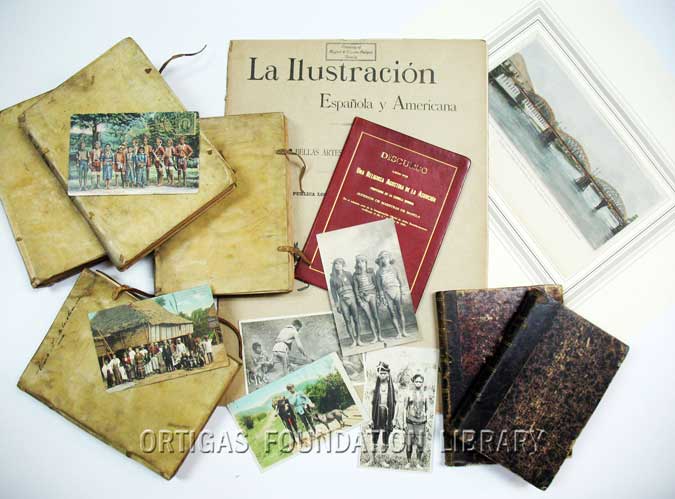
AFTER 25 years in Pasig City, the Ortigas Foundation Library is moving from its location in the Ortigas Building to the Greenhills Mall in San Juan City.
“Three years ago, the Ortigas Building was intended for demolition so the Library had to figure out where to go. We outgrew our library since acquisitions and donations increased and we needed more storage. Our conservation lab services also expanded way past its ability to fulfill its services,” Ortigas Foundation Library executive director John Silva told BusinessWorld in an e-mail.
The Ortigas Foundation opened in November 1996 to create a center promoting the study of Philippine history for students and the general public. The library’s extensive collection include Richard Hakluyt’s 1666 translation of Melchisédech Thévenot’s Relations de Divers Voyages Curieux (Relationships From Various Curious Voyages), records the Japanese war crimes and trials, and images and documents from Rafael Ortigas, Jr.’s personal collection.
Packing and transferring of the library’s collection of over 23,000 books, prints, maps, and photographs to a secure location began early this year. According to Mr. Silva, the collection will remain in storage until the renovations of the new location are finished by the end of April.
The library will potentially gain more visitors thanks to the foot traffic within the commercial area.
“In our old library I was pleased to see students from the working colleges who would take one jeepney or bus ride to come and use our facilities and do their homework in air conditioned comfort with free wi-fi. We could still be of help to the schools nearby since we specialize wholly in Filipiniana,” Mr. Silva wrote.
“The Library’s holdings collection section will increase by almost 50% to hold new acquisitions and donations for the years ahead,” Mr. Silva wrote of the materials to be added to their collection. “We will have a new but modest area for exhibits. Our rare books, documents of importance, maps and prints will now have a revolving section to be seen by the public for free.”
The library was prioritized digitizing its collection of photographs, and this will be followed by the books and documents.
“We will eventually digitize material except those that are already available in internet sources like the Gutenberg Project or [the] digital resources [that] already offered [it] free in major libraries throughout the world…,” Mr. Silva said.
The Ortigas Foundation Library targets opening in the new location in May. Guests will have to follow safety and health protocols such as having their temperature taken, wearing masks, and observing social distancing. A reservation protocol will be established for future events and visitors.
“When we do open, we will have a vigorous education program on vaccinations since I am of the opinion that it is an essential civic duty,” Mr. Silva wrote.
During visits, a closed library procedure will be followed where the librarian goes into the library stacks to retrieve a title when a researcher asks for it. “The pandemic has moderated previous plans to expand our conference/lecture room… Our reading room has been shaved a bit, sensing [too] that more requests will come on the internet,” Mr. Silva wrote.
“Our citizens do not have, as of yet, a library culture. What little there is, is being eroded by Google and social media. But then again, libraries are not for everybody. A small percentage of people will have an affinity to books, research, and a love for reading. We can slowly grow that percentage by introducing them to the world of books and what it opens up for them,” Mr. Silva wrote,
“Jose Rizal’s love was books and he had a library of 2,000 volumes. Look what he became. We will need more Rizals to uplift our country.”
In the meantime, the library is screening videos, holding talks, and selling books and other items based on its collection on its official Facebook page (https://www.facebook.com/Ortigas.Foundation). — Michelle Anne P. Soliman
Why Christianity put away its dancing shoes — only to find them again centuries later

IN THE PBS documentary series The Black Church: This Is Our Story, This Is Our Song, scholar Henry Louis Gates, Jr. shows how African Americans introduced new rhythms, music, and dance to Christianity from the days of slavery to the present. African American spirituals and the ring shout, a type of religious dance, provided some enslaved people with hope and perseverance.
While the Black Church enlivened Christian worship, there is an even older story of Christian dance that I tell in my 2021 book, Ringleaders of Redemption: How Medieval Dance Became Sacred.
Evidence from the ninth through 15th centuries in Western Europe suggests that Europeans not only tolerated dance, but incorporated it into religious thought and practice.
The tradition of Christian dance did not happen overnight. For the first five centuries of Christianity, the church opposed dancing. According to church leaders and early theologians such as Tertullian and Saint Augustine, dance incited idolatry, lust, and damnation.
Moreover, early Christians were more likely hostile to dance because it reminded them of their pagan counterparts in the Roman Empire, as Augustine’s book The City of God made clear. For example, Augustine wrote: “the worshippers and admirers of these (pagan) gods delight in imitating their scandalous iniquities… Let there be heard everywhere the rustling of dancers, the loud, immodest laughter of the theater; let a succession of the most cruel and the most voluptuous pleasures maintain a perpetual excitement.”
Indeed, dance was an important part of cultural and civic life in Greco-Roman antiquity. Christians, however, needed to distinguish themselves from pagans and set an example of pious behavior.
Much to the annoyance of medieval clergy, some Christians would even skip Mass for the theater or gladiatorial games, which formed a larger part of ancient dance and entertainment culture.
Despite centuries of dance prohibitions that came from church councils, ancient and medieval Christians would not stop dancing. Ritual manuals of the 13th century and beyond reveal how church authorities turned dance to the service of Christendom.
Within the spaces of churches, cathedrals, and shrines, dance could help generate collective worship. For example, following healing miracles that saints supposedly enacted, community members would erupt into song and dance. From the church’s point of view, such pious performances could actually enhance orthodoxy. In other words, dance could work in the service of conversion and rituals.
By the 12th century, Christian theologians would look to the Bible to obtain evidence that dance was permitted. For example, in Exodus 15:20, Miriam, the sister of Moses, dances with other Israelite women to praise God. For medieval Christians, Miriam’s dancing signified Christian worship and rituals.
Additional biblical evidence for sacred dance came from King David, an Old Testament monarch. The Bible contains a scene in which David humbles himself before his subjects by dancing for the Lord.
According to the Latin Bible, David danced while he was naked. Medieval commentators interpreted this dance as a Christian expression of humility.
In a 13th-century manuscript called the Bible Moralisée, or The Moralized Bible, the dance of David, according to the author, “signifies Jesus Christ who celebrated Holy Church and celebrated the poor and the simple and showed great humility.”
Moreover, as I discovered in my archival research, an image from a 14th-century biblical picture book of sorts, juxtaposes the dance of David with the Crucifixion of Christ.
Although a Jewish figure from the Old Testament, medieval Christians began to see David and his dance as prophesying the “Passion of Christ.” Because David danced naked — in a way unbefitting of a king — they believed, it had a resemblance to the humiliation of one who had to suffer and die.
Since at least the ninth century, dance became integrated into Christian devotion. During pilgrimages to the shrine of Saint Faith, a child martyr from the third century who had a strong following in medieval France, Christians would break into dancing and singing.
And 13th-century friar Francis of Assisi was said to dance in a dramatic fashion while preaching. For Francis, who was later canonized as a saint, it animated his image.
Actual dances began to be performed in churches and cathedrals during public worship. Ritual manuals from the 13th century testify to a variety of dances that Christians and clergy performed during sacred days, especially during Christmas and Easter.
From the 14th through 16th centuries at the Auxerre Cathedral in France, religious men danced and played a ball game on the cathedral’s labyrinth every Easter Monday. They sang a sacred hymn about Christ’s triumph over death, as they danced.
Moreover, dance appeared in the literary arts as well. Dante Alighieri’s Divine Comedy, composed in the 14th century, contains exquisite poetic renderings of dance in purgatory and paradise.
Medieval women enacted sacred dance too. Sister-books, or documents produced in German nunneries during the Middle Ages, provide textual evidence for the existence of dancing at convents. For example, one German sister-book tells how a nun named Irmendraut began to dance in a spiritual manner after she recovered from a long illness: “this sister became so deeply enraptured that she jumped off the pillow where they had laid her and into the middle of their circle with quick straight legs. And then, in the presence of the community, she danced so lovingly in God’s praise that all who saw and heard it felt longing and anguish for the joy that was so unknown to them.”
In the 13th century, female mystics such as Mechthild von Magdeburg and Agnes Blannbekin were reported to have danced erotically with Christ or envisioned heavenly dancers.
For medieval women, dance allowed them a proximity to divine presence during a time when no more women were being ordained into important ministerial and leadership roles. According to religion scholar Gary Macy, the church stopped ordaining women around the 13th century. As Macy writes, “by the 13th century, it was assumed in both law and theology that women could not be ordained and indeed had never been ordained.”
By the 16th century, however, the cultural landscape of Christian dance changed dramatically. There were many reasons.
The Protestant Reformation and Catholic Counter-Reformation began to critique dance and declare it idolatrous, much like the early church did. Moreover, starting in the 14th century, women were suspected of, and persecuted for, practicing witchcraft. During the European witch trials, witches were accused of dancing with the devil during a satanic ritual known as the Witches’ Sabbath.
By the time the first slave ships set sail to Virginia in 1619, Christian dance was largely lost to history. Over time, enslaved Africans, with their traditions of sacred song and movement, would put the dance back into Christianity.
Kathryn Dickason is a Visiting Scholar at the School of Religion, University of Southern California.