Home Blog Page 8236

Most Filipinos willing to pay for convenience — Facebook study
PHILIPPINE STAR/ MICHAEL VARCAS

By Arjay L. Balinbin, Senior Reporter

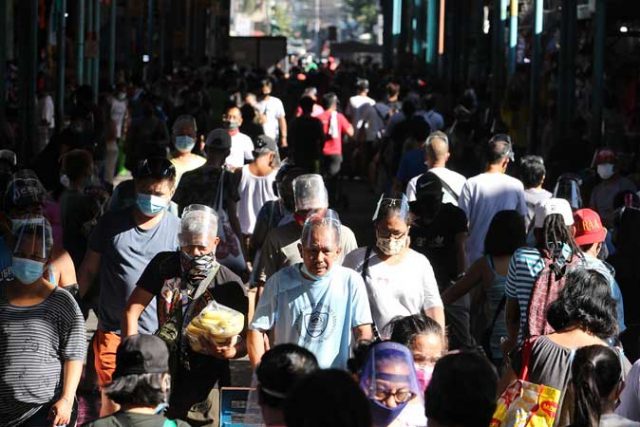
MOST Filipinos are willing to pay more for convenience, a Facebook study showed, suggesting that businesses should explore innovative ways to provide convenience to customers as a way to recover from the impact of the public health crisis.

“What convenience seekers are looking for are ways that you as companies can redefine value for them,” John Rubio, country director of Facebook Philippines, said at an online briefing on Tuesday.

He said 90% of Filipinos surveyed considered convenience “almost as important as rice.”

Mr. Rubio presented the results of the Facebook-commissioned “Emerging Trends Research” where 12,500 people (ages 18 to 64) from 14 countries including the Philippines were surveyed last year.

The study analyzed the changes in consumer behavior over the past year to guide badly impacted businesses as they try to recover from the ongoing crisis.

Respondents were asked if they were willing to pay for a product or service that would help them save time. They were also asked if they were willing to pay for a product or service that would free up their minds so they could think about more important things.

In the Philippines, 87% of the respondents said they would pay for products that free up their minds while 93% considered convenience alongside price when deciding what to buy.

Also, 92% of the participants thought social media platforms made life more convenient, with 87% saying social media allowed them to interact more and deepen their relationship with brands.

Respondents in the Philippines were also interested in live shopping. Facebook said 25% of them tried live shopping last year while 85% expected to increase their live shopping this year.

Facebook said marketers should set a new standard in convenience, embrace change as readily as their customers are, harness the power of community to create deeper connections — from Facebook Groups to innovative collaborations, and draw inspiration from the mobile-first and agile innovation of businesses around the world.

Akshat Jain, country lead of Growth Business at Facebook Philippines, presented the 2021 Global State of Small Business Report, which looked at the effects of the pandemic on small and medium-sized businesses (SMBs) and how they are pivoting towards the new normal. It reached out to over 36,000 SMB leaders, who are also Facebook users, across 27 countries and territories including the Philippines.

The survey found that 27% of SMBs in the Philippines closed in February while 56% of those that remained operational had reduced the number of their workers.

Almost half or 44% reported a decline in sales in January compared to last year.

“The pandemic led to reduced work forces and SMBs increasing their use of digital tools,” Mr. Jain noted.

He said 55% of global SMBs reported using digital tools to communicate with customers amid the pandemic crisis.

“Small businesses play an important role in pandemic recovery. At Facebook, we remain focused on providing small businesses with resources and tools, so that they could continue to reach and engage their customers, and hopefully accelerate business recovery,” Mr. Jain noted.

Vivant profit slides 38% as power sales falter

CEBU-BASED Vivant Corp. said on Wednesday that its net income attributable to its parent firm fell by 38% to P1.4 billion for the full-year 2020, as revenues declined.

In its annual report shared with the local bourse, Vivant said total revenues slid 37% to P3.8 billion last year compared with P6 billion in 2019. The drop was partly caused by lower power sales at P1.9 billion, a 47% decrease year on year.

The firm also noted that its subsidiary Vivant Energy Corp. did not record energy sales after its independent power producer administrator (IPPA) agreement with state-led Power Sector Assets and Liabilities Management Corp. was terminated in October 2019.

It said the decline in energy sales was mitigated by its subsidiaries’ improved revenues. Corenergy’s retail electricity supply business posted a 67% rise year on year, while ET Energy Island Corp.’s sales of solar rooftop projects were up by 20%.

Vivant President Arlo Angelo G. Sarmiento said the power generation business contributed 72% of the total income, followed by electricity distribution with a 27% share.

“Despite the challenges and uncertainties faced in 2020, Vivant has remained in a healthy financial position, maintaining healthy profits albeit lower than 2019, which had been our strongest year,” Mr. Sarmiento was quoted as saying in the report.

He said that the firm was able to secure a P3-billion fixed-rate corporate note facility despite the challenging times that it faced last year. The proceeds from the fund-raising activity will be used for the growth initiatives of Vivant’s power and infrastructure businesses.

Vivant also detailed its 20-year vision, saying it plans to become a “major conglomerate in the Philippines by 2040.”

Two months ago, the company said its subsidiaries Vivant Energy and Amberdust Holdings Corp. were set to acquire equity shares by infusing P433.83 million in Senator Juan Miguel F. Zubiri’s two power firms in Bukidnon. The acquisition will allow Vivant’s continued expansion in Mindanao.

Vivant, which is into power generation, distribution, and retail electricity supply, saw its shares inch up by 0.27% or four centavos to close at P14.62 each on Wednesday. — Angelica Y. Yang

Scrabble marks UK lockdown easing with light show

THEBARROWBOY/ EN.WIKIPEDIA.ORG

LONDON — Some of Britain’s favorite words were projected onto buildings around London to mark the easing of lockdown restrictions and National Scrabble Day on Tuesday.

Words like “freedom,” “hope,” “family,” and “beer” to represent the mood of the nation were beamed in the style of the game’s letter tiles onto a pub, shops and locations near landmarks such as the Harrods department store and the Shard skyscraper.

“Scrabble is projecting the nation’s favorite words to coincide with the lockdown lifting in the UK and National Scrabble Day,” said company spokeswoman Amarilis Whitty.

Scrabble commissioned a survey to find the words that best summed up people’s feelings as months of lockdown began to be eased on Monday.

The game that would eventually be called Scrabble was invented in New York by Alfred Mosher Butts, an unemployed architect, during the Depression. National Scrabble Day is celebrated on his birthday.

A redesigned version of the game, played in more than 120 countries in 33 languages, is being put on sale with the board rebranded from green to blue.

Scrabble said lockdown had boosted sales of the game in Britain by 51.2% in 2020. — Reuters

Yields on term deposits decline

BW FILE PHOTO
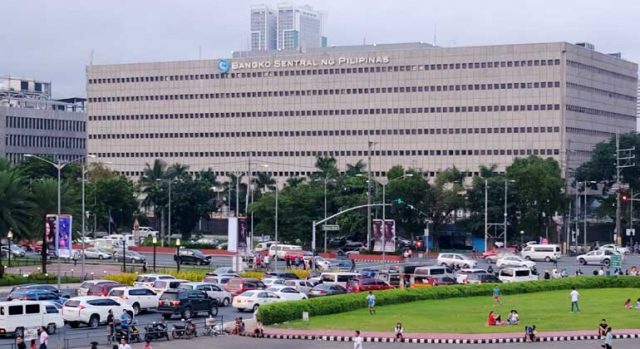
YIELDS on the central bank’s term deposits dropped on Wednesday on expectations of slower economic activity amid the lockdown. — BW FILE PHOTO

YIELDS on the central bank’s term deposits slipped on Wednesday as some restrictions remain in place, which could slow down economic activity and bring down inflationary pressures.

Total tenders for the term deposit facility (TDF) of the Bangko Sentral ng Pilipinas (BSP) amounted to P634.779 billion on Wednesday, higher than the P490-billion offer but lower than the P651.115 billion in bids recorded in previous auction.

“The results in the TDF auction reflects the continued normalization in market participants’ sentiment on liquidity conditions, amid ample supply in the financial system,” BSP Deputy Governor Francisco G. Dakila, Jr. said in a statement.

Broken down, demand for the seven-day papers reached P181.415 billion, surpassing the P140-billion offer but lower than the P191.731 billion in tenders seen a week ago.

Accepted rates for the one-week term deposits ranged from 1.7% to 1.8%, a narrower band compared with the 1.7% to 1.825% logged a week earlier. This brought the average rate of the tenor down by 1.05 basis points (bps) to 1.7737% from 1.7842% previously.

Meanwhile, tenders for the 14-day deposits amounted to P453.364 billion, going beyond the P350 billion on the auction block but down from the P459.384 billion in bids last week.

Lenders asked for yields ranging from 1.78% to 1.83%, a tighter margin compared with the 1.75% to 1.8625% seen the previous week. This caused the average rate of the two-week tenor to 1.8097%, lower by 3.34 bps from the 1.8431% a week ago.

The BSP did not offer 28-day deposits for the 25th straight auction to give way to its weekly auctions of bills with the same tenor.

The term deposits and the BSP bills are instruments used by the central bank to mop up excess liquidity in the financial system and guide market interest rates.

TDF yields went down as Metro Manila and surrounding provinces Cavite, Laguna, Rizal, and Bulacan remain under tight restriction measures, affecting businesses and, consequently, prospects for economic recovery.

“Though eased from the lockdown, the MECQ (modified enhanced community quarantine) in NCR (National Capital Region) Plus until April 30 could still lead to a slowdown in economic recovery and could reduce inflationary pressures, especially on the demand side,” Mr. Ricafort said in a text message.

Under MECQ, only authorized persons working outside their residence can use public transportation. Also, while businesses can already open fully under MECQ, enterprises related to entertainment and personal care services are still not allowed to reopen.

Meanwhile, headline inflation in March slowed to 4.5% from 4.7% in February, the Philippine Statistics Authority reported last week. This was mainly due to the slower increase in food prices.

Despite this, March marked the third straight month that the headline print went beyond the central bank’s 2-4% target as supply issues caused a hike in prices of meat products.

The central bank expects headline inflation to average 4.2% this year before easing to 2.8% in 2022. BSP officials have said the inflation path is likely to ease below the midpoint of the 2-4% target towards the fourth quarter. — Luz Wendy T. Noble

Huawei says 6G tech still being defined; 2030 launch possible

REUTERS

HUAWEI Technologies Co., Ltd. said the sixth-generation wireless communication technology or 6G, which the technology industry anticipates to be available in the market by 2030, remains unclear to the company.

“We think 6G will be launched in the market around 2030, but we still don’t know what 6G is,” Eric Xu, Huawei’s rotating chairman, said at the “Huawei Global Analyst Summit 2021” on April 12.

“The only thing we know is that our industry wants to launch something that could contribute to enterprises as well as consumers by around 2030 just like what the industry has done with 4G and 5G,” he added.

He said Huawei is currently working with other industry players to define what 6G actually is.

Huawei intends to launch its white paper on 6G “in the near future” to show to consumers and businesses what the technology would look like, Mr. Xu noted. “At the same time, we are also conducting research into cutting-edge technologies to help us, as well as the whole industry, in realizing 6G.”

“If the industry concludes that all of the scenarios and use cases that 6G is supposed to support can actually be supported by 5G or 5.5G, then 6G would be of little value. If that’s the case, we will have to wait for the next generation of industry players, who may be smarter than us or who may have different technology consumption behaviors, to brainstorm and come up with use cases that can only be addressed by 6G. That’s how the demand will come for 6G,” Mr. Xu explained.

Mr. Xu reiterated that Huawei should definitely prepare itself for the possible arrival of 6G with the necessary investment.

Huawei also intends to invest more in businesses that are less reliant on advanced process techniques.

It will also invest more in components for intelligent cars, maximize 5G and define 5.5G with other industry players “to drive the evolution of mobile communications.”

“We will continue to find ourselves in a complex and volatile global environment. The resurgence of COVID-19 (coronavirus disease 2019) as well as geopolitical uncertainty will present challenges for every organization, business, and country,” Mr. Xu noted. — Arjay L. Balinbin

Eastern Communications buys Moderna vaccines for employees

TELECOMMUNICATIONS service provider Eastern Communications has started purchasing doses of coronavirus vaccines from American pharmaceutical and biotechnology firm Moderna, Inc. for all its employees, a company official said.

“While the sourcing of the vaccines is a challenge as of the moment, we were already able to procure initial doses, and we will continue to source for more in the coming months,” Eastern Communications Co-Coordinator Aileen D. Regio said in an e-mailed statement on Monday.

The company is providing free vaccines to its more than 500 employees.

“Eastern Communications also aims to help keep its employees’ households safe by extending the vaccination program to workers who opt to purchase for their families and other members of their household at cost,” it said.

The vaccines will be delivered in batches from the second to the fourth quarter of this year.

“This initiative is in line with Eastern Communications’ commitment to ensure the health and safety of its employees especially during the pandemic,” the company said.

“Since the implementation of quarantine measures last year, the telco has enforced its COVID-19 Task Force to administer safety protocols and guidelines in line with government standards and also enacted a robust internal program supporting its employees during these tough times, including a line-up of health and wellness activities,” it added.

The company announced in February that it was allotting P2.8 billion for its expansion plans this year, which will cover wider service areas, including Davao City, Cagayan De Oro, Dumaguete, Tagbilaran, Bacolod, Roxas, Kalibo, Caticlan, Boracay, Naga, Legazpi, Iriga, and Sorsogon.

The company said it intends to support the government’s “digital cities” program aimed at boosting rural development. — Arjay L. Balinbin

Listen to the music of a spider’s web

CHRISTIAN ENGLMEIER/UNSPLASH

IT IS an eerie, foreboding, reverberating tune, enough to send a tingle down your spine.

This is what a spiderweb sounds like.

From communication to construction, spiderwebs may offer an orchestra of information, says Markus Buehler, engineering professor at the Massachusetts Institute of Technology, who has been using artificial intelligence to study them.

“Spiders utilize vibrations as a way to communicate with the environment, with other spiders,” he said. “We have recorded these vibrations from spiders and used artificial intelligence to learn these vibrational patterns and associate them with certain actions, basically learning the spider’s language.”

Mr. Buehler and his team of researchers created 3D models of spiderwebs when the arachnids were doing different things —  such as construction, repair, hunting and feeding. They then listened for patterns in the spider signals and recreated the sounds using computers and mathematical algorithms.

“Spiders are a whole different animal,” said Mr. Buehler. “What they see or sense isn’t actually audible or visible to the human eye or the human ear. And so by transposing it, we begin to experience that.”

Mr. Buehler hopes his team’s work could enable humans to understand the language of a spider and one day communicate with them.

“The melodies are really the kind of relationships that the spider would also experience. And so we can begin to feel a little bit like a spider in that way,” Mr. Buehler said.

There are more than 47,000 species of spiders, and all spin silk webs to provide housing and catch food. Scientists say the silk from a spiderweb is five times stronger than steel.

The living structure of a spiderweb could lead to innovations in construction, maintenance and repair, Mr. Buehler said. “We can imagine creating a synthetic system that would mimic what the spider does in sensing the web, repairing the web,” he said. — Reuters

Outstanding T-bills, bonds hit P7.2 trillion as of March

BW FILE PHOTO

OUTSTANDING Treasury bills (T-bills) and Treasury bonds (T-bonds) issued by the government rose to P7.203 trillion as of March as it completed its first retail bond sale for the year, data from the Bureau of the Treasury (BTr) showed.

Latest BTr data released on Wednesday showed outstanding government securities went up by 5.58% from the P6.822 trillion seen as of February.

The government runs on a budget deficit as it spends more than the revenue it generates. Falling tax collections and stimulus spending due to the coronavirus pandemic forced the state to borrow more from both local and foreign lenders.

National Treasurer Rosalia V. de Leon said the T-bills issued are mainly used to refinance existing debts. Outstanding debt will rise further throughout the year to meet the funding needs of the government, she said.

BTr data showed outstanding T-bills went up by 4.2% to P1.049 trillion as of last month from P1.007 trillion at end-February. Year on year, this grew by 81%.

The total was made up of P140 billion in 91-day debt, P201.85 billion in 182-day T-bills, and P707.39 billion in 364-day papers.

Meanwhile, outstanding T-bonds were at P6.154 trillion as of March, up 5.8% versus the P5.815 trillion recorded the month before. This was also 24% higher than the P4.96 trillion logged in the same period last year.

The increase was largely due to the P463.32 billion in three-year retail Treasury bonds (RTBs) issued on March 9.

Broken down, the outstanding bonds were comprised of P252.5 billion in three-year debt papers, P316.78 billion in five-year bonds, P458.13 billion in seven-year notes, P757.72 billion in 10-year securities, P420 billion in 20-year IOUs, and P235.98 billion in 25-year papers.

On the other hand, RTBs issued reached P2.596 trillion.

The government ramped up its borrowings last year to plug its budget deficit that hit 7.63% of the gross domestic product (GDP) from a record low ratio of 3.38% in 2019.

For this year, it is looking to raise P3 trillion from domestic and external lenders as the fiscal gap is seen to hit 8.9% of GDP. It plans to source 85% of the total from the local debt market while the rest will be sourced abroad. — B.M. Laforga

PC shipments notch fastest quarterly growth in 20 years — Gartner

PHILSTAR

GLOBAL shipments of personal computers (PC) rose at their fastest pace in two decades in the first quarter as people bought computers to help them work and study remotely during the COVID-19 crisis, according to research firm Gartner, Inc.

PC shipments, which include both laptops and desktop computers, grew 32% in the quarter to 69.9 million units, Gartner said.

China’s Lenovo Group Ltd. grabbed the lead with a 25.1% market share, followed by HP, Inc., Dell Technologies, Inc., Apple, Inc. and Acer Group, according to the report.

“This growth should be viewed in the context of two unique factors: comparisons against a pandemic-constrained market and the current global semiconductor shortage,” said Mikako Kitagawa, research director at Gartner.

“Without the shipment chaos in early 2020, this quarter’s growth may have been lower.”

The coronavirus-driven surge in demand, along with an unprecedented shortage in semiconductor microchips, has strained the supply chain of personal computers. 

While the chip shortage was originally concentrated in the auto industry, it has now spread to a range of other consumer electronics, including smartphones, refrigerators and microwaves.

Gartner said that demand for Chromebook by Alphabet, Inc.’s Google, which it does not account for in its analysis, tripled in the first quarter thanks to strong demand from educational institutions in North America.

“It is still reasonable to conclude that PC demand could remain strong even after stay-home restrictions ease,” Gartner said. — Reuters

Century Pacific Food set to give free COVID vaccine for employees

CENTURY PACIFIC Food, Inc. (CNPF) will provide free coronavirus disease 2019 (COVID-19) vaccines for all its employees and will donate 5,000 doses to the government’s vaccination program.

In a regulatory filing on Wednesday, the listed food manufacturer said it had contracted close to 70,000 doses via tripartite agreements signed by the private sector, the national government, and vaccine manufacturers.

CNPF said free vaccines will also be given to the dependents of its employees. It will also provide assistance to key suppliers in order to ensure the health of their personnel.

“The vaccines shall be administered for free, on a voluntary basis, to all CNPF employees nationwide, and in full compliance with the Department of Health’s guidelines on the vaccination rollout,” the company said in the disclosure.

CNPF President and Chief Executive Officer Teodoro Alexander T. Po said the health and safety of workers are the company’s top priority, adding that its manufacturing facilities had maintained a 99.9% COVID-prevention rate with the strict implementation of health protocols.

“This has then enabled us to serve heightened consumer demand — undisrupted despite the surge — both domestically and abroad, in line with our goal of helping ensure food security especially to those who need it the most,” Mr. Po said in the disclosure.

“Keeping our employees safe and our factories productive will continue to strengthen our ability to provide affordable nutrition to our consumers,” he added.

CNPF said information and awareness initiatives within the organization aim to increase the vaccination rate and address employees’ vaccine hesitancy.

For 2020, the company posted a 24% increase in net income to P3.9 billion as revenues improved 19% to P48.3 billion year on year.

On Wednesday, shares of CNPF at the stock exchange improved 0.22% or four centavos to close at P18.54 apiece. — Revin Mikhael D. Ochave

Dining In/Out (04/15/21)

Mimi & Bros launches comfort frozen food line

THE BONIFACIO Global City restaurant Mimi & Bros, which is known for its comfort food, is launching a line of freshly made, easy-to-order frozen food that anyone can add to their pandemic pantries. “Stressful times call for feel-good, nostalgic food. These days, people find solace in more familiar and indulgent items but we want to make sure they have a healthier option. Our frozen items are made fresh daily, with no artificial preservatives and extenders — just 100% comfort food,” said chef Ed Bugia, the head of the Food & Beverage division of MFT Group of Companies, which owns Mimi & Bros.,in a statement. These frozen items are Homemade Chicken Nuggets, Corn Dogs, Sausages, Snapdogs, and Handcut Fries. The restaurant’s all-time bestseller, Corn Dogs, made with Mimi & Bros’ signature batter and juicy hotdogs, costs P250 for eight pieces, while the Homemade Chicken Nuggets sell for P299 per 500 grams and the Handcut Fries are P199. The Sausages are available in three variants — Chorizo, Andouille, and Tex-Mex. Each 500 grams package is sold for P339. The Snapdogs sell at P299 for 500 grams. To order, send a message to the restaurant’s Facebook Messenger (m.me/mimiandbros) to launch the online ordering app. Payment can also be done on the restaurant’s Facebook Messenger. Both ready-to-cook and ready-to-eat options are available for same-day delivery.

Sekaya Botanic Infusions now available in eco-friendly teabags

SEKAYA Botanic Infusions botanical blends, originally introduced in loose-leaf format, now come in eco-friendly tea bags. It is also launching a new infusion. The different infusions serve different functions, helping with health concerns from stomach discomfort, to sleep quality, to mental alertness. Each blend is put together based on the therapeutic properties of its ingredients, and are largely a combination of leaves, bark, roots, seeds, and fruits of different plants known for their traditional medicinal value. The current eight Sekaya Botanic Infusion variants are now available in both loose-leaf and tea bags. They include Aftermeal Treat that helps alleviate stomach discomfort after a meal, Cozy Calm for after a stressful day, and Easy Nightcap for better quality sleep. There’s Energy Mix and Gentle Detox, Liver Vitality and Skin Cleanse. Pu-erh Trim can help in managing cholesterol and weight. Sekaya is also introducing a new infusion created to strengthen the body’s immunity. Immune Brew, which is exclusively available in tea bags, contains organic echinacea purpurea lemon balm leaves, olive leaf, elderflower, lemon peel, elderberries, goldenseal herb, and ginger root. The tea bags are made of plant-derived materials that are biodegradable and non-toxic. The brand is also using pyramid tea bags to give the botanicals more room to freely float around and release each infusion’s flavor, aroma, and phytoactives and nutrients. All Sekaya Botanic Infusion variants are made with 100% organic plant ingredients that are non-GMO and non-irradiated, and have been certified organic by the United States Department of Agriculture and Quality Assurance International. Sekaya Botanic Infusions come in reusable cans of 16 tea bags starting at P550 and boxes of eight teabags starting at P275. The teabags are now available via Facebook (@sekayaph), Instagram (@sekayaph), the Synnovate Flagship Store in Lazada, and S Sentials Online Store in Lazada, Shopee and Zalora.

Sony PlayStation 5 up for grabs in Tic Tac contest

MINTS brand Tic Tac has launched its “It’s Good To Chill” campaign, with two Sony PlayStation 5 and two Apple AirPods up for grabs every week until May 21 in the #TicTacForTheWin challenge. To join, purchase any flavor of Tic Tac 14.5 gm or higher. Snap a photo of your single-receipt purchase and upload it to www.TicTacWin.com. Every receipt upload is equivalent to one raffle entry and a chance to win any of the prizes for the week. Winners are announced at the end of each week through the website and are also contacted via email. For more details about #TicTacForTheWin, visit Tic Tac’s Official Facebook Page https://www.facebook.com/tictacpilipinas or www.TicTacWin.com.

RCBC’s sustainable loans hit P52B in 2020

BW FILE PHOTO

RIZAL COMMERCIAL Banking Corp. (RCBC) continued to boost its sustainable lending portfolio through credit for green and social projects related to transport, energy, water management, and housing.

RCBC said in a statement on Wednesday that its sustainable loan portfolio reached P52.165 billion in 2020. Broken down, P32.722 billion funded 15 eligible green projects and P19.432 billion went to 9,947 social projects.

More than half (61%) of its eligible green portfolio consists of renewable energy projects related to clean transportation and energy efficiency (18%), and sustainable water management (3%).

Meanwhile, its social portfolio includes affordable housing projects (36%), employment generation (32%), access to essential services (24%), and socioeconomic advancement and empowerment (8%).

“As the economy gradually rises from the ruins of the pandemic, RCBC will be a strong partner in support of the BSP (Bangko Sentral ng Pilipinas), not just in rebuilding, but in championing the ESG (Environmental, Social, and Governance) agenda and sustainable practices,” RCBC President and CEO Eugene S. Acevedo was quoted as saying.

In 2020, the bank said it will stop financing coal-fired power projects in the Philippines in support of the Department of Finance’s drive to hike the country’s share of renewable energy power source to 43%.

Meanwhile, the bank raised P17.8 billion through 2.5- and 5.25-year ASEAN sustainability bonds in March, which it said will be used to refinance green and social projects.

RCBC’s net income fell 7% to P5 billion in 2020 from P5.388 billion in 2019 as it ramped up loan loss provisions during the crisis.

Its shares closed at P17.14 apiece on Wednesday, down by 36 centavos or 2.06% from its previous finish. — LWTN

ADVERTISEMENT
ADVERTISEMENT