THE Finnish ambassador has conveyed interest in possible collaboration with the Philippines in climate change mitigation and digitalization projects, the Department of Finance said in a statement Wednesday.
Finnish Ambassador to Manila Juha Pyykkö made the remarks in a recent video meeting with Finance Secretary Carlos G. Dominguez III, according to the statement. He also listed smart city development, education, and digital healthcare as possible areas of investment.
Mr. Pyykkö said he would like Finnish investors to “have another look at the Philippines,” citing its stable economy and strong medium-term outlook.
Mr. Pyykkö was the first resident ambassador dispatched by Helsinki since Finland reopened its diplomatic mission in January. It had shut down its embassy in Manila in 2012.
He said the reopening of the embassy should facilitate closer business ties. — Beatrice M. Laforga
THE intellectual property office will work with the National Telecommunications Commission (NTC) to effect faster blocking of websites carrying pirated material.
The Intellectual Property Office of the Philippines (IPOPHL), in a statement Wednesday, said it will partner with NTC to develop streamlined protocols for rapid site blocking.
IPOPHL has been asking Congress for power to issue take-down orders for the NTC to immediately block websites, foregoing a review process. Bills on the proposed amendments to the intellectual property code are being consolidated by the House of Representatives.
For now, IPOPHL can review piracy complaints from intellectual property rights holders and request the NTC to order internet service providers (ISPs) to take down the websites.
In a meeting with the agency, ISPs said collaboration between IPOPHL and NTC will prevent the shutdown of law-abiding websites.
IPOPHL Rights Enforcement Officer-in-Charge and Director Ann N. Edillon said that the agency makes sure to weigh the evidence of piracy before referring websites to the NTC for blocking.
“The duration of IPOPHL’s investigations will depend on the merits of the case and evidence submitted, but we always ensure a speedy and thoroughly validated decision,” she said.
IPOPHL recently partnered with the Asia Video Industry Association (AVIA) to develop site blocking measures for pirated content.
AVIA will provide information on piracy, conduct training on piracy matters, and make recommendations for IPOPHL’s online piracy monitoring and rolling site blocking. IPOPHL in turn will review piracy issues and will act on piracy reports and tips from AVIA. — Jenina P. Ibañez
Through the years, countries have developed a network of tax treaty agreements which provide tax residents of treaty countries income tax exemption or preferential tax treatment on foreign-sourced income. As a minimum requirement to avail of tax treaty benefits, an income earner must prove that it is a tax resident of the treaty country. This is done by presenting a tax residency certificate (TRC) issued by the tax authority of the home country.
In 2019, the Bureau of Internal Revenue (BIR) issued Revenue Memorandum Order (RMO) No. 51-2019 providing guidelines and procedures for Philippine taxpayers who wish to secure a TRC. Among the objectives of the RMO is to monitor the reporting and declaration of foreign-sourced income in the tax returns of the applicant-taxpayers since they are taxable on their worldwide income. In 2020, the BIR issued RMO No. 43-2020 to further streamline the process of securing TRCs. Under these rules, domestic corporations or resident citizens requesting a TRC must submit their annual income tax return (ITR) for the immediately preceding year. In practice, Audited Financial Statements (AFS) and VAT returns are also requested by the tax authority.
According to the RMO, the International Tax Affairs Division (ITAD) acts as the repository of documents, substantiating the foreign-sourced income of Philippine taxpayers and furnishing the Revenue District Office (RDO) or Large Taxpayers Division (LTD) with all documents submitted by the applicant. The RDO or LTD is tasked to verify whether the foreign-sourced income was properly declared by the taxpayer and if the corresponding tax was paid. If not, the RDO or LTD, following the procedures for conducting tax investigation, must assess the deficiency tax and enforce its collection, including penalties. This is where the challenge comes in. Assessment of deficiency tax solely on the basis that the foreign-sourced income was not reported in the tax returns or AFS submitted during the application was filed seems unjustified primarily because of the chronology of events as well as different rules for declaring the revenue.
The ultimate purpose of requesting a TRC is for the Philippine taxpayer to avail of treaty benefits for its foreign-sourced income. Without a TRC, the foreign income payor may not be able to apply the reduced withholding tax rate or exemption to its payment to the Philippine income earner. To ensure compliance with the TRC requirements of the foreign tax authority and considering the usual processing time for TRC issuance by the BIR, Philippine taxpayers prudently opt to file the TRC application much earlier than the date the income is expected to be earned and/or received. Consequently, the AFS and the tax returns available at the time the application is filed with the BIR may not yet reflect the foreign-sourced income.
For instance, take the case of anticipated dividend income from a foreign company by a Philippine taxpayer. The foreign company may hold off declaration and payment of dividends until the TRC is secured. The TRC is necessary for the foreign company to be able to apply the preferential tax rate to which the Philippine taxpayer is eligible. Until the dividends are declared and received, the Philippine taxpayer may have no basis to report such foreign-sourced dividend income in its AFS and tax returns.
On the other hand, in the case of foreign-sourced service income, following the VAT rules, such income should only be reported upon collection of the payment. Thus, while the income may have already been earned, the gross receipts would not be reflected in the VAT returns until the TRC is secured and the service fees can be remitted to the Philippines.
In both scenarios, the AFS and tax returns do not reflect the foreign-sourced income, but this should not warrant issuance of an assessment notice to the taxpayer. Instead, the rules can be adjusted to recognize such timing/reporting discrepancies, or at the very least, to give the taxpayer an opportunity to clarify its side before responding with a full regular tax audit and eventual assessment of deficiency taxes which may only be refuted by the taxpayer with factual and legal basis.
In addition, assessment issues that sprout from a Philippine taxpayer’s request for TRC to avail of tax treaty benefits negate, to some extent, the purpose of the tax treaty — to avoid double taxation and give relief to the taxpayer from paying the undue amount of taxes on foreign-sourced income.
The process and requirements may also leave taxpayers with little recourse but to forego the treaty benefit at the outset, so that the foreign income can be remitted (albeit without the benefit of the preferential treaty rate or exemption) and reported in the Philippines for tax and financial reporting purposes, and the TRC secured. Recovery of the overpaid tax may then be through a refund from the foreign tax office, which may or may not be feasible.
Supposedly, if the taxpayer does not secure a refund from the foreign tax authority, the taxpayer should be able to recover the foreign tax withheld as a foreign tax credit or deduction in its ITR which is allowed under the Tax Code. However, unfortunately, this also raises issues with the BIR during an audit as examiners are instructed to disallow the foreign tax credit claimed on the ground that the taxpayer should have availed of treaty relief. Instead of claiming a tax credit, RMO 43-2020 suggests that the taxpayer secure a TRC and file a claim for tax refund in the foreign country. Something that the current TRC procedures have made rather difficult. In fact, one could say, it has devolved into a chicken or egg situation.
It may also be a good time to revisit the rules given that under the recently enacted Corporate Recovery and Tax Incentives for Enterprises (CREATE) law, foreign-sourced dividends may already be subject to exemption provided conditions are met. At least for dividends, checking compliance with the conditions for exemption should now be considered before issuing any potential deficiency tax assessment.
One hopes that these procedural issues are revisited to make it easier to secure a TRC, so that the intention of entering tax treaties with other countries is not undermined and so the BIR can also achieve its objective of not losing out to other countries on its share of the international tax pie. I suspect that given the choice, Philippine taxpayers would choose to pay tax to the Philippine government instead of to a foreign country.
The views or opinions expressed in this article are solely those of the author and do not necessarily represent those of Isla Lipana & Co. The content is for general information purposes only, and should not be used as a substitute for specific advice.
Donabel M. Villegasis a tax manager at the Tax Services Department of Isla Lipana & Co., the Philippine member firm of the PwC network.
FOREIGN AFFAIRS SECRETARY TEODORO L. LOCSIN, JR. — PHILSTAR
By Vann Marlo M. Villegas and Kyle Aristophere T. Atienza, Reporters
THE PHILIPPINES on Wednesday fired off another diplomatic protest against China after authorities spotted a swarm of Chinese vessels, including six war ships within its waters in the South China Sea.
Two Houbei class missile warships were spotted at Mischief Reef, one Corvette class warship at the Fiery Cross Reef and one navy tugboat at Subi Reef, a Philippine task force on border security said on Tuesday night.
Two Chinese coast guard vessels were also spotted at Thitu Island, which the Philippines calls “Kalayaan,” according to a report based on patrols by Philippine authorities on April 11.
“Changing my policy of acting only on national task force requests,” Foreign Affairs Secretary Teodoro L. Locsin, Jr. tweeted.
The Philippine task force said more than 200 Chinese ships were scattered in waters within its exclusive economic zone. About 15 vessels either manned by Chinese militia, People’s Liberation Army Navy or the Chinese Coast Guard had also been spotted at the Scarborough Shoal.
“The continuous swarming of Chinese vessels poses a threat to the safety of navigation, safety of life at sea and impedes the exclusive right of Filipinos to benefit from the marine wealth in the exclusive economic zone,” the task force said.
The presence of naval warships also “contributes to the militarization of the area,” it said. “The combined presence of the Chinese vessels is “prejudicial to the peace and security of the region.”
Meanwhile, about 240 Chinese vessels that China claims are ordinary fishing vessels have spread out to a wider area in the South China Sea, the agency said. The ships allegedly manned by Chinese maritime forces were scattered across the Spratlys, about 175 nautical miles west of Palawan province, it added.
It said 136 vessels were seen at Gaven Reef and more than 60 vessels were at McKennan Reef.
The rest of the ships were scattered in other parts of the disputed territory — 11 at the Second Thomas Shoal, nine at Whitsun Reef, six at Mischief Reef, five at Loaita Island, four at Thitu Island, three at Subi Reef and one at West York Island.
The ships were about 60 meters long.
“This is an issue of fact that we refer to the Department of Foreign Affairs, Department of Defense and Task Force West Philippine Sea for verification,” presidential spokesperson Herminio “Harry” L. Roque, Jr. said in a text message when sought for comment.
He earlier parroted the Chinese Embassy’s claim that the vessels at Whitsun Reef were manned by fishermen who were forced to moor there due to bad weather.
Manila on Monday summoned China’s ambassador to convey its “utmost displeasure” over the continued presence of Chinese militia vessels at Whitsun Reef.
The reef, which the Philippines calls Julian Felipe, is within its exclusive economic zone, Foreign Affairs acting Undersecretary Elizabeth P. Buensuceso had told Chinese Ambassador Huang Xilian.
‘NAVAL GUNS’ Meanwhile, retired Supreme Court Justice Antonio T. Carpio said all countries should stand against China to keep order at sea.
“If China succeeds in taking the South China Sea or in making [it] its own national lake… then the United Nations Convention on the Law of the Sea (UNCLOS) will collapse for other naval powers will also seize their new seas as their own possessions,” he told an online news briefing.
“That will mean the beginning of a maritime order created and enforced by naval guns and the entrenchment of the ‘might is right’ concept,” he added.
Chester B. Cabalza, president of International Development and Security Cooperation, cited the need for an alliance to pressure China into following maritime order.
The Philippines, aside from boosting its military, should work with the Association of Southeast Asian Nations for regional stability, Rommel Jude Ong from the Ateneo School of Government said.
Renato C. de Castro, international studies professor at De La Salle University, said the Philippines should try to prevent China from winning in the South China Sea “without actually fighting.”
Jay L. Batongbacal, head of the University of the Philippines Institute for Maritime Affairs and Law of the Sea said China’s Coast Guard Law, which allows the body to fire at enemies at sea, is limited to areas within its jurisdiction.
“The implementation of the law cannot be used to assert China’s excessive claims to jurisdiction in the South China Sea,” he said.
Meanwhile, Philippine business groups said the government should protect Whitsun Reef’s rich marine life and mineral deposits “for the well-being of each and every Filipino.”
“It is only through peaceful coexistence that we can achieve prosperity for all,” the Philippine Chamber of Commerce and Industry, Management Association of the Philippines, Makati Business Club and Bishops-Businessmen’s Conference for Human Development said in a joint statement.
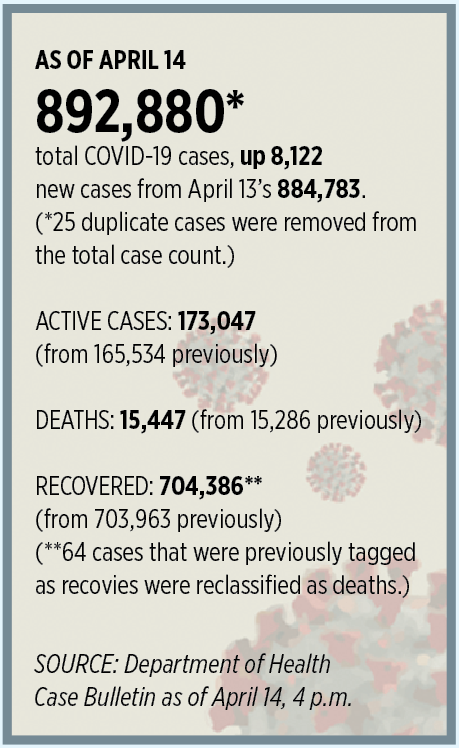
THE DEPARTMENT of Health (DoH) reported 8,122 coronavirus infections on Wednesday, bringing the total to 892,880.
The death toll rose by 162 to 15,447, while recoveries increased by 501 to 704,386, it said in a bulletin.
There were 173,047 active cases, 96.3% of which were mild, 2.4% did not show symptoms, 0.4% were critical, 0.5% were severe and 0.31% were moderate.
The agency traced the low tally to fewer testing outputs. “DoH continues to work with laboratories to ensure their continued operation and high testing output every day,” the agency said in a statement.
The Health department on April 2 reported the highest daily tally at 15,310 cases since the pandemic started last year.
DoH said 25 duplicates had been removed from the tally and 64 recovered cases were reclassified as deaths. Twelve laboratories failed to submit data on April 12.
About 10.2 million Filipinos have been tested for the coronavirus as of April 12, according to DoH’s tracker website.
The coronavirus has sickened about 138.1 million and killed three million people worldwide, according to the Worldometers website, citing various sources including data from the World Health Organization.
About 111.1 million people have recovered, it said.
Meanwhile, Health Undersecretary Maria Rosario S. Vergeire said 24,823 adverse events after immunization had been reported as of April 11.
About 7,000 non-serious adverse reactions and 164 serious adverse reactions had been reported by people who were given the Sinovac vaccine, she told an online news briefing.
She added that 17,503 minor and 206 serious adverse effects had been reported by people who got the AstraZeneca vaccine.
“All of these are being investigated,” Ms. Vergeire said.
Serious adverse events after vaccination refer to death or life-threatening situations, hospitalization and persistent disability.
Presidential spokesperson Herminio “Harry” L. Roque, Jr. on Monday said 1.13 million vaccines have been given out — 1 million for the first dose and more than 132,000 for a second shot.
President Rodrigo R. Duterte on Monday night said the country was facing a shortage of coronavirus vaccines due to global supply problems. He said rich countries were being prioritized for the vaccines.
The Philippines is aiming to vaccinate 70 million people this year after starting the rollout last month. — Vann Marlo M. Villegas
GOVERNMENT agents have not found any signs of foul play in the deaths of several high-profile inmates at the national jail, according to the Justice department.
“The National Bureau of Investigation (NBI) has not found any evidence so far that any foul play was involved,” Justice Secretary Menardo I. Guevarra said in a Viber group message on Wednesday.
Among those who died was former Calauan, Laguna Mayor and convicted rapist and murderer Antonio L. Sanchez, who was found unconscious in his cell on March 27. He was declared dead on arrival at the jail hospital in Muntinlupa City due to natural causes.
Mr. Sanchez, 71, reportedly had asthma, chronic kidney disease, hypertension, prostate problems and gastroenteritis.
Another prisoner who died at the jail last year was convicted Chinese drug financier Calvin de Jesus Tan after being attacked in one of two riots.
Mr. Guevarra said his death was “more or less expected,” adding that there had been no riots since then. — Bianca Angelica D. Añago
2GO lures passengers with promo fares; hopes non-essential trips will be allowed by May 1
SEA travel provider 2GO is luring passengers with promo fares amid the ongoing restrictions being implemented in Metro Manila and nearby provinces, anticipating that non-essential travel will be allowed starting May 1. In an e-mailed statement, the company said it expects the ban on non-essential travel to be lifted by next month. The company said passengers can already book tickets and travel later from Batangas to Caticlan and Roxas for P299 one-way. Trips from Manila to Bacolod, Cebu, Coron, Iloilo, Dumaguete, Puerto Princesa are priced at P399, while Manila to Butuan, Iligan, Ozamiz, Zamboanga, and Cagayan De Oro are at P499 per ticket. The promo fares are available until April 20 for May 1 to Dec. 15, 2021 trips, it said. For now, only health and emergency frontline services personnel, government officials and government frontline personnel, authorized humanitarian assistance actors, persons traveling for medical or humanitarian reasons, overseas Filipino workers leaving for work abroad, and overseas Filipinos, and anyone crossing zones for work or business or going back home are allowed in and out of Metro Manila, Bulacan, Cavite, Laguna, and Rizal until April 30. “In the event that there are changes in travel guidelines on May 1st onwards, 2GO Travel extends free unlimited rebooking of tickets; therefore, our passengers can rebook their tickets without penalties,” the company said. — Arjay L. Balinbin
Local governments mandated to have cooperative dev’t officer
PRESIDENT Rodrigo R. Duterte on Wednesday signed into law a measure that requires all local government units to have an officer focusing on the development of support for cooperatives. Republic Act No. 11535 amends the Local Government Code of 1991 to make the position of a cooperatives development officer mandatory in every municipality, city, and provincial government. The law tasks the co-op officers to take the lead in identifying groups, sectors, or communities that can be transformed into cooperatives, which will serve as “vehicles in poverty reduction, job creation, and socioeconomic development” of the locality. Local governments may appoint a full-fledged cooperative officer or merge such position to an existing one in a related local office. — Kyle Aristophere T. Atienza
Hiring for contract tracers opens Saturday
THE Department of Labor and Employment (DoLE) announced it will start accepting applications for contact tracers under its emergency employment program beginning Saturday. Bureau of Workers with Special Concerns Director Karen Perida-Trayvilla, in a briefing on Wednesday, said the department will undertake the hiring along with the Metropolitan Manila Development Authority (MMDA) and the Department of the Interior and Local Government (DILG). “As agreed upon, we will blast these notices of hiring in the social media accounts of DILG, DoLE, and MMDA,” she said, adding that the application period will be until April 22. Applicants should be at least a high school graduate and with basic knowledge on using a cellphone and internet. The department is targeting to hire 5,000 tracers who will be deployed in Metro Manila, the country’s coronavirus epicenter. — Gillian M. Cortez
House committees OK amnesty bill
TWO House of Representatives panels on Wednesday approved committee reports on the proposed amnesty grant to members of rebel groups. The House committees on justice and national defense approved the reports on Concurrent Resolutions 12, 13, 14, and 15, which will grant amnesty to members of the Moro Islamic Liberation Front, Moro National Liberation Front, Rebolusyonaryong Partido ng Manggagawa ng Pilipinas/Revolutionary Proletarian Army/Alex Boncayao Brigade, and the Communist Terrorist Group. “It is crystal clear that an amnesty program will promote a climate of peace and reduce conflicts in order to build a culture of confidence.” IIoilo City Rep. Raul C. Tupas, who heads the House’s national defense panel, said in Wednesday’s hearing. The resolutions are in response to the proclamations issued by President Rodrigo R. Duterte granting the amnesty to strengthen peace efforts. — Gillian M. Cortez
Guevarra vows to keep lobbying for prisoners’ vaccination
JUSTICE Secretary Menardo I. Guevarra assured that he will continue to push for the inclusion of inmates in the priority list for vaccination against coronavirus disease 2019 (COVID-19). “The DoJ (Department of Justice) will argue on the basis of greater COVID risk due to overcrowding,” Mr. Guevarra told reporters on Tuesday. The group Kapatid, which represents families of political prisoners, has appealed for the vaccination of 215,000 inmates in the country’s crowded jails. — Bianca Angelica D. Añago
San Juan closes city hall until April 28 for disinfection; taxes due extended to May 20
THE SAN JUAN local government is suspending all transactions at the city hall from April 14 to 28 to give way to the disinfection of all offices. However, all departments involved in the coronavirus response will continue to function, Mayor Francis M. Zamora announced on Wednesday. The city government is currently implementing the coronavirus disease 2019 (COVID-19) vaccination program and distribution of the latest cash aid from the national government. The deadline for all local taxes due during this period has been extended to May 20, Mr. Zamora said. The city, with a population of over 122,000, had 1,982 COVID-19 active cases as of April 13 out of the total 7,394 recorded since the start of the pandemic. It had 116 deaths and 5,296 recoveries.
Tropical storm Surigae seen to be stronger when it enters PHL by Friday
THE TROPICAL storm currently located over 1,200 kilometers (km) east of Mindanao is expected to intensify into a typhoon category over the coming days and will likely enter he Philippine area by Friday, state weather bureau PAGASA said on Wednesday. The storm with international name Surigae will be given the local name Bising once inside the country’s weather line. Surigae “may intensify into severe tropical storm in the next 24 hours. It is forecast to continuously intensify throughout the forecast period and may reach typhoon category by Friday,” the Philippine Atmospheric, Geophysical, and Astronomical Services Administration (PAGASA) said in its 11 a.m. bulletin. The storm is forecasted to move in a north-west direction and will possibly be 710 km east of Guiuan, Eastern Samar by Saturday morning. “Considering the uncertainty in the track forecast of this storm, a westward shift in the current forecast track may result in potentially significant impacts over the aforementioned areas (Southern Luzon and Visayas) over the weekend and onto Monday,” PAGASA said.
Oceana urges DENR to halt ‘flawed’ Manila Bay beautification as more dolomite dumped
CIVIL society organization Oceana called on the Department of Environment and Natural Resources (DENR) to order its contractors to immediately stop putting a fresh layer of crushed dolomite on the baywalk area of Manila Bay, which started Wednesday. “What is happening now is appalling… instead of tending to the flawed beautification project of Manila Bay, the government needs to prioritize the effect of the COVID-19 (coronavirus disease 2019) pandemic on its people,” Oceana Vice President Gloria Estenzo-Ramos said in a press statement. The University of the Philippines Marine Science Institute has previously said “dolomite sand will only erode, given the hydrodynamic conditions of the bay. Continuously replacing the sand will be even more expensive.” Ms. Estenzo-Ramos said the dolomite “dumped in the area from Sept. to Dec. 2020 has already been reclaimed by the sea. From Dec. 2020 to Feb. 2021, this dolomite beach has eroded by at least 300 square meters. They are refilling it again and even extending the area.” The artificial white sand project is part of the DENR’s Manila Bay rehabilitation project, which has an estimated cost of P389 million. DENR Secretary Roy A. Cimatu last year said the agency is “prepared to defend their decision.” — Angelica Y. Yang
In last week’s column, we questioned whether Microfinance has shifted away from its initial mission of targeting the poorest of the poor as it becomes more and more institutionalized and commercialized over time. I pointed out how Microfinance in developing countries has followed three key trends: 1.) a shift in lending methods: from group to individual lending; 2.) a change in the purpose of loans, broadening of product offerings, and the use of new technologies; and, 3.) the diversification of funding sources and changes in organization type. Today, we delve further into what exactly these three trends imply.
These three trends are indications of the dominance of what academics call the institutionalist perspective, or when social structures and norms start to dominate behavior, often to the point wherein the original objective is lost. In this case, market-driven forces shift the Microfinance model into a commercialized institution. The change from group to individual lending is easiest to explain from a financial sustainability viewpoint: group lending is simply more costly and cumbersome than individual lending which may not be compensated by the financial profit. Group lending entails higher frequency of repayment periods, longer loan approval times, and smaller loan sizes than individual lending. Additionally, group formation costs, training, and supervision of clients all result in high operating expenses.
Taking the amount of each loan granted (that is: higher for individual lending compared to group lending) as a proxy for the poverty level of customers, this shift indicates that Microfinance Institutions (MFIs) increasingly target less poor households. Similarly, some research suggests that younger MFIs begin with group-lending and move toward individual-lending when they grow, illustrating that moving towards individual lending may have less impact on outreach and evidences a change in the MFIs’ philosophical orientation towards a prioritization of financial sustainability over a social mission.
Nevertheless, the change in purpose of the loan, the broadening of product offerings, and the use of new technologies all signal key positive developments, from both a financial and social point of view. MFIs realized that in order to become entrepreneurs, the poor must first use their financial access to fulfil basic needs while learning financial discipline. Over the years, MFIs have developed several types of products extending to micro-insurance and micro-savings and improved them by removing upper ceilings and setting reasonable interest rates. Some studies on micro-savings have shown that doing this allows for client loyalty, facilitates the credit screening process, and increases the capital of the MFI. MFIs are also able to address the issues of health, a key concern which was absent from the original objective of the Microloan. In this way, Microfinance has become not only a micro-entrepreneurship tool but rather a means for reducing vulnerability.
What is most problematic, however, is the third trend: the diversification of funding sources and the consequent change in strategies and policies. While doing so may make the firm more efficient, distributing dividends to shareholders and being controlled by capital markets is where heavy debates come in. It is no longer a question of changing business models to address firm survival but rather a change in identity and mission. The Mexican Compartamos story is the notorious case study about mission drift. Founded as an NGO in 1990, it became a regulated financial institution in 1998 before issuing public debt in 2002 and going public in 2007, transforming itself into a commercial bank. The IPO was a success, with the issue being over-subscribed 13 times. However, this IPO was highly controversial. The backlash held accusations that poor people were paying for rich investor returns. Apart from the exorbitant interest rates, both public and private funds initially received by the NGO Compartamos were reinvested in the for-profit entity, raising the question of the acceptable level of profit for MFIs.
According to some scholars, the use of subsidies is associated with better social performance and a deeper outreach. Further, other research evidence that subsidized MFIs do not always charge lower interest rates, but rather enjoy higher gross margins and that most performance indicators such as portfolio quality are unchanged between subsidized and non-subsidized institutions. This implies that there is no real reason for MFI institutions who have access to cheap credit, subsidies, and donations to have to go to the stock market for expansion as their performance indicators show that they can grow organically.
The recent evolution of microfinance in the developing world indicates a host of possible problems that need to be addressed with a shift in client focus towards the less poor (but more profitable) clients and correspondingly the exclusion of those who need it the most. Further, because regulation remains weak in many places, the borderline between setting interest rates to appropriately reflect high risk and taking advantage of the vulnerability of the poor is increasingly blurred.
Microfinance faces an identity crisis. It appears that the social mission approach in the developing world has lost in favor of commercialization, yet it seems to have become a successful industry in terms of financial stability and business sustainability. Is it possible, then, to truly have Microfinance in a win-win situation?
Notes: This article is based on a co-authored working paper originating from the Master Thesis of Hélène Laherre under the supervision of the author at the IÉSEG School of Management (Catholic University of Lille) in Paris, France. References are available upon request.
Daniela “Danie” Luz Laurel is a business journalist and anchor-producer of BusinessWorld Live on One News, formerly Bloomberg TV Philippines. Prior to this, she was a permanent professor of Finance at IESEG School of Management in Paris and maintains teaching affiliations at IESEG and the Ateneo School of Government. She has also worked as an investment banker in The Netherlands. Ms. Laurel holds a Ph.D. in Management Engineering with concentrations in Finance and Accounting from the Politecnico di Milano in Italy and an MBA from the Universidad Carlos III de Madrid.
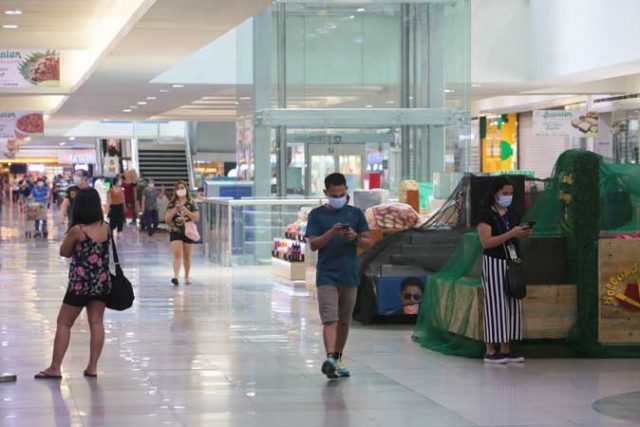
A QUEZON CITY MALL on the second day of the implementation of the Modified Enhanced Community Quarantine in the National Capital Region in May 2020. — PHILIPPINE STAR/ MICHAEL VARCAS
Every time there is a “lockdown” or strict community quarantine, when many businesses temporarily close shop, smaller enterprises and their workers tend to hurt the most. Single proprietorships depend heavily on daily revenues. Also, they employ many daily wage earners. But many of them, by government’s definition, are not considered “essential.”
Luckily for some businesses, they have gained access to electronic trading platforms like Shopee, Lazada, Metro Mart, or Grab. But albeit the volume they do online is small compared to what they could normally make from walk-in customers and those that deliberately or intentionally visit their shops during regular business hours. Estimates put at roughly 250,000 the number of jobs lost because of the two-week lockdown at NCR Plus (National Capital Region + Laguna, Cavite, Bulacan, and Rizal) from March 29 to April 11. The National Economic and Development Authority (NEDA) also estimates income lost during the period for NCR Plus at around P30 billion. No estimates yet for the period April 12-30.
Other than business closures due to lockdowns, survivor-businesses are also contending with changing consumer preferences, also brought about by changes in shopping habits as a result of the pandemic. So, they get hit both on the operation side as well as the customer side. As such, even if the government considers them essential, customers may not.
As the SM Group noted in a recent presentation, the pandemic and “quarantine life” have made people reassess what are “essential purchases.” And, in this line, people are now categorizing and prioritizing their purchases starting with “obvious essentials,” then moving to “new essentials,” and then to “next essentials.”
Goods or products that get priority fall under the categories of domestic hobbies; productivity at home; health and well-being; functional fashion; take home experiences; and, comfort food. If what you produce or sell does not fall under any of these categories, then you might not be a priority. And SM notes the “reassessment of what is essential is a trend that will likely endure.”
That smaller businesses are the most impacted by lockdowns and changing consumer preferences is a global and not just a local concern. After all, anywhere in the world, smaller businesses have less resources and access to technology compared to their big counterparts. Thus, any prolonged disruption in business and cash flow is enough to put many of them under.
A rise in business closures and insolvencies is thus anticipated, and this will have serious implications. In an April 2 blog by staffers of the International Monetary Fund (IMF), they said that “even with public support measures, small and medium enterprise insolvencies are likely to rise. Therefore, a comprehensive set of insolvency and debt restructuring tools will be needed for the insolvency proceedings system to cope with the added strain.”
These tools, they noted, include “dedicated out-of-court restructuring mechanisms, hybrid restructuring, and strengthened insolvency procedures. Since liquidations may be excessive even under well-functioning insolvency procedures, governments could provide financial incentives to tilt the balance towards restructuring.”
The April 2 blog, “Taming the Wave of Small and Medium Enterprise Insolvencies,” was authored by IMF staffers Federico J. Díez, Romain Duval, Chiara Maggi, and Nicola Pierri. Diez is an Economist at the Structural Reforms Unit of the IMF’s Research Department. Duval is an Assistant Director in the IMF’s Research Department. Maggi is an Economist in the IMF’s Middle East and Central Asia Department. And Pierri is an Economist at the Macro-Financial Division of the IMF Research Department.
“The pandemic has hit small and medium enterprises particularly hard, partly because they are predominant in some contact-intensive sectors like hotels, restaurants, and entertainment. As a result, many advanced economies risk experiencing a wave of liquidations that could destroy millions of jobs, damage the financial system, and weaken an already fragile economic recovery,” the authors wrote.
They also noted that loans, credit guarantees, and moratoria on debt payments can protect small and medium enterprises (SMEs) from the “immediate risk of bankruptcy,” but such “liquidity support cannot address solvency problems. As firms accumulate losses and borrow to keep carrying on, they risk becoming insolvent — saddled with debt well over their ability to repay.”
Their research shows the COVID-19 pandemic will raise the number of insolvencies among small and medium enterprises from 10% to 16% in 2021, across 20 mostly advanced economies in Europe and the Asia-Pacific region. The increase, they said, would be on a magnitude similar to the rise in liquidations in the five years after the 2008 global financial crisis, but it would take place over a much shorter period of time.
“Projected insolvencies put about 20 million jobs at risk (i.e., over 10% of workers employed by small and medium enterprises), roughly the same as the total number of currently unemployed workers, in the countries covered by the analysis. Further, 18% of small and medium enterprises may also become illiquid (they may not have enough cash to meet their immediate financial obligations), underscoring the need for continued liquidity support,” the blog authors wrote.
The implication for banks is a “concern,” they said, noting that more SME “insolvencies could trigger defaults and cause significant write-offs, depleting banks’ capital.” Smaller banks, they added, would be hit even harder, as they often specialize in lending to smaller businesses. “Compared to past crises, this time around there is a clearer case for solvency support by governments,” they added.
With SMEs comprising most of the businesses in the country, and given the adverse impact of COVID-19 on them since early 2020, there is urgent need to consider additional “modes” to ensure “solvency support” for them. Bayanihan I and II may not be enough, especially given the possibility of prolonged lockdowns in the future.
Marvin Tort is a former managing editor of BusinessWorld, and a former chairman of the Philippines Press Council
IN ECONOMICS, the once heretical is now almost virtuous: central banks funding massive fiscal stimulus, deficits blowing out, de-emphasized inflation fears, and a degree of skepticism about markets. This isn’t limited to rich countries. A time traveler from the 1990s would scarcely recognize some emerging markets today.
Especially if that voyager was a proponent of the “Washington Consensus,” a view of reforms for ending boom-and-bust cycles in Latin America in the late 1980s. The notion became shorthand for market-friendly policies practiced in — some might even say prevailed upon — the developing world. John Williamson, the economist who formulated what became a controversial term, died over the weekend.
Williamson often said he was simply describing a view, prevalent in DC around 1989, about the mix of markets and government that would drive prosperity in Latin America. The Washington Consensus came to have broader connotations, though, and was tossed around as if it were a right-leaning doctrine popular among certain Beltway and Wall Street types. To adherents — and foes — it involved dismantling capital controls, loosening exchange-rate strictures, reining in state spending, closely monitoring inflation and encouraging privatization. In short, markets ought to occupy a central role in economic life.
Although Williamson came to have reservations about some interpretations, his phrase captured the zeitgeist. The Cold War had been won. Markets were supreme. Even China appeared to be embracing a form of capitalism. The state was out, or so it seemed. Yet the Asian financial crisis toward the end of the 20th century challenged that school of thought. It has been further diminished by the policy responses to the COVID-19 pandemic.
Before I arrived as a reporter in Kuala Lumpur from Sydney in 1996, Williamson’s term barely came up. Then suddenly it was everywhere. Markets boomed and money poured into Southeast Asia, via foreign direct investment, portfolio flows, and no small amount of speculative cash. Governments courted this capital as a path to rapid development, and many officials were eager to show their Western-oriented commercial bona fides. It was the era of “tiger economies” — until the hot money began to flee in mid-1997. Severe downturns followed, along with bailouts and, in some cases, the fall of long-ruling leaders and governing political parties.
By the time the Asian financial crisis subsided in 1999, the tides had shifted. Some thought the two pillars of DC policy orthodoxy, the International Monetary Fund (IMF) and the US Treasury, had overstepped. They demanded too much austerity and excessive re-engineering of financial and economic structures as conditions for emergency loans. A photo of Michel Camdessus, the managing director of the IMF, folding his arms and leaning over then-Indonesian President Suharto in 1998 became a damaging symbol of Western supremacy over Asia. Or, at least, ascendance of Western economic thought. That didn’t sit well with local leaders chafing at harsh recommendations and, they claimed, no small amount of schadenfreude from Washington. The region had been doing rather too well before the crisis and needed a comeuppance, or so the conspiratorial argument ran.
In neighboring Malaysia, Prime Minister Mahathir Mohamad took a very different path. Watching the ringgit tumble and fearing that an eventual IMF loan would carry unacceptable conditions, he fixed the exchange rate and imposed some capital controls. He fired and later imprisoned Anwar Ibrahim, his deputy and finance minister, who was seen to have courted elite American opinion too overtly. Mahathir also dismissed top officials at the central bank, who he thought were too orthodox. Critics — I was often one of them — predicted this would be the end of his political career and possibly of Malaysia. We were wrong. Mahathir survived and the economy rebounded. In Indonesia, meanwhile, the IMF and Treasury were ultimately forced to relax conditions, as sectarian violence and a deep recession threatened the viability of the state. Suharto eventually fell in 1998.
The IMF these days is so touchy-feely it’s unrecognizable from the organization feared in the 1990s. The lender no longer admonishes member states for pumping fiscal stimulus into flagging economies. The biggest global economic contraction since the 1930s left policy makers with little appetite for cookie-cutter approaches. Whatever works. The IMF has refrained from lecturing developing nations undertaking quantitative easing and, in the case of Indonesia, outright debt monetization. It talks exhaustively about poverty and inequality, and frets about the lopsided global economic recovery. The central theme of last week’s virtual meetings with the World Bank was “giving everyone a fair shot.”
Speaking at the World Bank in 2004, Williamson recognized his idea had morphed into a phrase that was “hopelessly compromised in public debate.” He said too much pressure had been applied too quickly on countries to absorb the free flow of money. “I can understand why anyone who has been brainwashed to think of the term… as a neoliberal agenda, would reject it as unhelpful.”
Washington Consensus was much less than a doctrine and certainly not a nefarious plot to bring Asia to heel. For that misperception, don’t blame Williamson, but the climate of the times.
SURVEYS are now the stuff of news, even in social media, especially when dealing with preferences for the top two spots “if elections were held today,” and not when it’s scheduled next year in May. Hopefully, by then the pandemic would be over, and you happen to be where you are registered as a voter, and inclined to line up for your turn at the booth, without having to wear a face mask.
Except for Viber groups, which are not representative of the country at all, soliciting informal opinions, I have never been approached as a respondent for nationwide surveys. I am not sure how they randomize the respondents or how I’ve gotten skipped all the past election years. Then again, I haven’t won random events like lotto, raffles, and door prizes either.
Do surveys use stratified clusters based on search engine profiles and interests? What about the non-digital natives who also vote? Are queries still conducted by field surveys in deserted malls and train stations? Sampling can be a tricky business, even without a pandemic. Clue: it’s even harder with masked respondents who avoid strangers with notebooks.
Market researches for consumer products or services are more focused and clearer on what their clients are looking for — why people buy their products, or don’t. For restaurants, it is routine for the waiter handing you the bill to also ask you to fill up a questionnaire with a tiny pencil without an eraser. You are asked for comments on the food and the quality of the service — did you get a back massage? Sorry we no longer offer hot towels.
In social media, surveys are “crowd sourced” and posted in real time. Thus, comments of customers on restaurants and hotels are gathered by ratings agencies who then give their seal of approval with stickers and on-line reviews. Still, bad experiences can be over-represented. Unhappy customers who shout at waiters take the time to let their bile rise with scathing reviews (there was a cockroach waving at me from the chandelier). On the other hand, satisfied customers tend to be lazy with their comments, and just read the review of others.
The reliability of surveys depends on methodology, mainly the sample size and stratification of respondents over the relevant population which determines the statistical margin for error. Thus, a 100% sample, as in actual elections, has zero margin for error (except for rigged machines), making the exit interview the most reliable survey even with a small sample. It is also too late to be of much help to the tail-enders.
Surveys anyway are not always the predictive tools that people expect them to be. The data can be massaged by bias or vested interests. Name familiarity too figures in the choice of respondents. (So what if he is better known as a boxer.)
At this time, surveys should be more diagnostic in nature, providing feedback on a product and how it can be improved. How does the tail-ender raise his profile? How does he appeal to the “don’t knows”? Where is the nearest bathroom? In social interactions, we don’t need surveys to determine the mood of a particular object of study. Text messages (I lose sleep thinking of all the expenses you keep racking up) and facial expressions, after the mask is removed, determine the chances of being alone with her in a dark room where she has nothing on but the radio — retro music?
The importance of surveys on an almost-declared candidate’s ranking, from prompted choices this early in the political season, lies in any or all of the following: a.) claiming bragging rights as a legitimate contender; b.) ability to attract top operatives and financial backing beyond internally generated funds from the importation of vaccines; and c.) getting free media coverage — I still haven’t decided if I’m going to run. Okay, are you taking back the sneakers?
What about the independence of survey companies which routinely hoist near 100% the favorability rating of the leader? Credibility should rest on the transparency of the methodology capable of delivering independent and reliable results.
Anyway, survey companies have clients too. So it is not unusual to reverse the usual survey process. Start with the desired survey results, and then figure out the methodology to achieve these. It’s a lot cheaper to do… and command a higher fee too.