Home Blog Page 8228

Tech-enabled coffee chain to expand in the Philippines, six other markets this year


Flash Coffee, a Singapore-based, tech-enabled coffee chain, announced that it raised $15 million in Series A funding in a round led by White Star Capital, with participation from investors including Delivery Hero-backed DX Ventures, Global Founders Capital, and Conny & Co. 

The Series A round sets the total capital raised to $20 million, and will be used to expand the brand in 10 markets across the Asia Pacific this year, including seven new markets: Hong Kong, Taiwan, South Korea, Japan, Malaysia, the Philippines, and Vietnam. 

The company aims to digitize the offline-dominated coffee industry with a consumer app that has a streamlined pick-up feature, loyalty program, personalized promotions, and interactive challenges. It also has a barista app that improves operational store efficiency and enables performance-based incentives for its baristas.

“Flash Coffee’s business model has proven successful during the pandemic in all of its markets,” said co-founder and Chief Executive Officer David Jonathan Brunier. “Our app’s pick-up feature together with our focus on grab-and-go locations enable customers to pick up their orders quickly and safely.”

Drinks in the coffee menu are curated by World Latte Art Champion Arnon Thitiprasert, and are also available in custom packaging through delivery platforms like Foodpanda and Grab.

“Not implementing a tech-first strategy is an antiquated way of doing business,” said Mr. Brunier. “This model is better suited for young, lifestyle-savvy middle-class consumers.”

PHILIPPINE COFFEE MARKET
The coffee chain launched in January 2020, and operates 50 locations across Singapore, Thailand, and Indonesia. It plans to open its first 10 branches in the Philippines in the second half of 2021, with the first locations in Metro Manila. 

In an e-mail interview with BusinessWorld, Mr. Brunier said that the Philippine coffee chain market’s appeal is due to the high population density in the country’s key cities, a rising middle class eager to try new products, and an ever-growing coffee per capita consumption.

“We see a very large potential for disrupting the Philippines’ coffee industry with our high-quality coffee at affordable prices,” he said. “Given the fact that mobile usage is especially high in the Philippines, we also foresee our intuitive and convenient consumer app to revolutionize the way Filipinos enjoy their daily caffeine fix.”

Coffee from well-known brands is expensive and hence inaccessible to the Asian middle class, Mr. Brunier said, referencing as an example the average daily income in the Philippines being equivalent to the price of three Starbucks lattes. 

For the majority of industry players, the operational backend (shops, stock management, purchasing, and staffing) is mostly offline, which opens opportunities for digitization and optimized processes. 

“Customers are constantly paying high prices for coffee from large outlets with extensive seating in expensive neighborhoods, while the majority of orders are grab-and-go and delivery,” he added. —  Patricia B. Mirasol

Brazil investigates reports of vaccines being exchanged for illegal gold

PIXABAY

BRASILIA — Federal prosecutors in the Brazilian state of Roraima are investigating reports that illegally mined gold is being exchanged for coronavirus disease 2019 (COVID-19) vaccines in the Yanomami indigenous reserve, the prosecutors office told Reuters on Wednesday.

Tribal leaders in the Amazon region have complained of the deals and prosecutors say they will investigate the reports as part of an investigation already underway into the diversion of vaccine shots intended for indigenous people.

Brazil is currently experiencing one of the worst waves of the coronavirus pandemic any country has suffered, and its indigenous people are among the most vulnerable.

The Hutukara Association, which represents the Yanomami people, flagged the issue to prosecutors with the backing of the Instituto Socioambiental, a non-governmental organization.

The association said a health worker in the Homoxi district gave illegal miners vaccines in exchange for gold. The worker also sold gasoline and a generator to the miners for gold, the association said.

“The Yanomami have long complained that materials and medicines intended for indigenous health are being diverted to wildcat miners,” Hutukara’s Dário Kopenawa Ianomâmi said in a letter outlining the formal complaints sent to prosecutors and the Health Ministry.

Another case involved a separate health worker who met miners at night and gave them medicine in exchange for gold, the association said.

The Health Ministry said it received the letter on April 5 and had opened the investigation. — Lisandra Paraguassu and Ricardo Brito/Reuters

E-commerce platform connects young Afghan female entrepreneurs with the world

UNSPLASH

KABUL — A locally grown e-commerce platform in Afghanistan is connecting vendors with customers around the world, providing an important opportunity for the war-torn economy and inspiring a new trend of young women starting up their own small businesses.

E-commerce site Click.af started in 2016 to give Afghans access to a domestic online market, and last year began shipping globally, according to its founder Masiullah Stanikzai. The idea behind the expansion was to connect local designers and artisans to a larger base of consumers, he said, mainly Afghans living in the United States, the United Kingdom, Germany and Australia.

Twenty-five-year-old Maryam Yousufi jumped at the chance to connect with consumers around the world. She launched a fashion line called Machum on the site a few weeks ago and has received more than a dozen orders for the clothes she designs.

“I wanted my company’s products to reach global markets … It’s a big achievement for us,” she said.

Her clothes fuse Western style with traditional Afghan design, with her page on the e-commerce site showcasing an array of women’s clothing, from beaded and embroidered jewel-tone dresses to a sleek balloon-sleeved mustard top. Prices vary from $12 to more than $100.

Economists said that despite poverty, corruption, and poor infrastructure creating setbacks, Afghan e-commerce gives women greater opportunities to break into the world of business in the conservative society.

“E-commerce can be a powerful tool for bringing in greater gains to women entrepreneurs since it addresses the outmoded barriers of geographic isolation and limited access to information and financing,” said Lutfi Rahimi, a research fellow at the Biruni Institute, a Kabul-based economic think-tank.

Ms. Yousufi, who works on her business at night after her day job in media is done, said she believes online platforms can give others like her a chance to try entrepreneurship.

The platforms can help women in Afghanistan, where the majority of citizens live below the poverty line, overcome hurdles such as violence and instability, conservative attitudes towards women, and the difficulty in getting credit, Yousufi and experts said.

“I believe that young people should not always be employees of a company or office,” she said.

“They should use their talents and have their own businesses.” — Orooj Hakimi/Reuters


US hearing on China competition told research funding falling behind

WASHINGTON — US investment in research and development has reached its lowest level in decades while soaring in the rest of the world, the head of a US Senate committee warned at a hearing on proposed subsidies to the tech industry to help the United States better compete with China.

Senate Commerce committee chair Maria Cantwell told the committee on Wednesday the proposed “Endless Frontier Act” had been the stimulus for a big debate about America’s competitiveness.

Federal investment in research and development is at its lowest in 45 years when measured against GDP, Ms. Cantwell said.

“This comes as international competition is increasing, and other nations are ready to challenge our position on the world’s innovation stage.”

The ranking member of the committee, Republican Senator Roger Wicker, said it appeared the intent of the legislation was to help America compete with China, but that the United States would not beat China by copying its “top-down program” of research and investment and government subsidies.

“Strategic investments in technologies and supply chains are important, but we will not win by simply throwing money at the problem,” Mr. Wicker said. “We could actually end up doing harm if recipients of funding through this concept lack the capacity and capability to conduct R&D activities that are actually useful.”

The Endless Frontier Act was first proposed in 2020 calling for $110 billion over five years to advance US technology efforts, co-sponsored by Senate Democratic Leader Chuck Schumer and Republican Senator Todd Young.

INVESTMENT PLAN
Mr. Schumer also wants to move legislation on boosting US semiconductor production. Both proposals could total $200 billion, congressional aides said.

President Joseph R. Biden, Jr., has proposed a sweeping infrastructure investment plan that could provide funds for semiconductors, though it is unclear just how the various funding initiatives will be ironed out between the administration and Congress.

Mr. Biden has also sought solutions to a chip shortage that has squeezed US automakers competing against the sprawling consumer electronics industry for chip supplies.

Several US tech industry groups on Wednesday wrote to Congress and White House officials urging them to not set aside new semiconductor manufacturing capacity for older chips as part of appropriations for the CHIPS for America Act, another plan to boost US semiconductor supply chains.

The letter signals a growing rift between the two US industries, with tech companies arguing that reserved capacity for legacy chips used by automakers would be market distorting.

“The competition among the rest of America’s chip-consuming industries for this artificially tightened chip supply will translate into higher costs for companies and their customers, including American taxpayers,” the letter from the tech lobbies, including the Information Technology Industry Council, said. — David Brunnstrom and Michael Martina/Reuters

Mobile games could be good for you (and how the vivo Y20s [G] makes the experience better)

The latest vivo smartphone delivers top-notch gaming features enhancing player performance

It is a common misconception that mobile games are bad for one’s health. With the explosion of gaming during quarantine, many mobile users have experienced its benefits, starting with treating it as a fun distraction from all the pandemic stress.

There are many discovered health benefits of playing mobile games including helping people overcome anxiety and improved mental memory. With proper self-regulation and a powerful gaming smartphone like the vivo Y20s [G], with its maximized speed and long-lasting battery, online games can help players conquer real-life challenges.

Here, we highlight how mobile games may actually be good for players.

Gives that sense of being ‘in control’ to combat anxiety

In a moment when people have less control on the outcome of events, mobile gamers feel empowered by dominating a challenge that’s literally in the palm of their hands.

In a study published on the US National Library of Medicine, researchers observed games minimize exhaustion caused by stresses in the real world by giving players an environment where they have more control of things. In fact, gamification is an increasingly used technique to ensure the effectiveness of wellness apps used to fight anxiety and depression.

Mobile games boost brain power

Granting you’ve chosen the right games, they actually help in keeping your brain engaged by improving spatial awareness and in boosting memory.

In particular, playing games is a good exercise to make the human brain remember things better. A study by neurobiologists at the University of California- Irvine (UCI) found 3D video games boost the formation of memories.

Global Positioning System or GPS-centered mobile games, on the other hand, are effective in improving spatial awareness. Knowing your surroundings would be enhanced further by using smartphones that have accurate positioning service, like the vivo Y20s[G] that has an excellent positioning system through the MediaTek Helio G80 octa-core processor.

Improves problem-solving skills

As life in the time of the pandemic becomes more complex, it would be good to get a fun problem-solving coach. With the richness of the challenges in games, problem-solving skills are harnessed with the desire to win. Chilean health researchers concluded in a study that since most games are episodic, they teach human brains to not stop until the challenge is completed or the problem solved.

Makes people more social by bringing them together

Most mobile games help users build a social community. They’re played together and simultaneously by gamers from different parts of the world which is an effective way to shake-off isolation loneliness.

For some people, communicating with others can be a challenge. Increased social interaction through games that involve multiple players can help them overcome those fears or awkwardness.

It would then be a bonus to have a faster system as you make connections with other gamers. vivo Y20s[G]’s HyperEngine Game Technology speeds up game load times and takes care of latency issues for those extended social playtimes.

As most of the country continues to stay home, it should be a comforting realization that mobile games do not only ease boredom. It also gives players several health benefits, if playing games is properly managed in terms of time spent and frequency.

Get the latest gaming smartphone with top-notch features, the vivo Y20s[G]. Learn more about this smartphone by visiting https://www.vivoglobal.ph/ or follow vivo Philippines on Facebook, Twitter, and Instagram.

J&J COVID-19 vaccine in limbo as US panel delays vote on resuming shots

REUTERS
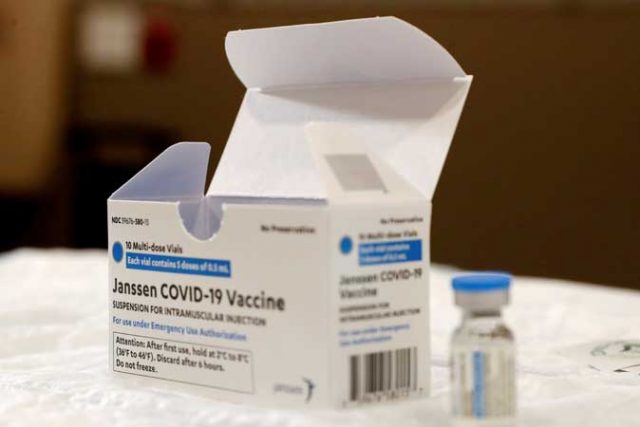
A vial of the Johnson & Johnson’s coronavirus disease vaccine is seen at Northwell Health’s South Shore University Hospital in Bay Shore, New York, US, March 3, 2021. — REUTERS/SHANNON STAPLETON/FILE PHOTO

Johnson & Johnson’s (J&J) coronavirus disease 2019 (COVID-19) vaccine remained in limbo on Wednesday as a US health panel called for more data before making a decision on how and whether to resume use of the one-dose shot, putting off a vote for a week or more.

The US Centers for Disease Control and Prevention (CDC) advisory panel decided to delay a vote on how best to use the J&J shot even after a US Food and Drug Administration (FDA) scientist told advisers he believed warnings could mitigate the risk of extremely rare but serious blood clots.

The panel is reviewing six reported cases of rare brain blood clots in women who received the J&J vaccine, a day after the FDA and CDC jointly recommended pausing its use to assess the issue.

Dr. Lynn Batha, an epidemiologist at the Minnesota health department, and several others spoke in favor of extending the pause to gather more safety information.

“By having more robust information, I think we can be more confident about how we talk about the safety of this vaccine,” she told other members of the advisory panel.

Earlier, the FDA’s deputy director for vaccine development, Doran Fink, told the panel that his current thinking was that warning statements and communications from the federal agency would allow doctors to weigh risks and benefits of the vaccine.

Other panel members and advisers, however, expressed concern that extending the pause could worsen issues related to equitable access to the vaccine, which is seen as important for serving hard-to-reach communities because it can be stored at normal refrigerator temperatures and given as one dose instead of two.

“Any extension of the pause will invariably result in the fact that the most vulnerable individuals in the United States will remain vulnerable,” Nirav Shah, director of the Maine Center for Disease Control and Prevention and a representative of the Association of State and Territorial Health Officials told the panel. Shah is not a voting member.

Several panel members wanted to vote to extend the pause by as much as a month, but Dr. Beth Bell, a global health expert at the University of Washington, argued that would send a signal globally of a major issue with the vaccine.

“I don’t want to send the message that there is something fundamentally wrong with this vaccine, which I don’t agree with,” she said.

“It’s a very rare event,” Dr. Bell said of the cases of blood clots in the brain, known as cerebral venous sinus thrombosis (CVST), along with low blood platelets. “Nothing is risk-free.”

The six cases, all in women under age 50, were reported out of 7.2 million doses of the J&J vaccine administered in the United States — a risk federal health officials and immunology experts said was extremely low, especially when weighed against the potential ravages of COVID-19.

One of the six women died and three remain hospitalized. So far, more than 562,000 people in the United States have died from COVID-19.

Dr. Bell argued in favor of postponing a vote and gathering more information, which the panel decided to do.

The FDA is charged with weighing evidence on a vaccine’s safety and effectiveness, and could add warnings to existing labeling. The panel’s role is to advise public health officials and the CDC director on how best to use vaccines once they are approved.

The FDA in an e-mail to Reuters said it is continuing to review the vaccine safety data, in partnership with the CDC, and will provide updates on additional scientific evidence as they become available.

“It’s important that these deliberative processes that protect patients are followed so that the American public has confidence in vaccine safety and effectiveness,” the FDA added.

The panel could recommend limiting the use of the vaccine to specific age groups to reduce risks, and is likely issue advice to healthcare providers on how to recognize concerning symptoms and treat those patients.

One of the standard treatments for blood clots, heparin, could lead to serious complications or death with this rare clotting condition.

Johnson & Johnson has not seen CVST in recipients of its Ebola vaccine or its vaccine against respiratory syncytial virus (RSV), which use similar technology, nor in its trial of a two-dose regimen of the COVID-19 vaccine, according to a company presentation to the vaccine advisory panel.

The group of outside advisers will make a decision by Friday on when it will reconvene, which could be within a week to 10 days, CDC officials said. — Julie Steenhuysen and Manas Mishra/Reuters

Taiwan tells Biden emissaries it will counter China’s ‘adventurous maneuvers’ with US

REUTERS

TAIPEI — Taiwan President Tsai Ing-wen on Thursday told emissaries visiting at the request of US President Joseph R. Biden, Jr., that the island would work with the United States to deter threats from Chinese military activities.

Former senior US officials, including former US Senator Chris Dodd and former Deputy Secretaries of State Richard Armitage and James Steinberg, are visiting Taipei in a trip to signal Biden’s commitment to Taiwan and its democracy.

Ms. Tsai told the US delegation in a meeting at the Presidential Office that Chinese military activities in the region have threatened regional peace and stability.

“We are very willing to work with like-minded countries, including the United States, to jointly safeguard the peace and stability of the Indo-Pacific and deter adventurous maneuvers and provocations,” Ms. Tsai said.

She vowed to continue to cooperate with the United States to counter “cognitive warfare” and misinformation, but did not elaborate.

Mr. Dodd told Ms. Tsai the Biden administration would be Taiwan’s “reliable, trusted friend,” which will help the island expand its international space and support its investment in self-defense.

He added the US partnership with Taiwan is “stronger than ever” and that the visit was to reaffirm Mr. Biden’s commitment to the island.

Ms. Tsai also told the delegation that Taiwan looks forward to resuming trade talks with the United States as soon as possible. Taipei has long sought a free trade deal with Washington.

Dan Biers, director of the State Department’s Office of Taiwan Coordination, is also part of the delegation.

Taiwan is China’s most sensitive territorial issue and a major source of contention with Washington, which is required by US law to provide the island with the means to defend itself.

Taiwan has complained over the last few months about almost daily missions by China’s air force near its air defense identification zone (ADIZ). Twenty-five Chinese aircraft, including fighters and nuclear-capable bombers, entered Taiwan’s ADIZ on Monday in the largest reported incursion to date.

China announced on Wednesday it would begin five days of live-fire drills off a part of its coast facing Taiwan, which Taiwan’s Defense Minister Chiu Kuo-cheng told reporters the country would pay close attention to.

“There’s some psychological impact, but don’t get too worked up about this. Everyone should have confidence in the armed forces,” he said.

Mr. Chiu will meet with the visiting Americans, his deputy Chang Che-ping told lawmakers.

The unofficial US visit, which a White House official called a “personal signal” of the president’s commitment to Chinese-claimed Taiwan, is further straining Sino-U.S. relations.

China on Wednesday described its military exercises near Taiwan as “combat drills” and said the meeting of the US officials with Tsai “will only exacerbate the tense situation in the Taiwan Strait”. —  Yimou Lee/Reuters

Beijing’s top official in Hong Kong warns foreign powers not to interfere

Wikimedia Commons

HONG KONG — Beijing’s top representative in Hong Kong said on Thursday that any foreign powers that try to use the global financial center as a pawn will face countermeasures, amid escalating tensions between the city and Western governments.

Luo Huining, the director at China’s Hong Kong Liaison Office, was speaking at a ceremony to mark National Security Education Day, which authorities have organized to promote the sweeping legislation China imposed last year.

“We will give a lesson to all foreign forces which intend to use Hong Kong as a pawn,” Mr. Luo said.

The new law drew criticism from the West for curbing rights and freedoms in the former British colony, which was promised a high degree of autonomy upon its 1997 return to Chinese rule. Its supporters say it has restored order following mass anti-government and anti-China protests in 2019.

China, the United States, Britain, and the European Union have traded sanctions over the past year as the security law and measures taken to reduce democratic representation in the city’s institutions exacerbated tensions.

Earlier this week, a letter signed by more than 100 British politicians asked Boris Johnson’s government to expand a list of Chinese officials accused of “gross human rights abuses.”

National Security Education Day will be marked with school activities, games and shows, and a parade by police and other services performing the Chinese military’s “goose step” march.

In line with Beijing’s increased assertiveness, the Chinese routine, in which troops keep their legs rigidly straight when lifting them off the ground and arms swing at a 90-degree angle in front of the chest, will replace British-style foot drills at a parade of police and other forces.

Elsewhere, in schools and cultural centers, Hong Kongers were invited to build national security “mosaic walls” to instill, according to a government website, the idea that people should work together to protect their homeland.

Stickers and bookmarks reading “Uphold National Security, Safeguard our Home” have been delivered to schools and kindergartens.

In February, Hong Kong unveiled national security education guidelines that include teaching students as young as six about colluding with foreign forces, terrorism, secession, and subversion — the four main crimes in the new law. — Reuters

Philippines lifts nine-year-old moratorium on new mining projects

PRESIDENTIAL PHOTO/ KING RODRIGUEZ

MANILA – Philippine President Rodrigo Duterte has lifted a moratorium on new mineral agreements imposed in 2012, according to an executive order made public by the presidential palace on Thursday.

The executive order, which Duterte signed a day earlier, allows the government to enter into agreements for new mining projects and undertake a review of existing mining contracts and agreements for possible renegotiation of the terms, as it seeks to boost state revenues. — Reuters

BIR collection slips amid lockdown

PHILIPPINE STAR/KRIZ JOHN ROSALES

By Beatrice M. Laforga, Reporter

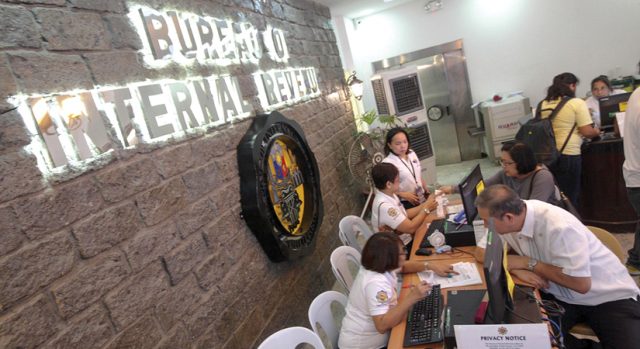
THE Bureau of Internal and Revenue (BIR) missed its collection target by 13% in March, as the government began tightening lockdown restrictions to curb the spike in coronavirus disease 2019 (COVID-19) infections.

Arnel SD. Guballa, BIR deputy commissioner for operations, on Wednesday said the agency collected P127.4 billion in taxes in March, 13% short of its P146.3-billion target for the month, citing preliminary data.

Last month’s collection was also 3.19% smaller than the P131.6 billion in March 2020, and 17.35% lower than the P154.14 billion in February.

In a Viber message, Mr. Guballa attributed the below-target tax collection to the impact of the stricter lockdown in Metro Manila, Bulacan, Cavite, Laguna and Rizal.

These areas were placed under a general community quarantine with more restrictions starting March 22, and later under an enhanced community quarantine starting March 29 until April 11. Restrictions were slightly eased until April 30.

Revenues in March brought the BIR’s first-quarter collection to P463.69 billion, 1% lower than the P468.79 billion it generated in the same period last year.

The BIR is targeting to collect P231.57 billion this month, mainly from annual income tax payments.

The deadline for filing and payment of annual income tax returns is on April 15 (Thursday).

Despite calls for an extension due to stricter quarantine measures and the delayed implementation of the law that cut the corporate income tax, the government announced it was keeping the April 15 deadline.

Republic Act 11534 or the Corporate Recovery and Tax Incentives for Enterprises Act was signed on March 26 and the implementing rules were only released last week.

Instead of a deadline extension, the BIR waived penalties for tax return amendments until May 15 and allowed taxpayers to file their ITRs even outside their registered district offices.

BIR Commissioner Caesar R. Dulay did not respond to queries as of press time when asked if a deadline extension is still possible.

The BIR is the largest tax-collecting agency, generating 70% of the state’s total revenues. The agency is tasked to collect P2.081 trillion this year.

Meanwhile, the Bureau of Customs exceeded its collection target for the third straight month in March. It raked in P54.5 billion last month, beating its P47.7-billion goal by 14%, and also up by 22% year on year.

Customs aims to generate P620 billion this year.

Lawmakers vow to rush Bank Secrecy Law amendments

AN EMPLOYEE checks dollar bills at a money changer in Manila in this file photo. — REUTERS

By Luz Wendy T. Noble, Reporter

EASING the Bank Secrecy Law will strengthen the case for the Philippines to avoid being “gray-listed” by the Financial Action Task Force (FATF), government officials said.

“The country now needs to demonstrate that our anti-money laundering and counter-terrorism financing (AML/CTF) legal and institutional framework is producing the expected results over a sustained period. Thus, at this point, all branches of government are contributing toward demonstrating tangible and positive progress, according to the roadmap set,” Anti-Money Laundering Council Executive Director Mel Georgie B. Racela said in a Viber message.

Mr. Racela made the statement after the International Monetary Fund (IMF) stressed the need for major reforms in the country’s efforts against money laundering and counter-terrorism financing.

In its the Financial System Stability Assessment for the Philippines, the IMF said the Philippines should amend the Bank Secrecy Law to strengthen the central bank’s supervision powers, boost the effectiveness of the country’s regulations against “dirty money” and terrorism financing, and further improve ties with foreign authorities. The IMF said that the country should address these gaps within the medium term.

“Without major reforms by June 2021, the country could again be included in the FATF list of jurisdictions with serious AML/CFT deficiencies and expose the financial system to significant risks,” the IMF said.

Quirino Rep. Junie E. Cua has filed House Bill (HB) 8991 which seeks to give the Bangko Sentral ng Pilipinas (BSP) the power to look into accounts of bank officials provided there is “reasonable ground” for fraud, serious irregularity, or unlawful activity committed by industry leaders. It has been approved by the House Committee on Banks and Financial Intermediaries.

The measure amending the bank secrecy law is not part of the list of priorities identified by the Legislative-Executive Development Advisory Council (LEDAC) for passage within the next few months.

Mr. Cua, chairman of the House Committee on Banks and Financial Intermediaries, said it is still “very possible” to approve the measure before 2022.

“I think by the time we resume session in May, it will not take long, we will be able to pass that on second and third reading, and the Senate still has several months to work on it,” Mr. Cua said in a phone call.

The measure can still be prioritized even if it is not endorsed by the LEDAC, according to Senate President Vicente C. Sotto III.

“We can consolidate the House bill with any filed in the Senate whether [the bill is] prioritized or not”, Mr. Sotto said in a WhatsApp message.

Senate Bill 1802 was filed by Senator Grace S. Poe-Llamanzares in September last year and is still pending at the committee level.

AMLC’s Mr. Racela said easing bank secrecy rules also means boosting regulatory powers of other agencies.

“The proposed amendments to the Bank Secrecy Law primarily aim to assist other supervisors and law enforcement agencies as the AMLC is already exempt from the effects of the bank secrecy law,” Mr. Racela said.

Meanwhile, the Chamber of Thrift Banks (CTB) expressed concern over the proposed amendments to the Bank Secrecy Law.

“We question the proposed amendment authorizing the BSP to examine and inquire into the deposits of a bank stock holder, owner, director, trustee, officer, or employee, citing the fact that present laws are already sufficient to enable to BSP and of course to examine the accounts, subject of course to existing requirements or limitations,” CTB President Cecilio Paul D. San Pedro said at their General Membership Meeting on Wednesday.

Bankers Association of the Philippines President Cezar P. Consing in February said the industry supports the amendments, saying it will making the Philippines less prone to “dirty money” flows.

However, he said there should be a safe harbor clause that will protect lenders from possible civil liability in relation to deposits examined by the BSP. This has already been addressed in the committee-approved version of HB 8991.

The IMF also recommended designating tax crimes as predicate money laundering offenses and establishing a comprehensive legal framework for targeted financial sanctions against proliferation financing. It also proposed boosting risk-based supervision by implementing sanctioning procedures for high risk sectors such as banks, casinos, and money value transfer services.

These recommendations have already been addressed by the Republic Act No. 11521 or the Anti-Money Laundering Act and the Republic Act No. 11479 or the Anti-Terror Act of 2020. Both laws were passed before a Feb. 1, 2021 deadline set by the FATF.

DBM releases 78% of P4.5-T budget in Q1

PHILIPPINE STAR/ MICHAEL VARCAS
Budget Secretary Wendel E. Avisado said last week that the agency is working on an executive order directing agencies to reduce nonessential expenses to free up more funds for the government’s pandemic response. — PHILIPPINE STAR/ MICHAEL VARCAS

THE Department of Budget and Management (DBM) has released P3.514 trillion to state offices and local government units (LGUs) as of end-March, and implemented cuts to the Agriculture and Education departments’ budgets, latest data from the agency showed.

The amount released so far accounts for 78% of the P4.5-trillion national budget this year. This leaves P991.596 billion left to be released for the next nine months.

Compared with the same period last year, the allocation rate was roughly similar, with the 78.4% recorded in the first quarter of 2020.

This was based on the allotment releases issued by the DBM to agencies and LGUs, allowing them to incur obligations to fund their programs, projects and activities for the year.

Several adjustments to the agencies’ budgets were made, amid the government’s plan to roll out belt-tightening measures amid the pandemic.

The Department of Agriculture had its budget slashed by P21.72 billion to P46.9 billion from P68.62 billion, originally. The budget for the Department of Education was also cut by P2.93 billion to P554.33 billion, from its initial allotment of P557.25 billion.

Subsidies to government-owned and -controlled corporations were also reduced by P712.26 million to P147.48 billion.

On the other hand, more funds were given to the Department of Public Works and Highways, which received an additional P15.358 billion to bring its total budget to P710 billion. An additional P10 billion was also added under the “special account in the general fund,” bringing the total to P31 billion.

Total allotment releases so far were broken down into P2.297 trillion for line departments, making up 87% of their budgets for the year. Around P1 trillion or 70% of the total was released under automatic appropriations, which includes the internal revenue allotment for LGUs.

The DBM also released P116 billion from special purpose funds, or 26.4% of the total budget.

As of end-March, P99.77 billion under the continuing appropriations from the extended 2020 budget has been released.

Budget Secretary Wendel E. Avisado said last week that the agency is working on an executive order directing agencies to reduce nonessential expenses to free up more funds for the government’s pandemic response. — Beatrice M. Laforga

ADVERTISEMENT
ADVERTISEMENT