Home Blog Page 8208

Philippines touted as 2nd best investment destination for renewables in SE Asia — report
Wind-Farm

By Angelica Y. Yang, Reporter

THE Philippines is the second best investment destination for renewable energy (RE) in Southeast Asia with resources that can generate up to 3,000 gigawatts (GW), and a “highly-liberalized” active spot market, according to a report from HSBC Global Research.

In deciding the rankings, the independent research house considered the entry barriers and regulatory environments of six Southeast Asian countries. The two parameters were believed to have effects on RE investments.

HSBC Global Research said the Philippines had a relative score of 2.5, second only to Vietnam which got 2.8, but better than Singapore, Malaysia, Indonesia and Thailand.

It said the Philippines has a medium range of solar or wind resource availability of up to 3,000 GW, but had a “fragmented market” with local players such as Aboitiz Power, Manila Electric Co. and AC Energy Corp.

Aside from policies that support renewables, the country’s active wholesale electricity spot market is said to be “highly liberalized with partial retail competition.” The spot market is a venue where electricity can be traded as a commodity.

In its report, HSBC Global named the Philippines as one of the three countries that led the first wave of the RE capacity growth in the Association of Southeast Asian Nations (ASEAN) region last year due to its “attractive regulatory environment.”

This time, the next growth wave of renewable energy will be more evenly spread out across the Southeast Asian region, but improved regulations and declining equipment costs are the two major forces that will drive more inclusive development in the region.

“Our analysis shows that governments are either in the process of defining policies or have already stated clear regulatory policies related to renewables to attract further investments,” HSBC Global Research said, highlighting the renewable portfolio standards (RPS) program in the Philippines.

The RPS program requires distribution utilities to get an agreed portion of their supply from eligible RE facilities.

HSBC Global Research also noted the “spectacular” fall in the cost of equipment used in building renewable energy projects. “Solar module prices in 2020 were 89% lower than a decade ago, and are forecast to drop another 27% by 2025. The price of wind turbines in 2020 was down 41% (in) 2010, and is expected to fall another 18% by 2025,” it said.

Renewables in four Southeast Asian countries, including the Philippines, will be the cheapest source of power as levelized costs of energy for solar and onshore wind are projected to decrease by 2025, HSBC Global Research said.

Based on Bloomberg and HSBC estimates, utility scale solar projects have a levelized cost of energy of $62 per megawatt-hour (MWh) in the Philippines and this will go down by 16% to $52 per MWh by 2025. Meanwhile, the cost of onshore wind projects in the country is at $93 per MWh, and the level will decrease by 22% to $72 per MWh.

HSBC Global added that other costs in renewable projects are likely to “marginally come down.”

Green financing may help bring down borrowing costs, while technology advancements in solar and wind farms can help firms trim labor costs and reduce outage periods, it added.

Energy Secretary Alfonso G. Cusi last week invited US firms to invest in the Philippine energy sector, particularly in renewables. During a virtual economic briefing on bilateral relations with the US, he urged American firms to take part in the department’s green energy option program (GEOP) and the green energy auction program (GEAP).

The GEOP allows users consuming at least 100 kilowatts of power to source their supply from retail energy suppliers that generate electricity from renewables, while the GEAP allows qualified RE developers to offer their output to the rest of the power industry.


High food prices to continue driving inflation — NEDA

PHILIPPINE STAR/ MICHAEL VARCAS

INFLATION will remain elevated in the coming months as food prices stay high, according to the National Economic and Development Authority (NEDA), which is supporting the reduction of tariffs to boost local food supply.

NEDA said in a report on Monday rising food costs due to prolonged supply-side issues, coupled with the steady increase in global oil prices, would largely drive this year’s overall inflation to go beyond the 2-4% target.

However, it said supply-side price pressures are still considered “transitory” and are projected to subside later in the year.

“In the near term, transitory factors will continue to put upward pressure on inflation. Accordingly, the government’s continuous efforts to address food security, by easing supply restrictions and increasing production will be crucial,” according to the report.

Headline inflation eased to 4.5% in March from 4.7% in February, mainly because of the slower rise in food prices. This snapped the five straight months of acceleration or since the rising trend began in October 2020.

Inflation will average 4.2% by yearend, breaching the 2-4% annual target, according to central bank forecasts

“To address the increase in overall inflation, the government needs to proactively manage the increase in food prices and prevent further second-round effects to protect the purchasing power of households, especially the poor,” the NEDA said.

Aside from boosting production of key agricultural goods, NEDA noted that measures that will lower the tariffs and raise minimum access volume (MAV) on imported meat could help stabilize food prices.

The continued spike in food prices was largely attributed to the pork shortage due to the African Swine Fever (ASF) outbreak.

This prompted President Rodrigo R. Duterte to issue Executive Order 128 on April 7, lowering the tariff rates on pork imported within the MAV quota to 5% in the first three months, and rising to 10% in the succeeding nine months.

He also lowered the tariff rates on out-of-quota pork imports to 15% in the first three months, rising to 20% in the succeeding nine months.

However, lawmakers are calling on the withdrawal of the EO, saying this would lead to huge revenue losses for the government.

NEDA Acting Secretary Karl Kendrick T. Chua earlier estimated that plugging the pork supply gap with imports could bring down full-year inflation by 0.4 percentage point.

The Philippine Statistics Authority will report April inflation data on May 5. — Beatrice M. Laforga

Ayala unit readies drilling plan for Palawan block

ACENERGY.COM.PH

THE Ayalas’ oil and gas exploration unit ACE Enexor, Inc. said on Monday that it is working on a proposal that details the drilling of an exploration well in its southwest Palawan service contract, adding that it will be submitting the plan to the Energy department for approval.

“I am pleased to report that preparation of a drilling proposal for the exploratory well is underway,” ACE Enexor President and Chief Operating Officer Raymundo A. Reyes said during the company’s virtual annual stockholders’ meeting.

He described the proposal for Service Contract (SC) 55 as a comprehensive technical document that explains the plan in constructing the borehole and assessing rock formations and fluids in the subsurface.

Mr. Reyes said the proposal, once completed, would be submitted to the Department of Energy (DoE) for approval.

“Following the [DoE] go-ahead, Palawan55 will commence the tendering process for the required drilling rig, major drilling equipment and supplies, and oilfield services,” Mr. Reyes said.

Palawan55 Exploration & Production Corp., which operates SC 55, holds a 75% interest in the gas prospect. Palawan55 is 75% owned by ACE Enexor and 25% owned by AC Energy Corp.

In a regulatory filing last month, publicly listed ACE Enexor said that the SC 55 consortium had requested the DoE to place the block under force majeure due to the resulting drop in electricity demand, which drove oil prices down.

On Monday, Mr. Reyes said that the company requested for the force majeure period to cover unforeseen delays in the firm’s drilling timeline.

“Should the Force Majeure be granted, the SC 55 venture will, nevertheless, continue to exert best efforts to deliver the obligatory well as soon as is reasonably practicable,” he said.

During the annual meeting, ACE Enexor Chairman Eric T. Francia said that the company remained focused on its commitment to drill a deepwater well in the SC 55 block by next year.

‘RECORD’ NET INCOME
During a separate annual stockholders meeting held virtually on Monday, Ayala Corp.’s energy platform AC Energy Corp. reported a net income of P3.75 billion last year, which it described as a “turnaround performance” due to improved operations and the acquisition of more shares in local renewable energy (RE) projects.

“The company was able to achieve significant improvement in operating efficiencies and reliability. Plant availability increased by 29 percentage points for our thermal assets,” said Mr. Francia, AC Energy president and chief executive officer.

He added that the company also improved its operating margins, which were largely driven by AC Energy’s ability to secure longer-term contracts that allowed more stable cash flows.

Last year, the firm was able to buy more shares in three RE projects, including North Luzon Renewable Energy Corp., which has a wind farm in Ilocos Norte, and the solar farms under San Carlos Solar Energy Inc. (Sacasol) and Negros Island Solar Power Inc. (Islasol).

The acquisitions had a total investment of P7.4 billion, and they were considered to be “earnings accretive” given the operational status of the power plants.

In 2020, AC Energy built five projects with around 374 megawatts (MW) in gross capacity. These projects include the 120-MW solar project and the 40-MW-hour battery storage project in Alaminos, Laguna; the 60-MW solar project in Palauig, Zambales; and the 150-MW quick response thermal plant in Pililla, Rizal.

Mr, Francia said that the company is in the process of building a renewable energy laboratory in Mariveles, Bataan with a 4-MW hybrid solar plant integrated with an energy storage system. The lab will help the company decide on the best technologies as it scales up its investments in solar and storage in the coming decade.

At present, the company has over 1,000 MW of attributable capacity in the Philippines, with almost half coming from renewable sources.

AC Energy Chairman Fernando Zobel de Ayala said that the company’s investments last year created over 3,000 jobs for workers living in host communities, and continue to help in reigniting the economy.

“Sustainable recovery is now seen as perhaps our best and only way forward to achieve our environmental goals to mitigate climate change, create jobs, build economic resilience, and ultimately, improve the well-being of people,” Mr. Zobel said.

“We are delighted that AC Energy has made significant progress along these fronts and continues to be recognized as a key contributor to sustainable growth and development,” he added.

On Monday, shares in AC Energy at the stock exchange improved 4.03% or or 29 centavos to finish at P7.49 apiece, while ACE Enexor shares fell by 4.84% or P1.1 to close at P21.65 apiece. — Angelica Y. Yang

Cebu Air raises $250 million through convertible bonds

BW FILE PHOTO

CEBU AIR, Inc., the listed operator of budget carrier Cebu Pacific, announced on Monday that it had signed an agreement to receive $250-million investment in the form of convertible bonds with International Finance Corp., IFC Emerging Asia Fund, and Indigo Philippines LLC.

The agreement was signed on April 16 after the company’s board of directors’ approval, Cebu Air said in a disclosure to the stock exchange.

“Transaction closing is subject to post-signing deliverables, which the parties expect to complete over the succeeding weeks,” it added.

It said the number of underlying shares for the convertible bonds is 318.75 million common shares with P38 conversion price.

The International Finance Corp. is a member of the World Bank Group. It is the world’s largest development institution focusing solely on the private sector in developing countries, according to Cebu Air.

Meanwhile, the IFC Emerging Asia Fund is a $693-million private equity fund managed by the IFC Asset Management Company, a division of the International Finance Corp (IFC).

Indigo Partners LLC, a private equity firm headquartered in the United States, is focused on aviation investments.

Currently, Indigo Partners’ aviation investments include Frontier Airlines in the United States, Volaris in Mexico, Wizz Air in Europe and JetSMART in Chile.

In March, Cebu Air successfully raised almost P12.5 billion from its stock rights offering, which would be used to strengthen its balance sheet.

In the same month, its board approved a P16-billion, 10-year loan from local banks, which would be used to fund its capital expenditures and other general corporate purposes.

Cebu Air shares closed 3.59% lower at P48.30 apiece on Monday. — Arjay L. Balinbin

Axelum profit dips 32% on pandemic’s impact

AXELUM Resources Corp. recorded a 32.1% decline in its net income to P526.41 million last year due to the effects of the coronavirus disease 2019 (COVID-19) pandemic to its operations.

Quarantine restrictions hampered production in 2020, the listed coconut manufacturer and exporter said in a regulatory filing on Monday.

Last year’s profit was down from the P774.81-million net income recorded in 2019.

Axelum said its consolidated sales last year fell 2.5% to P5.17 billion from P5.30 billion the earlier year because of the lockdown restrictions.

In 2020, it sold 27.1 million liters of coconut water, an increase of 20% from 22.5 million liters the previous year. The said product accounted for 27% of consolidated sales.

The company said additional costs were also incurred as a result of COVID-19 protocols and mobility limitations that caused an increase in raw and packaging materials costs.

Axelum’s cost of sales for 2020 increased 3.2% to P3.87 billion, against P3.75 billion the year earlier due to raw material prices.

It added that the prices of coconut used for production ranged from P7,200 to P7,700 per metric ton in 2020, higher than the P5,800 to P6,000 per metric ton recorded in 2019.

“Additional costs also were due to the impact of escalating shipping fees, container space constraints and enforcement of intensified health policies to safeguard its workforce including regular COVID-19 testing and shuttle services to seamlessly transport workers,” the company said.

For Axelum President and Chief Operating Officer Henry J. Raperoga, the company has been able to sustain its profitability despite the pandemic by taking advantage of opportunities during its extra downtime to improve its operations.

“[We have been able] to bolster our manufacturing capabilities and develop new products to anchor long-term growth. At the same time, we strictly implemented health and sanitation policies to prevent virus transmissions, allowing us to operate continuously without interruption,” Mr. Raperoga said in the disclosure.

According to Axelum, it recently completed the expansion of its spray-drying facility that used agglomerated technology to double the production capacity of coconut milk powder. It expects the move to be a key growth driver for its organic gluten and dairy-free variants due to strong demand in culinary ingredients used for plant-based diets and other applications.

The company said it also commissioned its pressed coconut water plant to fast-track the commercial production of its new coconut water variant, adding that the product continues to have massive appeal in the global market.

On Monday, shares of Axelum at the stock exchange rose 0.29% or one centavo to end at P3.44 apiece. — Revin Mikhael D. Ochave

Lima Estate sells commercial lots within CBD

LIMA Estate’s 30-hectare commercial area in Batangas. — BW FILE PHOTO

ABOITIZ GROUP’S LIMA Land, Inc. will be selling commercial lots to assist its economic activity during the pandemic.

LIMA Estate, a 700-hectare economic zone in Lipa-Malvar, Batangas, is selling four hectares of its commercial lot inventory in 1,800 to 5,000 square meter lots in its central business district (CBD).

The LIMA central business district is the estate’s 30-hectare commercial area which houses The Outlets at Lipa, LIMA Exchange, LIMA Park Hotel, and LIMA Transport Hub.

The lots would be ideal, Aboitiz said in a press release Friday, for outsourcing firms, offices, dormitories, condominiums, schools, hospitals, hotels, civic centers, and other commercial uses to complement existing commercial activity in the zone.

“The launch of our commercial lot offerings paves the way for our vision to turn LIMA Estate into a smart integrated economic center, fully supported by our own ecosystem of services including power, water, and construction, as well as the latest digital technologies,” Aboitiz Integrated Economic Centers First Vice-President Rafael Fernandez de Mesa said.

“This will open up a new wave of opportunities in the area and bring a higher standard of development and quality to provincial locations.”

LIMA also plans to build LIMA Tower One, the first of a six-building office complex, in the same area.

LIMA Land is managed by Aboitiz InfraCapital, Inc., the infrastructure arm of the Aboitiz Group. — Jenina P. Ibañez

SEC’s company registration system eSPARC now online

THE new company registration system of the Securities and Exchange Commission (SEC) called the Electronic Simplified Processing of Application for Registration of Company (eSPARC) launched online on Monday.

Applications to register as one person corporations (OPCs) and as stock and nonstock domestic corporations, with at least two but not over 15 incorporators, will be now accepted through the new platform.

“eSPARC brings us another step closer to our vision of a unified system that can seamlessly handle the company registration process from end to end,” Emilio B. Aquino, chairperson of the SEC, said in a statement.

It may be accessed via https://secwebapps.sec.gov.ph/application.

Applicants or duly appointed representatives may submit their proposed company names and information, along with the required documents to be reviewed by the SEC. The platform has a real-time inquiry facility where applicants can track the status of their applications.

eSPARC is linked to the SEC Cashiering System, the commission’s online payment portal, and its Central Business Portal.

“As we proceed further with the commission’s digital transformation, we also have to ensure that our stakeholders may adapt well and be able to fully take advantage of our ongoing initiatives, which are after all aimed at improving the ease of doing business in the country for them,” Mr. Aquino said.

eSPARC replaces the Interim Registration System, previously used by OPCs and corporations with two to four incorporators, and the Company Registration System (CRS) platform for domestic and foreign-owned corporations with at least five incorporators.

The CRS will only accept applications for the registration of foreign corporations and partnerships moving forward.

Applications filed through the CRS before April 19 will still be processed by the system unless otherwise instructed. — Keren Concepcion G. Valmonte

Oscars show reinvented as a movie — with masks, longer speeches

EN.WIKIPEDIA.ORG
EN.WIKIPEDIA.ORG

LOS ANGELES —  The Oscars ceremony next week will have the look and feel of a movie, giving winners more time for speeches, while coronavirus masks will play a major role, producers of the show said on Saturday.

The coronavirus pandemic and a trio of new producers have led to a reinvention of the traditional show where the world’s highest movie honors are handed out before a seated theater audience of more than 4,000 A-list stars and industry executives.

Much of the April 25 ceremony will instead be held at the Art Deco Union Station in downtown Los Angeles, where a stage is being built and where presenters will be doing more than opening an envelope with the winner’s name.

“It’s not going to be like anything that’s been done before,” director Steven Soderbergh, who is producing the show with Stacey Sher and Jesse Collins, told a news conference.

Mr. Soderbergh, who directed the 2011 movie Contagion, said the pandemic had “opened up an opportunity to try something that hasn’t been tried.”

“We want the show to have a voice,” he added.

Mr. Soderbergh said the ceremony would be shot like a movie, with presenters including Brad Pitt, Harrison Ford, and Halle Berry “playing themselves, or at least a version of themselves.”

Speeches by Oscar winners were previously limited to around 45 seconds. This year, Soderbergh said, “we’re giving them space. We’ve encouraged them to tell a story, and to say something personal.”

The producers said strict testing and COVID-19 protocols would be in place, much of them following standards developed last year to get movie and TV production running again.

They also have consulted extensively with epidemiologists who worked 10 years ago on Contagion, which eerily foreshadowed the devastating effects of a virus on the world and which saw a bump in rentals and streaming last year.

Asked about masks at the ceremony, Mr. Soderbergh gave what he called a deliberately cryptic reply.

“Masks are going to play a very important role in the story,” he said. “That topic is very central to the narrative.”

Nominees unable to travel to Los Angeles for the ceremony will be able to take part via satellite hookups from venues around the world but there will be no Zoom appearances.

The ceremony will be preceded by a 90-minute pre-show that will include performances of the five original song contenders that were recorded in advance on the roof of the new Academy Museum in Los Angeles, and in Iceland. — Reuters

Handwashing station built with eco-bricks made from 18,000 discarded plastic sachets

COMPANY HANDOUT

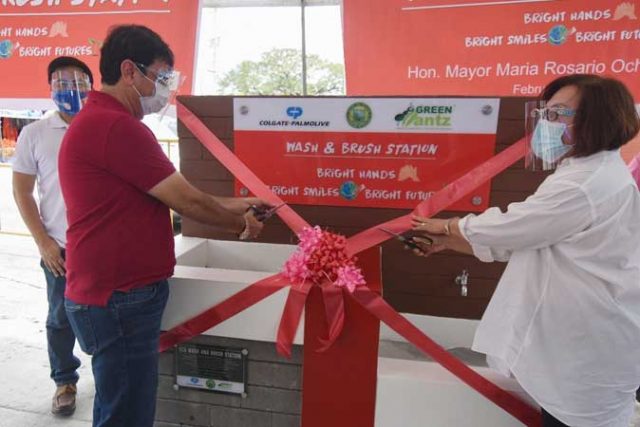
A HANDWASHING STATION has been built using eco-bricks made from around 18,000 discarded plastic sachets in Pulilan, Bulacan.

Building and housing solutions provider Green Antz Builders, Inc. and Colgate-Palmolive Philippines, Inc. last Feb. 16 turned over the first of a series of “wash-and-brush stations,” in the Pulilan Public Market.

In a statement, Colgate-Palmolive Philippines President and General Manager Arvind Sachdev said 18,000 discarded plastic sachets were used by Green Antz in making the eco-bricks for the handwashing station.

The plastic waste is said to have been collected from over 60 schools in Bulacan.

“By helping to collect plastic waste, we are able to make Wash & Brush Stations available to the schools and the community. These handwashing stations are most appropriate at this time to help inculcate proper hygiene and cleanliness within the community. This is only the start for us in our efforts to address plastic waste,” Mr. Sachdev said.

Green Antz President and Chief Executive Officer Rommel B. Benig expressed optimism that the plastic waste problem in the country can be solved if groups work together.

“Even as a handwashing station is highly relevant in helping people to keep healthy during the pandemic, we can collaborate to transform waste into a resource of value. We are glad that more and more people are joining the Green movement. If we combine forces and help each other, we can successfully address the plastic waste crisis,” Mr. Benig said in a statement.

Green Antz and Colgate-Palmolive Philippines are working to reduce plastic waste with its “closed loop plastic waste management program” with five local government units and 62 schools in Bulacan province.

Green Antz said that the closed loop system involves collecting plastic waste, manufacturing eco-bricks, constructing the “wash-and-brush” stations, and turning them over to municipalities and schools.

On its website, the Bulacan-based Green Antz describes itself as a provider of environment-friendly products and solutions for the construction industry. — Angelica Y. Yang

BTr fully awards T-bill offer on strong demand

BW FILE PHOTO

THE GOVERNMENT fully awarded the Treasury bills (T-bills) it offered on Monday despite slightly higher rates on some tenors as demand remained strong amid easing inflation concerns.

The Bureau of the Treasury (BTr) raised P25 billion as planned via the T-bills on Monday as the offering was nearly thrice oversubscribed, with bids at P71.65 billion. Demand for the securities increased from the P54.74 billion in tenders seen at last week’s auction.

The BTr also opened its tap facility yesterday to offer another P5 billion in one-year instruments.

Broken down, the Treasury raised P5 billion as planned via the 91-day papers from P14.85 billion in bids. The three-month papers fetched an average rate of 1.349%, up by 2.4 basis points (bps) from the 1.325% seen last week.

It also awarded P8 billion in 182-day T-bills as programmed as the tenor attracted P21.6 billion in demand. The average yield of the six-month papers inched up to 1.713% from 1.695% previously.

Lastly, the BTr made a full P12-billion award of the 364-day securities it offered on Monday from P35.2 billion in bids. The one-year papers were quoted at an average rate of 1.884%, down by 1.9 bps from the 1.903% seen last week.

National Treasurer Rosalia V. de Leon said the rates of the 91- and 182-day T-bills inched up as demand continued to swamp the short end of the curve.

Meanwhile, a bond trader said the market is “starting to get comfortable again with the one-year paper,” with the decline in its average rate slowly tapering off in recent auctions as a dimmer economic outlook “overcoming inflation concerns.”

Economic managers are currently reviewing their 6.5-7.5% growth target for the year, with the reimposition of strict lockdown measures in the capital and adjacent provinces expected to dent the full-year print by 0.8 percentage point.

Meanwhile, headline inflation slowed to 4.5% in March from the 4.7% in February, driven by a slower increase in food prices.

Inflation averaged at 4.5% for the first quarter, beyond the BSP’s 2-4% target for 2021.

The Bangko Sentral ng Pilipinas (BSP) expects inflation to average 4.2% this year before easing to 2.8% in 2022. Central bank officials have said the inflation path is likely to ease below the midpoint of the 2-4% target towards the fourth quarter.

BSP Governor Benjamin E. Diokno has said the central bank will remain accommodative to support economic recovery but will continue to watch out for  potential second-round inflation effects, such as wage and transport fee hikes.

The Philippine Statistics Authority will report inflation data for April on May 5, while the first-quarter gross domestic product (GDP) report will be out on May 10.

The Treasury wants to raise P170 billion from the local debt market this month: P100 billion via weekly offers of T-bills and P70 billion from fortnightly auctions of Treasury bonds (T-bonds).

On Tuesday, the BTr will offer P35 billion in fresh seven-year T-bonds.

The government is looking to borrow P3 trillion this year from domestic and external sources to help fund a budget deficit seen to hit 8.9% of GDP. — B.M. Laforga

CLI, Archdiocese of Cebu break ground for mixed-use development

CEBULANDMASTERS.COM

CEBU Landmasters, Inc. (CLI) and the Archdiocese of Cebu broke ground for mixed-use development Patria de Cebu at Cebu City’s heritage trail, the listed property developer disclosed to the exchange on Monday.

Patria de Cebu’s groundbreaking is said to be “timed to also celebrate the 500th year of Christianity in the Philippines.”

The 21,000-square meter (sq.m.) project was named after and inspired by a Catholic recreation center in the 1950s and will be located in front of the Cebu Metropolitan Cathedral.

“The final design of Patria de Cebu is a result of a collaboration between the Archdiocese of Cebu, CLI and key stakeholders. It is a celebration of Cebuano history and culture in today’s setting,” Jose R. Soberano III, CLI chief executive officer, said.

The collaboration will cover the development and operation of the project for 40 years.

Project architect Jose Pedro C. Recio envisions the development to “visually bridge the old and the new,” with baroque influences featured in its design.

The main Patria building will be retained in the final design, which was approved by the National Historical Commission of the Philippines.

“[The] new practical structure will be integrated while preserving the heritage of the main Patria building that will have dining, entertainment and office hub while showcasing a large central interior plaza for cultural and other gatherings,” CLI said.

Patria de Cebu will use 4,320 sq.m. of the development for dining and entertainment spaces, while some 4,400 sq.m. will be allotted for office spaces.

The remaining area will be taken up by 182-room international hotel Mercure Cebu Downtown, which will be operated by French multinational hospitality group Accor S.A.

Mercure Cebu Downtown will include amenities such as a ballroom, meeting rooms, a restaurant, executive floor lounge, swimming pool, and a rooftop bar. The hotel is set to open in 2024.

Shares of Cebu Landmasters at the stock exchange went up by 1.25% or P0.07 on Monday to close at P5.67 each. — Keren Concepcion G. Valmonte

Jack Newsome: making music that says something

SINGER/songwriter Jack Newsome — 12TONEMUSICGROUP.COM

THERE are  so many more things that you learn outside of music school, said young singer/songwriter Jack Newsome, a former Berklee College of Music student who, after moving to Los Angeles with the goal of pursuing his music career, landed a stint in a reality show and, just before the pandemic hit, a record deal.

“You’ll learn so much more when you’re learning in real life… there’s so many things that they can’t teach you in the classroom,” Mr. Newsome said in an interview with BusinessWorld via Zoom on April 15.

While continuing music school online, he grabbed an opportunity to be a contestant in the first season of NBC’s reality songwriting competition series Songland in 2019. There he worked with Grammy award-winning country singer, songwriter, and producer Shane McAnally who was his mentor. On the show, Messrs. Newsome and McAnally produced the song, “Lying (Next To You).”

In the reality show, Mr. Newsome learned more about substance in writing lyrics. “I feel like my strong suit is melodies… But when I got to work with Shane I realized [that I] have a lot of work to do in making lyrics that stand out,” he said. “Anybody can write a song, but it takes a really long time to learn how to craft really good lyric[s].”

Calling from Los Angeles, the 24-year-old American said that if there were songs he wishes he had written himself, they would be Bonnie Raitt’s “I Can’t Make You Love Me” and Michael Jackson’s “Thriller,” citing the songs’ brilliant lyrics for his fondness for both.

Mr. Newsome —  who had written songs for PLATINUM, Jordy, Matt Sato, Sean Kingston, and Alex Sampson — landed a record deal with 12Tone Music last year just before the global COVID-19 lockdown.

Working under a record label did not disrupt his creativity, Mr. Newsome said —  it was a learning experience. “It’s opened my eyes to so many different aspects of it, like doing press, and creating visuals for things in putting together an EP. So, I’ve learned a lot about the big picture,” he said. “Since working with the label, it’s not about each song anymore.”

In Feb., Mr. Newsome released a new single, “Arms,” a pop song about longing to be in the company of someone. A product of his time in lockdown last year, the song was conceptualized via Zoom calls with his producer Cambo (who has worked with Doja Cat and Bea Miller). It was later finished in the studio. It is his second release following the song “The Year The World Stood Still” (which came out in January) which talks about the importance of hitting pause at a certain point in life.

“The inspiration for the song was mostly from the pandemic. It was a very sad time.  Everyone felt so divided,” Mr. Newsome said.

“Our goal was to make a song you could dance to, but where the lyrics are relatable [since] a lot of people were missing their friends,” he said. “The focus [of the songs] is [to be] very uplifting and I want people to feel like they’re getting a big hug from me.”

Mr. Newsome continues to write and produce music while anticipating the opportunity to perform live again. He and his team are currently working on another single and an EP which is set for release in the summer.

“I don’t want to do the same thing over and over again, so I probably will end up trying a few different things,” he said.

“Arms” is available on music streaming platforms. For more information, visit https://jacknewsomemusic.com/#music. — M.A.P. Soliman

ADVERTISEMENT
ADVERTISEMENT