FLAG BEARERS march past during the 62nd Merdeka Day (Independence Day) celebrations in Putrajaya, Malaysia, Aug. 31, 2019. — REUTERS
MALAYSIA kicked off an offering of its first-ever sustainability Sukuk, adding to a growing number of countries turning to debt financing for environmental projects.
The Southeast Asian nation is marketing dollar-denominated Islamic finance securities in 10-year and 30-year parts, a person familiar with the matter said. It may price the deal as soon as today, according to the person, who asked not to be identified as the details are private.
Sustainable debt issuance rose 29% last year to a record $732 billion, according to figures from BloombergNEF. Indonesia sold green debt that complies with religious principles in 2018, making it the first country in the world to sell such securities, according to a United Nations Development Programme report.
The last time Malaysia tapped the global debt market was in 2019 when it sold yen debt. — Bloomberg
Netflix Inc. said slower production of TV shows and movies during the pandemic hurt subscriber growth in the first quarter, sending shares of the world’s largest streaming service down 11% on Tuesday.
Roughly 3.98 million people signed up for Netflix from January through March, below the 6.25 million average projection of analysts surveyed by Refinitiv.
Netflix estimated it will add just 1 million new streaming customers in the second quarter. Analysts had expected a forecast of nearly 4.8 million.
Shares of Netflix sunk 11% in after-hours trading to $489.28, wiping $25 billion off the company’s market capitalization. Its stock has risen 27% over the past 12 months compared with a 63% increase in the tech-heavy Nasdaq Composite Index.
Netflix said it did not believe competition changed materially in the quarter or impacted its new sign-ups “as the over-forecast was across all of our regions.”
The company projected membership growth would accelerate in the second half of the year when it releases new seasons of You, Money Heist, and The Witcher and action movie Red Notice, among other titles.
A year ago, Netflix added a record 15.8 million customers as the pandemic forced people around the world to stay home. The company said on Tuesday the pandemic hindered filming new shows.
“These dynamics are also contributing to a lighter content slate in the first half of 2021, and hence, we believe slower membership growth,” the company said in its quarterly letter to shareholders.
Analysts project people will spend less time streaming from their living rooms as COVID-19 vaccinations spread and more people emerge from their homes.
Rival media companies have declared streaming their priority and are spending billions to compete with Netflix. Walt Disney Co’s Disney+ crossed 100 million subscribers in March. Netflix’s total streaming customers stood at 207.6 million at the end of March.
Netflix said it did not believe competition changed materially in the quarter or impacted its new sign-ups “as the over-forecast was across all of our regions.”
Netflix’s share of new US subscribers fell to 8.5% during the quarter, down from 16.2% the same period a year ago, according to Kantar Media.
During the quarter, Netflix lost one of its most popular titles when workplace comedy “The Office” moved to Comcast Corp streaming service Peacock.
Netflix also raised its monthly rates in Britain, Germany, Argentina and Japan during the quarter.
New customers totaled 1.8 million in Europe, 1.36 million in Asia and 360,000 in Latin America.
“What wasn’t expected was the strength of the slowdown in international markets, where competition is significantly lower,” said eMarketer analyst Eric Haggstrom.
Excluding items, the company earned $3.75 per share in the first quarter, beating analyst estimates of $2.97 per share.
Revenue rose to $7.16 billion from $5.77 billion during the quarter, edging past estimates of $7.13 billion.
Net income rose to $1.71 billion, or $3.75 per share, from $709 million, or $1.57 per share, a year earlier. — Lisa Richwine and Chavi Mehta/Reuters
ZURICH — A German scientist studying extremely rare blood clots linked to AstraZeneca’s COVID-19 vaccine said on Tuesday Johnson & Johnson has agreed to work with him on the research after similar serious side effects emerged in recipients of its shot.
Andreas Greinacher, a transfusion medicine expert at Greifswald University, announced the collaboration after the European Medicines Agency said it would add a label to J&J’s vaccine warning of unusual blood clots with low platelet counts. AstraZeneca’s shot has a similar warning.
As with AstraZeneca, the EMA said benefits of getting J&J’s shot still outweigh the clotting risk, a position Mr. Greinacher backs, too.
Mr. Greinacher, who on Tuesday released a new paper offering a potential explanation for the complications, wants J&J vaccine samples to study in his lab. Since mid-March, his team has been analyzing specimens from people who suffered clots after getting AstraZeneca’s shot.
“We agreed today with (J&J) that we will work together,” Greinacher said during a news conference. “My biggest need, which I’ve expressed to the company, is I would like to get access to the vaccine, because the J&J vaccine is not available in Germany.”
Johnson & Johnson did not immediately respond to a request for comment.
The EMA said on Tuesday it suspects the vaccine may trigger an unwanted immune response, but safety committee chairwoman Sabine Straus said it has not identified specific risk factors.
“It would be very helpful if we know beforehand, whether it might be some kind of genetic disorder, or something else in the blood vessels,” Ms. Straus told reporters.
Mr. Greinacher does not believe such a prognostic test is likely, based on experience with a similar disorder called heparin-induced thrombocytopenia that has defied efforts to identify why some people may be predisposed to the serious condition.
“We even completely gene-sequenced 3,000 of these patients, and we couldn’t find a genetic predisposition,” he said.
In Mr. Greinacher’s new, not yet peer-reviewed, paper he suggests the technology behind AstraZeneca’s shot, some of its ingredients, and the powerful immune reaction it induces, may contribute to a cascade of events that overpowers numerous mechanisms that normally keep the human immune system under control.
Health regulators and scientists are exploring whether the clotting problem may affect the whole class of so-called viral vector vaccines, which EMA’s Ms. Straus said was possible while noting differences in the two shots.
Both the AstraZeneca and J&J vaccines use a common cold virus, albeit different ones, to ferry instructions to cells to produce an immune response. J&J’s shot uses a human adenovirus, while AstraZeneca uses a chimpanzee adenovirus.
“Individuals are different, and only if by coincidence, nine or 10 weaknesses are coming together, then we have a (problem),” Mr. Greinacher said. “Otherwise, our in-built security systems block it, and keep us safe.” — John Miller/Reuters
SYDNEY — Equipped with just a pan and sieve, a group of amateur scientists comb the beach looking for tiny bits of plastic that are near invisible to the naked eye but belie their threat.
“There’s evidence that we are breathing it, ingesting it in our foods. There’s lots of studies showing it’s in our water, it’s in our food products,” said Scott Wilson, research director of the Australian Microplastic Assessment Project (AUSMAP).
“There’s a good chance all of us will have some type of microplastic in our bodies at some stage — the question is what harm is that having?”
The widespread use of inexpensive disposable products has surged in the last 50 years and AUSMAP estimates approximately 12 million metric tonnes of plastic seep into oceans around the world every year.
But since plastic is not biodegradable, it breaks down into smaller pieces over time.
These fragments — known as microplastic — have even been found in some of the most remote of locations, including the Pacific Ocean’s Mariana Trench — the deepest place on Earth — and in ice cores in the Arctic.
Little is known about how harmful microplastics are, Mr. Wilson said. A 2019 study by conservation group WWF International concluded that people could be ingesting the equivalent of a credit card of plastic a week.
A pressing need to establish how widespread and harmful they are prompted dozens of amateur scientists to sign up to help AUSMAP.
“If this is going to help find answers as to how we can prevent it getting it there and maybe cleaning up what’s there, then it’s worth doing. It’s definitely worth doing,” said Sarah Cook, a Sydney resident who is one of the volunteers scanning for microplastic. — James Redmayne/Reuters
ROME — Violations of religious freedom are increasing and persecution takes place in more than 25 countries, with China and Myanmar among those that have the worst records, according to a report by a Vatican-backed charity.
The Religious Freedom in the World Report, covering 2019–2020 and issued on Tuesday, said that in some countries, such as Niger, Turkey, and Pakistan, prejudices against religious minorities led local residents to blame them for the coronavirus disease 2019 (COVID-19) pandemic and denial of access to medical aid.
The 800-page report was prepared by Aid to the Church in Need International (ACN), a worldwide Catholic charity that studies violations of freedoms of all religions.
The latest report put 26 countries in a “red” category denoting the existence of persecution, compared to 21 countries at the time of the last report two years ago.
It put 36 countries in the “orange” category denoting discrimination, compared to 17 two years ago.
The report describes discrimination as when laws or rules apply to a particular group and not to all, and persecution as when there is an active program to subjugate people based on religion.
“There has been a significant increase in the severity of religiously-motivated persecution and oppression,” the report said.
It was particularly scathing about China and Myanmar.
“The apparatus of repression constructed by the Chinese Communist Party (CCP) in recent years is … fine-tuned, pervasive, and technologically sophisticated,” the report said.
The most egregious violations were against Muslim Uighurs in Xinjiang “where the atrocities have reached such a scale that a growing number of experts describe them as genocide,” it said.
HARASSMENT AND ARREST In February, the administration of US President Joseph R. Biden, Jr., endorsed a last-minute determination by the Trump administration that China has committed genocide in Xinjiang and has said the United States must be prepared to impose costs on China.
China says the complexes it set up in Xinjiang provide vocational training to help stamp out Islamist extremism and separatism. The Chinese foreign ministry has called allegations of forced labor and human rights violations “groundless rumor and slander.”
The ACN report said Catholic hierarchy in China “continue to suffer harassment and arrest” despite a landmark deal signed in 2018 between Bejing and the Vatican on the appointment of bishops on the mainland.
Reuters reported last year that two nuns who work at the Vatican mission in Hong Kong were arrested when they went home to the mainland for a visit.
China was increasing the use of facial recognition on worshippers of various religions, it said.
In Myanmar, the report said Rohingya Muslims “have been the victims of the most egregious violations of human rights in recent memory.”
Last year, the International Court of Justice ordered Myanmar to take urgent measures to protect Rohingya from genocide. The government has denied accusations of genocide.
The ACN report said the military coup on Feb. 1 was “likely to make things worse for all religious minorities” in Myanmar, where about 8% of the population is Christian.
Africa would be “the next battleground against Islamic militants,” the report said.
Militant groups were causing havoc in countries including Mauritania, Mali, Burkina Faso, Niger, Nigeria, northern Cameroon, Chad, Central African Republic, Democratic Republic of the Congo, Somalia and Mozambique, it said. — Philip Pullella/Reuters
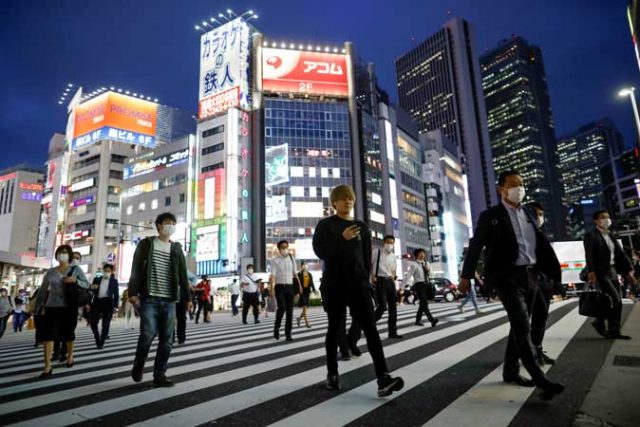
TOKYO — Japan’s glacial coronavirus disease 2019 (COVID-19) inoculation push is prompting some foreign residents to consider flying to other countries to get vaccinated, as the pandemic surges again with no shots in sight for everyday people.
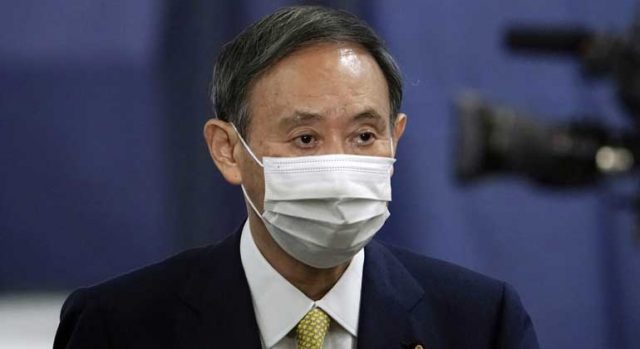
Prime Minister Yoshihide Suga negotiated with the CEO of Pfizer Inc. on Saturday to secure more vaccine doses, now expected to be enough for all residents by September. That’s well after the scheduled start of the Tokyo Olympics and far behind the pace of most major economies.
Japan only started vaccinating its sizable elderly population this month and health experts say it may take till the winter or longer for most of the general populace to get access to the shots.
It’s unclear how many foreigners are flying out of Japan to get shots, but it is a hot topic on social media and in business circles.
“I can confirm having heard of executives going to their home countries for vaccines,” said Michael Mroczek, president of the European Business Council in Japan, adding the number doing so is limited because of the need to quarantine when travelling back to Japan.
Marc Wesseling is one long-term foreign resident who couldn’t wait any longer. The co-founder of an ad agency in Tokyo flew this month to Singapore, where his company has an office, in part to get the shots so he could safely visit his parents in the Netherlands.
“I love the country and I wish them all the best,” Mr. Wesseling said about Japan from his quarantine quarters in Singapore. “They are not the fastest. I think a lot of people are frustrated, especially when you want to have the Olympics and everything. Come on, guys. Make it happen. The whole world is doing it. Why wait?”
Japan has vaccinated about 1% of its population, compared with 2.9% in South Korea, which started later, and at least 40% in both the United States and Britain, according to a Reuters tracker.
The Maldives will soon offer shots to visitors as part of a “visit, vaccinate, and vacation” campaign, the tourism minister of the popular Indian Ocean destination told CNBC last week.
Japan bars tourists from entering the country, and it’s no easy matter for residents to get vaccinated overseas and come back. A two-dose regimen would take at least a couple weeks, often longer, and Japan operates a two-week quarantine for people coming into the country, even if they have been vaccinated.
“If you would like to go back to your home country for inoculation, that’s fine with us,” Japan’s vaccine chief Taro Kono said on Friday. “Some countries have a higher rate of COVID-19, so you could consider which is safer for your health.”
Representatives from Japan’s foreign ministry and immigration service did not immediately respond with comment.
Japan’s top health experts say the COVID-19 pandemic has entered a fourth wave.
Quasi-emergency measures have been imposed in 10 prefectures and the western metropolis of Osaka requested a full emergency declaration on Tuesday amid a rebound in cases driven by mutant variants of the virus. Tokyo may follow later in the week with a similar request, local media said.
Lauren Jubelt thought about going home to Florida to get the shots, but ultimately decided it wasn’t worth the risk of perhaps getting trapped overseas if Japan shut its borders.
“I’m frustrated when I see my family in the US get their vaccine,” said Ms. Jubelt, who works in digital marketing in Osaka.
“We don’t even have a solid date on when we can get it here and the cases are on the rise again.” — Rocky Swift and Daniel Leussink/Reuters
TOKYO — Japanese Prime Minister Yoshihide Suga is postponing plans to visit India and the Philippines on a trip originally set for the end of the month, media said on Wednesday.
Mr. Suga will instead focus on handling a recent surge in coronavirus cases, broadcaster FNN and other media said. — Reuters
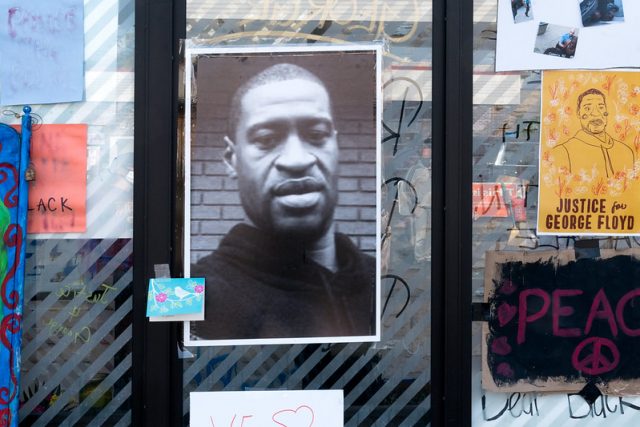
MINNEAPOLIS — Former Minneapolis police officer Derek Chauvin was convicted on Tuesday of murdering George Floyd, a milestone in the fraught racial history of the United States and a rebuke of law enforcement’s treatment of Black Americans.
A 12-member jury found Chauvin, 45, guilty of all three charges of second-degree murder, third-degree murder, and manslaughter after considering three weeks of testimony from 45 witnesses, including bystanders, police officials, and medical experts. Deliberations began on Monday and lasted just over 10 hours.
In a confrontation captured on video, Chauvin, a white veteran of the police force, pushed his knee into the neck of Floyd, a 46-year-old Black man in handcuffs, for more than nine minutes on May 25, 2020. Chauvin and three fellow officers were attempting to arrest Floyd, accused of using a fake $20 bill to buy cigarettes at a grocery store.
The jurors remained still and quiet as the verdict was read. Chauvin, wearing a gray suit with a blue tie as well as a light-blue face mask, nodded and stood quickly when the judge ruled that his bail was revoked. He was taken out of the courtroom in handcuffs and placed in the custody of the Hennepin County sheriff.
The conviction triggered a wave of relief and reflection not only across the United States but in countries around the world.
“It was a murder in the full light of day and it ripped the blinders off for the whole world to see the systemic racism,” President Joseph R. Biden, Jr., said in televised remarks. “This can be a giant step forward in the march toward justice in America.”
Outside the courthouse, a crowd of several hundred people erupted in cheers when the verdict was announced — a scene that unfolded in cities across the country. Car horns honked, demonstrators blocked traffic and chanted: “George Floyd” and “All three counts.”
At George Floyd Square in Minneapolis, the intersection where Floyd was killed and which was later named in his honor, people screamed, applauded and some threw dollar bills in the air in celebration.
While celebrating the verdict, protesters called for justice in the case of Daunte Wright, a Black man who was fatally shot by a police officer after a routine traffic stop on April 11, just a few miles from where Chauvin stood trial. Kimberly Potter, who has turned in her badge, has been charged with manslaughter in that case.
George Floyd’s brother Philonise, speaking at a news conference with several family members, said: “We are able to breathe again” after the verdict, but he added the fight for justice was not over.
“We have to protest because it seems like this is a never-ending cycle,” he said.
‘FIRST STEP TOWARDS JUSTICE’
Chauvin could now face up to 40 years in prison. While the US criminal justice system and juries have long given leeway and some legal protection to police officers who use violence to subdue civilians, the Minneapolis jurors found that Chauvin had crossed the line and used excessive force.
Chauvin’s defense team did not immediately respond to a request for comment on the verdict but is considered likely to appeal the conviction.
In a trial that opened on March 29, the defense argued that Chauvin behaved as any “reasonable police officer” would have under those circumstances, and sought to raise doubts about the cause of Floyd’s death.
In his comments, Mr. Biden emphasized his support for legislation “to root out unconstitutional policing,” including the George Floyd Justice in Policing Act, which has been passed by the U.S. House of Representatives and seeks to increase accountability for law enforcement misconduct.
The Police Officers Federation of Minneapolis said in a statement published in the Minneapolis Star Tribune that “there are no winners in this case, and we respect the jury’s decision,” adding: “We need to stop the divisive comments, and we all need to do better to create a Minneapolis we all love.”
The intersection of race and law enforcement has long been contentious in the United States, underscored by a series of deadly incidents involving white police officers and Black people in recent years.
Floyd’s death prompted protests against racism and police brutality in many US cities and other countries last summer, even as the world grappled with the coronavirus pandemic.
Mr. Biden and Vice-President Kamala D. Harris watched the verdict being read out along with staff in the White House’s private dining room, the White House said. Mr. Biden, Ms. Harris and first lady Jill Biden all spoke with Philonise Floyd.
“Nothing is going to make it all better but at least … now there’s some justice,” Mr. Biden told the Floyd family, according to a video posted to Twitter.
Suzuki Philippines Inc. (SPH), the country’s pioneer compact car distributor, welcomes the month of April with several new promos sure to excite its customers as Suzuki continues to remain dedicated in finding avenues to provide its clientele with the best possible service. Nothing less to be expected as SPH continues to champion the Suzuki Way of Life!
Dzire to Excel
Customers may find it increasingly difficult to resist these irresistible treats! Suzuki is offering massive discounts of up to Php 90,000 in their Dzire to Excel April promo set to run from April 1 to April 30, 2021. For as low as Php 372 a day, customers can find themselves behind the wheel of a brand new Suzuki Dzire. Aside from the low amortization rates for financing schemes, Suzuki is also offering lower down payments and huge discounts for cash transactions. For the entire month of April, cash discounts of as much as Php 90,000 are being offered for the different variants of the Suzuki Dzire.
Ride In Style
Grab the opportunity at an affordable and functionally stylish ride with the Suzuki Ertiga as Suzuki is offering low down payment promos for all variants for the month of April! For as low as Php 499 a day and as low as Php 68,000 down payment, you may find yourself cruising in the metro or in your favorite destinations in a brand new 7-seater MPV. Take a chance this month with the Ride in Style promo until April 30, 2021.
Suzuki Grand Deals
Treat yourself and get a chance to drive your very own Suzuki XL7, Suzuki S-Presso, and/or Suzuki Ciaz – all being offered at incredibly low down payments just for the month of April. The Suzuki Grand Deals promo is applicable to all variants of the Ciaz, S-Presso, and XL7. A whopping Php 200,000 cash discount is being offered for the Ciaz, while Php 32,000 and Php 65,000 cash discounts are being offered for the S-Presso and XL7 respectively. April Fools may be over, but this is not a joke! Get a chance to boast any of these Suzuki models at these incredibly discounted prices.
Shall We Drive Doraemon
Last, but not the least, fans of the popular Japanese manga and anime series, Doraemon, can rejoice as Suzuki announces the extension of their Shall We Drive Doraemon Promo. Customers who avail of any variant of the Suzuki Dzire, old and new, can now still enjoy a complimentary Doraemon Merchandise Kit up until the 30th of June, 2021. Patrons are entitled to one Doraemon Merchandise Kit for every Suzuki Dzire purchased, which may be claimed at the Authorized Suzuki Auto Dealership where the purchase was made, within 60 days upon the release of the unit. This promo can be used in conjunction with the Dzire to Excel promo.
All promos are applicable to all Suzuki Auto dealerships nationwide.
Grey chair at desk against white wall with poster in home office with plants on wooden shelves
Working at home has its advantages. However, it can also be difficult at times with so many distractions. How do we stay focused and productive? How can we improve our work routine and separate it from our home life? So, here are ways and tips for optimizing your spaces efficiently and comfortably for remote work especially during summer.
Create a designated working area
Whether it’s in your bedroom or living room, create a designated area as your working zone. Find the perfect spot at home and opt for a stylish yet ergonomic table and chair. You can achieve a beautiful, modern minimalist-looking working area with a Safdie desk and Heim chair without compromising comfort and productivity.
Poor air quality is a big productivity killer. To keep your workspace cool and comfortable this summer, you need to invest in having an air-conditioning unit. Proper ventilation in your working area is a major factor in boosting your productivity levels even at home. Kaze inverter split type air-conditioners are energy-saving, economical, and environment-friendly AC units with low sound technology. It also has superior quality filters that guarantee cleaner air and can keep your room free from air pollutants and other smaller particles.
Make your working space look bigger by installing light-colored tiles. You can let the natural light come into your room and tiles with lighter shades can reflect light, unlike darker tiles that absorb light. Cifre light-colored floor tiles with a subtle wood-like finish can stylishly make your room feel more spacious and attractive.
Better quality lighting can keep you awake and focused. So aside from your general lighting, it’s ideal to have accent lighting in your working area. Alphalux table lamps use LED lights that can help you achieve better visibility, brighter ambiance, and improved work performance, whereas can also help you save energy this summer for it only consumes 20%-25% of energy. It has a life expectancy of up to 15,000 hours.
A clean and organized workspace has a big impact on getting more tasks done easily. Avoid the clutter and make your working desk visually pleasing by keeping your supplies and work accessories in one place with this Interdesign transparent bin. Maximize your empty wall space and place floating shelves from Heim for extra decorative storage.
When you want to stay hydrated while working, you need to have a cup of coffee, tea, or water by your side. This Bubba insulated mug has dual-wall foam insulation that can keep the temperature of your drinks for longer hours. It is a handy partner to keep your cool this summer with its easy-to-carry handle.
Your working space should inspire and motivate you to accomplish your tasks. It’s a must to decorate your home office and add these vibrant and stylish decorative pieces from Heim. Glam up your walls by hanging a gorgeous wall clock and a gallery of tropical-inspired artworks to breathe in an outdoor vibe.
Get rid of all the clutter easily by having an accessible trash bin in your station. You can refrain from standing up to throw out your trash with a trash bin from Kasch that has a step pedal for easy disposal.
Optimize how you work from home efficiently and comfortably with all these home office products and essentials from Wilcon Depot. Shop now for your home improvement and building needs at any Wilcon Depot and Wilcon Home Essentials store nationwide. Visit any of their 65 stores nationwide and explore the limitless product selections that Wilcon offers ranging from Tiles, Sanitarywares, Plumbing, Furniture, Home Interior, Building Materials, Hardware, Electrical, Appliances, and other DIY items.
Adhering to health and safety protocols to fight against COVID-19, Wilcon continuously implements necessary precautionary measures inside all of its stores to ensure their employees and valued customers’ safety, health, and well-being a priority.
You can also browse their Digital Catalogue and shop conveniently while at home through your personal shopper with the Browse, Call, and Collect/Deliver service. BROWSE the items you want to purchase at shop.wilcon.com.ph and www.wilcon.com.ph, CALL/Viber/text the Wilcon branch of your choice, and schedule a COLLECT/DELIVER. For the list of participating stores with their pick-up and delivery contact details, click this link: www.wilcon.com.ph/content/328-bcc-branches.
Another shopping alternative is the Wilcon Virtual Tour. An online shopping option wherein customers can contact the nearest Wilcon store via Facebook Messenger App. Customers can contact the nearest stores, and the Wilcon team will take you on a virtual tour where you can explore the available products inside their physical stores.
Wilcon also provides contactless payment options to its customers like bank transfers, GCash, PayMaya, InstaPay, PesoNet, WeChat, and Alipay for customers’ convenience.
AROUND P83.3 billion in income may be lost during the nearly five weeks of stricter lockdown in Metro Manila and adjacent provinces, Acting Socioeconomic Planning Secretary Karl Kendrick T. Chua said on Monday evening.
During a televised Cabinet meeting with President Rodrigo R. Duterte, Mr. Chua said about P19.6 billion in workers’ income is sacrificed for every week of enhanced community quarantine (ECQ), while P14.7 billion is lost for every week of modified ECQ (MECQ).
Metro Manila and the provinces of Bulacan, Cavite, Laguna, and Rizal were under a two-week ECQ from March 29 to April 11, in order to curb the spike in coronavirus disease 2019 (COVID-19) infections. Many businesses were ordered to scale down operations or close during the ECQ, while others implemented work-from-home schemes.
Restrictions were slightly loosened as the so-called “National Capital Region Plus” was placed under an MECQ until end-April.
“Dahil two weeks na po ’yong ating ECQ at may madadagdag pa na almost three weeks na MECQ, so total of almost 5 weeks, ang epekto po sa ating tao ay (the effect on the people is) P83.3 billion in foregone wages,” Mr. Chua said.
Mr. Chua noted that prior to the stricter lockdown, the jobs situation in the country was improving as the economy began to reopen. He said 9.3 million jobs were generated in February, although the unemployment rate rose to 8.8% versus 8.7% in the month prior.
“Ang hinahabol natin sana by next year ay bumalik na sa 4-5% unemployment rate (We are targeting to bring down the unemployment rate to 4-5% next year),” he said.
Meanwhile, the number of overseas Filipino workers (OFW) who lost their jobs due to the pandemic reached 647,827, according to Labor Secretary Silvestre H. Bello III. The number represents 19% of the 3.5 million documented OFWs around the world.
Mr. Bello said the government has so far repatriated more than 519,000 of these “displaced” OFWs.
“They were displaced. Meaning, they lost their jobs or even if they did not lose their jobs, they could not earn a living because they were prevented from reporting to work,” he said.
Mr. Bello said about 49,000 OFWs are still in the process of repatriation while more than 79,000, mostly in Italy, United Kingdom, Germany and Spain, have chosen to stay in their host countries.
“They don’t want to go home, because many of them got vaccinated, particularly in the Middle East. So with their vaccination, the opportunity for reemployment was very high, so they opted to stay,” he said.
According to the government, there are 8.74 million Filipinos living and working abroad as of June 2020. Of this, 1.58 million are undocumented and 3.8 million are permanent migrants.
Money sent home by OFWs in February increased by an annual 5.1% to $2.477 billion, data from the central bank showed. Total cash remittance inflows in the first two months of 2021 rose 1.5% to $5.08 billion, as the United States and host countries in the Middle East and Europe reopened their economies. — Kyle Aristophere T. Atienza
Most hospitals in Metro Manila are now overwhelmed with coronavirus-stricken patients. — PHILIPPINE STAR/ MICHAEL VARCAS
By Norman P. Aquino, Special Reports Editor
and Kyle Aristophere T. Atienza, Reporter
SHERWIN DE LOS REYES, 38, sat in a wheelchair in the corridor of the Las Piñas City District Hospital near the Philippine capital for five days waiting to be treated for the coronavirus disease 2019 (COVID-19). He died shortly after.
“Sherwin never had the chance to fight for his life,” Roy R. Bayona, his business partner and close friend, said by telephone. “He might have recovered and survived had he been admitted and given proper treatment.”
This was in August last year, when more than a million doctors and nurses had warned about losing the COVID-19 battle amid record infections sweeping the Southeast Asian nation.
Nearly a year after, the pandemic is staring the government in the face. Manila and nearby cities are at the heart of a major breakdown of the country’s healthcare system that critics had long foretold.
Daily tallies and deaths are at their peak, while highly contagious variants of the COVID-19 virus are sweeping the nation as vaccines remain in short supply.
“What we’re seeing in the Philippines is the culmination of a multilayered and prolonged failure on every single dimension of governance,” said Richard Javad Heydarian, a political analyst and research fellow at the National Chengchi University in Taiwan.
“It’s a concatenation of mismanagement of the crisis on multiple levels,” he said in a Facebook Messenger chat.
The Philippines will lag behind its Asia-Pacific neighbors in terms of economic recovery as coronavirus infections continue to spike and vaccines remain in short supply, Moody’s Analytics said this week.
“The Philippines is the laggard of the entire region as a record-high number of new COVID-19 cases has led to a resumption of strict lockdowns in Metro Manila, and the country faces a severe shortage of vaccines,” Moody’s Analytics Chief APAC Economist Steven Cochrane said in a note on Monday.
Philippine authorities have blamed the surge on more contagious variants of the virus and people ignoring health protocols, but experts disagree.
“The Philippines has the longest lockdown in the world, yet the government has failed not only in saving lives, but in recognizing, admitting and learning from its failures,” said Leonard D. Javier from the Health Alliance for Democracy.
Some hospitals were running at full capacity even before the fresh surge in infections started in March, he said in an e-mail.
“Hospitals are not supposed to be inundated by patients if we contain and prevent the spread at the community level,” Mr. Javier, a doctor, said.
“Now most hospitals in the National Capital Region Plus are overwhelmed, with patients spilling over to nearby provinces,” he added.
Anabel W. Samonte, 61, got tested after experiencing high fever, body pains and other flu-like symptoms on March 27. A few days after, she tested positive for the coronavirus.
“Knowing that the hospitals were full, and with advice from our relatives who were doctors, we tried to manage her at home,” her daughter Gwendolyn Samonte said in a Facebook Messenger chat.
But they had to bring her to a hospital after her symptoms worsened. “We contacted more than 20 public and private hospitals in Metro Manila and nearby provinces but all were full.”
It took days before they found a hospital willing to admit her mother.
Gilbert Enrile, 87, was not as fortunate. He died two days after testing positive for the coronavirus, a situation described by a group of private hospital administrators as a “nightmare.”
“A village health worker advised us to just have my dad stay at home and wait until there’s an isolation facility that could take him in, which was not assured,” his son Ivan Phell said in a Messenger chat.
‘UNMANAGEABLE’ Almost a million people have been infected with the coronavirus in the Philippines, the second-highest in Southeast Asia after Indonesia. More than 16,000 people have died, while almost 800,000 have recovered, according to the Department of Health (DoH).
The agency on April 2 reported the highest daily tally of 15,310 cases since the pandemic started last year.
Active cases breached the 200,000 mark on April 17, according to DoH data, the highest in the region. The number has since gone down to 127,006 cases.
“Compared with many regions like Latin America, North America or Europe, the Philippine numbers are not as bad, but if you look at comparable cases in the region, it has not done very well,” Mr. Heydarian said.
Presidential Spokesperson Herminio “Harry” L. Roque, Jr. said the recent surge is not unique to the country but is happening worldwide.
Mr. Roque, who had tested positive for the coronaviru at least twice, added that criticisms were expected because “critics and the detractors of the administration have always something to say.”
Mr. Roque said 68% of intensive care unit (ICU) beds for coronavirus patients in the country have been used. About 49% of isolation beds have been used and more than 56% of ward beds were already occupied.
More than 80% of ICU beds in Metro Manila have been used. He added that about 63% of isolation beds and 70% of ward beds in the region were already occupied.
The command center responsible for referring patients to hospitals had been receiving an average of 399 calls daily, or almost four times the number last year, the Health department earlier said.
On-the-ground reports showed many have died without seeing a hospital or being treated by a health professional, Vice-President Maria Leonor G. Robredo said in a Facebook post this month.
“Many have already died inside tents outside hospitals, waiting to be admitted to the emergency rooms, in an ambulance while in transit, at home without receiving any medical help,” she said.
Jaime A. Almora, President of the Philippine Hospital Association, said the government had “failed to listen to the cry for help from the private hospitals.”
He said private hospitals in Metro Manila and nearby provinces had not increased their beds for coronavirus patients due to late payments from the state health insurer.
“Private hospitals had not been paid their COVID-19 claims since the start of the pandemic up to now,” he said in an e-mail. “This discouraged many hospitals in participating and expanding their capability to manage COVID-19.”
Gene A. Nisperos, a board member of the Community Medicine Development Foundation, said the state had failed to prepare the country’s healthcare system for possible emergencies such as the coronavirus pandemic.
“Government hospitals were always understaffed, poorly funded and lacked the resources to function optimally even before the pandemic,” he said in an e-mail. “The government did very little to address these issues.”
“The medical community has also learned much about handling COVID-19 patients. Management of severe cases is now more aggressive and unified. However, much needed resources, like medicine, remained in short supply,” he added.
Mr. Javier from the Health Alliance said the government had “neglected measures that matter in halting the spread of the virus: prevention through mass testing, contact tracing, isolation, quarantine and aid to those required to stay home.”
The medical community, along with civic groups, had been calling for broad-based testing since last year.
The country’s testing czar Vivencio B. Dizon has said the government could not test all Filipinos. “Testing is not the only solution to the pandemic,” he said. “We cannot test our way out of this pandemic.”
Health experts had been urging the government to test as many as 100,000 people daily in the capital region and nearby provinces, double the current rate.
“The surge became unmanageable because the fundamentals, like adequate testing and efficient contact tracing, are not even there,” Mr. Nisperos said.
‘HUBRIS’ He said the government was content in whatever it was doing for as long as hospitals were not full, people were complying with minimum health standards and vaccines were becoming available.
“The latest surge was triggered by the government’s hubris and refusal to acknowledge its own shortcomings,” Mr. Nisperos said.
“As much as we condemn vaccine apartheid around the world, Duterte had put all his eggs in Chinese and Russian vaccines,” Mr. Heydarian said. ¨But the Chinese vaccines came in late February but these were not enough,” he said, adding that Russian vaccines have yet to come.
It also did not help that state agencies led by the Health department and Philippine Health Insurance Corp. had been mired in corruption scandals, he added.
Jose Enrique A. Africa, executive director of think-tank Ibon Foundation, said the state overly relied on vaccines, which got delayed due to global supply issues.
“Its practice has evidently been a crude strategy of controlling the populace with restrictions while waiting for vaccines to come,” he said in an e-mail.
The government aims to vaccinate as many as 70 million Filipinos by year-end. It hadtaken delivery of 3 million doses of CoronaVac made by China’s Sinovac Biotech Ltd. and the vaccine developed by AstraZeneca, Plc.
The government relied heavily on non-health personnel, particularly the military and police generals, instead of those in the health sector, Mr. Nisperos said.
“The Duterte government viewed the pandemic as a discipline problem, like a crime. Interventions were therefore militaristic and punitive. These are anathema to a health-based approach,” he said.
Mr. Duterte on April 15 said he could use police power to take over hotels and use their beds for coronavirus patients.
“I can order the authorities to take over the operations of hotels if there are no beds anymore. That is easy,” he said. “When we are pushed to the wall, I can always order the military and police to go there and confiscate the operation of hotels.”
During the implementation of a hard lockdown in Metro Manila, a resident of General Trias in Cavite province died after police forced him to do 300 pushups as a punishment for a curfew violation.
More than 120,000 violators of quarantine protocols have been arrested since Mr. Duterte locked down the entire Luzon island in mid-March last year to contain the pandemic.
The Presidential Palace has blamed health protocol violations for the recent surge, but government officials themselves have violated the rules.
Police Chief Debold M. Sinas reportedly skipped health screening when he visited Calapan City in the southwestern part of Luzon, the same day he announced he had the coronavirus. At the height of the first lockdown last year, he celebrated his birthday with a pre-dawn serenade.
“Public officials have the basic responsibility to be good examples to the public,” said Noreen Sapalo, a college lecturer on culture and politics and a graduate student of anthropology at the University of the Philippines.
“When they fail to do this, it leads to more distrust among Filipinos and fuels the ‘bahala na’ or fatalistic demeanor,” she said in a Messenger chat.
“We can clearly see that populism is not necessarily a recipe for competence especially in times of crisis,” Mr. Heydarian said.












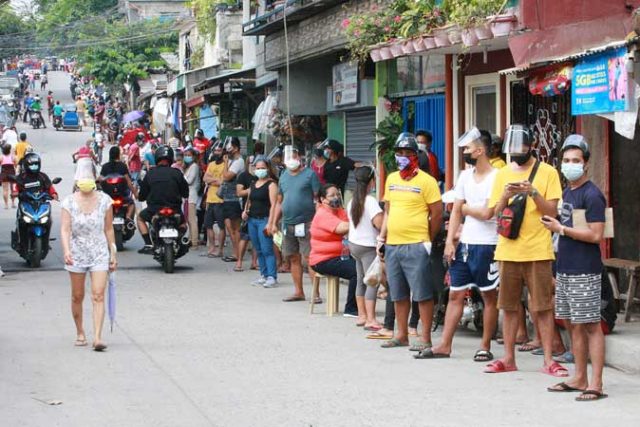
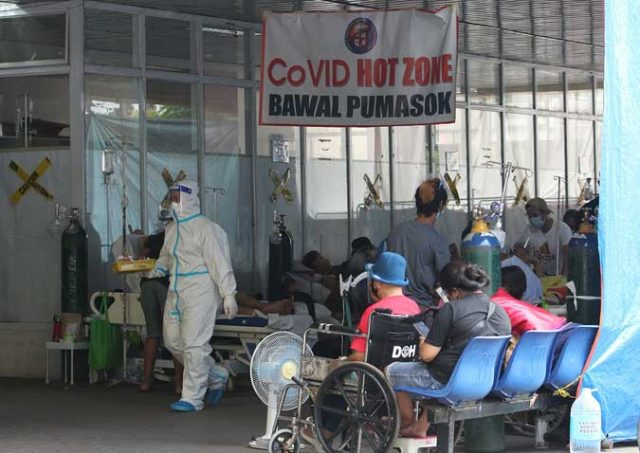
 Nearly a year after, the pandemic is staring the government in the face. Manila and nearby cities are at the heart of a major breakdown of the country’s healthcare system that critics had long foretold.