Home Blog Page 8177

PhilWeb returns to profitability with P7-M income

PHILWEB Corp. generated P7.15 million in net attributable income for the first quarter of the year, a reversal of the P1.53-million loss incurred in the same period in 2020 as gaming activities improved to “pre-quarantine levels.”

The 19 eGames (electronic games) sites converted back to the company’s electronic gaming system and the acquisition of 16 more eBingo (electronic bingo) venues and two accredited eBingo machine providers also boosted the company’s results for the first quarter, PhilWeb said in a regulatory filing on Tuesday.

Revenues increased by 8.4% to P137.94 million from P127.24 million, while cost and expenses declined by 1.6% to P121.47 million from P123.45 million year on year.

PhilWeb’s EBITDA (earnings before interest, taxes, depreciation, and amortization) amounted to P28.91 million in the first quarter, up by 97.9% from the P14.6 million seen in the first three months of the previous year.

The company is an accredited service provider of the Philppine Amusement and Gaming Corp. (PAGCOR) and has an operational network of 69 eGames outlets and 22 eBingo outlets by the end of last year.

Some 85 eGames venues are using the company’s electronic gaming system, while 68 eBingo sites are using its eBingo machines.

PAGCOR recently gave PhilWeb the go signal to operate its remote gaming platform “to allow high-value customers to enjoy PhilWeb gaming products outside of eGames venues.”

On Tuesday, PhilWeb shares at the stock exchange went up by 3.47% to close at P2.68 apiece. — Keren Concepcion G. Valmonte

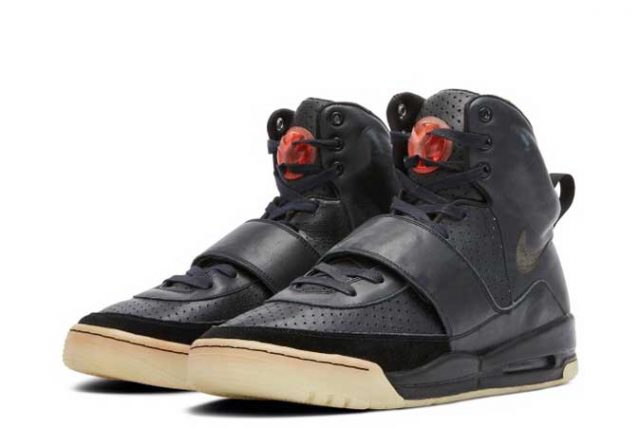
Kanye’s Yeezy sneakers snag world record $1.8 million in private sale

Kanye’s Yeezy sneakers — SOTHEBYS.COM

NEW YORK — The Kanye West sneakers that sent athletic shoes strutting down fashion runways sold for $1.8 million, a new world record price for a pair of sneakers, Sotheby’s announced on Monday.

The American rapper’s 2008 “Grammy Worn” Nike Air Yeezy samples were prototypes for a line developed by West and Mark Smith for Nike. They were revealed during West’s performance at the 2008 Grammy Awards.

The buyer was sneaker investing platform RARES, which paid the highest publicly recorded price for the pair. RARES is a leader in fractional ownership, allowing users to invest in sneakers by buying and trading shares in them.

The private sale shattered the current auction record for sneakers, far above the $560,000 that Sotheby’s scored in May 2020 for a pair of 1985 Air Jordan 1’s, designed for and worn by basketball player Michael Jordan.

The black leather, size 12 Nike Air Yeezy 1 Prototypes have a Yeezy forefoot strap and the brand’s signature Y medallion lace locks in pink.

They were put up for sale at Sotheby’s by New York collector Ryan Chang.

Mr. West ended his collaboration with Nike in 2013 and took the brand to Adidas, where the Yeezy brand of sneakers brought in an estimated $1.7 billion in sales in 2020, according to Forbes.

“Our goal in purchasing such an iconic shoe — and a piece of history — is to increase accessibility and empower the communities that birthed sneaker culture with the tools to gain financial freedom through RARES,” said Gerome Sapp, RARES co-founder and CEO. —  Reuters

Emerging Asia’s central banks could delay rate hikes until 2022

EMERGING ASIA’S central banks are expected to opt for supporting their economic recoveries rather than tackling volatile price swings this year.

All eight emerging Asian economies, including India and Indonesia, are seen holding benchmark interest rates steady through 2021, according to the median forecasts from Bloomberg surveys of economists.

Higher real interest rates will allow some of Asia’s central banks to stand pat, while for others a recent pickup in inflation is set to moderate. Much depends on the path of global interest rates, and the Federal Reserve’s meeting this week will be keenly watched by the region’s policy makers.

“To support economic recoveries, Asian central banks are expected to maintain their accommodative stance and avoid hinting at future rate hikes,” said Duncan Tan, rates strategist at DBS Banking Group Ltd.

Considering that recent inflation prints have been elevated, Bangko Sentral ng Pilipinas and Reserve Bank of India seem most likely to hike for inflation reasons, Mr. Tan added.

After cutting its key interest rate by 200 basis points (bps) last year, the Philippine central bank has held steady since November, even with inflation running above the bank’s 2%-4% goal. The BSP has estimated that average price gains this year would be slightly above target, while Governor Benjamin Diokno has signaled the bank will keep policy on hold while its loose monetary settings work their way through the economy.

“The real policy rate will likely average close to -3% in 2021, and as the economy gradually reopens, even marginal demand-side price momentum would call for a less accommodative policy stance,” said Joseph Incalcaterra, chief Asean economist at HSBC Holdings Plc. in Hong Kong.

INDIA, SOUTH KOREA
For India, which is suffering the world’s worst COVID-19 outbreak, wholesale price inflation quickened in March at its sharpest pace since late 2012, reflecting upward pressure from higher commodity prices and firmer input costs. Meanwhile, consumer prices last month rose 5.52% from the same time last year, beating expectations though still within the Reserve Bank of India’s 2%-6% target range.

South Korea is also a popular pick to be among the first in the region to normalize monetary policy, even if that means waiting until after 2021, as it has carried a relatively lower virus caseload and benefited disproportionately from the global electronics boom.

“We still believe Korea will be one of the earliest to have better progress on its vaccine drive,” said Angela Hsieh, an economist at Barclays Bank Plc in Singapore. “Improved mobility should help support the recovery in private spending and labor market, which is still the missing factor for the Bank of Korea to consider normalization.”

The differing growth and inflation expectations are playing out in markets. Foreign investors net invested a record 9.1 trillion won ($8.2 billion) in South Korean listed debt in March, with rate swaps already pricing in about 100 bps of hikes over the next three years, making a selloff unlikely. India and Philippines, however, have seen a combined net outflow of more than $4 billion year-to-date in their bond markets, based on the data available.

Much of the emerging Asia policy track will depend on vaccination progress — with many economies suffering from a dearth of supply — and on how quickly some of the region’s economies can damp a recent surges in cases. Meanwhile, their economies are generally better positioned than elsewhere in the emerging-market world, with hearty foreign reserves and thriving goods trade as two buffers that will give central bankers some room to consider normalizing rates.

Analysts are generally reluctant to pin their bets on any one economy as the first hiker in emerging Asia, given the multitude of uncertainties and the generally low-inflation atmosphere. It’s difficult to see Asian central banks being “gung-ho” about raising rates unless they’re battling rapid capital outflows, said Selena Ling, head of Treasury research and strategy at Oversea-Chinese Banking Corp. in Singapore.

Like the Federal Reserve, “an inflation overshoot will be largely perceived as temporary and by itself should not trigger a recalibration” in this region, Ling said. “At this juncture, with the virus mutations and resurgent COVID cases, most would hesitate to be ahead of the curve.”

For bond investors, “it might not be an end of world though,” said Kiyong Seong, an Asia rates strategist at Societe Generale in Hong Kong. “It is quite doubtful if emerging markets central banks will be able to hike their policy rate substantially in this cycle,” he said. “If the market is pricing in a reasonable degree of tightening, bond investors will weather well.” — Bloomberg


Smile Train speech app

SMILE TRAIN, a nonprofit organization and charity providing corrective surgery for children with cleft lips and palates, developed a free cleft palate speech app in Filipino. The interactive app uses stories, games, and songs for them to improve their speech. The app lowers the burden on families with limited means to travel for therapy. Fun encourages children to practice more often to yield better speech outcomes. The app contains videos teaching the correct placement, manner and voicing of the target sounds. A video about common speech errors is also included to help parents, caregiver and patients be familiarized with the sounds. By this, they will be able to discriminate the correct from the incorrect productions. The app provides opportunities to practice the high pressure sounds in isolation, syllable, word and sentences level. It also has stories to practice the use of sound in connected speech practice. Visit smiletrainspeechapp.com.

Discovery World unit, Samal Shores enter management deal

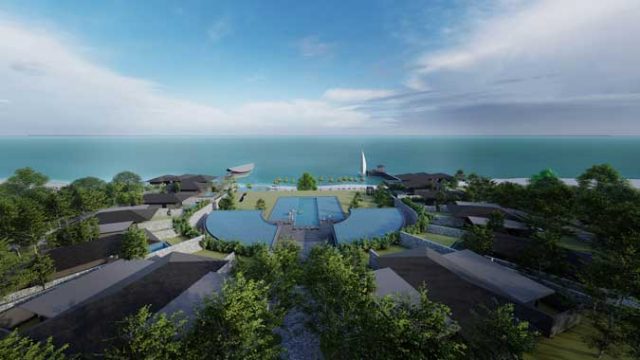
DISCOVERY Hospitality Corp. (DHC) has signed a contract with Samal Shores, Inc. to manage the latter’s resort project in Davao del Norte’s Samal island that is set to open next year.

“The opening of Discovery Samal is part of the commitment of DHC to widen our reach across strategic locations,” DHC Chief Operating Officer and Discovery World President Jose C. Parreno, Jr. said in a statement on Tuesday.

The contract will add the upcoming project to the portfolio of hotels and resorts under the property management company of publicly listed Discovery World Corp. Samal Shores is a subsidiary of CSG Holdings Corp.

DHC currently manages Discovery Primea, Discovery Suites, Discovery Shores Boracay, and Club Paradise Palawan.

Once the agreement is finalized, DHC’s portfolio expansion across the country will total 690 rooms and a conference capacity of 2,018 for engagements.

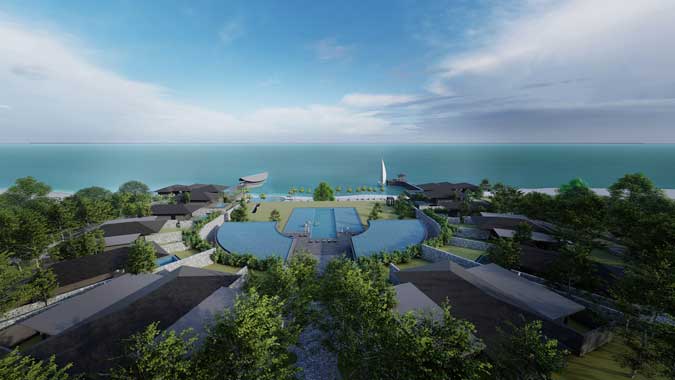
Discovery Samal will be located on a land spanning five hectares along the coast of the Island Garden City of Samal, boasting of views of the Davao Gulf.

It will be about 30 minutes away from the Francisco Bangoy International Airport.

Slated to open in 2022, Discovery Samal will feature 162 villas and “plush” accommodations, four meeting rooms, a convention center good for up to 1,000 guests, all-day dining, a seafood specialty restaurant, and a bar and lounge.

“This is a new way for us to offer more outdoor experiences for dynamic guests looking for more recreational vacations,” Mr. Parreno added.

The project is designed by Architect Edgardo L. Ledesma, Jr. and is embellished by interior designer Manny Samson of Emesaé Design Corp.

Discovery World shares at the local bourse declined by 0.30% or P0.01 on Tuesday, closing at P3.29 each. — Keren Concepcion G. Valmonte

Fashion designer Alber Elbaz dies from COVID-19

Alber Elbaz — (PORTRAIT CREDIT: A.KOO) VIA RICHEMONT.COM/

LUXURY fashion company Richemont on Sunday confirmed the death of designer Alber Elbaz, saying the former creative director at French fashion house Lanvin had died from coronavirus disease 2019 (COVID-19).

Among Elbaz’s creations were the dress worn by Meryl Streep when she accepted her Oscar for Best Actress in 2012 for The Iron Lady, while other celebrity fans included Nicole Kidman, Julianne Moore and Kate Moss, according to Women’s Wear Daily.

“It was with shock and enormous sadness that I heard of Alber’s sudden passing,” said Richemont chairman Johann Rupert, who described Mr. Elbaz as a beloved friend. “Alber had a richly deserved reputation as one of the industry’s brightest and most beloved figures. I was always taken by his intelligence, sensitivity, generosity and unbridled creativity,” Mr. Rupert added.

The designer, who was known for his work at fashion house Lanvin from 2001 to 2015, died on Saturday in Paris, WWD reported. He was 59.

Since 2019 he had been working on a fashion joint venture with Richemont called AZ Factory, a company aimed at producing smart women’s fashion by blending traditional craftsmanship with technology.

Mr. Elbaz was born in Morocco and raised in Israel from the age of one. He launched his fashion career in 1985, working in New York with designer Geoffrey Beene. In 1996 he became the design director at Guy Laroche in Paris, before joining Yves Saint Laurent as creative director of its ready-to-wear brand Rive Gauche. In 2001, he joined Lanvin, where he earned critical and commercial success based on his principle of putting women first.

During his 14-year tenure, Mr. Elbaz was credited with reviving the French couture house’s fortunes, with modern takes on silk cocktail dresses and colorful, feminine designs. “It was just about giving ease to women,” he said of his dresses with industrial zips and raw edges, two of the hallmarks he established for Lanvin.

Lanvin sales slumped following his departure in 2015 and the brand was eventually bought by China’s Fosun. — Reuters

BPI to seek regulatory approval for merger with BFSB by Sept.

BANK of the Philippine Islands will apply for regulatory approval for its planned merger with its thrift unit within the year. — BW FILE PHOTO

THE MERGER between Bank of the Philippine Islands (BPI) and its thrift unit BPI Family Savings Bank (BFSB) will now be up for regulatory approval after the listed lender’s stockholders okayed the plan.

BPI said in a filing on Tuesday that at least two-thirds of its stockholders — which constitutes a quorum — approved the planned merger, which was announced by the bank in January, on April 22.

“Next steps include the regulatory filings with the Bangko Sentral ng Pilipinas (BSP), SEC (Securities and Exchange Commission), BIR (Bureau of Internal Revenue), PDIC (Philippine Deposit Insurance Corp.) and PSE (Philippine Stock Exchange) before the end of September 2021,” the bank said.

The lender said the transaction will be effective once the SEC issues a Certificate of Merger.

“BFSB is 100% owned by BPI. Since it is not listed, the basis of the exchange will be the net asset value of BFSB as of Dec. 31, 2020 and the price of BPI shares as of Dec. 29, 2020,” BPI said in its filing.

“After the issuance of shares, the investment in the subsidiary account will be canceled, and treasury will be recognized for the newly issued BPI common shares,” it added.

The plan of merger was approved by BPI’s board of directors on Feb. 24 and was signed on March 23 by BPI’s former president Cezar P. Consing and BFSB President Maria Cristina L. Go.

“The merger of BPI and BFSB will create considerable value to the customers, employees and shareholders of the two entities. The customers of the combined BPI and BFSB will have access to all the products, via all the digital and physical channels, of both entities,” BPI said.

“The employees of the merged entity will have the ability to work across a larger, more varied bank; and potential synergies will create shareholder value,” it added.

BFSB has P278 billion in assets, making it the country’s largest thrift bank. It has about 3,000 employees with a portfolio focused on housing and auto loans.

Its parent BPI’s net income declined by 21.64% to P5 billion in the first quarter from P6.381 billion in the same period a year earlier.

BPI’s shares closed unchanged at P83 apiece on Tuesday. — L.W.T. Noble

TMC air medical services

THE Medical City (TMC) partnered with Ascent, an on-demand helicopter service, to provide air transfers between its facilities. Patients and personnel can fly to and from TMC locations and dedicated Ascent hubs within minutes. For example, The Medical City in Ortigas is now only 25 minutes away from its Clark branch. Ascent’s air services will include transport of medical personnel and sensitive medical cargo, such as organs or fragile medical equipment.

AC Energy’s 63-MW solar farm in Zambales goes online

AC ENERGY Corp.’s 63-megawatt (MW) GigaSol Palauig solar farm in Zambales has begun commercial operations, making it the first of five new plants that the Ayala-led company scheduled to go online this year.

“Despite the challenges in construction amidst the pandemic, GigaSol Palauig has begun generating power for supply to the Luzon grid,” AC Energy said in a regulatory filing on Tuesday.

The P2.39-billion solar facility will generate over 90 million kilowatt-hours (KWh) of clean power to support the country’s power demands, the firm said.

“The Palauig solar farm is the first of AC Energy’s five new plants to begin operating in 2021, making it quite an exciting year for the company’s Philippine operations,” Jose Maria P. Zabaleta, AC Energy chief development officer, said in the disclosure.

“This is all the more important as these new plants can help offset some supply shortfalls in recent months, and help to reduce the elevated prices seen in the market caused by these shortages,” he added.

AC Energy said it had also begun the construction of a 72-MW solar farm in Arayat-Mexico in Pampanga. The project, which is a joint venture with Citicore Solar Energy Corp., has a projected cost of P2.75 billion. The solar facility is set to begin operations by the summer of 2022.

The developments in the Central Luzon area are in line with the company’s renewables growth strategy. The firm earlier said that its 2025 plan is to exceed 5,000 MW of attributable capacity and generate at least half of its power from renewables.

In a separate disclosure on Tuesday, AC Energy said that it signed a deed of agreement with its parent firm AC Energy and Infrastructure Corp. (ACEIC), which will subscribe to 16.69 billion common shares at P5.15 apiece in the listed company. The total transfer value amounts to P85.92 billion.

After the transaction, ACEIC will own 76.03% of AC Energy’s capital stock from 55.99% at present.

In turn, AC Energy will own 100% of the outstanding common and redeemable preferred shares of AC Energy International, Inc.

On its website, the company said that it hopes to add 1,400 MW to its attributable capacity “with the planned infusion of AC Energy International.”

Shares of ACEN in the local bourse shed 0.99% or 7 centavos to finish at P6.98 apiece on Tuesday. — Angelica Y. Yang

Spotify’s new tie-up to allow listeners play music, podcasts from Facebook app

ALEXANDER SHATOV/UNSPLASH

STOCKHOLM —  Spotify on Monday said it has partnered with Facebook to allow listeners to play music and podcasts directly from the social network’s iOS and Android apps.

Facebook last week said it planned to launch several audio products, including Clubhouse-style live audio rooms and a way for users to find and play podcasts.

The new integration is rolling out in 27 markets, including the US and Canada, with additional markets to follow in the coming month, Spotify said in a statement.

Spotify’s paid subscribers would be able to access full playback without advertisements without leaving the Facebook app.

Apple last week said it will launch podcast subscriptions, which will let users pay to unlock new content and additional benefits like ad-free listening, intensifying competition with Spotify.

Both Spotify and Facebook have been fighting Apple on different fronts, from privacy changes on iOS devices to the 30% fee levied on app developers to use the iPhone maker’s in-app purchase system.

Apple has said its App Store helped Spotify to benefit from hundreds of millions of app downloads to become Europe’s largest music streaming service. — Reuters

BSP sets rules for nonstock savings associations

BW FILE PHOTO

THE BANGKO SENTRAL ng Pilipinas (BSP) has released new guidelines meant to boost corporate governance in nonstock savings and loan associations (NSSLAs) following its issuance of rules on the screening and monitoring of officials of BSP-supervised financial institutions.

Circular No. 1115 Series of 2021 signed by BSP Governor Benjamin E. Diokno outlines the duties, responsibilities and qualifications of members of NSSLAs’ board of trustees, officials, and employees.

“[T]hese guidelines take into account the unique challenges of governance related to the member-driven nature of NSSLAs, as well as existing applicable governance,” the circular said.

The circular said the BSP can look through its own records to determine the qualifications of a trustee. Members of an association’s board of trustees will also be required to attend a special seminar on corporate governance in compliance with BSP-prescribed syllabus.

It said the Monetary Board will be the confirming authority for trustees, presidents and chief executive officers of NSSLAs with assets of P10 billion and above.

Meanwhile, the Financial Supervision Sector will be in charge of confirming trustees and chief executives of NSSLAs with assets below P10 billion, as well as NSSLAs’ treasurers, heads of internal audit, risk management and compliance functions, and other officers with rank of senior vice-president and above.

Monetary Board or BSP approval will not be required for the re-election or re-appointment of officers.

The circular also defined a complex NSSLA as an institution with assets of at least P6 billion. These institutions should satisfy at least one of the following characteristics: having more than two thousand members; operating non-conventional delivery platforms such as electronic platforms or agents; or has a network of at least five service units, whether branches or satellite offices.

Meanwhile, NSSLAs with operational limits that do not meet qualifications of the complex type will be considered as “simple NSSLAs.”

Aside from the board of trustees, complex NSSLAs should have committees focusing on audit, risk oversight, corporate governance, and membership. On the other hand, a simple NSSLA is expected to have at least audit and membership committees.

The BSP said an NSSLA’s president or CEO will be primarily responsible for achieving targets for conduct and behavior, implementing strategies, and promoting the long-term interest of an NSSLA.

Meanwhile, associations with assets of at least P5 million are required to have a full-time manager to take charge of their operations.

The BSP also requires a bond from officers and employees that have access to money or negotiable securities before entering their duties. This will provide for indemnity to the NSSLA against the loss of money or security by reason of dishonesty.

Central bank data showed there are currently 63 registered NSSLAs. These associations collect savings from members of certain industries that are used to finance the personal loans of members.

Prior to its circular on NSSLAs, the BSP also released guidelines on corporate governance on the hiring and performance management of bankers. — LWTN

MakatiMed cardiac cath lab

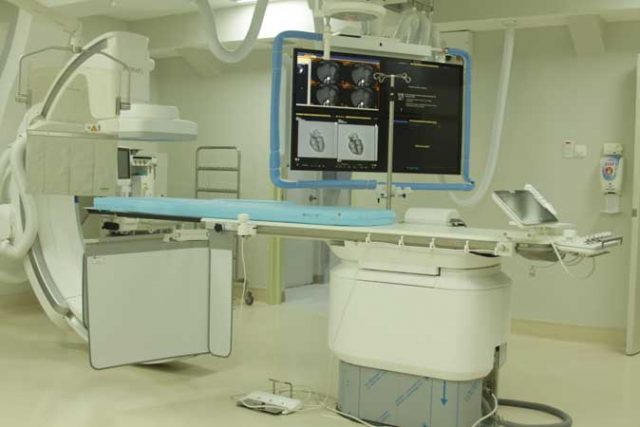
MAKATI MEDICAL CENTER (MakatiMed) opened an advanced Cardiac Catheterization Laboratory (Cardiac CathLab) which allows doctors to perform complex yet minimally invasive interventional cardiology and electrophysiology procedures with equipment that offers optimal imaging and positioning. The Cardiac CathLab is equipped with the Philips Azurion 7 C20, a new machine that uses a reduced radiation dose while maintaining excellent image quality for cardiac catheterization in both 2D and 3D. Procedures that can be performed at MakatiMed’s Cardiac CathLab include left and right heart catheterization (coronary angiography and angioplasty), intravascular ultrasound, intra-aortic balloon pump insertion, transcatheter aortic valvular replacement, endovascular aneurysm repair (EVAR), thoracic endovascular aortic repair (TEVAR), pacemaker insertion, implantable cardioverter defibrillator insertion, placement of implantable cardiac resynchronization devices, septal ablation, and electrophysiology studies. Contact MakatiMed at mmc@makatimed.net.ph or makatimed.net.ph.

ADVERTISEMENT
ADVERTISEMENT